
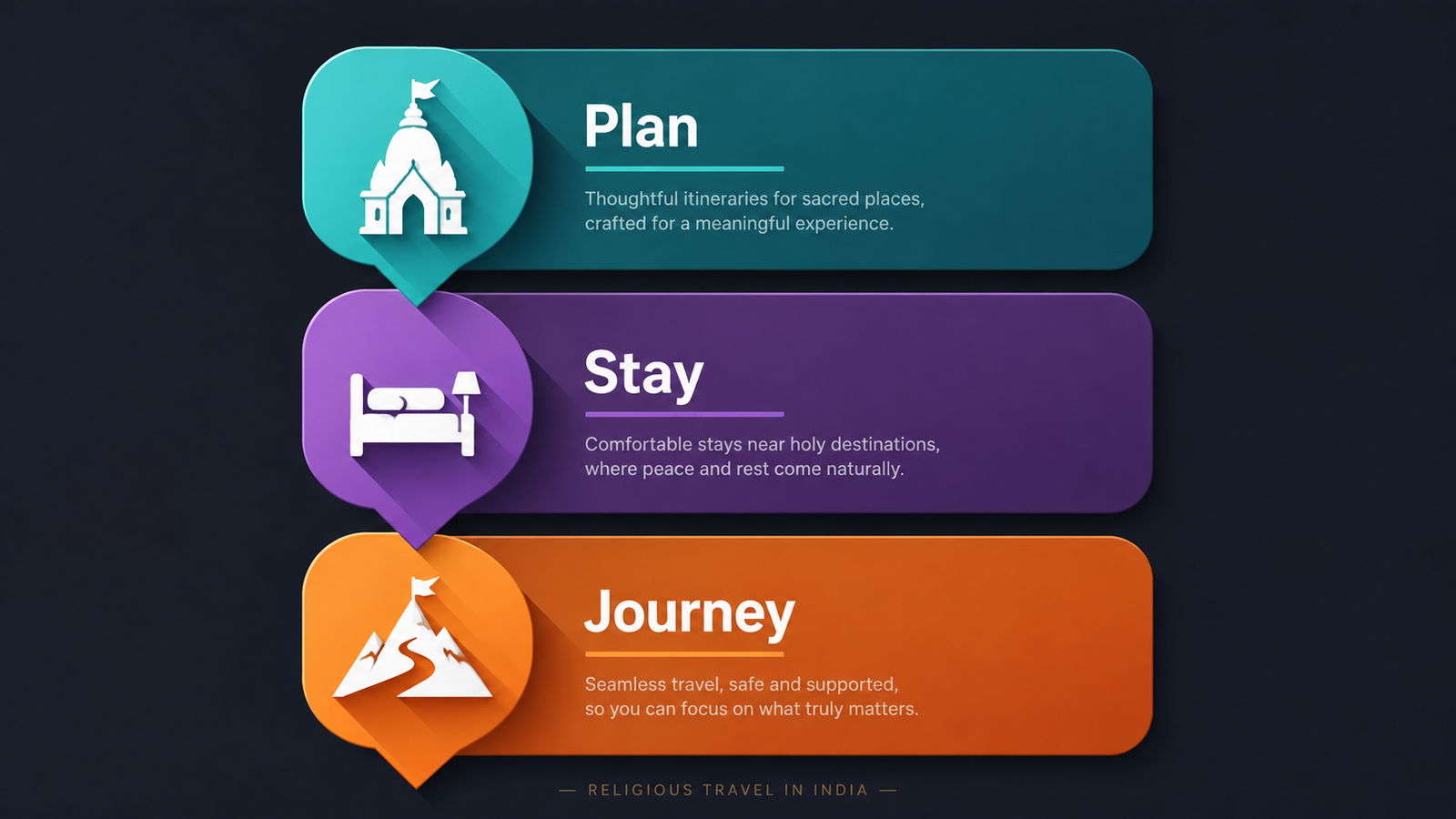
Religious travel in India is changing rapidly. Pilgrimages that once depended largely on local contacts, word-of-mouth hotel recommendations, and last-minute arrangements are becoming more organized, digital, and traveler-focused. Devotees today still seek the same spiritual connection, blessings, and cultural meaning, but they increasingly expect a better overall travel experience around the journey.
For modern pilgrims, a successful temple visit is no longer defined only by reaching the shrine. The quality of accommodation, ease of local travel, cleanliness, safety, accessibility, meal availability, and support for families and senior citizens now play a much larger role in the overall experience.
This shift is creating a new standard for religious travel in India. Travelers want spiritual journeys that remain meaningful while also being comfortable, transparent, and easier to plan. They want to know where they are staying, how far the hotel is from the temple, whether elderly parents can access it comfortably, and whether the property genuinely suits pilgrimage travel.
Platforms such as Mudras Stays reflect this evolution by focusing specifically on accommodation near temples and spiritual destinations instead of treating religious travelers exactly like general tourists.
Religious Travel Is Becoming More Organized
Pilgrimage has always been deeply rooted in Indian culture, but the planning process is becoming more structured than before.
Modern travelers increasingly prepare for:
- Accommodation.
- Transportation.
- Temple timings.
- Weather conditions.
- Family requirements.
- Senior citizen accessibility.
- Local transportation.
- Budget planning.
This shift toward organized planning reduces uncertainty and allows devotees to focus more on the spiritual purpose of the journey.
Comfort Is Becoming Part of the Pilgrimage Experience
Comfort does not mean luxury. For a pilgrim, comfort often means simple things that make the journey easier.
These include:
- A clean room.
- A comfortable bed.
- Reliable hot water.
- A hotel close to the temple.
- Easy transportation.
- Helpful staff.
- Safe surroundings.
These practical factors help devotees remain physically refreshed and mentally relaxed throughout their pilgrimage.
Temple Proximity Matters More Than Ever
Travelers are becoming more aware that hotel location can significantly affect their temple experience.
Staying close to the temple offers several advantages:
- Reduced travel time.
- Lower local transportation costs.
- Easier early morning darshan.
- Convenient evening aarti visits.
- Less walking for senior citizens.
- More flexibility throughout the day.
A well-located hotel can often provide greater value than a cheaper property located far away.
Families Expect Better Pilgrimage Accommodation
Religious journeys in India are often multi-generational family experiences. Grandparents, parents, children, and relatives may all travel together.
This creates demand for accommodation offering:
- Family rooms.
- Extra bedding.
- Multiple-room availability.
- Nearby dining options.
- Safe surroundings.
- Parking.
- Easy temple access.
Family-friendly planning is therefore becoming an important part of the new religious travel experience.
Senior Citizen Comfort Is Now a Priority
Senior citizens remain one of the most important segments of pilgrimage travel.
Their needs often include:
- Minimal walking distance.
- Lift access.
- Ground-floor rooms.
- Comfortable beds.
- Nearby transportation.
- Medical access.
Travel platforms and accommodation providers that understand these needs can create a significantly better pilgrimage experience.
Cleanliness and Reliability Are Becoming Non-Negotiable
Travelers increasingly expect basic hospitality standards regardless of hotel category.
Even budget accommodation is expected to provide:
- Clean rooms.
- Fresh linen.
- Hygienic bathrooms.
- Reliable housekeeping.
- Safe surroundings.
- Accurate property information.
Price remains important, but pilgrims are less willing to compromise on hygiene and basic comfort.
Digital Booking Is Raising Expectations
Online booking has made hotel comparison easier and has also increased traveler expectations.
Before paying, devotees can now check:
- Room photographs.
- Guest reviews.
- Hotel location.
- Facilities.
- Room categories.
- Cancellation policies.
- Final prices.
This transparency allows travelers to make more informed decisions and avoid many traditional booking problems.
Religious Travelers Want More Relevant Search Results
Generic hotel booking websites provide large inventories, but many properties may not be suitable for pilgrimage travelers.
A religious traveler often cares more about:
- Temple distance.
- Accessibility.
- Family suitability.
- Vegetarian food availability.
- Local transportation.
- Senior citizen convenience.
This is why specialized temple-focused platforms are becoming increasingly relevant.
Verified Accommodation Builds Confidence
Trust is critical when booking accommodation in unfamiliar pilgrimage towns.
Travelers want confidence that:
- The hotel exists.
- The room matches expectations.
- The location is practical.
- The property information is clear.
- Support is available if required.
Relevant and carefully presented accommodation options can significantly reduce booking anxiety.
Transparent Pricing Is Part of Better Religious Travel
Travelers increasingly expect to understand the complete cost before confirming a room.
They want clarity about:
- Room price.
- Taxes.
- Extra-bed charges.
- Meal costs.
- Parking fees.
- Cancellation conditions.
Transparent pricing helps families manage their pilgrimage budgets more effectively.
Affordable Travel Can Still Be Comfortable
A new standard for pilgrimage does not mean making every journey expensive.
Instead, it means helping travelers find better value.
A budget hotel can still provide an excellent stay if it offers:
- A convenient location.
- Clean rooms.
- Essential facilities.
- Safe surroundings.
- Helpful hospitality.
The focus is increasingly shifting from lowest price to best practical value.
Local Hospitality Plays an Important Role
Many pilgrimage destinations depend heavily on independent hotels, guest houses, homestays, and family-run properties.
These businesses often offer:
- Local knowledge.
- Personalized service.
- Temple proximity.
- Regional hospitality.
- Flexible arrangements.
Giving such properties stronger visibility can improve both traveler choice and local economic development.
Religious Travel Is Becoming More Family-Oriented
Modern families increasingly combine pilgrimage with cultural exploration, local sightseeing, and quality time together.
They may visit:
- Temples.
- Ghats.
- Local markets.
- Historic sites.
- Nearby attractions.
- Regional food destinations.
This creates demand for accommodation that supports longer and more comfortable stays.
Travelers Expect Better Information Before Arrival
Good religious travel planning requires more than a hotel listing.
Travelers increasingly want to understand:
- Temple timings.
- Best time to visit.
- Local transportation.
- Nearby attractions.
- Festival periods.
- Travel conditions.
Destination-focused information helps travelers prepare more effectively.
Festival Travel Requires a Higher Standard of Planning
Temple festivals can create exceptional pressure on hotels, roads, transportation, and local services.
During peak periods, travelers need:
- Earlier bookings.
- Better location planning.
- Flexible itineraries.
- Confirmed transportation.
- Reliable accommodation.
This makes organized pilgrimage planning even more valuable.
Support Matters When Plans Change
Travel can occasionally be affected by weather, transportation delays, crowd-control measures, or local conditions.
A modern pilgrimage experience should provide travelers with access to practical support when coordination is required.
Human assistance can be particularly helpful for:
- Families.
- Senior citizens.
- First-time visitors.
- Large groups.
- Travel agents.
Mudras Stays Reflects This New Approach
Mudras Stays has been developed around the idea that temple travelers deserve a more relevant accommodation experience.
Instead of presenting unrelated city hotels, the platform focuses on stays near important spiritual destinations and considers factors that matter during pilgrimage.
These may include:
- Temple proximity.
- Budget.
- Family requirements.
- Senior citizen convenience.
- Property type.
- Destination relevance.
This temple-first approach aligns with the changing expectations of modern religious travelers.
Religious Travel Is Moving Beyond Basic Hotel Booking
The next stage of pilgrimage tourism is likely to involve a broader travel ecosystem rather than isolated hotel reservations.
Travelers increasingly expect easier coordination between:
- Accommodation.
- Local transportation.
- Temple information.
- Destination guidance.
- Family planning.
- Travel support.
Bringing these elements together can make religious journeys considerably smoother.
Technology and Human Support Can Work Together
Digital booking provides speed and convenience, while human assistance can help with questions that technology alone may not fully answer.
A balanced travel experience can combine:
- Online hotel discovery.
- Digital payments.
- Property information.
- Local destination knowledge.
- Personalized support.
This combination can be particularly useful in pilgrimage destinations where local conditions vary significantly.
Better Planning Creates Better Spiritual Experiences
When accommodation, transportation, and daily logistics are organized properly, travelers can dedicate more time to the actual purpose of the journey.
Better planning allows devotees to focus on:
- Prayer.
- Darshan.
- Family.
- Rituals.
- Reflection.
- Local culture.
Comfort and spirituality are not opposites. Good hospitality can support a more peaceful pilgrimage.
What the New Standard Looks Like
The emerging standard for religious travel in India is defined by relevance rather than luxury alone.
Travelers increasingly expect:
- Convenient temple locations.
- Clean and comfortable accommodation.
- Transparent pricing.
- Family-friendly facilities.
- Senior citizen accessibility.
- Reliable information.
- Easy online booking.
- Practical travel support.
Together, these factors create a more dependable and traveler-friendly pilgrimage experience.
Frequently Asked Questions
What is changing in religious travel in India?
Pilgrimage travel is becoming more organized, digital, family-oriented, and comfort-focused. Travelers increasingly expect convenient accommodation, transparent information, reliable booking, and practical travel support.
Why is accommodation so important during a pilgrimage?
A good hotel provides rest, reduces travel time, improves temple access, and makes the journey more comfortable for families, children, and senior citizens.
Does better pilgrimage travel mean luxury accommodation?
No. The focus is on practical comfort, cleanliness, convenience, accessibility, and value. Budget accommodation can still provide an excellent experience when these essentials are handled well.
Why are hotels near temples becoming more important?
Nearby accommodation reduces transportation costs, walking requirements, and daily travel time while making early morning and evening temple visits easier.
How are senior citizens benefiting from modern pilgrimage planning?
Travelers can now compare hotel accessibility, location, transport options, room facilities, and nearby services before booking, making senior-friendly travel easier to organize.
What role does digital booking play in religious tourism?
Digital booking allows travelers to compare prices, rooms, locations, reviews, facilities, and policies before arrival, reducing uncertainty and improving decision-making.
How does Mudras Stays fit into this new standard?
Mudras Stays focuses specifically on temple and pilgrimage accommodation, helping travelers identify more relevant stays based on location, budget, family needs, and senior citizen convenience.
Can families benefit from temple-focused accommodation platforms?
Yes. Families can more easily compare room configurations, temple distance, accessibility, parking, food options, and other practical requirements that influence a group pilgrimage.
Why is transparent pricing important for pilgrims?
Clear pricing helps travelers understand the complete cost of accommodation, manage their budget accurately, and avoid unexpected charges during the journey.
What defines a better religious travel experience?
A better experience combines spiritual purpose with clean accommodation, practical location, reliable information, family comfort, accessibility, transparent booking, and support when required.