
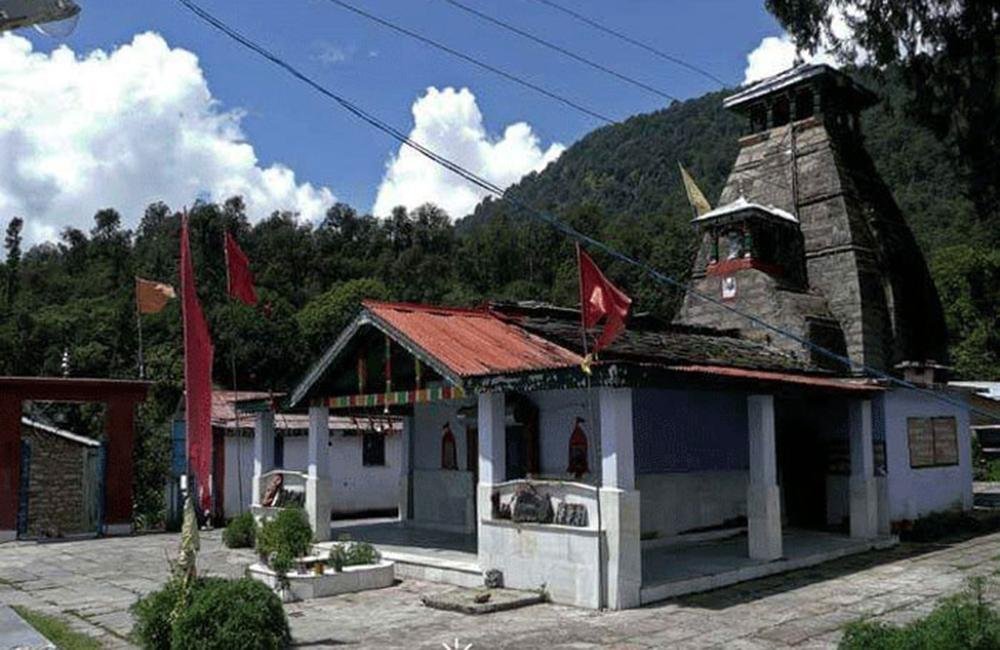
Anusuya Devi Temple, also written as Ansuya Mata Temple or Mata Anusuya Mandir, is one of the most peaceful and spiritually significant pilgrimage destinations in the Chamoli district of Uttarakhand. Situated in the forested mountains beyond Mandal village near Gopeshwar, the temple is dedicated to Mata Anusuya, the revered wife of Sage Atri and a celebrated symbol of devotion, spiritual strength, compassion and selfless service in Hindu tradition.
Surrounded by dense Himalayan forests, mountain streams, waterfalls and quiet walking trails, Anusuya Devi Temple offers a pilgrimage experience that combines faith, mythology, nature and trekking. Unlike roadside shrines that can be reached directly by vehicle, devotees must travel to Mandal and then continue on foot through the forest to reach the temple. The walk gradually separates visitors from roads, markets and urban noise, allowing the spiritual journey to unfold slowly through the natural surroundings of Chamoli.
The traditional route begins at Mandal, located approximately 13 kilometres from Gopeshwar. From Mandal, pilgrims undertake a forest trek of roughly 6 kilometres to reach Anusuya Devi Temple. The exact walking experience can vary according to the route, weather, trail conditions and the visitor’s starting point.
The trail passes through oak, rhododendron and mixed Himalayan forest, with sections following mountain slopes, streams and village pathways. During the walk, visitors can hear birds, flowing water and wind moving through the trees. The peaceful natural environment makes the journey especially suitable for devotees, trekkers, nature lovers, photographers and spiritual travellers looking for a less-commercial pilgrimage destination in Uttarakhand.
The temple is closely associated with Sage Atri, Mata Anusuya and Lord Dattatreya. Atri Muni Ashram and cave are located further within the forested landscape beyond the principal temple. Travellers with sufficient time and physical fitness may continue towards the ashram with reliable local guidance.
Anusuya Devi Temple can be included in a wider Chamoli spiritual circuit covering Gopeshwar, Gopinath Temple, Mandal, Atri Muni Ashram, Chopta, Tungnath, Rudranath, Kalpeshwar, Joshimath and Badrinath. Its position near Mandal also makes it a meaningful destination for travellers interested in the Panch Kedar routes and the lesser-known temples of the Garhwal Himalayas.
## Spiritual Importance of Mata Anusuya
Mata Anusuya is remembered in Hindu tradition as the devoted wife of Sage Atri, one of the ancient sages traditionally counted among the Saptarishis. Her name is commonly interpreted as representing freedom from jealousy, envy or ill will.
She is respected as an embodiment of devotion, purity, compassion, patience and spiritual power. Her life stories emphasise the strength that arises from discipline, integrity and selfless commitment.
At Anusuya Devi Temple, devotees approach the goddess as a compassionate mother who listens to sincere prayers and provides courage during difficult phases of life. Pilgrims may pray for family welfare, harmony, children, health, spiritual strength, peace and fulfilment of personal wishes.
Mata Anusuya is especially revered by married couples and families. According to regional religious tradition, couples seeking the blessing of children visit the temple, offer prayers and participate in established rituals.
This belief has given the shrine the popular identity of a place associated with blessings for parenthood. Such traditions should be understood as matters of religious faith and spiritual comfort rather than guaranteed medical outcomes.
Couples experiencing fertility-related concerns should continue to seek appropriate medical advice while visiting the temple for prayer, hope and emotional support.
The importance of Mata Anusuya extends beyond one particular blessing. Her story represents dignity, courage, hospitality, devotion and the ability to overcome difficult circumstances through wisdom rather than anger.
For spiritual travellers, the pilgrimage provides an opportunity to reflect on these qualities while walking through a landscape traditionally associated with her life and penance.
## The Story of Mata Anusuya and the Trimurti
The best-known religious story associated with Mata Anusuya concerns the Hindu Trimurti—Lord Brahma, Lord Vishnu and Lord Shiva.
According to sacred tradition, the spiritual power and devotion of Mata Anusuya became widely known. The divine consorts of the Trimurti—Goddess Saraswati, Goddess Lakshmi and Goddess Parvati—heard about her extraordinary devotion and wished to test its strength.
Brahma, Vishnu and Shiva are believed to have arrived at the ashram of Sage Atri disguised as wandering ascetics. Mata Anusuya welcomed them according to the sacred tradition of hospitality and offered to serve them food.
The visitors then placed a difficult condition before her. Mata Anusuya recognised the divine nature of the test and used her spiritual power to transform the three visitors into infants.
She then cared for and fed the infants with the compassion of a mother, preserving both her dignity and the sacred duty of hospitality.
When Saraswati, Lakshmi and Parvati realised what had happened, they approached Mata Anusuya and requested that their husbands be restored to their original divine forms.
Mata Anusuya accepted their request, and the Trimurti returned to their original forms. Pleased by her spiritual strength, compassion and purity, they blessed her.
The combined divine energy of Brahma, Vishnu and Shiva is traditionally associated with the birth of Lord Dattatreya, who is revered as the son of Sage Atri and Mata Anusuya.
This story belongs to Hindu religious tradition and should be understood through its spiritual meaning rather than treated as conventional documented history.
The narrative presents Mata Anusuya not as a passive figure but as a spiritually accomplished woman who resolves an impossible situation with wisdom, dignity and maternal compassion.
Her power does not arise through violence. It is shown through self-control, clarity, devotion and the ability to transform a challenge into an act of care.
For devotees, the story demonstrates that sincere spiritual discipline can create extraordinary inner strength.
## Connection with Lord Dattatreya
Lord Dattatreya occupies an important place in the religious identity of Anusuya Devi Temple.
He is traditionally regarded as the son of Sage Atri and Mata Anusuya and as a combined manifestation of Brahma, Vishnu and Shiva.
Dattatreya is commonly represented with three faces, symbolising the three principal divine functions of creation, preservation and transformation.
He is revered as a teacher, ascetic, yogi and spiritual guide. Different traditions across India associate Lord Dattatreya with knowledge, detachment, meditation and the recognition of wisdom throughout nature.
The connection with Lord Dattatreya makes Anusuya Devi Temple important not only for devotees of the goddess but also for spiritual practitioners interested in yoga, renunciation, Guru traditions and the combined worship of the Trimurti.
Images or sacred representations associated with Lord Dattatreya may be present within the temple area according to local tradition.
Visitors should ask the priests about the appropriate order of worship and the significance of the different sacred forms in the temple complex.
## Dattatreya Jayanti and Anusuya Fair
Dattatreya Jayanti is the most important annual religious occasion associated with Anusuya Devi Temple.
The festival generally falls during the Hindu month of Margashirsha, commonly corresponding with November or December. The exact date changes every year according to the lunar calendar.
A large pilgrimage gathering, often known as the Anusuya Mela, is organised around Dattatreya Purnima or Dattatreya Jayanti.
Devotees travel from villages across Chamoli and other parts of Uttarakhand to participate in prayers, devotional singing, traditional rituals and community worship.
The festival takes place during a cold period in the mountains. Visitors should be prepared for low nighttime temperatures, particularly around Mandal and the temple.
Pilgrims may remain awake during the night while participating in bhajans, prayers and religious observances. Local residents, temple organisers and devotees may arrange community food and basic support according to the circumstances of the particular year.
Couples praying for children traditionally form an important part of the annual gathering. They may participate in overnight worship or other customs prescribed by the priests.
Visitors should follow established temple traditions and avoid attempting rituals based only on incomplete online information. Guidance should be taken directly from authorised priests or temple management.
Accommodation near Mandal and Gopeshwar can experience increased demand during the fair. Homestays, guesthouses and transport should be reserved early.
The trail may also become busier, and pilgrims should remain patient while crossing narrow or uneven sections.
Winter clothing, reliable footwear, rain protection and personal medication should be carried even when the weather forecast appears favourable.
Festival visitors should remember that the gathering is primarily a religious occasion. Photography and recording should not interfere with prayers, rituals or the privacy of devotees.
## The Forest Trek from Mandal
The trek from Mandal to Anusuya Devi Temple is one of the defining features of the pilgrimage.
After reaching Mandal by road, visitors continue through a mountain trail that extends for approximately 6 kilometres.
The route passes through dense Himalayan forest, creating a gradual transition from the inhabited village to the isolated temple surroundings.
The forest may include oak, rhododendron and other native mountain vegetation. The exact appearance changes throughout the year.
In spring, the forest may display fresh leaves and flowering rhododendrons. During summer, the trail becomes greener, while the monsoon creates a dense and misty landscape.
Autumn may offer clearer weather and comfortable walking conditions. Winter can bring cold temperatures, frost and occasional snow in the wider region.
The trail may include uphill and downhill sections, stone pathways, stream crossings, bridges and wet surfaces. Conditions can change after rainfall or maintenance work.
Travellers should not assume that the trek is equivalent to a paved urban walk. Even visitors with regular fitness should begin slowly and conserve energy.
Comfortable trekking or walking shoes with reliable grip are strongly recommended.
Slippers, smooth-soled shoes and heavy formal footwear may be unsuitable.
Visitors should carry drinking water, light food, personal medication, sun protection, a rain layer and basic first-aid supplies.
Luggage should be kept light. A small backpack is generally more practical than hand-carried bags.
During the monsoon, leeches may occur in wet forest areas. Travellers can seek current advice from local residents regarding suitable precautions.
The trail should preferably be completed during daylight.
Visitors unfamiliar with the route should hire or travel with a knowledgeable local guide, particularly when continuing beyond the temple towards Atri Muni Ashram.
Mobile connectivity may be unreliable within forested sections. Travellers should inform their accommodation provider or family about their expected route and return time.
Solo travellers should avoid beginning the trek late or entering unfamiliar side trails.
Families should ensure that children remain close to adults and do not run near steep slopes, streams or slippery sections.
Senior citizens and visitors with heart, breathing, knee or mobility concerns should assess the trek carefully and obtain appropriate medical advice when required.
The pilgrimage should not be approached as a competition. Visitors should rest when needed and turn back if weather, health or trail conditions become unsafe.
## Atri Muni Ashram and Cave
Atri Muni Ashram is located beyond Anusuya Devi Temple within the surrounding forested mountain landscape.
The route is commonly described as extending approximately 2 kilometres further from the temple, although the practical distance and difficulty should be confirmed locally.
The ashram is associated with Sage Atri, the husband of Mata Anusuya.
According to religious tradition, Sage Atri performed meditation and spiritual practices in this area.
The ashram is situated near a cave and waterfall, creating a dramatic natural setting of rock, water and forest.
The approach can be more demanding than the trek to the principal temple. It may involve wet rocks, narrow paths and areas affected by flowing water.
Visitors should not attempt the route without reliable local guidance, particularly during rain or when trail conditions are uncertain.
The cave is an active sacred place rather than an adventure attraction. Travellers should maintain silence, follow the guide and respect any restrictions established by priests or local residents.
The waterfall near the ashram is one of the most visually striking natural features of the journey.
Water descends across rock formations and creates a cool, misty environment around parts of the route.
Some regional traditions describe a path allowing devotees to move around or behind the falling water as part of a circumambulation. Access and safety can vary significantly according to water flow.
Visitors should never attempt to walk behind or around a waterfall without explicit local guidance.
Water volume can increase suddenly after rainfall, making rocks slippery and previously accessible sections dangerous.
Photography should never take priority over personal safety.
The cave, waterfall and surrounding forest should be protected from plastic, incense packaging, food waste and synthetic religious materials.
## A Temple Surrounded by Nature
The natural environment is inseparable from the spiritual experience of Anusuya Devi Temple.
The temple stands within a forested Himalayan valley rather than a crowded town or commercial pilgrimage centre.
Mountain streams, trees, birds, rocks and changing weather create the atmosphere through which visitors approach the goddess.
For many pilgrims, the silence of the forest encourages prayer and reflection before reaching the temple.
The sound of flowing water may accompany sections of the route, while bells and devotional voices gradually become audible closer to the shrine.
The temple architecture reflects the character of a traditional Garhwali mountain shrine.
A stone shikhara rises above the principal sacred structure, while later-built halls and covered areas provide space for worshippers.
Bright flags, temple bells and painted elements contrast with the dark stone and green forest.
The complex is comparatively intimate, allowing devotees to experience darshan without the scale of a major urban temple.
During ordinary weekdays, the area may remain especially peaceful. During Dattatreya Jayanti and other religious occasions, the same courtyard can become filled with pilgrims and devotional activity.
## Prayer for Parenthood and Family Welfare
Anusuya Devi Temple is widely associated with prayers offered by couples seeking the blessing of children.
This tradition arises from Mata Anusuya’s identity as a compassionate mother and the sacred story of Lord Dattatreya.
Couples may travel to the temple, undertake the forest journey and participate in prayers according to the instructions of the priests.
Some local customs may involve fasting, night worship, lamps or vows. These practices should only be undertaken with reliable religious guidance and appropriate attention to health and safety.
Visitors should avoid making medical claims about the temple.
The shrine offers spiritual hope, prayer and emotional support, but it should never be presented as a scientifically established fertility treatment.
Couples experiencing difficulty conceiving should continue consulting qualified healthcare professionals.
Faith and medical care do not need to be treated as opposites. A family may seek medical advice while also undertaking a pilgrimage for spiritual strength and emotional reassurance.
The temple is equally meaningful for parents praying for the welfare of existing children, families seeking harmony and individuals asking for guidance during difficult circumstances.
## Best Time to Visit Anusuya Devi Temple
The best season depends on the visitor’s fitness, pilgrimage purpose and preferred weather.
### Spring
Spring is one of the most pleasant periods for the trek.
The forest begins to display fresh vegetation, and rhododendron flowers may appear along parts of the route.
Daytime temperatures are generally comfortable, although mornings and evenings can remain cold.
The season is suitable for pilgrims, families, photographers and nature lovers.
### Summer
Summer offers comparatively mild mountain weather and longer daylight hours.
The forest provides shade during much of the walk, although exposed sections may still feel warm.
This period can be suitable for families and travellers combining the temple with Gopeshwar, Chopta or nearby destinations.
Accommodation in Gopeshwar, Mandal and the wider Chopta region may become busy during school holidays and pilgrimage season.
Advance booking is advisable.
### Monsoon
The monsoon transforms the landscape into a lush green environment with active streams, waterfalls and mist.
However, it is also the season requiring the greatest caution.
Heavy rainfall can create landslides, falling stones, muddy trails, slippery rocks and increased water flow.
Travellers should check official road and weather advisories before leaving Gopeshwar.
The forest trail should not be attempted during severe rain, thunderstorms or unsafe local conditions.
Visitors should carry proper rainwear rather than relying only on umbrellas.
Waterproof footwear with good grip is important.
### Autumn
Autumn is among the most suitable periods for visiting Anusuya Devi Temple.
The post-monsoon forest remains green, rainfall generally reduces and the sky may become clearer.
Walking conditions can be comfortable, although temperatures begin to fall during the evening.
This season is suitable for combining the pilgrimage with Chopta, Tungnath, Gopeshwar and other Chamoli destinations.
### Winter
Winter has special religious importance because Dattatreya Jayanti and the annual fair often occur during the colder months.
The forest and temple surroundings can become extremely cold, particularly at night.
Frost, snow or icy surfaces may affect the trail depending on prevailing weather.
Visitors should carry thermal layers, insulated jackets, gloves, woollen caps and suitable trekking shoes.
Festival pilgrims planning overnight worship should prepare carefully for cold exposure.
Road and trail accessibility must be confirmed locally before departure.
Snowfall should never be assumed or guaranteed for a particular date.
## Morning and Evening Experience
An early morning start from Mandal is generally advisable.
Beginning early provides sufficient daylight for the trek, temple darshan, rest and return journey.
The forest is often quiet during the morning, and the cooler temperature can make walking more comfortable.
Visitors who stay near the temple during an organised festival or permitted pilgrimage arrangement may experience morning prayers within the forest surroundings.
Evening at the temple can be deeply peaceful, with bells, lamps and devotional chanting creating a strong spiritual atmosphere.
However, returning through the forest after darkness is not advisable without local guidance, reliable lighting and confirmed arrangements.
Travellers wishing to attend evening worship should determine in advance whether permitted accommodation or shelter is available near the temple.
Ordinary visitors should plan to return to Mandal while there is still sufficient daylight.
Temple timings and seasonal arrangements may change. Current information should be obtained from local priests, homestay hosts or tourism authorities before beginning the walk.
## Reaching Mandal and Anusuya Devi Temple
Mandal is the principal road-access point for the Anusuya Devi Temple pilgrimage.
It is located approximately 13 kilometres from Gopeshwar on a route also used by travellers heading towards Chopta and other mountain destinations.
From Mandal, visitors continue on foot towards the temple.
Gopeshwar is the most practical major base for the journey. It is the administrative centre of Chamoli district and offers hotels, guesthouses, shops, restaurants, medical facilities and local transport.
Travellers arriving from Rishikesh or Haridwar generally follow the road through Devprayag, Srinagar Garhwal, Rudraprayag, Karnaprayag, Nandprayag and Chamoli before reaching Gopeshwar.
The journey from the plains is long and should not be combined with the full temple trek on the same day unless the traveller has planned sufficient rest and daylight.
An overnight stay in Gopeshwar or Mandal is recommended before beginning the pilgrimage.
Private taxis offer the greatest flexibility for reaching Mandal, particularly for families and groups.
Shared vehicles may operate according to local demand, but their schedule should be confirmed in advance.
Travellers should also arrange the return journey from Mandal before beginning the trek.
Mountain roads can be affected by rain, landslides, maintenance and seasonal traffic.
Actual driving time may be considerably longer than map estimates.
## Gopeshwar as a Pilgrimage Base
Gopeshwar is the most developed nearby town and a useful base for visiting Anusuya Devi Temple.
The town is known for Gopinath Temple, an ancient Shiva shrine that attracts devotees throughout the year.
Visitors can arrive in Gopeshwar, rest overnight and begin the journey to Mandal early the following morning.
The local market allows travellers to purchase basic trekking supplies, medicines, food, rain protection and religious offerings.
Gopeshwar also offers a larger selection of hotels and transport services than Mandal.
Families and senior travellers may prefer staying in Gopeshwar for the availability of medical and essential facilities.
The town can also serve as a base for exploring Chopta, Mandal, Sagar village, Rudranath routes and other destinations in Chamoli.
## Nearby Spiritual Destinations
### Gopinath Temple, Gopeshwar
Gopinath Temple is an important ancient Shiva shrine located in Gopeshwar.
The stone temple, sacred courtyard and regional religious traditions make it a natural addition to the Anusuya Devi pilgrimage.
Travellers can attend evening darshan at Gopinath Temple before beginning the Mandal journey the following morning.
### Atri Muni Ashram
Atri Muni Ashram lies beyond Anusuya Devi Temple and is associated with the meditation of Sage Atri.
The journey should be undertaken only after checking trail and weather conditions.
A local guide is recommended.
### Chopta
Chopta is a scenic mountain destination known for forests, meadows and access to the Tungnath and Chandrashila trek.
Anusuya Devi Temple can be included in a longer itinerary covering Mandal and Chopta.
Both journeys involve physical activity and should usually be planned on separate days.
### Tungnath Temple
Tungnath is one of the Panch Kedar temples and is dedicated to Lord Shiva.
The trek begins from Chopta and is accessible according to seasonal conditions.
Combining Anusuya Devi Temple with Tungnath creates a spiritually rich itinerary, but sufficient rest should be included between the two treks.
### Rudranath Temple
Rudranath is one of the Panch Kedar shrines and is reached through demanding trekking routes.
Uttarakhand Tourism identifies Mandal and Anusuya Devi Temple as part of one possible approach towards the broader Rudranath pilgrimage landscape.
The complete Rudranath trek requires separate preparation, multiple days, suitable accommodation and reliable local guidance.
It should not be treated as a simple extension of an ordinary Anusuya Devi day visit.
### Badrinath Temple
Badrinath is one of India’s principal Char Dham destinations and is dedicated to Lord Vishnu.
Travellers with sufficient time can combine the Anusuya Devi pilgrimage with Badrinath, Joshimath and other destinations across Chamoli.
The routes should be planned carefully because road travel in the mountains requires substantial time.
### Kalpeshwar Temple
Kalpeshwar is one of the Panch Kedar temples and is located in the Urgam Valley.
It provides another opportunity to experience a quieter Shiva pilgrimage in Chamoli.
The road and walking route to Kalpeshwar should be planned independently.
### Nandprayag
Nandprayag is one of the sacred Panch Prayags, where the Alaknanda and Nandakini rivers meet.
Travellers approaching Gopeshwar from Karnaprayag generally pass near Nandprayag.
A short stop can be included when road and daylight conditions permit.
## Suggested One-Day Pilgrimage
A one-day visit is possible for travellers already staying in Mandal or Gopeshwar.
Visitors should leave early, reach Mandal and begin the forest trek during the morning.
After reaching the temple, sufficient time should be kept for darshan, rest and food.
The return walk should begin early enough to reach Mandal before darkness.
This itinerary is physically demanding and should not include the longer journey to Atri Muni Ashram unless the traveller is fit, guided and has enough daylight.
## Suggested Two-Day Itinerary
A two-day itinerary provides a more comfortable experience.
On the first day, travellers can arrive in Gopeshwar, check into a hotel or homestay and visit Gopinath Temple.
The second day can begin with an early drive to Mandal, followed by the trek to Anusuya Devi Temple.
After darshan, visitors can return to Mandal and continue to Gopeshwar for an overnight stay.
This plan is suitable for regular travellers, families with older children and small pilgrimage groups.
## Suggested Three-Day Spiritual Journey
The first day can include arrival in Gopeshwar, local sightseeing and Gopinath Temple.
The second day can be dedicated entirely to the Anusuya Devi Temple trek.
The third day can include Mandal village, a relaxed nature experience or onward travel towards Chopta.
Travellers planning Atri Muni Ashram may require additional time depending on fitness, weather and local advice.
A demanding second trek should not be scheduled immediately without adequate rest.
## Extended Chamoli Pilgrimage Circuit
A longer journey can begin with Nandprayag and Gopeshwar.
The itinerary can continue to Mandal and Anusuya Devi Temple.
After returning, travellers may proceed towards Chopta and Tungnath.
Those interested in the Panch Kedar tradition can plan Rudranath or Kalpeshwar separately.
Additional days can include Joshimath, Narsingh Temple, Badrinath and nearby sacred destinations.
Such a circuit allows visitors to experience Devi worship, Shiva temples, sacred river confluences, forest treks and traditional Garhwali villages.
## Where to Stay Near Anusuya Devi Temple
Accommodation is available primarily in Mandal, Gopeshwar, nearby villages and the wider Chopta region.
The most suitable base depends on the traveller’s fitness, comfort expectations, onward route and preferred distance from the trek.
### Homestays in Mandal
Mandal is the most convenient location for beginning the temple trek.
Local homestays may offer simple rooms, home-cooked meals, parking and information regarding the trail.
Staying in Mandal allows pilgrims to begin walking early without first completing a road journey from Gopeshwar.
Facilities may be basic compared with larger hotels.
Travellers should confirm attached bathrooms, hot water, meal timings, mobile connectivity, power supply and parking before booking.
Local hosts can often help arrange guides and provide current trail information.
### Hotels and Guesthouses in Gopeshwar
Gopeshwar offers the widest accommodation selection near the pilgrimage.
Options may include budget hotels, family guesthouses, lodges and homestays.
The town is suitable for travellers who prefer access to markets, restaurants, medical facilities and transport.
Visitors must still travel to Mandal before beginning the trek.
Families and senior citizens may find Gopeshwar more comfortable for overnight rest, even when the trek begins from Mandal.
### Stays Around Chopta
Travellers combining Anusuya Devi Temple with Chopta or Tungnath may select accommodation along the wider Mandal–Chopta region.
These options can include camps, cottages, small resorts and mountain guesthouses according to the season.
Actual driving time to Mandal should be confirmed before booking.
A property using the word “Chopta” in its name may be located far from the principal trekking point.
### Pilgrimage Accommodation Near the Temple
Temporary or basic pilgrimage arrangements may be available near the temple during fairs or organised events.
Visitors should never assume that permanent lodging is available beside the shrine.
Accommodation, bedding, meals and permission should be confirmed before planning an overnight stay.
Camping should not be undertaken without local approval because the surrounding forest is environmentally sensitive and may contain wildlife.
## Choosing Suitable Accommodation
The right accommodation can significantly improve the Anusuya Devi pilgrimage.
Travellers should choose a stay based on the actual route to Mandal rather than only the district or destination name.
Visitors planning an early trek should prefer Mandal or a nearby village.
Families requiring more developed facilities may prefer Gopeshwar.
Senior citizens should select properties with direct road access, limited stairs and comfortable bathrooms.
Winter travellers should confirm room heating, warm bedding and hot-water availability.
Monsoon visitors should check the condition of the final approach road.
Guests requiring reliable internet should verify network and Wi-Fi quality directly with the property.
Pilgrimage groups should confirm room inventory, vegetarian meals, guide arrangements and parking.
Properties should be booked early during Dattatreya Jayanti, long weekends and peak summer travel periods.
## Book Stays Near Anusuya Devi Temple with MudrasStays
MudrasStays helps pilgrims discover homestays, guesthouses, hotels and mountain accommodation near Anusuya Devi Temple, Mandal and Gopeshwar.
The platform is designed specifically for travellers looking for places to stay near temples, sacred destinations and pilgrimage routes across India.
Visitors can explore properties according to their practical distance from Mandal, room requirements, group size, budget and onward travel itinerary.
Booking a stay in Mandal allows pilgrims to begin the forest trek early and reduces tiring road travel on the day of darshan.
Families can search for homestays offering meals, parking and suitable rooms.
Couples can explore peaceful village stays and mountain-view accommodation.
Solo pilgrims and trekkers can select simple budget rooms near the trail.
Senior citizens can choose comfortable accommodation in Gopeshwar while carefully assessing the physical demands of the trek.
Pilgrimage groups can identify properties providing multiple rooms, vegetarian food and support with local guides or transport.
Travellers visiting Chopta and Tungnath can compare stays according to the complete sequence of their journey.
MudrasStays can also help create a connected Chamoli pilgrimage covering Anusuya Devi Temple, Gopinath Temple, Tungnath, Rudranath, Kalpeshwar, Joshimath and Badrinath.
By choosing accommodation through a temple-focused platform, travellers can prioritise actual access to the pilgrimage route rather than selecting a general tourism property located far from Mandal.
## Responsible Pilgrimage and Forest Travel
Anusuya Devi Temple lies within a sensitive Himalayan forest environment.
Every visitor should carry back all plastic bottles, food wrappers, disposable plates and puja packaging.
Waste should not be hidden under rocks or left beside streams.
Religious offerings should be placed only in designated areas.
Synthetic cloth, plastic flags and non-biodegradable materials should not be tied randomly to trees.
Visitors should remain on the recognised trail. Shortcuts can damage vegetation, increase erosion and create confusion for future walkers.
Loud music should be avoided because it disturbs wildlife, pilgrims and the peaceful character of the forest.
Smoking, open flames and careless disposal of burning materials can create serious forest-fire risks.
Wildlife should not be fed, followed or photographed from an unsafe distance.
Visitors should not enter caves, river channels or waterfall sections without guidance.
At the temple, travellers should dress respectfully and remove footwear wherever directed.
Photography of the principal deity, rituals, priests and individual devotees should only be undertaken with permission.
Couples participating in private religious rituals should not be photographed without consent.
Children must remain under supervision throughout the trek.
Travellers should support local homestays, guides, drivers, shops and food providers so that pilgrimage tourism benefits the communities maintaining the destination.
## A Pilgrimage of Devotion, Nature and Inner Strength
Anusuya Devi Temple offers much more than a conventional temple visit.
The pilgrimage begins in Mandal, continues through a quiet Himalayan forest and ends at a sacred shrine associated with one of the most respected women in Hindu tradition.
The physical journey requires patience, preparation and effort.
The spiritual story emphasises compassion, wisdom, hospitality and inner discipline.
The connection with Sage Atri represents meditation and sacred knowledge.
The connection with Lord Dattatreya represents the unity of creation, preservation and transformation.
The annual fair connects the temple with living community traditions across Chamoli.
The forest, streams and waterfall demonstrate how closely Himalayan spirituality is connected with nature.
For devotees of Mata Anusuya, the temple is a place to seek blessings, courage and family welfare.
For couples, it is a destination associated with prayers for children and a harmonious family life.
For followers of Lord Dattatreya, it is connected with his sacred birth tradition.
For trekkers, it offers a meaningful forest route ending at a living Himalayan temple.
For nature lovers, the trail provides oak and rhododendron forests, streams, birds and changing mountain scenery.
For photographers, the stone temple, flags, bells, forest and waterfall offer memorable visual experiences when approached respectfully.
For families, the pilgrimage provides an opportunity to introduce younger travellers to mythology, mountain ecology and the value of perseverance.
For solo travellers, the walk can become a period of silence and personal reflection.
For spiritual groups, the route encourages mindful walking, prayer and connection with the natural environment.
Anusuya Devi Temple should not be treated as a quick sightseeing stop.
The destination requires time, physical preparation and respect for local conditions.
Travellers who stay in Mandal or Gopeshwar can begin early, walk at a comfortable pace and experience the temple without constantly worrying about the return journey.
A well-planned stay also allows visitors to explore Gopinath Temple, Mandal village, Chopta and other sacred destinations of Chamoli.
Plan your pilgrimage to Anusuya Devi Temple with MudrasStays and experience one of Uttarakhand’s most peaceful forest shrines.
Walk from Mandal through the Himalayan forest, seek the blessings of Mata Anusuya and discover the sacred traditions of Sage Atri and Lord Dattatreya.
Continue towards Atri Muni Ashram only with proper guidance and experience the waterfalls, caves and natural beauty of the Chamoli mountains.
Combine your journey with Gopeshwar, Gopinath Temple, Chopta, Tungnath, Rudranath, Kalpeshwar, Joshimath and Badrinath.
Book homestays near Anusuya Devi Temple, discover village accommodation in Mandal and explore comfortable hotels in Gopeshwar through MudrasStays.
Stay closer to the trekking point, begin your pilgrimage early and reduce unnecessary travel before the forest walk.
MudrasStays connects pilgrims and spiritual travellers with suitable accommodation near temples and sacred destinations across India.
Begin your Anusuya Devi Temple journey with a comfortable stay and experience a meaningful pilgrimage centred on devotion, family blessings, Garhwali culture, forest trekking and the peaceful beauty of the Chamoli Himalayas.