
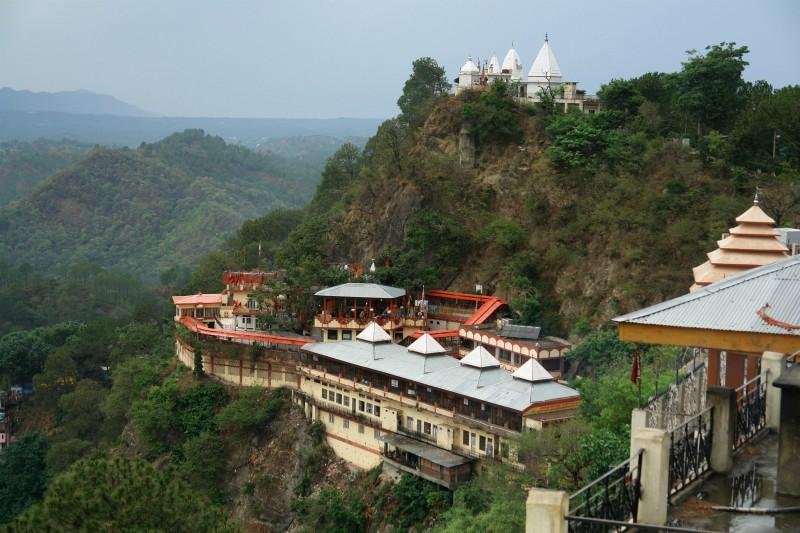
Baba Balak Nath Temple at Deotsidh is one of the most revered pilgrimage destinations in Himachal Pradesh and one of the principal centres of Baba Balak Nath worship in North India. Situated on a forested hill at Chakmoh village in Hamirpur district, close to the boundary with Bilaspur, the shrine is built around a natural cave believed by devotees to be the meditation place and sacred abode of Baba Balak Nath.
The temple is also known as Sidh Baba Balak Nath Temple, Deotsidh Temple, Deoth Sidh Temple, Diyotsidh Temple, Baba Balak Nath Gufa and Shri Sidh Baba Balak Nath Mandir. The variations in spelling refer to the same major shrine in the Hamirpur region.
Baba Balak Nath is worshipped widely across Himachal Pradesh, Punjab, Haryana, Chandigarh, Jammu, Delhi and other parts of North India. Many families maintain a devotional relationship with Baba Ji across generations, visiting Deotsidh after marriages, the birth of children, successful harvests, new employment, recovery from hardship or the fulfilment of a religious vow.
The temple’s spiritual identity is closely connected with the traditions of the Siddhas and Nath yogis. Baba Balak Nath is remembered as an eternally youthful ascetic, a disciplined celibate and a compassionate spiritual protector whose life represents simplicity, devotion, self-control and service.
The word “Balak” means child or young boy, while “Nath” refers to a spiritual master or lord. His name therefore conveys the idea of a divine child-sage whose spiritual awareness remained complete despite his youthful appearance.
Deotsidh is not merely a temple building. It is a complete pilgrimage landscape consisting of the natural cave, multi-level temple structures, prayer platforms, courtyards, pathways, accommodation facilities, food arrangements, local markets and hill viewpoints.
The white temple towers rise above a steep green slope, while the main complex extends across terraces below the cave. The visual setting creates the impression of a sacred settlement built into the hillside.
The pilgrimage is suitable for devotees, families, senior citizens, children, solo travellers, religious groups and cultural visitors. It does not require a long mountain trek, although the steep terrain, stairs, queues and multi-level construction can require moderate walking.
Travellers searching for hotels near Baba Balak Nath Temple, homestays near Deotsidh, pilgrimage accommodation near Shah Talai or places to stay near Baba Balak Nath Gufa can use MudrasStays to plan a convenient and spiritually meaningful journey.
## Spiritual Importance of Baba Balak Nath
Baba Balak Nath is revered as a great Siddha, yogi and child-saint.
A Siddha is understood as a spiritually accomplished person who has attained exceptional discipline, insight and control over the mind and senses.
Within popular regional belief, Baba Ji is sometimes connected with Lord Shiva, Lord Kartikeya, the Nath tradition and the continuing presence of divine spiritual power during the present age.
Different communities explain his divine identity in different ways.
Some devotees regard Baba Balak Nath as an incarnation or manifestation associated with Lord Kartikeya, the youthful son of Shiva and Parvati.
Others understand him as a form blessed directly by Lord Shiva.
Many worshippers approach him primarily as a perfected Siddha who protects devotees and guides them towards devotion, discipline and moral conduct.
These interpretations belong to religious tradition and should not be forced into one rigid historical account.
The central spiritual qualities remain consistent: youthfulness, celibacy, simplicity, courage, meditation and service.
Devotees pray to Baba Balak Nath for family welfare, peace of mind, courage, health, children, education, employment, prosperity and protection during travel.
Parents often bring children to the shrine and seek blessings for their wellbeing and character.
Young people may pray for concentration, responsible decision-making and success in education or work.
Families may visit to express gratitude after an important event.
Such prayers are matters of faith and personal experience. The temple should never be advertised as guaranteeing fertility, healing, marriage, wealth, employment or any other specific result.
The pilgrimage provides spiritual reassurance and emotional strength, while medical, legal, financial and personal concerns should continue to receive appropriate practical attention.
## Meaning of Deotsidh
The name Deotsidh combines the ideas of divinity and spiritual accomplishment.
“Deo” or “Dev” refers to the divine, while “Sidh” or “Siddha” refers to a realised spiritual master.
Deotsidh may therefore be understood as the place of the divine Siddha.
The name reflects the belief that Baba Balak Nath attained or maintained a powerful state of meditation within the hill cave.
The location is also sometimes called Deoth Sidh or Diyotsidh because of differences in local pronunciation and transliteration.
Travellers should use the complete phrase “Baba Balak Nath Temple, Deotsidh, Hamirpur” while searching for accommodation or arranging taxis, because smaller Baba Balak Nath temples exist in many towns across North India.
## The Sacred Natural Cave
The natural cave is the spiritual centre of the Deotsidh pilgrimage.
An image of Baba Balak Nath is placed within the cave and worshipped as the living sacred presence of the child-sage.
The cave represents withdrawal from worldly distraction and movement towards inner awareness.
Across Indian spiritual traditions, caves are associated with yogis, saints and seekers who practised meditation away from settlements and material comforts.
A cave provides silence, isolation and protection from external activity. It also symbolises the inner chamber of the human mind, where spiritual awareness is cultivated through discipline.
At Deotsidh, the natural rock and constructed temple complex exist together.
The cave preserves the shrine’s ascetic identity, while the surrounding buildings allow large numbers of devotees to receive darshan safely.
The inner area can become extremely crowded during Sundays, Navratri, Chaitra Mela and public holidays.
Visitors should follow the designated queue and avoid attempting to remain in front of the cave after completing darshan.
Photography of the cave, sacred image, priests and offerings should only be undertaken when clearly permitted.
Flash, tripods and large recording equipment can disturb worship and may be restricted.
## Baba Balak Nath as an Eternal Child-Sage
The youthful appearance of Baba Balak Nath is central to his identity.
He is traditionally remembered as a spiritual being who remained in a child-like form while possessing the wisdom and discipline of an accomplished yogi.
This should not be interpreted as immaturity.
The child form represents purity, directness and freedom from excessive worldly ambition.
Children can trust, learn and approach the world without the layers of pride and calculation often developed in adulthood.
At the same time, Baba Ji’s ascetic discipline represents extraordinary control over desire and distraction.
The combination of child-like purity and yogic discipline makes his image especially meaningful for families.
Parents may see him as a protector of children, while spiritual seekers understand him as an example of simplicity and self-mastery.
## Nath and Siddha Traditions
The Nath tradition is an important stream of Indian yoga and spiritual practice associated with accomplished masters such as Matsyendranath and Gorakhnath.
Nath teachings generally emphasise disciplined living, meditation, yogic practice, control of the senses and direct spiritual experience.
Baba Balak Nath is honoured within the wider cultural world of Nath and Siddha traditions, although regional narratives about his exact guru lineage vary.
The title “Nath” reflects spiritual mastery rather than ordinary social authority.
The title “Siddha” indicates accomplishment gained through devotion and discipline.
Visitors should avoid treating Siddha stories merely as displays of supernatural power.
Their deeper purpose is to teach humility, restraint, service and freedom from greed.
## Regional Tradition of Baba Ji’s Journey
The complete life story of Baba Balak Nath survives mainly through hagiography, devotional songs and oral tradition rather than a single dated historical biography.
Different versions describe Baba Ji travelling across regions of western and northern India before reaching the Himalayan foothills.
Some traditions connect his early life with Gujarat or the Kathiawar region.
Others focus primarily on his spiritual relationship with Shiva, Kartikeya or a Nath guru.
The narratives usually present Baba Ji as a child who rejected ordinary worldly attachments and chose a life of spiritual discipline.
He travelled through forests and settlements, practised meditation and eventually reached the area now associated with Shah Talai and Deotsidh.
These stories should be understood as sacred biography rather than modern documentary history.
Their spiritual message is that commitment to truth and self-discipline can remain stronger than comfort, status or social expectation.
## Shah Talai and Ratno Mai
Shah Talai in Bilaspur district is the most important associated pilgrimage destination near Deotsidh.
Regional tradition connects it with an elderly woman commonly remembered as Ratno Mai or Mai Ratno.
According to the widely narrated account, Baba Balak Nath reached the area while still appearing as a young ascetic.
Ratno Mai requested his assistance in grazing cattle, and Baba Ji agreed to serve for a period traditionally described as twelve years.
In return, he was to receive simple food, usually described as bread and buttermilk or milk.
Baba Ji’s service represented humility. Although spiritually accomplished, he accepted ordinary rural work without seeking status or recognition.
A disagreement eventually arose regarding the exchange of food and labour.
Different versions say that Baba Ji revealed that the food he had supposedly consumed had been preserved miraculously, or that milk and bread emerged from a sacred location to demonstrate the truth of his service.
The details vary considerably between narrators.
The story should therefore be presented as regional religious tradition rather than a literal economic record.
Its moral meaning concerns honesty, gratitude and recognition of service.
The relationship between Shah Talai and Deotsidh is fundamental to the pilgrimage.
Many devotees visit Shah Talai before Deotsidh, following the symbolic journey of Baba Ji from the place of service towards the cave of meditation.
The sites are connected by road and by traditional walking practices, although visitors should confirm current routes and avoid unrecognised shortcuts.
## Meaning of Shah Talai
The name Shah Talai is connected in local interpretation with the sacred episode involving Baba Ji and Ratno Mai.
The area contains temples and locations associated with Baba Ji’s pastoral service and meditation.
For devotees, Shah Talai represents the disciplined and service-oriented stage of Baba Ji’s life.
Deotsidh represents the cave of spiritual accomplishment.
A combined visit therefore creates a complete narrative journey—from service and simplicity to meditation and Siddhi.
Travellers should not confuse Shah Talai with the main Deotsidh cave.
They are separate pilgrimage locations in adjoining districts and require their own transport and time.
## The Sacred Flame
Himachal tourism tradition refers to a sacred flame or “light of truth” maintained at Deotsidh and believed by devotees to have originated with Baba Balak Nath.
The flame symbolises truth, awareness and the continuity of devotion.
A lamp transforms darkness without using force.
Its light can be shared without reducing the original flame.
This makes it a powerful spiritual symbol for knowledge and ethical conduct.
Accounts describing the flame as having burned continuously for a specific number of centuries belong to temple faith and inherited tradition.
Visitors should respect the flame without attempting to touch it, light unauthorised material or move close for photography.
Oil lamps and fire must remain under the control of temple staff because the shrine receives large crowds and includes enclosed spaces.
## Rota: The Traditional Offering
Rota is the best-known offering associated with Baba Balak Nath.
It is a sweet, thick preparation generally made from wheat flour, jaggery or sugar and ghee.
Recipes and proportions vary between households and temple traditions.
The offering reflects the simple rural food associated with Baba Ji’s life and the hospitality of the Himalayan foothills.
Devotees may bring Rota as thanksgiving after the fulfilment of a vow or prepare it as part of regular worship.
The offering is made at the designated counter or altar according to temple arrangements.
Visitors should not attempt to carry excessive homemade food into crowded areas without checking current rules.
Plastic packaging should be minimised.
Prasad should be handled hygienically and distributed respectfully.
Food should never be left on steps, railings or forest slopes.
The meaning of Rota lies in gratitude and sharing rather than the quantity offered.
## Women’s Darshan Tradition
Baba Balak Nath is traditionally regarded as a lifelong celibate or brahmachari.
Because of this ascetic identity, a long-standing temple custom restricts women from entering the innermost natural cave area.
This custom applies to the cave rather than the entire temple complex.
Women devotees visit Deotsidh in large numbers and receive Baba Ji’s darshan from a specially designated platform or viewing area facing the sacred cave.
They can offer prayers and participate in the pilgrimage according to the arrangements established by the Temple Trust.
The custom should be described accurately and respectfully.
It is misleading to say that women cannot visit Baba Balak Nath Temple.
Women can enter the wider complex, pray and receive darshan, while access to the innermost cave follows a specific inherited practice.
Temple arrangements may be modified for safety, crowd management or administrative reasons, so all visitors should follow current signs and staff instructions.
Visitors should avoid arguments, provocative filming or attempts to bypass barriers.
Questions regarding religious practice should be addressed respectfully through authorised temple representatives.
## Sunday as Baba Ji’s Sacred Day
Sunday is regarded as an especially auspicious day for Baba Balak Nath worship.
As a result, Deotsidh commonly receives much larger crowds on Sundays than on ordinary weekdays.
Devotees may arrive from Punjab, Haryana, Chandigarh, Jammu, Delhi and neighbouring districts by private vehicles and organised buses.
Queue time, parking pressure and restaurant demand can increase substantially.
Families with senior citizens or small children may prefer visiting on a weekday unless Sunday has particular religious importance for them.
Those visiting on Sunday should arrive early, reserve accommodation in advance and remain prepared for traffic diversions.
## Chaitra Mela
The annual Chaitra Mela is the most important extended pilgrimage period at Deotsidh.
It is traditionally observed from 14 March to 13 April.
The month-long celebration attracts devotees from across North India and from overseas communities with roots in Punjab and Himachal Pradesh.
During the fair, the entire Deotsidh area becomes more active.
Additional food stalls, water facilities, temporary services, security arrangements, medical support and crowd-control measures may be introduced.
Religious groups travel with flags, drums and devotional songs.
Many families fulfil annual vows during this period.
The fair creates a powerful collective pilgrimage atmosphere, but it also brings long queues, crowded roads and pressure on accommodation.
Travellers should book hotels near Baba Balak Nath Temple well in advance.
Senior citizens should visit during quieter morning hours whenever possible.
Children should carry identity information and remain with adults.
Groups should establish a meeting point in case members become separated.
The exact programme, traffic plan and public-transport arrangements should be reconfirmed for the relevant year.
## Navratri and Other Busy Periods
Navratri also brings a continuous flow of devotees to Deotsidh.
Although Baba Balak Nath is not worshipped as a Goddess deity, the pilgrimage forms part of the wider sacred culture of North India in which families combine Siddha, Shiva and Shakti destinations.
Public holidays, school vacations and long weekends can also produce major crowds.
Visitors seeking quiet prayer should choose an ordinary weekday outside Chaitra Mela and festival dates.
## Daily Darshan and Aarti
Daily temple timings may vary according to season, crowd level, festival arrangements and maintenance.
During major fairs, darshan may begin earlier and continue through extended hours.
Visitors planning a pre-dawn or late-evening visit should confirm current timing through the Temple Trust or accommodation provider.
Morning darshan generally offers cooler weather and comparatively manageable crowds.
Evening worship creates a devotional atmosphere with lamps, bells and hill views, but visitors should arrange safe return transport before darkness.
Phones should remain silent inside queue and worship areas.
Private ceremonies and worshippers should not be photographed without permission.
## Hilltop Architecture and Setting
The Deotsidh temple complex is built across a steep hill within the Shivalik landscape.
The natural cave occupies the spiritually important rock area, while the larger pilgrimage complex extends across several levels below and around it.
White shikharas and smaller towers rise along the ridge.
Long buildings containing corridors, pilgrim facilities and administrative areas follow the contour of the slope.
Covered passages and terraces help manage movement through the complex.
The temple’s architecture is functional as well as symbolic.
The hill represents spiritual ascent.
The cave represents inward meditation.
The towers represent the visible presence of the divine.
The terraces allow large numbers of devotees to approach a naturally confined sacred space.
Visitors may encounter old structures beside newer construction, improved railings, tiled floors or crowd-management systems.
A living shrine serving millions of pilgrims requires regular repair and infrastructure development.
The religious significance of the cave remains central even when the surrounding complex changes.
## Views from Deotsidh Hill
The hilltop provides broad views across the lower Himalayan and Shivalik landscape.
Forest-covered slopes, villages, cultivated land and distant ridges can be visible during clear weather.
The experience differs greatly from the high alpine scenery of Manali or the Dhauladhar range.
Deotsidh belongs to the lower and middle hill environment, where pine-covered ridges meet warmer valleys.
Visibility depends on haze, cloud, season and time of day.
Visitors should remain within permitted viewpoints.
Steep edges, stairs and crowded railings require caution.
No photograph is worth crossing a barrier or climbing onto a temple wall.
## Accessibility and Physical Effort
Deotsidh is road-connected and does not require a long trek.
However, the temple stands on steep terrain and contains multiple levels, slopes and stairs.
The practical amount of walking depends upon the parking location, current traffic controls and the visitor’s darshan route.
Festival parking may be established farther from the temple.
Infrastructure work may temporarily change vehicle access to the upper bazaar or entrance area.
Senior citizens should ask their hotel or taxi driver about the nearest authorised drop-off point.
Visitors with significant mobility limitations should confirm whether wheelchairs or assistance services are available.
The natural cave and old circulation areas may not be completely barrier-free.
Darshan from the designated platform may be more suitable for visitors unable to use narrow or steep sections.
Comfortable footwear should be worn until the point where shoes must be removed.
During rain, tiles and stone steps can become slippery.
## Visiting with Children
Baba Balak Nath Temple is strongly associated with family pilgrimage, and children are commonly brought for blessings.
Parents should explain the sacred character of the cave and the importance of queue discipline.
Children should not climb railings, run on steep steps or ring bells continuously.
A contact number should be placed in the child’s pocket during major fairs.
Water, simple snacks and necessary medicines should be carried, while food should not be consumed inside restricted temple areas.
Young children may become tired during long queues. Families should avoid the busiest periods when possible.
## Weather and Best Time to Visit
Deotsidh can generally be visited throughout the year.
The experience changes according to season.
### Spring
Spring is the principal pilgrimage season because of Chaitra Mela.
The weather is generally comfortable, vegetation becomes greener and devotional activity reaches its annual peak.
The same period brings the largest crowds.
Travellers should choose between the vibrant fair atmosphere and a quieter weekday according to their priorities.
### Summer
Summer in the lower hills can become warm.
Visitors should not assume that all destinations in Himachal Pradesh have cool hill-station weather.
Morning and evening are preferable for darshan.
Water, sunscreen and light clothing are useful.
A modest shawl or layer may still be needed during early morning.
### Monsoon
The monsoon turns the surrounding hills green but creates slippery steps, road disruptions and occasional landslide or drainage risks.
Heavy rainfall can reduce visibility and affect rural roads.
Visitors should monitor official weather advisories and avoid travelling during severe warnings.
Shoes with reliable grip and a rain jacket are preferable to slippery footwear.
### Autumn
Autumn is a comfortable period for pilgrimage.
Rain generally reduces, the landscape remains green and road travel becomes easier.
Navratri and holiday periods can still create crowding.
### Winter
Winter is cool, especially during morning and evening.
Daytime conditions may remain pleasant under sunlight.
Fog can affect road travel in lower valleys.
Snowfall at Deotsidh should not be expected regularly because the shrine lies in the Shivalik hills rather than a high Himalayan zone.
Visitors should carry warm layers and confirm heating when reserving accommodation.
## Reaching Baba Balak Nath Temple from Hamirpur
Deotsidh lies approximately 45 kilometres from Hamirpur town according to the district administration.
The road journey passes through the Barsar and Bijhari side of the district, depending on the selected route.
Regular buses and local taxis connect the region, although schedules should be checked before travel.
A private vehicle provides greater flexibility for families and groups.
The journey should preferably be undertaken during daylight by visitors unfamiliar with the roads.
Hamirpur is a practical base for travellers combining Deotsidh with Sujanpur Tira, Nadaun, Gasota Mahadev and other district attractions.
However, pilgrims wanting early morning darshan should stay closer to Deotsidh.
## Reaching from Bilaspur
Deotsidh lies near the Hamirpur–Bilaspur border.
Official sources give different distance estimates from Bilaspur depending upon the route and starting point, generally around 60–70 kilometres.
Travellers should treat the distance as approximate and check the current road sequence.
A Bilaspur-based journey can include Gobind Sagar Lake and other regional temples.
Those visiting both Shah Talai and Deotsidh should plan the route geographically rather than returning unnecessarily to Bilaspur town between the two.
## Reaching from Una
Una is an important broad-gauge railway gateway for Hamirpur district.
Road travel is required from the railway station to Deotsidh.
Buses and taxis may be available, but visitors arriving late should arrange transport in advance.
Una can be used as an overnight base, although staying around Deotsidh, Shah Talai, Barsar or Bijhari provides easier access to the temple.
## Reaching by Air
Hamirpur district does not have a commercial airport.
Gaggal Airport near Dharamshala is identified by the district administration as the nearest air gateway, although road distance to Deotsidh remains substantial.
Chandigarh may also be practical for some travellers depending upon flight availability and onward road plans.
Mountain and regional flights can be affected by weather.
Visitors should not schedule a tightly timed temple visit immediately before departure.
## Reaching by Train
There is no direct railway line to Deotsidh.
Una is the principal broad-gauge railway gateway identified officially for the district.
Other railheads may be practical for travellers arriving through Punjab, depending upon the train and onward road route.
Rail schedules and station stops can change.
A geographically close small station is not necessarily the most convenient if only limited trains stop there.
## Parking and Current Access
Vehicle access and parking arrangements can change because of construction, festival management and crowd-control measures.
The Temple Trust’s website has recently indicated restrictions affecting vehicle passes towards the upper bazaar during infrastructure work.
Visitors should therefore avoid depending on an old claim that every vehicle can reach the same upper parking area.
Follow police signs and use authorised parking.
Do not block local homes, shop entrances, bus turning areas or emergency routes.
Drivers of buses and large pilgrimage vehicles should confirm designated parking before arrival.
## Shah Talai
Shah Talai is the most important nearby associated destination.
It represents the period of Baba Ji’s service to Ratno Mai and is commonly included before or after Deotsidh.
The distance is comparatively short, but hill roads and festival traffic affect journey time.
Visitors should allow enough time for separate darshan rather than treating Shah Talai as a roadside photograph.
Local temples, sacred locations and narrative sites should be approached according to current access and priestly guidance.
## Bachhretu and Nearby Hill Heritage
The wider area contains smaller sacred and heritage locations associated with local rulers, forts and temples.
Bachhretu is mentioned in regional tourism material as a nearby hill site containing remains and a temple.
Conditions, road access and the state of ruins should be checked before travel.
Visitors should not climb unstable fort walls or remove stones.
## Gobind Sagar Lake
Gobind Sagar is the major reservoir created by Bhakra Dam on the Sutlej River.
It can be included in a Bilaspur-based itinerary.
Water levels, boating availability and access points vary seasonally.
Visitors should use authorised operators and recognised viewpoints.
Dam infrastructure may have security and photography restrictions.
## Naina Devi Temple
Shri Naina Devi Temple is one of Himachal Pradesh’s principal Shakti pilgrimage destinations.
It lies within Bilaspur district and requires a separate road journey from Deotsidh.
A combined Siddha and Shakti pilgrimage can be planned across two or more days.
Navratri and Shravan fairs bring large crowds, making accommodation and transport planning essential.
## Sujanpur Tira
Sujanpur Tira is known for its Chaugan, historic temples and association with the Katoch rulers.
The Narbadeshwar Temple is especially valued for its wall paintings.
A combined Deotsidh and Sujanpur itinerary provides both pilgrimage and regional heritage.
Historic paintings must not be touched or photographed with flash unless permitted.
## Nadaun
Nadaun is a historic Beas riverside town with temples, a gurdwara and regional associations with the Katoch period.
It can be combined with Sujanpur or Hamirpur during a longer district journey.
River safety is important, particularly during the monsoon.
## Gasota Mahadev Temple
Gasota Mahadev is a well-known Shiva temple near Hamirpur.
Its natural setting and annual fair make it an important district pilgrimage destination.
It requires a separate road journey and should not be added to an already crowded Deotsidh fair-day itinerary.
## Suggested One-Day Itinerary
A one-day pilgrimage is most practical for visitors staying near Deotsidh, Shah Talai, Barsar or Bijhari.
Begin with early morning darshan at Baba Balak Nath Temple.
Follow the designated route to the cave or viewing platform and offer Rota according to temple arrangements.
Spend time in the complex without blocking pilgrim circulation.
After darshan, travel to Shah Talai and explore the sites associated with Ratno Mai and Baba Ji’s service.
Return to accommodation before dark.
## Suggested Two-Day Itinerary
On the first day, arrive near Deotsidh and check into a hotel, homestay or Temple Trust accommodation.
Visit Shah Talai during the afternoon and learn about the regional tradition.
On the second morning, attend peaceful darshan at Deotsidh.
After breakfast, continue towards Hamirpur, Bilaspur, Una or the next pilgrimage destination.
This plan is suitable for families and senior citizens because it reduces same-day road fatigue.
## Suggested Three-Day Pilgrimage Journey
The first day can focus on Shah Talai and arrival near Deotsidh.
The second day can be dedicated to Baba Balak Nath Temple and nearby local sites.
The third day can include Bilaspur and Gobind Sagar, Hamirpur and Gasota, or onward travel towards Naina Devi according to the selected route.
The itinerary should not attempt to include distant Kangra Shakti temples within the same day.
## Accommodation Near Baba Balak Nath Temple
Deotsidh offers Temple Trust accommodation, pilgrim rooms, guesthouses, small hotels and local lodging.
Facilities range from simple dormitory-style arrangements to private rooms.
Availability can become extremely limited during Chaitra Mela, Sundays and religious holidays.
Guests should confirm bathroom type, hot water, bedding, meals, parking, stairs and distance from the actual temple entrance.
### Temple Trust Accommodation
The Temple Trust provides free and economical accommodation according to availability and its current rules.
Online booking facilities may be available for some accommodation categories.
Pilgrims should use only official channels and retain their booking confirmation.
Temple accommodation is intended primarily for pilgrimage convenience and may not offer hotel-style luxury.
### Hotels and Guesthouses in Deotsidh
Private properties near the shrine provide varying room types and facilities.
A property described as “near Baba Balak Nath Temple” may still require climbing or a shuttle journey because of steep terrain and traffic controls.
Visitors should ask for practical walking time rather than only map distance.
### Stays Near Shah Talai
Shah Talai offers pilgrim accommodation, guesthouses and local rooms.
It is useful for travellers following the traditional pilgrimage sequence.
Guests should confirm transport to Deotsidh and whether late-evening services are available.
### Hotels in Barsar and Bijhari
Barsar and Bijhari provide markets, pharmacies, transport and practical accommodation options.
They may suit families seeking more developed services while remaining within reasonable road distance of Deotsidh.
### Hotels in Hamirpur
Hamirpur offers a broader selection of hotels, restaurants, hospitals and transport.
It is useful for visitors combining several district attractions.
The 45-kilometre road journey makes it less convenient for very early darshan than Deotsidh or Barsar.
### Hotels in Bilaspur and Una
Bilaspur and Una are suitable arrival, departure or transit bases.
Both involve a longer road journey to the shrine.
They are best selected when the wider itinerary includes Naina Devi, Gobind Sagar, train connections or destinations in Punjab.
## Choosing the Right Stay
Pilgrims focused primarily on Baba Balak Nath Temple should choose Deotsidh or a verified nearby property.
Families should check room size, meals, hot water, parking and the number of stairs.
Senior citizens should prioritise properties with direct vehicle access, lifts or ground-floor rooms.
Couples may prefer quieter homestays outside the busiest bazaar while retaining reliable temple transport.
Solo pilgrims can choose economical Trust accommodation or simple guesthouses.
Large groups should confirm multiple rooms, driver accommodation, vegetarian meals and bus parking.
Chaitra Mela visitors should reserve rooms well in advance.
Summer travellers should confirm fans or cooling because the lower hills can become warm.
Winter guests should ask about blankets, room heating and hot water.
Monsoon visitors should confirm the safety of the property’s final approach road.
## Book Stays Near Baba Balak Nath Temple with MudrasStays
MudrasStays helps pilgrims, families and spiritual travellers discover hotels, homestays, guesthouses and pilgrimage accommodation near Baba Balak Nath Temple, Deotsidh, Shah Talai, Barsar, Bijhari and Hamirpur.
The platform is designed specifically for travellers searching for places to stay near temples and sacred destinations across India.
Visitors can compare accommodation according to practical distance from the temple, room type, budget, group size and required facilities.
Booking closer to Deotsidh makes it easier to attend peaceful morning darshan and reduces unnecessary travel before entering a crowded pilgrimage complex.
Solo pilgrims can search for economical rooms and simple guesthouses.
Couples can explore quieter hill homestays.
Families can choose hotels offering meals, parking and comfortable room capacity.
Senior citizens can prioritise accessible properties with dependable drop-off arrangements.
Pilgrimage groups can identify stays providing multiple rooms, vegetarian meals and parking for larger vehicles.
Travellers attending Chaitra Mela can book early and avoid uncertain last-minute availability.
Visitors combining Deotsidh with Shah Talai, Naina Devi, Gobind Sagar, Sujanpur or Gasota can select different accommodation bases according to the actual road sequence.
MudrasStays helps pilgrims avoid booking a property that appears close in straight-line distance but requires difficult backtracking through hill roads or restricted bazaar areas.
## Responsible Pilgrimage
Baba Balak Nath Temple is an active sacred destination receiving very large numbers of visitors.
Pilgrims should dress respectfully and follow the designated darshan route.
The cave, sacred image, flame, priests and private rituals should only be photographed when permission is clear.
Visitors must respect the separate cave-darshan arrangements established for women.
Barriers and queue divisions should not be crossed.
Rota and other offerings should be submitted only at authorised locations.
Plastic bags, disposable plates, bottles and food wrappers must not be thrown onto forest slopes or temple paths.
Loudspeakers and devotional music should remain under authorised control.
Independent groups should not create noise that disrupts other worshippers.
Feeding monkeys or other animals can create aggression and litter and should be avoided unless management provides a controlled arrangement.
Smoking, alcohol and intoxicants are inappropriate within the pilgrimage area.
Children should remain supervised near railings, stairs and steep slopes.
Donations should be made through official counters or recognised digital channels.
Visitors should not respond to pressure from unauthorised intermediaries promising special access or guaranteed blessings.
Local drivers, shopkeepers, food providers, priests and accommodation hosts should be treated fairly.
## A Sacred Home of the Child-Siddha
Baba Balak Nath Temple represents a powerful meeting of child-like purity, yogic discipline, service, cave meditation and living North Indian devotion.
The name Balak expresses eternal youth and simplicity.
The title Nath represents spiritual mastery.
The identity of Siddha reflects disciplined accomplishment.
The natural cave preserves the memory of meditation and withdrawal from worldly distraction.
The sacred flame symbolises truth and continuing awareness.
Rota expresses gratitude through simple food and sharing.
Shah Talai preserves the tradition of Baba Ji’s service to Ratno Mai.
Deotsidh represents the movement from service towards spiritual accomplishment.
The designated women’s platform preserves a long-standing cave custom while allowing women devotees to offer prayers and receive darshan.
Sunday worship maintains the weekly rhythm of faith.
The Chaitra Mela brings together millions of family memories, vows, devotional songs and pilgrimage journeys from across North India.
For devotees, Baba Balak Nath Temple is a place to seek courage, discipline and spiritual reassurance.
For families, it is a destination where several generations can participate in one shared pilgrimage.
For children, Baba Ji’s youthful form creates an immediate and approachable spiritual connection.
For senior citizens, road access makes the pilgrimage more manageable than remote high-altitude shrines, although stairs and queues require planning.
For cultural travellers, Deotsidh provides insight into the Siddha traditions and devotional geography connecting Himachal Pradesh with Punjab and the wider north.
For photographers, the white hilltop shrines, layered temple buildings and forested valleys provide memorable views when sanctum rules and pilgrim privacy are respected.
For spiritual seekers, the movement from Shah Talai to Deotsidh offers a powerful teaching: service, truth and humility form the foundation of genuine spiritual achievement.
Baba Balak Nath Temple should not be treated merely as a crowded religious stop or a mysterious cave.
Its deeper significance lies in the ethical qualities associated with Baba Ji—simplicity, discipline, gratitude, honesty and freedom from excessive worldly desire.
Plan your pilgrimage to Baba Balak Nath Temple with MudrasStays and experience one of the most important Siddha shrines in Himachal Pradesh.
Seek the blessings of Sidh Baba Balak Nath, visit the sacred cave respectfully, offer Rota according to temple tradition and experience the devotional atmosphere of Deotsidh Hill.
Combine your journey with Shah Talai, Hamirpur, Gasota Mahadev, Sujanpur Tira, Nadaun, Gobind Sagar Lake and Shri Naina Devi Temple.
Book hotels near Baba Balak Nath Temple, discover homestays near Deotsidh and explore suitable pilgrimage accommodation around Shah Talai, Barsar, Bijhari and Hamirpur through MudrasStays.
Stay closer to the shrine, attend peaceful morning darshan and avoid unnecessary travel through crowded hill roads.
MudrasStays connects pilgrims, families and spiritual travellers with suitable accommodation near temples and sacred destinations across India.
Begin your Baba Balak Nath Temple journey with a comfortable stay and experience a meaningful pilgrimage centred on the sacred cave, Siddha tradition, Rota offering, Shah Talai and the timeless devotion of Deotsidh.