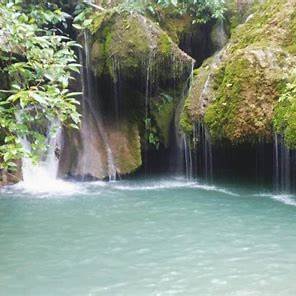
Baba Dhansar Temple is one of the most beautiful and spiritually distinctive pilgrimage destinations in Reasi district, Jammu and Kashmir. Hidden within a green ravine near Karua village, between the wider Katra and Reasi regions, the sacred site combines a natural Shiva cave, a clear blue-green pool, flowing springs, moss-covered rocks, forest vegetation and the devotional traditions of Baba Dhansar.
The shrine is commonly known as Baba Dhansar Temple, Baba Dhansar Dham, Shri Baba Dhansar Ji, Dhansar Baba Temple, Baba Dhansar Shiv Gufa and Baba Dhansar Karua Jheel.
Travellers arranging local transport should clearly specify Baba Dhansar near Karua village on the Katra–Reasi road because other temples, waterfalls and shrines with similar names exist in the wider Jammu region.
Baba Dhansar Temple is located approximately 17 kilometres from Reasi towards Katra. It is also commonly described as lying around 13 to 17 kilometres from Katra, depending upon the visitor’s hotel, route and exact starting point.
The final approach generally involves leaving the main road and walking downhill for a short distance through steps, paved sections or a forested pathway.
Although the walk is not a long mountain trek, the descent and return climb can feel demanding for senior citizens, visitors with knee problems and families carrying small children.
The temple is especially popular among pilgrims who have travelled to Katra for Shri Mata Vaishno Devi.
Many visitors add Baba Dhansar Temple to their itinerary after completing the Vaishno Devi pilgrimage, while others visit it as part of a broader Reasi spiritual circuit including Nau Devi Mandir, Aghar Jitto, Dera Baba Banda Bahadur, Bhimgarh Fort and Shiv Khori.
Baba Dhansar is not only a temple building.
It is a complete sacred natural landscape.
The cave represents meditation and the hidden presence of Lord Shiva.
The flowing water represents purification and continuity.
The pool known as Karua Jheel represents a protected sacred space.
The waterfalls create an atmosphere of movement and divine energy.
The forest represents the quiet environment in which sages and spiritual seekers traditionally practised devotion.
The shrine is suitable for Shiva devotees, Vaishno Devi pilgrims, families, couples, children, senior citizens with manageable mobility, photographers, nature travellers and visitors interested in the folk traditions of the Jammu hills.
Travellers searching for hotels near Baba Dhansar Temple, homestays near Karua village, places to stay near Baba Dhansar, pilgrimage accommodation near Katra or hotels between Katra and Reasi can use MudrasStays to plan a comfortable and geographically practical journey.
## Spiritual Importance of Baba Dhansar Temple
Baba Dhansar Temple occupies an important position within the Shiva and Naga traditions of the Jammu region.
The shrine is connected with Lord Shiva, a natural cave, sacred water and a respected spiritual figure remembered as Baba Dhansar.
Lord Shiva represents pure consciousness, meditation, transformation, detachment and liberation.
He is worshipped as the Himalayan yogi, the protector of devotees, the lord of time and the divine presence who transforms ignorance into awareness.
The word “Baba” is used respectfully for a saint, elder or spiritually accomplished person.
Dhansar is remembered within regional tradition as a saintly protector who prayed to Lord Shiva for the welfare of the people living around Karua village.
The shrine therefore combines direct Shiva worship with respect for a local spiritual guardian.
Devotees may pray for peace, family welfare, health, courage, safe travel and the strength to overcome difficult circumstances.
Some pilgrims visit after completing the Vaishno Devi yatra and offer gratitude for a safe journey.
Others come during Mahashivratri or Shravan to worship Lord Shiva.
Families from the surrounding region may visit according to inherited community customs.
Such prayers belong to personal faith.
The shrine should not be advertised as guaranteeing healing, wealth, employment, marriage, fertility or the fulfilment of every wish.
A pilgrimage can provide spiritual confidence and emotional reassurance, while medical, legal, financial and personal concerns should continue to receive appropriate practical attention.
## Baba Dhansar and the Naga Tradition
The religious traditions of Baba Dhansar are closely connected with Nagas or sacred serpent beings.
Within Hindu mythology, Nagas are not understood merely as ordinary snakes.
They are powerful beings associated with water, springs, rivers, underground realms, fertility and the protection of sacred landscapes.
Naga worship has an important history across Jammu, Kashmir, Himachal Pradesh and other parts of the western Himalayas.
Many springs, lakes and mountain shrines are connected with serpent deities because water emerging from the earth was understood as a mysterious and life-giving force.
At Baba Dhansar, the combination of a sacred pool, underground water, cave formations and Shiva worship creates a natural connection with Naga tradition.
Lord Shiva himself is frequently represented with a serpent around his neck.
The serpent symbolises control over fear, desire and mortality.
It also represents energy, renewal and the cycles of nature.
The association of Baba Dhansar with Sheshnag or a serpent king should therefore be understood within this wider sacred geography.
## The Sheshnag and Vasudev Tradition
According to local Hindu tradition, Lord Shiva travelled towards the Amarnath Cave to reveal the secret of immortality to Goddess Parvati.
Before entering the remote cave, Shiva is believed to have left behind several companions and sacred symbols along the route.
One regional version states that he left the serpent king Sheshnag near Anantnag.
Sheshnag later assumed a human form known as Vasudev.
Baba Dhansar is remembered as one of Vasudev’s saintly sons or descendants.
The names Sheshnag, Vasudev and Baba Dhansar are therefore linked through local devotional storytelling.
Some popular retellings loosely use the name Vasuki while describing the serpent association.
Sheshnag and Vasuki are distinct Naga figures in broader Hindu mythology, so the most careful approach is to preserve the shrine’s commonly narrated Sheshnag–Vasudev tradition while acknowledging that oral versions can differ.
This story belongs to regional mythology rather than documented human genealogy.
Its deeper meaning concerns the relationship between Lord Shiva, sacred water, Naga guardians and the spiritual protection of the local community.
## The Demon of Karua Jheel
The best-known Baba Dhansar legend concerns a destructive being who lived near Karua Jheel.
According to local belief, the demon troubled the residents of Karua village and created fear around the water source.
The villagers approached Baba Dhansar and asked for help.
Baba Dhansar prayed to Lord Shiva.
Responding to his devotion, Shiva appeared and defeated the demon.
The site then became associated with the worship of Lord Shiva and Baba Dhansar.
Different versions of the story describe the demon, the battle and Baba Dhansar’s role differently.
The narrative should be presented as sacred oral tradition rather than a historically recorded military event.
Its moral meaning is more important than literal reconstruction.
The demon can represent fear, violence, uncontrolled desire and the misuse of power.
Baba Dhansar represents devotion, service and responsibility towards the community.
Lord Shiva represents the divine power that restores balance.
The story teaches that spiritual discipline should be used for the welfare of others rather than personal pride.
## Lord Shiva’s Cave
A natural cave associated with Lord Shiva forms one of the principal sacred features of Baba Dhansar Dham.
Caves have a deep spiritual meaning within Hindu traditions.
They represent withdrawal from distraction, silence, meditation and movement towards the inner self.
Unlike a large decorated hall, a cave creates a concentrated environment.
The visitor becomes more aware of darkness, rock, flowing water and limited physical space.
This atmosphere reflects Shiva’s identity as an ascetic yogi who remains beyond material luxury.
The cave shrine may contain a Shiva lingam and other sacred representations according to the current temple arrangement.
Water naturally flowing through or around the rock adds to the devotional atmosphere.
Visitors should follow all instructions regarding entry, photography, touching sacred objects and the movement of queues.
The cave and surrounding rock can remain damp.
Stone surfaces may be slippery.
Senior citizens and visitors with balance difficulties should use railings and family assistance.
Large bags should not be carried into narrow worship areas.
## The Shiva Lingam
The Shiva lingam represents Lord Shiva beyond the limitations of ordinary human form.
It symbolises infinite consciousness, the source of creation and the divine reality that cannot be measured completely.
The surrounding base represents Shakti, the active power through which creation becomes visible.
Together, the lingam and its base express the unity of consciousness and energy.
At a natural cave shrine such as Baba Dhansar, the form of the lingam and the surrounding rock may appear closely connected with the landscape.
Devotees may regard the sacred form as natural or self-manifested.
Such beliefs belong to religious faith rather than geological classification.
Visitors should not scratch, measure, test or collect stone from the cave.
Water, flowers and other offerings should only be presented according to the priest’s instructions.
Large quantities of milk, oil, colour or packaged offerings can create pollution and damage the natural drainage system.
Simple and respectful worship is more appropriate than excessive material offerings.
## Karua Jheel
Karua Jheel is the striking blue-green sacred pool beside the Baba Dhansar shrine.
The word “jheel” ordinarily means lake, although the water body at Baba Dhansar is more accurately experienced as a natural spring-fed pool within a rocky ravine.
Water enters the pool through waterfalls, fine streams and seepage across moss-covered rock.
Its colour changes according to light, depth, mineral content, rainfall and the surrounding vegetation.
On clear days, the pool may appear turquoise, emerald or deep blue-green.
During rain, the water can become stronger, cloudier or more dangerous.
Karua Jheel is regarded as sacred.
Traditional instructions discourage bathing directly within the principal pool.
Devotees may be permitted to bathe farther downstream in designated areas, subject to local rules and current water conditions.
Visitors must not enter the main pool for swimming, photography or social-media videos.
The water may be deeper than it appears.
Rock edges can be slippery.
Underwater surfaces may be uneven.
Waterfall current can change quickly after rainfall.
A sacred appearance does not remove the ordinary dangers of deep water.
## Why Bathing Is Restricted in the Sacred Pool
Restricting bathing within Karua Jheel serves both religious and environmental purposes.
The principal pool is treated as a protected sacred space rather than a recreational swimming area.
Human entry can disturb the water, damage moss and aquatic environments, create litter and increase the risk of drowning.
Soap, shampoo, detergent and chemical products can permanently affect the natural system.
Even substances considered religious offerings can create pollution when introduced in large quantities.
Visitors should not throw flowers wrapped in plastic, coins, food, cloth, oil or incense material into the pool.
Where downstream bathing is permitted, it should be undertaken carefully and without soap or chemical products.
Children and non-swimmers require continuous supervision.
No one should enter moving water during or after heavy rainfall.
## The Waterfalls of Baba Dhansar
The waterfall landscape is one of the reasons Baba Dhansar Temple feels so distinctive.
Water descends from several points across mossy rock walls.
Some sections form stronger cascades.
Others appear as fine silver threads flowing over green surfaces.
The visual effect changes throughout the year.
During wetter periods, the waterfall can become fuller and louder.
During drier periods, the flow may be gentler.
Visitors should avoid making guaranteed claims about the exact volume or colour of the waterfall on a particular date.
Natural water depends upon rainfall, underground supply and seasonal conditions.
The waterfall is not a theme-park attraction with controlled flow.
Its changing character forms part of its beauty.
The rocks should not be climbed.
Moss can make apparently dry surfaces extremely slippery.
Falling stones, tree branches and sudden runoff are possible within a narrow ravine.
Visitors should remain on authorised platforms, bridges and pathways.
## Sacred Water and Natural Purification
Water is one of the most important elements within Hindu pilgrimage.
It represents life, purification, movement and renewal.
A devotee may touch water or bathe before worship to symbolise the intention to leave behind harmful habits and approach the deity with a clearer mind.
This symbolism should not be misunderstood as a guaranteed removal of moral responsibility.
A ritual bath does not replace apology, justice or responsible action.
Sacred water should also not be promoted as a medical treatment.
Natural pools and streams can contain microorganisms, sediment and seasonal contamination.
People with open wounds, reduced immunity or other health concerns should avoid unnecessary immersion.
The spiritual value of the water lies in faith and symbolic purification, while ordinary health precautions remain essential.
## The Forested Ravine
Baba Dhansar Temple is surrounded by dense vegetation, trees, moss, vines and rock formations.
The forest creates shade and keeps parts of the ravine cooler than the exposed road above.
Bird calls, flowing water and filtered sunlight contribute to the peaceful atmosphere.
The natural environment should be treated as part of the sacred site.
Visitors should not cut branches, collect plants, remove moss or carve names into trees.
Wildlife should not be disturbed or fed.
Discarded food can attract monkeys, dogs and other animals and create aggressive behaviour.
Smoking and open flames increase the risk of forest fire.
Plastic waste thrown into the ravine can remain trapped for years and eventually enter the water.
Protecting the forest is an essential part of worship at Baba Dhansar.
## Mahashivratri at Baba Dhansar
Mahashivratri is the most important annual festival celebrated at Baba Dhansar Temple.
The festival is dedicated to Lord Shiva and is observed through prayer, fasting, abhishek, mantra recitation, lamps, bhajans and community gatherings.
A large mela is organised around the shrine.
Recent arrangements have extended across multiple days, although the exact duration and programme can change each year.
Devotees arrive from Reasi, Katra, Jammu, Udhampur and neighbouring areas.
The approach road, parking spaces, stairs and temple pathways become crowded.
Temporary food stalls, community services, security arrangements and medical support may be introduced.
Families should keep children and senior citizens close.
Groups should select a clear meeting point before descending towards the shrine.
Visitors should carry minimal luggage.
Hotels near Baba Dhansar Temple, Katra and Reasi should be booked early during Mahashivratri.
The exact fair dates, traffic plan and opening hours must be confirmed for the relevant year.
## Shravan and Monday Worship
The Hindu month of Shravan is especially sacred to Lord Shiva.
Mondays during Shravan may attract additional devotees to Baba Dhansar.
Pilgrims may offer water, flowers, bilva leaves and prayers according to local customs.
Shravan normally overlaps with the rainy season.
The waterfall becomes visually impressive, but the same rainfall creates serious safety concerns.
Steps can become slippery.
The stream can rise.
Rockfall and road disruption can occur.
Visitors should not travel during severe weather merely because the date is religiously important.
A safe pilgrimage on another day remains meaningful.
## Daily Darshan and Aarti
Daily opening times and aarti arrangements can vary according to season, weather, priestly duties and visitor numbers.
Travellers planning an early-morning or evening visit should confirm current timing through their hotel, driver or local temple representatives.
Morning generally provides the most comfortable experience.
The road is quieter, the light is softer and visitors have more time to descend and return before midday heat or afternoon rain.
Evening can be peaceful, but the forested path becomes darker quickly.
Visitors should avoid beginning the return climb after daylight has faded unless the path is properly lit and local access remains authorised.
## Best Time to Visit Baba Dhansar Temple
Baba Dhansar Temple can generally be visited through much of the year, subject to road, weather and shrine conditions.
### Spring
Spring is one of the best periods for visiting.
The weather is generally pleasant, vegetation becomes fresh and the stream retains good flow.
Mahashivratri may fall during late winter or early spring.
Festival visitors should expect crowds, while ordinary weekdays offer a quieter experience.
A light jacket and shoes with good grip are useful.
### Summer
Summer around Katra and Reasi can become hot.
The shaded ravine may feel cooler than the main road, but the return climb can be tiring.
Visitors should arrive early, carry drinking water and avoid the strongest afternoon heat.
Children and senior citizens should rest before climbing back to the road.
The water should not be entered simply to escape the heat.
### Monsoon
The monsoon creates the greenest and most dramatic waterfall scenery.
It also creates the greatest risk.
Heavy rain can cause sudden water increase, slippery paths, landslides, falling stones and reduced visibility.
The ravine can become unsafe even when rain is not falling directly at the shrine because water may arrive from higher ground.
Visitors must follow local closures and barriers.
Travel should be postponed during severe weather advisories.
### Autumn
Autumn is among the most comfortable seasons for pilgrimage.
Rain generally reduces, the landscape remains green and walking conditions improve.
The water flow may remain attractive after the monsoon.
Morning and late afternoon are ideal for photography and peaceful darshan.
### Winter
Winter is generally cool and quieter.
Morning and evening can become cold, while daytime may remain comfortable under sunlight.
The shaded ravine feels colder than the road above.
Regular snowfall should not be expected at Baba Dhansar because it lies within the lower hill region.
Warm layers and stable footwear are useful.
## Reaching Baba Dhansar from Katra
Katra is the most popular accommodation and transport base for Baba Dhansar Temple.
The shrine is commonly described as lying approximately 13 to 17 kilometres from Katra, depending upon the visitor’s hotel and selected route.
A private taxi, local cab or prearranged vehicle is generally the easiest option.
Public transport may serve the broader Katra–Reasi road, but the exact drop-off point and return availability should be confirmed.
Visitors should ask the driver to wait because immediate return transport may not always be available near the roadside entrance.
The final approach involves walking downhill from the road.
The return journey requires climbing back to the vehicle.
Pilgrims who have completed the demanding Vaishno Devi walk should assess their energy level before adding Baba Dhansar on the same day.
A separate morning visit after adequate rest is often more comfortable.
## Reaching from Reasi
Baba Dhansar lies approximately 17 kilometres from Reasi towards Katra.
Reasi town provides hotels, markets, restaurants, hospitals, transport and access to other district attractions.
A taxi or private vehicle provides the easiest connection.
Travellers staying in Reasi can combine Baba Dhansar with Bhimgarh Fort, Dera Baba Banda Bahadur or another nearby attraction.
The shrine should be visited during daylight because the final forested approach is less suitable after dark.
## Reaching from Jammu
Jammu is the principal air, rail and urban gateway for the wider region.
A day trip to Baba Dhansar is possible by private vehicle, generally through the Katra side.
The journey can also be included during a transfer between Jammu and Katra.
Traffic near Katra and pilgrimage-season controls can affect travel time.
Visitors should not schedule Baba Dhansar immediately before a tightly timed flight or train.
An overnight stay in Katra or Reasi provides a more relaxed pilgrimage.
## Reaching by Train
Shri Mata Vaishno Devi Katra Railway Station is the most convenient major rail gateway for travellers staying in Katra.
Jammu Tawi provides extensive long-distance railway connectivity.
Current train schedules and onward transport should be checked before travel.
A taxi is required from the railway station to Baba Dhansar.
Visitors arriving late at night should first check into accommodation rather than attempting the forested shrine approach immediately.
## Reaching by Air
Jammu Airport is the principal commercial airport serving the region.
The onward journey to Katra, Reasi or Baba Dhansar requires road transport.
Flight operations and road travel can be affected by weather and traffic.
Travellers should keep sufficient buffer time.
## The Final Walk
The shrine is generally reached through a short walk of approximately 200 metres from the road, though the visitor’s actual walking distance can vary according to parking and crowd arrangements.
The path descends towards the ravine.
Steps, railings, bridges and paved sections may be present along the route.
The descent can feel easy, while the return climb requires more effort.
Visitors should wear footwear with dependable grip.
Slippers and smooth-soled shoes are unsuitable during rain.
Those carrying luggage should leave unnecessary bags securely in the vehicle or accommodation.
The route should not be attempted through informal forest shortcuts.
## Accessibility for Senior Citizens
Baba Dhansar is accessible by road but is not fully barrier-free.
The final descent and return climb can be difficult for visitors with knee, heart, breathing or balance concerns.
Senior citizens should visit during cooler hours and move slowly.
Family assistance and railings should be used.
The current availability of wheelchair access, assisted transport or an alternative route should be confirmed rather than assumed.
Visitors unable to reach the lower cave area may still appreciate permitted upper viewpoints and offer prayer according to local guidance.
Mahashivratri crowds may be unsuitable for people unable to tolerate long waiting or dense queues.
## Visiting with Children
Children often enjoy the forest, bridges and waterfalls, but the site requires close supervision.
Parents should hold young children near steps, water and railings.
Children must not enter the sacred pool, climb moss-covered rock or run on wet pathways.
The Baba Dhansar story can be explained through themes of courage, community service and devotion.
The demon legend should not be presented only as frightening entertainment.
Water, snacks and necessary medicines should be carried, but all wrappers must be taken away.
## Safety Around the Waterfall and Pool
Water safety is the most important practical consideration at Baba Dhansar.
The main sacred pool should not be entered.
Visitors should remain behind barriers and use authorised viewing points.
Wet rock is extremely slippery.
The depth of blue-green water is difficult to judge visually.
Falling water can create strong underwater movement.
Rainfall in higher areas can increase the flow without immediate warning.
Children and non-swimmers should never stand independently beside the water.
Selfies should not be taken from unstable edges.
Photography equipment should not be placed on wet railings or rocks.
Where bathing is permitted downstream, visitors should follow local instructions and avoid entering during high flow.
## Distinguishing Baba Dhansar from Siar Baba
Baba Dhansar and Siar Baba are separate destinations within Reasi district.
Both are associated with water, shrines and scenic natural settings, which can create confusion among travellers.
Baba Dhansar lies near Karua village on the Katra–Reasi side and contains a sacred Shiva cave and Karua Jheel.
Siar Baba is a different waterfall and shrine located near another part of Reasi.
Drivers, hotels and online listings should be given the complete destination name to avoid route confusion.
Visitors should also remember that waterfall environments can carry rockfall and flash-water risks.
## Shri Mata Vaishno Devi
Shri Mata Vaishno Devi is the most famous pilgrimage destination near Baba Dhansar.
The sacred cave shrine lies in the Trikuta Hills above Katra.
Pilgrims undertake a substantial uphill journey from the base town.
Baba Dhansar can be included before or after the yatra, but adequate rest is essential.
Visitors should not attempt a demanding Vaishno Devi walk, an immediate Baba Dhansar descent and several additional attractions without considering the health of the group.
Katra provides the most convenient accommodation for combining both shrines.
## Nau Devi Mandir
Nau Devi Mata Mandir is another important cave shrine near Katra.
It is associated with nine forms of the Goddess represented through sacred pindis.
The Reasi district administration places it around nine kilometres from Katra.
A combined Nau Devi and Baba Dhansar itinerary can be completed within a day when traffic and access conditions remain favourable.
The caves, steps and water areas at both locations require suitable footwear.
## Aghar Jitto
Aghar Jitto is associated with the respected farmer-saint Baba Jitto and the traditions of justice, sacrifice and rural dignity.
The site holds special importance within the Dogra cultural region.
It can be combined with Baba Dhansar during a Katra-based spiritual and cultural journey.
Visitors should allow time to understand Baba Jitto’s social significance rather than treating the site only as another quick temple stop.
## Dera Baba Banda Bahadur
Dera Baba Banda Bahadur is an important pilgrimage centre for both Sikhs and Hindus near Reasi.
It stands beside the Chenab and preserves the memory of Banda Singh Bahadur, the saint-soldier connected with Guru Gobind Singh.
Baisakhi is an important annual gathering.
A combined Baba Dhansar and Dera Baba Banda Bahadur itinerary demonstrates the religious diversity and shared heritage of Reasi district.
## Bhimgarh Fort
Bhimgarh Fort overlooks Reasi town and represents the region’s political and military heritage.
The fort has undergone rebuilding and restoration across different periods.
Access conditions and opening arrangements should be checked locally.
Visitors should not climb restricted walls or unstable sections.
A Reasi-based day can combine the fort with Baba Dhansar when sufficient time is available.
## Shiv Khori
Shiv Khori is one of Reasi district’s most important Shiva cave pilgrimages.
It is located at Ransoo and requires a much longer journey from Katra or Reasi than Baba Dhansar.
The shrine should be planned as a separate full-day excursion.
Baba Dhansar and Shiv Khori are connected through Shiva devotion but differ greatly in route, scale and physical effort.
Visitors should not attempt both within a rushed half-day itinerary.
## Chenab River and Reasi
Reasi stands beside the Chenab River and offers a dramatic landscape of hills, bridges and river valleys.
River viewpoints should be approached only from recognised areas.
The Chenab is powerful and should never be treated as safe for casual swimming.
Tourism activities such as rafting should only be undertaken through authorised operators when officially available.
## Suggested One-Day Baba Dhansar Itinerary from Katra
Begin with an early departure from Katra after breakfast.
Travel towards Karua village and reach the Baba Dhansar roadside entrance during the cooler morning hours.
Descend slowly towards the temple.
Visit the Shiva cave and offer prayers according to local arrangements.
Observe Karua Jheel and the waterfalls from the authorised pathway.
Do not enter the sacred pool.
Spend quiet time within the forested shrine complex.
Climb back to the vehicle before midday heat.
Continue to Nau Devi Mandir or Aghar Jitto if the group remains comfortable.
Return to Katra before evening.
## Suggested Two-Day Katra and Reasi Pilgrimage
On the first day, arrive in Katra and complete local darshan or rest after the Vaishno Devi pilgrimage.
On the second morning, visit Baba Dhansar Temple.
Continue towards Reasi for lunch.
Explore Bhimgarh Fort or Dera Baba Banda Bahadur according to time and current access.
Return to Katra or stay overnight in Reasi.
This itinerary is suitable for families and senior citizens because it avoids combining every activity with the Vaishno Devi trek.
## Suggested Three-Day Reasi Spiritual Circuit
The first day can focus on Katra and Shri Mata Vaishno Devi according to the pilgrim’s registration and health.
The second day can include Baba Dhansar, Nau Devi Mandir and Aghar Jitto.
The third day can include Reasi town, Dera Baba Banda Bahadur and Bhimgarh Fort.
Travellers interested in Shiv Khori should add a separate day rather than compressing the cave pilgrimage into an already crowded schedule.
## Accommodation Near Baba Dhansar Temple
Accommodation immediately beside Baba Dhansar may be limited.
Karua village and the immediate roadside area should not be assumed to provide a large selection of full-service hotels.
The most practical accommodation bases are Katra and Reasi.
Limited local homestays or guesthouses may be available where verified.
## Hotels in Katra
Katra offers the widest selection of accommodation near Baba Dhansar.
Options include budget hotels, mid-range family properties, premium hotels, guesthouses, dharamshalas and resorts.
Katra is ideal for travellers combining Baba Dhansar with Shri Mata Vaishno Devi.
Guests should choose a property according to actual road access rather than only distance from Katra railway station or the yatra registration area.
A hotel on the Reasi-facing side of Katra may reduce local traffic for a Baba Dhansar excursion.
Visitors should confirm parking, meal timings, luggage storage, lifts and local taxi arrangements.
## Hotels Near the Katra–Reasi Road
Properties located outside the busiest central Katra market can provide easier vehicle movement and quieter surroundings.
Such accommodation may be useful for families, couples and travellers planning Baba Dhansar or Reasi excursions.
Guests should confirm whether restaurants, public transport and medical facilities are available nearby.
A property described as being near Baba Dhansar may still require a substantial road journey and the final walk.
## Hotels in Reasi
Reasi provides hotels, guesthouses, markets, hospitals and local transport.
It is suitable for visitors combining Baba Dhansar with Bhimgarh Fort, Dera Baba Banda Bahadur and other district attractions.
Reasi can offer a quieter experience than central Katra.
The visitor should confirm the actual road time to Baba Dhansar and arrange a vehicle in advance.
## Local Homestays
Verified homestays around Karua, Panthal or the wider Katra–Reasi corridor may provide local food, rural hospitality and a peaceful environment.
Facilities can vary considerably.
Guests should confirm attached bathrooms, hot water, cooling, heating, meals, electricity, mobile connectivity and vehicle access.
A local host may provide useful information about rainfall, water flow and temple access.
Travellers should never arrive without a confirmed reservation when accommodation options are limited.
## Dharamshalas and Pilgrim Rooms
Katra and Reasi contain dharamshala-style accommodation and economical pilgrim rooms.
Facilities may be simple and can include shared bathrooms or limited services.
Guests should use recognised booking channels and understand the difference between a basic pilgrim room and a commercial hotel.
Mahashivratri and Vaishno Devi festival periods can create high demand.
## Choosing the Right Place to Stay
Pilgrims combining Baba Dhansar with Vaishno Devi should generally stay in Katra.
Travellers focused on Reasi district heritage may prefer Reasi town.
Families should check room size, meals, parking and bathroom facilities.
Senior citizens should prioritise lifts, ground-floor rooms and dependable taxis.
Couples may prefer quieter hotels or homestays away from the busiest Katra market.
Solo pilgrims should select populated accommodation with secure transport.
Groups should confirm multiple rooms, vegetarian meals, driver accommodation and parking for larger vehicles.
Mahashivratri travellers should reserve rooms early.
Summer guests should confirm effective cooling.
Winter visitors should check hot water and heating.
Monsoon guests should ask specifically about the road and waterfall access conditions.
## Book Hotels Near Baba Dhansar Temple with MudrasStays
MudrasStays helps pilgrims, families and nature travellers discover hotels, homestays, guesthouses and pilgrimage accommodation near Baba Dhansar Temple, Katra, Karua village and Reasi.
The platform is designed specifically for travellers searching for places to stay near temples, sacred caves, pilgrimage routes and spiritual destinations.
Visitors can compare accommodation according to practical road distance from Baba Dhansar, room category, budget, family size and required facilities.
Booking closer to the Katra–Reasi route allows devotees to reach the shrine during peaceful morning hours and avoid unnecessary travel through central traffic.
Solo pilgrims can search for affordable guesthouses and simple rooms.
Couples can explore peaceful stays surrounded by lower-hill scenery.
Families can choose hotels offering meals, parking and comfortable room capacity.
Senior citizens can prioritise accessible properties with lifts and reliable taxi arrangements.
Vaishno Devi pilgrims can select stays offering luggage storage, early meals and transport assistance.
Pilgrimage groups can identify properties providing several rooms, vegetarian food and suitable vehicle parking.
Travellers combining Baba Dhansar with Nau Devi Mandir, Aghar Jitto, Reasi town, Dera Baba Banda Bahadur or Shiv Khori can choose accommodation according to the actual sequence of their journey.
MudrasStays helps pilgrims avoid choosing a property that appears close in straight-line distance but lies on an inconvenient side of Katra, across a different hill route or far from dependable transport.
## Responsible Pilgrimage at Baba Dhansar
Baba Dhansar is both an active place of worship and a sensitive natural water environment.
Visitors should dress respectfully and follow the designated temple route.
The Shiva lingam, cave, priests and private rituals should only be photographed when permission is clear.
Karua Jheel must not be entered.
Soap, shampoo and chemicals must not be used in the stream.
Plastic bottles, food wrappers, flowers, cloth, coins and ritual packaging must not be thrown into the water.
Visitors should not climb waterfall rocks or cross railings.
Trees and moss should not be damaged.
Open fires and smoking should be avoided.
Monkeys and other animals should not be fed.
Children must remain supervised.
Donations should be made through recognised counters or temple representatives.
Unauthorised persons promising guaranteed blessings, cures or special access should be avoided.
## Respecting Karua Village
Karua is a living village rather than only a tourism location.
Residents use the same roads, pathways, forests and water resources as visitors.
Vehicles must not block homes, shops or emergency access.
Private fields and courtyards should not be entered without permission.
Residents should not be photographed casually.
Local drivers, shopkeepers, priests, food providers and homestay hosts should be treated fairly.
Supporting local services can help pilgrimage tourism benefit the surrounding community.
## A Sacred Meeting of Shiva, Water and Forest
Baba Dhansar Temple represents a powerful meeting of Lord Shiva, Naga tradition, sacred water, cave worship and the natural landscape of Reasi.
The Shiva cave represents meditation and the hidden divine presence within the earth.
The lingam represents infinite consciousness.
Karua Jheel represents sacred water protected from recreational use.
The waterfalls represent continuous movement and renewal.
The Naga tradition connects the shrine with springs and the guardianship of water.
The Sheshnag–Vasudev story connects Baba Dhansar with the wider mythology of Lord Shiva’s journey towards Amarnath.
The demon legend represents the victory of devotion and divine protection over fear and harmful power.
The forested ravine creates an environment in which spiritual reflection and natural beauty cannot be separated.
Mahashivratri brings the shrine into the collective religious life of the region.
Shravan worship maintains the continuing relationship between devotees and Mahadev.
For Shiva devotees, Baba Dhansar is a place to seek peace, courage and spiritual clarity.
For Vaishno Devi pilgrims, it offers a quieter spiritual experience close to Katra.
For families, it provides a meaningful combination of temple worship and natural scenery.
For children, it offers an opportunity to learn about water protection, mythology and responsible pilgrimage.
For senior citizens, the road-based location makes the shrine approachable when the final descent is planned carefully.
For couples, the forest and waterfall setting creates a peaceful spiritual excursion away from the busiest Katra market.
For photographers, the turquoise pool, cave, moss-covered rocks and flowing water provide memorable visual opportunities when safety and religious dignity are respected.
For nature travellers, Baba Dhansar demonstrates how forests, springs and rock formations become part of a living sacred tradition.
Baba Dhansar Temple should not be treated merely as a waterfall stop near Katra.
Its true identity comes from the relationship between Lord Shiva, Baba Dhansar, sacred water and the local community.
Descend the path patiently.
Enter the cave with respect.
Observe the sacred pool without attempting to swim.
Listen to the flowing water.
Avoid littering the forest.
Understand the legends as expressions of regional faith.
Carry the values of protection, service and responsibility beyond the shrine.
Plan your pilgrimage to Baba Dhansar Temple with MudrasStays and experience one of the most beautiful Shiva destinations in Reasi district.
Seek the blessings of Lord Shiva and Baba Dhansar, visit the sacred cave and observe the waterfalls and Karua Jheel responsibly.
Combine your journey with Shri Mata Vaishno Devi, Nau Devi Mandir, Aghar Jitto, Dera Baba Banda Bahadur, Bhimgarh Fort, Reasi town and Shiv Khori.
Book hotels near Baba Dhansar Temple, discover homestays near the Katra–Reasi road and explore suitable pilgrimage accommodation in Katra and Reasi through MudrasStays.
Stay closer to the shrine, arrive during peaceful morning hours and reduce unnecessary travel through crowded pilgrimage roads.
MudrasStays connects pilgrims, families and spiritual travellers with suitable accommodation near temples, caves, sacred water bodies and pilgrimage destinations across India.
Begin your Baba Dhansar Temple journey with a comfortable stay and experience a meaningful pilgrimage centred on Lord Shiva, Baba Dhansar, Karua Jheel, flowing waterfalls and the sacred forest landscape of Reasi.