
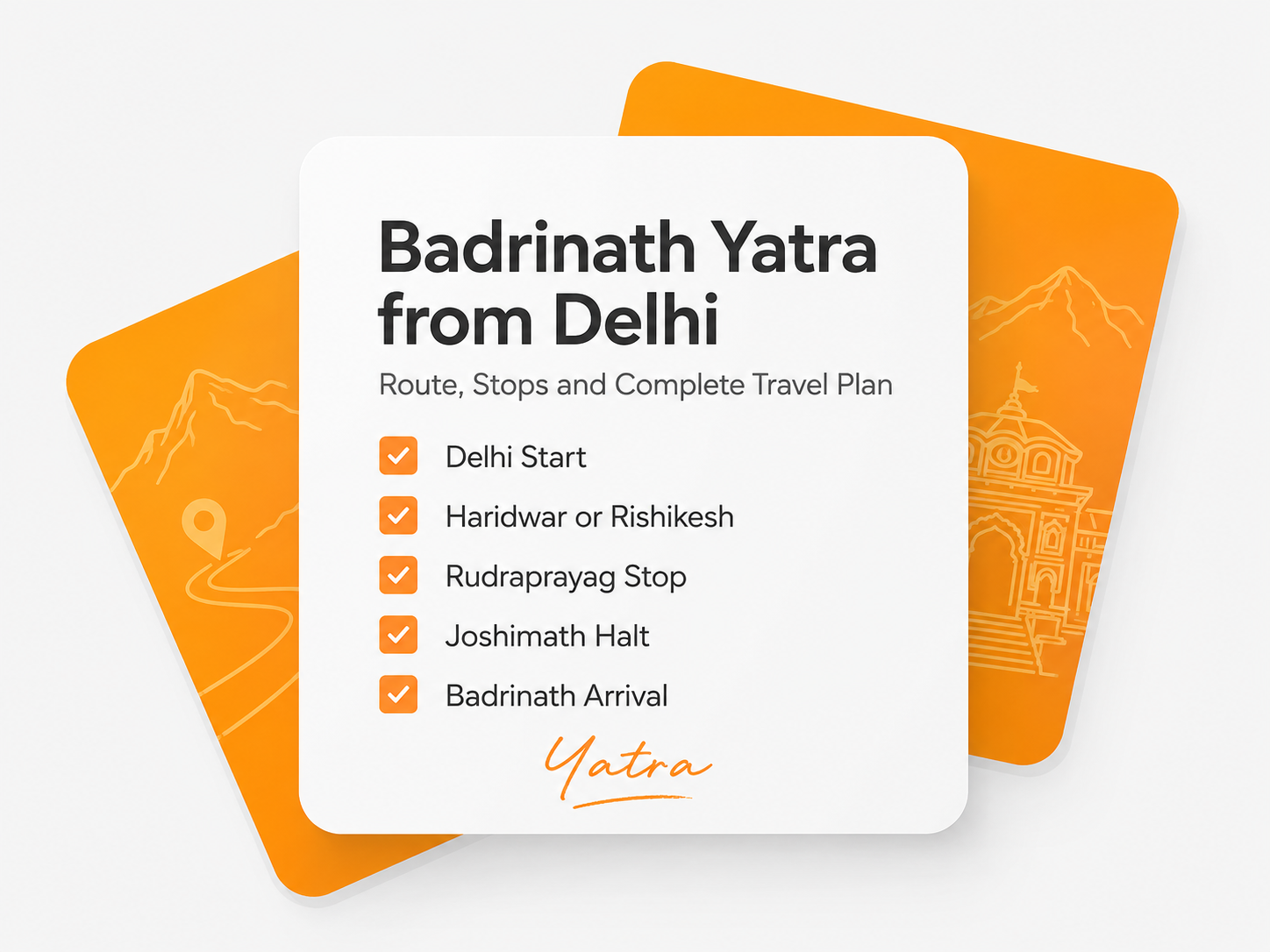
Badrinath Yatra from Delhi: Route, Stops and Complete Travel Plan
A Delhi-to-Badrinath pilgrimage is most comfortable when split at Haridwar or Rishikesh. The second stage is a long Himalayan road journey through Devprayag, Srinagar, Rudraprayag, Karnaprayag and Joshimath before the final climb to Badrinath. A four-day plan gives first-time visitors time for darshan and Mana without turning every day into a long drive.
Travel note: Mountain routes, traffic rules, temple systems and seasonal services can change because of weather or administration. Verify same-day local conditions before starting.
Badrinath Yatra from Delhi
Delhi to Badrinath is best split into two road days or combined with a train to Haridwar/Rishikesh. The total road distance is roughly in the 530–560 km range depending on your start point and route, but the final 290–300 km are mountain roads. A plan that tries to cover the entire distance in one day may leave pilgrims arriving late, tired and poorly acclimatised.
Recommended travel pattern
- Day 1: Delhi to Haridwar or Rishikesh. Complete registration checks, buy last-minute essentials and sleep early.
- Day 2: Rishikesh to Badrinath via the Alaknanda route, starting near dawn.
- Day 3: early darshan, Tapt Kund/Brahma Kapal as relevant, Mana village, then either stay again or descend to Joshimath/Pipalkoti.
- Day 4: continue toward Rishikesh/Haridwar and onward to Delhi.
Travellers with only three days can compress the return, but this makes the trip highly dependent on good road conditions. Families with senior citizens should prefer four days or more. If you are also visiting Kedarnath, plan the two shrines as a multi-day circuit rather than independent out-and-back journeys from Delhi.
How to Reach Badrinath from Rishikesh
Rishikesh is the most practical road gateway to Badrinath. The route follows the Alaknanda valley and passes several important confluences and pilgrimage towns. The distance is roughly 290–300 km, but the drive commonly takes 10–12 hours and can take longer in peak traffic or poor weather. An early start is essential.
Route in order
Rishikesh → Devprayag → Srinagar → Rudraprayag → Karnaprayag → Nandprayag → Chamoli → Pipalkoti → Joshimath → Govindghat → Pandukeshwar/Hanuman Chatti area → Badrinath.
Where to stop
Devprayag is a natural first scenic pause because it marks the confluence of the Bhagirathi and Alaknanda. Srinagar is a useful breakfast or fuel stop. Rudraprayag and Karnaprayag work well for short breaks, while Joshimath is the most important final major town before the upper Badrinath road. Keep stops purposeful; too many 20-minute breaks can turn a long day into a night arrival.
Bus, shared vehicle or private cab?
Public transport is economical and widely used, but it can be slower and less flexible. Shared jeeps are useful on some sectors but may require transfers. A private cab is the easiest option for families because it offers control over meal stops and luggage. Self-driving is suitable only for drivers comfortable with long Himalayan roads, blind bends and steep drop-offs.
Do not rely on one fixed road-time estimate. During monsoon or high pilgrim traffic, authorities may temporarily regulate movement through sensitive sections. Keep digital and printed copies of your booking, identification and yatra registration accessible.
Badrinath Yatra at a Glance
Badrinath is one of India’s Char Dham shrines and one of Uttarakhand’s four principal Himalayan pilgrimage destinations. Dedicated to Lord Vishnu in the form of Badri Narayan, the temple stands on the banks of the Alaknanda River at about 3,133 metres in Chamoli district. Unlike Kedarnath, Badrinath is directly connected by a motorable road during the open yatra season, making it accessible to a wider range of pilgrims.
Road access does not mean the trip is effortless. The approach from Rishikesh is a long mountain drive of roughly 290–300 km through the Alaknanda valley. Traffic, road work, rain, landslides and regulated movement can make travel time much longer than a plains journey of similar distance. Most first-time pilgrims should avoid trying to drive from Delhi all the way to Badrinath in a single exhausting push.
Essential facts
- Altitude: about 3,133 m.
- Main road gateway: Rishikesh/Haridwar.
- Typical route: Rishikesh → Devprayag → Srinagar → Rudraprayag → Karnaprayag → Nandprayag → Chamoli/Pipalkoti → Joshimath → Govindghat → Badrinath.
- Nearby highlight: Mana village, roughly 3 km from Badrinath.
- Registration: complete mandatory Char Dham registration through the official Uttarakhand Char Dham registration portal.
- Season: temple opening and closing dates change each year; verify the current official schedule before travel.
Badrinath Yatra for First-Time Visitors
Register before travelling
Char Dham registration is mandatory. Complete it through the official Uttarakhand Char Dham registration portal, save the QR/registration letter offline and carry the identification used during registration. Vehicle details may also need to be recorded according to current rules.
Do not underestimate altitude
Although you can drive close to the temple, Badrinath is above 3,000 metres. Travellers may feel headache, poor sleep, reduced appetite or breathlessness when walking uphill. Take the first evening slowly, avoid heavy exertion immediately after arrival and seek medical advice if symptoms are severe or worsening.
Keep the temple day simple
A strong first-time sequence is early Tapt Kund if desired, temple darshan, breakfast, Brahma Kapal if relevant and then Mana village later. Avoid scheduling a long return drive immediately after a rushed morning if you have elderly family members.
Carry layers
Weather changes quickly. A sunny afternoon can become cold after cloud cover, and mornings near the river are chilly even when lower Uttarakhand is warm. Pack a thermal or base layer, fleece and waterproof shell rather than relying on one bulky garment.
Respect local traffic controls
The upper road can be regulated during congestion, construction or weather events. Follow police and district instructions even if navigation apps suggest a faster alternative. In the Himalayas, the safest route is the officially open route.
Badrinath to Mana Village
Mana lies only about 3 km from Badrinath and is the easiest major side trip after darshan. Uttarakhand Tourism describes it as a border-area tourism village on the banks of the Saraswati River. Because the drive is so short, many pilgrims visit Mana on the same day as the temple, but you still need two to four hours if you want to walk beyond the parking area instead of taking a quick photograph and returning.
What to see in Mana
- Bheem Pul: a natural rock formation associated in local tradition with Bhima of the Mahabharata.
- Saraswati River: a dramatic mountain stream seen near the village.
- Vyas Gufa: traditionally associated with sage Vyasa and the composition of the Mahabharata.
- Ganesh Gufa: connected in tradition with Lord Ganesha.
- Village lanes: stone houses, small cafés and mountain views make slow walking worthwhile.
The road reaches Mana, but several points inside and beyond the village require walking on uneven slopes. Wear proper shoes, especially if the surface is wet. Senior citizens can enjoy the village without attempting every uphill path.
Vasudhara Falls
Vasudhara is a farther trekking excursion beyond Mana and should not be added casually to a packed darshan day. Uttarakhand Tourism places the waterfall about 6 km from Mana. The trail requires time, fitness, daylight and stable weather. If your group is not prepared for a real mountain walk, enjoy Mana itself and return to Badrinath.
Where to Stay in Badrinath
Staying in Badrinath makes early darshan much easier and gives you time for Mana without a rushed descent. Travellers looking for a best hotel in Badrinath can consider Hotel Yoga Badrinath. Advance booking is strongly recommended during May–June, festival dates and long weekends.
When comparing any hotel in Badrinath, check walking distance or road access to the temple, hot-water arrangements, heating/blankets, meal timing, parking, and how the property handles late arrivals caused by road delays. At high altitude, practical comfort and a warm room often matter more than elaborate facilities.
Detailed Badrinath Planning Checklist
Before leaving home
Complete yatra registration through the official Uttarakhand Char Dham registration portal, confirm transport and save all bookings offline. Pack for cold mountain mornings even if the plains are hot. Carry regular medicines and a basic medical note for elderly travellers.
Before leaving Rishikesh
Start early, fuel the vehicle and carry water/snacks. The drive is long enough that a delayed departure can push the last Joshimath-to-Badrinath section into darkness. Do not schedule too many sightseeing stops on the uphill day.
On arrival
Walk slowly, especially if you have come directly from low altitude. Have a warm drink, rest and avoid climbing unnecessary slopes immediately. Keep dinner light and hydrate normally.
Darshan morning
Follow the current queue system and local instructions. If taking a ritual bath at Tapt Kund, keep dry clothing ready. Those performing ceremonies at Brahma Kapal should coordinate with family members so the rest of the group is not rushing them.
Mana visit
Carry a layer and wear proper shoes. Stop at the village itself if seniors are tired; there is no need for everyone to attempt the farther walking routes. Keep an eye on the weather because cloud and rain can move in quickly.
Return journey
If you have already spent a full morning in darshan and Mana, consider stopping at Joshimath or Pipalkoti rather than forcing a very long drive toward Rishikesh. A rested driver is an essential part of a safe Char Dham trip.
Frequently Asked Questions About Badrinath
Can Badrinath be reached by car?
Yes, during the open yatra season Badrinath is connected by road. The route is mountainous and can be affected by weather and traffic regulation.
How far is Mana from Badrinath?
Mana is roughly 3 km away and is easy to combine with temple darshan on the same day.
Is registration required?
Yes. Use the official Uttarakhand Char Dham registration portal and follow current verification requirements.
How many days should I plan from Rishikesh?
Three days is a comfortable basic plan: one day up, one day for darshan/Mana, and one day down. Two days is possible but much more rushed.
Which months are best?
May–June and September–October are the main windows. Monsoon months require more flexibility because of landslide and road-block risk.
Is Badrinath difficult for senior citizens?
It is easier than Kedarnath because the road reaches the town, but the altitude above 3,000 metres can still be tiring. Keep walking slow, avoid overpacking the day and seek medical guidance for significant health conditions.
Altitude, Road and Darshan Strategy
Badrinath’s road access can create a false sense that altitude does not matter. In reality, arriving above 3,000 metres after a long drive can leave some travellers tired, headachy or short of breath on stairs. Walk slowly on arrival, keep the first evening quiet and do not add an unnecessary uphill excursion just because daylight remains.
Temple queues are easiest to manage when the group has a clear meeting point and minimal luggage. Elderly pilgrims should not be left standing while others shop or arrange rituals. Decide the sequence—Tapt Kund if desired, darshan, Brahma Kapal if relevant, breakfast, Mana—before leaving the accommodation.
Road-Journey Habits That Make a Difference
Use daylight intelligently. Start early, take short purposeful breaks, and avoid stopping at every confluence on the uphill day. The Panch Prayag towns are important, but they can be explored on the return if your arrival at Badrinath would otherwise be pushed late.
Keep snacks, water, tissues, medicines and a warm layer in the cabin rather than the boot. When traffic is held for road work, the ability to access essentials without unpacking the car is surprisingly useful.
Common Mistakes to Avoid
- Driving from Delhi to Badrinath in one continuous push with an exhausted driver.
- Assuming summer in the plains means Badrinath will be warm.
- Leaving registration until the last minute.
- Planning Mana and a long return drive after a late darshan.
- Attempting the Vasudhara trek without enough daylight or fitness.
- Treating traditional hot-spring beliefs as medical advice.
- Standing too close to the Alaknanda for photographs.
- Scheduling an inflexible train or flight immediately after a monsoon road day.
Final Takeaway
Badrinath rewards travellers who treat the road, altitude and temple morning with equal respect. Start early, stay flexible, keep Mana optional if the group is tired and avoid compressing the return into an unsafe night drive.
Extended Badrinath Yatra Notes
Badrinath is often called the easier of the two major Garhwal dhams because a road reaches the town, but this can encourage overambitious schedules. A ten- to twelve-hour mountain road is still a demanding travel day, and arrival above 3,000 metres can amplify tiredness. The smartest itinerary keeps the first evening quiet and protects the next morning for worship.
If you plan to visit Mana, do it after the main religious priorities are complete. This prevents a traffic delay or long village walk from interfering with darshan. Carry only a small day bag and wear shoes with grip; stone lanes can be slick after rain.
Road conditions are dynamic. Construction, rockfall clearing and one-way controls can create queues even in otherwise good weather. Keep the vehicle at least half-fuelled, carry water and do not postpone meals until a specific restaurant many kilometres ahead. A delay can turn that plan into several hungry hours.
Senior travellers often do better with a two-night upper-valley plan. One night is for arrival and rest; the next day is for darshan and Mana; departure happens after proper sleep. This costs more time but reduces the pressure to complete temple rituals and a long descent on the same day.
Badrinath is also a place where religious practices vary. Some families come primarily for darshan, others for ancestral rites at Brahma Kapal, and others for a wider Char Dham circuit. Respect these differences. Do not rush another family’s ceremony or assume your own sequence is universal.
On the return, use Joshimath, Pipalkoti, Karnaprayag or Rudraprayag as practical break points depending on daylight and energy. The best return stop is the one that keeps the driver alert, not the one that makes the next day’s map look shortest.
Decision Guide: One Night or Two in the Upper Valley
Choose one night when your group is fit, the road is stable and your main goal is darshan. Choose two nights when travelling with seniors, performing rituals at Brahma Kapal, planning Mana at an unhurried pace or arriving after a very long road day. The second night often turns a rushed pilgrimage into a calmer one.
A two-night stay also protects against traffic controls. If the road reaches Badrinath later than expected, you can sleep, complete the religious visit the next day and leave the following morning instead of forcing sightseeing and descent into a shrinking daylight window.
The additional time is especially useful after monsoon, when road delays can occur without a full-day closure. In mountain travel, schedule resilience is a form of safety.
Deep Planning Notes for a Badrinath Pilgrimage
Why the road day deserves respect
Rishikesh to Badrinath is a long, beautiful drive, but the visual beauty can hide how tiring repeated bends and slow traffic become. The driver must remain attentive for many hours, and passengers may experience motion sickness or stiffness. A good road day starts early, uses two or three meaningful breaks rather than many random stops, and aims to arrive before dark.
The upper sections near Joshimath, Govindghat and Badrinath can be affected by construction, narrow passages and weather-related controls. The exact delay cannot be predicted from total distance. This is why travellers should resist adding every Panch Prayag sightseeing stop on the uphill day. You can appreciate the confluences on the return when the temple arrival is no longer at risk.
How to prepare for 3,000 metres when arriving by car
Driving to altitude is physically easier than trekking but gives the body less gradual adjustment. After arrival, walk slowly, avoid racing up stairs and drink normally. Some people notice a mild headache or restless sleep on the first night. If symptoms become severe, unusual or progressive, seek medical help rather than assuming all discomfort is normal.
Senior citizens benefit from a calm arrival routine: check in, have a warm drink, take prescribed medicines on schedule and eat a simple meal. Do not make the first activity a steep optional walk just because the road journey finished earlier than expected.
Building the darshan sequence
Families often become disorganised in the morning because different members want different rituals. Decide the sequence beforehand. Those who follow the tradition of bathing at Tapt Kund can do so with dry clothes ready. Temple darshan should remain the central shared activity. Brahma Kapal requires more time for families performing ancestral rites. Mana can come afterward as the flexible part of the day.
Keep a meeting point in case phone networks become unreliable or the group separates in queues. Elderly relatives should not be asked to stand holding bags while others shop. A small amount of planning turns a crowded pilgrimage morning into a much calmer experience.
Understanding Tapt Kund respectfully
The spring is sacred in religious practice and naturally hot, but visitors should not make exaggerated medical claims about it. Traditional belief and modern medical evidence are different categories. Bathe briefly, follow designated arrangements and use common sense if you have a condition affected by heat. The spiritual ritual does not require ignoring your health.
Understanding Brahma Kapal respectfully
Ancestral ceremonies can be deeply personal. Give families space, avoid photography and do not turn the platform into a waiting area for casual sightseeing. If your family plans a ritual, clarify requirements and timing with a legitimate priest rather than relying solely on generic internet lists. Regional traditions differ, and the ceremony should follow your family’s practice.
Mana without rushing
Mana is close in road distance but invites walking. The village lanes, river, caves and Bheem Pul area are more enjoyable when you are not watching an immediate departure deadline. Senior travellers can choose a shorter walk while younger members continue farther. Do not make Vasudhara Falls an automatic extension; it is a real trek that needs fitness, daylight and stable weather.
If clouds thicken or rain begins, return before the path becomes slippery. The best Mana visit is not the one that reaches the farthest point; it is the one everyone can complete comfortably at altitude.
Where to break the return
After a full temple morning, the driver’s alertness should decide how far you continue. Joshimath is the closest major base, while Pipalkoti, Chamoli, Karnaprayag and Rudraprayag become options depending on departure time. Do not force a predetermined destination after unexpected delays. A shorter safe day can be recovered the next morning; a fatigued night drive is a poor bargain.
Budgeting for uncertainty
Keep room for one additional night in both time and money. Road closures do not care whether your itinerary was prepaid. A contingency reserve can cover extra accommodation, changed rail travel or a different vehicle arrangement. This is especially important during monsoon and around peak pilgrimage dates.
Responsible pilgrimage
Carry your waste out of sensitive areas, avoid single-use plastic where possible and respect riverbanks. Do not feed wildlife or block roads for photographs. Use toilets and established facilities rather than creating new informal stopping points. The Himalayas receive enormous seasonal pressure; every visitor contributes either to that pressure or to reducing it.
A well-planned Badrinath trip therefore balances devotion with practical mountain discipline: early starts, warm layers, modest daily goals, respect for altitude and enough flexibility to let the road set the pace.