
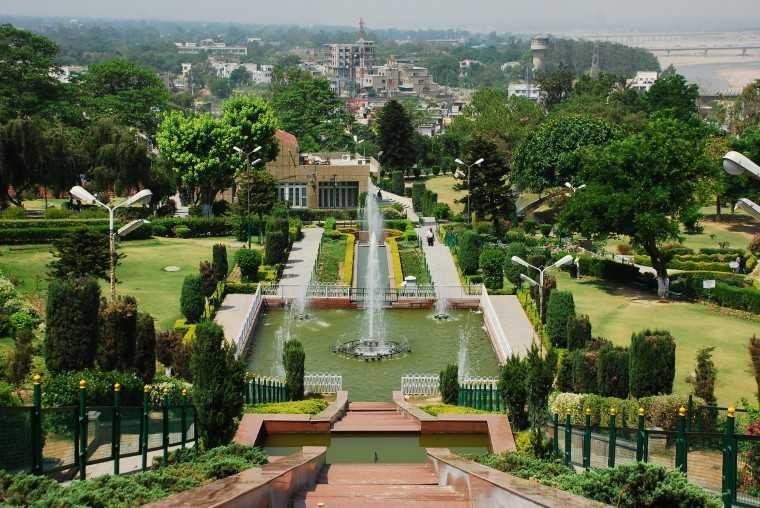
Bagh-e-Bahu – A Scenic Garden Retreat Beside Bawe Wali Mata Temple in Jammu
Bagh-e-Bahu is one of the most popular leisure attractions in Jammu, offering pilgrims and families a peaceful place to relax after visiting the sacred temples of the city. Located beside the historic Bahu Fort and overlooking the Tawi River, this beautifully landscaped terraced garden is known for its green lawns, colourful flowerbeds, fountains, walking paths and panoramic views of Jammu.
Its location beside Bawe Wali Mata Temple, a revered shrine dedicated to Goddess Kali within Bahu Fort, makes Bagh-e-Bahu particularly suitable for travellers planning a temple-focused itinerary. Devotees can complete their darshan at the temple, explore the fort surroundings and then spend a relaxed afternoon walking through the garden with their families.
For pilgrims travelling to Shri Mata Vaishno Devi Temple in Katra, Bagh-e-Bahu can also be included during a stay in Jammu before beginning the yatra or after returning from Katra. Instead of treating Jammu only as an arrival or departure point, travellers can use the city as a base for temple visits, heritage sightseeing and leisure experiences.
With its combination of faith, history, gardens, river views and family recreation, Bagh-e-Bahu adds a refreshing dimension to a spiritual journey planned through MudrasStays.
Relax After Darshan at Bawe Wali Mata Temple
The strongest pilgrimage connection of Bagh-e-Bahu is with Bawe Wali Mata Temple, situated within the adjoining Bahu Fort complex. The shrine is dedicated to Goddess Kali and attracts devotees seeking the blessings and protection of the Divine Mother.
Temple visits often involve early-morning travel, queues, walking and long hours away from the hotel. After completing darshan, families may want a quiet place where they can sit together rather than immediately moving towards another crowded destination. Bagh-e-Bahu provides this peaceful transition from spiritual activity to leisure.
Devotees can offer prayers at Bawe Wali Mata Temple and then enter the landscaped garden to enjoy its lawns, pathways and views over Jammu. The garden is especially suitable for:
Families travelling with children
Senior citizens seeking a relaxed outing
Couples visiting Jammu’s temples
Mata Vaishno Devi pilgrims staying in Jammu
Religious groups with additional sightseeing time
Travellers waiting for a train or flight later in the day
This combination allows pilgrims to experience both the devotional atmosphere of the temple and the natural calmness of the garden within the same area.
A Beautiful Terraced Garden Overlooking the Tawi River
Bagh-e-Bahu is designed as a terraced garden, with lawns and landscaped sections arranged across different levels. The official Jammu district tourism page describes it as a serene Mughal-style garden known for colourful flowerbeds, fountains and panoramic city views.
Visitors can walk along its paths, rest beneath trees, admire seasonal flowers and take photographs against the backdrop of the Tawi River and Jammu city. The elevated setting around Bahu Fort provides attractive views across the surrounding urban landscape.
The garden’s open spaces make it suitable for families who want to spend an unhurried afternoon after temple darshan. Children can enjoy the outdoor environment, while elderly travellers can relax on available seating and appreciate the scenery without following a demanding itinerary.
Unlike destinations that require extensive trekking or long-distance travel, Bagh-e-Bahu can be visited comfortably as part of a local Jammu sightseeing plan.
Explore the Historic Bahu Fort
Bagh-e-Bahu surrounds the historic Bahu Fort, which stands on a rocky elevation on the left bank of the Tawi River. The Jammu and Kashmir Tourism Development Corporation places the fort approximately five kilometres from Jammu’s city centre and notes that the present structure was developed and expanded under the Dogra rulers.
The fort is closely associated with Jammu’s history and cultural identity. Its position above the river gives visitors panoramic views of the surrounding city and landscape.
For pilgrims, the fort is primarily important because it houses Bawe Wali Mata Temple. However, visitors interested in local heritage can also appreciate the historic setting, defensive location and relationship between the fort, temple, river and garden.
A visit to Bahu Fort and Bagh-e-Bahu therefore brings together four different travel experiences:
Temple darshan, historical exploration, garden leisure and scenic river views.
Visit Bawe Wali Mata Temple
Bawe Wali Mata Temple is one of Jammu’s prominent places of worship. Located inside Bahu Fort, the shrine is dedicated to Goddess Kali and forms the spiritual centre of the entire complex. Official tourism information identifies the Kali temple as an important feature within the fort.
Devotees visit the temple to seek divine blessings before beginning important journeys, during religious occasions or as part of a wider temple tour across Jammu.
Pilgrims travelling towards Mata Vaishno Devi can include Bawe Wali Mata Temple before proceeding to Katra. Those returning from the yatra can visit the shrine as a concluding spiritual experience before leaving Jammu.
Visitors should dress respectfully, maintain silence near the sanctum and follow instructions issued by temple authorities. During festivals and auspicious days, the area may experience larger crowds, so travellers should keep additional time in their schedule.
Discover the Bagh-e-Bahu Aquarium
Another important family attraction near the garden is the Bagh-e-Bahu Aquarium. Located close to Bahu Fort on the bank of the Tawi River, the underground aquarium extends the visit beyond gardens and temple sightseeing. Official tourism sources describe it as a major underground aquarium featuring numerous fish species and attracting a large number of visitors.
The aquarium can be especially enjoyable for families travelling with children. After visiting Bawe Wali Mata Temple and exploring the garden, visitors can spend additional time learning about aquatic life.
The combination of the aquarium and garden makes Bagh-e-Bahu suitable for multigenerational family trips. Senior family members can focus on temple darshan and relaxation, while younger visitors can enjoy the garden and aquarium experience.
Operating hours, ticket prices and access conditions may change, so visitors should confirm the latest information locally before planning their visit.
Panoramic Views of Jammu City
One of the most memorable features of Bagh-e-Bahu is its elevated view over the Tawi River and Jammu city. The terraced layout creates several points from which travellers can appreciate the river, bridges, surrounding neighbourhoods and distant cityscape.
The scenery is particularly attractive for photography. Families can take group photographs after darshan, while couples and solo travellers can capture the garden’s symmetry, fountains and river backdrop.
Morning light may offer clearer surroundings, while the late afternoon can create a softer atmosphere across the garden. Visibility depends on the season and weather conditions.
For pilgrims who have spent much of their journey travelling between hotels, temples and transport terminals, the open view provides a welcome feeling of space and relaxation.
A Family-Friendly Attraction in Jammu
Bagh-e-Bahu is suitable for a broad range of visitors because it does not require strenuous physical activity. Families can explore it according to their own pace and available time.
Visitors may choose to:
Walk through the terraced gardens
Relax on the lawns or seating areas
Photograph the fountains and flowerbeds
Enjoy views of the Tawi River
Visit the underground aquarium
Explore Bahu Fort
Complete darshan at Bawe Wali Mata Temple
Spend quiet time with family after a pilgrimage
The destination is especially useful for families with mixed age groups. Not every family member may want to visit museums, undertake long walks or participate in adventure activities. Bagh-e-Bahu provides a comparatively relaxed outing that can appeal to children, adults and senior citizens together.
Combine Bagh-e-Bahu with Jammu’s Famous Temples
Bagh-e-Bahu can be included in a complete Jammu temple and sightseeing circuit.
Raghunath Temple
Raghunath Temple is one of Jammu’s most prominent temple complexes and is primarily dedicated to Lord Rama. Its history dates to the nineteenth century and is connected with Maharaja Gulab Singh and the Dogra dynasty.
Pilgrims can visit Raghunath Temple in the morning, explore the nearby market and then proceed towards Bahu Fort, Bawe Wali Mata Temple and Bagh-e-Bahu.
Ranbireshwar Temple
Dedicated to Lord Shiva, Ranbireshwar Temple is another important religious destination in Jammu. It becomes especially vibrant during the holy month of Sawan and Maha Shivratri.
Shiva devotees can include Ranbireshwar Temple with Peer Kho Cave Temple and Bawe Wali Mata Temple before relaxing at Bagh-e-Bahu.
Peer Kho Cave Temple
Peer Kho Cave Temple is an ancient Shiva shrine located within a natural cave setting near the Tawi River. Its distinctive spiritual atmosphere makes it a valuable addition to a Jammu temple tour.
Mahamaya Temple
Mahamaya Temple is another sacred destination in the Bahu Fort area. Travellers with additional time can include it while exploring the wider temple and heritage circuit around Bagh-e-Bahu.
A suitable local itinerary may include:
Raghunath Temple – Ranbireshwar Temple – Peer Kho Cave Temple – Bawe Wali Mata Temple – Bahu Fort – Bagh-e-Bahu
This route allows pilgrims to experience several important temples along with heritage, gardens and river views.
Include Bagh-e-Bahu in a Mata Vaishno Devi Itinerary
Jammu is a major gateway for pilgrims travelling to Mata Vaishno Devi Temple in Katra. Many visitors arrive through Jammu Tawi Railway Station or Jammu Airport and continue directly to Katra.
However, pilgrims with an additional day can explore Jammu before or after the yatra.
Suggested Itinerary
Day 1: Arrival in Jammu
Check into a hotel and rest after the journey.
Day 2: Jammu Temple and Leisure Tour
Visit Raghunath Temple, Ranbireshwar Temple and Peer Kho Cave Temple. Continue to Bawe Wali Mata Temple, explore Bahu Fort and spend the evening at Bagh-e-Bahu.
Day 3: Travel to Katra
Check into a hotel near the Mata Vaishno Devi pilgrimage route and prepare for darshan.
Day 4: Mata Vaishno Devi Darshan
Complete the yatra and return to Katra for proper rest.
This plan allows travellers to experience Jammu without compromising the main pilgrimage schedule.
Alternatively, families returning from Katra can stay in Jammu for one night and visit Bagh-e-Bahu before taking their onward train or flight.
Best Time to Visit Bagh-e-Bahu
Bagh-e-Bahu can be visited throughout much of the year, although the experience varies with the season.
Spring
Spring is suitable for enjoying the landscaped garden, flowers and comfortable outdoor weather.
Summer
Jammu can become hot during summer, so morning or late-afternoon visits are generally more comfortable. Travellers should carry drinking water and use sun protection.
Monsoon
Rain can make the garden greener, but pathways may become slippery. Visitors should check weather conditions before travelling and carry suitable footwear.
Autumn
Autumn generally provides pleasant conditions for walking, temple visits and photography.
Winter
Winter days can be comfortable for sightseeing, although mornings and evenings may be cold. Families should carry appropriate warm clothing.
The garden’s appearance may vary according to seasonal planting, weather and maintenance conditions.
Ideal Time to Spend at Bagh-e-Bahu
Travellers can generally plan a few hours for the complete Bahu Fort area. Additional time should be kept when combining:
Bawe Wali Mata Temple darshan
Bahu Fort exploration
Bagh-e-Bahu Garden
The underground aquarium
Mahamaya Temple
Photography and family leisure
Visitors arriving during festivals, weekends or holiday periods should allow extra time for traffic, parking and temple queues.
Families should avoid scheduling the visit too close to a train, flight or fixed yatra reporting time.
Food and Shopping Near Bagh-e-Bahu
Basic snacks and refreshments may be available around the tourist area, while Jammu city offers a wider variety of restaurants and local eateries.
Travellers can enjoy traditional Dogra and North Indian dishes during their stay in Jammu. Regional food associated with Jammu includes rajma, aloo dum, Kashmiri pulao and patisa.
Visitors interested in shopping can explore markets in central Jammu for dry fruits, handicrafts, traditional jewellery, local food products and pilgrimage souvenirs.
Families should select food according to their dietary requirements, particularly when travelling with children, senior citizens or pilgrims following vegetarian or satvik diets.
How to Reach Bagh-e-Bahu
Bagh-e-Bahu is located near Bahu Fort on the bank of the Tawi River. JKTDC places the aquarium area approximately four kilometres from Jammu Tawi Railway Station and around nine kilometres from Jammu Airport.
The destination can be reached by:
Private taxi
App-based cab, subject to local availability
Auto-rickshaw
Personal vehicle
Pre-arranged sightseeing transport
Actual travel time depends on traffic, road diversions and the visitor’s starting point in Jammu.
Pilgrims staying near the railway station, Raghunath Bazaar or central Jammu can easily include Bagh-e-Bahu in a half-day local sightseeing tour.
Where to Stay Near Bagh-e-Bahu
Travellers visiting Bagh-e-Bahu can stay in Jammu according to their transport and temple plans.
Accommodation near central Jammu may be suitable for visitors planning to explore Raghunath Temple, local markets and railway connectivity. Properties closer to Bahu Fort may provide more convenient access to Bawe Wali Mata Temple and Bagh-e-Bahu.
Pilgrims travelling onward to Mata Vaishno Devi should consider:
Distance from Jammu Tawi Railway Station
Airport connectivity
Taxi availability for Katra
Family-room options
Parking facilities
Lift or ground-floor access for senior citizens
Vegetarian meal availability
Flexible check-in and check-out arrangements
Travellers whose main purpose is Mata Vaishno Devi darshan should book a separate stay in Katra for the pilgrimage portion of the journey.
Book Stays Near Bagh-e-Bahu and Jammu Temples with MudrasStays
MudrasStays helps pilgrims find accommodation near temples, pilgrimage destinations and nearby leisure attractions.
Travellers visiting Jammu can use MudrasStays to search for:
Hotels near Bagh-e-Bahu
Stays near Bawe Wali Mata Temple
Family accommodation near Bahu Fort
Hotels near Raghunath Temple
Stays near Ranbireshwar Temple
Accommodation near Jammu Tawi Railway Station
Hotels along the Jammu–Katra pilgrimage route
Family stays near Mata Vaishno Devi Temple
Booking suitable accommodation near the places included in your itinerary can reduce unnecessary travel and make the pilgrimage more comfortable, particularly for children and elderly family members.
With MudrasStays, travellers can plan a better-balanced journey that brings together:
Temple darshan, comfortable stays, local sightseeing, heritage exploration and family leisure.
Bagh-e-Bahu is more than a garden in Jammu. It is a peaceful extension of the Bawe Wali Mata pilgrimage experience—a place where devotees can complete darshan, explore a historic fort, walk through landscaped lawns, enjoy views of the Tawi River and spend meaningful time with their families.
By including Bagh-e-Bahu in your Jammu temple itinerary and finding the right accommodation through MudrasStays, you can turn a short religious visit into a complete spiritual, cultural and leisure experience.