
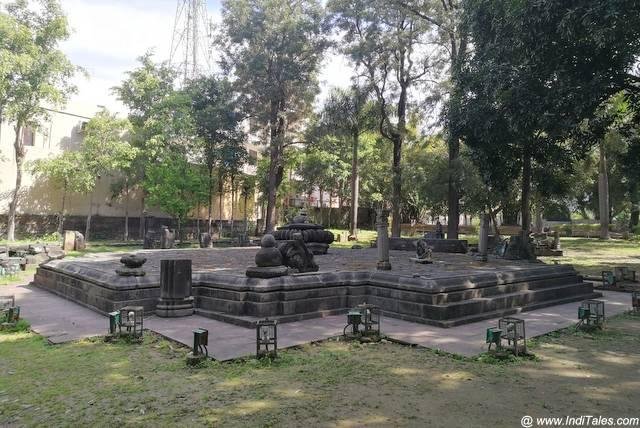
Bhima Devi Temple Complex is one of Haryana’s most important archaeological temple sites and one of the finest heritage destinations to visit near Pinjore, Panchkula and Chandigarh. Situated in the lower Shivalik landscape of Pinjore, the protected complex preserves the foundations, sculptures and architectural remains of a large medieval Hindu temple ensemble that flourished broadly between the ninth and eleventh centuries.
The destination is also known as:
Bhima Devi Temple
Bhima Devi Temple Complex
Bhima Devi Temple Site Museum
Bhima Devi Archaeological Complex
Bhima Devi Temple Ruins
Bhima Devi Pinjore
Ancient Bhima Devi Temple
Bhima Devi Heritage Site
The complex is sometimes promoted as the “Khajuraho of North India” because several surviving sculptures display elaborate human figures, musicians, divine couples and erotic imagery. This tourism nickname helps visitors understand the richness of its sculpture, but Bhima Devi should not be presented as a branch, replica or smaller version of the Khajuraho temple group.
The two heritage sites belong to different regional landscapes and historical contexts.
Bhima Devi possesses its own architectural identity, religious history and importance within the sacred geography of the Shivalik foothills.
Travellers arranging transport should clearly specify:
**Bhima Devi Temple Complex and Site Museum, Pinjore, Panchkula district, Haryana.**
This helps distinguish the archaeological complex from modern temples dedicated to goddesses with similar names.
Bhima Devi is not experienced today as a completely standing medieval temple with an intact shikhara, enclosed mandapa and continuously functioning ancient sanctum.
The visitor instead encounters an archaeological landscape.
Stone foundations reveal the plan of the temple.
Carved pillars and architectural pieces suggest the scale and ornamentation of the vanished superstructure.
Divine sculptures help historians understand the temple’s religious identity.
Fragments of towers, decorative windows, brackets, floral patterns and figures demonstrate the skill of the artisans who worked at the site.
The nearby museum protects and interprets many of the recovered objects.
This means that Bhima Devi requires a different type of attention from an active pilgrimage temple.
The visitor is not only seeking darshan.
The visitor is learning to read stone.
A damaged carving becomes evidence of an artistic tradition.
A platform reveals how the shrines were organised.
A broken architectural fragment suggests the appearance of the temple’s outer wall.
A weathered divine figure preserves the spiritual imagination of a community that lived more than a thousand years ago.
For heritage travellers, Bhima Devi is among the most rewarding places to visit near Pinjore.
For Hindu pilgrims, it preserves the remains of an important Shaiva sacred centre.
For students, it provides a direct introduction to medieval temple architecture and iconography.
For families, it can be combined with Yadavindra Gardens and other attractions around Panchkula.
For photographers, the grey stone, shaded grounds and carved fragments offer meaningful subjects when monument rules are respected.
For travellers searching for hotels near Bhima Devi Temple Complex, homestays near Pinjore, accommodation near Yadavindra Gardens or places to stay for a Panchkula heritage itinerary, MudrasStays can help identify conveniently located properties.
## State-Protected Archaeological Monument
Bhima Devi Temple Complex is protected by the Government of Haryana through the state’s Directorate of Archaeology and Museums.
It should not be incorrectly described as an Archaeological Survey of India monument unless its administrative status changes officially.
The distinction matters because different authorities may establish different procedures for:
Opening hours
Photography
Professional filming
Drone use
Research access
Conservation work
Museum entry
Construction restrictions around the monument
Events and educational visits
Visitors should follow signage and instructions issued by the Haryana archaeological authorities and site personnel.
Protection means that the stones, foundations, sculptures and archaeological deposits cannot be treated like ordinary objects.
Visitors must not move fragments to create better photographs.
No stone may be collected as a souvenir.
Religious colour, oil, vermilion, milk or adhesive material should not be applied to archaeological sculptures unless a clearly identified active shrine is separately maintained for worship.
Names must never be carved into walls, plinths, pillars or trees.
A monument can survive for future generations only when visitors resist the urge to touch, climb and modify it.
## Historical Period of Bhima Devi Temple
The surviving remains are generally dated between the ninth and eleventh centuries CE, with the wider ancient importance of the settlement extending into the twelfth century.
This places the temple within a significant phase of North Indian temple construction.
The period witnessed the development of elaborately carved stone temples, expanding Shaiva and Shakta traditions and strong regional patronage of sacred architecture.
The precise date of every sculpture or structural phase may not be identical.
A large temple complex could be built, expanded, repaired and redecorated across several generations.
A sculpture may belong to an earlier phase than a later platform.
An inscription may record one patron without proving that he founded every part of the complex.
Visitors should therefore understand Bhima Devi as a developing sacred centre rather than a structure completed in one moment and left unchanged.
The archaeological remains suggest that the ancient settlement was important enough to support substantial temple construction and skilled artistic work.
## Ancient Panchapura and Pinjore
The historical identity of Pinjore is connected with the name Panchapura.
Nineteenth-century archaeological exploration brought attention to an inscription mentioning Panchapura.
Another inscriptional reference dated to the twelfth century has also been connected with the ancient place.
The name Panchapura may be understood as a settlement associated with five towns, five sections or another fivefold geographical idea, though its precise historical interpretation requires specialist study.
Over time, the pronunciation and local name are believed to have developed into Pinjore.
The settlement was also associated with the name Bhima Nagar, reflecting the importance of the Bhima Devi sacred site.
These changing names demonstrate how cities and pilgrimage centres evolve.
A place may preserve several historical identities at once.
Panchapura represents the medieval settlement.
Bhima Nagar reflects the sacred temple tradition.
Pinjore is the modern town known for gardens, heritage and its position at the entrance to the Shivalik hills.
## Pandava Tradition
Pinjore is connected through local tradition with the Pandavas and their period of exile.
The name is sometimes explained through stories concerning the five brothers.
Bhima, the physically strongest Pandava, is naturally connected in popular imagination with the name Bhima Nagar or Bhima Devi.
These traditions belong to epic memory and local faith.
They should not be presented as archaeological proof that the Pandavas physically constructed the surviving medieval temple.
The stone architecture belongs to a much later historical period than the era traditionally assigned to the Mahabharata.
A sacred place can preserve an epic legend while its visible monument belongs to medieval history.
The two layers should be explained separately and respectfully.
For visitors, the Pandava tradition adds a mythological dimension to Pinjore’s landscape.
The archaeological foundations, however, must be interpreted through inscriptions, architecture, sculpture and scientific study.
## Who Is Bhima Devi?
The exact theological identity represented by the name Bhima Devi deserves careful explanation.
The word Bhima can mean powerful, formidable, immense or awe-inspiring.
Within Goddess traditions, Bhima Devi may be understood as a strong and protective manifestation of Shakti.
Some sacred texts describe the Goddess appearing in a formidable form to protect sages in the Himalayan region.
The lower Shivalik setting of Pinjore makes this broader Shakti tradition meaningful.
However, the surviving sculpture and architecture also indicate a strong Shaiva identity.
Images associated with Shiva, Parvati, Ganesha and Kartikeya suggest that the principal temple was closely connected with the divine family of Shiva.
It is therefore safer to describe Bhima Devi as a sacred complex with a predominantly Shaiva character and an important Goddess association rather than forcing the entire site into one narrowly defined identity.
Ancient Hindu temples often contained several divine forms.
A principal shrine could be dedicated to Shiva while the exterior walls presented Surya, Vishnu, guardian deities, river goddesses and other sacred figures.
The presence of multiple deities did not reduce the identity of the main temple.
It represented the wider sacred universe surrounding the presiding deity.
## Panchayatana Temple Plan
One of the most important architectural features of Bhima Devi is its Panchayatana arrangement.
Panchayatana means a five-shrine temple plan.
A principal shrine stands at the centre, while four smaller shrines occupy positions around it.
The arrangement creates a balanced sacred geometry.
The central deity remains the principal focus, but the surrounding shrines acknowledge related divine forms.
Panchayatana architecture became important within several Hindu traditions.
It allowed worshippers to recognise the unity of the sacred while honouring distinct deities.
At Bhima Devi, the surviving stone plinths help visitors understand the basic organisation of the complex even though the original towers and halls no longer stand completely.
Visitors should walk around the foundations slowly.
The arrangement becomes clearer when the platforms are understood as the bases of once-rising shrines rather than as isolated stone surfaces.
The central platform would have supported the main sacred structure.
Subsidiary shrines would have created a ritual and visual relationship around it.
The complete monument would have appeared far taller and more richly decorated than the present foundations initially suggest.
## North Indian Nagara Architecture
Bhima Devi belonged broadly to the North Indian Nagara tradition of temple architecture.
A Nagara temple generally includes a sanctum containing the principal deity and a rising tower or shikhara above it.
Additional halls may extend along the main axis.
The exterior walls are often divided into projections and recesses containing sculptures and decorative motifs.
The surviving architectural remains at Bhima Devi include forms associated with:
Miniature temple towers
Decorative chaitya-window motifs
Carved wall projections
Pillar brackets
Floral bands
Human figures
Divine images
Animal decoration
Architectural mouldings
Amalaka-like crowning elements
The original temple exterior may have been densely decorated, while the inner sanctum was likely comparatively restrained.
This contrast is common in temple architecture.
The outer wall represents the varied world of divine beings, humans, musicians, animals, plants and movement.
The sanctum represents concentration, stillness and the presence of the principal deity.
## Shaiva Identity of the Complex
The surviving sculptures strongly suggest that Bhima Devi was connected with the worship of Lord Shiva.
Shiva represents meditation, transformation, time, liberation and pure consciousness.
He is worshipped through both anthropomorphic images and the Shiva lingam.
Within a large Shaiva complex, the temple exterior could include Shiva in several forms, Goddess Parvati, their sons Ganesha and Kartikeya, attendants, guardians and other deities of the Hindu sacred universe.
The presence of Shiva and Parvati together represents the unity of consciousness and divine energy.
Shiva without Shakti remains unmanifest awareness.
Shakti without consciousness lacks spiritual direction.
Their union represents the balance between stillness and action.
## Shiva and Parvati Sculptures
Representations of Shiva and Parvati are among the important sculptural themes recovered from the site.
The divine couple may appear seated together or within family and sacred narratives.
Such images communicate more than marital symbolism.
They represent complementary spiritual powers.
Shiva embodies consciousness, meditation and transformation.
Parvati embodies energy, courage, compassion and creative life.
Their relationship expresses cosmic balance.
Visitors should observe posture, jewellery, attendants and surviving attributes without touching the stone.
Even when faces or limbs are damaged, the remaining iconography can reveal the original identity.
## Lord Ganesha
Ganesha is the son of Shiva and Parvati and is worshipped as the remover of obstacles and lord of beginnings.
His presence is especially appropriate at a temple entrance or within a Shaiva complex.
His elephant head represents wisdom, memory and the ability to recognise what is truly important.
His large ears symbolise careful listening.
His vehicle, the mouse, represents desire brought under control.
A recovered Ganesha sculpture helps establish the family and Shaiva environment of the temple.
Visitors may feel devotional respect before such an image, but offerings should not be placed directly upon protected archaeological material unless site authorities provide a separate worship arrangement.
## Kartikeya
Kartikeya, also known as Skanda or Murugan, is another son of Shiva and Parvati.
He represents courage, leadership and disciplined action.
His presence within the sculptural programme strengthens the connection with Shiva’s divine family.
Kartikeya is often shown as a youthful warrior and may be associated with the peacock.
Weathering or damage can make individual attributes difficult to identify, so visitors should rely upon museum labels rather than assumptions.
## Surya
Surya, the Sun God, represents light, vitality, clarity and the regular movement of time.
Surya images are often recognised through an upright posture, elaborate dress and solar symbolism.
The sun makes physical life possible and also represents spiritual knowledge.
Darkness disappears when light is present.
Similarly, ignorance can be reduced through education and awareness.
The presence of Surya within the sculptural programme demonstrates the broad sacred universe represented on the temple walls.
## Vishnu
Lord Vishnu represents preservation, balance and the restoration of dharma.
He may be recognised through attributes such as the conch, discus, mace and lotus, depending upon the surviving condition of the sculpture.
Vishnu’s presence within a Shaiva complex should not be considered contradictory.
Medieval Hindu temple programmes regularly included multiple divine forms.
The sculptures expressed a connected sacred world rather than rigid separation.
## Agni and Varuna
Agni represents fire, transformation and the sacred power carrying offerings through yajna.
Varuna is associated with water, cosmic order and the moral structure of existence.
The inclusion of elemental and directional deities helped protect and complete the sacred architecture.
Fire and water also represent complementary forces.
Fire transforms.
Water nourishes and purifies.
Together with earth, air and space, they form the material environment in which life and ritual unfold.
## Musicians, Dancers and Social Scenes
The surviving fragments include more than images of gods and goddesses.
Musicians, performers and figures from social life formed part of the original decorative programme.
This reminds visitors that medieval temples were not isolated from culture.
They were centres of ritual, music, gathering, patronage and artistic expression.
A carved musician preserves information about instruments, clothing and performance traditions.
A dancing figure reveals movement captured in stone.
Social scenes help historians understand the world in which the temple was built.
## Erotic Sculptures
Bhima Devi is frequently called the Khajuraho of North India because some surviving sculptures contain erotic or intimate imagery.
These carvings should be approached maturely and placed within the wider temple programme.
They do not mean that the entire temple was dedicated to sexuality.
Indian temple exteriors could represent many dimensions of existence:
Divine beings
Warriors
Musicians
Dancers
Householders
Animals
Vegetation
Love
Fertility
Protection
Spiritual practice
Intimate imagery may symbolise fertility, auspiciousness, worldly life, creative energy or the completeness of existence outside the sanctum.
Visitors should not treat the sculptures as material for jokes, mockery or intrusive photography.
Parents and teachers can explain them according to the age and maturity of children.
## Inscriptions and Raja Rama Deva
Stone inscriptions associated with the site include references connected with a ruler named Raja Rama Deva.
He may have been an important local patron who supported the temple or one phase of its development.
Inscriptions are essential historical evidence because they can preserve names, titles, donations, religious affiliations and place names.
However, an inscription mentioning a ruler does not automatically prove that he founded the entire complex.
He may have financed repairs, added a shrine or made an endowment.
The cautious interpretation of inscriptions is part of responsible heritage writing.
## Destruction and Reuse
The temple no longer survives as a complete standing structure.
Haryana tourism interpretation associates its ruin with repeated episodes of destruction during medieval conflict and suggests that the final major damage occurred by the Mughal period.
It has also been suggested that temple material may have been reused in later construction around Pinjore.
These explanations should be presented cautiously.
A monument can decline through several processes:
Conflict
Deliberate demolition
Reuse of stone
Earthquakes
Weathering
Neglect
Vegetation
Changes in settlement
Loss of patronage
The surviving fragments show that the temple experienced severe destruction and dispersal.
Assigning every damaged stone to one ruler or one event requires stronger evidence than popular retellings sometimes provide.
The most respectful approach is to acknowledge the evidence of destruction without turning the heritage site into a space for modern communal hostility.
## Archaeological Clearance and Recovery
Scientific clearance and archaeological work revealed temple foundations and numerous sculptural and architectural fragments.
These discoveries made it possible to reconstruct the broad plan of the complex and establish its medieval importance.
Archaeological clearance differs from treasure hunting.
Each object must be recorded according to its location and relationship with surrounding deposits.
The position of a stone can provide information that is lost when it is moved without documentation.
This is why visitors must never shift loose-looking fragments.
An object that appears unimportant may still form part of an archaeological pattern.
## Bhima Devi Site Museum
The site museum preserves and displays sculptures and architectural elements recovered from the complex.
A museum visit is essential for understanding Bhima Devi properly.
The open foundations show the scale and arrangement of the temple.
The gallery allows visitors to examine individual divine images and carved fragments more closely.
Displays may include:
Divine sculptures
Architectural panels
Pillar fragments
Decorative window motifs
Miniature tower elements
Human figures
Animal carvings
Floral designs
Fragmentary inscriptions
Protective and directional deities
Visitors should read available labels carefully.
Photography rules may differ between the open site and the museum.
Flash, tripods or professional equipment may require permission.
Museum objects must never be touched, even when displayed without glass.
## Is Bhima Devi an Active Temple?
Bhima Devi is principally experienced today as a protected archaeological complex and site museum.
It should not be marketed in exactly the same way as a continuously functioning temple with daily large-scale aarti, priestly schedules and major annual melas.
Visitors may approach the site with devotional respect, especially because the sculptures represent Hindu deities and the location preserves a sacred temple tradition.
However, archaeological conservation rules take priority around protected remains.
Before carrying offerings, lighting lamps or performing rituals, visitors should confirm whether a separately maintained active shrine exists and what practices are permitted.
No ceremony should damage the sculptures, stone platforms or museum environment.
## Festivals and Religious Visits
Because the site is predominantly Shaiva, visitors may feel a special connection during Mahashivratri or the month of Shravan.
However, a major official festival programme at the archaeological complex should not be assumed.
Travellers planning a visit specifically for Mahashivratri, Navratri or another sacred date should confirm whether the site follows ordinary museum hours or hosts any authorised observance.
The complex may be busier during weekends, school holidays, heritage walks and events at nearby Yadavindra Gardens.
## Best Time to Visit Bhima Devi Temple Complex
The site can generally be visited throughout the year when the museum and grounds are open.
### October to March
The cooler months provide the most comfortable conditions for walking around the open archaeological grounds.
Morning and evening can become cold during December and January.
Fog may affect travel on the Chandigarh–Shimla corridor.
### February and March
Late winter and early spring are particularly pleasant.
The weather allows visitors to combine the archaeological site with Yadavindra Gardens without excessive heat.
### April to June
Pinjore can become hot during the day.
Much of the complex is outdoors.
Visitors should arrive in the morning, carry drinking water and use sun protection.
### July to September
The monsoon makes the lower Shivalik surroundings greener.
Rain can also make stone paving, grass and exposed foundations slippery.
Visitors should avoid climbing any platform and should follow temporary closures.
## Suggested Visiting Duration
A quick visitor may spend approximately one hour at the complex.
Travellers genuinely interested in sculpture, architecture and the museum should allow at least ninety minutes to two hours.
A combined visit with Yadavindra Gardens can occupy half a day.
School and heritage groups may require additional time for interpretation.
## Reaching Bhima Devi Temple Complex
Bhima Devi Temple Complex is located in Pinjore within Panchkula district.
Pinjore lies on the important road corridor connecting Chandigarh, Panchkula, Kalka, Parwanoo and the Shimla hills.
A taxi, private vehicle or local auto-rickshaw is generally the easiest way to reach the site.
Visitors should confirm the exact entrance for the archaeological complex rather than entering Yadavindra Gardens and assuming that both attractions use the same gate.
Parking arrangements may differ during weekends, festivals and tourism events.
## Reaching from Chandigarh and Panchkula
Pinjore is easily approached by road from Chandigarh and Panchkula.
Travel time depends heavily upon the starting sector, traffic around Panchkula, road construction and congestion towards Kalka.
A morning departure is preferable, especially on weekends and during the summer holiday period.
## Reaching from Kalka
Kalka is one of the closest railway and transport towns.
Travellers arriving by train can use a taxi or local vehicle for the short onward road journey to Pinjore.
Visitors continuing towards Shimla can include Bhima Devi and Yadavindra Gardens before beginning the hill journey, provided luggage and time are managed properly.
## Reaching by Air
Chandigarh International Airport is the principal airport serving the region.
A road transfer is required.
Visitors should not schedule the archaeological complex immediately before a flight without a generous buffer for Tricity traffic.
## Accessibility for Senior Citizens
The complex does not require a mountain trek.
The principal visitor areas are reached by road and involve walking through museum and open heritage grounds.
Uneven stone, raised plinths, grass, thresholds and temporary conservation barriers may create difficulty.
Senior citizens should wear stable footwear and avoid attempting to climb temple foundations.
Wheelchair access to every archaeological feature may not be possible.
The nearest accessible drop-off and museum route should be confirmed locally.
## Visiting with Children
Bhima Devi is an excellent educational destination for children interested in history, mythology and art.
Parents and teachers can explain how archaeologists use foundations, carvings and inscriptions to understand the past.
Children must not climb the platforms or sit upon sculptures.
They should not pick up small stone fragments.
Museum barriers and labels must be respected.
The erotic carvings can be explained in a mature, age-appropriate manner as one part of a much wider artistic programme.
## Photography
Photography can help document architectural details, but current rules must be followed.
Professional shoots, tripods, drones and commercial filming may require permission.
Visitors should not stand upon protected foundations to obtain a better angle.
No sculpture should be moved.
Flash photography may be prohibited inside the museum.
Images should present the site respectfully rather than sensationalising damaged figures or erotic carvings.
## Yadavindra Gardens
Yadavindra Gardens, also known as Pinjore Gardens, is the most important nearby attraction.
The terraced garden complex developed during the Mughal period and later received patronage and restoration under the rulers of Patiala.
Its descending terraces, water channels, fountains, pavilions and garden architecture create a strong contrast with the earlier stone temple remains.
Bhima Devi represents medieval sacred architecture.
Yadavindra Gardens represents a later garden tradition.
Together, they allow visitors to experience different historical layers of Pinjore.
The two sites should remain distinct in interpretation even when included in one itinerary.
## Mata Mansa Devi Temple
Mata Mansa Devi Temple near Panchkula is one of the region’s most important active Shakti pilgrimage centres.
It offers a living worship experience very different from the archaeological character of Bhima Devi.
A multi-day spiritual and heritage itinerary can include both sites.
Navratri visitors should account for large crowds around Mansa Devi.
## Gurdwara Nada Sahib
Gurdwara Nada Sahib is associated with Guru Gobind Singh Ji and the period following the Battle of Bhangani.
Visitors should cover their heads, remove footwear and follow Sikh maryada.
A combined journey can demonstrate the diverse sacred heritage of Panchkula district.
## Kalka and Kali Mata Temple
Kalka is an important gateway to Himachal Pradesh and is associated with the historic Kali Mata Temple.
The Kalka shrine is an active Goddess temple and should not be confused with the archaeological Bhima Devi complex.
## Morni Hills
Morni Hills provides a scenic extension to a Panchkula journey.
The hill roads require additional time and should not be compressed into a short half-day visit with Pinjore.
Weather and road conditions should be checked before travel.
## Suggested Half-Day Pinjore Heritage Itinerary
Begin at Bhima Devi Temple Complex during museum opening hours.
Walk through the archaeological foundations.
Study the Panchayatana plan.
Visit the site museum and examine the recovered sculptures.
Continue to Yadavindra Gardens.
Explore the terraces, water channels and pavilions.
Have a meal or refreshment at an authorised tourism facility before returning to accommodation.
## Suggested One-Day Panchkula Heritage Itinerary
Begin with Bhima Devi Temple Complex and Site Museum.
Continue to Yadavindra Gardens.
Travel towards Panchkula for a later visit to the Cactus Garden, Mansa Devi area or another suitable attraction.
Avoid attempting too many sites if travelling with senior citizens or children.
## Suggested Two-Day Heritage and Spiritual Journey
On the first day, explore Bhima Devi Temple Complex and Yadavindra Gardens.
On the second day, visit Mata Mansa Devi Temple and Gurdwara Nada Sahib.
This itinerary combines archaeological heritage, active Hindu pilgrimage and Sikh sacred history.
## Accommodation Near Bhima Devi Temple Complex
Travellers can choose accommodation in Pinjore, Kalka, Panchkula, Chandigarh or Parwanoo depending upon the wider route.
Pinjore provides the closest base.
Panchkula and Chandigarh offer a much larger variety of hotels, restaurants and transport.
Kalka is practical for railway travellers and visitors continuing towards Shimla.
## Haryana Tourism Accommodation at Pinjore Gardens
Haryana Tourism operates accommodation within the Pinjore Gardens Tourist Complex.
Published options include motel rooms and heritage-style suites, along with restaurant and event facilities.
Current availability, tariffs, maintenance status and booking rules should be confirmed directly.
Staying in Pinjore allows visitors to explore Bhima Devi and Yadavindra Gardens during quieter morning hours.
## Hotels in Pinjore
Pinjore has budget hotels, guesthouses and smaller properties serving highway and leisure travellers.
Guests should verify room quality, parking, meals, air-conditioning, heating and the distance from the archaeological site.
## Hotels in Kalka
Kalka offers railway access and accommodation for travellers continuing towards Shimla.
The town can be busy and room standards vary.
Guests should confirm parking and early transport to Pinjore.
## Hotels in Panchkula
Panchkula provides modern hotels, restaurants, hospitals and wider city facilities.
It is suitable for families combining Bhima Devi with Mansa Devi, Nada Sahib and Chandigarh.
## Hotels in Chandigarh
Chandigarh offers the widest range of accommodation, from economical guesthouses to premium hotels.
It is practical for travellers arriving by air or planning a larger Tricity itinerary.
The road journey to Pinjore should be included in the daily schedule.
## Homestays Near Pinjore and Panchkula
Verified homestays can provide local guidance and quieter accommodation.
Guests should confirm attached bathrooms, parking, meals, air-conditioning, heating and accessibility.
A property described as being near Pinjore may still lie on a separate hill or highway route.
Practical driving time matters more than straight-line distance.
## Choosing the Right Place to Stay
Visitors focused primarily on Bhima Devi and Yadavindra Gardens should stay in Pinjore or Kalka.
Travellers planning a broader Tricity itinerary may prefer Panchkula or Chandigarh.
Families should prioritise room size, meals and parking.
Senior citizens should select accommodation with lifts, ground-floor rooms and dependable taxis.
Couples may prefer quieter garden-facing or foothill properties.
Solo travellers should choose populated and well-connected accommodation.
Groups should confirm several rooms, breakfast and bus parking.
Summer visitors should verify air-conditioning.
Winter guests should confirm hot water and room heating.
## Book Hotels Near Bhima Devi Temple Complex with MudrasStays
MudrasStays helps heritage travellers, families, students and spiritual visitors discover hotels, homestays, guesthouses and comfortable accommodation near Bhima Devi Temple Complex, Pinjore, Kalka and Panchkula.
The platform is designed for travellers searching for places to stay near temples, archaeological monuments and sacred heritage destinations.
Visitors can compare properties according to practical road distance from the complex, room category, budget, family size and required facilities.
Booking in Pinjore can make an early visit to Bhima Devi and Yadavindra Gardens easier.
Rail travellers can choose accommodation near Kalka while retaining convenient road access to Pinjore.
Families can select hotels offering meals, parking and suitable room capacity.
Senior citizens can prioritise accessible properties with dependable local transport.
Student and heritage groups can identify accommodation offering multiple rooms, early breakfast and parking for larger vehicles.
Travellers combining Bhima Devi with Mansa Devi, Nada Sahib, Chandigarh, Kalka or Morni can choose accommodation according to the actual geographical sequence of the journey.
MudrasStays helps visitors avoid booking a property that appears close on a map but requires unnecessary travel across congested roads or hill routes.
## Responsible Heritage Travel
Bhima Devi Temple Complex is a fragile archaeological site.
Visitors should remain on authorised paths.
Temple platforms must not be climbed.
Sculptures must not be touched.
Loose stones must not be moved.
No religious colour, oil, milk or incense should be placed upon protected remains.
Names must not be carved.
Tripods and professional equipment should only be used with permission.
Children must remain supervised.
Waste should be carried to designated bins.
## Respecting Sacred Sculptures
Although many sculptures are displayed as archaeological objects, they represent deities and sacred traditions.
Visitors should avoid disrespectful poses, jokes or physical contact.
Erotic imagery should not be sensationalised.
Damaged sculptures should not be treated as decorative props.
Respecting the spiritual identity of an object and following museum conservation rules are fully compatible.
## A Stone Record of Pinjore’s Sacred Past
Bhima Devi Temple Complex represents a powerful meeting of archaeology, medieval temple architecture, Shaiva worship, Shakti tradition and the layered history of Pinjore.
The temple foundations reveal a Panchayatana plan.
The central shrine represents the sacred focus.
The four subsidiary shrines express balance and divine plurality.
Shiva represents consciousness and transformation.
Parvati represents Shakti and creative energy.
Ganesha represents wisdom and auspicious beginnings.
Kartikeya represents courage and disciplined action.
Surya represents light and clarity.
Vishnu represents preservation and balance.
Agni represents transformation.
Varuna represents water and cosmic order.
Musicians and dancers reveal the cultural life surrounding worship.
Floral and animal motifs connect sacred architecture with nature.
Intimate figures represent one dimension of a complete human and cosmic world.
Inscriptions connect the temple with the historic settlement of Panchapura and with medieval patrons.
The surviving ruins record both artistic achievement and historical destruction.
The museum protects fragments that would otherwise lose their context.
For Hindu visitors, Bhima Devi preserves the memory of an important sacred centre.
For heritage travellers, it offers a rare opportunity to examine temple architecture at foundation level.
For students, it demonstrates how archaeological interpretation is built from inscriptions, plans, sculpture and material remains.
For families, it provides an educational destination close to Chandigarh and Panchkula.
For photographers, the stone fragments and shaded landscape offer meaningful visual details when conservation rules are respected.
For spiritual seekers, the ruined temple carries a quiet lesson: physical structures may fall, but knowledge, art and sacred memory can survive when communities choose to protect them.
Plan your visit to Bhima Devi Temple Complex with MudrasStays and explore one of Haryana’s most important protected temple sites.
Study the Panchayatana foundations, observe the Shaiva sculptures, visit the site museum and understand the historical relationship between ancient Panchapura and modern Pinjore.
Combine your journey with Yadavindra Gardens, Mata Mansa Devi Temple, Gurdwara Nada Sahib, Kalka and the wider heritage attractions of Panchkula.
Book hotels near Bhima Devi Temple Complex, discover homestays near Pinjore and choose suitable heritage accommodation through MudrasStays.
Stay closer to the monument, visit during museum hours and experience Pinjore’s archaeological and architectural heritage without unnecessary travel.
MudrasStays connects pilgrims, families, students and heritage travellers with suitable accommodation near temples, protected monuments and sacred destinations across India.