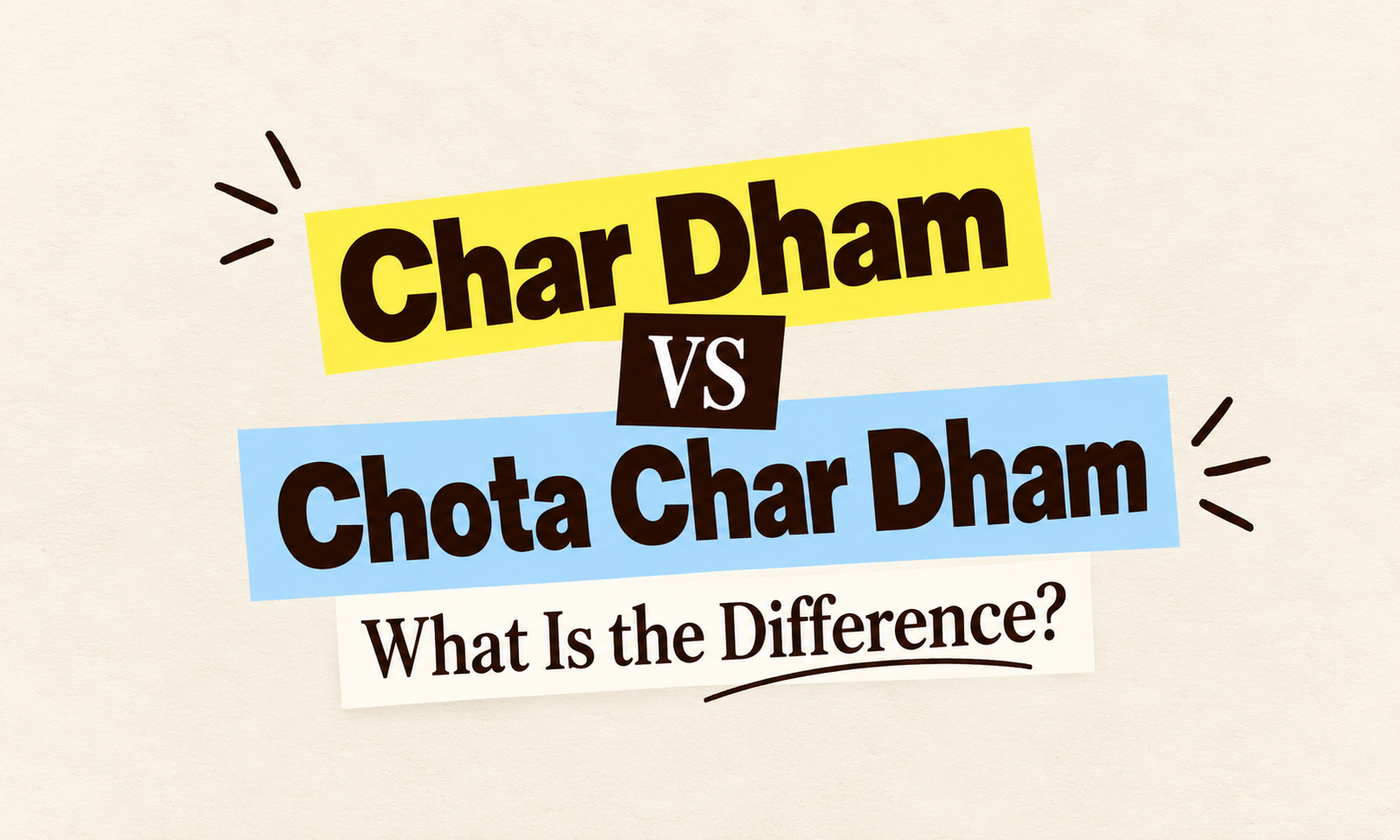
The simplest distinction is: Char Dham is pan-India; Chota Char Dham is Uttarakhand’s Himalayan circuit.
KEY THINGS TO KNOW
Kedarnath’s winter worship shifts to Omkareshwar Temple at Ukhimath.
For senior citizens in the open Yatra season, fitness, altitude tolerance and assistance options should be assessed before travel.
Guptkashi, Sonprayag and Gaurikund solve different Yatra logistics: comfortable base, final road staging, and trek roadhead.
Panch Kedar traditionally refers to Kedarnath, Tungnath, Rudranath, Madhyamaheshwar and Kalpeshwar.
India’s traditional Char Dham refers to Badrinath, Dwarka, Puri and Rameswaram, while Uttarakhand’s Chota Char Dham refers to Yamunotri, Gangotri, Kedarnath and Badrinath.
Kedarnath and Badrinath close for winter because of snow and seasonal access constraints.
QUICK PLANNING CHECKLIST
- Check seasonal shrine status.
- Use official Yatra information.
- Plan around altitude and fitness.
- Choose the correct route base.
- Respect winter closures.
HIGH-INTENT STAY SEARCHES WITH GOOGLE BUSINESS LINKS
For the normal Kedarnath Yatra season—not December closure—keywords such as Kedarnath stay, best stay in Kedarnath, Kedarnath accommodation, family stay Kedarnath and stay near Kedarnath Dham can point to Mudras Kedarnath’s Google listing. This is not a December operating recommendation.
PRACTICAL DARSHAN AND TRAVEL ADVICE
Use official temple or shrine-board websites for current bookings and timings.
Do not rely on old social-media posts for live queue, road or closure information.
Carry fewer belongings into high-security temple zones.
Fix a family meeting point in crowded complexes.
Keep prescribed medicines in the day bag.
For winter travel, start earlier so transfers finish before the coldest part of the evening.
One major temple plus one or two secondary stops is usually a better day than five tightly timed darshans.
Treat special darshan, aarti and senior-citizen access as quota-based when the authority says so.
DETAILED FREQUENTLY ASKED QUESTIONS
Are Kedarnath and Badrinath open in December?
No. The main high-altitude shrines are closed for winter. Worship continues at lower-altitude winter seats.
Can senior citizens visit Kedarnath in season?
Many do, but medical fitness and altitude tolerance matter. Discuss significant heart, lung, blood-pressure or mobility conditions with a doctor before planning.
Where does Kedarnath worship continue in winter?
At Omkareshwar Temple in Ukhimath, the official winter seat of Lord Kedarnath.
What is Char Dham vs Chota Char Dham?
Char Dham is Badrinath, Dwarka, Puri and Rameswaram across India. Chota Char Dham is Yamunotri, Gangotri, Kedarnath and Badrinath in Uttarakhand.
How should I plan this trip during a busy weekend or festival?
Book the main transport and accommodation first, then confirm current temple timing or pass systems. Add at least one flexible hour around the main darshan and avoid scheduling a long road transfer immediately after a crowd-heavy ritual.
What is the best way to keep a family pilgrimage comfortable?
Limit compulsory stops, keep meals predictable, choose a practical stay and allow time to sit and recover. For children and elderly parents, comfort and safety should take priority over completing every attraction.
Carry fewer belongings into high-security temple zones.
Fix a family meeting point in crowded complexes.
Keep prescribed medicines in the day bag.
For winter travel, start earlier so transfers finish before the coldest part of the evening.
One major temple plus one or two secondary stops is usually a better day than five tightly timed darshans.
Treat special darshan, aarti and senior-citizen access as quota-based when the authority says so.
India’s traditional Char Dham refers to Badrinath, Dwarka, Puri and Rameswaram, while Uttarakhand’s Chota Char Dham refers to Yamunotri, Gangotri, Kedarnath and Badrinath.
Kedarnath and Badrinath close for winter because of snow and seasonal access constraints.
Kedarnath’s winter worship shifts to Omkareshwar Temple at Ukhimath.
For senior citizens in the open Yatra season, fitness, altitude tolerance and assistance options should be assessed before travel.
Guptkashi, Sonprayag and Gaurikund solve different Yatra logistics: comfortable base, final road staging, and trek roadhead.
Panch Kedar traditionally refers to Kedarnath, Tungnath, Rudranath, Madhyamaheshwar and Kalpeshwar.
Use official temple or shrine-board websites for current bookings and timings.
Do not rely on old social-media posts for live queue, road or closure information.
Carry fewer belongings into high-security temple zones.
Fix a family meeting point in crowded complexes.
Keep prescribed medicines in the day bag.
For winter travel, start earlier so transfers finish before the coldest part of the evening.
One major temple plus one or two secondary stops is usually a better day than five tightly timed darshans.
Treat special darshan, aarti and senior-citizen access as quota-based when the authority says so.
India’s traditional Char Dham refers to Badrinath, Dwarka, Puri and Rameswaram, while Uttarakhand’s Chota Char Dham refers to Yamunotri, Gangotri, Kedarnath and Badrinath.
Kedarnath and Badrinath close for winter because of snow and seasonal access constraints.
Kedarnath’s winter worship shifts to Omkareshwar Temple at Ukhimath.
For senior citizens in the open Yatra season, fitness, altitude tolerance and assistance options should be assessed before travel.
Guptkashi, Sonprayag and Gaurikund solve different Yatra logistics: comfortable base, final road staging, and trek roadhead.
Panch Kedar traditionally refers to Kedarnath, Tungnath, Rudranath, Madhyamaheshwar and Kalpeshwar.
Use official temple or shrine-board websites for current bookings and timings.
Do not rely on old social-media posts for live queue, road or closure information.
Carry fewer belongings into high-security temple zones.
Fix a family meeting point in crowded complexes.
Keep prescribed medicines in the day bag.
For winter travel, start earlier so transfers finish before the coldest part of the evening.
One major temple plus one or two secondary stops is usually a better day than five tightly timed darshans.
Treat special darshan, aarti and senior-citizen access as quota-based when the authority says so.
India’s traditional Char Dham refers to Badrinath, Dwarka, Puri and Rameswaram, while Uttarakhand’s Chota Char Dham refers to Yamunotri, Gangotri, Kedarnath and Badrinath.
Kedarnath and Badrinath close for winter because of snow and seasonal access constraints.
Kedarnath’s winter worship shifts to Omkareshwar Temple at Ukhimath.
For senior citizens in the open Yatra season, fitness, altitude tolerance and assistance options should be assessed before travel.
Guptkashi, Sonprayag and Gaurikund solve different Yatra logistics: comfortable base, final road staging, and trek roadhead.
Panch Kedar traditionally refers to Kedarnath, Tungnath, Rudranath, Madhyamaheshwar and Kalpeshwar.
Use official temple or shrine-board websites for current bookings and timings.
Do not rely on old social-media posts for live queue, road or closure information.
Carry fewer belongings into high-security temple zones.
Fix a family meeting point in crowded complexes.
Keep prescribed medicines in the day bag.
For winter travel, start earlier so transfers finish before the coldest part of the evening.
One major temple plus one or two secondary stops is usually a better day than five tightly timed darshans.
Treat special darshan, aarti and senior-citizen access as quota-based when the authority says so.
India’s traditional Char Dham refers to Badrinath, Dwarka, Puri and Rameswaram, while Uttarakhand’s Chota Char Dham refers to Yamunotri, Gangotri, Kedarnath and Badrinath.
Kedarnath and Badrinath close for winter because of snow and seasonal access constraints.
Kedarnath’s winter worship shifts to Omkareshwar Temple at Ukhimath.
For senior citizens in the open Yatra season, fitness, altitude tolerance and assistance options should be assessed before travel.
Guptkashi, Sonprayag and Gaurikund solve different Yatra logistics: comfortable base, final road staging, and trek roadhead.
Panch Kedar traditionally refers to Kedarnath, Tungnath, Rudranath, Madhyamaheshwar and Kalpeshwar.
Use official temple or shrine-board websites for current bookings and timings.
Do not rely on old social-media posts for live queue, road or closure information.
Carry fewer belongings into high-security temple zones.
Fix a family meeting point in crowded complexes.
Keep prescribed medicines in the day bag.
For winter travel, start earlier so transfers finish before the coldest part of the evening.
One major temple plus one or two secondary stops is usually a better day than five tightly timed darshans.
Treat special darshan, aarti and senior-citizen access as quota-based when the authority says so.
India’s traditional Char Dham refers to Badrinath, Dwarka, Puri and Rameswaram, while Uttarakhand’s Chota Char Dham refers to Yamunotri, Gangotri, Kedarnath and Badrinath.
Kedarnath and Badrinath close for winter because of snow and seasonal access constraints.
Kedarnath’s winter worship shifts to Omkareshwar Temple at Ukhimath.
For senior citizens in the open Yatra season, fitness, altitude tolerance and assistance options should be assessed before travel.
Guptkashi, Sonprayag and Gaurikund solve different Yatra logistics: comfortable base, final road staging, and trek roadhead.
Panch Kedar traditionally refers to Kedarnath, Tungnath, Rudranath, Madhyamaheshwar and Kalpeshwar.
Use official temple or shrine-board websites for current bookings and timings.
Do not rely on old social-media posts for live queue, road or closure information.
Carry fewer belongings into high-security temple zones.
Fix a family meeting point in crowded complexes.
Keep prescribed medicines in the day bag.
For winter travel, start earlier so transfers finish before the coldest part of the evening.
One major temple plus one or two secondary stops is usually a better day than five tightly timed darshans.
Treat special darshan, aarti and senior-citizen access as quota-based when the authority says so.
India’s traditional Char Dham refers to Badrinath, Dwarka, Puri and Rameswaram, while Uttarakhand’s Chota Char Dham refers to Yamunotri, Gangotri, Kedarnath and Badrinath.
Kedarnath and Badrinath close for winter because of snow and seasonal access constraints.
Kedarnath’s winter worship shifts to Omkareshwar Temple at Ukhimath.
For senior citizens in the open Yatra season, fitness, altitude tolerance and assistance options should be assessed before travel.
Guptkashi, Sonprayag and Gaurikund solve different Yatra logistics: comfortable base, final road staging, and trek roadhead.
Panch Kedar traditionally refers to Kedarnath, Tungnath, Rudranath, Madhyamaheshwar and Kalpeshwar.
Use official temple or shrine-board websites for current bookings and timings.
Do not rely on old social-media posts for live queue, road or closure information.
Carry fewer belongings into high-security temple zones.
Fix a family meeting point in crowded complexes.
Keep prescribed medicines in the day bag.
For winter travel, start earlier so transfers finish before the coldest part of the evening.
One major temple plus one or two secondary stops is usually a better day than five tightly timed darshans.
Treat special darshan, aarti and senior-citizen access as quota-based when the authority says so.
India’s traditional Char Dham refers to Badrinath, Dwarka, Puri and Rameswaram, while Uttarakhand’s Chota Char Dham refers to Yamunotri, Gangotri, Kedarnath and Badrinath.
Kedarnath and Badrinath close for winter because of snow and seasonal access constraints.