
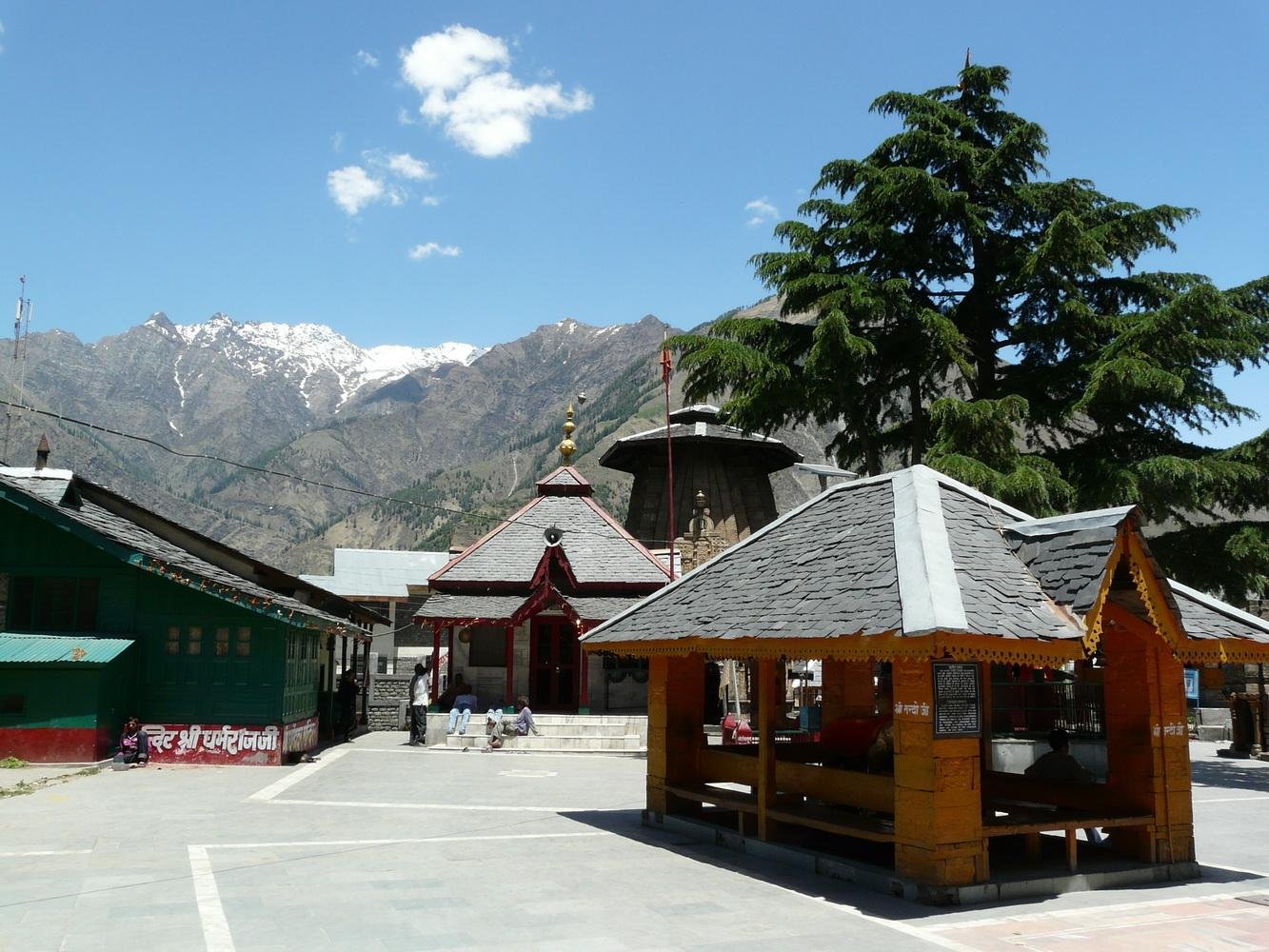
The Chaurasi Temple Complex is the spiritual, historical and cultural heart of Bharmour, an ancient Himalayan settlement in the Chamba district of Himachal Pradesh. Located in the centre of the town, the complex brings together a remarkable group of temples, Shiva lingams, sacred images, old stone towers, wooden shrines, ceremonial spaces and living traditions associated with Lord Shiva, Goddess Shakti, Lord Vishnu, Lord Ganesha, the eighty-four siddhas and the pilgrimage to Manimahesh Kailash.
The word “Chaurasi” means eighty-four in Hindi.
The temple complex receives its name from the traditional presence of eighty-four shrines associated with eighty-four siddhas or spiritually accomplished yogis. Some temples are substantial architectural monuments, while others are smaller sacred structures, Shiva lingams or devotional spaces arranged around the broad courtyard.
Chaurasi Temple Complex is not a single temple building. It is a sacred settlement within a settlement—a concentrated religious landscape containing shrines from different periods, architectural traditions and forms of worship.
Its principal temples include Manimahesh Temple, Lakshana Devi Temple, Narasimha Temple, Ganesha Temple, Dharmeshwar Mahadev Temple and the sacred representation of Nandi. Other shrines and lingams contribute to the wider identity of the complex.
The site is generally associated with the early medieval period, with official Himachal tourism information tracing the complex broadly to the seventh century. However, the temples were not necessarily constructed at one time.
Different rulers, communities, artisans and priests contributed to the sacred landscape over several centuries. Older structures were repaired, rebuilt or protected as mountain weather, fire, snow and seismic conditions affected them.
This long process explains the architectural diversity visible within Chaurasi.
Visitors encounter historic wooden craftsmanship at Lakshana Devi Temple, tall stone temple towers at Manimahesh and Narasimha shrines, smaller slate-roofed structures, metal sacred images and later protective additions.
The complex continues to function as a living centre of worship. Local residents pass through it as part of daily life. Pilgrims offer prayers before proceeding towards Bharmani Mata Temple, Hadsar and Manimahesh Lake. Priests conduct rituals, bells ring through the courtyard and religious gatherings become especially important during the Manimahesh Yatra and other festivals.
Chaurasi should therefore be approached simultaneously as a temple complex, heritage site, community space and pilgrimage gateway.
It is suitable for Shiva devotees, Shakti worshippers, families, senior citizens, Manimahesh pilgrims, historians, photographers, architecture enthusiasts and cultural travellers exploring the sacred traditions of Chamba.
Unlike Manimahesh Lake, the complex does not require a high-altitude trek. It lies within Bharmour town and can generally be reached through a short walk from the market, bus stand or nearby accommodation.
Travellers searching for hotels near Chaurasi Temple, homestays in Bharmour, pilgrimage accommodation near Manimahesh or places to stay near Bharmani Mata Temple can use MudrasStays to plan a comfortable and geographically practical journey.
## Spiritual Importance of Chaurasi Temple Complex
Chaurasi Temple Complex represents the spiritual meeting of Shiva, Shakti, Vishnu and the siddha tradition.
Lord Shiva holds the central position through Manimahesh Temple and numerous Shiva-related shrines and lingams.
Goddess Shakti is represented prominently through Lakshana Devi, worshipped in the powerful form of Mahishasuramardini.
Lord Vishnu is represented through Narasimha, the man-lion incarnation who destroys oppressive power and protects the devotee.
Lord Ganesha is worshipped as the remover of obstacles and guardian of sacred beginnings.
Dharmeshwar Mahadev is connected in regional tradition with Dharamraj and the principles of justice, accountability and the consequences of human actions.
Nandi represents devotion, patience and unwavering attention towards Lord Shiva.
Together, these divine forms create a complete spiritual environment rather than a shrine dedicated to only one aspect of Hindu worship.
Devotees may pray for family welfare, protection, courage, health, prosperity, safe travel, clarity and relief from difficult circumstances.
Manimahesh pilgrims seek blessings before beginning the physically demanding journey towards the sacred lake.
Families may visit before weddings, the birth of a child, a new livelihood or another important stage of life.
Students and professionals may pray for discipline, wisdom and success.
Such prayers are matters of personal faith and should not be presented as guaranteed outcomes.
The temple complex provides a sacred setting for reflection, emotional strength and community worship. Medical, legal, financial and personal concerns should still be addressed through appropriate practical action.
## The Tradition of the Eighty-Four Siddhas
The most important origin story of Chaurasi Temple Complex concerns eighty-four siddhas or yogis.
According to regional tradition, a group of eighty-four spiritually accomplished beings arrived in Bharmour while travelling towards Manimahesh.
The peaceful landscape, mountain air and spiritual atmosphere attracted them, and they remained in the area for meditation.
Their presence transformed the settlement into an important sacred centre.
Different versions of the legend connect the siddhas with an early ruler of Bharmour. Some traditions say that the king had no heir and received blessings from the yogis for sons and a daughter.
Other versions focus primarily on the siddhas’ journey, their meditation and the creation of shrines in their honour.
The exact name of the ruler differs across popular retellings, with traditions sometimes referring to Meru Varman and sometimes to Sahil Varman.
Because Bharmour’s temples developed across different reigns, it is safer to treat the complete story as regional religious tradition rather than a single verified construction record.
The number eighty-four holds symbolic importance in several Indian spiritual traditions.
It may represent completeness, a full circle of spiritual attainment or a recognised grouping of siddhas within yogic and devotional lineages.
At Bharmour, the number became physically connected with the temple courtyard through numerous shrines and Shiva lingams.
The legend should not be dismissed merely because it cannot be reconstructed as ordinary political history.
It communicates how generations of people understood the sacred identity of Bharmour and its relationship with Manimahesh.
The siddhas represent discipline, meditation and detachment.
Their journey reminds pilgrims that travel towards a sacred mountain should involve inner preparation as well as physical movement.
## Bharmour as Ancient Brahmapura
Bharmour was historically known as Brahmapura or Brahampura.
District history places the foundation of the early settlement around the beginning of the sixth century and identifies it as the former capital of the rulers of the region for more than three centuries.
Its position within the Budhil Valley provided protection through surrounding mountains while maintaining connections with Chamba, Lahaul, Kangra and high Himalayan routes.
The concentration of temples at Chaurasi reflects the political and religious importance of the early capital.
A royal centre required temples, priests, craftspeople, public gathering spaces and institutions through which rulers expressed legitimacy and devotion.
The temples also served local communities whose lives depended upon agriculture, pastoral movement, forests and mountain trade.
When the political capital later shifted towards present-day Chamba, Bharmour retained its religious importance.
The sacred connection with Manimahesh, Bharmani Mata and the Chaurasi shrines ensured that pilgrims and local devotees continued to visit.
This continuity explains why ancient temples remain under active worship rather than surviving only as archaeological ruins.
Visitors should not treat Bharmour merely as a transit town before the Manimahesh trek.
It is an independent historical destination with temples, inscriptions, traditional architecture and a distinct Gaddi cultural identity.
## Manimahesh Temple
Manimahesh Temple occupies a central and highly prominent position within the Chaurasi complex.
Dedicated to Lord Shiva, it represents the accessible spiritual seat of the Manimahesh tradition within Bharmour town.
The temple contains a sacred Shiva lingam and is visited by pilgrims before or after travelling towards Manimahesh Lake.
Its tall stone form rises above much of the surrounding courtyard and creates a powerful architectural focus.
The tower follows the broad tradition of North Indian stone temple construction, with vertical projections, carved surfaces and a rising form above the sanctum.
Protective roofing has been added or modified over time to respond to Bharmour’s rain and snow.
The temple’s architecture reflects both sacred symbolism and practical mountain adaptation.
The upward movement of the tower represents a sacred mountain, while the inner sanctum represents the concentrated presence of Lord Shiva.
This symbolism is especially meaningful in Bharmour because the distant Manimahesh Kailash peak is itself regarded as the mountain abode of Mahadev.
The temple within the town and the peak beyond the valley form two parts of one spiritual geography.
Pilgrims unable to undertake the high-altitude journey can still offer prayers to Manimahesh Mahadev within Chaurasi.
Those preparing for the yatra may seek strength, protection and safe passage.
Visitors should remove footwear where directed and follow the priest’s instructions concerning offerings, abhishek and photography.
Milk, water, flowers, bilva leaves and other materials should only be used according to local rules.
Excessive offerings wrapped in plastic should be avoided.
## Manimahesh Kailash and the Sacred Landscape
Manimahesh Kailash is one of the most revered mountain peaks in Himachal Pradesh.
The sacred lake lies at the foot of the peak in the Budhil Valley, beyond Bharmour and Hadsar.
Regional belief identifies the peak as the abode of Lord Shiva.
The organised Manimahesh Yatra generally takes place during the Hindu month of Bhadon, around the period between Janmashtami and Radhashtami, subject to annual administrative announcements.
Pilgrims travel through Bharmour, visit Chaurasi Temple and seek the blessings of Maa Bharmani before continuing towards Hadsar.
From Hadsar, the recognised route requires a demanding uphill trek towards Dhancho, Sundrasi, Gauri Kund and Manimahesh Lake.
The Chaurasi complex therefore serves as the spiritual preparation point for a much more difficult mountain pilgrimage.
Visitors should not confuse the easy access to Chaurasi with the physical demands of Manimahesh.
The lake journey requires registration whenever prescribed, medical readiness, suitable clothing, official route compliance and current weather information.
The yatra dates, health requirements, helicopter arrangements and traffic restrictions can change annually.
Travellers must verify current government instructions rather than relying on an old itinerary.
## Lakshana Devi Temple
Lakshana Devi Temple is one of the oldest and most artistically significant shrines within the complex.
Dedicated to Goddess Durga in the form of Mahishasuramardini, it preserves an important early metal image and an extraordinary carved wooden doorway.
The temple is associated with King Meru Varman and the artisan Gugga through an inscription on the pedestal of the sacred image.
This evidence gives the shrine exceptional historical importance because it connects royal patronage, a named craftsman and a surviving object of worship.
The outer form of Lakshana Devi Temple is comparatively modest.
Its low wooden profile and sloping roof differ from the tall stone towers nearby.
The principal artistic achievement appears at the entrance, where multiple bands of carved figures, river goddesses, floral designs and sacred imagery frame the doorway.
The carvings include themes associated with Shakti, Shiva and Vishnu traditions.
Ganga and Yamuna are traditionally identified at the threshold, symbolically purifying the devotee before entry.
The principal image represents the goddess overcoming Mahishasura.
This form symbolises the victory of courage, awareness and divine order over arrogance, deception and destructive force.
Visitors should never touch, rub or apply substances to the old wooden carvings.
Oil, vermilion, water and repeated physical contact can permanently damage historic timber.
Photography of the sacred image or interior should only be undertaken with permission.
## Ganesha Temple
The Ganesha Temple stands among the important shrines of Chaurasi and is generally encountered near the approach to the older sacred structures.
Lord Ganesha is worshipped as the remover of obstacles, the lord of beginnings and the patron of wisdom.
His presence has particular significance for Manimahesh pilgrims.
Before beginning a difficult journey, devotees may seek his blessings for safe travel, clear decisions and the successful completion of the pilgrimage.
The historic Ganesha image and temple structure have experienced damage, repair and alteration over time.
Visitors should avoid repeating sensational claims about every damaged section unless supported by reliable conservation records.
The surviving sacred form remains important to the worshipping community.
Children can be introduced to the temple through the meaning of Ganesha—patience, intelligence and the ability to address difficulties calmly.
They should also be taught not to touch old images, climb temple platforms or ring bells continuously.
## Narasimha Temple
Narasimha Temple is dedicated to the man-lion incarnation of Lord Vishnu.
Narasimha appears in Hindu tradition to protect the devotee Prahlada and destroy the oppressive ruler Hiranyakashipu.
The narrative represents the principle that destructive power cannot remain beyond moral accountability.
At Bharmour, the Narasimha shrine adds a strong Vaishnava dimension to a complex often understood primarily through Shiva worship.
Its stone tower and architectural form demonstrate the diversity of early Himalayan temple construction.
The sacred image represents Narasimha in a powerful but controlled posture.
Devotees may pray for courage, protection and the ability to withstand injustice.
Claims that worship guarantees victory over a specific person or legal opponent should be avoided.
The spiritual meaning centres on protection, truth and the defeat of destructive arrogance.
The temple’s exterior should be observed carefully without leaning against carved stone or entering restricted areas.
## Nandi and Devotion to Shiva
Nandi, the sacred bull and vehicle of Lord Shiva, occupies an important position in relation to Manimahesh Temple.
Nandi represents devotion, strength, patience and disciplined attention.
In Shiva temples, Nandi is generally positioned facing the sanctum, maintaining an unwavering gaze towards Mahadev.
Devotees may offer prayers to Nandi before seeking Shiva darshan.
Some people traditionally speak a prayer close to Nandi’s ear, believing that the devoted guardian will carry it to Lord Shiva.
Any such practice should be performed gently and according to local custom.
The sacred image should not be climbed upon, sat on or treated as a photography prop.
Children should be supervised and taught that Nandi is part of the living religious tradition.
## Dharmeshwar Mahadev Temple
Dharmeshwar Mahadev Temple is among the most unusual and deeply respected shrines within the Chaurasi complex.
Regional tradition associates the shrine with Dharamraj or Yama, the divine authority connected with justice, death and moral accountability.
Local stories describe the temple as a place where the actions of human beings are evaluated after death.
Some narratives refer to a divine court, a record keeper or symbolic pathways associated with the journey of the soul.
These beliefs belong to Hindu religious tradition and local folklore. They should not be presented as scientifically established information about death or the afterlife.
The spiritual message is nevertheless powerful.
Human actions have consequences.
Power, wealth and social position do not remove moral responsibility.
Every person should live with honesty, compassion and awareness of the effects of their choices.
Visitors should approach Dharmeshwar Temple quietly.
It is inappropriate to turn the shrine into frightening or sensational social-media content.
People praying for deceased family members should not be photographed without consent.
Children can be introduced to the temple through the principle of responsibility rather than through fear.
## Architecture Across the Complex
Chaurasi Temple Complex contains several architectural languages within one courtyard.
Some shrines use tall stone towers associated with North Indian temple architecture.
Others follow low wooden forms with sloping slate roofs adapted to snowfall and rain.
Smaller shrines may contain simple lingams protected by modest roof structures.
This variety reflects the fact that the complex developed across different periods and through different forms of patronage.
Stone provides weight, permanence and resistance to fire.
Wood offers flexibility, warmth and the ability to support detailed carving.
Slate roofing sheds rain and snow.
Broad eaves protect doors and walls.
Mountain architecture cannot be understood only through decorative style. It also reflects practical knowledge of weather, local materials and seismic conditions.
Visitors may notice newer roofs, repaired walls or modern railings beside ancient structures.
These additions are often necessary for safety and continued worship.
A living temple complex is not frozen at one moment in history.
Its authenticity lies partly in the continued relationship between old structures, sacred images and the community that maintains them.
## The Chaurasi Courtyard
The open courtyard is central to the experience of the complex.
It provides space for movement between temples, gathering during festivals and quiet observation of the surrounding architecture.
Large deodar trees and mountain slopes contribute to the atmosphere.
Local residents may sit, meet or pass through the area as part of ordinary life.
This everyday use should not be mistaken for a lack of sacredness.
In Himalayan towns, the temple courtyard can function simultaneously as religious centre, community space and historical heart of the settlement.
Visitors should keep pathways clear.
Food should not be placed against temple walls or sacred structures.
Loud music, shouting and staged group performances are inappropriate.
The courtyard is especially beautiful during morning light, evening worship and winter snowfall, but weather and safety conditions should always take priority over photography.
## Connection with Bharmani Mata Temple
Bharmani Mata Temple stands on a ridge above Bharmour and is closely connected with Chaurasi and the Manimahesh pilgrimage.
According to regional tradition, Maa Bharmani was the guardian goddess of the area before Lord Shiva and the eighty-four siddhas arrived.
Different versions of the story describe tension, negotiation and the eventual establishment of a sacred relationship between the goddess and the Shiva tradition.
The goddess moved to the ridge above the settlement, and pilgrims travelling towards Manimahesh were expected to seek her blessings.
The sacred kund at Bharmani Mata Temple became associated with ritual purification before the yatra.
The story should be understood as regional belief rather than documented political history.
Its spiritual meaning is the balance of Shiva and Shakti.
The Chaurasi complex cannot be understood completely without recognising the guardian role of Maa Bharmani.
Pilgrims can visit Chaurasi and Bharmani Mata on the same day when weather, road conditions and personal fitness allow.
Bharmani Mata requires a separate uphill road journey or walk from Bharmour.
## Festivals and Religious Gatherings
The Manimahesh Yatra period is the busiest religious season in Bharmour.
Thousands of pilgrims may pass through the town, visit Chaurasi and continue towards Hadsar.
Temporary shops, accommodation, traffic arrangements and administrative facilities may be established according to the year’s plan.
The complex becomes filled with devotional songs, bells, group prayers and the movement of pilgrims.
Mahashivratri is another important occasion because of the strong Shaivite identity of Chaurasi.
Special worship, fasting, mantra recitation and offerings may take place at Manimahesh Temple and other Shiva shrines.
Navratri is significant for Lakshana Devi and the wider Shakti traditions of Bharmour.
Ganesha-related observances and local religious dates may bring additional activity to individual shrines.
Visitors should confirm the current festival programme through local priests or accommodation providers.
Crowd-control instructions and temple restrictions should be followed patiently.
## Morning Darshan
Morning is the best time for a peaceful visit.
The courtyard is quieter, the air is fresh and soft light reveals details in the stone towers and wooden doorways.
Visitors can begin with Ganesha, continue towards Lakshana Devi, Manimahesh, Nandi, Narasimha and other shrines according to local guidance.
There may not be one compulsory sequence for every visitor.
The priest or local devotees can provide direction.
Morning darshan leaves enough time for Bharmani Mata Temple, Bharmour market or another local attraction later in the day.
Photographers should give worshippers priority and avoid blocking doorways while waiting for particular light.
## Evening Experience
Evening gives Chaurasi a different character.
As the temperature falls, lamps and bells become more prominent.
Mountain shadows move across the town, and the courtyard becomes a place for quiet reflection.
Travellers wishing to attend evening worship should stay in Bharmour rather than attempt the long mountain road to Chamba after dark.
Temple closing times may vary by season.
Winter evenings become cold quickly, and visitors should wear warm layers.
## Best Time to Visit Chaurasi Temple Complex
The complex can be visited during much of the year, subject to road access to Bharmour.
### Spring
Spring brings gradual improvement after the winter.
Snow may remain on surrounding peaks and shaded sections of the road.
Daytime conditions become increasingly comfortable, while mornings and evenings remain cold.
Spring is suitable for quieter darshan and heritage observation.
Current Chamba–Bharmour road conditions should be checked before travel.
### Summer
Summer is one of the most comfortable periods for visiting Bharmour.
The landscape becomes green, daylight hours are longer and access generally improves.
Direct sunlight can still be strong at elevation.
Visitors should carry water, sunscreen and a light jacket.
Summer is suitable for families, senior citizens and travellers combining several Bharmour temples.
### Monsoon
The monsoon brings green mountains, clouds and flowing streams.
The stone temples and slate roofs can appear especially atmospheric during light rain.
Heavy rainfall creates serious risks on the Chamba–Bharmour road.
Landslides, falling rocks, temporary closures and poor visibility may affect travel.
The temple courtyard and town lanes can become slippery.
Visitors should wear shoes with dependable grip and postpone travel during severe weather warnings.
### Manimahesh Yatra Season
The yatra period provides the strongest pilgrimage atmosphere.
Bharmour becomes crowded with devotees, temporary facilities and transport activity.
Rooms can fill quickly.
Traffic and parking restrictions may be introduced.
Pilgrims should complete registration and health requirements according to the current official rules.
Visitors interested only in Chaurasi may prefer early morning hours to avoid peak crowding.
### Autumn
The post-monsoon period often provides clearer weather and attractive mountain views.
The landscape remains green, while rain generally reduces.
Sharad Navratri gives additional significance to Lakshana Devi worship.
Temperatures fall quickly during the evening.
### Winter
Winter can cover Bharmour and the temple courtyard in snow.
The landscape becomes beautiful but travel conditions can be difficult.
The Chamba–Bharmour road may experience ice, snow and temporary closure.
Temple services and accommodation may operate at reduced capacity.
Visitors must confirm road status before departure.
Snowfall cannot be guaranteed for a particular date.
## Reaching Chaurasi Temple Complex
The complex is located in central Bharmour.
Visitors staying near the main market, bus stand or central accommodation can generally reach it on foot.
The approach may include sloping roads, village lanes or steps.
A taxi can often bring visitors close to the complex, subject to traffic restrictions and parking conditions.
Large vehicles may not enter every narrow section.
Senior citizens should ask their hotel about the easiest drop-off point.
The temple itself does not require a trek, but stable footwear remains useful because stone surfaces can become wet or icy.
## Reaching Bharmour from Chamba
Bharmour is approached mainly by road from Chamba.
The route passes through mountain valleys and contains narrow sections, sharp bends and areas affected by weather.
Actual travel time should be calculated according to road conditions rather than distance alone.
Public buses may operate according to current schedules.
Private taxis provide greater flexibility for families, groups and senior citizens.
The journey should preferably be completed during daylight.
Travellers arriving late in Chamba from Pathankot, Dalhousie or Dharamshala should consider resting before proceeding towards Bharmour.
## Accessibility
Chaurasi is among the most accessible major pilgrimage sites in the Bharmour region.
There is no high-altitude trek.
However, Bharmour is a mountain town, and uneven paths, slopes, thresholds and steps may create difficulty.
Wheelchair users and visitors with substantial mobility limitations should confirm the latest access with their accommodation provider.
Senior citizens should use stable footwear and assistance where needed.
The sanctums of old temples can be small and may contain raised entrances.
Visitors should not force entry into a crowded or physically difficult space.
Darshan from the doorway may be more appropriate for some travellers.
## Nearby Bharmani Mata Temple
Bharmani Mata Temple lies on the ridge above Bharmour.
It is the most important nearby Devi destination and a traditional part of the Manimahesh pilgrimage.
Travellers can reach it through a mountain road, local taxi or uphill walking route according to current conditions.
The sacred kund and valley views make the temple a meaningful addition to a Bharmour itinerary.
The journey should be completed during daylight.
## Hadsar
Hadsar is the recognised roadhead for the principal Manimahesh trek.
It lies beyond Bharmour and should not be confused with Chaurasi Temple.
Pilgrims often stay in Bharmour, visit Chaurasi and Bharmani Mata, and then continue towards Hadsar.
The journey beyond Hadsar requires significantly greater physical preparation.
## Manimahesh Lake
Manimahesh Lake lies high in the Budhil Valley at the foot of the sacred Kailash peak.
The principal route involves approximately 13 kilometres of trekking beyond Hadsar.
It requires official planning, medical fitness and compliance with current yatra rules.
Chaurasi Temple provides the spiritual beginning of the journey but should also be valued independently.
## Chhatrari and Shakti Devi Temple
Chhatrari contains an important early temple dedicated to Goddess Shakti.
The shrine preserves a historic metal image and traditional wooden architecture connected with the artistic traditions of the early Chamba kingdom.
A combined Lakshana Devi and Shakti Devi journey allows travellers to explore two major examples of early Himalayan Goddess worship.
Road conditions should be confirmed before departure.
## Kugti and Kartik Swami Temple
Kugti is a remote village within the wider Bharmour region.
It is associated with a temple dedicated to Kartikeya and with difficult high-mountain routes towards Kugti Pass.
The village requires separate planning and should not be treated as a brief extension of a Chaurasi visit.
Weather, transport and walking requirements should be verified locally.
## Suggested One-Day Bharmour Itinerary
Begin with early morning darshan at Chaurasi Temple Complex.
Visit Ganesha Temple, Lakshana Devi Temple, Manimahesh Temple, Nandi, Narasimha Temple and Dharmeshwar Mahadev according to current access.
Spend time observing the different wooden and stone architectural forms.
After breakfast or lunch, travel towards Bharmani Mata Temple.
Visit the sacred kund and return to Bharmour before evening.
Conclude with a quiet evening walk through Chaurasi.
## Suggested Two-Day Itinerary
On the first day, arrive in Bharmour and check into a hotel or homestay.
Explore the complete Chaurasi Temple Complex slowly and attend evening worship.
On the second morning, visit Bharmani Mata Temple.
Return to Bharmour for rest, local food and cultural exploration.
This itinerary is suitable for families and senior citizens.
## Suggested Three-Day Spiritual and Heritage Itinerary
The first day can focus entirely on Chaurasi Temple Complex and Bharmour town.
The second day can include Bharmani Mata Temple and nearby viewpoints.
The third day can include Chhatrari, Hadsar or another road-accessible destination according to the traveller’s onward route.
Pilgrims beginning the Manimahesh trek should add separate days according to the official yatra plan.
## Gaddi Culture
Bharmour is closely associated with the Gaddi community.
Gaddi traditions include pastoralism, seasonal movement, mountain agriculture, local deity worship, woollen clothing and knowledge of high Himalayan routes.
The Chaurasi complex forms part of this cultural world.
It is not only a monument constructed by historic rulers. It remains a sacred place maintained through the participation of local communities.
Visitors should respect local dress, language, ceremonies and livelihoods.
People should not be photographed without consent.
Livestock should not be disturbed.
Supporting local guides, drivers, homestays, food providers and artisans helps pilgrimage tourism benefit the community.
## Where to Stay Near Chaurasi Temple
Bharmour is the best accommodation base.
Options include hotels, homestays, guesthouses, lodges and pilgrim accommodation.
Properties near the temple complex make morning and evening darshan easier.
### Hotels Near Chaurasi Temple
Central hotels provide convenient access to the market, restaurants, taxis and temples.
Guests should confirm parking, hot water, meals and the number of stairs.
During the Manimahesh Yatra, advance booking is essential.
### Homestays in Bharmour
Homestays provide local food, Gaddi hospitality and useful information about temple timings and roads.
Facilities vary.
Visitors should confirm attached bathrooms, heating, electricity, meals and mobile connectivity.
### Guesthouses and Pilgrim Stays
Simple guesthouses and dharamshala-style stays suit budget travellers and pilgrimage groups.
Facilities can be basic.
Bedding, hot water and meals should be verified before arrival.
### Hotels in Chamba
Chamba provides a broader selection of hotels, hospitals and transport.
However, it is too far for convenient daily darshan at Chaurasi.
It is better used as an arrival or departure base.
## Choosing the Right Accommodation
Pilgrims focused on Chaurasi should stay in central Bharmour.
Families should confirm room size, meals, parking and bathroom facilities.
Senior citizens should prioritise ground-floor rooms, minimal stairs and short walking distance to the temple.
Couples may prefer quiet homestays with mountain views.
Solo pilgrims can choose affordable guesthouses close to the complex.
Manimahesh groups should confirm luggage storage, early breakfast, multiple rooms and transport towards Hadsar.
Winter travellers must verify heating and road access.
Monsoon guests should ask about landslide risks and the property’s final approach.
## Book Stays Near Chaurasi Temple with MudrasStays
MudrasStays helps pilgrims, families and heritage travellers discover hotels, homestays, guesthouses and pilgrimage accommodation near Chaurasi Temple Complex, Bharmour, Bharmani Mata Temple and the Manimahesh route.
Visitors can compare properties according to practical walking distance from Chaurasi, room type, budget, group size and required facilities.
Booking in central Bharmour allows travellers to attend peaceful morning and evening darshan without unnecessary local transport.
Solo pilgrims can search for simple and affordable rooms.
Couples can explore peaceful mountain-view homestays.
Families can select hotels offering meals, parking and comfortable room capacity.
Senior citizens can prioritise accessible properties with fewer stairs.
Heritage travellers can select accommodation that allows enough time to study the architecture rather than rushing through the complex.
Manimahesh groups can identify stays offering multiple rooms, vegetarian meals, luggage storage and onward taxi support.
Travellers combining Chaurasi with Bharmani Mata, Hadsar, Chhatrari or Chamba can choose properties according to the actual sequence of their journey.
MudrasStays helps pilgrims stay closer to their spiritual destinations and avoid unnecessary travel on winding mountain roads.
## Responsible Temple and Heritage Travel
Chaurasi Temple Complex is both an active place of worship and an irreplaceable heritage landscape.
Visitors should remove footwear wherever instructed and dress respectfully.
Photography of sacred images, sanctums, priests and private rituals should only be undertaken with permission.
Ancient wooden doorways and stone carvings must not be touched, rubbed or marked.
Oil, vermilion, water and colour should not be applied to historic surfaces unless part of an authorised ritual.
Incense and lamps should be used only in designated locations because timber structures are vulnerable to fire.
Plastic bottles, food wrappers and puja packaging must be carried away.
Visitors should keep the central courtyard and temple entrances clear.
Children should not climb shrine platforms, trees, railings or sacred images.
Drones, professional lighting and commercial filming may require permission.
Private homes and local residents should not be photographed without consent.
Responsible behaviour preserves Chaurasi for both future pilgrims and future generations.
## The Sacred Heart of Bharmour
Chaurasi Temple Complex represents a rare meeting of ancient history, Himalayan architecture, living worship and mountain pilgrimage.
The tradition of the eighty-four siddhas gives the complex its name and spiritual identity.
Manimahesh Temple connects the courtyard with Shiva’s sacred mountain.
Lakshana Devi preserves early Shakti worship, a historic metal image and extraordinary wooden craftsmanship.
Narasimha represents divine protection and the defeat of oppressive power.
Ganesha blesses sacred beginnings and pilgrimage journeys.
Nandi represents unwavering devotion.
Dharmeshwar Mahadev encourages reflection on justice, responsibility and the consequences of human action.
The different wooden, stone and slate-roofed structures demonstrate how Himalayan architecture evolved across centuries.
The courtyard remains a living community space rather than an abandoned archaeological site.
The connection with Bharmani Mata establishes the balance between Shiva and Shakti.
The road towards Hadsar and Manimahesh transforms Bharmour into the gateway to one of Himachal Pradesh’s most important pilgrimages.
For Shiva devotees, Chaurasi is a place to seek the blessings of Manimahesh Mahadev.
For Shakti worshippers, Lakshana Devi and Bharmani Mata create a powerful Goddess pilgrimage.
For families, the complex offers an accessible spiritual experience without a demanding trek.
For senior citizens, central Bharmour provides road-based access to several important shrines.
For historians, the temples preserve evidence of the early Chamba kingdom.
For architecture enthusiasts, Chaurasi offers stone shikharas, wooden doorways, metal icons and mountain construction traditions within one courtyard.
For cultural travellers, the complex provides insight into Gaddi life and the religious identity of Bharmour.
For Manimahesh pilgrims, it marks the essential spiritual beginning of the journey.
Chaurasi Temple Complex should not be treated merely as a transit stop or a collection of small temples to be photographed quickly.
Its shrines represent different periods, deities, artistic traditions and layers of community memory.
Visitors should allow sufficient time for darshan, architectural observation and quiet reflection.
Plan your pilgrimage to Chaurasi Temple Complex with MudrasStays and experience the sacred heart of historic Bharmour.
Seek the blessings of Manimahesh Mahadev, Maa Lakshana Devi, Lord Narasimha, Lord Ganesha and the sacred traditions of the eighty-four siddhas.
Combine your journey with Bharmani Mata Temple, Hadsar, Manimahesh Lake, Chhatrari, Kugti and the spiritual destinations of Chamba district.
Book hotels near Chaurasi Temple Complex, discover homestays in Bharmour and explore suitable pilgrimage accommodation near the Manimahesh route through MudrasStays.
Stay closer to the temples, attend peaceful morning darshan and reduce unnecessary travel on difficult mountain roads.
MudrasStays connects pilgrims, families and cultural travellers with suitable accommodation near temples and sacred destinations across India.
Begin your Chaurasi Temple Complex journey with a comfortable stay and experience a meaningful pilgrimage centred on Lord Shiva, Maa Shakti, ancient Himalayan architecture, Gaddi culture and the timeless spiritual heritage of Bharmour.