
Chausathi Yogini Temple – The Mystical Yogini Shrine of Ranipur Jharial
Situated at the historic archaeological complex of Ranipur Jharial in Odisha's Balangir district, the Chausathi Yogini Temple is one of India's most remarkable Tantric monuments. Built around the 9th century CE, this ancient shrine is dedicated to the 64 Yoginis and is among the few surviving Yogini temples in the country.
Perched on a rocky hill amidst a vast archaeological landscape, the temple is renowned for its circular open-air design, unique stone sculptures, and deep association with ancient Shakta and Tantric traditions. The site offers visitors a fascinating blend of spirituality, history, archaeology, and panoramic natural beauty.
History of Chausathi Yogini Temple
Ranipur Jharial flourished as an important religious and cultural centre between the 8th and 10th centuries under the Somavamsi rulers. The Chausathi Yogini Temple was constructed during this period when Yogini worship and Tantric practices were prominent across eastern and central India.
The archaeological complex surrounding the temple contains more than 50 ancient shrines, making Ranipur Jharial one of Odisha's most significant heritage sites. Today, the temple is protected by the Archaeological Survey of India and attracts historians, archaeologists, photographers, and spiritual seekers alike.
Religious Significance
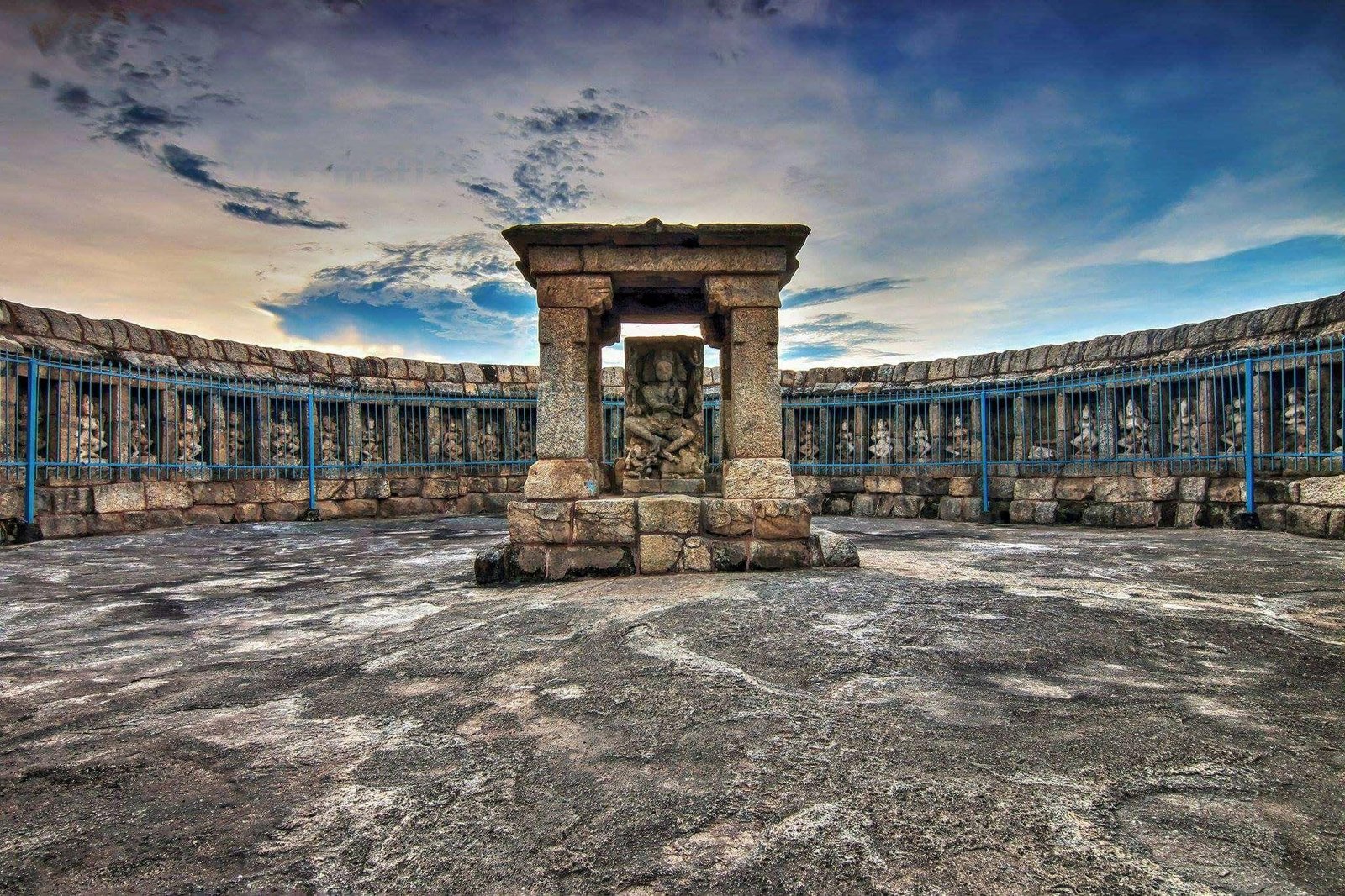
The temple is dedicated to the 64 Yoginis, divine feminine manifestations representing cosmic power, wisdom, protection, and spiritual energy. At the centre of the circular shrine stands a platform that originally enshrined Lord Shiva as Bhairava, symbolizing the union of Shiva and Shakti.
For centuries, the temple served as an important centre for Tantric worship, meditation, and spiritual practices. Even today, devotees visit to seek blessings for strength, knowledge, courage, and inner transformation.
Architectural Excellence
The Chausathi Yogini Temple at Ranipur Jharial follows the rare hypaethral (roofless) circular architectural style. The circular stone wall contains niches that originally housed 64 Yogini sculptures, each representing a distinct divine form with unique iconography.
Although several original sculptures have been lost over time, the surviving carvings continue to display the exceptional craftsmanship of early medieval Odisha. The temple's elevated location provides breathtaking views of the surrounding archaeological landscape, enhancing its spiritual ambience.
The combination of sacred geometry, open-sky architecture, and artistic detailing makes this temple one of India's most important examples of Tantric architecture.
Main Attractions
- Rare circular open-air Yogini temple.
- Historic Ranipur Jharial archaeological complex.
- Ancient Tantric heritage.
- Surviving Yogini sculptures.
- Central Bhairava platform.
- Panoramic hilltop views.
- Ancient sandstone carvings.
- Peaceful spiritual surroundings.
- Outstanding heritage photography opportunities.
- One of India's rare surviving Yogini temples.
Things to Do During Your Visit
- Explore the circular temple architecture.
- Observe the surviving Yogini sculptures.
- Learn about ancient Tantric traditions.
- Visit the surrounding archaeological monuments.
- Enjoy panoramic views from the hilltop.
- Capture photographs of the heritage site.
- Spend time in meditation.
- Study the evolution of Odisha's temple architecture.
- Interact with local guides for historical insights.
- Experience the peaceful rural atmosphere.
Major Festivals Celebrated
- Navratri.
- Durga Puja.
- Maha Shivaratri.
- Chaitra Navratri.
- Special Shakti worship ceremonies.
- Local cultural festivals.
Nearby Attractions
- Ranipur Jharial Archaeological Complex.
- Someswar Shiva Temple.
- Indralath Temple.
- Pataneswari Temple, Patnagarh.
- Harishankar Temple.
- Nrusinghanath Temple.
- Gandhamardan Hills.
Best Time to Visit
The ideal time to visit is from October to February, when the weather is cool and pleasant for exploring the archaeological site and surrounding landscape.
Temple Timings
The temple complex is generally open during daylight hours. Morning and late afternoon visits are recommended for comfortable sightseeing and photography.
How to Reach
Ranipur Jharial is located approximately 100 km from Balangir and is well connected by road. The nearest railway station is Balangir, while the nearest major airport is Swami Vivekananda Airport in Raipur. Taxis and private vehicles are the most convenient options for reaching the site.
Accommodation with Mudras Stays
Planning to explore Odisha's hidden heritage treasures? Mudras Stays offers comfortable accommodations, excellent hospitality, and carefully selected stays across Odisha, making it easy to discover ancient temples, archaeological wonders, and spiritual destinations while enjoying a relaxing travel experience.
Travel Tips
- Visit during the winter months for pleasant weather.
- Wear comfortable walking shoes.
- Carry drinking water and sun protection.
- Hire a local guide to understand the archaeological significance.
- Respect the protected heritage monument.
- Avoid climbing on ancient structures.
- Allocate sufficient time to explore the entire archaeological complex.
- Carry a camera for landscape and heritage photography.
Why Visit Chausathi Yogini Temple at Ranipur Jharial?
This extraordinary temple offers visitors a rare opportunity to experience one of India's oldest surviving centres of Yogini worship. Its circular architecture, fascinating archaeological surroundings, ancient sculptures, and peaceful hilltop setting make it a must-visit destination for history lovers, pilgrims, photographers, and cultural travellers.
Conclusion
The Chausathi Yogini Temple at Ranipur Jharial remains one of Odisha's most fascinating archaeological and spiritual treasures. Its ancient traditions, rare architecture, and scenic location continue to attract visitors seeking both knowledge and devotion. Enhance your Odisha heritage journey with the comfort and trusted hospitality of Mudras Stays, ensuring every trip becomes truly memorable.
Frequently Asked Questions (FAQs)
1. Why is Chausathi Yogini Temple at Ranipur Jharial famous?
It is famous for its rare circular roofless architecture, association with ancient Tantric traditions, and its location within the historic Ranipur Jharial archaeological complex.
2. Where is the temple located?
The temple is located at Ranipur Jharial in Balangir district, Odisha.
3. When was the temple built?
It is believed to have been constructed during the 9th century CE under the Somavamsi rulers.
4. What is the best time to visit?
October to February offers the most pleasant weather for exploring the temple and the surrounding archaeological complex.
5. Which nearby attractions should visitors explore?
Ranipur Jharial Archaeological Complex, Indralath Temple, Someswar Shiva Temple, Pataneswari Temple, Harishankar Temple, Nrusinghanath Temple, and Gandhamardan Hills are excellent nearby attractions.
6. How much time should visitors plan?
Visitors should plan approximately 2–3 hours to fully explore the temple and the surrounding archaeological site.
7. Why choose Mudras Stays?
Mudras Stays provides comfortable accommodations, excellent hospitality, and convenient access to Odisha's leading heritage and pilgrimage destinations, ensuring a memorable and relaxing travel experience.