
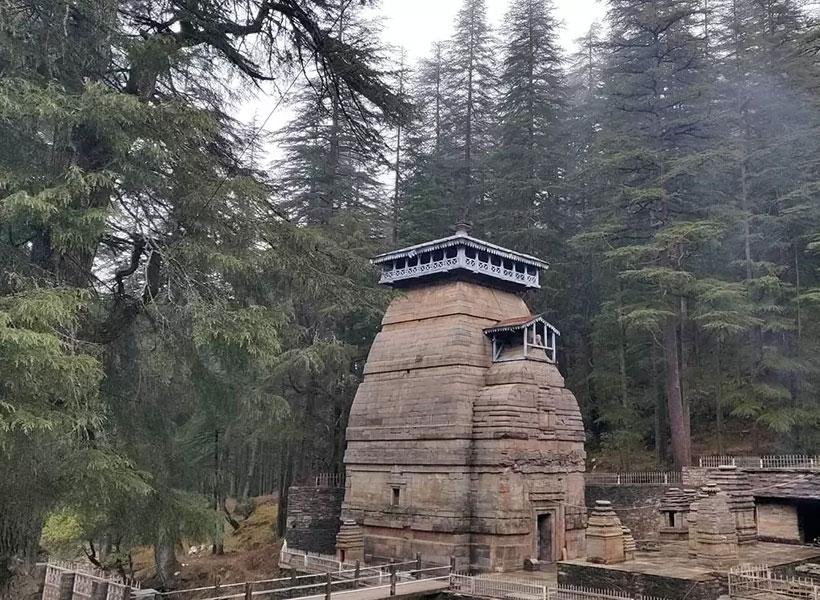
Dandeshwar Temple is one of the most important ancient Shiva shrines in the Jageshwar temple region of Almora district, Uttarakhand. Situated a short distance upstream from the main Jageshwar Dham temple complex, the shrine stands amid a dense forest of towering deodar trees, mountain vegetation and flowing Himalayan streams. Its quiet natural setting, impressive stone architecture and deep association with Lord Shiva make it an essential destination for pilgrims exploring the sacred temples of Jageshwar.
The Dandeshwar Temple complex is believed to date to approximately the 9th century CE and forms an important part of the wider group of historic temples spread across the Jageshwar valley. The complex contains fourteen stone temples constructed primarily in the traditional North Indian Nagara style of architecture. The main shrine rises prominently above the smaller temples surrounding it and is regarded as one of the largest Shiva temples in the Jageshwar region.
Unlike the more compact and crowded arrangement of temples at the central Jageshwar Dham complex, Dandeshwar offers visitors a quieter and more open spiritual environment. The temple stands close to the route leading towards Jageshwar, near Artola village, and is often the first major historic temple encountered by travellers entering the sacred valley.
Many visitors travel directly to the main Jageshwar temple group without spending sufficient time at Dandeshwar. However, the temple has its own distinctive religious identity, architecture and natural setting. A complete pilgrimage to Jageshwar should ideally include Dandeshwar Temple, the main Jageshwar Dham complex, Mahamrityunjaya Temple, Kuber Temple, Vriddha Jageshwar and other sacred sites located across the valley.
The name Dandeshwar is associated with Lord Shiva in his role as the divine guardian of the Jageshwar region. In local spiritual tradition, Lord Shiva is worshipped here as Dandeshwar, the form of Mahadev who protects and watches over the sacred forest, temples, streams and surrounding settlements.
The word “Danda” can be understood as a staff, symbol of authority or instrument of protection, while “Ishwar” means the Supreme Lord. Dandeshwar may therefore be interpreted as the Lord who holds the staff of divine authority and stands guard over the sacred landscape of Jageshwar.
This protective identity gives Dandeshwar Temple an important position at the entrance to the wider pilgrimage region. Devotees may offer prayers here before proceeding towards the principal Jageshwar Dham temples, seeking the blessings and protection of Lord Shiva for the remainder of their spiritual journey.
The main temple houses a large, naturally formed and uncut rock Shiva linga. Unlike polished or conventionally shaped lingas installed in many Shiva temples, the sacred form at Dandeshwar is connected directly with the natural rock. This relationship between the deity and the mountain landscape reflects an ancient tradition of recognising the presence of Lord Shiva within natural formations.
The natural rock Shiva linga is one of the most distinctive spiritual features of Dandeshwar Temple. Devotees view it as a manifestation of Mahadev that emerged through nature rather than being shaped entirely by human hands. The presence of the uncut rock reinforces the connection between Shiva worship and the forests, mountains, rivers and caves of the Himalayas.
Lord Shiva has traditionally been associated with remote mountains, meditation, forests and natural landscapes. Dandeshwar Temple expresses this relationship powerfully. The shrine is not separated from nature by a large urban settlement or commercial complex. Instead, it appears to rise directly from the forested valley and become part of the surrounding Himalayan environment.
The principal temple is surrounded by smaller shrines, forming a compact but architecturally significant sacred complex. These temples were constructed from carefully arranged stone and display the characteristic form of Himalayan Nagara-style architecture.
The main temple has a tall stone shikhara that rises above the surrounding shrines. Its strong vertical form directs the viewer’s attention upward, symbolically connecting the earthly temple with the divine realm.
The weathered stone surface reveals the passage of centuries. Sunlight, rain, mountain winds, moss and seasonal changes have gradually altered the appearance of the stone, giving the temple a powerful sense of age and continuity.
The architecture of Dandeshwar is especially valuable for travellers interested in the historical temple-building traditions of Uttarakhand. The stone walls, carved doorways, structural proportions and arrangement of the shrines reveal the technical knowledge and artistic skill of the craftsmen who worked in the Kumaon Himalayas.
The builders had to respond to difficult mountain terrain, cold weather, heavy rainfall and limited transportation. Locally available stone was shaped, carried and assembled to create temples that have survived for centuries.
The wooden protective structure visible near the upper portion of the principal shrine represents later efforts to shield the ancient temple from rain and harsh mountain conditions. Such additions demonstrate how local communities and heritage authorities have continued to care for the monument over time.
Dandeshwar Temple is surrounded by dense deodar forest. The deodar tree has a special association with sacred Himalayan landscapes, and its name is often interpreted as meaning the tree or timber of the gods.
The tall trees create a natural enclosure around the temple. Their trunks rise above the stone structures, while the forest canopy filters sunlight and creates shifting patterns of light and shadow across the complex.
The sound of wind moving through the trees adds to the contemplative atmosphere. During quieter hours, visitors may hear flowing water, birds, temple bells and the movement of leaves rather than the traffic and commercial noise associated with larger pilgrimage centres.
The temple lies close to the meeting area of the Doodhganga and Jatganga streams. Water is central to the sacred identity of the Jageshwar valley, and the streams flowing through the forest contribute significantly to the beauty and tranquillity of the region.
The Jatganga stream continues through the wider Jageshwar temple area. Its name is traditionally connected with the jata, or matted locks, of Lord Shiva. In Hindu sacred tradition, the River Ganga descends through Shiva’s matted hair, allowing its powerful waters to reach the earth in a controlled form.
The combination of Shiva temples, flowing streams and ancient deodar forest creates a complete sacred landscape. At Dandeshwar, spirituality is experienced not only through the temple structure or ritual worship but also through the surrounding water, trees, rocks and mountain air.
Morning is one of the best times to visit Dandeshwar Temple. The forest is generally quiet, the air is fresh and the softer sunlight highlights the old stone structures. Visitors travelling early towards Jageshwar Dham can stop at Dandeshwar before continuing to the main temple complex.
An early visit also gives pilgrims sufficient time to sit quietly, observe the architecture and offer prayers without rushing. The atmosphere can become busier during weekends, religious festivals and popular travel months, but Dandeshwar generally remains more peaceful than the main Jageshwar group.
Devotees visit the temple to pray for protection, courage, family welfare, spiritual strength and freedom from difficulties. As Dandeshwar is associated with the guardian form of Lord Shiva, many pilgrims seek blessings for safety before beginning a longer religious journey.
Visitors may offer water, flowers, bilva leaves and traditional prayers to Lord Shiva according to local temple practices. The availability and permitted use of offerings should be confirmed at the temple because rules may vary, particularly within protected heritage structures.
The temple is meaningful for pilgrims undertaking a Shiva-focused journey through Uttarakhand. Jageshwar is one of the state’s most important Shaiva destinations, and Dandeshwar provides an essential introduction to the spiritual landscape of the valley.
The shrine is also suitable for travellers interested in meditation and quiet reflection. The natural environment allows visitors to sit away from large crowds and spend time observing the forest and flowing streams.
The slow soundscape of the destination encourages mindfulness. Travellers can pause after darshan, listen to the surrounding forest and experience the sense of stillness that has attracted saints, pilgrims and spiritual seekers to the Himalayas for generations.
Dandeshwar Temple should ideally be explored as part of a complete Jageshwar pilgrimage circuit. The wider region contains more than one hundred historic stone temples dedicated primarily to Lord Shiva, along with shrines associated with Goddess Shakti, Lord Vishnu, Surya, Kuber and other deities.
The main Jageshwar Dham temple group is located further inside the valley and is surrounded by deodar forests and the Jatganga stream. The closely arranged stone temples create one of the most recognisable sacred landscapes in Uttarakhand.
Jageshwar Mahadev Temple is one of the principal active shrines within the main complex. Lord Shiva is worshipped here in a youthful form, and the temple remains central to the religious identity of Jageshwar.
Mahamrityunjaya Temple is another major shrine in the Jageshwar group. Lord Shiva is worshipped here as the conqueror of death. Devotees frequently visit to pray for protection, health, courage and spiritual strength.
The Mahamrityunjaya mantra is one of the most respected Shiva mantras in Hindu tradition. Its association with the temple attracts pilgrims seeking freedom from fear and blessings for physical and spiritual well-being.
Kuber Temple is located within the broader Jageshwar pilgrimage landscape and is dedicated to Lord Kuber, traditionally regarded as the guardian of wealth and prosperity. The temple adds another dimension to the religious diversity of the valley.
Vriddha Jageshwar Temple is situated on an elevated ridge above the main Jageshwar region. Dedicated to the ancient or older form of Lord Shiva, the shrine offers a quieter hilltop pilgrimage experience and beautiful views of the surrounding Himalayan landscape.
Travellers can combine Dandeshwar Temple with Vriddha Jageshwar to experience two contrasting forms of Shiva worship. Dandeshwar stands within the lower forested valley, while Vriddha Jageshwar occupies a higher and more open mountain setting.
The Archaeological Museum at Jageshwar is an important destination for visitors interested in sculpture, history and temple architecture. The museum preserves ancient images and artefacts recovered from temples within the Jageshwar valley.
A museum visit can help travellers understand the artistic traditions represented in the temples. Sculptures of Shiva, Parvati, Surya, Vishnu and other deities reveal the complexity of the religious culture that developed across the region.
Dandeshwar Temple is easily included at the beginning or end of a Jageshwar visit because of its location along the approach to the main temple area. Travellers arriving from Almora can stop at Dandeshwar, continue towards Jageshwar Dham and return through the same route.
A half-day visit may include Dandeshwar Temple, the main Jageshwar Dham group and the Archaeological Museum. However, this plan can feel rushed for visitors who wish to attend rituals, observe the architecture or spend time in the forest.
A full-day itinerary can begin with morning darshan at Dandeshwar Temple, followed by the Jageshwar Dham complex, Mahamrityunjaya Temple, Kuber Temple and the Archaeological Museum.
Visitors can spend the afternoon walking beside the Jatganga stream, exploring nearby shrines and experiencing the deodar forest before returning to their accommodation.
A two-day Jageshwar itinerary provides a more comfortable experience. The first day can cover Dandeshwar Temple, Jageshwar Dham and the museum. The second day can include Vriddha Jageshwar Temple, nearby village trails and quiet time for meditation or prayer.
A three-day temple circuit can combine Dandeshwar and Jageshwar on the first day, Vriddha Jageshwar on the second day and Chitai Golu Devta Temple or Kasar Devi Temple on the third day.
Travellers can extend the journey further by adding Nanda Devi Temple in Almora, Katarmal Sun Temple, Patal Bhuvaneshwar or other spiritual destinations across Kumaon.
Chitai Golu Devta Temple is known for thousands of bells and written petitions submitted by devotees seeking justice. It can be visited while travelling between Almora and the Jageshwar region.
Kasar Devi Temple is known for its hilltop setting, meditation traditions, Himalayan views and association with spiritual seekers. It offers a different experience from the ancient Shiva temples of Jageshwar.
Nanda Devi Temple in Almora represents the cultural and devotional traditions of the Kumaon region. Its annual festival is an important part of Almora’s religious identity.
Katarmal Sun Temple is dedicated to Surya and is known for its historic stone architecture. Combining Katarmal with Jageshwar enables visitors to experience both Surya worship and ancient Shaiva traditions within the Almora district.
Accommodation near Dandeshwar Temple is primarily available in Jageshwar, Artola and neighbouring mountain settlements. Travellers can choose from hotels, budget guesthouses, traditional homestays, cottages and forest retreats.
Staying in Jageshwar is one of the most convenient options for pilgrims planning to explore Dandeshwar and the wider temple valley. A nearby stay makes it easier to attend early-morning prayers, visit multiple temples and experience the destination during quieter hours.
Hotels near Jageshwar Dham may offer convenient road access, meals, parking and assistance with local transport. These properties are suitable for families, senior citizens and travellers undertaking a shorter pilgrimage.
Homestays around Jageshwar and nearby villages offer a closer connection with Kumaoni culture. Guests may experience local food, traditional hospitality and personal guidance regarding temple routes, weather and nearby attractions.
Mountain cottages and nature retreats are suitable for couples, solo travellers, yoga practitioners and guests planning a peaceful extended stay. Properties surrounded by forest can complement the spiritual atmosphere of the temple journey.
Budget guesthouses are suitable for pilgrims seeking simple rooms close to the temples. Travellers should confirm hot-water arrangements, room heating, meal availability and road access before booking, particularly during winter.
Families travelling with children should select accommodation with comfortable rooms, reliable meals and safe access. Senior citizens may prefer properties that minimise steep walking and provide direct vehicle connectivity.
Visitors planning to stay during Mahashivratri, Shravan or summer holidays should reserve rooms in advance because accommodation near Jageshwar may experience greater demand during these periods.
MudrasStays helps pilgrims discover hotels, homestays, guesthouses, cottages and spiritual retreats near Dandeshwar Temple and Jageshwar Dham.
The platform is designed specifically for travellers looking for accommodation near temples, sacred sites and pilgrimage destinations across India.
Visitors can explore nearby properties based on distance from the temple, room type, group size, travel budget and required facilities.
Booking a stay near Dandeshwar Temple reduces the need to travel repeatedly from Almora or more distant hill towns. It also gives visitors sufficient time to explore the entire Jageshwar temple circuit at a relaxed pace.
A nearby property enables pilgrims to begin darshan early, avoid peak traffic and return to the temples during peaceful evening hours.
Travellers using MudrasStays can create a broader Kumaon pilgrimage itinerary by finding accommodation near Dandeshwar, Jageshwar Dham, Vriddha Jageshwar, Chitai Golu Devta Temple, Kasar Devi Temple and other sacred destinations.
The best time to visit Dandeshwar Temple depends on the type of experience preferred by the traveller. Spring offers pleasant weather, fresh mountain vegetation and comfortable conditions for temple exploration.
Summer is cooler than the plains and is suitable for family holidays. However, Jageshwar may receive more visitors during school holidays and peak travel periods.
The monsoon transforms the deodar forest into a rich green landscape. Mist, flowing streams and wet stone surfaces create a beautiful atmosphere, but rain may affect roads and make pathways slippery.
The Hindu month of Shravan is especially significant for Lord Shiva devotees. Pilgrims visit the Jageshwar temples during this period to offer prayers and participate in religious ceremonies.
Autumn generally provides comfortable temperatures, clearer skies and favourable conditions for road travel and photography.
Winter offers a quieter spiritual experience. The forest can become extremely cold, particularly during the morning and evening, so visitors should carry appropriate warm clothing.
Mountain weather can change quickly in every season. Travellers should check current road and weather conditions before leaving Almora or other nearby destinations.
Comfortable walking shoes are recommended because the temple complex contains stone paths, steps and potentially wet surfaces. Visitors should move carefully during the rainy season or after snowfall and frost.
The Dandeshwar and Jageshwar temples form part of an important heritage landscape. Visitors should avoid touching carvings, climbing on temple structures or placing objects against the ancient stone walls.
Names, symbols and messages should never be carved into the temple. Even minor damage can permanently affect structures that have survived for centuries.
Photography may be permitted within portions of the outer complex, but visitors should confirm restrictions before photographing the inner shrine, Shiva linga, rituals or worshippers.
Drone photography should not be undertaken without proper permission, particularly because the temples form part of a protected heritage area.
The deodar forest surrounding Dandeshwar is ecologically sensitive. Visitors should not leave plastic bottles, food packaging, disposable plates or other waste near the temple or streams.
Religious offerings should be placed only in designated areas. Flowers, incense, oil and ritual materials should not be left against ancient stone surfaces unless temple authorities allow it.
Open flames, discarded cigarettes and burning materials can create serious fire hazards in mountain forests. Travellers should follow all local safety instructions.
The streams should be kept free from plastic, soap, food waste and religious materials. Preserving the purity of the water is essential to maintaining both the spiritual and ecological character of Jageshwar.
Visitors can support the regional economy by choosing locally operated homestays, taxis, guides, shops and restaurants. Local residents often possess valuable knowledge about the temples, traditional stories and safe travel routes.
Dandeshwar Temple is more than an architectural monument. It is a living spiritual destination where the worship of Lord Shiva remains connected with the natural elements of rock, water, trees and mountains.
The temple’s large natural Shiva linga represents the sacred presence of Mahadev within the landscape itself. The surrounding stone shrines reflect centuries of devotion, craftsmanship and community protection.
For Shiva devotees, Dandeshwar offers the blessings of the guardian form of Mahadev. For heritage travellers, it provides an exceptional example of ancient Himalayan temple architecture.
For nature lovers, the deodar forest and mountain streams create a peaceful environment. For photographers, the tall stone temple, surrounding shrines and changing forest light offer a memorable visual experience.
For families, the temple provides an opportunity to learn about the spiritual and architectural heritage of Uttarakhand. For meditation travellers, the quiet forest atmosphere offers valuable space for reflection.
The shrine should not be treated as only a quick stop before Jageshwar Dham. Spending time at Dandeshwar allows visitors to understand how the sacred valley begins and how Lord Shiva is believed to guard the entire region.
Plan your journey to Dandeshwar Temple with MudrasStays and discover one of the most important ancient Shiva shrines near Jageshwar Dham.
Seek the blessings of Lord Dandeshwar, observe the natural rock Shiva linga, explore the historic stone temples and experience the silence of the sacred deodar forest.
Book hotels near Dandeshwar Temple, find homestays near Jageshwar Dham and discover peaceful cottages and forest retreats through MudrasStays.
Stay closer to the temple, begin your pilgrimage early and explore Jageshwar’s spiritual, architectural and natural heritage without rushing.
MudrasStays connects pilgrims with accommodation near temples and religious destinations across India, helping every traveller build a more comfortable and meaningful spiritual journey.