Govardhan Giriraj Ji Aarti: Worship of Krishna’s Sacred Hill
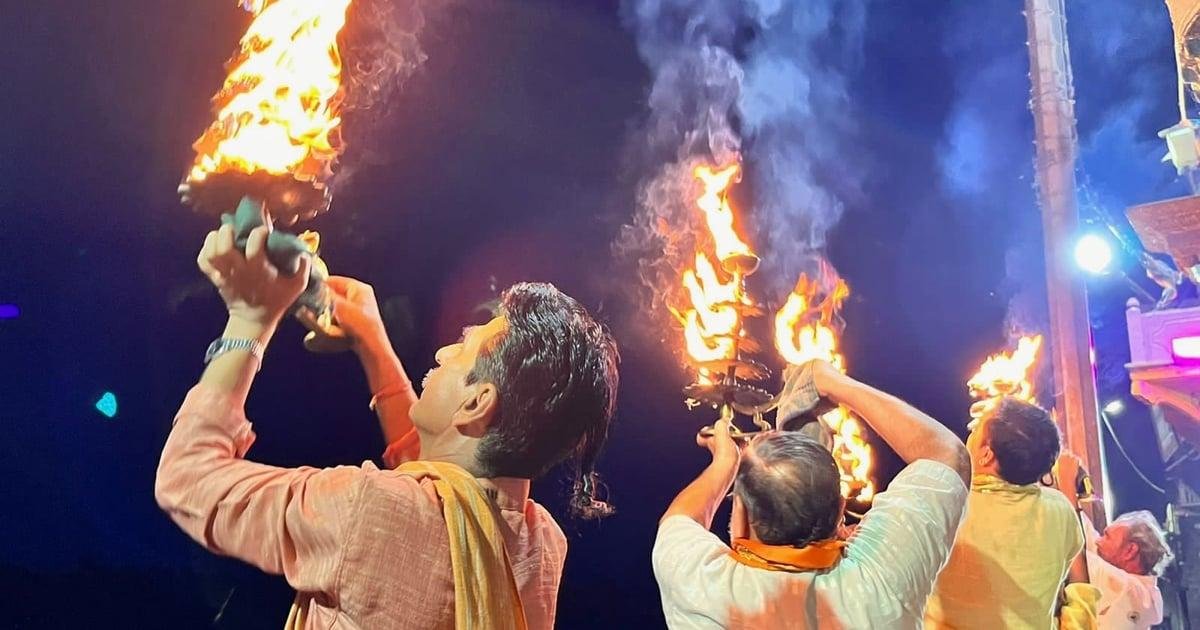
Govardhan Giriraj Ji Aarti is the ceremonial worship of Giriraj Maharaj, the sacred Govardhan Hill revered by devotees as a direct manifestation of Lord Krishna. The Aarti is performed with illuminated lamps, incense, flowers, devotional singing and prayers expressing gratitude for divine protection.
The principal public Aartis associated with Govardhan are performed at Shri Giriraj Ji Daan Ghati Mandir. Devotees can also experience a separate tradition of worship at the Mukharvind Temple in Jatipura, where a sacred rock formation is worshipped as the divine face of Giriraj Maharaj.
Unlike an Aarti performed only before a sculpted deity, Govardhan Aarti honours a sacred natural landscape. The hill, its stones, trees, water bodies and surrounding Parikrama path are approached with the respect ordinarily offered to a living divine presence.
The sound of temple bells, the glow of the Aarti flame, the decorated Giriraj Shila and the continuous chanting of “Giriraj Maharaj Ki Jai” give the ceremony a powerful Braj character. For many pilgrims, receiving Aarti darshan before beginning or completing Govardhan Parikrama is an essential part of the devotional journey.
Who Is Giriraj Maharaj?
Giriraj means the king of mountains. It is an affectionate and respectful name used for Govardhan Hill, which stands within the sacred Braj region associated with the childhood pastimes of Lord Krishna.
According to the Shrimad Bhagavatam, Krishna persuaded the residents of Braj to worship Govardhan Hill, the cows and the local Brahmins instead of conducting their traditional sacrifice for Lord Indra.
The cowherd community prepared large quantities of rice, vegetables, sweets and other foods. Krishna then assumed an immense divine form identified with Govardhan and accepted the offerings presented by the residents of Braj.
Lord Indra became angry when his worship was discontinued and sent destructive clouds over the region. Krishna lifted Govardhan Hill with one hand and used it as an enormous umbrella, protecting the residents, cows and animals of Braj for seven days.
This sacred account forms the spiritual foundation of Govardhan Aarti. The ceremony praises both Krishna as the lifter of the hill and Govardhan as the divine shelter through which Krishna protected His devotees.
Origin of the Govardhan Aarti Tradition
Worship of Govardhan originates in the Govardhan Puja described in the tenth canto of the Shrimad Bhagavatam. Krishna asked the residents of Braj to prepare food, decorate the cows and circumambulate the hill.
After the offerings were presented, Krishna appeared in a vast form and declared His identity with Govardhan. This established the theological understanding that Giriraj Maharaj is not merely a symbolic reminder of Krishna but is worshipped as Krishna’s own divine form.
The daily Aarti tradition developed as temple worship became established at important locations around the hill. Sacred Govardhan Shilas were adorned with garments, flowers, Tulasi leaves and ornaments before being offered lamps and devotional songs.
Daan Ghati became one of the principal centres of this worship. The name is connected with Krishna’s playful Daan Leela, in which He is traditionally believed to have stopped the Gopis carrying milk products and demanded a symbolic contribution or toll.
Jatipura developed another important seva tradition. Its Mukharvind, meaning the divine face or mouth, is worshipped with milk, flowers, Shringar, food offerings and evening Aarti.
Although worship practices vary between these sacred places, the central devotional principle remains the same: Giriraj Maharaj is approached as a living protector, beloved companion of Krishna and compassionate shelter of the people of Braj.
Spiritual Significance of Govardhan Giriraj Ji Aarti
Govardhan Aarti expresses gratitude for divine protection. The story of Krishna lifting the hill teaches that sincere devotion provides an inner source of shelter during difficulty and uncertainty.
The ceremony also represents humility. Lord Indra’s pride was corrected when Krishna demonstrated that divine authority should protect living beings rather than demand recognition from them.
Govardhan worship honours the relationship between human communities and nature. The original Puja included respect for the hill, cows, food, land and those who sustained the community.
The Aarti flame represents divine knowledge. As the lamp is moved before Giriraj Ji, devotees pray that pride, fear, confusion and spiritual ignorance may be removed from their lives.
The circular movement of the lamp also reflects Parikrama. Just as devotees circumambulate Govardhan Hill, the flame circles before Giriraj Maharaj in an expression of surrender and reverence.
Flowers and Tulasi leaves represent affection, while food offerings express gratitude for nourishment. Bells and devotional singing help the congregation focus its attention on Krishna and Giriraj Maharaj.
What Makes Govardhan Aarti Special?
- Worship of a sacred hill: The Aarti honours Govardhan as a living divine form rather than treating the hill only as a geographical feature.
- Direct connection with Krishna: Scriptural tradition identifies Govardhan with Krishna Himself.
- Giriraj Shila worship: Sacred stone forms are decorated and served like temple deities.
- Connection with Parikrama: Many devotees attend Aarti before beginning or after completing the approximately 21-kilometre circumambulation.
- Milk Abhishek: Daan Ghati maintains a published period for devotees to participate in the traditional milk offering.
- Braj devotional music: The ceremony includes local praises, Krishna bhajans and repeated invocations of Giriraj Maharaj.
- Natural symbolism: Govardhan worship encourages gratitude towards land, cows, water, vegetation and food.
- Multiple sacred locations: Daan Ghati and Jatipura maintain distinctive forms of Giriraj seva.
- Festival Annakut: Govardhan Puja is celebrated through a magnificent offering representing a mountain of food.
- Accessible participation: Visitors may join through darshan, chanting, folded-hand prayer and respectful listening.
Devotional Value of Attending Govardhan Aarti
- Gratitude: The ceremony encourages appreciation for food, shelter, nature and community.
- Inner concentration: Lamps, bells and chanting help redirect the mind away from daily distractions.
- Understanding of surrender: Krishna’s Govardhan pastime demonstrates the spiritual importance of seeking divine shelter.
- Connection with Braj: The Aarti links visitors with one of Krishna’s best-known childhood pastimes.
- Preparation for Parikrama: Receiving darshan can establish a devotional intention before undertaking the sacred walk.
- Respect for nature: Worship of a hill, cows and sacred water encourages environmentally responsible conduct.
- Community participation: Pilgrims from different regions join together through familiar chants and prayers.
- Spiritual discipline: Attending Mangala Aarti requires punctuality, cleanliness and preparation.
- Emotional reassurance: The story of Krishna protecting Braj can provide comfort during difficult periods.
- Reflection on humility: The ceremony reminds devotees that power and achievement should be accompanied by service.
These should be understood as devotional and reflective benefits rather than guaranteed material outcomes. The experience depends upon the visitor’s faith, attention and personal conduct.
Official Daan Ghati Aarti Timings
The current Shri Giriraj Ji Daan Ghati Mandir website publishes the following daily schedule. It was checked on 30 July 2026:
- 4:30 AM: Mangala Aarti
- 8:00 AM to 12:00 noon: Dugdh Abhishek
- 2:00 PM: Shringar Darshan
- 7:00 PM: Sandhya Aarti
Published Temple Darshan Hours
- Morning session: 4:30 AM to 12:00 noon
- Evening session: 4:00 PM to 9:00 PM
Important timing note: The official page lists Shringar Darshan at 2:00 PM while separately stating that the public afternoon interval continues until 4:00 PM. Since these details do not completely align, visitors travelling specifically for Shringar should confirm the same-day arrangement with the temple.
Aarti and darshan schedules can change during Govardhan Puja, Guru Purnima, Kartik, Janmashtami, Purnima, Amavasya, Ekadashi and other major occasions. Crowd-control arrangements can also affect entry.
Understanding the Daily Aarti and Seva Cycle
Mangala Aarti
Mangala Aarti is the first principal ceremony of the day and currently begins at 4:30 AM. The word Mangala means auspicious.
Giriraj Maharaj is welcomed at the beginning of the day through lamps, prayers, bells and devotional singing. The early hour creates a disciplined and contemplative atmosphere before Govardhan’s streets and Parikrama route become busy.
Devotees attending Mangala Aarti should reach Daan Ghati before 4:15 AM. Additional time may be required for footwear deposit, security and movement towards the darshan area.
Dugdh Abhishek
The official schedule provides a Dugdh Abhishek period from 8:00 AM to 12:00 noon. During this seva, milk is respectfully offered to Giriraj Maharaj according to the temple’s arrangements.
Milk has a special place in Braj because Krishna’s childhood pastimes are closely connected with cows, cowherds, butter, curd and other milk products.
Visitors should use only authorised offering channels. Milk should not be poured randomly on the road, open hill, Parikrama path or unprotected stones because this can cause waste, sanitation problems and slippery surfaces.
Shringar Darshan
Shringar refers to the decoration of Giriraj Maharaj with garments, flowers, garlands, ornaments and other sacred articles.
Decoration can change according to the season. Summer worship may feature flowers and lighter arrangements, while winter Shringar can use warmer fabrics. Special festivals bring elaborate colours, floral backgrounds and ceremonial ornaments.
The official website currently lists Shringar Darshan at 2:00 PM, but its published general darshan hours show an afternoon closure until 4:00 PM. Same-day verification is therefore recommended.
Sandhya Aarti
Sandhya Aarti is the principal evening ceremony and is currently published at 7:00 PM. The word Sandhya refers to the transition between daylight and night.
A sacred lamp is presented before Giriraj Maharaj while bells ring and devotees sing. The evening atmosphere is generally more energetic than the early-morning worship because Parikrama pilgrims, local residents and visiting families gather together.
Sandhya Aarti is usually the most practical choice for first-time visitors. Reaching the temple by approximately 6:30 PM provides time to deposit footwear and enter before the main lamp offering begins.
Rituals Performed During Govardhan Aarti
Opening Darshan
The decorated Giriraj form is revealed for darshan. Temporary closures may occur while garments, ornaments, food or ritual articles are being arranged.
Offering of Incense
Fragrant incense may be moved before Giriraj Maharaj. Its rising smoke symbolises purified thoughts and sincere prayer.
Offering of Sacred Lamps
Ghee or oil lamps are moved in circular patterns before the sacred form. Their light represents knowledge, divine presence and the removal of spiritual darkness.
Flowers and Tulasi
Flowers express devotion and beauty. Tulasi leaves are especially important in Krishna worship and may be offered according to the temple’s accepted arrangements.
Milk Offering
Dugdh Abhishek expresses the pastoral character of Braj and Krishna’s relationship with cows. The temple’s official schedule provides a designated period for this offering.
Chamara and Other Articles
Depending on the ceremony and season, priests may present water, cloth, flowers, a chamara whisk or a ceremonial fan. The precise sequence should be performed only by authorised temple representatives.
Bells, Conch and Bhajans
Bells and conch sounds announce sacred moments. Devotional songs praise Krishna as Giridhari—the lifter of Govardhan—and Giriraj as the protector of Braj.
Final Prayer
The ceremony concludes with darshan, chanting and respectful obeisance. Devotees may silently offer personal prayers without obstructing the movement of others.
Connection Between Aarti and Govardhan Parikrama
Govardhan Parikrama is an approximately 21-kilometre circumambulation around the sacred hill. The Mathura district administration lists Daan Ghati, Jatipura, Poonchari, Kusum Sarovar, Radha Kund, Mansi Ganga, Govind Kund and other sacred points along the route.
Many devotees begin with darshan or Aarti at Daan Ghati. Others start from Mansi Ganga or Jatipura and return to the same point after completing the circular route.
Aarti and Parikrama express the same devotional principle through different actions. During Aarti, the lamp circles before Giriraj Maharaj. During Parikrama, the devotee physically walks around the hill.
Completing Parikrama is not compulsory for attending Aarti. Elderly visitors, families with young children and people with medical conditions can participate fully through temple darshan and prayer.
Jatipura Mukharvind Aarti
Jatipura Mukharvind maintains a separate Giriraj worship tradition. The sacred rock formation is approached as the face of Giriraj Maharaj and is decorated with flowers, garments and ornaments.
Devotees commonly offer milk and receive Shringar or evening Aarti darshan. Annakut worship has particular significance at this location.
Published visitor references commonly place morning Aarti around 6:00 AM and evening worship around 6:30 PM, but Jatipura timings can vary according to season and seva arrangements.
Visitors should not apply Daan Ghati’s schedule automatically to Mukharvind Temple. Those travelling specifically for Jatipura Aarti should confirm locally on the same day.
Which Govardhan Aarti Should You Attend?
Choose Mangala Aarti if you want a peaceful and disciplined experience before the town becomes crowded.
Choose Dugdh Abhishek if you want to understand Giriraj Ji’s milk-offering tradition and the pastoral symbolism of Braj.
Choose Shringar Darshan if your main interest is seeing the decorated Giriraj form. Confirm the time because the currently published details contain an afternoon inconsistency.
Choose Sandhya Aarti if you are visiting for the first time. The 7:00 PM ceremony is accessible and generally offers the most congregational atmosphere.
Visit Jatipura Mukharvind if you want to experience the intimate tradition of worshipping the sacred face of Giriraj Maharaj.
Festival Aartis and Special Celebrations
Govardhan Puja and Annakut
Govardhan Puja is the most important annual celebration associated with Giriraj Maharaj. It is observed around October or November on the day following Diwali, according to the Hindu lunar calendar.
A mountain-like arrangement of vegetarian food is presented as Annakut. The offering recalls the feast prepared by the residents of Braj when Krishna established Govardhan worship.
Special Aarti, Shringar, bhajans, Parikrama and prasad distribution attract exceptionally large numbers of devotees. Ordinary timings should not be used for this day.
Mudiya Purnima and Guru Purnima
The Guru Purnima period brings one of Govardhan’s largest Parikrama gatherings. Aarti areas and surrounding roads can become extremely crowded, and traffic diversions may be introduced.
Kartik Purnima
Kartik Purnima is associated with Parikrama and Deepdan. Lamps illuminate parts of the sacred route, creating a devotional relationship between the daily Aarti flame and the wider landscape of Govardhan.
Janmashtami
Krishna’s appearance festival is celebrated with extended kirtan, Abhishek and special offerings. Daan Ghati’s official festival information describes all-night singing and prasad distribution.
Holi
Holi celebrations in Braj combine colours, seasonal songs and the playful remembrance of Radha and Krishna. Temple decoration and crowd arrangements may differ from the regular programme.
Ekadashi, Purnima and Amavasya
These lunar occasions attract larger numbers of Parikrama pilgrims. Visitors attending Aarti should arrive substantially earlier than on an ordinary weekday.
Dress Code and Aarti Etiquette
- Wear clean and modest clothing covering the shoulders and knees.
- Remove footwear at the designated location before entering the worship area.
- Reach the temple before Aarti instead of entering during the principal lamp offering.
- Keep mobile phones silent and follow current photography instructions.
- Do not use flash, tripods or selfie sticks near the sacred Giriraj form.
- Do not touch the Aarti lamp, ornaments or ritual articles without permission.
- Present milk, flowers and Tulasi only through authorised arrangements.
- Do not remove stones, soil, plants or other natural material from Govardhan Hill.
- Avoid plastic bags, disposable bottles and food litter along the Parikrama route.
- Do not push when the altar opens or the Aarti flame is brought towards devotees.
- Allow elderly people, children and shorter visitors space for darshan.
- Avoid loud personal conversations during Aarti and devotional singing.
- Accept prasad respectfully and avoid wasting food.
- Follow instructions given by priests, volunteers, security staff and local authorities.
Planning Your Govardhan Aarti Visit
Sandhya Aarti is generally the easiest option for a first visit. Reach Daan Ghati by approximately 6:30 PM for the currently published 7:00 PM ceremony.
For Mangala Aarti, staying in or close to Govardhan is advisable because the ceremony begins at 4:30 AM. Accommodation around Govardhan and nearby Braj destinations can be explored through Mudras Stays when planning an early-morning visit.
The temple’s current public hours are 4:30 AM to 12:00 noon and 4:00 PM to 9:00 PM. Avoid arriving during the afternoon interval unless a specific festival or seva has been confirmed.
Weekdays are usually easier than weekends, Purnima, Amavasya, Ekadashi, Guru Purnima, Kartik and Govardhan Puja. During peak periods, roads can be closed or diverted for pilgrims.
General participation in public Aarti is ordinarily free. Milk Abhishek, special Shringar, sponsored offerings and other sevas may follow separate arrangements.
Nearby Spiritual Places After Aarti
- Mansi Ganga: A sacred water body traditionally used as a starting point for Govardhan Parikrama.
- Haridev Temple: A historic Krishna temple situated near Mansi Ganga.
- Jatipura Mukharvind: The sacred Giriraj face worshipped through milk offerings, Shringar and Aarti.
- Kusum Sarovar: A historic reservoir and devotional site associated with Radha and Krishna.
- Radha Kund and Shyam Kund: Two highly revered sacred water bodies on the Govardhan route.
Interesting Facts About Govardhan Aarti
- Govardhan Hill is worshipped as Giriraj Maharaj, the king of mountains.
- Krishna established Govardhan worship in place of the customary sacrifice to Indra.
- Scriptural tradition describes Krishna assuming a vast form identified with Govardhan.
- Krishna held Govardhan Hill for seven consecutive days to protect Braj.
- Daan Ghati is associated with Krishna’s playful Daan Leela.
- The principal deity at Daan Ghati is worshipped in a sacred rock form.
- The official Daan Ghati schedule lists Mangala Aarti at 4:30 AM.
- Dugdh Abhishek is currently conducted between 8:00 AM and 12:00 noon.
- Sandhya Aarti is currently published at 7:00 PM.
- Govardhan Parikrama covers approximately 21 kilometres.
- The Aarti’s circular lamp movement symbolically resembles Parikrama.
- Jatipura Mukharvind follows a separate Giriraj seva tradition.
- Govardhan Puja is also known as Annakut because of its mountain-like food offering.
- Kartik Purnima includes Parikrama and the offering of numerous lamps.
- Devotees should not remove stones or natural material from Govardhan Hill.
Frequently Asked Questions About Govardhan Aarti
What is Govardhan Giriraj Ji Aarti?
It is the ceremonial worship of Giriraj Maharaj through sacred lamps, incense, flowers, prayers and devotional singing.
Where is the principal Govardhan Aarti performed?
One of the principal public Aarti traditions is maintained at Shri Giriraj Ji Daan Ghati Mandir. Separate worship is performed at Jatipura Mukharvind.
What time is Mangala Aarti at Daan Ghati?
The current official schedule lists Mangala Aarti at 4:30 AM.
What time is Sandhya Aarti?
Daan Ghati’s current official schedule lists Sandhya Aarti at 7:00 PM.
When is Dugdh Abhishek performed?
The published schedule provides a Dugdh Abhishek period from 8:00 AM to 12:00 noon.
What time is Shringar Darshan?
The official page currently lists Shringar Darshan at 2:00 PM. However, the same page states that evening public hours begin at 4:00 PM, so same-day confirmation is advisable.
What are the public darshan hours?
The currently published hours are 4:30 AM to 12:00 noon and 4:00 PM to 9:00 PM.
Which Aarti is best for first-time visitors?
Sandhya Aarti is generally the most convenient introduction. Mangala Aarti is preferable for visitors seeking a quieter experience.
Is there an entry fee?
General participation in ordinary public Aarti is ordinarily free. Special offerings, Abhishek and sponsored sevas may involve separate contributions.
Can visitors offer milk to Giriraj Ji?
Yes, but milk should be offered only through the temple’s authorised arrangements during the designated Dugdh Abhishek period.
Can Aarti be attended without performing Parikrama?
Yes. Aarti and Parikrama are separate devotional activities, and completing the full walk is not compulsory for receiving darshan.
How long is Govardhan Parikrama?
The full route is approximately 21 kilometres and commonly requires five to seven hours on foot, depending on pace and crowd conditions.
Can devotees take a Govardhan stone home?
Visitors should not remove stones, soil or other natural material from the hill. Giriraj Ji should be worshipped respectfully in place unless recognised religious and local rules specifically permit otherwise.
Are photographs allowed during Aarti?
Photography rules can change. Visitors should follow current signs and instructions and avoid flash or obstructive photography.
Do timings change during Govardhan Puja?
Yes. Govardhan Puja, Guru Purnima, Kartik and other major occasions can have extended worship, special Aartis and separate crowd arrangements.
What is the difference between daily Aarti and Govardhan Puja?
Daily Aarti is part of the regular worship cycle. Govardhan Puja is the annual festival featuring Annakut, elaborate offerings, special decoration and exceptionally large gatherings.
How early should devotees arrive?
Arrive at least 20 to 30 minutes before an ordinary Aarti. During festivals and important lunar dates, considerably more time may be required.