Kasar Devi Temple Aarti: Worship in the Sacred Silence of Almora
Kasar Devi Temple Aarti is the ceremonial worship of Goddess Kasar Devi at an ancient hilltop shrine near Almora in Uttarakhand. Unlike the large, highly choreographed ceremonies performed at major pilgrimage centres, the Aarti here is generally intimate, contemplative and closely connected with the stillness of the surrounding Kumaon Himalayas.
The ceremony centres upon the offering of sacred light before the Goddess. Lamps, incense, flowers, bells and Devi prayers transform the compact shrine into a place of focused devotion. The mountain air, pine-covered slopes and distant Himalayan views give both morning and evening worship a distinctive atmosphere.
The Ministry of Tourism currently lists the temple’s public opening hours as approximately 7:00 AM to 7:00 PM. Independent temple references report morning Aarti around 6:30 AM to 7:00 AM and evening Aarti between approximately 6:00 PM and 7:00 PM.
No dependable live timetable issued directly by the temple is presently available. The ceremony can shift according to daylight, winter conditions, festivals and the priest’s daily arrangements. Devotees should therefore treat these as planning windows, arrive early and obtain local confirmation.
History and Spiritual Background of Kasar Devi Temple
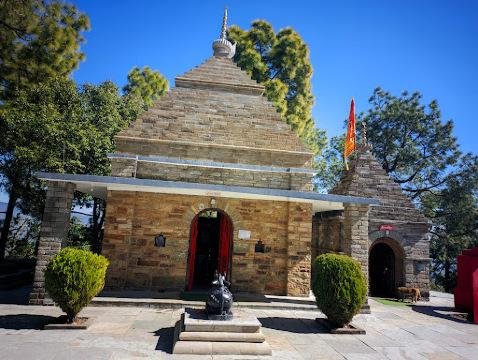
Kasar Devi Temple stands on a ridge approximately eight kilometres from Almora. Government tourism sources place the temple structure in the second century CE, making it one of the region’s ancient centres of Goddess worship.
The shrine is dedicated to Kasar Devi, a local manifestation of Shakti commonly identified with Goddess Durga and, in some traditions, with Katyayani. The surrounding village takes its name from the presiding Goddess.
The temple complex is associated with worship of both the Goddess and forms of Shiva and Bhairava. Large natural rocks, the wooded ridge and the compact sacred spaces contribute to its character as a place of worship, meditation and personal spiritual practice.
Kasar Devi acquired wider recognition after Swami Vivekananda meditated in the area in September 1890. Uttarakhand Tourism includes the temple within the Swami Vivekananda Trail, while Ramakrishna Math records Kasar Devi among the important places connected with his journey through Kumaon.
In later decades, mystics, writers, artists and spiritual seekers also spent time around Kasar Devi and the nearby Crank’s Ridge. However, for local devotees, the temple has remained fundamentally a living Shakti shrine where the Goddess is worshipped through Puja, lamps, offerings and seasonal celebrations.
Meaning of Kasar Devi Temple Aarti
Aarti is the ritual offering of light before a deity. At Kasar Devi, the flame is presented to the Goddess as an expression of devotion, gratitude and surrender.
The ceremony carries several spiritual meanings:
- Presence of Shakti: The lamp honours the divine feminine power represented by Kasar Devi.
- Removal of inner darkness: Light symbolises knowledge, awareness and the ability to recognise harmful thoughts and actions.
- Protection: Devotees pray for courage and guidance while facing uncertainty, fear or difficult decisions.
- Purification of intention: Flowers, incense and light encourage worshippers to approach the Goddess with sincerity.
- Gratitude: Aarti provides a structured moment to acknowledge family, health, livelihood and opportunity.
- Inner discipline: Standing quietly before the lamp helps direct attention away from ordinary distraction.
- Connection with nature: The hilltop setting encourages worshippers to recognise the sacred within the natural world.
These meanings belong to devotional tradition. Aarti should not be presented as a guaranteed cure for illness or as a guaranteed solution to financial, legal, professional or relationship difficulties.
Daily Aartis and Worship at Kasar Devi Temple
The temple does not publish a detailed official daily liturgical schedule. The worship sequence described below should therefore be understood as a practical overview rather than a guaranteed ritual programme.
Morning Preparation
Before public worship, the priest may clean and prepare the sanctum, arrange flowers, light the lamp and incense, and prepare the articles needed for Puja.
Some published references place morning worship at approximately 6:30 AM, while the Ministry of Tourism lists public opening at 7:00 AM. This means that part of the preparation or early worship may occasionally take place before general visitor access.
Morning Aarti
Morning Aarti is best planned within a window of approximately 6:30 AM to 7:00 AM. Devotees should confirm whether visitors will be admitted before 7:00 AM on the chosen day.
The ceremony may include an invocation of the Goddess, flowers, incense, the ringing of bells, recitation of Devi prayers and the circular offering of a ghee or oil lamp.
Morning worship is particularly suitable for visitors seeking a quiet experience. The cool air and softer mountain light also create favourable conditions for sitting silently after the ceremony.
Daytime Darshan and Personal Prayer
After morning worship, visitors can receive darshan, present accepted offerings and spend a short period in prayer. Meditation should be practised only where it does not obstruct access to the shrine.
Kasar Devi attracts both pilgrims and visitors interested in meditation. Devotees should remember that the temple remains an active religious space. Yoga, photography and personal spiritual practices should never interfere with Puja or ordinary darshan.
Evening or Sandhya Aarti
Evening Aarti is reported within a seasonal planning window of approximately 6:00 PM to 7:00 PM. One published temple reference places it at 7:00 PM, while another places it closer to 6:00 PM.
The difference is understandable in a Himalayan setting where daylight changes significantly between summer and winter. During colder months, worship and closing may occur earlier than visitors expect.
As the lamp is offered, the fading natural light, sound of bells and surrounding silence create a deeply contemplative atmosphere. Devotees wishing to attend should reach the complex approximately 30 minutes before the locally confirmed time.
Navratri Worship
Navratri is an important period for worship of Kasar Devi as a manifestation of Shakti. The shrine may receive additional flowers, red cloth, coconuts, lamps and devotional recitations during these nine sacred nights.
Durga prayers and passages associated with Devi worship may be recited according to the priest’s tradition. The ordinary Aarti schedule can be modified to accommodate additional worshippers.
Kartik Purnima and Kasar Devi Fair
The annual Kasar Devi Fair is traditionally held on Kartik Purnima, generally falling in November or December. The occasion brings local devotees, families, traders and visitors to the hilltop shrine.
Aarti during the fair may be accompanied by expanded Puja, additional lamps and a larger congregation. Visitors should expect crowd pressure on the approach, limited parking and longer waiting periods.
Kasar Devi Temple Aarti Timings
| Aarti or Activity | Common Planning Time | Important Information |
|---|---|---|
| Morning Preparation | Before approximately 7:00 AM | May be performed internally before public access |
| Morning Aarti | Approximately 6:30 AM to 7:00 AM | Confirm whether visitors can enter before the listed public opening |
| Public Opening | Approximately 7:00 AM | Current Ministry of Tourism listing |
| Morning Darshan | From approximately 7:00 AM | Suitable for prayer, offerings and quiet meditation |
| Daytime Worship | During public opening hours | Priest availability may vary |
| Evening Aarti | Approximately 6:00 PM to 7:00 PM | Time may change with season and daylight |
| Public Closing | Approximately 7:00 PM | Do not assume access will continue after Aarti |
| Festival Aarti | Announced locally | Regular timings may change during Navratri and Kartik Purnima |
Important timing note: No live daily Aarti timetable is currently published by the temple. Independent sources differ by approximately one hour. Confirm the ceremony locally on the same day rather than planning solely around an online listing.
Rituals Performed During Kasar Devi Temple Aarti
Preparation of the Lamp
A ghee or oil lamp is prepared before the ceremony. The priest may also arrange incense, flowers, water, cloth and other accepted Puja articles.
Invocation of the Goddess
The ceremony begins with prayers honouring Kasar Devi as a manifestation of divine feminine power. Worshippers generally fold their hands and direct their attention towards the shrine.
Offering of Flowers and Chunari
Flowers and red chunari are commonly associated with Devi worship. These should be presented to the priest or placed only in the designated offering area.
Incense and Fragrance
Incense symbolises the purification of thought and intention. Visitors should not independently light incense or camphor in crowded or fire-sensitive areas.
Offering of Sacred Light
The priest moves the illuminated lamp in circular patterns before the Goddess. The flame represents awareness, protection and the removal of spiritual darkness.
Bells and Devi Prayers
Bells may accompany the lamp offering together with mantras, names of the Goddess or locally followed devotional prayers. The exact verses can vary and should not be assumed to follow a fixed public script.
Receiving the Aarti Flame
When the lamp is brought towards the congregation, devotees commonly place their hands near its warmth and then touch their forehead. Visitors should wait patiently and avoid leaning across another worshipper.
Prasad and Final Darshan
Prasad may be offered after the ceremony according to availability and temple arrangements. Online claims regarding guaranteed prasad distribution are inconsistent, so visitors should not treat it as assured.
Silence and Meditation
Many worshippers sit quietly after Aarti. This period of reflection is one of the distinctive aspects of Kasar Devi, but meditation is a personal practice and not necessarily a formal part of the priest-led ceremony.
The Akhand Jyoti and Dhuni Tradition
Traditional accounts of Kasar Devi describe a continuously maintained sacred light and a dhuni, or ritual fire, within the wider temple complex.
An akhand jyoti symbolises uninterrupted divine presence, while a dhuni is associated with prayer, renunciation and the spiritual practices of ascetics. These sacred fires should not be confused with the lamp temporarily circulated during Aarti.
Visitors should not touch the flame, add wood or place offerings into a ritual fire without the priest’s permission. Claims that ash from a dhuni can medically cure disease should be treated as matters of religious belief, not as substitutes for professional treatment.
Offerings for Kasar Devi Aarti
Commonly reported offerings associated with the shrine and Devi worship include:
- Fresh flowers
- Red chunari or clean cloth
- Coconut
- Fruit
- Incense accepted by the temple
- Ghee or oil for lamps, when permitted
- Simple sweets or locally accepted prasad
- A voluntary donation placed in the authorised box
Devotees should purchase only what they can comfortably afford. The spiritual value of an offering does not depend upon its price, size or quantity.
Benefits of Attending Kasar Devi Temple Aarti
- Developing concentration: The flame and rhythmic prayers provide a clear focus for attention.
- Finding emotional calm: The small shrine and forested setting can create a sense of distance from everyday pressure.
- Strengthening devotion: Aarti allows worshippers to express faith through light, prayer and gratitude.
- Encouraging reflection: Silence after the ceremony can help visitors examine their choices and responsibilities.
- Connecting with Shakti tradition: The ceremony introduces visitors to the continuing worship of the Goddess in Kumaon.
- Practising humility: The simple hilltop environment encourages worship without excessive display.
- Supporting family prayer: Families can participate together and pray for harmony, courage and responsible decisions.
- Experiencing Himalayan spirituality: The ceremony combines formal worship with the natural atmosphere of the mountains.
These are devotional and emotional interpretations. Attendance cannot guarantee healing, success, marriage, wealth or the resolution of personal disputes.
A Responsible Note About the Van Allen Belt Claim
Kasar Devi is frequently described in tourism publications as a place possessing an unusual geomagnetic field. Some accounts claim that it lies within the Van Allen Belt or is one of only three comparable spiritual-energy locations in the world.
NASA describes the Van Allen belts as enormous regions of trapped charged particles surrounding Earth in space. They are not narrow surface belts passing through individual temples.
No publicly available NASA study was found confirming that Kasar Devi, Stonehenge and Machu Picchu are the only three surface locations with a special Van Allen connection. A local magnetic anomaly would require direct, repeatable scientific measurements and should not be established through visitor sensations alone.
Visitors can respectfully appreciate the peace they experience at Kasar Devi without presenting spiritual feelings as proven medical or geophysical effects. The quiet landscape, elevation, forest environment, religious expectation and opportunity for meditation can themselves contribute to feelings of calm and attention.
Which Kasar Devi Aarti Should You Attend?
Choose morning Aarti if you prefer cooler conditions, fewer visitors and time for silent reflection after worship. Confirm whether public entry is permitted before 7:00 AM.
Choose evening Aarti if you want to experience the sacred lamp as daylight fades over the Himalayan ridge. Reach early because the ceremony may begin closer to 6:00 PM during shorter winter days.
Choose a weekday if your priority is quiet worship and personal prayer.
Choose Navratri or Kartik Purnima if you prefer a larger devotional gathering and are comfortable with crowds and modified schedules.
Travellers using Mudras Stays can arrange accommodation around Almora or the Kasar Devi road while keeping enough flexibility for same-day Aarti confirmation.
Best Time to Attend Kasar Devi Temple Aarti
Ordinary weekday mornings generally provide the calmest worship experience. October and November often offer clearer Himalayan views, while Kartik Purnima provides the most active traditional atmosphere.
Winter Aarti can be especially peaceful, but temperatures fall rapidly after sunset and the ceremony may be advanced. Carry adequate layers and confirm return transport before attending evening worship.
During monsoon, stone paths and steps can become slippery. Heavy rain, fog, lightning or road disruption should take priority over an Aarti plan.
Nearby Places to Combine With Morning Aarti
- Chitai Golu Devta Temple: A renowned Kumaoni shrine associated with written petitions and bells.
- Nanda Devi Temple: An important centre of Goddess worship within Almora.
- Katarmal Sun Temple: A historic temple complex dedicated to the Sun God.
- Binsar Wildlife Sanctuary: A forested Himalayan area known for walking routes and mountain views.
- Jageshwar Dham: A major group of ancient Shiva temples surrounded by deodar forest.
- Ramakrishna Kutir: A spiritual institution connected with the legacy of Swami Vivekananda in Almora.
Morning Aarti offers the greatest flexibility for visiting another shrine during daylight. Evening visitors should avoid creating a rushed return journey on unfamiliar mountain roads.
Key Details for Devotees
| Temple Name | Kasar Devi Temple |
|---|---|
| Location | Kasar Devi village near Almora, Uttarakhand |
| Distance from Almora | Approximately 8 kilometres |
| Principal Deity | Goddess Kasar Devi |
| Divine Association | Worshipped as a manifestation of Shakti or Durga, often associated with Katyayani |
| Reported Historical Period | Temple structure placed in the second century CE by government tourism sources |
| Swami Vivekananda Connection | Meditated in the Kasar Devi area in September 1890 |
| Public Opening | Approximately 7:00 AM |
| Morning Aarti Planning Window | Approximately 6:30 AM to 7:00 AM |
| Evening Aarti Planning Window | Approximately 6:00 PM to 7:00 PM |
| Public Closing | Approximately 7:00 PM |
| Principal Annual Gathering | Kasar Devi Fair on Kartik Purnima |
| Recommended Arrival | At least 30 minutes before the locally confirmed Aarti |
| Advance Booking | No verified booking requirement for ordinary public Aarti |
| Timing Confirmation | Required locally because a live official Aarti timetable is unavailable |
Kasar Devi Temple Aarti Dress Code and Etiquette
- Wear clean, modest clothing suitable for a place of Goddess worship.
- Carry warm layers for morning and evening Aarti.
- Use comfortable footwear for the uphill stone approach.
- Remove footwear only at the designated point.
- Reach before the locally confirmed ceremony begins.
- Keep mobile phones silent during Aarti.
- Ask permission before photographing the sanctum, priest or sacred lamp.
- Do not use flash near the deity or Aarti flame.
- Do not block the small shrine while meditating or taking photographs.
- Present flowers, coconut and chunari through the accepted system.
- Do not independently light lamps, incense or camphor.
- Do not touch or add material to an akhand jyoti or dhuni.
- Wait patiently when receiving the Aarti flame or prasad.
- Supervise children near lamps, steps, rocks and exposed hill sections.
- Do not leave plastic packaging, bottles or discarded offerings in the forest.
- Avoid loud music, recreational shouting or disruptive yoga demonstrations.
- Follow instructions issued by the priest, attendants and local authorities.
Frequently Asked Questions About Kasar Devi Temple Aarti
1. What is Kasar Devi Temple Aarti?
It is the ceremonial worship of Goddess Kasar Devi through sacred light, flowers, incense, bells and Devi prayers at the hilltop shrine near Almora.
2. What is the morning Aarti time?
Morning worship is independently reported around 6:30 AM to 7:00 AM. Public opening is officially listed at 7:00 AM, so visitors should confirm whether earlier entry is available.
3. What is the evening Aarti time?
Published references place evening Aarti between approximately 6:00 PM and 7:00 PM. The time may shift with daylight and season.
4. Are the Aarti timings officially confirmed?
No live temple-issued daily schedule is currently available. The stated times should be treated as planning windows and confirmed locally.
5. Who is worshipped at Kasar Devi Temple?
The presiding deity is Goddess Kasar Devi, worshipped locally as a manifestation of Shakti or Durga and often associated with Katyayani.
6. Which Aarti is best for first-time visitors?
Morning Aarti is generally more practical because visitors can complete the approach and return during daylight. Entry before 7:00 AM should be confirmed.
7. Is advance booking required?
No verified advance booking system is listed for ordinary public Aarti. Special Puja or festival arrangements may follow a separate local process.
8. What offerings can devotees carry?
Commonly reported offerings include flowers, coconut, fruit and red chunari. Visitors should confirm what the temple currently accepts.
9. When is Kasar Devi Temple most crowded?
The largest traditional gathering occurs during the Kasar Devi Fair on Kartik Purnima. Navratri, weekends and holidays can also attract more visitors.
10. Can visitors meditate after Aarti?
Quiet meditation may be possible in an appropriate area, provided it does not block darshan, the sanctum entrance or other worshippers.
11. Is photography permitted during Aarti?
Photography may be allowed in parts of the outer complex, but visitors should ask before recording the sanctum, priest or ceremony.
12. Has NASA confirmed the Kasar Devi energy claim?
No publicly available NASA study was found confirming Kasar Devi as one of three unique surface locations connected with the Van Allen belts. Spiritual experiences and scientific claims should be presented separately.