
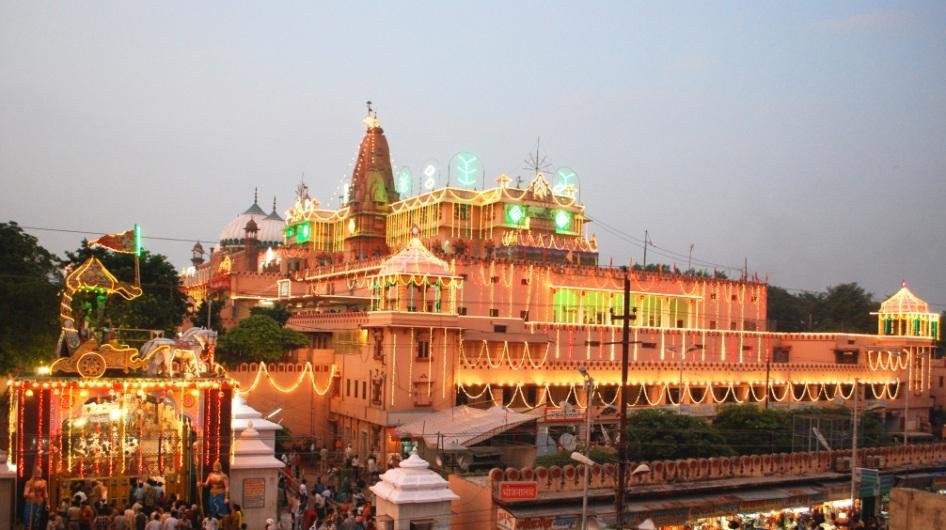
Krishna Janmabhoomi Aarti: Divine Worship at Krishna’s Birthplace
Krishna Janmabhoomi Aarti is a sacred sequence of daily worship performed within the Shri Krishna Janmasthan complex in Mathura, Uttar Pradesh. The ceremony honours Lord Krishna, worshipped here as Shri Keshavdev and alongside Shri Radha in the principal shrines of the complex. The location holds exceptional importance because Hindu tradition identifies it as the place where Krishna was born to Devaki and Vasudeva inside the prison of King Kansa.
The Aarti combines illuminated lamps, temple bells, conch shells, devotional hymns, flowers, incense and carefully prepared offerings. Priests move the sacred lamp rhythmically before the deity while devotees sing prayers and receive the light as a symbol of divine grace. Each ceremony corresponds to a different part of Krishna’s daily routine, from awakening during Mangala Aarti to retiring during Shayan Aarti.
Devotees attend Krishna Janmabhoomi Aarti not merely to observe a religious ceremony but to participate in personal service to Krishna. The morning worship is quiet and contemplative, while the evening ceremony creates a more vibrant atmosphere through collective chanting, radiant lamps and the devotion of pilgrims gathered from different parts of India.
History of Krishna Janmabhoomi and Its Aarti Tradition
Mathura is traditionally regarded as the birthplace of Lord Krishna and is counted among the seven sacred cities of Hinduism. According to the Krishna tradition, Devaki gave birth to Krishna at midnight inside the prison of her brother, King Kansa. Vasudeva then carried the infant Krishna across the Yamuna to Gokul, where he was raised by Yashoda and Nanda.
The sacred birth site is associated with Katra Keshavdev, an area regarded by devotees and several historical accounts as part of ancient Mathura. The present Shri Krishna Janmasthan complex includes the Garbh Grih or traditional birth chamber, Keshavdev Temple, Bhagavata Bhavan, Radha-Krishna shrine, Yogmaya Temple and other places of worship.
Although the exact date on which the present daily Aarti sequence began is not publicly documented, its structure follows the traditional Vaishnava system of seva. In this tradition, the deity is served as a living divine presence. Krishna is awakened, adorned, offered food, worshipped with lamps, allowed to rest and finally put to sleep through ceremonies performed at specific stages of the day.
The continuing Aarti tradition therefore represents more than a fixed temple programme. It maintains an intimate devotional relationship between Krishna and his worshippers. Every offering is treated as an act of loving service, reflecting the bhakti traditions for which Mathura and the wider Braj region are renowned.
The most important extension of this tradition occurs during Krishna Janmashtami. The temple’s official festival programme describes a dawn Mangala Aarti and Abhishek, followed by a special late-night sequence. At midnight, Krishna’s Prakatya Darshan is celebrated with Aarti, after which Janmabhishek is performed with Panchamrit and followed by another Aarti.
Spiritual Significance of Krishna Janmabhoomi Aarti
Aarti represents the offering of light to the divine. At Krishna Janmabhoomi, the flame holds additional meaning because it is offered at the site associated with Krishna’s appearance at midnight. The light symbolically recalls hope emerging within darkness, freedom arising from imprisonment and the restoration of righteousness in a period of fear.
The circular movement of the lamp represents the completeness and continuity of creation. Devotees watch the flame while concentrating on Krishna, allowing the senses and thoughts to become centred on worship. At the end of the ceremony, worshippers place their hands near the flame and touch their forehead, symbolically receiving sacred light and blessings.
The sound of the conch traditionally announces an auspicious moment and draws attention towards the deity. Bells help separate the mind from ordinary distractions, while incense represents purified intention. Flowers express affection and gratitude, and bhajans enable the congregation to participate collectively in Krishna bhakti.
The different Aartis also express different devotional moods. Mangala Aarti welcomes Krishna at the beginning of the day. Rajbhog Aarti accompanies the principal food offering, while evening Aarti expresses gratitude as daylight fades. Shayan Aarti is gentle and intimate, marking the conclusion of daily service before the deity rests.
Benefits of Attending Krishna Janmabhoomi Aarti
- Spiritual peace: Sacred chants and the glow of the lamps create an environment suitable for prayer and quiet reflection.
- Strengthened devotion: Participating in Krishna’s daily seva helps devotees develop a more personal relationship with the deity.
- Positive focus: Bells, mantras and bhajans encourage the mind to move away from everyday distractions.
- Emotional comfort: Devotees often experience reassurance while praying at a site associated with hope overcoming hardship.
- Cultural understanding: The ceremony introduces visitors to the living Vaishnava worship traditions of Mathura and Braj.
- Community worship: Singing with fellow pilgrims creates a sense of spiritual unity and belonging.
- Meaningful reflection: The Aarti offers time to express gratitude and consider personal intentions.
- Connection with Krishna’s story: Worship at the traditional birthplace gives the prayers a distinctive emotional and devotional context.
What Makes Krishna Janmabhoomi Aarti Special?
The foremost distinction of Krishna Janmabhoomi Aarti is its setting. Devotees are worshipping within the complex traditionally identified as Krishna’s birthplace. The story of his birth inside Kansa’s prison gives the lamp ceremony a powerful symbolism: divine light appearing where fear and confinement once prevailed.
The Aarti is not limited to one evening ceremony. It is part of a complete daily cycle of service that includes awakening, food offerings, afternoon rest, reawakening, evening worship and Shayan. This sequence allows devotees arriving at different times to witness a particular devotional mood.
During the lamp offering, priests stand before the decorated deity and perform the ceremony with traditional lamps. The ringing of bells, blowing of the conch, fragrance of incense and singing of Krishna bhajans create a multisensory devotional experience. Devotees frequently respond with chants such as “Radhe Radhe,” “Hare Krishna” and “Jai Shri Krishna.”
The appearance of the shrine changes with the season and religious calendar. Krishna and Radha may be adorned with specially selected clothing, garlands, flowers and ornaments. Food offerings can include fruits, sweets, butter, milk preparations and other items associated with Krishna worship.
Festival ceremonies are considerably more elaborate. During Janmashtami, devotees gather for the midnight Prakatya Darshan marking Krishna’s birth. Shravan Ghata Darshan, Deepavali, Annakoot, Holi, Basant Panchami and Sharad Purnima also introduce distinctive decorations, offerings and devotional programmes.
Krishna Janmabhoomi Aarti Timings
The official Shri Krishna Janmasthan website displays separate winter and summer schedules. However, during verification, its printed seasonal date ranges had not been updated beyond 2024–25. The following should therefore be treated as the temple’s published reference schedule, and visitors should reconfirm the current timings before travelling.
- Mangala Aarti: 6:30 AM in both the published winter and summer schedules.
- Bal Bhog Seva: 9:00 AM.
- Rajbhog Seva: 11:00 AM.
- Rajbhog Aarti: 11:10 AM at the Shri Keshavdev and Shri Radha-Krishna shrines.
- Afternoon Shayan: 1:00 PM.
- Utthapan: 3:00 PM in winter and 4:00 PM in summer.
- Mewa or Phal Bhog: 4:00 PM in winter and 5:00 PM in summer.
- Evening Aarti: 7:00 PM in winter and 8:00 PM in summer.
- Shayan Bhog Seva: 7:30 PM in winter and 8:10 PM in summer.
- Shayan Aarti Seva: 8:25 PM in winter and 8:55 PM in summer.
- Night Shayan: Listed at 8:25 PM in winter and 9:25 PM in summer.
The Garbh Grih has a separately published darshan window, while the Keshavdev, Bhagavata Bhavan, Yogmaya and Giriraj shrines follow seasonal opening and closing periods. Visitors should arrive well before the desired Aarti because security screening and queues can require additional time.
For same-day confirmation, devotees can contact Shri Krishna Janmasthan Seva Sansthan at +91 565 2423714.
Note: Timings may change during festivals or according to temple administration.
Rituals Performed During Krishna Janmabhoomi Aarti
Preparation and Shringar
Before the Aarti, priests prepare the worship area and adorn the deities. Krishna and Radha may be dressed in garments selected for the season, festival or devotional theme. Flowers, garlands, jewellery and sacred markings complete the Shringar.
Lighting of the Sacred Lamp
Cotton wicks are placed in a lamp containing ghee or oil and lit before the ceremony. The priest moves the illuminated lamp in circular patterns before the deity. The flame represents knowledge, purity and the presence of divine consciousness.
Mantras and Krishna Bhajans
Prayers, names of Krishna and devotional hymns accompany the lamp offering. Devotees may join the familiar responses and bhajans, creating a ceremony based on shared participation rather than silent observation alone.
Temple Bells and Conch Shell
Bells are sounded during important stages of worship, while a conch may be blown to announce the sacred ceremony. Together, these sounds establish the rhythm of the Aarti and help direct the congregation’s attention towards Krishna.
Flowers and Incense
Flowers express devotion, beauty and gratitude. Incense is offered for purification and creates a distinctive fragrance around the shrine. Depending on the ceremony, other traditional items may also be presented.
Bhog and Prasad
Bal Bhog, Rajbhog, fruit offerings and Shayan Bhog correspond to different times of the day. Once accepted symbolically by the deity, sanctified offerings may be distributed as prasad. Visitors should accept prasad respectfully with the right hand or both hands.
Temple Dress Code and Visitor Guidelines
- Wear clean, modest clothing appropriate for a major place of worship.
- Remove footwear at the designated location before entering temple areas.
- Travel light because security checks are strict around the Janmasthan complex.
- Mobile phones, cameras, large bags and electronic devices may not be permitted inside.
- Use only authorised deposit or locker facilities for restricted belongings.
- Photography and video recording are prohibited in sensitive temple areas.
- Maintain silence when priests are chanting and avoid obstructing the Aarti.
- Follow the designated queue and do not push during crowded darshan periods.
- Respect restricted areas around the deities and traditional birth chamber.
- Follow all instructions issued by temple personnel and security authorities.
Best Time to Attend Krishna Janmabhoomi Aarti
Mangala Aarti is suitable for devotees seeking a peaceful beginning to the day. The early hour, softer devotional atmosphere and morning worship encourage quiet concentration. Visitors should reach the security entrance well in advance.
Evening Aarti is generally the most atmospheric option for first-time visitors. The glowing lamps, collective chanting and illuminated temple surroundings create a vibrant devotional experience. Seasonal evening times differ, making advance confirmation important.
Shayan Aarti has a quieter devotional mood. It represents the final service of the day and is appropriate for visitors who wish to experience a gentle conclusion to temple worship.
Krishna Janmashtami offers the most elaborate celebration, particularly the midnight Prakatya Aarti and Janmabhishek. It also attracts extremely large crowds and enhanced security arrangements. Visitors should attend only with sufficient preparation and awareness of the special entry system.
Devotees who want to attend an early ceremony can use Mudras Stays to explore accommodation around Mathura and the wider Braj region, reducing the need for long-distance travel before morning worship.
Nearby Attractions
- Vishram Ghat: A sacred Yamuna riverfront where Krishna is believed to have rested after defeating Kansa. Morning and evening Yamuna Aarti are performed here.
- Dwarkadhish Temple: A celebrated Mathura temple where Krishna is worshipped in his royal form through an elaborate sequence of seasonal darshans and Aartis.
- Government Museum, Mathura: The museum preserves important sculptures and archaeological works associated with Mathura’s ancient artistic heritage.
Interesting Facts About Krishna Janmabhoomi Aarti
- Krishna Janmabhoomi Aarti is a series of daily ceremonies rather than only one evening ritual.
- The official schedule separately identifies Rajbhog Aarti at the Shri Keshavdev and Shri Radha-Krishna shrines.
- The traditional birth chamber is associated with the prison where Devaki is believed to have given birth to Krishna.
- A shrine dedicated to Maa Yogmaya stands within the sacred Janmasthan tradition.
- Janmashtami worship includes Aarti at Krishna’s midnight Prakatya Darshan and another Aarti after Janmabhishek.
- During Deepavali, numerous oil lamps are placed in the courtyard of Keshavdev Temple.
- Shravan Ghata Darshan combines decorative costumes, flowers, light and sound according to Braj tradition.
- Mathura is traditionally included among the Sapta Puri, the seven sacred cities of Hinduism.
Frequently Asked Questions About Krishna Janmabhoomi Aarti
What is Krishna Janmabhoomi Aarti?
Krishna Janmabhoomi Aarti is a sequence of lamp-offering ceremonies performed for Lord Krishna within the Shri Krishna Janmasthan complex in Mathura. It includes lamps, prayers, bells, incense, bhajans and food offerings.
Where is Krishna Janmabhoomi Aarti performed?
The Aarti is performed within the Shri Krishna Janmasthan complex at Katra Keshavdev in Mathura, Uttar Pradesh. Different services are associated with the Keshavdev and Radha-Krishna shrines.
What are the Krishna Janmabhoomi Aarti timings?
The official published reference schedule lists Mangala Aarti at 6:30 AM, Rajbhog Aarti at 11:10 AM, evening Aarti at 7:00 PM in winter or 8:00 PM in summer, and Shayan Aarti later in the evening. Visitors must reconfirm current times.
Which Krishna Janmabhoomi Aarti is most popular?
The evening Aarti is popular for its lamps and collective devotional atmosphere. Mangala Aarti is preferred for peaceful worship, while the midnight Prakatya Aarti on Janmashtami is the most significant annual ceremony.
Can anyone attend Krishna Janmabhoomi Aarti?
Regular Aarti is generally open to devotees and respectful visitors, subject to security screening, temple rules, available space and special restrictions during major festivals.
Is there an entry fee for Krishna Janmabhoomi Aarti?
Regular temple entry and participation in the general Aarti are normally free. Donations, separately arranged pujas and particular sevas are voluntary or may have their own procedures.
Are mobile phones and cameras allowed inside?
Mobile phones, cameras, electronic devices and large bags are generally prohibited inside the main complex for security reasons. Visitors should leave them safely outside or use an authorised deposit facility.
How early should devotees arrive for the Aarti?
Arriving at least 30–45 minutes before the expected Aarti is advisable. More time may be required on weekends, festival days and during Janmashtami because of security checks and large queues.