
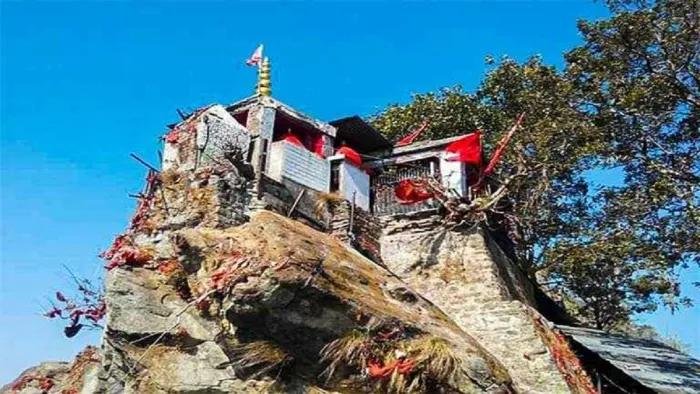
Purnagiri Temple Aarti: Shakti Worship Above the Sharda Valley
Purnagiri Temple Aarti is the ceremonial worship of Maa Purnagiri at one of Uttarakhand’s most revered hilltop Shakti shrines. Located near Tanakpur in Champawat district, the temple stands above the Kali-Sharda river valley and attracts devotees seeking the blessings of the Divine Mother.
The Aarti brings together sacred lamps, bells, incense, flowers, Devi mantras and collective prayer. The experience becomes especially powerful because devotees reach the shrine after an uphill pilgrimage through the Purnagiri hills.
Maa Purnagiri is worshipped as a manifestation of Shakti, the divine feminine power responsible for creation, protection and transformation. The shrine is widely revered as a Shakti Peeth and one of the 108 Siddha Peethas.
Morning Aarti is commonly reported at approximately 7:30 AM. Evening Aarti is generally associated with a planning window of around 7:00 PM to 7:30 PM during summer, festival and extended-access periods. Winter worship may be performed considerably earlier because daylight and public darshan hours are shorter.
No government or temple authority currently publishes a dependable live daily Aarti timetable. Devotees should therefore confirm the ceremony locally, particularly during winter, monsoon, Navratri and the annual Purnagiri Mela.
History of Purnagiri Temple
Purnagiri Temple is situated on Purnagiri hill near Tanakpur in the Kumaon region of Uttarakhand. The District Administration of Champawat places the shrine approximately 20 kilometres from Tanakpur and around 3,000 feet above sea level.
The pilgrimage route continues by vehicle towards Thuligad, after which devotees complete an uphill journey involving steps and walking sections. The commonly reported walking distance is approximately three kilometres, although the precise starting point can vary with traffic and local transport arrangements.
Purnagiri is also known as Punyagiri, meaning the sacred or meritorious mountain. From the temple area, visitors can look towards the Kali River, its islands, the plains around Tanakpur and settlements across the India-Nepal border. As the Kali enters the plains, it becomes known as the Sharda River.
The precise historical origin of worship on Purnagiri hill is not firmly documented. The sacred geography and Shakti tradition are believed to be considerably older than the present temple structure.
A regional tradition connects the development of the shrine with a trader named Chandra Tiwari. According to this account, he reached the Kumaon region during the reign of King Gyan Chand and received a divine instruction from the Goddess in a dream. The year 1632 is commonly associated with the formal establishment of the shrine in this traditional narrative.
This account should be understood as temple tradition rather than independently established historical evidence. What is clear is that Purnagiri became an important pilgrimage centre for communities across Kumaon, Uttar Pradesh and neighbouring Nepal.
Legend of Maa Sati at Purnagiri
The sacred importance of Purnagiri is connected with the story of Goddess Sati, Lord Shiva and Daksha Prajapati.
According to Hindu tradition, Daksha organised a grand Yagya but deliberately excluded his daughter Sati and her husband, Lord Shiva. Sati attended the ceremony but was deeply hurt when Daksha insulted Shiva. Unable to tolerate the humiliation, she gave up her life in the sacrificial fire.
Lord Shiva was overcome with grief and carried Sati’s body across the universe. To restore cosmic balance, Lord Vishnu used the Sudarshana Chakra to divide the body. Places where parts of Sati’s body fell became sacred Shakti Peethas.
Purnagiri is traditionally believed to be the place where the navel of Goddess Sati fell. The navel represents nourishment, creation and the source from which life receives energy. Devotees therefore associate Maa Purnagiri with completeness, maternal protection and the fulfilment of sincere prayers.
The story belongs to sacred religious tradition. It should be presented as a matter of faith rather than as a historically verifiable event.
Meaning of Purnagiri Temple Aarti
Aarti is the ceremonial offering of light before a deity. At Purnagiri Temple, the priest presents a lighted ghee or oil lamp before Maa Purnagiri while bells, incense and Devi prayers accompany the worship.
The flame represents divine consciousness. Its movement before the Goddess symbolises the removal of fear, ignorance, confusion and negative tendencies. Devotees watch the flame with the intention of directing their thoughts towards Shakti.
Purnagiri Aarti carries several devotional meanings:
- Divine protection: Maa Purnagiri is approached as a protective mother who gives courage during uncertainty.
- Completeness: The name Purnagiri is associated with spiritual fulfilment and a sense of inner wholeness.
- Creation and nourishment: The Shakti Peeth tradition connects the shrine with the creative and sustaining power of the Goddess.
- Truthfulness: Local pilgrimage stories remind devotees that offerings must be made with sincerity rather than display.
- Strength: Completing the uphill journey encourages patience, determination and self-discipline.
- Purification: The sacred lamp, prayers and mountain pilgrimage encourage reflection upon thoughts and actions.
- Gratitude: Devotees use the ceremony to thank the Goddess for protection, family and opportunity.
All Daily Aartis and Worship at Purnagiri Temple
The daily worship programme primarily includes morning Puja and Aarti, daytime darshan and evening or Sandhya Aarti. Additional ceremonies can be organised during Navratri, the Purnagiri Mela and other important religious occasions.
Morning Preparation and Puja
The priests prepare the sanctum before the principal public worship. The sacred form of Maa Purnagiri is decorated, lamps are prepared and flowers, fragrance and other ceremonial articles are arranged.
Some internal rituals may take place before ordinary devotees are admitted. Public opening time should therefore not automatically be treated as the exact time of the lamp ceremony.
Morning or Pratah Aarti
Morning Aarti is commonly reported at approximately 7:30 AM. The exact time can change according to season, daylight, festival arrangements and the temple’s daily ritual programme.
The ceremony usually includes Devi prayers, bells, incense, flowers and the offering of a sacred lamp. Devotees may join the prayers, fold their hands and quietly focus upon Maa Purnagiri.
Morning Aarti is especially suitable for first-time visitors because the return journey can be completed in daylight. The hill is generally cooler, and the valley may appear clearer before clouds or afternoon haze develop.
Visitors should begin their journey early enough to account for road movement, the uphill walk, security arrangements and queues near the sanctum.
Daytime Puja and Darshan
After morning worship, darshan continues during the applicable public-access period. Devotees present accepted offerings such as flowers, fruit, chickpeas, dry fruits and a sari or chunari.
The priests may conduct short individual prayers or accept offerings according to the temple’s current system. Special Puja arrangements should be confirmed directly rather than assumed.
Daytime darshan is not a separate Aarti, but it forms part of the temple’s daily worship cycle. The movement of devotees can be regulated when internal rituals, Bhog or sanctum preparations are taking place.
Evening or Sandhya Aarti
Evening Aarti is generally performed as daylight begins to fade. Available sources place it around 7:00 PM to 7:30 PM during summer or periods of extended temple access.
Published seasonal darshan references indicate that the temple may close around 5:00 PM in winter and around 7:00 PM in summer. Consequently, an evening Aarti at 7:00 PM or later should not be treated as a year-round fixed time.
During Sandhya Aarti, lamps illuminate the compact hilltop shrine while bells, prayers and the voices of devotees fill the temple area. The surrounding darkness makes the ceremonial flame visually striking.
Evening visitors must plan the descent carefully. The mountain route can become difficult in darkness, rain, fog and heavy crowds. A reliable torch, appropriate footwear and local guidance are strongly recommended.
Chaitra Navratri Aarti
Chaitra Navratri is the most important annual period at Purnagiri Temple. The festival generally falls during March or April, although the dates change according to the Hindu lunar calendar.
Special decoration, Devi prayers, Bhajans, offerings and expanded Aarti ceremonies may form part of the programme. Ashtami and Navami can attract particularly large numbers of pilgrims.
The ordinary morning and evening schedule may be altered during Navratri. Devotees should follow the festival announcement and instructions issued by the temple committee and district administration.
Purnagiri Mela Aarti
The annual Purnagiri Mela is centred on the Chaitra pilgrimage season. Depending upon the year and administrative arrangements, the managed fair period may continue for several weeks or months.
During the Mela, the entire pilgrimage route becomes active with devotional chanting, temporary facilities, community services and large streams of pilgrims. Special worship may be performed according to the day’s religious programme.
Aarti during the Mela can be more crowded than ordinary worship. Entry, queue movement and the presentation of offerings may be regulated for safety.
Sharadiya Navratri and Other Special Aartis
Sharadiya Navratri, generally observed during September or October, is another important period for Devi worship. Special Puja, decoration and Aarti may be organised locally.
Additional ceremonies can take place during Ashtami, Navami, Purnima and community-sponsored religious programmes. Their timings are determined locally and should not be assumed to follow the ordinary daily schedule.
Purnagiri Temple Aarti Timings
| Aarti or Worship | Common Planning Time | Important Information |
|---|---|---|
| Morning Preparation and Puja | Before or around public opening | Some rituals may be conducted internally by the priests |
| Morning Aarti | Commonly reported around 7:30 AM | Reach early after allowing time for the uphill journey |
| Daytime Puja and Darshan | Throughout the applicable access period | Movement may pause during internal rituals or Bhog |
| Evening or Sandhya Aarti | Around 7:00 PM to 7:30 PM during extended or summer access | Winter worship may take place earlier |
| Chaitra Navratri Aarti | Announced locally | Ordinary timings may change because of festival crowds |
| Purnagiri Mela Aarti | According to the annual programme | Queue and access arrangements can be regulated |
| Other Special Aartis | Announced locally | Includes locally organised festival and community worship |
Important timing note: The commonly published timing sources are inconsistent. Morning Aarti is generally reported at approximately 7:30 AM, while evening references range from around 7:00 PM to 7:30 PM. Seasonal darshan windows are commonly reported as approximately 5:00 AM to 5:00 PM in winter and 5:00 AM to 7:00 PM in summer. Devotees must obtain same-day local confirmation.
Rituals Performed During Purnagiri Temple Aarti
Preparation of the Sanctum
The priests prepare the sacred space and arrange the lamps, flowers, incense and ritual vessels before the public ceremony. Devotees should wait patiently if access is temporarily restricted.
Invocation of Maa Purnagiri
The worship begins with prayers invoking the presence and blessings of the Divine Mother. The priest follows the temple’s established ritual sequence.
Offering of Flowers and Chunari
Flowers represent purity and gratitude. Devotees may also present a sari or chunari through the authorised offering system. No cloth should be tied or placed inside the complex without permission.
Offering of Incense
Incense is offered as a symbol of purified thoughts and prayers rising towards the Goddess. Visitors should avoid lighting independent incense near crowded or fire-sensitive areas.
Devi Mantras and Devotional Singing
Prayers honouring Durga, Kali and Maa Purnagiri may accompany the ceremony. Devotees should follow the priest’s lead and avoid interrupting the established sequence.
Offering of the Sacred Lamp
A lighted ghee or oil lamp is moved in circular patterns before Maa Purnagiri. The flame represents divine knowledge, protection and victory over inner darkness.
Ringing of Bells
Bells help direct the mind towards worship. Their sound combines with devotional chanting to create the characteristic atmosphere of Purnagiri Aarti.
Receiving the Aarti Flame
When the lamp is presented to the congregation, devotees commonly place their hands near its warmth and respectfully touch their forehead. They should wait for their turn without pushing.
Prasad and Final Darshan
The ceremony may conclude with final darshan and the distribution of prasad. Distribution arrangements depend upon the day’s programme and the number of pilgrims.
Benefits of Attending Purnagiri Temple Aarti
- Seeking protection: Devotees pray to Maa Purnagiri for courage and guidance during uncertain circumstances.
- Developing inner strength: The uphill pilgrimage and disciplined worship encourage determination.
- Finding emotional reassurance: Worship of the Goddess as a divine mother can provide comfort and hope.
- Encouraging truthful conduct: Local traditions emphasise honesty in promises, offerings and personal intentions.
- Improving concentration: Lamps, bells and rhythmic prayers help direct attention towards a single spiritual purpose.
- Expressing gratitude: Aarti provides a structured opportunity to thank the Goddess for family, protection and opportunity.
- Strengthening family prayer: Families can participate together and pray for harmony, responsibility and mutual support.
- Developing humility: The physical effort required to reach the shrine reminds pilgrims to approach worship respectfully.
- Connecting with Shakti tradition: Aarti introduces visitors to the living spiritual heritage of the Himalayan Goddess shrines.
- Finding mental calm: The hilltop setting creates distance from ordinary noise and distraction.
These benefits are devotional interpretations based on religious belief. Aarti should not be presented as a guaranteed cure for illness or a guaranteed solution to financial, professional, family or personal difficulties.
What Makes Purnagiri Temple Aarti Special?
- Revered Shakti Peeth: The shrine is traditionally connected with the navel of Goddess Sati.
- Siddha Peeth tradition: Purnagiri is widely honoured among India’s 108 Siddha Peethas.
- Hilltop pilgrimage: Devotees complete an uphill journey before attending the ceremony.
- Kali-Sharda Valley: The temple overlooks the river valley, plains, islands and settlements near the border.
- Morning mountain atmosphere: Early worship combines prayer with cooler air and changing Himalayan light.
- Illuminated evening shrine: The Aarti flame appears especially vivid as daylight fades around the hill.
- Chaitra Navratri: The most important festival period brings expanded worship and large congregations.
- Purnagiri Mela: The annual fair transforms the entire pilgrimage route into a devotional gathering.
- India-Nepal connection: Devotees from both sides of the border participate in the wider pilgrimage tradition.
- Lesson of truthful offerings: The nearby Jhoothe Ka Mandir tradition reminds pilgrims to honour their promises sincerely.
Chaitra Navratri and Purnagiri Mela
Chaitra Navratri is the principal pilgrimage season at Purnagiri. The District Administration of Champawat records that the shrine receives visitors throughout the year but attracts particularly large numbers during March and April.
The annual Purnagiri Mela is organised around this sacred season. The administrative fair period may extend beyond the nine days of Navratri, depending upon the programme announced for that year.
Devotees should expect long queues, restricted vehicle movement and heavy pressure on the walking route. Carrying minimal belongings makes the ascent and security process easier.
Visitors attending festival Aarti should not depend upon ordinary timings. They should check the current programme, weather, traffic arrangement and crowd advisory before leaving Tanakpur.
The Lesson of Jhoothe Ka Mandir
The pilgrimage route is associated with a place commonly called Jhoothe Ka Mandir, meaning the Temple of the False Offering.
According to a local legend, a wealthy devotee promised to offer a golden bell after his prayer was fulfilled. He later attempted to present a copper bell coated to resemble gold. The bell reportedly became impossible to move further along the route and was understood to have been rejected by the Goddess.
The story teaches that the value of an offering lies in honesty rather than appearance. During Aarti, devotees are therefore encouraged to approach Maa Purnagiri with truthful intentions and offerings suited to their genuine ability.
Purnagiri and Siddha Baba Pilgrimage Tradition
Many devotees believe that their Purnagiri journey should be followed by darshan at Siddha Baba Temple. This custom connects the worship traditions practiced by communities in the India-Nepal border region.
The Siddha Baba visit is a separate part of the wider pilgrimage and should not be confused with Purnagiri Temple Aarti. Travel arrangements and border requirements should be checked independently.
Devotees attending morning Aarti generally have more daylight available if they wish to continue the broader pilgrimage after descending from Purnagiri.
Which Purnagiri Temple Aarti Should You Attend?
Choose morning Aarti if you are visiting for the first time, prefer cooler conditions and want to complete the descent in daylight.
Choose evening Aarti if you want to experience the sacred lamps as darkness gathers around the hilltop shrine. Confirm the time and arrange a safe descent before attending.
Choose Chaitra Navratri if you want an intense festive atmosphere and are comfortable with large crowds, long queues and regulated movement.
Choose an ordinary weekday if your priority is quieter darshan and personal prayer.
Travellers using Mudras Stays to plan their pilgrimage can arrange accommodation around Tanakpur while keeping enough flexibility for weather, crowd conditions and same-day Aarti confirmation.
Key Details for Devotees
| Temple Name | Maa Purnagiri Temple, also known as Punyagiri |
|---|---|
| Location | Near Tanakpur, Champawat district, Uttarakhand |
| Principal Deity | Maa Purnagiri, a manifestation of Shakti |
| Religious Significance | Revered as a Shakti Peeth and Siddha Peeth |
| Traditional Shakti Peeth Association | The navel of Goddess Sati is believed to have fallen here |
| Reported Elevation | Approximately 3,000 feet according to the District Administration |
| Distance from Tanakpur | Approximately 20 kilometres |
| Final Approach | Vehicle access towards Thuligad followed by an uphill walking route |
| Reported Morning Aarti | Around 7:30 AM |
| Evening Aarti Planning Window | Around 7:00 PM to 7:30 PM during suitable seasonal access |
| Winter Darshan Planning Hours | Approximately 5:00 AM to 5:00 PM |
| Summer Darshan Planning Hours | Approximately 5:00 AM to 7:00 PM |
| Principal Festival | Chaitra Navratri and the annual Purnagiri Mela |
| Recommended Arrival | Reach the shrine 30 to 45 minutes before the locally confirmed Aarti |
| Timing Confirmation | Required locally because seasonal and festival schedules can change |
Purnagiri Temple Aarti Etiquette
- Wear clean, modest and weather-appropriate clothing.
- Use secure footwear for the uphill route and remove it only at the designated location.
- Carry only essential belongings during crowded periods.
- Reach the shrine before the locally confirmed Aarti begins.
- Keep mobile phones silent during worship.
- Ask permission before photographing the sanctum, priests or ceremony.
- Respect photography restrictions displayed by the temple.
- Do not use flash near the deity or sacred lamp.
- Present flowers, fruit, chickpeas, dry fruits and chunari only through the accepted system.
- Do not tie cloth, bells or other objects without permission.
- Wait patiently when receiving the Aarti flame or prasad.
- Do not push within the compact temple or narrow queue areas.
- Keep children away from open lamps, steep steps and exposed edges.
- Carry drinking water while avoiding unnecessary plastic packaging.
- Do not leave bottles, food packets or discarded offerings on the hill.
- Carry a torch if attending evening Aarti.
- Avoid the route during severe rain, thunderstorms, landslides or unsafe crowd conditions.
- Follow instructions issued by priests, police, temple attendants and district authorities.
Frequently Asked Questions About Purnagiri Temple Aarti
1. What is Purnagiri Temple Aarti?
Purnagiri Temple Aarti is the ceremonial worship of Maa Purnagiri through sacred lamps, bells, incense, flowers and Devi prayers at the hilltop shrine near Tanakpur.
2. What is the morning Aarti time at Purnagiri Temple?
Morning Aarti is commonly reported at approximately 7:30 AM. Visitors should confirm the current time before beginning the uphill journey.
3. What is the evening Aarti time?
Available references place evening Aarti around 7:00 PM to 7:30 PM during summer or extended-access periods. Winter worship may be performed earlier.
4. Are the Aarti timings officially confirmed?
No dependable live official daily timetable is currently published. Timings can change with season, daylight, festivals, weather and temple arrangements.
5. Who is worshipped at Purnagiri Temple?
The temple is dedicated to Maa Purnagiri, a manifestation of the divine feminine power known as Shakti.
6. Why is Purnagiri considered a Shakti Peeth?
According to religious tradition, the navel of Goddess Sati fell at Purnagiri when Lord Vishnu divided her body to restore cosmic balance.
7. Which Aarti is best for first-time visitors?
Morning Aarti is generally more practical because the journey and descent can be completed during daylight.
8. Is advance booking required for Aarti?
Advance booking is generally not required for ordinary public Aarti. Special Puja and festival arrangements may follow a separate local system.
9. What can devotees offer to Maa Purnagiri?
Commonly reported offerings include flowers, fruit, chickpeas, dry fruits and a sari or chunari. Devotees should use only materials accepted by the temple.
10. When is Purnagiri Temple most crowded?
The greatest crowds generally arrive during Chaitra Navratri and the annual Purnagiri Mela. Ashtami, Navami, weekends and important festival days can be particularly busy.