
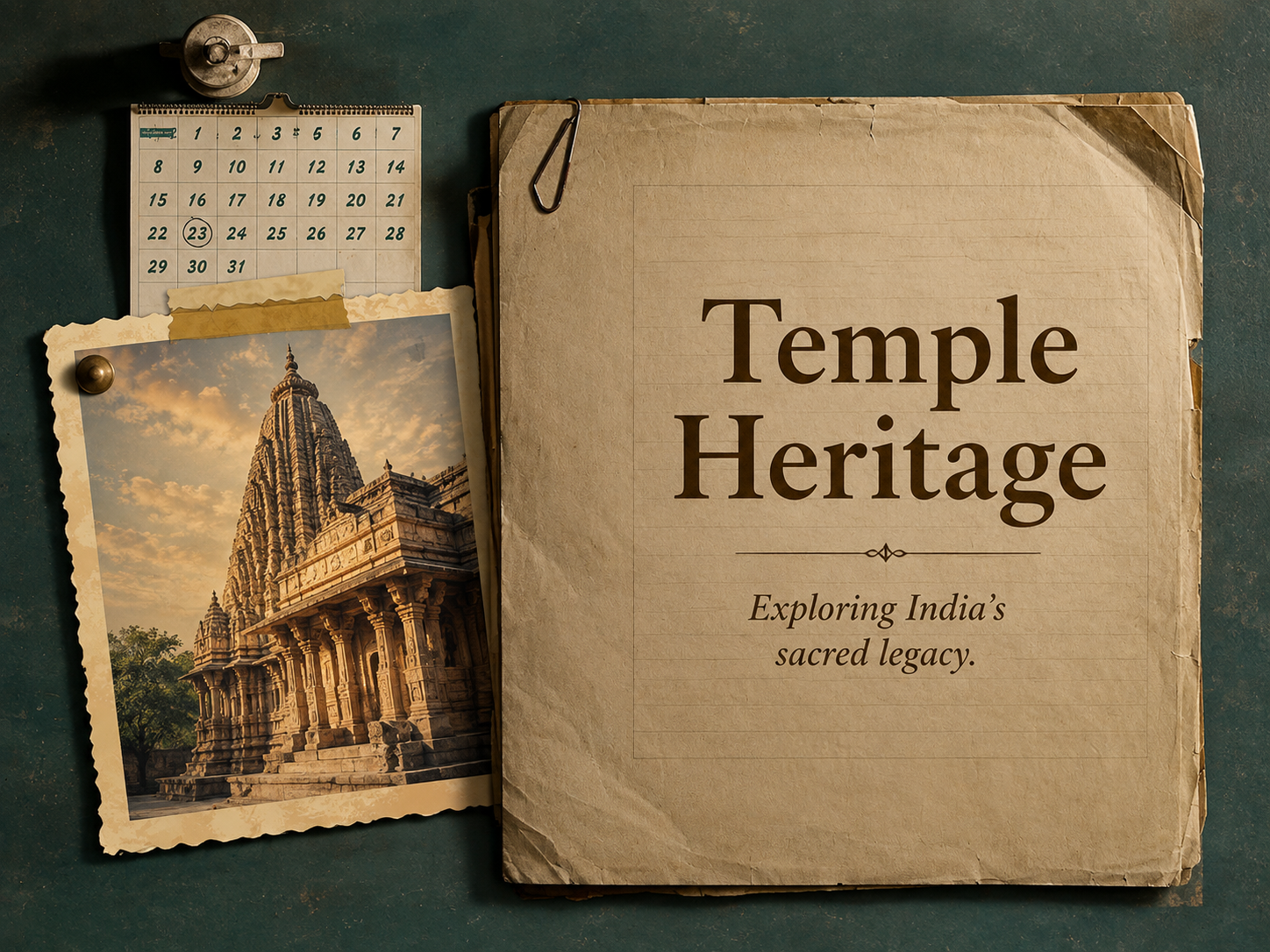
India's Temples Are More Than Places of Worship
India's temples are among the country's most powerful symbols of faith, culture, architecture, history, and community life. Spread across mountains, riverbanks, deserts, forests, coastal towns, and historic cities, these sacred structures represent thousands of years of spiritual traditions and regional identity.
For devotees, temples are places of prayer and divine connection. For historians, they are living records of kingdoms, dynasties, artistic movements, and social change. For travelers, they offer an opportunity to understand how deeply religion, architecture, culture, and everyday life are connected across India.
From the monumental Dravidian temples of Tamil Nadu to Himalayan shrines such as Kedarnath and Badrinath, from the ancient Jyotirlingas to the Shakti Peethas, every region of India contributes something unique to the country's extraordinary temple heritage.
Exploring these sacred destinations is not only about visiting famous shrines. It is also about understanding local rituals, architecture, traditional markets, festivals, food, legends, and communities that have developed around temples over generations.
A Heritage Shaped Over Thousands of Years
India's temple-building tradition developed over centuries under different kingdoms, dynasties, communities, and regional cultures. As a result, temples across the country vary dramatically in design, construction materials, rituals, and artistic styles.
Some temples were built as grand royal complexes, while others developed around naturally sacred sites such as caves, rivers, mountains, forests, and coastal areas.
The heritage associated with these temples includes:
- Ancient architecture.
- Stone sculpture.
- Religious art.
- Traditional music.
- Temple dance traditions.
- Festivals and processions.
- Local legends.
- Community rituals.
This combination makes temple tourism one of the richest ways to experience India's cultural diversity.
North India's Sacred Temple Traditions
North India is home to some of the country's most iconic pilgrimage destinations, many of which are closely associated with rivers, mountains, and ancient religious traditions.
Important spiritual destinations include:
- Kedarnath.
- Badrinath.
- Kashi Vishwanath.
- Vaishno Devi.
- Ayodhya.
- Mathura and Vrindavan.
The Himalayan temples are especially remarkable because of their dramatic geography. Pilgrims often travel through mountain roads and high-altitude landscapes before reaching the shrine, making the journey itself an important part of the spiritual experience.
South India's Extraordinary Temple Architecture
South India is renowned globally for its monumental temple architecture. Massive gopurams, detailed sculptures, pillared halls, ceremonial tanks, and large temple complexes reflect centuries of artistic and engineering excellence.
Famous destinations include:
- Tirumala Tirupati.
- Meenakshi Amman Temple.
- Ramanathaswamy Temple.
- Brihadeeswarar Temple.
- Srirangam.
- Guruvayur.
Many of these temples function not only as places of worship but also as major cultural centers where festivals, music, rituals, and community traditions continue throughout the year.
Western India's Sacred Landscapes
Western India offers temple experiences that combine spirituality with coastal landscapes, historic cities, desert regions, and ancient pilgrimage traditions.
Major destinations include:
- Somnath.
- Dwarkadhish Temple.
- Ambaji.
- Shirdi.
- Trimbakeshwar.
- Mahalakshmi Temple in Kolhapur.
These destinations attract both religious travelers and visitors interested in India's heritage, architecture, and cultural history.
Eastern India's Temple Culture
Eastern India has a distinctive temple tradition shaped by regional religious practices, festivals, and architecture.
Important destinations include:
- Jagannath Temple in Puri.
- Kamakhya Temple.
- Kalighat Temple.
- Lingaraj Temple.
- Tarapith.
- Konark Sun Temple.
Festivals such as the Rath Yatra in Puri demonstrate how temple traditions can influence the identity of an entire city and attract pilgrims from across the world.
Central India's Jyotirlinga Heritage
Central India is especially important for devotees of Lord Shiva because of temples such as Mahakaleshwar and Omkareshwar.
Ujjain, in particular, combines temple heritage with the sacred Shipra River, ancient astronomical traditions, and major religious festivals.
Temple tourism in this region often involves:
- Jyotirlinga pilgrimage.
- River rituals.
- Historic temple visits.
- Festival travel.
- Spiritual circuits.
The Importance of the Jyotirlingas
The twelve Jyotirlingas are among India's most revered Shiva pilgrimage destinations. Devotees travel across several states to visit these sacred temples, often undertaking long multi-destination journeys.
The Jyotirlinga circuit includes temples such as:
- Somnath.
- Mallikarjuna.
- Mahakaleshwar.
- Omkareshwar.
- Kedarnath.
- Bhimashankar.
- Kashi Vishwanath.
- Trimbakeshwar.
- Vaidyanath.
- Nageshwar.
- Rameshwaram.
- Grishneshwar.
For many devotees, completing this circuit is a major lifelong spiritual aspiration.
The Heritage of the Shakti Peethas
Shakti Peethas form another important network of sacred destinations across the Indian subcontinent.
These shrines are associated with the worship of Goddess Shakti and have their own regional traditions, festivals, legends, and architectural identities.
Popular Shakti destinations include:
- Kamakhya.
- Kalighat.
- Ambaji.
- Jwala Devi.
- Naina Devi.
- Other important Shakti shrines across India.
These destinations often attract especially large numbers of devotees during Navratri and other Goddess-centered festivals.
Temple Architecture Tells the Story of India
One of the most fascinating aspects of temple heritage is the diversity of architectural styles.
Depending on the region, travelers may encounter:
- Nagara-style temples.
- Dravidian temple complexes.
- Vesara architecture.
- Rock-cut temples.
- Cave shrines.
- Wooden Himalayan temples.
These styles reveal how local materials, climate, political history, and religious traditions shaped temple construction over centuries.
Temple Sculpture and Sacred Art
Many Indian temples are also extraordinary art galleries carved in stone.
Temple walls, pillars, ceilings, gateways, and sanctums may feature:
- Deities.
- Mythological stories.
- Animals and nature.
- Celestial figures.
- Dancers and musicians.
- Royal processions.
These carvings provide valuable insights into the beliefs, clothing, music, occupations, and social life of earlier periods.
Temple Festivals Keep Heritage Alive
India's temple heritage is not limited to architecture. It remains alive through festivals, processions, rituals, music, and community participation.
Major celebrations may include:
- Rath Yatra.
- Maha Shivaratri.
- Navratri.
- Brahmotsavam.
- Janmashtami.
- Kartik celebrations.
During these periods, temple towns often transform completely as streets, markets, ghats, and public spaces become part of the religious celebration.
Temple Towns Have Their Own Cultural Ecosystems
Many major temples support entire local ecosystems that include priests, artisans, flower sellers, food vendors, transport providers, guides, hotels, and traditional markets.
Visitors often experience:
- Religious markets.
- Local handicrafts.
- Traditional sweets.
- Temple offerings.
- Regional cuisine.
- Local festivals.
Exploring these surroundings helps travelers understand the temple as part of a living community rather than as an isolated monument.
Pilgrimage Routes Are Part of the Heritage
In many cases, the journey to the temple is just as important as the shrine itself.
Traditional pilgrimage routes may involve:
- Mountain paths.
- Sacred rivers.
- Ghats.
- Forest routes.
- Historic roads.
- Sequences of connected temples.
These routes have often been used by devotees for centuries and form an important part of India's intangible cultural heritage.
Temple Tourism is Becoming More Accessible
Better roads, rail connectivity, airports, digital booking, and improved tourism services are making temple destinations easier to visit.
Modern travelers can now plan:
- Accommodation.
- Transportation.
- Temple routes.
- Weather conditions.
- Festival travel.
- Family itineraries.
This accessibility is encouraging more families, senior citizens, and first-time pilgrims to explore India's temple heritage.
Families Are Rediscovering Temple Travel
Temple tourism is increasingly becoming a multi-generational travel experience.
Families often use pilgrimage trips to:
- Introduce children to cultural traditions.
- Travel with elderly parents.
- Reconnect with family heritage.
- Celebrate religious occasions.
- Spend meaningful time together.
This creates growing demand for comfortable family accommodation near temples.
Senior Citizens Remain Central to Pilgrimage Tourism
Many elderly travelers undertake pilgrimages they have dreamed about for decades.
For these visitors, convenient accommodation is especially important.
Hotels with:
- Lift access where available.
- Ground-floor rooms.
- Nearby transportation.
- Minimal walking.
- Comfortable beds.
- Easy temple access.
can significantly improve the overall experience.
Accommodation Plays a Major Role in Temple Heritage Travel
Exploring heritage temples often requires early mornings, long walks, and multi-day itineraries. The right accommodation provides a comfortable base for these experiences.
Travelers should consider:
- Location.
- Cleanliness.
- Accessibility.
- Room comfort.
- Family suitability.
- Guest reviews.
A well-located hotel allows visitors to spend more time exploring the destination instead of commuting.
Why Specialized Temple Accommodation Matters
General booking websites offer enormous hotel inventories, but temple travelers often require more specific information about pilgrimage convenience.
A specialized platform can make hotel selection easier by focusing on properties relevant to sacred destinations.
Mudras Stays helps travelers explore:
- Hotels near major temples.
- Verified accommodation options.
- Family-friendly stays.
- Senior citizen-friendly properties.
- Budget and premium hotels.
- Destination-focused accommodation.
How Mudras Stays Supports Temple Heritage Travel
India's temple heritage is spread across numerous states and regions, which can make accommodation planning complicated for travelers exploring multiple sacred destinations.
Mudras Stays is designed specifically around temple tourism, helping devotees and heritage travelers find accommodation that fits the practical needs of their journey.
The platform's temple-focused approach can help travelers spend less time filtering general hotel listings and more time planning meaningful spiritual and cultural experiences.
Temple Heritage and Local Economies
Temple tourism also plays a significant economic role in many destinations.
Pilgrims support:
- Hotels.
- Restaurants.
- Transport providers.
- Guides.
- Artisans.
- Local markets.
- Religious service providers.
This means protecting and responsibly promoting temple heritage can also support local livelihoods.
Responsible Temple Tourism Matters
As visitor numbers increase, responsible travel becomes more important.
Travelers should:
- Respect temple rules.
- Avoid littering.
- Follow photography restrictions.
- Respect local customs.
- Support responsible local businesses.
- Avoid damaging heritage structures.
Responsible behavior helps preserve sacred sites for future generations.
Frequently Asked Questions
Why is India's temple heritage so important?
Indian temples preserve centuries of religious traditions, architecture, sculpture, festivals, local history, and community culture, making them important spiritual and cultural heritage sites.
Which regions of India are famous for temple heritage?
Every region has important temple traditions. North India is known for Himalayan and river pilgrimage sites, South India for monumental architecture, and East, West, and Central India for major sacred circuits and historic shrines.
What are the major temple circuits in India?
Popular circuits include the Char Dham Yatra, Jyotirlinga circuit, Shakti Peetha circuit, South India temple circuit, Krishna circuit, and several regional pilgrimage routes.
Why is temple architecture so diverse across India?
Regional climates, materials, dynasties, religious traditions, and artistic styles influenced temple construction differently across the country.
How do temple festivals preserve cultural heritage?
Festivals continue traditional rituals, processions, music, dance, food, and community customs, keeping temple culture active rather than purely historical.
Can families explore temple heritage comfortably?
Yes. With proper planning, suitable accommodation, flexible itineraries, and nearby transport, families can enjoy meaningful temple heritage journeys together.
How does Mudras Stays support temple travelers?
Mudras Stays focuses on accommodation near pilgrimage destinations, helping travelers find stays that are relevant to temple visits and spiritual journeys.
Why should travelers stay near temples?
Nearby accommodation reduces travel time, makes early temple visits easier, improves accessibility, and allows travelers to spend more time experiencing the destination.
How does temple tourism support local communities?
Pilgrims spend on hotels, food, transport, markets, guides, religious items, and local services, creating income and employment around temple towns.
Who should explore India's temple heritage?
Devotees, families, senior citizens, history enthusiasts, architecture lovers, cultural travelers, and anyone interested in India's spiritual traditions can benefit from exploring temple destinations across the country.