
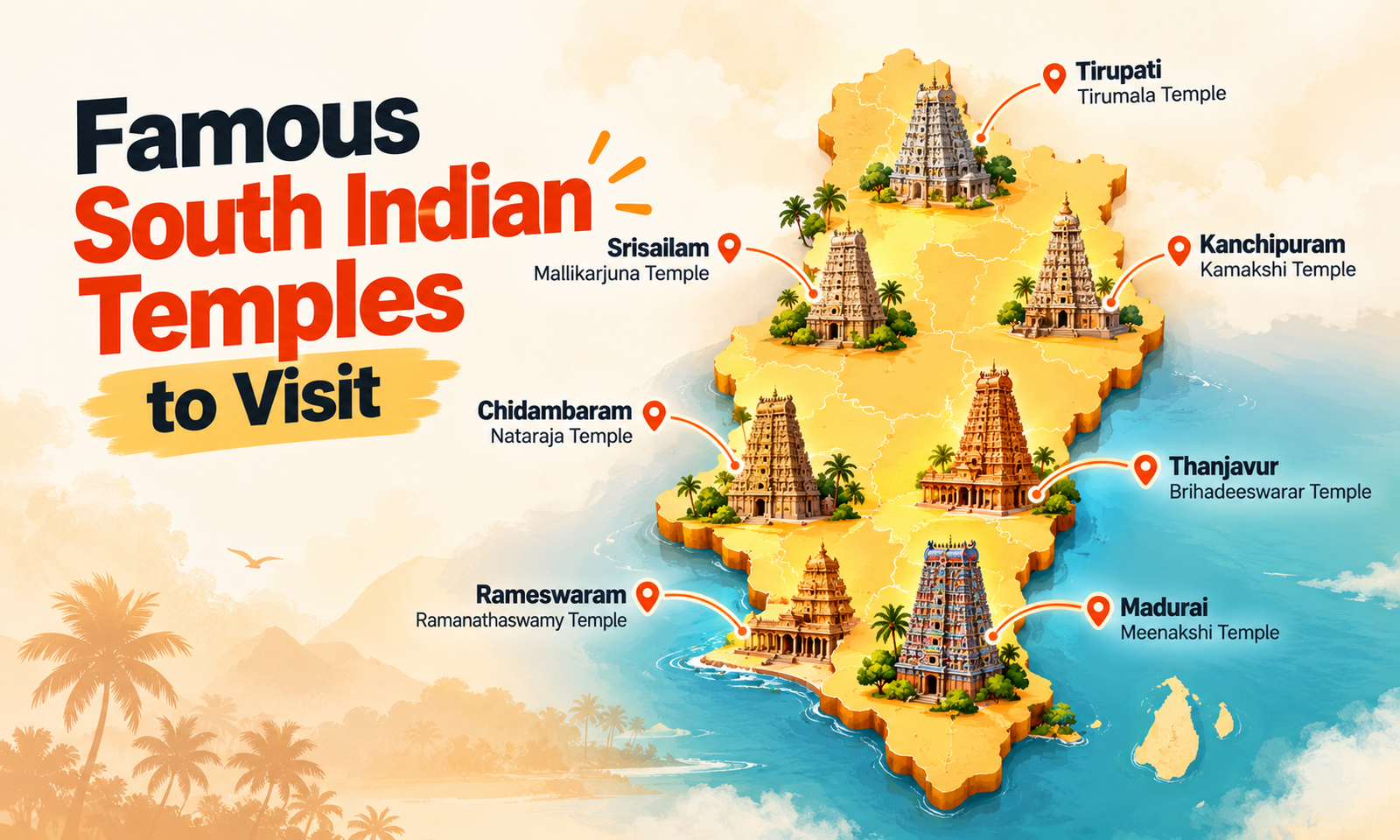
Famous South Indian Temples to Visit
Introduction: Why a South India Temple Journey Is Worth Planning Carefully
South India is one of the richest temple-travel regions in the world. Across Tamil Nadu, Andhra Pradesh, Kerala and Karnataka, sacred towns have grown around ancient shrines, living ritual traditions, temple architecture, pilgrimage routes, festivals and local food cultures. A journey here can be devotional, architectural, historical or simply reflective, but it is rarely just a quick sightseeing stop. Many of the most famous South Indian temples are active places of worship first and tourist attractions second, so the best trips are planned around darshan procedures, local customs, seasonal crowds, transport and enough rest between long travel days.
First-time visitors often search for the most famous temples in South India and then discover that the practical side of the journey matters just as much as the list itself. Tirumala can involve long queues and pre-planned darshan options; Sabarimala has pilgrimage-specific customs and access patterns; Rameswaram is an island destination with its own religious sequence; Madurai is a busy heritage city where the temple sits at the centre of everyday urban life. In Kerala, temple entry and dress practices may differ from those in Tamil Nadu or Karnataka. This is why a good South India temple tour should combine spiritual priorities with realistic travel pacing.
This guide brings together some of the most famous South Indian temples to visit and explains how to approach them as a traveller. It focuses on the character of each destination, who it may suit, what to think about before darshan, how to combine nearby experiences and how accommodation location can affect the trip. Because temple schedules, entry rules, ticketing systems and festival arrangements can change, always verify current details through the official temple or tourism authority before departure rather than relying on an old itinerary or a social-media post.
Famous South Indian Temples to Visit
1. Sri Venkateswara Temple, Tirumala, Andhra Pradesh
Sri Venkateswara Temple at Tirumala is one of India’s most prominent Vishnu pilgrimage centres. Tirumala Tirupati Devasthanams identifies the shrine with Lord Venkateswara, also known as Srinivasa and Balaji, and the temple stands on the sacred Seshachalam hills above Tirupati. For many families, Tirupati is not simply another stop on a South India temple itinerary; it is the central purpose of the trip. The devotional atmosphere, the scale of the pilgrimage system and the number of visitors mean that travel planning should begin with darshan rather than with sightseeing.
The temple administration operates multiple darshan systems, including Sarva Darshan, the free queue-based option. Since the number of pilgrims can be very high, visitors should study the official TTD portal before choosing travel dates and should understand the difference between available darshan categories, reporting requirements and any advance booking they plan to use. Avoid constructing a tight train or flight connection immediately after darshan because waiting time can vary substantially. Families with children and senior citizens should allow additional buffer time for meals, rest and movement between Tirupati and Tirumala.
Tirupati is well connected by road and rail, while travellers arriving by air can use Tirupati Airport and continue by road. Once in the pilgrimage zone, follow current TTD transport and access instructions. If you plan to visit other temples around Tirupati, keep them secondary to your main darshan schedule. A one-night stay may work for a tightly planned visit, but many families prefer extra time so that arrival, darshan and onward travel do not all fall on the same day.
2. Meenakshi Amman Temple, Madurai, Tamil Nadu
Madurai’s Meenakshi Amman Temple is one of the defining images of Tamil temple architecture. The complex is dedicated to Goddess Meenakshi and Lord Sundareswarar and is known for its monumental gopurams, sculptural detail and the celebrated thousand-pillared hall. The temple is not isolated from the city; it is embedded in Madurai’s historic core, surrounded by streets, markets, local eateries and neighbourhood activity. That makes a visit especially rewarding for travellers who want to experience how a major temple continues to shape the cultural rhythm of a living city.
Madurai is also one of the easier major pilgrimage cities to build into a broader South India itinerary because it has its own airport and an important railway junction. Travellers can combine temple darshan with nearby heritage attractions such as Thirumalai Nayakkar Palace and the Gandhi Memorial Museum if time permits. During important festivals, especially the Meenakshi Thirukalyanam period, crowds increase significantly, so accommodation and transport should be planned well ahead.
For families, staying reasonably close to the old city can reduce repeated transfers, but the nearest hotel is not always the most comfortable choice if your group needs vehicle access or quieter surroundings. When comparing a hotel near temple areas, check actual road access, drop-off possibilities and how far you will need to walk through pedestrian or congested streets. Senior citizens may benefit from visiting at a less crowded time of day and from keeping the rest of the day light rather than stacking multiple attractions after darshan.
3. Sri Ramanathaswamy Temple, Rameswaram, Tamil Nadu
Rameswaram is one of India’s most important Shaiva pilgrimage destinations and is deeply associated with the Ramayana tradition. Sri Ramanathaswamy Temple is revered as one of the twelve Jyotirlinga shrines, and the town’s spiritual identity is inseparable from the sea, sacred bathing traditions and the wider pilgrimage landscape of Pamban Island. The temple is also architecturally renowned for its long pillared corridors, making it compelling for both devotees and travellers interested in South Indian temple design.
Rameswaram is reached by road and rail across the island connection, while Madurai is a major air gateway for many visitors. Because pilgrims often combine the main temple with several sacred sites around the island, it is better to treat Rameswaram as a destination rather than a hurried half-day stop. Build the day around the sequence that matters to your family’s religious practice and verify current rules before participating in any ritual bathing or temple procedure. Coastal heat and humidity can be tiring, so hydration, light clothing suitable for the temple and adequate rest are important.
Accommodation location matters because travellers may be moving between the temple, waterfront areas and other sites at different times of day. A hotel near temple precincts can simplify early or repeated visits, while a stay with easier road access may suit groups travelling by car. Instead of choosing only on price, compare the actual route to the temple, vehicle access, room configuration for families and the practical needs of older travellers.
4. Brihadisvara Temple, Thanjavur, Tamil Nadu
Brihadisvara Temple in Thanjavur offers a different type of temple journey. It is an active Shiva temple, but it is also one of India’s great architectural monuments. Built under Chola king Rajaraja I in the early eleventh century, it forms part of UNESCO’s Great Living Chola Temples. The soaring vimana, large-scale stone composition, sculpture and surviving artistic traditions make this an essential visit for anyone interested in the history of South Indian architecture.
Unlike pilgrimage destinations where queue management dominates the day, Thanjavur rewards slower observation. Travellers should allow time to walk through the complex, appreciate the relationship between the monumental tower and the courtyard, and understand the temple as part of the wider Chola cultural landscape. Those with deeper architectural interest can extend the journey to the other Great Living Chola Temples at Gangaikondacholapuram and Darasuram rather than treating Brihadisvara as an isolated monument.
Thanjavur can be combined with Trichy, Kumbakonam and other temple towns in central Tamil Nadu. For families, this cluster works well as a multi-day road itinerary because driving distances between individual sites are more manageable than attempting to connect far-flung pilgrimage centres every day. A centrally located family stay can reduce packing and unpacking while still allowing day trips to nearby temple towns.
5. Mallikarjuna Swamy Temple, Srisailam, Andhra Pradesh
Srisailam is a major Shiva pilgrimage centre set in the Nallamala hill region. The Mallikarjuna Swamy shrine is venerated as a Jyotirlinga and the temple complex is also associated with Goddess Bhramaramba, giving Srisailam particular importance to both Shaiva and Shakta traditions. The landscape contributes strongly to the experience: the approach is different from an urban temple city, and the hill environment encourages visitors to plan around road travel, arrival time and sufficient rest.
The official Srisaila Devasthanam provides darshan, accommodation and pilgrim information online, so checking current arrangements before departure is useful. Road travel is the usual approach for many visitors, and those prone to motion sickness or fatigue should factor in the hill journey. Avoid scheduling a demanding onward transfer immediately after a late arrival. For senior citizens, the best itinerary is often one that separates the long drive from the main darshan period.
If Srisailam is part of a larger Andhra Pradesh pilgrimage circuit, consider it as a dedicated overnight stop rather than a place to rush through. That gives families flexibility if traffic, queues or weather conditions affect the schedule and also leaves room for the spiritual experience to remain the focus.
6. Guruvayur Sree Krishna Temple, Kerala
Guruvayur is one of Kerala’s best-known Krishna pilgrimage centres and is frequently described as the “Dwaraka of the South.” The temple’s architecture and ritual atmosphere are distinctively Kerala in character, creating a different visual and devotional experience from the towering gopuram complexes of Tamil Nadu. Guruvayur is also a town shaped strongly by pilgrimage, so accommodation, local transport and meal planning are relatively central to the visitor experience.
Before travelling, check the temple’s current entry and dress rules and ensure that every member of the group understands them. Temple practices in Kerala can be more restrictive than visitors from other regions expect, and rules may affect what can be carried or worn inside. Families attending a ceremony or visiting during festival periods should keep additional time for crowd movement and security procedures.
Guruvayur can be combined with Thrissur and other central Kerala destinations, but a pilgrimage-focused trip is usually more comfortable when the group stays close enough to avoid long transfers before early visits. When searching for a best stay or accommodation near temple areas, compare practical walking conditions, vehicle approach and the needs of elderly family members instead of assuming that a short map distance will always mean an easy walk.
7. Sree Padmanabhaswamy Temple, Thiruvananthapuram, Kerala
Sree Padmanabhaswamy Temple is one of the most significant Vishnu temples in Kerala and one of the 108 Divya Desams. The presiding deity is represented in the reclining Anantha Shayanam posture, and the temple is known for a blend of Kerala and Dravidian architectural traditions. Its location in Thiruvananthapuram’s East Fort area makes it particularly accessible for travellers who want to combine pilgrimage with a city stay.
Kerala Tourism notes that Thiruvananthapuram Central railway station is close to the temple area and that the international airport is also within the city. This makes Padmanabhaswamy Temple one of the easier major South Indian temples to incorporate into a fly-in or rail itinerary. However, visitors should still verify current temple entry eligibility, dress requirements and permitted items before arriving, because these rules are central to the experience.
A city-based itinerary can pair the temple with heritage areas, local cuisine and other attractions without requiring long road transfers. For older travellers, the advantage is the availability of urban transport and the ability to return to the hotel for rest. Choose accommodation based on the balance between temple access and overall comfort rather than only on a “rooms near me” search result.
8. Sabarimala Sree Dharma Sastha Temple, Kerala
Sabarimala is not a conventional sightseeing temple. It is a major pilgrimage dedicated to Lord Ayyappa and is reached through a highly specific religious journey associated with vratham, seasonal pilgrimage patterns and movement through the forested hill environment. Kerala Tourism identifies the Mandala-Makaravilakku period as the major pilgrimage season, when very large numbers of devotees travel to the shrine.
Anyone considering Sabarimala should plan from the official pilgrimage framework outward. Check current registration, route, transport, entry, medical and safety guidance before setting out. Physical preparation matters because the journey can involve substantial walking and crowd movement, and conditions differ sharply from an urban temple visit. Families should not assume that a standard leisure itinerary is appropriate; the pilgrimage traditions and practical requirements need to be understood in advance.
Accommodation planning also differs from that of a city temple. Your stay may be determined by the chosen approach route, reporting point and transport plan rather than by simply finding the nearest hotel. Senior pilgrims or anyone with mobility or medical concerns should review current official advice and consult their healthcare professional if necessary before undertaking a strenuous route.
9. Virupaksha Temple, Hampi, Karnataka
Virupaksha Temple is one of the spiritual anchors of Hampi and one of the most important living temples within the UNESCO-listed landscape. Dedicated to Lord Shiva in the form of Virupaksha, the temple combines an active devotional setting with the monumental remains of the Vijayanagara capital. Karnataka Tourism describes the temple as having ancient origins, while the surviving complex includes imposing gopurams and extensive craftsmanship.
Hampi deserves at least one full day beyond the temple itself. The archaeological landscape is spread over a broad area, and visitors often underestimate the amount of walking and road movement involved. Virupaksha Temple can be paired with the riverside area, bazaar remains, royal-centre monuments and other heritage sites, but it is better to group attractions geographically rather than zigzagging across Hampi.
Hosapete is the nearest major railway gateway, while Vidyanagar provides the closest air access according to Karnataka Tourism. Accommodation is available in and around Hampi and Hosapete, so the right choice depends on whether your priority is early access to the heritage zone, a wider hotel selection or easier onward transport. For families and senior citizens, heat management is important; plan outdoor exploration in cooler hours and keep the middle of the day lighter.
10. Udupi Shri Krishna Temple, Karnataka
Udupi’s Shri Krishna Temple is one of Karnataka’s most important Vaishnava centres and is closely associated with the thirteenth-century philosopher Madhvacharya and the Dvaita tradition. The temple’s worship traditions, the Kanakana Kindi window and the cluster of associated mathas give Udupi a strong spiritual identity that extends beyond a single shrine visit.
Udupi works particularly well for travellers who want to mix pilgrimage with a relaxed coastal Karnataka itinerary. The town can be combined with nearby temples and the coast without forcing very long daily transfers. Because local festivals and religious events can significantly affect crowd levels, verify the temple calendar before fixing the rest of the trip.
When comparing a budget hotel, family hotel or other accommodation near the temple, look beyond the advertised distance. Check whether the route is comfortable on foot, whether a vehicle can reach the property conveniently and whether your group needs a quieter location away from the busiest temple streets. A slightly farther stay can sometimes be easier for families travelling with luggage or a private vehicle.
How to Plan a South India Temple Circuit Without Making the Trip Exhausting
The biggest mistake in a multi-temple journey is treating every famous shrine as a point that can simply be connected on a map. South India is large, and some pilgrimage destinations require far more time than their road distance suggests. A better approach is to build regional clusters. In Tamil Nadu, Madurai and Rameswaram pair naturally, while Thanjavur can anchor a separate central Tamil Nadu heritage circuit. In Kerala, Guruvayur works well with Thrissur, while Thiruvananthapuram and Sabarimala belong to different travel patterns and should not automatically be compressed into the same short itinerary. Karnataka travellers can combine Hampi with a heritage-focused route and Udupi with a coastal route. Tirumala and Srisailam are best treated as major Andhra Pradesh pilgrimage destinations with their own darshan and road-travel requirements.
For a first temple tour, choose three to five major destinations rather than trying to cover ten famous temples in one week. A good rhythm is to alternate a demanding pilgrimage day with a lighter transfer or heritage day. This matters especially for families with children and senior citizens. Overnight road travel may save a hotel night but can reduce the quality of the next day’s darshan, and repeated early departures quickly become tiring.
Weather also affects how ambitious your itinerary should be. Much of South India can be hot and humid for long periods, while monsoon conditions can influence road travel in Kerala and the Western Ghats. Temple courtyards and heritage complexes may involve barefoot walking on warm surfaces. Carry water where permitted, use sun protection outside temple premises, choose breathable clothing that still meets local dress expectations and keep a spare change of clothes when your pilgrimage practices involve ritual bathing.
Choosing Accommodation Near Famous Temples
Accommodation can determine whether a pilgrimage feels organised or tiring. Searches such as “hotel near me,” “best hotel near me,” “hotel near temple,” “family stay,” “budget hotel,” “rooms near me” and “pilgrimage accommodation” are useful starting points, but the first result is not automatically the right one. Temple towns often have pedestrian zones, one-way traffic, barricades, festival diversions and access restrictions that make a short straight-line distance misleading.
For urban temples such as Meenakshi Amman Temple or Sree Padmanabhaswamy Temple, staying close can reduce local travel, but families arriving by car may also value easier parking or vehicle access. In Rameswaram, the best accommodation depends on how many sacred sites you plan to cover and whether you need repeated temple access. In Tirumala-Tirupati, the darshan plan should guide where you stay. At Sabarimala, accommodation choices are tied to the pilgrimage route and official access framework rather than ordinary city-hotel logic.
Before you book hotel online, verify the recent property information, check the room configuration you actually need and read the cancellation conditions. A cheap hotel can be perfectly suitable for a short pilgrimage if location and basic requirements are clear, while a more expensive stay may be poor value if it adds unnecessary travel time. Families should confirm practical matters such as lift access where needed, vehicle approach and whether food is available nearby. Senior citizens should prioritise easy access and rest over squeezing every possible attraction into the itinerary.
For high-demand pilgrimage dates, early booking is sensible. Major festivals, weekends and school-holiday periods can tighten availability quickly. If your darshan slot or pilgrimage schedule is not yet confirmed, prefer booking terms that give you enough flexibility. Keep all reservation details, identity documents and official temple confirmations accessible offline in case mobile connectivity becomes unreliable in a crowded pilgrimage zone.
Practical Advice for Families, Senior Citizens and First-Time Pilgrims
Families should decide in advance what the main objective of each stop is. If darshan is the priority, sightseeing should fit around it, not compete with it. Children may find long queues difficult, so carry simple snacks and water where allowed and plan a quiet break afterward. Avoid separating the group in dense crowds unless everyone has a clear meeting point.
Senior citizens need more generous pacing. A schedule that looks easy on paper can involve long standing periods, barefoot walking, stairs, heat and crowded transport. Choose accommodation that reduces repeated movement and avoid late-night arrivals before an early-morning temple visit. Where official special arrangements are available for eligible pilgrims, use only the authorised process and confirm current rules directly from the temple administration.
First-time pilgrims should also pay attention to etiquette. Dress conservatively, follow photography restrictions, store footwear and prohibited items only in designated places, and do not rely on unofficial intermediaries promising faster darshan. Use official booking channels whenever the temple operates advance reservations. Carry modest cash for small local expenses but avoid displaying valuables in crowded areas.
Food planning is another underrated part of temple travel. Some pilgrims follow dietary restrictions before or after darshan, while many temple towns have strong vegetarian food traditions. Eat lightly before long queue periods, stay hydrated and avoid experimenting with very heavy meals on transfer days. If travelling with older family members who have specific dietary or medication schedules, treat meal timing as part of the itinerary rather than an afterthought.
Official Resources Worth Checking Before You Travel
The following official or government tourism resources are useful for verifying current travel information. For live darshan procedures or temple-specific regulations, prefer the official temple administration whenever one is available.
- Tirumala Tirupati Devasthanams for Tirumala and Sri Venkateswara Temple information.
- Srisaila Devasthanam for Srisailam darshan, pilgrimage and accommodation information.
- Incredible India – Meenakshi Amman Temple for Madurai travel context.
- Incredible India – Sri Ramanathaswamy Temple for Rameswaram travel context.
- UNESCO – Great Living Chola Temples for Brihadisvara Temple and the Chola temple group.
- Kerala Tourism – Sabarimala for pilgrimage background and route guidance.
- Kerala Tourism – Guruvayur and Kerala Tourism – Sree Padmanabhaswamy Temple.
- Karnataka Tourism – Virupaksha Temple and Karnataka Tourism – Udupi Shri Krishna Temple.
Frequently Asked Questions
Which are the most famous South Indian temples for a first pilgrimage trip?
A strong first list includes Sri Venkateswara Temple at Tirumala, Meenakshi Amman Temple in Madurai, Ramanathaswamy Temple in Rameswaram, Brihadisvara Temple in Thanjavur, Mallikarjuna Temple in Srisailam, Guruvayur, Sree Padmanabhaswamy Temple, Sabarimala, Virupaksha Temple in Hampi and Udupi Shri Krishna Temple. The right combination depends on your devotional priorities, available days and preferred state or route.
How many temples should I include in a one-week South India trip?
For most travellers, three to five major temples are more comfortable than trying to cover a long checklist. Choose a regional cluster so that the trip is not dominated by road transfers. If one destination has a long darshan process or strenuous pilgrimage route, give it a full day or more.
What is the best time to visit South Indian temples?
There is no single best month for every destination. Climate, monsoon patterns, festival dates and pilgrimage seasons vary across the region. Travellers who prefer lighter crowds should generally avoid the biggest festival days unless the festival itself is the reason for the journey. Always check destination-specific weather and temple calendars before booking.
Should I stay near the temple or outside the main pilgrimage area?
Staying near the temple can reduce transfer time, especially for early or repeated visits. However, central pilgrimage zones may be crowded and difficult for vehicles. Families travelling by car or senior citizens may sometimes prefer a slightly farther property with easier access. Compare the actual route rather than only the map distance.
How early should I book accommodation for a temple trip?
Book earlier for weekends, school holidays, major festivals and destinations with a fixed pilgrimage season. If darshan booking is required, try to align the hotel dates with your confirmed temple plan. Where your schedule is uncertain, review cancellation and date-change conditions before payment.
What should senior citizens consider before a South India temple tour?
Prioritise shorter transfers, rest breaks, minimal hotel changes and realistic queue expectations. Check walking distance, stairs, heat exposure and current official arrangements for eligible senior pilgrims. Keep regular medication, identification and emergency contacts easily accessible throughout the journey.
Do South Indian temples have dress codes?
Many temples expect conservative clothing, and some have specific dress requirements or entry conditions. These rules differ by temple and can change. Check the official temple website shortly before travel and make sure every member of the group is prepared before arriving at the entrance.
Can I book darshan online for major temples?
Some major temple administrations provide official online booking for selected darshan categories, sevas or pilgrim services, while others rely more heavily on on-site systems. Use only official temple portals and avoid unofficial sellers promising guaranteed access.
What should I pack for a South India pilgrimage?
Carry comfortable conservative clothing, easy-to-remove footwear, identification, required booking confirmations, a small medication kit, sun protection for outdoor travel and a light layer for air-conditioned transport. Pack only what you can manage easily in crowded areas, because large bags may not be permitted inside temple premises.
Is a temple tour suitable for children?
Yes, but the route should be adjusted to their stamina. Limit very long queue periods where possible, schedule meals and rest, and avoid multiple late-night or early-morning travel days in succession. A slower itinerary usually gives children a better experience of the temples and the surrounding culture.
Mudras Stays — For Details
For Details: 9599190222
For current availability at destinations served by Mudras Stays, contact the reservations team or follow the latest stay updates on Instagram.