
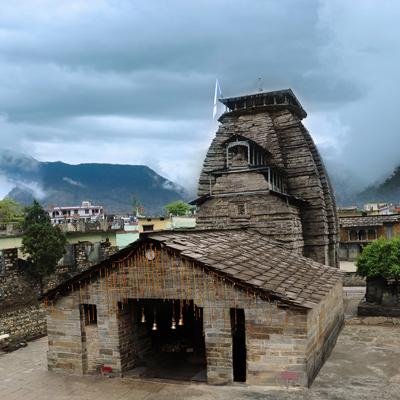
Gopinath Temple is one of the most important ancient Shiva temples in the Chamoli district of Uttarakhand. Situated in the heart of Gopeshwar town, the temple is dedicated to Lord Shiva and is admired for its historic stone architecture, sacred Shiva lingam, towering trident and strong connection with the Panch Kedar pilgrimage tradition.
Surrounded by the mountain ranges, terraced fields and traditional settlements of the Garhwal Himalayas, Gopinath Temple offers visitors a spiritual experience rooted in devotion, history and regional culture. Unlike remote Himalayan temples that require several days of trekking, Gopinath Temple is located within a well-connected town, making it accessible to families, senior citizens, solo pilgrims and travellers planning a wider pilgrimage across Chamoli.
The temple is believed to have developed between the 9th and 11th centuries during the period associated with the Katyuri rulers. Its carefully arranged stone walls, tall shikhara, sloping roof and traditional Himalayan construction reflect the architectural practices that shaped many historic temples across Uttarakhand.
Gopinath Temple is much more than an architectural landmark. It remains an active place of worship where devotees visit throughout the year to seek the blessings of Lord Shiva. During winter, the temple also becomes closely associated with the ceremonial worship of Lord Rudranath, one of the sacred Panch Kedar temples located in the high Himalayas.
The combination of permanent Shiva worship, winter Rudranath traditions, ancient architecture and the sacred trident makes Gopinath Temple one of the most significant spiritual destinations in Gopeshwar.
## Spiritual Importance of Gopinath Temple
Gopinath Temple is dedicated to Lord Shiva, who is worshipped here as Gopinath. The name combines “Gopi” with “Nath,” meaning lord or protector. Regional traditions offer different interpretations of the name, while the temple itself remains firmly associated with the worship of Mahadev.
Lord Shiva represents transformation, meditation, detachment, spiritual awareness and freedom from fear. Devotees visit Gopinath Temple to pray for health, family welfare, courage, protection, prosperity and peace of mind.
Many pilgrims also seek the blessings of Lord Shiva before beginning journeys towards Rudranath, Tungnath, Kalpeshwar, Badrinath and other sacred destinations in Chamoli.
For residents of Gopeshwar, the temple forms an important part of everyday religious life. Local families visit for regular prayers, major festivals, family ceremonies and the fulfilment of religious vows.
The temple’s location within the town gives it a different character from high-altitude shrines. Devotees do not need to undertake an extended trek to experience its spiritual atmosphere. They can attend morning or evening worship, spend time in the courtyard and explore other pilgrimage destinations from Gopeshwar.
The principal Shiva lingam is housed within the sanctum sanctorum. Devotees offer water, flowers, bilva leaves, incense and prayers according to temple traditions.
Visitors should follow the instructions of the priests regarding offerings, entry and photography. Customs may vary during festivals, special rituals and the winter worship period connected with Lord Rudranath.
## Winter Seat of Lord Rudranath
One of the most important religious traditions associated with Gopinath Temple is its connection with Lord Rudranath.
Rudranath is one of the five sacred Shiva temples forming the Panch Kedar pilgrimage circuit. The other temples are Kedarnath, Tungnath, Madhmaheshwar and Kalpeshwar.
Rudranath Temple stands in a remote high-altitude Himalayan landscape and is reached through demanding trekking routes. Because of snow and severe winter conditions, the temple remains inaccessible for part of the year.
After the seasonal closure of Rudranath Temple, the ceremonial representation of Lord Rudranath is brought to Gopinath Temple in Gopeshwar. Worship continues here during the winter months until the high-altitude shrine becomes accessible again.
This tradition gives Gopinath Temple an important role within the Panch Kedar pilgrimage. During winter, devotees who cannot undertake the difficult Rudranath trek can visit Gopeshwar and seek blessings through the seasonal worship maintained at Gopinath Temple.
The movement of the Rudranath doli is conducted according to established religious customs. The procession travels between Gopeshwar and the mountain shrine through villages, forests and alpine meadows.
Local communities participate in welcoming and accompanying the deity. Prayers, traditional music, flower offerings and ceremonial stops form part of the sacred journey.
The opening and closing dates of Rudranath Temple vary every year according to the Hindu calendar, weather conditions and decisions taken by the temple authorities.
Travellers wishing to witness the departure or arrival of the Rudranath doli should confirm the current schedule before booking transport and accommodation.
During important procession dates, Gopeshwar may receive larger numbers of pilgrims. Hotels and homestays near Gopinath Temple should therefore be reserved in advance.
The winter-seat tradition also makes Gopeshwar an important destination outside the main summer pilgrimage season. While many visitors associate Uttarakhand temple travel only with warmer months, Gopinath Temple provides a meaningful winter pilgrimage experience.
## The Sacred Trident of Gopinath Temple
A large historic trident standing within the temple courtyard is one of the most recognisable features of Gopinath Temple.
The trident, or trishul, is a principal symbol of Lord Shiva. Its three points are interpreted through several spiritual meanings, including creation, preservation and transformation.
They may also represent the past, present and future, or the three qualities of nature described in Hindu philosophy.
At Gopinath Temple, the trident is regarded not merely as a decorative symbol but as a sacred object connected with the religious identity and history of the shrine.
According to a popular local legend, Lord Shiva was once absorbed in deep meditation. The gods required Shiva to marry Goddess Parvati so that their future son could defeat a powerful demonic force.
Kamadeva, the god associated with love and desire, attempted to disturb Shiva’s meditation. When Shiva’s meditation was interrupted, he reacted with divine anger.
Regional tradition says that Shiva threw his trident towards Kamadeva, and the trident became fixed at the place where Gopinath Temple now stands.
This account belongs to sacred mythology and local religious tradition rather than documented historical evidence. Its importance lies in the spiritual meaning it carries for devotees.
Another popular belief says that the trident cannot be moved through physical strength, while the sincere touch of a devoted worshipper may cause it to vibrate.
Such accounts should be presented respectfully as local beliefs rather than guaranteed or scientifically established occurrences.
Visitors should not push, pull, climb upon or repeatedly test the trident. It is an ancient sacred object and should be treated with respect.
Photography may be permitted from appropriate areas, but visitors should avoid obstructing the courtyard or disturbing people engaged in worship.
The trident is also historically important because inscriptions associated with it contribute to the understanding of the region’s cultural past.
Its continued presence reflects the relationship between temple worship, local history and the living traditions of Gopeshwar.
## Historic Copper Plates and Inscriptions
Gopinath Temple is associated with old copper plates and inscriptions recording donations and religious contributions made by rulers and devotees.
Such records provide valuable evidence about the temple’s historical importance and the support it received over different periods.
Copper-plate inscriptions were commonly used in ancient and medieval India to record grants of land, donations, privileges and religious patronage.
Their presence at Gopinath Temple demonstrates that the shrine was connected with wider systems of governance, pilgrimage and community support.
Visitors interested in history should understand that the temple represents more than a structure used only for worship. It also preserves evidence of the political, artistic and religious history of the Garhwal Himalayas.
Any historic inscription, stone or metal object within the temple complex should not be touched, rubbed or marked.
Even apparently minor physical contact can contribute to the gradual deterioration of an old surface.
Visitors should never attempt to trace inscriptions using paper, chalk, water or other materials without official archaeological permission.
## Architecture of Gopinath Temple
Gopinath Temple is one of the most impressive examples of traditional stone temple architecture in Chamoli.
The principal structure is built from carefully arranged stone slabs. Its tall shikhara rises prominently above the surrounding town and can be recognised from several nearby locations.
The temple’s vertical tower creates a visual connection between the earthly courtyard and the mountains and sky above Gopeshwar.
The weathered grey stone gives the temple a powerful sense of age and continuity. Rain, wind, sunlight and Himalayan winters have shaped the appearance of the structure over centuries.
A sloping stone roof covers the entrance and assembly area. This form reflects the practical architectural requirements of the mountain climate, where buildings must respond to rainfall, cold and occasional snowfall.
The temple does not depend upon bright marble, large domes or modern decorative materials for its visual importance.
Its character emerges from proportion, stone craftsmanship, age and the relationship between the shrine and its Himalayan surroundings.
Carved architectural details and sacred images can be observed around parts of the structure. Visitors should move slowly and allow time to examine the temple without interfering with devotees.
The courtyard provides space for prayer, processions and religious gatherings. Temple bells, saffron flags and ritual objects add to the atmosphere.
During festivals, the temple may be decorated with flowers, cloth, lights and traditional religious materials.
The contrast between the old stone architecture and colourful festival decorations creates a memorable visual experience.
The temple remains an active religious site rather than only a protected architectural monument. Worship and community traditions therefore continue alongside the preservation of its historic structure.
## Vaitarni Kund and Surrounding Sacred Sites
Vaitarni Kund is an important sacred water feature associated with the Gopinath Temple area.
The name Vaitarni is traditionally connected with the sacred river described in Hindu religious texts. Regional devotees attach spiritual importance to the kund and may include it within their temple visit.
Visitors should confirm current access and local customs before touching or using the water.
Soap, shampoo, detergent, plastic, coins and food should never be placed in a sacred water body.
The area around Gopinath Temple also contains smaller shrines, old religious structures and remains associated with earlier temple activity.
The presence of broken images and temple fragments suggests that the wider area may once have contained a larger group of shrines.
These objects should be treated as part of the region’s cultural heritage rather than moved or handled casually.
Gopeshwar also contains a group of small temples described locally as shrines without installed idols. Their architectural and cultural character makes them interesting for visitors exploring the town beyond the principal temple.
Travellers should ask local residents or authorised guides for directions and information rather than entering restricted or poorly marked sites independently.
## Mahashivratri at Gopinath Temple
Mahashivratri is one of the most important festivals celebrated at Gopinath Temple.
The festival is dedicated to Lord Shiva and is observed through fasting, prayer, mantra recitation, night worship and offerings.
During Mahashivratri, the temple receives devotees from Gopeshwar, nearby villages and other parts of Chamoli.
The stone complex is decorated with flowers, lights, sacred flags and traditional materials. The sound of bells, chants and devotional music fills the courtyard.
Pilgrims offer water, milk, flowers and bilva leaves to Lord Shiva according to temple customs.
Visitors should follow the directions of priests and temple volunteers regarding queues and offerings.
The festival may continue for extended hours, and local arrangements can differ each year.
Travellers planning to visit during Mahashivratri should reserve hotels and homestays in Gopeshwar early.
Parking and access roads near the temple may become congested, so visitors should arrive with sufficient time and follow local traffic instructions.
Families travelling with children or senior citizens may prefer visiting during early morning hours before the largest crowds arrive.
Mahashivratri is primarily a religious occasion. Photography, video recording and social-media content creation should not obstruct worship or reduce the dignity of the ceremony.
## Shravan and Monday Worship
The Hindu month of Shravan is especially sacred for devotees of Lord Shiva.
During this period, many pilgrims visit Gopinath Temple to offer water, bilva leaves and prayers.
Mondays are traditionally associated with Shiva worship and may attract additional visitors throughout the year.
The monsoon generally overlaps with much of the Shravan period. The surrounding mountains become green, streams become active and clouds move across the Chamoli valleys.
However, heavy rainfall can affect mountain roads and create landslide risks. Visitors should check official weather and travel advisories before beginning their journey.
Temple pathways and stone surfaces may become slippery during rain. Shoes with suitable grip are recommended.
Religious enthusiasm should always be balanced with travel safety. Pilgrims should avoid driving or walking through areas affected by active landslides or official restrictions.
## Morning and Evening Darshan
Morning is one of the most peaceful times to visit Gopinath Temple.
The courtyard is usually quieter, the air is fresh and the surrounding mountain slopes are gradually illuminated by early sunlight.
Visitors staying within Gopeshwar can reach the temple without undertaking a long road journey.
Morning darshan also allows travellers to continue towards Mandal, Anusuya Devi Temple, Chopta, Joshimath or other nearby destinations during daylight.
Evening worship offers a different spiritual atmosphere. Bells, lamps and devotional chanting become more prominent as daylight fades over the mountains.
Travellers can attend evening aarti and later return to a nearby hotel or homestay within Gopeshwar.
The temple’s operational timings and ritual schedule may change according to season, festivals and religious ceremonies.
Visitors should confirm the current schedule through temple authorities, their accommodation provider or recognised local sources.
## Gopeshwar Town
Gopeshwar is the district headquarters of Chamoli and one of the most important towns in the central Garhwal region.
Located at an elevation of approximately 1,308 metres, the town is surrounded by mountain ridges, terraced farms, forests and traditional settlements.
Gopeshwar provides a useful combination of pilgrimage facilities and local urban services.
Travellers can access hotels, homestays, restaurants, markets, transport, medical facilities, banks and shops while remaining close to important spiritual destinations.
The town is considerably quieter than many heavily commercialised hill stations. Its atmosphere is shaped by local government institutions, residential neighbourhoods, temples and the movement of pilgrims towards the surrounding mountains.
Visitors can explore the local market, try Garhwali food and purchase essential supplies before continuing towards remote trekking routes.
Gopeshwar is also a practical place to rest after long road journeys from Rishikesh, Haridwar or Dehradun.
Staying for at least one night enables travellers to attend peaceful morning or evening darshan at Gopinath Temple.
It also reduces the need to combine a long road journey with a demanding trek on the same day.
## Gopinath Temple and the Rudranath Journey
Gopeshwar serves as one of the principal bases for the Rudranath pilgrimage.
Rudranath is among the most remote temples of the Panch Kedar circuit and is reached through long mountain trails.
Different routes towards Rudranath begin from villages and trekking points around Gopeshwar, including Sagar and Mandal.
The journey passes through forests, meadows, ridges and high-altitude landscapes. It requires proper preparation, suitable footwear, physical fitness and reliable local guidance.
Gopinath Temple should form an important part of the Rudranath pilgrimage. Devotees may offer prayers here before beginning the trek and return after completing the journey.
During winter, when Rudranath becomes inaccessible, the spiritual connection continues through worship at Gopinath Temple.
This makes Gopeshwar relevant to the Rudranath tradition throughout the year rather than only during the trekking season.
Travellers should not attempt the Rudranath trek based on limited social-media information.
Current route conditions, weather, registration requirements, guides, accommodation and emergency planning should be confirmed before departure.
The trek can be physically demanding and may require several days depending on the route.
Senior citizens, young children and travellers with medical concerns should assess the journey carefully.
Visitors unable to complete the trek can still participate in the Rudranath tradition through worship at Gopinath Temple.
## Nearby Spiritual Destinations
### Anusuya Devi Temple
Anusuya Devi Temple is situated beyond Mandal village and is reached through a forest trek.
The shrine is dedicated to Mata Anusuya and is connected with Sage Atri and Lord Dattatreya.
Travellers can stay in Gopeshwar, drive towards Mandal and begin the trek early in the morning.
The Anusuya Devi journey should generally be planned as a full-day pilgrimage rather than a brief excursion.
### Atri Muni Ashram
Atri Muni Ashram lies beyond Anusuya Devi Temple within the forested mountain landscape.
The route may involve additional walking, streams, wet rocks and waterfall sections.
It should only be undertaken after checking conditions and arranging reliable local guidance.
### Rudranath Temple
Rudranath is one of the Panch Kedar temples and represents an important Shiva pilgrimage in the Chamoli Himalayas.
The route is demanding and requires careful preparation.
Gopinath Temple serves as the spiritual centre from which the seasonal Rudranath worship tradition continues.
### Kalpeshwar Temple
Kalpeshwar is another Panch Kedar shrine situated in the Urgam Valley.
The temple is dedicated to Lord Shiva and is known for its cave-like setting.
Kalpeshwar is accessible during a larger part of the year than several high-altitude Panch Kedar temples, although current road and walking conditions should still be checked.
### Chopta and Tungnath
Chopta is known for forests, meadows and access to the Tungnath Temple trek.
Tungnath is one of the Panch Kedar temples and is among the highest Shiva shrines in the Himalayan region.
Travellers can combine Gopeshwar and Chopta within a multi-day itinerary, but the roads and trekking schedule should not be rushed.
### Joshimath
Joshimath, also known as Jyotirmath, is an important spiritual and travel centre in Chamoli.
It is associated with Adi Shankaracharya and serves as a gateway to Badrinath, Auli and several mountain routes.
Travellers can visit Gopinath Temple before continuing towards Joshimath.
### Narsingh Temple
Narsingh Temple in Joshimath is dedicated to Lord Vishnu in his Narasimha form.
The temple holds particular importance within the winter traditions associated with Badrinath.
A combined Gopeshwar and Joshimath journey allows visitors to experience both Shiva and Vishnu worship.
### Badrinath Temple
Badrinath is one of the Char Dham pilgrimage sites and is dedicated to Lord Vishnu.
Travellers heading towards Badrinath may stay in Gopeshwar as part of a wider Chamoli journey.
Road access is seasonal and may be affected by weather, traffic and official travel regulations.
### Nandprayag
Nandprayag is one of the sacred Panch Prayags of Uttarakhand.
It marks the confluence of the Alaknanda and Nandakini rivers.
Travellers approaching Gopeshwar through the Badrinath highway region can include Nandprayag within their itinerary.
### Badrinath and Panch Kedar Circuit
Gopinath Temple can serve as an important starting point for travellers designing a wider pilgrimage covering Panch Kedar and Badrinath.
Such an itinerary may include Gopinath Temple, Rudranath, Kalpeshwar, Tungnath, Joshimath and Badrinath.
Every high-altitude temple requires separate planning according to season, road conditions and physical ability.
## Suggested One-Day Gopeshwar Visit
A one-day visit can begin with morning darshan at Gopinath Temple.
Travellers can spend time observing the stone architecture, sacred trident and temple courtyard.
The visit can continue towards Vaitarni Kund and other small religious sites within Gopeshwar.
The afternoon may be used for exploring the local market, nearby viewpoints or surrounding villages.
Evening aarti at Gopinath Temple can conclude the day.
This itinerary is suitable for families, senior citizens and travellers resting before a longer Chamoli pilgrimage.
## Suggested Two-Day Itinerary
On the first day, visitors can arrive in Gopeshwar, check into a hotel or homestay and attend evening darshan at Gopinath Temple.
The second morning can begin with another temple visit before continuing towards Mandal or another nearby destination.
Travellers who do not wish to trek can explore Gopeshwar town, nearby temples and scenic mountain roads.
Those visiting Anusuya Devi Temple should dedicate most of the second day to the forest trek and return journey.
## Suggested Three-Day Spiritual Journey
The first day can include arrival, Gopinath Temple and Gopeshwar town.
The second day can be dedicated to Mandal and Anusuya Devi Temple.
The third day can include onward travel towards Chopta, Joshimath, Kalpeshwar or another Chamoli destination.
Travellers should include rest between demanding journeys and avoid placing multiple long treks on consecutive days without preparation.
## Best Time to Visit Gopinath Temple
Gopinath Temple can be visited throughout the year, although the wider travel experience changes with the seasons.
### Spring
Spring offers pleasant temperatures, flowering vegetation and comfortable conditions for temple visits.
The surrounding mountains become colourful, making the season suitable for photography and local exploration.
Morning and evening temperatures may remain cool.
### Summer
Summer is an important pilgrimage season in Chamoli.
Roads towards Badrinath, Panch Kedar routes and other mountain destinations generally receive larger numbers of travellers.
Gopeshwar remains comparatively pleasant compared with the plains, although afternoon sunlight can be strong.
Hotels and homestays should be booked early during weekends and holiday periods.
### Monsoon
The monsoon creates lush green mountain scenery but also brings significant travel risks.
Heavy rainfall can cause landslides, falling stones, road delays and temporary closures.
Travellers should check official weather and road advisories before departure.
Flexible itineraries are essential during severe rainfall.
### Autumn
Autumn is one of the most favourable periods for visiting Gopeshwar.
The post-monsoon landscape remains fresh, rainfall reduces and mountain visibility may improve.
The season is also important because of the movement of deities from high-altitude shrines towards their winter worship centres.
### Winter
Winter offers a quieter pilgrimage experience and special importance through the worship of Lord Rudranath at Gopinath Temple.
Days may be clear and pleasant, while mornings and evenings can become cold.
Visitors should carry warm clothing and confirm heating and hot-water arrangements at their accommodation.
Higher destinations and trekking routes may become inaccessible because of snow, even when Gopeshwar itself remains reachable.
## Reaching Gopeshwar
Gopeshwar is connected by motorable roads with Rishikesh, Srinagar Garhwal, Rudraprayag, Karnaprayag, Chamoli, Joshimath and other important destinations.
Travellers arriving from the plains generally follow the road through Rishikesh, Devprayag, Srinagar, Rudraprayag, Karnaprayag and Nandprayag.
The journey is long and should preferably be completed during daylight.
Jolly Grant Airport near Dehradun is the principal airport used for reaching the region. The road journey from the airport to Gopeshwar is substantial and may require a full travel day.
Rishikesh is an important railway and road gateway. Buses and taxis may be available towards Chamoli and Gopeshwar.
Services and schedules can change, so current transport information should be confirmed before travel.
Private taxis provide greater flexibility for families, senior citizens and groups.
Mountain travel time should never be calculated only through distance. Curves, road repairs, weather and pilgrimage traffic can considerably increase the journey.
## Where to Stay Near Gopinath Temple
Gopeshwar offers a range of hotels, guesthouses, homestays, lodges and pilgrimage accommodation.
Staying within the town provides convenient access to Gopinath Temple, markets, restaurants and transport.
### Hotels Near Gopinath Temple
Hotels close to the temple are suitable for pilgrims who wish to attend morning and evening darshan.
A central location can reduce the need for repeated taxi journeys and make it easier to explore Gopeshwar on foot.
Travellers should confirm the actual walking route because the town includes slopes and steps.
### Homestays in Gopeshwar
Homestays offer visitors an opportunity to experience Garhwali hospitality and local food.
Hosts may provide information about nearby temples, treks, transport and weather.
Homestays can be particularly useful for travellers continuing towards Mandal, Anusuya Devi Temple or Rudranath trekking routes.
### Mountain-View Stays
Properties on the outskirts of Gopeshwar may offer quieter surroundings and wider mountain views.
These stays are suitable for couples, families and slow travellers seeking peace away from the central market.
Actual road connectivity should be confirmed before booking.
### Accommodation for Pilgrimage Groups
Groups should look for properties offering multiple rooms, vegetarian meals, driver accommodation and parking.
Room inventory can become limited during Mahashivratri, Rudranath processions and the main pilgrimage season.
Advance booking is strongly recommended.
## Choosing the Right Accommodation
Travellers should choose accommodation according to their complete itinerary.
Visitors whose primary purpose is Gopinath Temple may prefer a property within walking or short driving distance.
Travellers beginning an early trek should select accommodation offering breakfast, packed food and transport arrangements.
Families should check room size, parking, meal availability and bathroom facilities.
Senior citizens should choose properties with minimal stairs and direct vehicle access.
Winter visitors should confirm warm bedding, hot water and room-heating arrangements.
Monsoon travellers should ask about the condition of the property’s approach road.
Guests requiring internet connectivity should confirm mobile and Wi-Fi quality directly with the property.
Mountain connectivity may vary between neighbourhoods.
## Book Stays Near Gopinath Temple with MudrasStays
MudrasStays helps pilgrims discover hotels, homestays, guesthouses and mountain accommodation near Gopinath Temple in Gopeshwar.
The platform is designed specifically for travellers seeking places to stay close to temples and pilgrimage destinations across India.
Visitors can search for properties according to distance from Gopinath Temple, budget, room type, group size and required facilities.
Booking a nearby stay allows devotees to attend morning and evening darshan without unnecessary travel.
Solo pilgrims can explore affordable guesthouses and homestays.
Couples can choose peaceful mountain-view rooms and private stays.
Families can select hotels offering meals, parking and larger rooms.
Senior citizens can find properties with accessible entry and limited climbing.
Pilgrimage groups can identify accommodation offering multiple rooms, vegetarian food and vehicle parking.
Travellers planning the Rudranath pilgrimage can use Gopeshwar as their spiritual and logistical base.
Visitors heading towards Anusuya Devi Temple can select accommodation convenient for an early departure towards Mandal.
Those continuing towards Joshimath, Badrinath, Chopta or Kalpeshwar can choose a property based on their onward road route.
MudrasStays helps travellers plan a complete spiritual journey rather than only a general hotel booking.
## Responsible Temple Travel
Gopinath Temple is an active place of worship and an important heritage structure.
Visitors should wear respectful clothing and remove footwear wherever instructed.
Photography of the principal Shiva lingam, inner sanctum, priests or rituals should only be undertaken with permission.
The sacred trident should not be pushed, pulled or treated as an object for testing strength.
Historic inscriptions, copper plates, stones and sculptures should not be touched unnecessarily.
Flowers and religious offerings should be placed only in designated areas.
Plastic bottles, food wrappers and puja packaging should not be left inside the temple complex.
Visitors should avoid loud music and behaviour that disturbs worshippers.
During processions, travellers should follow crowd-management instructions and keep the ceremonial route clear.
Drone photography should not be attempted without religious, local and aviation permission.
Gopeshwar is a living mountain town. Visitors should respect residential neighbourhoods, private property and local customs.
Supporting local hotels, homestays, guides, taxi drivers, shops and restaurants helps pilgrimage tourism benefit the resident community.
## An Ancient Centre of Shiva Worship in Chamoli
Gopinath Temple represents the connection between ancient architecture, living worship and the seasonal traditions of the Garhwal Himalayas.
Its old stone shikhara reflects the craftsmanship of earlier temple-building periods.
The sacred trident preserves a powerful local tradition connected with Lord Shiva.
The copper inscriptions reveal the temple’s historic relationship with rulers, donors and regional society.
The Shiva lingam remains the centre of daily worship.
The winter presence of Lord Rudranath connects Gopeshwar with the remote Panch Kedar landscape.
For Shiva devotees, Gopinath Temple is a place to seek courage, protection and spiritual peace.
For Panch Kedar pilgrims, it is an essential centre connected with Lord Rudranath.
For senior citizens, it provides an accessible opportunity to participate in an important Himalayan Shiva tradition.
For architecture enthusiasts, it offers one of Chamoli’s finest historic stone temples.
For cultural travellers, it provides insight into Garhwali festivals, processions and local religious life.
For families, it is a convenient spiritual destination that can be combined with Gopeshwar’s markets and nearby attractions.
For trekkers, it serves as a gateway to Anusuya Devi Temple, Rudranath and other mountain routes.
For photographers, the stone temple, sacred trident, bells and surrounding mountains create a memorable visual environment.
For winter travellers, the temple offers a quieter form of Himalayan pilgrimage connected with Lord Rudranath.
Gopinath Temple should not be treated only as a brief stop before Badrinath or another major destination.
Visitors should allow enough time to attend darshan, observe the architecture and understand the temple’s relationship with Gopeshwar and Rudranath.
Staying overnight in Gopeshwar allows pilgrims to experience the temple during peaceful morning and evening hours.
Plan your pilgrimage to Gopinath Temple with MudrasStays and experience one of the most important ancient Shiva shrines in Chamoli.
Seek the blessings of Lord Gopinath, observe the sacred trident and discover the winter worship traditions connected with Lord Rudranath.
Combine your journey with Anusuya Devi Temple, Atri Muni Ashram, Rudranath, Kalpeshwar, Chopta, Tungnath, Joshimath and Badrinath.
Book hotels near Gopinath Temple, find homestays in Gopeshwar and explore peaceful mountain accommodation through MudrasStays.
Stay closer to your spiritual destination, attend morning and evening darshan comfortably and reduce unnecessary travel on Himalayan roads.
MudrasStays connects pilgrims with suitable accommodation near temples and sacred destinations across India.
Begin your Gopinath Temple journey with a comfortable stay and experience a meaningful pilgrimage centred on Lord Shiva, Panch Kedar traditions, Garhwali culture and the natural beauty of the Chamoli Himalayas.