
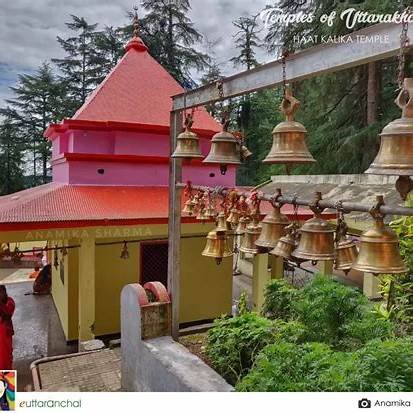
Haat Kalika Temple, also known as Maa Haat Kalika Mandir or Mahakali Temple of Gangolihat, is one of the most revered Shakti shrines in the Kumaon region of Uttarakhand. Located in Gangolihat in the Pithoragarh district, the temple is dedicated to Goddess Kali, the powerful form of the Divine Mother associated with courage, protection, strength and the destruction of negative forces.
Surrounded by a peaceful Himalayan forest, temple bells and the spiritual traditions of eastern Kumaon, Haat Kalika Temple attracts devotees from Uttarakhand and other parts of India. Pilgrims visit the shrine to seek the blessings of Maa Kali for protection, family welfare, courage, success, prosperity and freedom from fear or difficulties.
The temple is also deeply connected with the cultural identity of Gangolihat. The town is known for its folk traditions, religious heritage and surrounding temple circuit, making it an important destination for travellers interested in Shakti worship, Himalayan spirituality and lesser-known pilgrimage places in Uttarakhand.
Haat Kalika Temple is located approximately 77 kilometres from Pithoragarh town. It stands slightly away from the main activity of Gangolihat, within a forested setting that creates a peaceful transition from the surrounding roads and settlements into a sacred place of worship.
Visitors approach the temple through a gateway and a pathway surrounded by tall Himalayan trees. The sound of bells, devotional chants and movement of the wind through the forest creates a powerful spiritual atmosphere even before devotees reach the main shrine.
Unlike major urban temples surrounded by commercial buildings and crowded markets, Haat Kalika Temple retains the character of a traditional mountain shrine. Its natural surroundings are an important part of the pilgrimage experience. The forest creates silence, shade and a feeling of separation from everyday life, allowing visitors to focus on prayer and reflection.
The temple is dedicated to Goddess Kali in her powerful Mahakali form. In Hindu tradition, Maa Kali represents divine energy that destroys darkness, fear, injustice and harmful forces. Although her appearance is fierce, devotees worship her as a compassionate and protective mother who provides strength during difficult situations.
At Haat Kalika Temple, the goddess is approached with both reverence and personal devotion. Many devotees regard her as a guardian who listens to sincere prayers and protects families, communities and soldiers.
The temple is therefore not merely a religious monument or sightseeing attraction. It is a living centre of faith where worship continues through daily prayers, aarti, offerings, bells and traditional rituals.
Devotees may visit Haat Kalika Temple during important moments in their lives, such as before beginning a journey, joining a new profession, facing an examination, making a major family decision or seeking courage during a period of uncertainty.
Some visitors come to express gratitude after a wish has been fulfilled. Others arrive to pray for the health and welfare of their families. For many local residents, worship of Maa Haat Kalika forms part of inherited family and community traditions.
The origins of Haat Kalika Temple are closely connected with religious tradition and regional belief. According to the Pithoragarh district administration, Gangolihat was chosen by Adi Shankaracharya for the installation of a Mahakali Shakti Peeth.
Adi Shankaracharya was one of the most influential spiritual teachers in Indian religious history. He is traditionally associated with the revival and organisation of Hindu worship, philosophy and pilgrimage routes across India.
Local tradition holds that Adi Shankaracharya recognised the spiritual importance of Gangolihat and established or consecrated the worship of Mahakali at this location. This association gives Haat Kalika Temple an important place within the wider sacred geography of the Himalayas.
The exact historical development of the present temple structures may have taken place over different periods. Like many ancient Himalayan shrines, the temple’s history includes a combination of documented regional information, local oral traditions and devotional legends preserved by priests and residents.
These traditions should be understood as an important part of the temple’s religious identity. They reveal how generations of devotees have interpreted the sacred power of the place and maintained worship of the goddess through changing political and social periods.
The term “Shakti Peeth” refers to a sacred centre associated with Shakti, the universal divine feminine power. Shakti worship recognises the goddess as the source of creation, strength, protection and spiritual transformation.
Haat Kalika Temple is widely regarded in the region as an important centre of Shakti worship. Devotees experience Maa Kalika not only as a powerful deity but also as the mother who protects people during danger and gives them the courage to face difficult situations.
The spiritual importance of the temple becomes especially visible during Navratri, when devotees worship different forms of the Divine Mother over nine sacred nights.
During the Navratri periods, the temple may receive larger numbers of pilgrims. Special prayers, offerings, devotional singing and religious ceremonies may be organised according to temple traditions.
Travellers planning to visit during Navratri should expect a more energetic and crowded atmosphere than on ordinary days. Accommodation in Gangolihat and nearby destinations should be booked in advance, particularly for families and larger pilgrimage groups.
Outside the major festival periods, Haat Kalika Temple offers a quieter experience. Visitors can attend darshan, observe the forest environment and spend more time within the temple complex without feeling hurried.
One of the most distinctive aspects of Haat Kalika Temple is its deep connection with the Kumaon Regiment of the Indian Army. Maa Haat Kalika has long been a source of faith, courage and inspiration for soldiers associated with the regiment.
The temple contains bells, structures and devotional offerings connected with soldiers. The relationship between Maa Kalika and the Kumaon Regiment has become an important part of the shrine’s modern identity.
The invocation “Jai Maa Kalika” carries deep emotional and spiritual significance for many soldiers connected with the Kumaon Regiment. The goddess is remembered as a source of strength, confidence and protection during military service.
Government accounts have also acknowledged the importance of the Kali temple at Gangolihat in strengthening the morale of Kumaon Regiment soldiers.
This connection gives Haat Kalika Temple a distinctive position among India’s military-associated religious shrines. Visitors may observe symbols, bells or contributions that reflect the long relationship between the temple and soldiers.
For serving personnel, veterans and military families, the temple may hold a particularly personal meaning. A pilgrimage to Haat Kalika can become an act of prayer for safety, courage, duty and gratitude.
For other travellers, the army connection provides insight into how religious faith becomes part of institutional tradition, regional identity and collective memory.
The temple architecture is simple, colourful and closely integrated with its forest surroundings. Red and yellow shades, temple domes, hanging bells, railings and sacred symbols create a recognisable mountain-temple appearance.
The shrine does not depend on monumental scale for its spiritual impact. Its character comes from the presence of Maa Kalika, the devotional atmosphere, the surrounding forest and the faith of generations of worshippers.
Numerous bells can be seen around parts of the temple complex. Bells are traditionally rung when entering a Hindu temple to announce the devotee’s arrival, focus the mind and create a sacred sound.
Some bells may also be offered by devotees after fulfilment of a prayer or as an expression of gratitude. Each bell can therefore represent a personal story of faith, protection or thanksgiving.
The sound of the bells spreads through the forest and becomes one of the most memorable elements of the Haat Kalika Temple experience.
The main sanctum is the spiritual centre of the temple. Devotees approach the goddess with flowers, chunari, incense, coconuts and other traditional offerings permitted by the temple authorities.
Visitors should follow the directions of priests and temple management regarding offerings, photography, entry and movement near the sanctum.
Local temple traditions also include stories about the living presence of the goddess. According to a popular belief, a resting place is prepared for Maa Kalika at night, and devotees believe that signs of her presence may be visible the following morning.
Another local tradition relates to a continuously maintained sacred flame associated with the power and presence of the goddess.
Such accounts belong to devotional belief and should be presented respectfully as temple traditions rather than as scientifically verifiable events.
These stories contribute to the mysterious and spiritually powerful identity of Haat Kalika Temple. They express the belief that Maa Kalika is not merely represented through an idol but remains actively present within the temple and surrounding region.
Visitors may hear additional legends from priests, local residents and guides. Different families or villages may preserve different versions of the temple’s history and miracles.
Listening respectfully to these traditions can enrich the pilgrimage experience and help travellers understand the cultural importance of the shrine.
Haat Kalika Temple is especially meaningful for travellers undertaking a Devi or Shakti pilgrimage in Uttarakhand.
The state contains numerous important temples dedicated to forms of the Divine Mother, including Nanda Devi, Purnagiri, Kasar Devi, Dhari Devi, Surkanda Devi and several regional goddesses worshipped by Kumaoni and Garhwali communities.
Haat Kalika represents the powerful Kali tradition of eastern Kumaon. Its location in Gangolihat also allows pilgrims to combine Shakti worship with Shiva temples, cave shrines and ancient regional pilgrimage destinations.
Morning is generally an excellent time to visit Haat Kalika Temple. The forest is quieter, the air is fresh and visitors may be able to attend morning prayers or aarti.
Beginning early also allows pilgrims to avoid larger groups and continue towards nearby destinations such as Patal Bhuvaneshwar later in the day.
Evening can offer a different spiritual atmosphere. Temple bells, lamps and devotional prayers create a peaceful environment as daylight fades through the surrounding trees.
Travellers should avoid arriving too late without confirming the current temple timings and local transport arrangements. Mountain roads are easier and safer to navigate during daylight.
Temple timings may change according to season, festivals, special rituals or management decisions. Visitors should confirm the latest schedule through their hotel, homestay host, local driver or temple authorities.
The best time to visit Haat Kalika Temple depends on the type of experience preferred by the traveller.
Spring generally offers pleasant temperatures, fresh vegetation and comfortable conditions for temple visits and road travel.
Summer is cooler than many cities in the plains and is suitable for families planning a longer holiday in Kumaon. The forest surroundings provide shade, although the temple may receive more visitors during school vacations and long weekends.
The monsoon transforms Gangolihat into a lush green destination. Mist, rain and dense vegetation create a dramatic mountain atmosphere around the temple.
However, heavy rainfall may affect road conditions, visibility and travel times. Visitors travelling during the monsoon should check local weather and road updates before departure.
Comfortable footwear with good grip is advisable because temple pathways and steps may become wet or slippery during rain.
Autumn is often one of the most suitable periods for visiting the temple. The weather is generally pleasant, the post-monsoon landscape appears fresh and clearer skies may support longer regional journeys.
Navratri celebrations during the autumn period can bring large numbers of devotees to Haat Kalika Temple. Travellers seeking a vibrant pilgrimage experience may prefer this period, while those seeking quiet darshan may select non-festival dates.
Winter offers a calm spiritual atmosphere and comparatively lower visitor numbers. Mornings and evenings can be very cold, so travellers should carry warm clothing.
Fog, frost and reduced daylight should be considered while planning winter road journeys. Guests should begin early and avoid tightly scheduled travel.
Haat Kalika Temple can be reached by road through Gangolihat. Mountain roads in the Pithoragarh region are scenic but winding, and travel times may be longer than travellers expect from the distance shown on maps.
Visitors arriving from Pithoragarh, Almora, Bageshwar, Berinag or Chaukori should leave sufficient time for road conditions, traffic and weather changes.
Local taxis and shared vehicles may be available, but availability can vary according to the season and time of day. Families, senior citizens and pilgrimage groups may prefer arranging a private vehicle.
Travellers should confirm where the vehicle can stop and whether the final approach involves steps or walking. Although the temple is comparatively accessible, individual mobility requirements should be considered.
Senior citizens should select accommodation with convenient road connectivity and minimise unnecessary same-day travel from distant towns.
Gangolihat is an important religious and cultural destination in its own right. Visitors should consider spending at least one night in or around the town rather than treating Haat Kalika Temple only as a brief stop.
A nearby stay allows pilgrims to attend early darshan, experience the evening atmosphere and explore other temples without rushing.
The town and surrounding villages offer an introduction to Kumaoni culture, local markets, traditional food and mountain life.
Travellers can interact respectfully with residents, explore locally operated shops and learn about the folk traditions associated with the region.
Haat Kalika Temple can be combined with several important spiritual and scenic destinations.
Patal Bhuvaneshwar Cave Temple is one of the most significant nearby pilgrimage sites. Located roughly 16 kilometres from Gangolihat according to the district administration, the underground limestone cave is primarily associated with Lord Shiva.
The cave contains natural formations that are traditionally interpreted as representations of Hindu gods, goddesses and mythological events.
Combining Haat Kalika Temple with Patal Bhuvaneshwar creates a powerful Shiva–Shakti pilgrimage itinerary. Travellers can worship Maa Kali in the Himalayan forest and later descend into the sacred cave associated with Lord Shiva.
Because entry into Patal Bhuvaneshwar involves a narrow and steep underground passage, travellers should keep sufficient time and assess physical suitability before visiting.
Chamunda Temple is another nearby spiritual destination. The Pithoragarh district administration places it approximately 2 kilometres in the direction opposite Haat Kalika Temple.
The shrine is associated with Goddess Chamunda, another fierce and protective form of the Divine Mother.
Local traditions connect the surrounding area with the goddess’s victory over negative forces. These stories contribute to the mysterious religious identity of Gangolihat.
A visit to Haat Kalika and Chamunda Temple allows devotees to experience two related but distinctive forms of Shakti worship within the same regional circuit.
Berinag is another destination that can be included in the journey. The area is associated with Nag or serpent worship and offers access to mountain scenery, local temples and accommodation.
Chaukori is suitable for travellers who want to combine pilgrimage with panoramic Himalayan views and a peaceful hill holiday.
On clear days, the Chaukori region offers views towards prominent snow-covered Himalayan ranges. It also contains tea gardens, forest walks and quiet mountain accommodation.
Travellers may stay in Chaukori and undertake a day visit to Gangolihat, or stay near Haat Kalika before continuing towards Chaukori.
Pithoragarh town can serve as a larger regional base for visitors exploring eastern Kumaon. It offers a wider selection of hotels, markets, transport connections and essential services.
However, travelling from Pithoragarh to Gangolihat and returning on the same day can involve several hours on winding mountain roads. Pilgrims seeking a relaxed experience should consider staying closer to Gangolihat.
A one-day Gangolihat pilgrimage itinerary can begin with early darshan at Haat Kalika Temple.
Visitors can spend time within the temple complex, observe the forest setting and explore nearby religious places.
The afternoon can be used for local sightseeing or a visit to Chamunda Temple, depending on road conditions and available time.
A two-day itinerary allows pilgrims to combine Haat Kalika Temple with Patal Bhuvaneshwar.
On the first day, travellers can arrive in Gangolihat, check into a nearby hotel or homestay and visit Haat Kalika Temple during the afternoon or evening.
The second day can begin with morning darshan before continuing towards Patal Bhuvaneshwar Cave Temple.
A three-day spiritual itinerary can include Haat Kalika and Gangolihat on the first day, Patal Bhuvaneshwar on the second day and Berinag or Chaukori on the third day.
This route provides a balanced combination of Shakti worship, Shiva pilgrimage, Himalayan scenery and regional culture.
Travellers with additional time can extend the journey towards Bageshwar, Jageshwar, Almora, Pithoragarh or Munsiyari.
Such an extended itinerary allows visitors to experience multiple forms of worship and different landscapes across the Kumaon region.
Accommodation near Haat Kalika Temple is available primarily in Gangolihat and its surrounding areas.
Travellers can choose from budget hotels, small guesthouses, family-run homestays and simple mountain properties.
Staying in Gangolihat is the most convenient choice for pilgrims who wish to attend morning or evening darshan and explore nearby temples.
A hotel near the town centre may provide easier access to markets, restaurants, taxis and essential facilities.
A homestay around Gangolihat can offer a more personal experience of Kumaoni hospitality. Guests may receive home-cooked meals and guidance regarding temple timings, local transport and nearby pilgrimage routes.
Travellers seeking a more scenic holiday may consider accommodation in Berinag or Chaukori.
Properties in Chaukori may offer Himalayan views, open spaces and a peaceful resort-like setting, although additional road travel will be required to reach Haat Kalika Temple.
Accommodation near Patal Bhuvaneshwar may be suitable for travellers whose itinerary focuses primarily on the cave temple and Haat Kalika.
Visitors should select their stay according to actual road travel time rather than straight-line distance.
Mountain routes can make two places that appear close on a map considerably farther apart in practical travel time.
Before confirming a room, travellers should check parking, meal availability, hot water, heating, mobile connectivity and accessibility.
Families should confirm whether the property offers suitable room sizes and food for children.
Senior citizens should choose accommodation with minimal stairs and easy vehicle access.
Winter travellers should confirm the availability of warm bedding, room heating and hot water.
Pilgrimage groups should look for properties offering multiple rooms, group meals and space for vehicle parking.
MudrasStays helps devotees discover hotels, homestays, guesthouses and spiritual stays near Haat Kalika Temple in Gangolihat.
The platform is designed specifically for pilgrims and travellers who prefer staying close to temples and religious destinations.
Visitors can search for accommodation based on its distance from Haat Kalika Temple, location, budget, group size and preferred facilities.
Booking a nearby stay can reduce tiring travel on mountain roads and give pilgrims more time for darshan, prayer and local exploration.
MudrasStays can also help travellers build a complete Gangolihat pilgrimage circuit by identifying accommodation near Haat Kalika Temple, Patal Bhuvaneshwar, Berinag and Chaukori.
Solo travellers may prefer a simple homestay close to the temple.
Couples may choose a peaceful mountain property with scenic surroundings.
Families may prefer hotels with meals, parking and larger rooms.
Senior citizens may require accommodation with convenient road access and minimal walking.
Pilgrimage groups may select properties capable of handling multiple rooms and transport arrangements.
Staying near the temple also benefits local communities by supporting homestay owners, taxi operators, shops and food providers.
Responsible tourism is particularly important at Haat Kalika Temple because the shrine is located within a sensitive Himalayan forest environment.
Visitors should not leave plastic bottles, food wrappers, disposable plates or other waste within the temple or forest.
Religious offerings should be placed only in designated areas. Flowers, cloth, incense packaging and other materials should not be scattered around the premises.
Travellers should avoid loud music and behaviour that disturbs worshippers or the natural environment.
Photography rules should be confirmed before taking pictures of the deity, sanctum, priests or religious ceremonies.
Visitors should not photograph individual devotees without permission.
The bells and military-associated offerings within the temple should be treated respectfully.
Open flames, smoking materials and careless disposal of burning objects can create serious risks in forested mountain areas.
Travellers should follow temple instructions regarding lamps, incense and sacred fires.
Supporting local businesses is an important part of responsible pilgrimage tourism.
Visitors can choose local accommodation, hire regional drivers, purchase offerings from nearby shops and try traditional Kumaoni food.
Haat Kalika Temple represents the powerful relationship between Shakti worship, Himalayan nature, Kumaoni culture and military faith.
Its importance does not come only from its legends or architecture. It comes from the continuous devotion of the people who regard Maa Kalika as their protector and source of courage.
The temple offers different meanings to different travellers.
For devotees of the goddess, it is a sacred Shakti centre where prayers are offered to Maa Kali.
For soldiers and military families, it represents protection, bravery and devotion to duty.
For cultural travellers, it provides insight into the traditions and spiritual identity of eastern Kumaon.
For nature lovers, the surrounding forest creates a peaceful setting filled with mountain air and the sound of temple bells.
For photographers and writers, the combination of colourful temple structures, bells, sacred symbols and tall trees offers a distinctive visual experience.
For families, the temple provides an opportunity to introduce younger travellers to Himalayan religious traditions and the worship of the Divine Mother.
For spiritual seekers, the quiet environment provides space for prayer, reflection and temporary separation from the noise of daily life.
For pilgrims undertaking a wider Uttarakhand journey, Haat Kalika acts as a gateway to Patal Bhuvaneshwar, Gangolihat’s local shrines and the sacred destinations of eastern Kumaon.
A visit to Haat Kalika Temple should ideally be undertaken without excessive hurry.
Travellers should allow time to approach the shrine calmly, attend darshan, listen to the bells and experience the surrounding forest.
The most meaningful pilgrimage is not always the one covering the greatest number of destinations in the shortest period.
Haat Kalika encourages travellers to pause, pray and connect with the strength represented by Maa Kali.
Whether you are visiting to seek courage, protection, fulfilment of a prayer or a deeper understanding of Kumaoni spirituality, Haat Kalika Temple offers a powerful and memorable religious experience.
Plan your pilgrimage to Haat Kalika Temple with MudrasStays and discover one of the most respected Shakti shrines in Uttarakhand.
Seek the blessings of Maa Kalika, experience the peaceful Himalayan forest and explore the sacred destinations surrounding Gangolihat.
Combine your journey with Patal Bhuvaneshwar Cave Temple, Chamunda Temple, Berinag, Chaukori and other spiritual destinations in Pithoragarh district.
Book hotels near Haat Kalika Temple, find homestays in Gangolihat and discover comfortable mountain accommodation through MudrasStays.
Stay closer to your place of worship, begin your darshan early and reduce unnecessary travel on winding mountain roads.
MudrasStays connects pilgrims with suitable accommodation near temples and pilgrimage destinations across India.
Begin your Haat Kalika Temple journey with a comfortable stay and experience the faith, culture, forests and spiritual power of Gangolihat at a relaxed pace.