
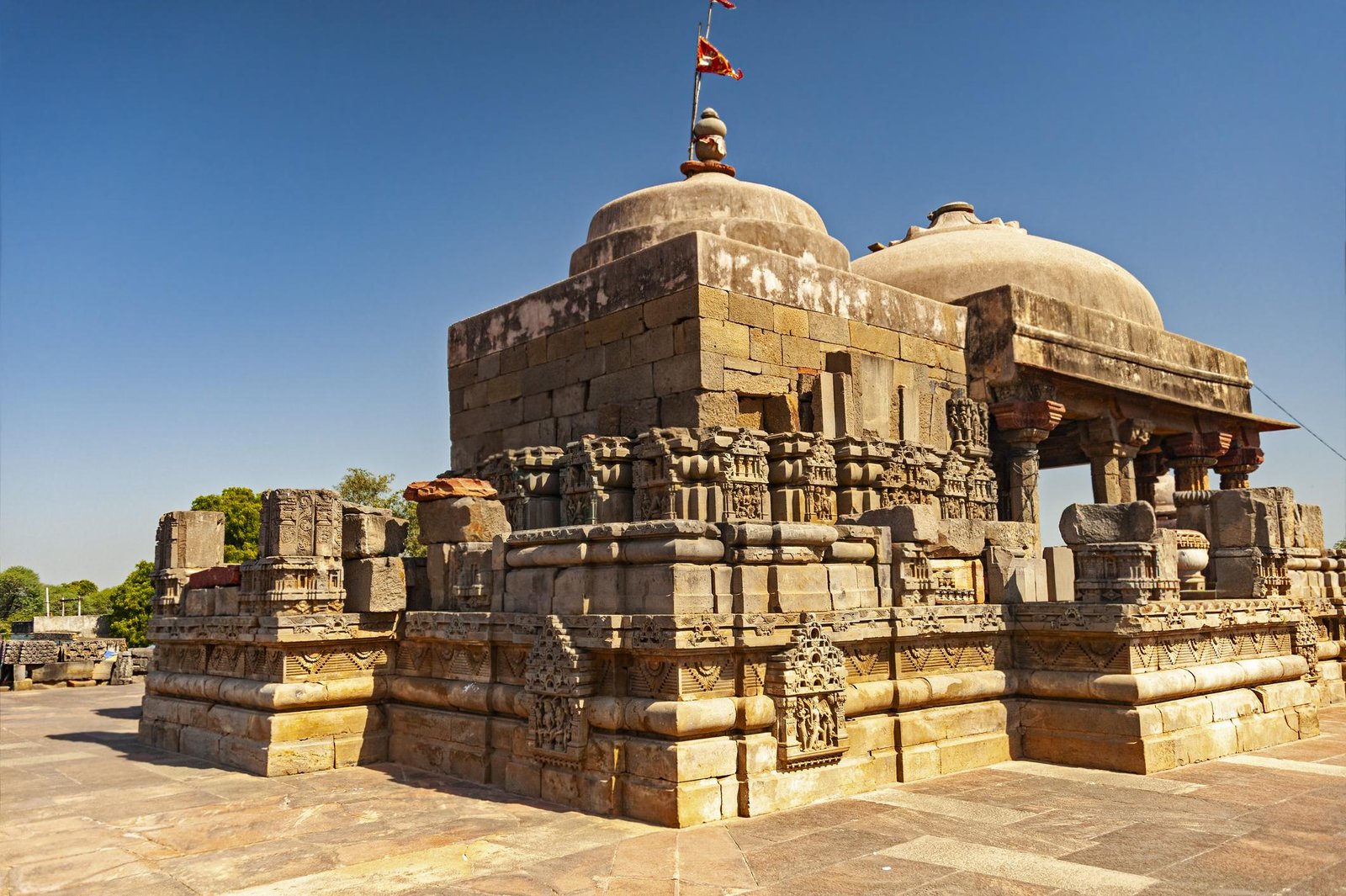
Harshat Mata Temple, Abhaneri – An Ancient Temple of Joy Beside Chand Baori
Harshat Mata Temple is an ancient Hindu temple situated in **Abhaneri village in the Dausa district of Rajasthan**. Standing immediately beside the celebrated Chand Baori stepwell, the temple forms part of one of Rajasthan’s most impressive archaeological and sacred landscapes.
The temple is presently dedicated to **Harshat Mata**, locally worshipped as a form of the Divine Mother associated with joy, happiness, prosperity and protection. Rajasthan’s tourism authorities describe her as the goddess who brings happiness to the village and blesses devotees with cheerfulness and well-being.
At the same time, the surviving architectural and sculptural evidence reveals a more complex history. The Archaeological Survey of India identifies images of Vasudeva-Vishnu, Pradyumna and Balarama-Sankarshana in the principal exterior niches. These sculptures indicate that the original temple was probably dedicated to Lord Vishnu or to a Vaishnava group of deities before it became associated with Harshat Mata.
Harshat Mata Temple is therefore important for several reasons:
* It is an active place of Goddess worship.
* It preserves 8th-century temple architecture.
* It contains important early medieval sculptures.
* It reflects Gurjara-Pratihara-period artistic traditions.
* It stands beside one of India’s most famous stepwells.
* It demonstrates how the identity of a sacred site can change while worship continues.
* It forms an important heritage destination between Jaipur, Dausa and the Agra route.
Travellers searching for hotels near Harshat Mata Temple, stays near Chand Baori or family accommodation for an Abhaneri heritage and pilgrimage visit can explore convenient options through **MudrasStays**.
## Who Is Harshat Mata?
The name **Harshat Mata** is commonly interpreted as the Mother Goddess who gives *harsha*—joy, happiness, delight and emotional well-being.
Local devotees approach the Goddess as a compassionate mother who protects the village and brings positivity into the lives of those who worship her with sincerity.
She may be worshipped for:
* Family happiness
* Peace within the household
* Protection from adversity
* Good health
* Prosperity
* Emotional strength
* Successful beginnings
* Marriage and family welfare
* Blessings for children
* Relief from repeated difficulties
* Fulfilment of sincere prayers
* Gratitude after a positive life event
Unlike some temples where the presiding deity is associated principally with fierce protection or warfare, Harshat Mata’s popular identity emphasises happiness and auspiciousness.
This does not mean that the Goddess is only connected with worldly pleasure. Within Shakti worship, genuine joy is also understood as the result of spiritual harmony, righteous conduct, inner stability and divine grace.
## Was the Original Temple Dedicated to Harshat Mata?
The answer requires an important distinction between the temple’s **present religious identity** and its **original architectural programme**.
Today, the shrine contains an image of the Goddess worshipped as Harshat Mata. The temple remains a living religious place for villagers and visiting devotees.
However, the Archaeological Survey of India records the following sculptures in the major exterior niches:
* Vasudeva-Vishnu on the southern side
* Pradyumna on the western side
* Balarama-Sankarshana on the northern side
This combination strongly suggests that the original temple was Vaishnava.
Vasudeva, Sankarshana, Pradyumna and Aniruddha are associated with the concept of the **Chaturvyuha**, an important theological formation in early Vaishnavism. Although not every original sculpture survives in its intended position, the visible iconographic programme indicates that Vishnu worship occupied a central role when the temple was first designed.
The temple may therefore have passed through several phases:
1. Construction as an early medieval Vaishnava temple
2. Damage, deterioration or partial abandonment
3. Loss or displacement of the original principal image
4. Installation of a Goddess image
5. Continued local worship under the name Harshat Mata
6. Archaeological protection alongside ongoing religious use
This layered identity should not be treated as a contradiction. Indian sacred sites often preserve continuity through adaptation. The building’s original dedication can be studied historically while the present Goddess continues to be worshipped respectfully.
## Historical Period of Harshat Mata Temple
The Archaeological Survey of India dates Harshat Mata Temple to approximately the **8th century CE**.
Rajasthan Tourism presents a slightly broader date range, commonly describing the temple as belonging to the 9th–10th century period. These differences arise because the site does not have a widely accepted surviving foundation inscription naming a precise construction year and patron.
Architectural historians generally associate the temple with the period of the **Gurjara-Pratiharas**, who became a major political power in northern and western India during the early medieval centuries.
The Gurjara-Pratihara period was especially important for the development of:
* North Indian Nagara temple architecture
* Monumental stone platforms
* Richly carved exterior walls
* Vaishnava, Shaiva and Shakta iconography
* Sculptural representations of music, dance and courtly life
* Temple complexes organised around a central sanctum
The original builder of the temple is not known with certainty.
Popular accounts sometimes attribute the temple or the development of Abhaneri to a ruler called Raja Chand or Raja Chandra. Rajasthan Tourism also preserves a tradition that Abhaneri was established by Raja Chandra. However, this should not be treated as conclusive evidence that the same ruler personally commissioned every surviving part of Harshat Mata Temple or Chand Baori.
The most historically careful description is that the temple was constructed during the early medieval period, probably within the Gurjara-Pratihara cultural sphere, while the exact patron remains uncertain.
## Abhaneri and the “City of Brightness”
Abhaneri is believed to have been known earlier as **Abha Nagari**, usually interpreted as the “city of brightness” or “radiant city.”
Over time, pronunciation and local usage are believed to have transformed Abha Nagari into Abhaneri.
The older name suits the sacred identity of Harshat Mata, whose blessings are associated with joy, light and happiness. It also reflects the importance of water, settlement and religious architecture in sustaining life within Rajasthan’s semi-arid landscape.
Today, Abhaneri is a village, but the scale of Chand Baori and the sophistication of Harshat Mata Temple suggest that the settlement once held considerably greater regional importance.
It may have functioned as:
* A religious centre
* A water-management settlement
* A stopping point on regional routes
* A gathering place for markets and festivals
* A centre supported by rulers, merchants and local communities
* A ritual landscape connecting temple worship with water
## Architecture of Harshat Mata Temple
The surviving temple is heavily altered and partially ruined, but its remaining structure still reveals the skill and ambition of its original builders.
The principal architectural features include:
* A high double-terraced platform
* A sanctum or garbhagriha
* A pancharatha exterior plan
* A covered circumambulatory passage
* Remains of a pillared mandapa
* Remains of an entrance porch
* Sculptural niches on the outer wall projections
* Carved friezes around the upper terrace
* Architectural fragments from the original superstructure
* Later domed roofing over the surviving shrine
The original temple would have appeared significantly taller and more elaborate than the structure visible today.
## The Double-Terraced Platform
One of the temple’s most impressive surviving features is its large raised platform.
The temple stands on two stepped terraces, creating a monumental approach and elevating the sanctum above the surrounding village landscape.
The raised platform served practical, architectural and symbolic purposes.
### Practical Purpose
The platform protected the shrine from surface water, dust and ordinary ground-level activity.
### Architectural Purpose
It increased the visual prominence of the temple and created space for carved panels, processional movement and subsidiary architectural elements.
### Symbolic Purpose
Ascending the steps represented movement from the ordinary world towards sacred space.
The terrace also allowed the temple to be seen from a distance and created a visual relationship with Chand Baori beside it.
## Pancharatha Temple Plan
The sanctum is described as **pancharatha** in plan.
In North Indian temple architecture, *ratha* refers to a projection on the exterior wall rather than a wheeled chariot. A pancharatha structure has five principal projections on each relevant side of the sanctum.
These projections create alternating surfaces of light and shadow and provide locations for:
* Deity niches
* Decorative mouldings
* Miniature architectural forms
* Sculptural panels
* Vertical divisions leading towards the original tower
The pancharatha layout gave the temple a more complex visual form than a plain square shrine.
## The Original Shikhara
The original temple tower or **shikhara** has not survived.
The present rounded or domed coverings belong to later phases and should not be confused with the early medieval superstructure.
The original temple probably had a tall North Indian-style tower rising above the sanctum. It may have included:
* Curving vertical lines
* Multiple projecting sections
* Miniature shrine motifs
* An amalaka or ribbed crowning element
* A finial above the tower
Fragments lying around the temple may once have formed part of the shikhara, mandapa, subsidiary shrines or external decoration.
Visitors should not move or sit upon carved stones, as even apparently isolated fragments may contain essential evidence for understanding the original temple.
## Pillared Mandapa and Porch
Only limited remains of the original pillared mandapa and entrance porch survive.
The mandapa would have served as a transitional and congregational space where devotees gathered before approaching the sanctum.
It may have been used for:
* Prayer
* Ritual performance
* Music
* Dance
* Religious teaching
* Festival ceremonies
* Offerings
* Community gathering
The surviving pillars and carved elements display the craftsmanship associated with early medieval Rajasthan.
The present appearance reflects centuries of damage, rebuilding and protective intervention rather than the complete original arrangement.
## Circumambulatory Passage
The temple sanctum was enclosed by an **ambulatory passage**, allowing devotees to perform pradakshina or circumambulation around the sacred centre.
Pradakshina symbolises keeping the deity at the centre of one’s life.
Walking clockwise around the sanctum may represent:
* Reverence
* Surrender
* The cyclical nature of existence
* The devotee’s spiritual journey
* Recognition of the Divine as the centre of creation
Access to particular sections may be limited for conservation or safety reasons. Visitors should follow current barriers and temple instructions rather than attempting to enter narrow or unstable passages.
## Sculptures of Harshat Mata Temple
The sculptures are among the site’s greatest artistic treasures.
The Archaeological Survey of India notes that the carved panels around the upper terrace include both religious and secular themes.
Visitors may observe representations associated with:
* Vishnu and Vaishnava deities
* Other Brahmanical gods and goddesses
* Musicians
* Dancers
* Couples
* Garden activities
* Courtly recreation
* Floral ornamentation
* Geometric designs
* Mythological figures
* Decorative attendants
These carvings offer more than religious imagery. They provide insight into the cultural imagination of early medieval Rajasthan.
## Dance, Music and Celebration in Stone
Several sculptures depict figures engaged in dance, music, love and recreational activities.
This is especially appropriate for a shrine now associated with Harshat Mata, the Goddess of joy.
The sculptors presented sacred life as containing:
* Music
* Movement
* Beauty
* Affection
* Celebration
* Human relationships
* Nature
* Divine abundance
Temple art did not always separate spirituality from ordinary life. Music, dance and human emotion could themselves become offerings to the Divine.
The expressive sculptures of Abhaneri are valuable records of clothing, jewellery, hairstyles, instruments and courtly behaviour from early medieval India.
## What Happened to the Original Temple?
The temple has suffered extensive damage over many centuries.
Its present condition may reflect a combination of:
* Political conflict
* Deliberate destruction
* Natural weathering
* Structural collapse
* Loss of patronage
* Removal of sculptures
* Reuse of stone
* Unrecorded repair
* Installation of later religious structures
* Modern conservation
Popular narratives sometimes attribute the entire destruction to a single invasion or ruler. However, the site’s complicated condition is unlikely to be explained adequately by one undocumented event.
Many original sculptures were displaced, removed or transferred to museums and protected collections. Other carved fragments remain arranged around the temple platform.
The surviving structure should therefore be understood as a partially preserved monument rather than a complete representation of the original 8th-century temple.
## The Present Goddess Shrine
Despite the loss of much of the original architecture, Harshat Mata Temple remains in religious use.
A Devi image is worshipped in the sanctum as Harshat Mata. Local residents and visiting pilgrims offer prayers for happiness, protection and family welfare.
Offerings may include:
* Flowers
* Red chunri
* Coconut
* Sweets
* Incense
* Camphor
* Roli and rice
* Fruit
* Sacred thread
* Personal prayers
Visitors should confirm permitted offerings with the temple priest or caretaker.
Oil, paint, sindoor or adhesive materials should never be applied to protected archaeological sculptures or ancient exterior stonework.
## Relationship Between Harshat Mata Temple and Chand Baori
Harshat Mata Temple stands directly beside **Chand Baori**, one of Rajasthan’s most famous stepwells.
The closeness of the two structures suggests that the temple and water system formed part of an integrated sacred and civic landscape.
Water from a stepwell supported:
* Drinking needs
* Ritual purification
* Travellers
* Temple ceremonies
* Local households
* Community gathering
* Relief from extreme summer heat
Traditional accounts say pilgrims washed their hands and feet at the baori before approaching the temple.
Today, access to the lower steps and water may be restricted for safety and conservation. Visitors should not enter prohibited sections or attempt ritual bathing without permission.
## Chand Baori
Chand Baori is celebrated for its extraordinary geometric arrangement of steps descending towards the water.
The structure includes:
* Thousands of narrow steps
* Multiple descending levels
* Symmetrical triangular patterns
* Deep subterranean space
* Galleries and pavilions
* Later royal sections
* Intricately carved architectural fragments
The stepwell provided access to water at different seasonal levels while creating a cooler environment below ground.
Visitors should treat Chand Baori as a protected archaeological monument, not as an active swimming or bathing facility.
## Harshat Mata and the Sacred Meaning of Water
The temple-stepwell relationship creates a meaningful symbolic connection.
Harshat Mata represents happiness, abundance and divine grace, while water represents:
* Life
* Purification
* Fertility
* Renewal
* Community survival
* Cooling energy
* Continuity through difficult seasons
In Rajasthan, where access to water shaped the survival of settlements, a great temple beside a deep baori expressed both spiritual and practical prosperity.
The sacred complex reminds visitors that human well-being depends upon the responsible protection of both culture and natural resources.
## Navratri and Goddess Worship
Navratri is an important period for the worship of the Divine Mother.
Local devotees may visit Harshat Mata Temple during Chaitra and Sharad Navratri for:
* Devi darshan
* Flowers and chunri offerings
* Family prayers
* Aarti
* Prasad
* Gratitude rituals
* Community worship
Because Harshat Mata Temple is also a protected monument, festival arrangements may be smaller than those at major urban Shakti shrines.
Visitors should verify the current temple programme locally rather than assuming that large-scale events, continuous opening or special rituals occur every year.
## Abhaneri Festival
The Rajasthan Department of Tourism organises the **Abhaneri Festival** to promote the village’s heritage and cultural traditions.
The festival may include:
* Rajasthani folk music
* Ghoomar
* Kalbelia performances
* Bhavai
* Kachhi Ghodi
* Street performances
* Art and craft displays
* Village experiences
* Camel-cart activities
* Cultural evenings around the heritage zone
Festival dates change from year to year.
Travellers visiting specifically for the event should verify the confirmed programme, traffic arrangements and monument access before booking accommodation.
## Temple and Heritage Etiquette
Visitors should:
* Dress respectfully.
* Remove footwear where instructed.
* Maintain silence near active worship.
* Follow the priest’s directions.
* Respect ASI barriers.
* Do not touch carved panels.
* Never climb the ruins.
* Do not move architectural fragments.
* Avoid applying sindoor or oil to ancient carvings.
* Use official donation facilities.
* Keep children supervised.
* Do not fly drones without permission.
* Avoid loud music.
* Carry waste away responsibly.
* Respect villagers and other devotees.
* Do not photograph private rituals without consent.
Protecting the temple is itself an act of respect towards Harshat Mata and the generations that preserved the site.
## Best Time to Visit
### October to March
The cooler months are most comfortable for exploring the exposed temple terraces and Chand Baori.
### Abhaneri Festival
The festival offers a lively cultural experience, subject to the announced annual schedule.
### Navratri
This is meaningful for Devi worship, although visitors should confirm local programmes.
### April to June
The region becomes extremely hot. Early-morning visits are preferable.
### July to September
Monsoon weather can make stone surfaces slippery. Visitors should carry rain protection and walk carefully.
Weekday mornings outside major holidays are generally suitable for quieter temple and heritage exploration.
## Suggested Duration
Keep approximately two to three hours for:
* Harshat Mata darshan
* Examination of the temple platform and sculptures
* Chand Baori
* Photography from permitted areas
* A short village walk
* Puja or prasad
* Rest and refreshments
Architecture enthusiasts may need additional time to study the carved fragments and original plan.
## How to Reach Harshat Mata Temple
Harshat Mata Temple is located in Abhaneri village in Dausa district.
The temple and Chand Baori can be reached by:
* Private taxi from Jaipur
* Personal vehicle
* Hotel-arranged cab
* Taxi from Dausa
* Taxi or local vehicle from Bandikui
* Group heritage-tour vehicle
* Bus to the surrounding area followed by local transport, subject to availability
Abhaneri is approximately:
* 33–35 kilometres from Dausa
* Around 88–90 kilometres from Jaipur
* Approximately 8–10 kilometres from Bandikui railway station, depending on the selected route
Bandikui is the most convenient nearby railway connection for many visitors.
Jaipur International Airport is the nearest major airport, followed by onward road travel.
Road conditions and journey times can vary, so travellers should confirm the route before departure.
## Food and Visitor Facilities
Abhaneri is a village, and visitor facilities may be more limited than in Jaipur or Dausa.
Travellers should consider carrying:
* Drinking water
* Light vegetarian snacks
* Sun protection
* Prescribed medicines
* A charged mobile phone
* Rain protection during monsoon
* Comfortable footwear
Basic tea stalls, snack counters or local food may be available near the heritage area, but opening hours should not be assumed.
More dependable restaurants and medical facilities are available in Bandikui, Dausa and Jaipur.
## Nearby Attractions
### Chand Baori
The essential companion visit to Harshat Mata Temple and the principal heritage attraction of Abhaneri.
### Bhandarej
Bhandarej is known for historic architecture, traditional structures and rural Rajasthan experiences. It can be included on a Dausa-area itinerary.
### Mehandipur Balaji Temple
A major Hanuman pilgrimage destination in Dausa district. It should be planned as a separate religious visit because crowd conditions and temple practices differ significantly from Abhaneri.
### Dausa
Dausa provides hotels, markets, restaurants, transport connections and access to other district attractions.
### Jaipur
Jaipur can serve as the principal base for travellers combining Abhaneri with Amber, Galta Ji, Govind Dev Ji Temple and other major heritage sites.
## Suggested Itineraries
### Short Abhaneri Visit
**Harshat Mata Temple – Chand Baori – Village Walk – Return to Dausa or Jaipur**
### Temple and Heritage Day
**Morning Departure from Jaipur – Harshat Mata Darshan – Chand Baori – Bhandarej – Return**
### Dausa Pilgrimage and Heritage Circuit
**Harshat Mata Temple – Chand Baori – Overnight Stay in Dausa – Mehandipur Balaji on the Following Day**
Avoid rushing Harshat Mata Temple and Chand Baori merely as a brief roadside photography stop. The site deserves time for both worship and historical understanding.
## Where to Stay Near Harshat Mata Temple
Accommodation directly within Abhaneri may be limited. Travellers can consider Bandikui, Dausa, Bhandarej or Jaipur.
### Stay Near Abhaneri or Bandikui For:
* Early access to the temple
* A quieter rural experience
* Reduced same-day driving
* Convenient Chand Baori exploration
* Railway connectivity through Bandikui
### Stay in Dausa For:
* More hotels and restaurants
* Medical facilities
* Access to district pilgrimage sites
* A practical base for families
* Shorter travel compared with Jaipur
### Stay in Jaipur For:
* The largest selection of hotels
* Airport connectivity
* Restaurants and transport services
* Multi-day Rajasthan itineraries
* Access to major temples and heritage monuments
Before booking, verify:
* Actual road distance to Abhaneri
* Availability of a local taxi
* Parking
* Family-room configuration
* Ground-floor or lift access
* Vegetarian meals
* Early breakfast
* Secure luggage storage
* Driver accommodation
* Cancellation policies
A property advertised as being near Chand Baori may still require a considerable rural road journey.
## Book Stays Near Harshat Mata Temple with MudrasStays
**MudrasStays** helps pilgrims and heritage travellers discover suitable accommodation near temples, sacred water structures and important spiritual routes.
Travellers visiting Abhaneri can use MudrasStays to explore:
* Hotels near Harshat Mata Temple
* Stays near Chand Baori
* Family accommodation in Dausa
* Hotels near Bandikui Railway Station
* Rooms suitable for senior citizens
* Properties serving vegetarian food
* Hotels with secure parking
* Group accommodation for heritage tours
* Stays for the Jaipur–Abhaneri route
* Accommodation for Dausa pilgrimage circuits
Choosing the right base allows visitors to reach Abhaneri before the strongest daytime heat, spend sufficient time understanding the temple and stepwell, and continue their journey without unnecessary fatigue.
Harshat Mata Temple is more than a small shrine beside a famous stepwell. It is a surviving fragment of a major early medieval sacred complex where Vaishnava theology, Goddess worship, sculpture, music, dance and water architecture meet.
Its damaged condition does not reduce its importance. The temple preserves evidence of changing religious traditions while Harshat Mata continues to be worshipped as the giver of happiness and prosperity.
By seeking the blessings of the Goddess, respecting the archaeological remains and booking a comfortable nearby stay through **MudrasStays**, travellers can experience one of Rajasthan’s most historically layered and visually remarkable temple destinations.