
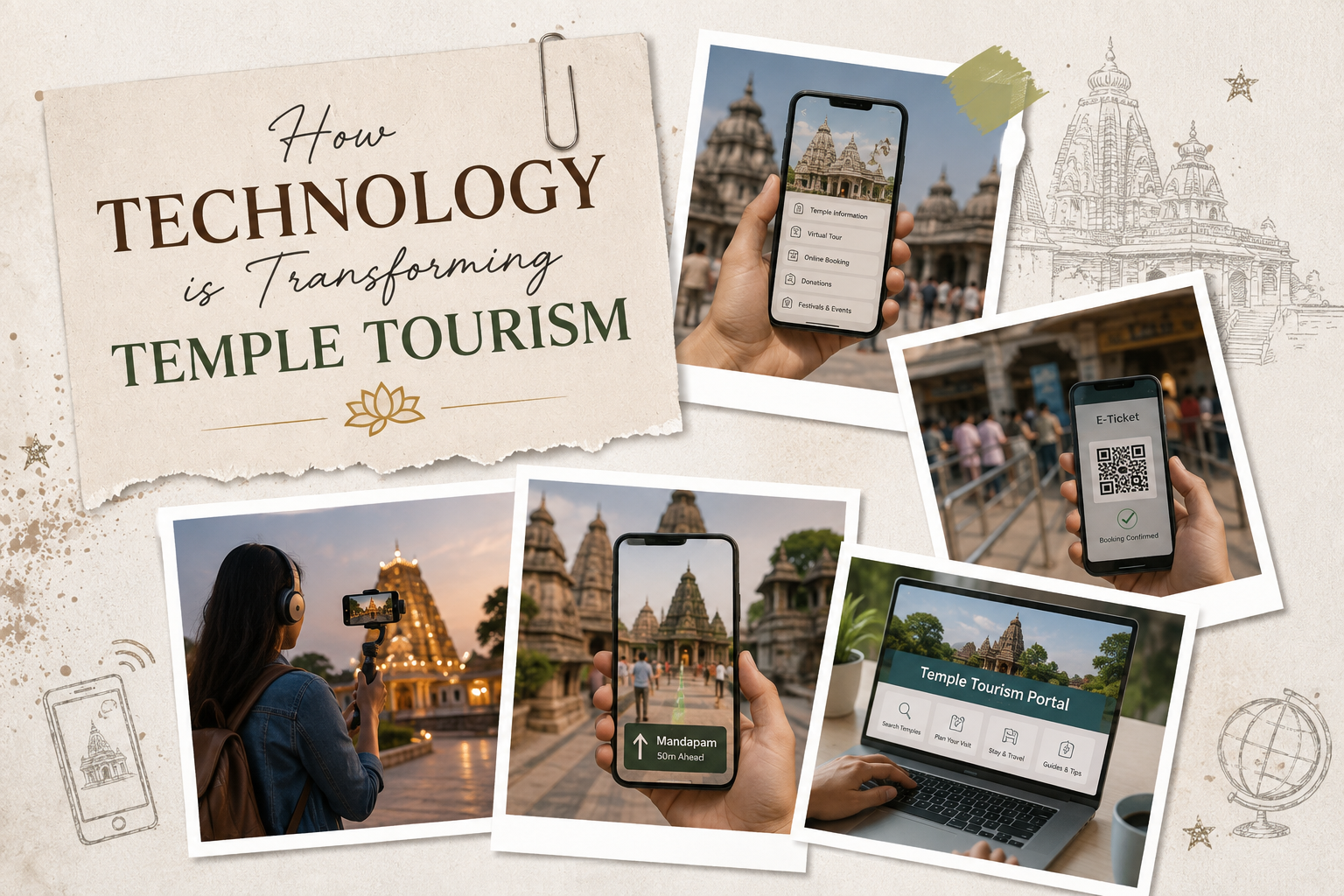
Temple tourism in India is entering a new era. For generations, pilgrimages were planned through family recommendations, local travel agents, handwritten notes, telephone calls, and word-of-mouth information. Devotees often arrived at a destination without knowing exactly where they would stay, how long darshan would take, or which transportation options would be available.
Today, technology is changing almost every stage of this experience. Travelers can research sacred destinations, compare accommodation, reserve hotels, check routes, monitor weather, access temple information, make digital payments, and coordinate their complete journey before leaving home.
This transformation is especially important because temple tourism is different from ordinary leisure travel. Pilgrims often travel with families, elderly parents, children, and religious groups. Their priorities include temple proximity, accessibility, cleanliness, affordable accommodation, transportation, food availability, and dependable local information.
Digital tools are helping travelers make better decisions around these needs. Platforms such as Mudras Stays are also contributing to this change by focusing specifically on accommodation near temples and spiritual destinations rather than treating pilgrimage travel like a generic holiday.
Technology is therefore not replacing the traditional pilgrimage experience. Instead, it is reducing many of the practical difficulties surrounding the journey so devotees can spend more time focusing on faith, family, and spiritual experiences.
Temple Tourism is Becoming More Digital
The biggest change in temple tourism is the shift from offline planning to digital planning. Travelers increasingly begin their pilgrimage research online, often weeks or months before departure.
Instead of depending entirely on local recommendations, devotees can now research:
- Temple destinations.
- Accommodation options.
- Travel routes.
- Weather conditions.
- Nearby attractions.
- Local transportation.
- Festival schedules.
- Food and shopping areas.
This access to information gives travelers greater confidence and allows them to prepare more carefully for their journey.
Online Hotel Booking Has Changed Pilgrimage Planning
Accommodation was once one of the most uncertain parts of temple travel. Pilgrims often reached a destination and searched for hotels, guest houses, or dharamshalas after arrival. During festival seasons, this frequently resulted in limited availability or higher prices.
Online booking has transformed this experience.
Travelers can now:
- Compare multiple properties before travelling.
- Review room categories.
- Check facilities.
- Understand location.
- Compare prices.
- Confirm accommodation in advance.
For families and senior citizens, this is particularly valuable because accommodation can be selected according to practical needs rather than availability alone.
Temple-Focused Platforms Improve Relevance
General travel platforms provide huge inventories, but large numbers of listings do not always make temple travel easier. A property may be located in the same city yet still be inconvenient for daily darshan because of traffic, road restrictions, walking distance, or limited transport.
This creates a need for more specialized travel platforms.
Mudras Stays focuses specifically on temple and pilgrimage destinations, helping travelers search for accommodation that is more relevant to spiritual journeys.
A temple-focused platform can give greater importance to:
- Practical distance from the temple.
- Accessibility for families.
- Suitability for senior citizens.
- Nearby transportation.
- Local food options.
- Budget-friendly accommodation.
- Group travel requirements.
This specialization helps reduce the time travelers spend filtering unrelated hotel listings.
Digital Maps Make Temple Access Easier
Navigation technology has dramatically improved pilgrimage travel. Devotees can now understand routes before arriving at a destination instead of depending entirely on local directions.
Digital maps help travelers identify:
- Hotel-to-temple routes.
- Walking distances.
- Taxi routes.
- Parking areas.
- Nearby restaurants.
- Railway stations and bus stands.
- Hospitals and pharmacies.
This is especially useful in unfamiliar temple towns where traffic systems, pedestrian zones, and local roads may differ significantly from ordinary cities.
Technology Helps Families Plan Better
Family pilgrimages often involve multiple generations travelling together. Parents may need comfortable rooms for children, while grandparents may require reduced walking distance and accessible accommodation.
Digital planning allows families to compare these requirements before booking.
Families can research:
- Family room availability.
- Lift access.
- Nearby dining options.
- Parking facilities.
- Distance from the temple.
- Availability of local transport.
This information allows families to choose accommodation that better matches their actual needs instead of making decisions after arrival.
Senior Citizens Benefit Significantly from Digital Planning
Many elderly devotees undertake pilgrimages they have dreamed about for years. For them, comfortable travel depends heavily on preparation.
Technology can help families research:
- Accessible hotels.
- Shorter travel routes.
- Nearby medical facilities.
- Weather conditions.
- Transportation availability.
- Temple access information.
These details can make spiritual travel significantly more comfortable for senior citizens.
Digital Payments Make Travel More Convenient
Cash was once essential during pilgrimage travel. Today, digital payments have reduced the need to carry large amounts of money.
Travelers can increasingly use digital payments for:
- Hotel reservations.
- Transportation.
- Restaurant bills.
- Local shopping.
- Travel bookings.
This improves convenience while also making travel expenses easier to track.
Online Reviews Help Travelers Make Better Decisions
Guest reviews have become an important part of modern hotel selection.
Travelers can read feedback about:
- Cleanliness.
- Staff behaviour.
- Room comfort.
- Temple proximity.
- Food quality.
- Accessibility.
- Overall guest experience.
For temple travelers, reviews related to location and practical access can often be more useful than comments about luxury amenities.
Mobile Phones Have Become Complete Travel Tools
A smartphone now performs several roles that once required separate services.
Travelers can use one device for:
- Hotel booking.
- Navigation.
- Digital payments.
- Weather updates.
- Travel tickets.
- Communication.
- Translation.
- Emergency information.
This has made pilgrimage travel significantly easier, especially when visiting multiple destinations during one journey.
Technology is Improving Festival Travel
Major temple festivals attract extremely large crowds. During these periods, advance planning becomes essential.
Digital tools help devotees:
- Book accommodation early.
- Monitor transportation schedules.
- Check festival dates.
- Review weather forecasts.
- Plan alternate routes.
- Coordinate group travel.
This reduces uncertainty during peak pilgrimage seasons.
Digital Information Helps Travelers Understand Destinations
Pilgrimage travel often involves much more than visiting a single temple. Travelers may also wish to visit nearby ghats, markets, heritage sites, spiritual attractions, and local food areas.
Digital destination content allows travelers to research these experiences before arrival.
Useful information may include:
- Temple history.
- Nearby attractions.
- Local markets.
- Regional cuisine.
- Important festivals.
- Travel routes.
- Seasonal recommendations.
Platforms focused on temple tourism can combine accommodation with this destination knowledge, helping devotees plan more complete journeys.
Technology Makes Multi-Temple Travel Easier
Many travelers now plan spiritual circuits rather than visiting only one temple. Char Dham journeys, Jyotirlinga circuits, Shakti Peetha visits, and regional temple tours often involve several destinations.
Technology helps travelers organize:
- Travel sequence.
- Hotel bookings for each destination.
- Transportation between temples.
- Daily schedules.
- Travel budgets.
- Important documents.
This makes complex pilgrimage itineraries easier to manage.
Smarter Hotel Search Saves Time
Searching manually for hotels across multiple destinations can take hours. Specialized booking tools reduce this workload by allowing travelers to compare suitable accommodation more efficiently.
Instead of choosing a property simply because it appears first in search results, devotees can evaluate:
- Temple distance.
- Room type.
- Price.
- Facilities.
- Guest reviews.
- Family suitability.
- Senior citizen accessibility.
This creates a more informed booking decision.
Technology Supports Affordable Pilgrimage Planning
Digital comparison tools also help travelers manage their budgets more carefully.
Instead of accepting the first available option, pilgrims can compare accommodation categories, travel dates, and room types to understand overall value.
Affordable planning does not always mean selecting the cheapest property. A slightly higher-priced hotel closer to the temple may reduce local transportation expenses and provide significantly greater convenience.
Technology makes these comparisons much easier.
Digital Communication Improves Hotel Coordination
Travelers often need to communicate with hotels before arrival to confirm specific requirements.
These may include:
- Late check-in.
- Early arrival.
- Extra bedding.
- Family rooms.
- Senior citizen requirements.
- Parking.
- Local directions.
Digital communication enables faster coordination and reduces misunderstandings before arrival.
Technology is Helping Local Hotels Reach More Pilgrims
Digital transformation benefits not only travelers but also local hospitality businesses.
Many independent hotels, guest houses, and homestays near temples previously depended mainly on walk-in guests or local travel agents. Online platforms now allow these properties to reach pilgrims from across India.
This can help local businesses:
- Increase online visibility.
- Receive advance bookings.
- Showcase facilities.
- Reach new traveler segments.
- Reduce dependence on walk-in demand.
Specialized platforms such as Mudras Stays can further strengthen this connection by bringing temple-focused travelers and local hospitality providers together.
Digital Tools Can Reduce Last-Minute Travel Stress
Many pilgrimage problems occur because important decisions are postponed until arrival.
Technology allows travelers to resolve several of these issues beforehand.
Before leaving home, devotees can confirm:
- Accommodation.
- Transport.
- Travel route.
- Weather.
- Temple information.
- Emergency contacts.
Reducing these uncertainties creates a calmer journey.
Technology Helps Travelers Prepare for Weather and Road Conditions
Many pilgrimage destinations are located in regions where weather can affect accessibility. Hill temples, monsoon destinations, and remote routes require careful preparation.
Digital weather services help travelers prepare appropriate clothing and adjust travel plans when necessary.
Similarly, navigation and travel information tools can help users understand route changes and approximate travel times.
Group Pilgrimages are Easier to Coordinate Digitally
Religious groups and large families often need to coordinate many travelers at once.
Digital tools make it easier to organize:
- Room allocations.
- Travel tickets.
- Shared itineraries.
- Group communication.
- Transport schedules.
- Emergency contacts.
This reduces confusion when several people are travelling together.
Technology Should Support, Not Replace, the Spiritual Experience
The purpose of pilgrimage remains spiritual. Technology should therefore act as a support system rather than becoming the focus of the journey.
Digital tools are most valuable when they remove unnecessary logistical problems.
When accommodation is confirmed, routes are understood, and practical information is available, devotees can spend less time solving travel problems and more time experiencing the temple, participating in rituals, and connecting with family.
How Mudras Stays Fits into the Digital Future of Temple Tourism
Mudras Stays represents the growing shift toward specialized digital pilgrimage planning. Instead of approaching temple travel as a small category within general tourism, the platform focuses specifically on accommodation around sacred destinations.
This temple-first model can help travelers search for stays based on the needs that actually matter during pilgrimage travel.
Mudras Stays focuses on:
- Hotels near temples.
- Destination-relevant accommodation.
- Family-friendly stays.
- Senior citizen-friendly options.
- Budget and premium properties.
- Local hospitality partners.
- Temple-focused travel planning.
- Useful destination information.
By bringing accommodation and spiritual travel planning into a focused digital ecosystem, Mudras Stays can help make temple journeys simpler for modern devotees.
The Future of Digital Temple Tourism
Temple tourism is likely to become increasingly connected with digital planning tools. Travelers will expect faster access to reliable information, better accommodation search, clearer destination guidance, and easier coordination throughout their journey.
Future temple travel may increasingly include:
- More personalized accommodation recommendations.
- Better destination planning tools.
- Smarter itinerary creation.
- Improved accessibility information.
- Enhanced multilingual travel support.
- Better integration between hotels and local services.
The most successful technology will be the technology that makes pilgrimage simpler without taking away from its spiritual character.
Frequently Asked Questions
How is technology changing temple tourism?
Technology is making temple tourism easier through online hotel booking, digital maps, travel planning tools, online payments, weather updates, destination information, and improved communication between travelers and accommodation providers.
Why is online hotel booking useful for pilgrims?
Online booking allows devotees to compare accommodation, review facilities, check locations, understand pricing, and confirm their stay before travelling to the temple destination.
How does technology help families during pilgrimages?
Families can research room types, temple distance, local transport, food options, accessibility, and other practical requirements before selecting accommodation.
Can technology help senior citizens plan temple travel?
Yes. Digital tools help families identify accessible accommodation, shorter routes, nearby medical facilities, weather conditions, and more convenient travel options for elderly pilgrims.
How do digital maps improve temple travel?
Digital maps help travelers understand hotel-to-temple routes, walking distances, transportation options, parking areas, restaurants, hospitals, and other useful locations around pilgrimage destinations.
How does Mudras Stays use digital travel planning for pilgrims?
Mudras Stays focuses on helping travelers find accommodation near temples and spiritual destinations while providing a more relevant booking experience for pilgrimage travel.
Can digital tools make pilgrimage travel more affordable?
Yes. Travelers can compare accommodation, dates, transport options, and overall trip costs before booking, helping them identify better value and avoid unnecessary expenses.
Is technology useful during temple festivals?
Yes. Digital planning helps pilgrims book accommodation early, monitor travel information, understand festival schedules, check weather, and coordinate family or group journeys more effectively.
Will technology replace traditional pilgrimage experiences?
No. Technology mainly simplifies practical aspects such as accommodation, navigation, and travel planning. The spiritual experience, temple traditions, rituals, and personal meaning of pilgrimage remain unchanged.
What is the future of temple tourism in India?
Temple tourism is likely to become increasingly digital, with better accommodation discovery, smarter travel planning, improved accessibility information, personalized recommendations, and stronger connections between pilgrims and local hospitality businesses.