
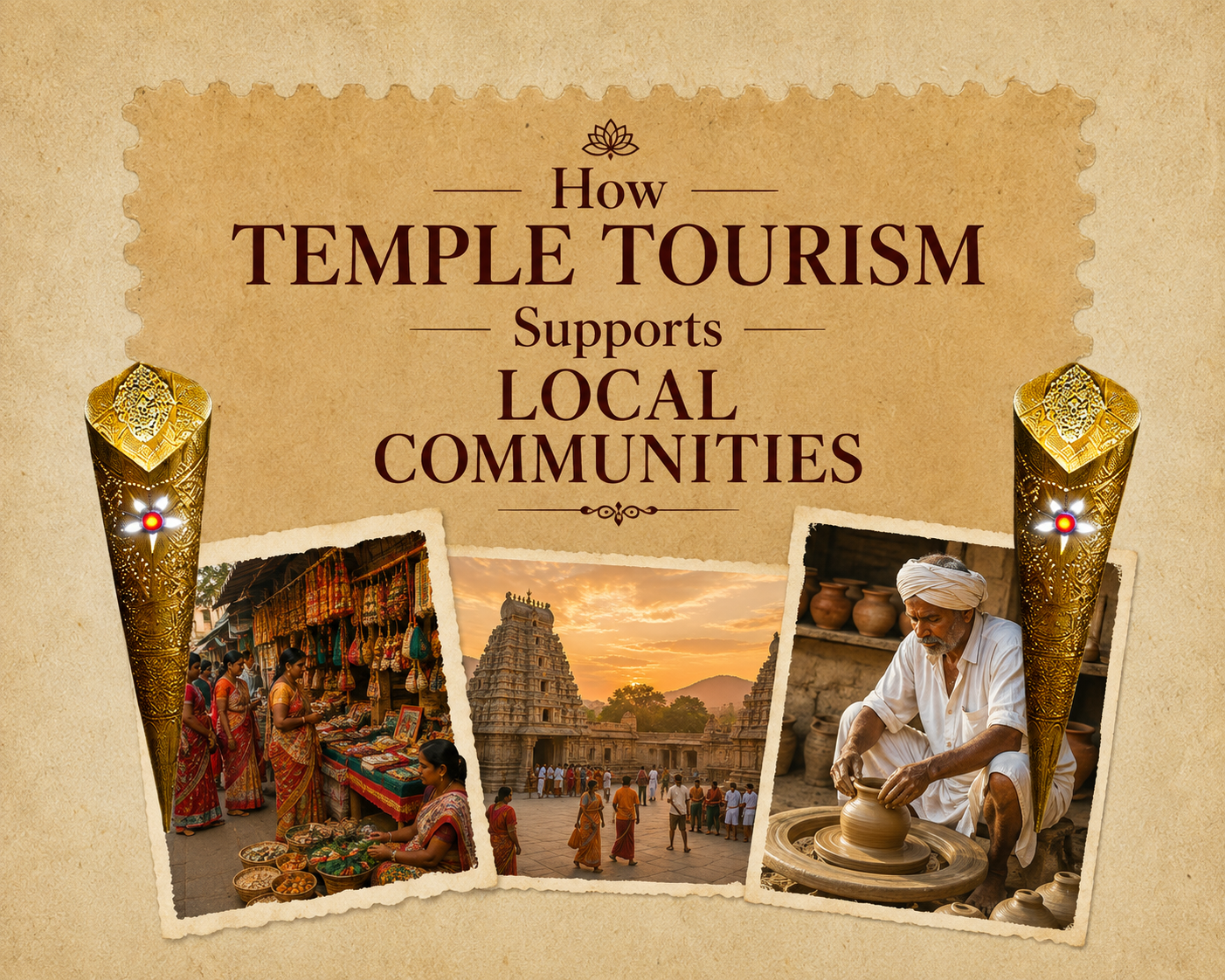
Temple tourism is one of the most important and deeply rooted forms of travel in India. Every year, millions of devotees visit sacred destinations such as Varanasi, Tirupati, Ujjain, Rameswaram, Puri, Dwarka, Somnath, Ayodhya, Vrindavan, Haridwar, Kedarnath, Badrinath, Katra, Madurai, and hundreds of smaller temple towns across the country.
For travelers, these journeys are primarily about faith, devotion, culture, and spiritual fulfillment. For the communities living around these sacred destinations, however, temple tourism also plays an important economic and social role. Every visitor staying in a hotel, hiring a taxi, eating at a local restaurant, buying flowers for worship, purchasing handicrafts, or hiring a local guide contributes to the surrounding economy.
This makes temple tourism significantly different from travel that is concentrated only in large commercial tourism zones. Pilgrimage often brings visitors into smaller towns, rural areas, mountain settlements, heritage cities, and communities that may otherwise receive limited tourism activity.
When managed responsibly, temple tourism can generate local employment, strengthen small businesses, improve infrastructure, preserve traditional crafts, support local hospitality, and create opportunities for residents across multiple income levels.
Platforms such as Mudras Stays can also contribute to this ecosystem by helping travelers discover accommodation near spiritual destinations, including independent hotels, guest houses, homestays, and local hospitality businesses that may not always receive strong visibility on large generic travel platforms.
Temple Tourism Creates Direct Local Employment
One of the clearest benefits of temple tourism is employment generation. A busy pilgrimage destination requires a large network of people to serve visitors throughout the year.
Employment opportunities can include:
- Hotel staff.
- Guest house operators.
- Restaurant workers.
- Taxi drivers.
- Local guides.
- Shopkeepers.
- Porters.
- Housekeeping staff.
- Tour operators.
- Drivers and transport coordinators.
These jobs are especially important in smaller pilgrimage towns where alternative employment opportunities may be limited.
A growing flow of pilgrims can therefore create more stable local demand and support livelihoods across hospitality, transportation, retail, and service industries.
Local Hotels Benefit from Pilgrimage Demand
Accommodation is one of the largest components of the temple tourism economy.
Pilgrims need places to stay near major temples, especially when journeys involve early morning darshan, long travel distances, multi-day rituals, or visits with elderly family members.
This creates opportunities for:
- Budget hotels.
- Family-run guest houses.
- Homestays.
- Boutique properties.
- Premium hotels.
- Small lodges.
Independent accommodation providers can benefit significantly when travelers are able to discover them online.
Mudras Stays supports this ecosystem by focusing specifically on temple destinations and helping travelers identify accommodation that is relevant to pilgrimage travel.
Temple Tourism Supports Small Restaurants and Food Businesses
Pilgrims spend on food throughout their journey, creating steady demand for local eateries and family-run restaurants.
Temple destinations often develop their own distinctive food culture centered around:
- Vegetarian meals.
- Traditional regional cuisine.
- Breakfast stalls.
- Sweet shops.
- Prasad shops.
- Tea and snack stalls.
These businesses may employ entire families and source ingredients from nearby suppliers, extending the economic benefits beyond the immediate tourism sector.
Local Transport Providers Gain Regular Business
Transportation is another major part of temple travel.
Pilgrims often require:
- Airport transfers.
- Railway station pickups.
- Local taxis.
- Auto-rickshaws.
- Shared transport.
- Temple transfers.
- Multi-destination vehicles.
This creates consistent demand for local drivers and transport operators.
In destinations where temples are located in mountainous or remote areas, local transport services become particularly important because travelers may depend heavily on regional expertise and specialized routes.
Handicrafts and Local Products Gain Visibility
Temple tourism also supports artisans and traditional craftspeople.
Pilgrims frequently purchase:
- Religious souvenirs.
- Handmade idols.
- Prayer items.
- Traditional textiles.
- Local handicrafts.
- Regional food products.
- Decorative items.
These purchases help preserve local craftsmanship while providing income to artisans who may otherwise struggle to reach wider markets.
For many communities, temple tourism becomes an important way of maintaining traditional skills across generations.
Temple Markets Support Micro-Entrepreneurs
Around most major temples, vibrant market ecosystems develop naturally.
These markets are often filled with small independent businesses selling:
- Flowers.
- Garlands.
- Incense.
- Religious books.
- Prasad.
- Clothing.
- Souvenirs.
- Local snacks.
Unlike large organized retail environments, these markets allow individuals and families to operate small-scale businesses with relatively limited infrastructure.
Pilgrim spending therefore reaches directly into the local community.
Religious Festivals Generate Seasonal Economic Activity
Major temple festivals can dramatically increase local economic activity.
During periods such as Navratri, Maha Shivaratri, Janmashtami, Rath Yatra, Kumbh Mela, Kartik Purnima, and regional temple festivals, visitor numbers may rise significantly.
This creates additional demand for:
- Hotels.
- Temporary accommodation.
- Restaurants.
- Transport.
- Retail shops.
- Event services.
- Local guides.
Although festival periods require careful crowd and infrastructure management, they can also generate substantial income for local businesses.
Temple Tourism Encourages Infrastructure Development
Growing pilgrimage destinations often receive investment in infrastructure to accommodate increasing visitor numbers.
Improvement may include:
- Better roads.
- Rail connectivity.
- Airport access.
- Public transportation.
- Parking facilities.
- Public sanitation.
- Lighting.
- Pedestrian pathways.
While these improvements are often introduced to support tourism, they can also benefit local residents in their everyday lives.
Healthcare and Emergency Services Can Improve
Large pilgrimage destinations need adequate medical support because visitors may include children, elderly travelers, and people undertaking physically demanding journeys.
As temple tourism expands, destinations may require:
- Medical centers.
- Emergency clinics.
- Ambulance services.
- Pharmacies.
- First-aid facilities.
Improved healthcare infrastructure can benefit both visitors and residents.
Local Guides Help Preserve Cultural Knowledge
Temple destinations are often rich in mythology, architecture, religious history, and local traditions.
Local guides play an important role in helping visitors understand these stories.
By employing local guides, tourism helps preserve knowledge about:
- Temple history.
- Religious traditions.
- Architecture.
- Local legends.
- Festivals.
- Regional customs.
This creates both economic value and cultural preservation.
Temple Tourism Can Strengthen Rural Economies
Not all sacred destinations are located in major cities. Many important temples are found in small towns, villages, mountains, forests, or remote regions.
Pilgrimage travel brings economic activity into these areas, creating opportunities that might otherwise be concentrated in larger urban centers.
Local residents can benefit through:
- Homestays.
- Transport services.
- Food businesses.
- Local shops.
- Guided tours.
- Handicraft sales.
This can help distribute tourism income across a wider geographic area.
Homestays Give Travelers Direct Community Connections
Homestays offer one of the most direct connections between temple tourism and local communities.
Travelers staying with local families can experience:
- Regional cuisine.
- Local customs.
- Traditional hospitality.
- Destination knowledge.
- Community life.
For residents, homestays create an opportunity to earn directly from tourism while maintaining ownership of their hospitality business.
Women Can Benefit from Local Tourism Enterprises
Temple tourism can also create opportunities for women through small businesses and family-run enterprises.
These opportunities may include:
- Homestays.
- Food preparation.
- Handicrafts.
- Retail stalls.
- Hospitality services.
- Local product businesses.
When tourism development includes local participation, it can create broader economic inclusion within communities.
Youth Employment Can Expand Through Hospitality
Young people living in pilgrimage destinations can find work without necessarily migrating to larger cities.
Possible opportunities include:
- Hotel operations.
- Digital marketing.
- Travel assistance.
- Transportation.
- Guiding services.
- Restaurant management.
- Tourism entrepreneurship.
As destinations modernize, digital hospitality and tourism skills can become increasingly valuable for younger workers.
Digital Platforms Can Give Local Hotels Greater Reach
Many small hotels near temples provide good hospitality but have historically depended on walk-in customers or local agents.
Digital platforms can help these businesses become visible to travelers from across India.
Benefits can include:
- Advance bookings.
- Greater online visibility.
- More consistent occupancy.
- Better communication with travelers.
- Access to new markets.
Mudras Stays can support this process by providing a dedicated platform for temple-focused accommodation rather than forcing local properties to compete only within broad general travel marketplaces.
Local Businesses Benefit When Travelers Stay Longer
A pilgrim who stays for multiple nights usually contributes more to the local economy than a short day visitor.
Longer stays may increase spending on:
- Accommodation.
- Restaurants.
- Local transport.
- Shopping.
- Guides.
- Nearby attractions.
Encouraging travelers to explore the wider destination can therefore spread tourism benefits across more businesses.
Temple Tourism Supports Heritage Preservation
Many temple towns contain historic architecture, old markets, sacred ghats, traditional neighborhoods, and heritage structures.
Tourism can create stronger economic incentives to preserve these areas because cultural heritage becomes part of the visitor experience.
Responsible tourism can support:
- Temple conservation.
- Historic streets.
- Traditional crafts.
- Cultural performances.
- Local festivals.
Visitors Can Support Communities Through Responsible Spending
Travelers themselves can play an important role in supporting local communities.
Simple choices can make a difference:
- Stay at locally operated accommodation.
- Eat at local restaurants.
- Purchase authentic local products.
- Use local transport providers.
- Hire knowledgeable local guides.
- Respect local customs and communities.
Responsible spending helps keep more tourism income within the destination.
Sustainable Temple Tourism Matters
Rapid tourism growth can create challenges if infrastructure does not keep pace with visitor numbers.
Potential concerns include:
- Waste management.
- Traffic congestion.
- Water consumption.
- Overcrowding.
- Pressure on local resources.
Sustainable temple tourism requires cooperation between travelers, local businesses, authorities, temple administrations, and hospitality providers.
Better Tourism Planning Can Spread Benefits More Widely
If all visitors stay, eat, and shop in one small area, economic benefits may become concentrated among a limited number of businesses.
Destination planning can encourage travelers to discover nearby:
- Markets.
- Local attractions.
- Restaurants.
- Homestays.
- Craft centers.
- Cultural experiences.
This helps tourism revenue reach a broader section of the local community.
Why Mudras Stays Can Support Local Temple Economies
Mudras Stays has been developed around temple destinations rather than general leisure tourism. This creates an opportunity to connect pilgrims with accommodation providers and local hospitality businesses that operate close to sacred destinations.
By helping travelers discover suitable stays, the platform can support:
- Independent hotels.
- Family-run properties.
- Local guest houses.
- Homestays.
- Regional hospitality businesses.
- Temple-town tourism economies.
A temple-focused booking ecosystem can help more local businesses participate in the growth of spiritual tourism while giving devotees accommodation options that are relevant to their journey.
Temple Tourism Creates a Wider Economic Network
The economic impact of pilgrimage extends far beyond hotels and temples.
A single visitor may interact with several local businesses during one trip:
- Taxi from the station.
- Hotel check-in.
- Restaurant meals.
- Flower and prasad purchase.
- Local transport to nearby attractions.
- Souvenir shopping.
- Guide services.
This creates a chain of spending that reaches many different sections of the community.
Frequently Asked Questions
How does temple tourism help local communities?
Temple tourism generates demand for hotels, restaurants, transport, guides, shops, handicrafts, and other services, creating employment and income opportunities for local residents.
How do local hotels benefit from pilgrimage tourism?
Pilgrims need accommodation close to temples, creating regular demand for budget hotels, guest houses, homestays, boutique properties, and other local hospitality businesses.
Does temple tourism support small businesses?
Yes. Local restaurants, flower sellers, prasad shops, handicraft stores, taxi drivers, guides, and market vendors can all benefit from increased visitor spending.
Can temple tourism create jobs in smaller towns?
Yes. Pilgrimage travel creates employment in hospitality, transportation, food services, retail, guiding, housekeeping, and several other local industries.
How does temple tourism support traditional crafts?
Pilgrims often purchase local handicrafts, religious souvenirs, textiles, and regional products, helping artisans generate income and preserve traditional skills.
Can Mudras Stays support local hospitality businesses?
Yes. Mudras Stays focuses on accommodation near temple destinations, which can help independent hotels, guest houses, homestays, and local hospitality providers reach more pilgrimage travelers.
Does temple tourism improve infrastructure?
Growing pilgrimage destinations often receive improvements in roads, transportation, sanitation, parking, lighting, and public services, which can benefit both visitors and residents.
How can travelers support local communities during temple trips?
Travelers can choose local accommodation, eat at local restaurants, buy authentic regional products, use local transportation, and hire local guides where appropriate.
Why is sustainable temple tourism important?
Sustainable tourism helps protect local resources, reduce overcrowding, improve waste management, preserve cultural heritage, and ensure that tourism remains beneficial to communities over the long term.
Who benefits from the growth of temple tourism?
Hotels, transport providers, restaurants, artisans, shopkeepers, guides, local workers, tourism entrepreneurs, and residents can all benefit when temple tourism is managed responsibly and inclusively.