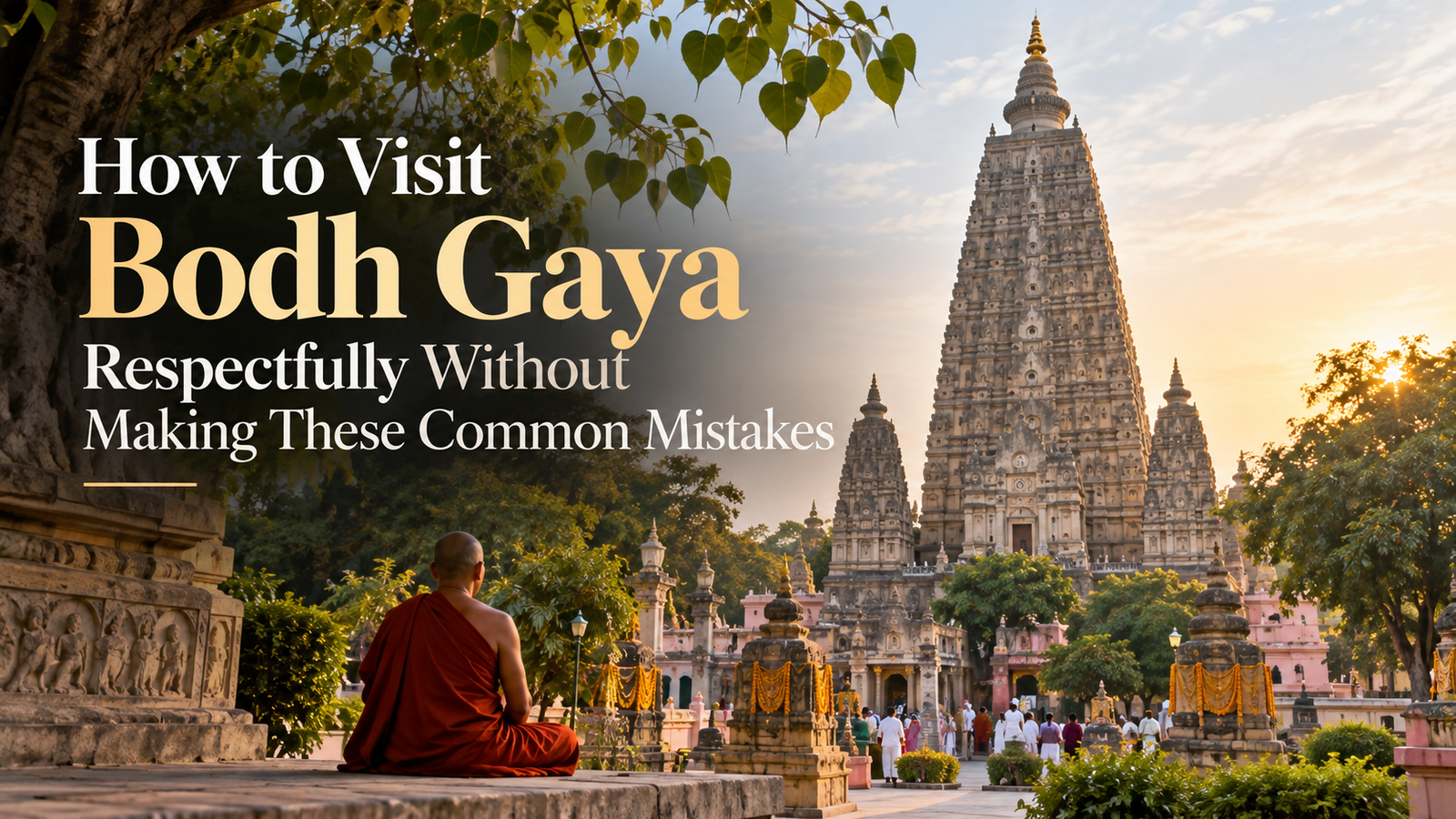
How to Visit Bodh Gaya Respectfully Without Making These Common Mistakes
Bodh Gaya is not just another point on a travel map. For pilgrims and culture-focused travelers, the destination carries religious meaning, local routines and expectations that are easy to miss when the trip is planned only through photos and short videos. The purpose of this guide—How to Visit Bodh Gaya Respectfully Without Making These Common Mistakes—is to help visitors understand the mistakes that create unnecessary difficulty or disrespect, and to replace them with simple habits that make the journey calmer for everyone.
Looking for a stay in Bodh Gaya? View hotels and stays in Bodh Gaya on Mudras Stays. Compare location, room suitability, family needs and access to the main sacred site before booking.
THE MISTAKES THAT MATTER MOST
Mistake 2: turning every sacred moment into content. Some of the most important spaces are meant to be experienced quietly, and other visitors may not want to appear in photographs or videos.
Mistake 3: wearing or carrying items that conflict with local rules and then arguing when security stops them. Sacred places are allowed to set their own visitor procedures.
Mistake 4: assuming a famous destination is easy to navigate simply because many people visit it. Parking, queues, road closures, local transport and walking routes can still require planning.
Mistake 5: ignoring elders, children or slower members of the group. A pilgrimage should be paced around the people who need the most care, not the person who can move fastest.
Mistake 6: leaving food, bottles or plastic behind. Sacredness does not end at the shrine entrance; responsible travel includes the surrounding town, road and natural environment.
Mistake 7: relying on one old blog or social-media reel for current rules. Temple, monastery, church, gurdwara and route procedures can change, so current signage and official instructions take priority.
Mistake 8: booking accommodation without checking the actual approach. A hotel may be in the right city but still be inconvenient for the sacred site if it involves steep steps, difficult parking or repeated local transport.
Keep voices low around monasteries, stupas and meditation areas, and avoid treating prayer spaces as backdrops for loud group photography.
Walk around stupas and sacred objects in the direction indicated locally, and do not climb onto religious structures or sit on ritual platforms.
Dress modestly, remove footwear where required and avoid pointing feet toward altars, monks or sacred images.
Ask before photographing monks, worshippers or ceremonies, and respect areas where photography is prohibited.
Mistake 1: arriving without learning the basic rules. A five-minute check of current entry, footwear, dress, photography and security procedures can prevent awkwardness at the gate.
HOW TO BE RESPECTFUL WITHOUT OVERTHINKING IT
Keep voices low around monasteries, stupas and meditation areas, and avoid treating prayer spaces as backdrops for loud group photography.
Walk around stupas and sacred objects in the direction indicated locally, and do not climb onto religious structures or sit on ritual platforms.
Dress modestly, remove footwear where required and avoid pointing feet toward altars, monks or sacred images.
Ask before photographing monks, worshippers or ceremonies, and respect areas where photography is prohibited.
PLANNING THE JOURNEY PRACTICALLY
Plan the first day in Bodh Gaya with enough buffer to understand the local layout before the main visit. Reaching at the last possible minute is one of the easiest ways to create stress.
Keep identification, medicines, a small amount of cash, water and the hotel address accessible. Do not pack essentials at the bottom of large luggage.
If the destination involves a climb, high altitude or a long road approach, treat physical preparation as part of pilgrimage planning rather than something separate from faith.
Ask the hotel about the best arrival route, parking, local transport and the realistic time required to reach the sacred site. Local knowledge can be more useful than a generic map estimate.
For families with senior citizens, confirm lift access, room floor, bathroom arrangements and meal availability before payment. These details matter more than decorative amenities.
If there is a major festival, weekend crowd or special ritual date, assume the normal timetable will become slower and book both the stay and onward transport earlier.
Leave part of the itinerary empty. Sacred travel is often more meaningful when there is time to sit, observe, pray or simply recover rather than move continuously from one attraction to another.
Before departure, reconfirm the return route. Many difficult trips become stressful not on arrival but when families discover they never planned how to reach the station, bus stand or next town.
WHERE TO STAY IN AND AROUND THE DESTINATION
For accommodation planning, use the Mudras Stays Bodh Gaya destination stay page to review stays for this location before confirming your pilgrimage itinerary.
Accommodation should support the purpose of the visit. Instead of choosing only by price or photographs, compare the location, approach road, room capacity, food access, parking and the amount of walking required from the property to the main sacred area.
Travelers can explore hotels and stays in Bodh Gaya with Mudras Stays to shortlist accommodation by destination before finalizing the trip. The destination stay page is especially useful when the sacred-site visit is the centre of the itinerary rather than an add-on to a general holiday.
A MORE THOUGHTFUL WAY TO TRAVEL
Senior citizens often need more seating, toilet access and shorter walking stretches. These practical needs should be built into the hotel and transport choice.
Avoid turning local people into scenery. Ask before photographing shopkeepers, monks, priests, sadhus, sevadaars or residents at close range.
Religious tourism also has an environmental footprint. Plastic bottles, food wrappers, disposable plates and vehicle congestion affect sacred destinations just as much as ordinary tourist towns.
Support the local economy respectfully by paying fair prices, using legitimate guides and avoiding aggressive bargaining over small amounts at pilgrim towns.
Do not assume a donation buys special access, ritual priority or permission to ignore a rule. Follow the same queue and visitor procedures as everyone else unless the institution formally offers another arrangement.
If a ritual is unfamiliar, observe quietly before participating. It is better to ask one respectful question than imitate incorrectly and disrupt others.
Keep phones on silent in prayer spaces. A ringtone or loud video can disturb a ceremony more than many visitors realise.
When a site becomes crowded, personal space shrinks. This makes patience more important, not less. Move steadily, keep bags controlled and avoid stopping suddenly in narrow passages.
A responsible traveler leaves enough time to recover from the journey. Fatigue is one of the biggest causes of irritability, poor decisions and conflict during pilgrimage.
The stay you choose can either reduce or increase that fatigue. Location, access and meal availability often matter more than decorative features on a spiritual trip.
Travelers should read recent guest feedback for practical clues—stairs, parking, road access, noise and room location—while remembering that individual reviews can be subjective.
If a place has both sacred and tourist identities, let the sacred identity lead your behaviour. Sightseeing can still be enjoyable without reducing worship to spectacle.
The simplest rule is to make your presence lighter: less noise, less litter, less obstruction and more awareness of the people who are there to worship.
Respectful travel is not about memorising dozens of rules. It is about noticing when a place is functioning as a living religious space and adjusting your behaviour accordingly.
Many visitor mistakes come from rushing. When people arrive late, hungry or worried about parking, they are more likely to push through queues, argue with staff or ignore instructions. Better timing often improves etiquette automatically.
Another common problem is copying what other tourists are doing. A crowd taking photographs does not necessarily mean photography is permitted, and a person wearing shoes in the wrong area does not make the rule disappear.
Ask before assuming. Volunteers, local guides, hotel staff and security personnel can usually explain where to leave footwear, when to arrive and what not to carry.
Children understand sacred places better when adults explain the reason for quiet behaviour rather than simply telling them not to move or speak.
If there is a major festival, weekend crowd or special ritual date, assume the normal timetable will become slower and book both the stay and onward transport earlier.
Leave part of the itinerary empty. Sacred travel is often more meaningful when there is time to sit, observe, pray or simply recover rather than move continuously from one attraction to another.
Before departure, reconfirm the return route. Many difficult trips become stressful not on arrival but when families discover they never planned how to reach the station, bus stand or next town.
Respectful travel is not about memorising dozens of rules. It is about noticing when a place is functioning as a living religious space and adjusting your behaviour accordingly.
Many visitor mistakes come from rushing. When people arrive late, hungry or worried about parking, they are more likely to push through queues, argue with staff or ignore instructions. Better timing often improves etiquette automatically.
Another common problem is copying what other tourists are doing. A crowd taking photographs does not necessarily mean photography is permitted, and a person wearing shoes in the wrong area does not make the rule disappear.
Ask before assuming. Volunteers, local guides, hotel staff and security personnel can usually explain where to leave footwear, when to arrive and what not to carry.
Children understand sacred places better when adults explain the reason for quiet behaviour rather than simply telling them not to move or speak.
Senior citizens often need more seating, toilet access and shorter walking stretches. These practical needs should be built into the hotel and transport choice.
Avoid turning local people into scenery. Ask before photographing shopkeepers, monks, priests, sadhus, sevadaars or residents at close range.
Religious tourism also has an environmental footprint. Plastic bottles, food wrappers, disposable plates and vehicle congestion affect sacred destinations just as much as ordinary tourist towns.
Support the local economy respectfully by paying fair prices, using legitimate guides and avoiding aggressive bargaining over small amounts at pilgrim towns.
Do not assume a donation buys special access, ritual priority or permission to ignore a rule. Follow the same queue and visitor procedures as everyone else unless the institution formally offers another arrangement.
If a ritual is unfamiliar, observe quietly before participating. It is better to ask one respectful question than imitate incorrectly and disrupt others.
Keep phones on silent in prayer spaces. A ringtone or loud video can disturb a ceremony more than many visitors realise.
When a site becomes crowded, personal space shrinks. This makes patience more important, not less. Move steadily, keep bags controlled and avoid stopping suddenly in narrow passages.
A responsible traveler leaves enough time to recover from the journey. Fatigue is one of the biggest causes of irritability, poor decisions and conflict during pilgrimage.
The stay you choose can either reduce or increase that fatigue. Location, access and meal availability often matter more than decorative features on a spiritual trip.
Travelers should read recent guest feedback for practical clues—stairs, parking, road access, noise and room location—while remembering that individual reviews can be subjective.
If a place has both sacred and tourist identities, let the sacred identity lead your behaviour. Sightseeing can still be enjoyable without reducing worship to spectacle.
The simplest rule is to make your presence lighter: less noise, less litter, less obstruction and more awareness of the people who are there to worship.
Accommodation should support the purpose of the visit. Instead of choosing only by price or photographs, compare the location, approach road, room capacity, food access, parking and the amount of walking required from the property to the main sacred area.
Travelers can explore hotels and stays in Bodh Gaya with Mudras Stays to shortlist accommodation by destination before finalizing the trip. The destination stay page is especially useful when the sacred-site visit is the centre of the itinerary rather than an add-on to a general holiday.
Plan the first day in Bodh Gaya with enough buffer to understand the local layout before the main visit. Reaching at the last possible minute is one of the easiest ways to create stress.
Keep identification, medicines, a small amount of cash, water and the hotel address accessible. Do not pack essentials at the bottom of large luggage.
If the destination involves a climb, high altitude or a long road approach, treat physical preparation as part of pilgrimage planning rather than something separate from faith.
Ask the hotel about the best arrival route, parking, local transport and the realistic time required to reach the sacred site. Local knowledge can be more useful than a generic map estimate.
For families with senior citizens, confirm lift access, room floor, bathroom arrangements and meal availability before payment. These details matter more than decorative amenities.
If there is a major festival, weekend crowd or special ritual date, assume the normal timetable will become slower and book both the stay and onward transport earlier.
Leave part of the itinerary empty. Sacred travel is often more meaningful when there is time to sit, observe, pray or simply recover rather than move continuously from one attraction to another.
Before departure, reconfirm the return route. Many difficult trips become stressful not on arrival but when families discover they never planned how to reach the station, bus stand or next town.
Respectful travel is not about memorising dozens of rules. It is about noticing when a place is functioning as a living religious space and adjusting your behaviour accordingly.
Many visitor mistakes come from rushing. When people arrive late, hungry or worried about parking, they are more likely to push through queues, argue with staff or ignore instructions. Better timing often improves etiquette automatically.
Another common problem is copying what other tourists are doing. A crowd taking photographs does not necessarily mean photography is permitted, and a person wearing shoes in the wrong area does not make the rule disappear.
Ask before assuming. Volunteers, local guides, hotel staff and security personnel can usually explain where to leave footwear, when to arrive and what not to carry.
Children understand sacred places better when adults explain the reason for quiet behaviour rather than simply telling them not to move or speak.
Senior citizens often need more seating, toilet access and shorter walking stretches. These practical needs should be built into the hotel and transport choice.
Avoid turning local people into scenery. Ask before photographing shopkeepers, monks, priests, sadhus, sevadaars or residents at close range.
Religious tourism also has an environmental footprint. Plastic bottles, food wrappers, disposable plates and vehicle congestion affect sacred destinations just as much as ordinary tourist towns.
Support the local economy respectfully by paying fair prices, using legitimate guides and avoiding aggressive bargaining over small amounts at pilgrim towns.
Do not assume a donation buys special access, ritual priority or permission to ignore a rule. Follow the same queue and visitor procedures as everyone else unless the institution formally offers another arrangement.
If a ritual is unfamiliar, observe quietly before participating. It is better to ask one respectful question than imitate incorrectly and disrupt others.
Keep phones on silent in prayer spaces. A ringtone or loud video can disturb a ceremony more than many visitors realise.
When a site becomes crowded, personal space shrinks. This makes patience more important, not less. Move steadily, keep bags controlled and avoid stopping suddenly in narrow passages.
Plan Your Bodh Gaya Stay with Mudras Stays
FREQUENTLY ASKED QUESTIONS
What should first-time visitors avoid in Bodh Gaya?
Avoid ignoring local dress, footwear, photography, queue and entry rules. Follow the current instructions at the sacred site.
How should I dress in Bodh Gaya?
Choose modest, practical clothing suitable for the religious site and local weather. Some individual shrines may have more specific rules.
Can I take photographs everywhere?
No. Photography rules vary by site and may be restricted in sanctums, prayer halls, ceremonies or security-sensitive areas.
Should I book accommodation before arriving?
Advance booking is sensible on weekends, festival dates and pilgrimage seasons, especially for families or senior citizens.
Where can I find stays in Bodh Gaya?
Use the Mudras Stays destination page for Bodh Gaya to compare available accommodation for the location.
What should senior citizens check before travel?
Room access, lift availability, walking distance, meal access, medicines, transport and realistic daily pacing.
Is local etiquette more important than what I read online?
Yes. Current signs, staff, volunteers and official instructions at the site take priority over older travel content.
How can I contact Mudras Stays?
Call 9599190222 for details and reservation support.
Where can I follow Mudras Stays?
Follow @mudras.stays on Instagram.
What is the most important rule for sacred travel?
Remember that the place is first a site of worship or heritage. Travel in a way that does not disturb devotees, residents or the environment.