
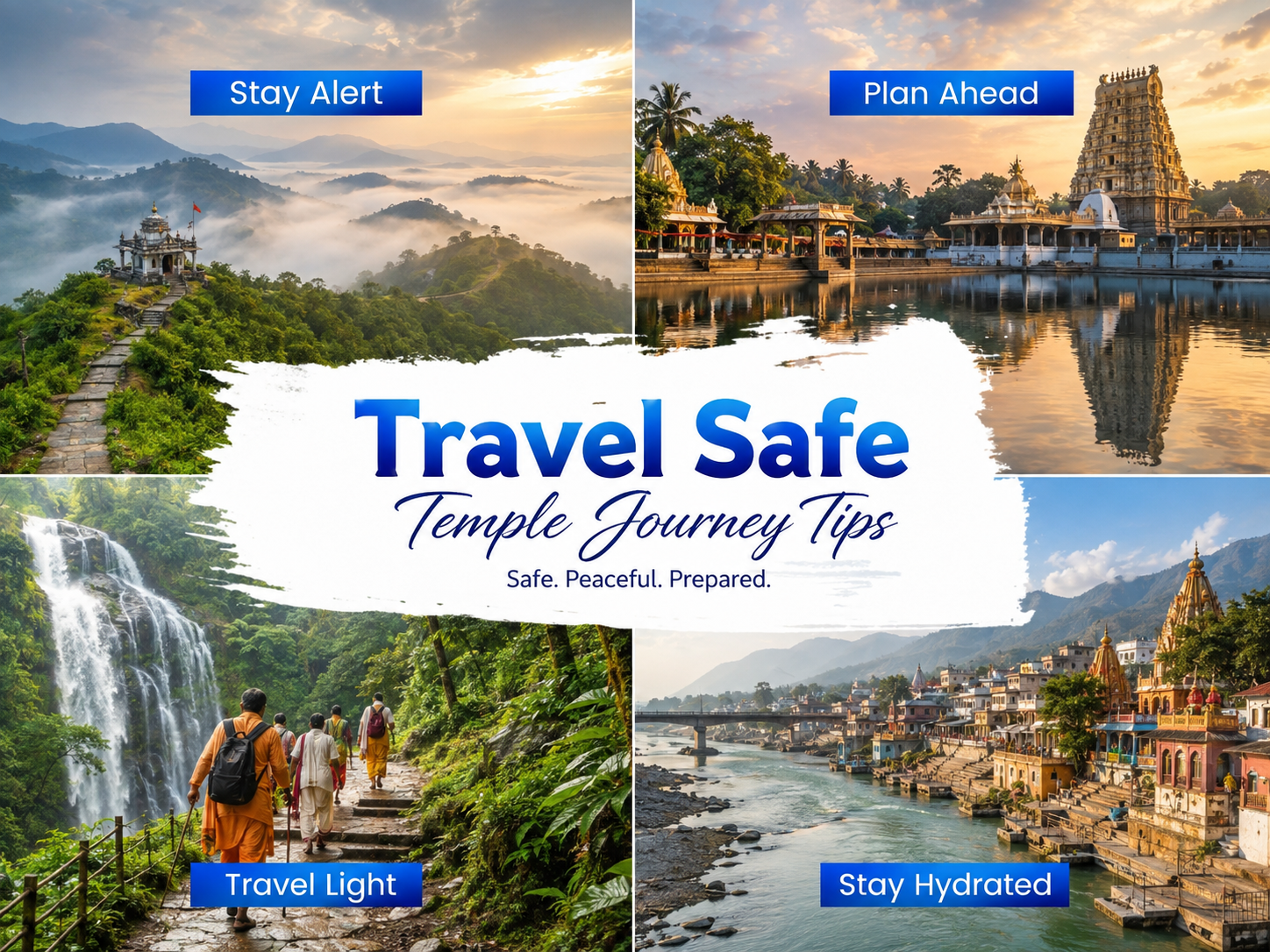
Temple travel is one of the most meaningful forms of travel in India. Every year, millions of devotees visit sacred destinations such as Kedarnath, Badrinath, Tirupati, Vaishno Devi, Somnath, Dwarkadhish Temple, Kashi Vishwanath, Mahakaleshwar, Jagannath Puri, Rameswaram, Ayodhya, Meenakshi Temple, and many other pilgrimage centers to seek blessings, participate in rituals, and spend time in spiritual reflection.
While most pilgrimages are peaceful and deeply rewarding, religious travel often involves conditions that require additional awareness. Large crowds, long queues, unfamiliar roads, changing weather, early morning travel, long walking distances, and journeys with children or elderly parents can all create practical challenges.
Safety during a pilgrimage is not about travelling with fear. It is about planning carefully so that common travel risks are reduced before they become problems. Choosing the right accommodation, keeping emergency information accessible, protecting personal belongings, understanding temple guidelines, and preparing for local weather can make a significant difference to the overall journey.
A well-prepared traveler is able to spend less time dealing with avoidable problems and more time focusing on the purpose of the pilgrimage. The following temple travel safety tips can help solo devotees, families, senior citizens, and group travelers enjoy religious journeys with greater confidence and comfort.
Research the Destination Before Travelling
Every pilgrimage destination functions differently. Some temple towns are compact and easily walkable, while others involve steep climbs, long trekking routes, crowded lanes, restricted vehicle zones, or significant travel between accommodation and the temple.
Before leaving home, research:
- Temple opening and closing timings.
- Official darshan procedures.
- Transportation options.
- Road conditions.
- Weather forecasts.
- Temple entry restrictions.
- Nearby medical facilities.
- Local emergency contact points.
Understanding these basics helps you avoid unnecessary confusion after arrival and allows you to prepare for the specific conditions of the destination.
Book Accommodation Before Reaching the Destination
Arriving at a temple destination without confirmed accommodation can create unnecessary risk, especially during weekends, festivals, school holidays, and peak pilgrimage periods.
Advance booking ensures that you know where you will stay before beginning the journey. It also gives you time to evaluate the property's location, facilities, guest reviews, cancellation policy, and suitability for your family.
Platforms such as Mudras Stays can simplify the search by focusing on accommodation near important temple and pilgrimage destinations rather than making travelers filter through large numbers of unrelated hotels.
Prioritize a Practical Location
A property's actual location matters significantly during temple travel. A hotel may appear close on a map but still require a difficult route because of restricted roads, traffic, steep lanes, or pedestrian-only areas.
Before booking, consider:
- Actual travel time to the temple.
- Walking distance.
- Vehicle access.
- Availability of taxis, autos, or local transport.
- Road conditions after dark.
- Accessibility for senior citizens.
A practical location reduces unnecessary movement and helps families avoid travelling through unfamiliar areas at inconvenient hours.
Choose Safe and Reliable Accommodation
A safe hotel provides peace of mind after a long day of temple visits and sightseeing.
Before booking, review whether the property has:
- A functioning reception.
- Secure room locks.
- Well-lit entrances and corridors.
- CCTV in appropriate common areas.
- Reliable staff assistance.
- Safe parking where required.
- Positive guest reviews regarding safety and cleanliness.
Do not judge a hotel only by photographs. Practical reviews from previous guests often provide a more realistic understanding of the property.
Keep Important Documents Organized
Identity documents and travel confirmations should remain easy to access but safely stored.
Carry:
- Government-issued identification.
- Hotel booking confirmation.
- Train, flight, or bus tickets.
- Medical prescriptions where necessary.
- Emergency contact details.
- Travel insurance information if applicable.
Keep digital copies of essential documents on your phone or secure cloud storage. If you are travelling as a family, one responsible member should also keep backup copies.
Avoid Carrying Unnecessary Valuables
Temple areas can become extremely crowded, particularly during major festivals and weekends. Carrying expensive jewelry, excessive cash, or unnecessary valuables increases the risk of loss.
Take only what you genuinely need for the day.
- Carry limited cash.
- Use secure bags.
- Keep phones and wallets in protected pockets.
- Avoid displaying expensive belongings unnecessarily.
- Keep bags closed while standing in queues.
Simple precautions are often enough to protect personal belongings during crowded pilgrimage experiences.
Stay Together in Crowded Temple Areas
Large temples can receive thousands of visitors within a short period. Family members can easily become separated during queues, security checks, or processions.
Before entering crowded areas:
- Choose a clear meeting point.
- Ensure everyone knows the hotel name.
- Keep children's identification details accessible.
- Share mobile numbers between family members.
- Keep senior citizens close to responsible adults.
Having a simple reunion plan prevents panic if anyone becomes temporarily separated.
Take Extra Precautions When Travelling with Children
Children may become tired or distracted in busy temple environments. Parents should plan the journey around their comfort and safety rather than expecting them to follow an adult schedule.
Useful precautions include:
- Keeping children within sight at all times.
- Giving older children emergency contact information.
- Carrying water and light snacks.
- Avoiding excessively long queues where alternatives exist.
- Scheduling regular rest breaks.
- Choosing accommodation near the temple.
Nearby accommodation is particularly valuable for families because children can return to the hotel for rest without a long commute.
Plan Carefully for Senior Citizens
Elderly devotees often undertake pilgrimages that are emotionally significant, but long queues, steep routes, and extensive walking can become physically demanding.
Before travelling with elderly parents, consider:
- The walking distance from hotel to temple.
- Availability of lifts at the hotel.
- Ground-floor room options.
- Nearby medical support.
- Comfortable local transportation.
- Regular medication schedules.
- Frequent rest breaks.
A slower itinerary is often safer and more enjoyable than trying to cover multiple attractions in one day.
Carry a Basic Medical Kit
A small medical kit can be extremely useful during temple travel, particularly when visiting remote or high-altitude destinations.
Consider carrying:
- Regular prescription medicines.
- Basic first-aid materials.
- Bandages.
- Personal medication prescribed by your doctor.
- Motion sickness medication if normally required.
- Hand sanitizer.
- Any personal health essentials.
Do not rely on finding a particular medicine after arriving at a remote pilgrimage destination. Carry sufficient quantities of necessary prescriptions for the complete journey.
Stay Hydrated During Long Temple Visits
Long queues, hot weather, walking, and fasting can increase fatigue. Travelers should pay attention to hydration, especially children and elderly devotees.
Carry a reusable water bottle where permitted and use safe drinking water sources. During hot weather, take regular breaks and avoid unnecessary physical exertion during the hottest part of the day.
Be Cautious with Food and Drinking Water
Food is an important part of pilgrimage travel, but stomach problems can quickly disrupt a journey.
Prefer:
- Freshly prepared meals.
- Clean and busy restaurants with good turnover.
- Sealed or trusted drinking water.
- Simple meals during long travel days.
- Vegetarian food where preferred during pilgrimage.
Avoid consuming food that appears to have been stored improperly or exposed for extended periods.
Check Weather Before Leaving the Hotel
Weather can change quickly, particularly in hill and mountain pilgrimage destinations.
Before beginning your day, check:
- Rain forecasts.
- Temperature changes.
- Local road conditions.
- Government travel advisories where applicable.
- Temple administration updates.
Carrying appropriate clothing and changing your plans when conditions become unsuitable is always safer than forcing an itinerary.
Wear Comfortable and Appropriate Footwear
Many temple journeys involve substantial walking through markets, stone pathways, ghats, hills, or temple complexes.
Choose footwear that is comfortable for travel before reaching areas where shoes must be removed. Avoid wearing new footwear for the first time during a pilgrimage because it may cause blisters or discomfort.
Respect Temple Security Procedures
Security checks are common at major temples and exist to protect devotees.
Follow instructions regarding:
- Restricted items.
- Mobile phones.
- Cameras.
- Bags.
- Electronic devices.
- Photography.
Checking official temple guidance before your visit helps avoid delays at security checkpoints.
Use Authorized Transportation Where Possible
When travelling in an unfamiliar destination, use established transportation providers and agreed fares wherever possible.
Confirm your route before departure and avoid changing transportation plans based solely on unsolicited suggestions from strangers.
If your hotel arranges local transport, confirm the driver's details and expected fare before beginning the journey.
Be Careful with Unofficial Guides and Agents
Popular pilgrimage destinations may attract unofficial agents claiming to provide faster darshan, special access, rooms, or transportation.
Whenever possible, rely on:
- Official temple counters.
- Authorized booking channels.
- Recognized travel providers.
- Your confirmed hotel.
- Reliable local tourism information.
Avoid making large payments to unknown individuals without verification.
Keep Emergency Contacts Accessible
Every traveler should keep basic emergency information readily available.
This may include:
- Hotel reception number.
- Family emergency contacts.
- Local travel provider details.
- Nearby hospital information.
- Relevant official emergency services.
If travelling with elderly parents or children, ensure more than one family member has this information.
Avoid Overloading Your Daily Schedule
Trying to visit several temples, markets, and attractions within a single day increases fatigue and may encourage rushed travel.
A safer itinerary includes enough time for:
- Darshan.
- Meals.
- Rest.
- Transportation delays.
- Weather changes.
- Unexpected queues.
A pilgrimage should feel meaningful rather than hurried.
Travel During Daylight When Practical
Arriving at an unfamiliar temple town late at night can make finding transportation and accommodation more difficult.
Where your itinerary permits, schedule arrivals during daylight or early evening. This makes navigation easier and generally provides access to more transportation, shops, restaurants, and hotel staff.
Check Your Hotel's Access Before Arrival
Some temple towns have vehicle restrictions near the main shrine, and hotels located inside narrow lanes may not be accessible directly by car.
Before arrival, ask:
- Can a taxi reach the hotel entrance?
- Where is the nearest parking?
- How much walking is required?
- Are stairs involved?
- Is luggage assistance available?
These questions are particularly important for families with heavy luggage and elderly travelers.
Keep Some Flexibility in Your Travel Plan
Temple journeys can be affected by crowd management, weather, transportation delays, or changes in local access. Avoid building an itinerary where every activity depends on perfect timing.
Keeping some buffer time allows you to adjust without feeling that the entire pilgrimage has been disrupted.
Choose Accommodation According to the Traveler, Not Just the Price
A safe and comfortable hotel should match the requirements of the people travelling.
A solo traveler may prioritize location and security, while a family may need larger rooms and meal options. Senior citizens may need minimal stairs and easy transportation.
Choosing accommodation according to actual traveler requirements often provides better value than simply selecting the lowest room rate.
How Mudras Stays Supports Safer Temple Travel
General booking platforms can make it difficult to understand whether a property is actually suitable for a pilgrimage. A hotel may be located in the correct city yet still be inconvenient because of distance, accessibility, or local transport conditions.
Mudras Stays focuses specifically on accommodation around India's temple and spiritual destinations. This allows travelers to evaluate stays through the practical lens of pilgrimage travel rather than general tourism.
Depending on the destination, travelers can explore:
- Accommodation near temples and pilgrimage routes.
- Options across different budgets.
- Family-friendly stays.
- Properties suitable for senior travelers.
- Practical destination information.
- Support with accommodation selection.
- Local travel guidance where available.
Using a specialized platform does not replace normal travel precautions, but it can make it easier to begin with accommodation choices that are more relevant to the journey.
Frequently Asked Questions
What are the most important safety precautions for temple travel?
Plan in advance, book reliable accommodation, keep documents secure, stay aware in crowded areas, use authorized transport, carry essential medicines, and follow official temple guidance throughout the journey.
How can families stay safe in crowded temples?
Stay together, establish a meeting point, keep children close, share contact numbers, protect valuables, and allow enough time so that the group does not need to rush through crowded areas.
What should senior citizens do before a pilgrimage?
They should plan a comfortable itinerary, carry required medicines, select accessible accommodation near the temple, understand the walking requirements, and include regular rest periods.
Is staying near the temple safer?
A practical nearby location can reduce unnecessary local travel, particularly early in the morning or after evening rituals. However, travelers should still evaluate the property's safety, accessibility, and surrounding area before booking.
What should I carry for emergencies?
Keep identification, hotel details, emergency contacts, prescribed medicines, travel confirmations, a charged phone, power bank, and any important medical information easily accessible.
How can I avoid unreliable local agents?
Use official temple booking channels, recognized travel providers, reliable hotels, and established platforms. Avoid making large payments to unknown individuals offering unofficial shortcuts or guaranteed access.
Can Mudras Stays help with temple accommodation?
Yes. Mudras Stays focuses on accommodation around temple and spiritual destinations, helping travelers compare options based on pilgrimage-specific requirements such as location, family suitability, and convenience.
What should I check before booking a temple hotel?
Review actual temple distance, road access, room cleanliness, guest feedback, safety features, cancellation policies, accessibility, meal availability, and transport options before confirming your stay.
How can I make pilgrimage travel safer for children?
Keep children within sight, give older children basic emergency information, carry food and water, avoid overly tiring itineraries, and stay in accommodation that allows easy rest between temple visits.
Is advance planning really necessary for a short temple trip?
Yes. Even a short pilgrimage can involve crowds, hotel shortages, transportation issues, and temple-specific rules. Confirming the essentials beforehand significantly reduces avoidable travel problems.