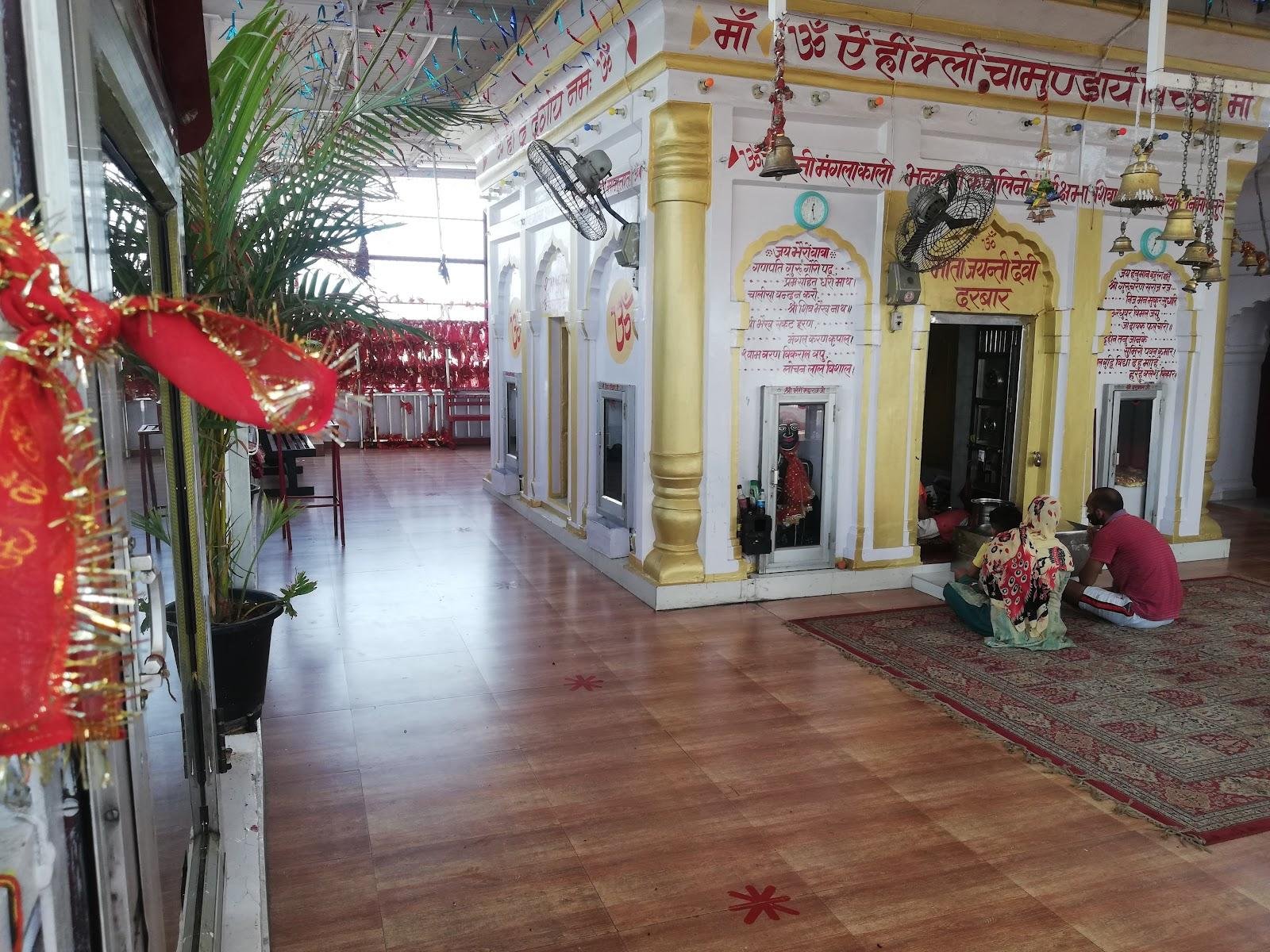
Jayanti Devi Temple is one of the most spiritually significant hilltop shrines near Chandigarh and one of the lesser-known Shakti pilgrimage destinations of Punjab’s lower Shivalik region. Situated at Jayanti Majri village in SAS Nagar, commonly known as Mohali district, the temple rises above fields, seasonal watercourses, scrub forests and the expanding urban landscape of New Chandigarh.
Although it is frequently described as a Chandigarh temple because of its proximity to the city, Jayanti Devi Temple is geographically located in Punjab.
Travellers arranging transport should clearly specify:
**Mata Jayanti Devi Temple, Jayanti Majri village, near M Temple is geographically located in Punjab.
Travellers arranging transport should clearly specify:
**Mata Jayanti Devi Temple,ullanpur Garib Dass and New Chandigarh, Mohali district, Punjab.**
This helps distinguish it from Chandi Mandir near Panchkula, Mata Mansa Devi Temple, Chandi Devi Temple in Haridwar and other shrines dedicated to forms of the Divine Mother.
The temple is also known as:
Mata Jayanti Devi Mandir
Jayanti Mata Temple
Jainti Devi Temple
Maa Jayanti Temple
Jayanti Majri Temple
Jayanti Devi Shakti Temple
Jayanti Devi Mandir near Chandigarh
The spelling Jayanti is most widely used, while Jainti and Jyanti may appear in local signage, maps and everyday speech.
The shrine stands on a rocky hill within the foothill zone of the Shivalik range. Its elevated position creates a distinctive pilgrimage experience.
Visitors first travel through the plains around Mullanpur and New Chandigarh.
Agricultural land, village roads and seasonal streams gradually replace the organised sectors and wide avenues of Chandigarh.
At the temple base, the journey changes from a road trip into a physical ascent.
Several hundred steps and developed inclined passages lead towards the principal shrine.
Academic documentation has counted approximately 380 steps from the lower gateway, although visitors may report different numbers depending on the parking point, route used and sections included in their count.
The temple’s white hilltop structure resembles a small fort when viewed from the surrounding countryside.
Its strong platform, corner supports, domed superstructure and saffron flags create a prominent landmark above Jayanti Majri.
From the upper level, pilgrims can see the surrounding hills, village settlements, seasonal greenery and the water landscape associated with Jayanti Dam and Jayanti Ki Rao.
The combination of Shakti worship, village tradition, physical ascent and panoramic scenery gives the temple an identity different from the large urban shrines of Chandigarh and Panchkula.
For Shakti devotees, Jayanti Devi represents divine courage and victory.
For families, the temple provides a meaningful spiritual outing near the Tricity.
For senior citizens, the journey requires realistic assessment because of the steps, heat and possible crowding.
For walkers and nature-oriented travellers, the hill approach offers a gentle pilgrimage challenge without becoming a long wilderness trek.
For cultural visitors, the temple preserves an important connection between Punjab’s plains and the Goddess traditions of the Kangra Valley.
Travellers searching for hotels near Jayanti Devi Temple, homestays near New Chandigarh, places to stay near Mullanpur Garib Dass, pilgrimage accommodation near Jayanti Majri or family hotels for a Chandigarh temple itinerary can use MudrasStays to choose a geographically suitable base.
## Location of Jayanti Devi Temple
Jayanti Devi Temple lies at Jayanti Majri village in Punjab’s SAS Nagar district.
The village was historically known as Majrian or Majri. Its present identity became closely associated with the Goddess and the temple, leading to the commonly used name Jayanti Majri.
The temple is generally described as being around 12–15 kilometres from Chandigarh’s northern side, although the practical distance varies substantially according to the visitor’s starting point.
A traveller beginning from PGIMER, Panjab University or Chandigarh’s northern sectors may have a shorter journey.
Someone travelling from Chandigarh Airport, Zirakpur, southern Mohali or Panchkula may cover a considerably greater distance.
The most practical approach generally passes through the Mullanpur or New Chandigarh side.
The final road enters a more rural and environmentally sensitive landscape.
Public transportation can be irregular, especially outside festival periods.
A private vehicle, prearranged taxi or cab with confirmed waiting time is generally the most dependable option.
Visitors should not assume that an app-based cab will be readily available for the return journey from the village.
Network coverage, driver availability and road conditions can vary.
## Jayanti Devi: The Goddess of Victory
The name Jayanti is connected with victory, triumph and the overcoming of destructive forces.
Maa Jayanti is worshipped as a manifestation of Shakti—the universal divine energy represented through the Goddess.
Victory in this spiritual context should not be understood only as defeating another person.
It can mean victory over fear.
It can mean victory over uncontrolled anger.
It can mean freedom from addiction, dishonesty, arrogance or despair.
It can mean the courage to continue through a difficult period without abandoning ethical conduct.
It can also mean the restoration of justice when harmful power has become dominant.
The Goddess therefore represents both external protection and inner transformation.
A devotee may pray for success in education, work, family responsibility or a difficult decision.
The deeper question is whether that success will be used responsibly.
A victory achieved through exploitation, cruelty or dishonesty does not reflect the spiritual meaning of Maa Jayanti.
True victory requires courage guided by dharma.
The temple should not be promoted as guaranteeing success in examinations, court cases, marriage, employment, fertility, business or medical treatment.
Devotees may offer such prayers according to personal faith, but spiritual worship does not replace preparation, professional guidance or responsible action.
## Shakti Worship at Jayanti Majri
Shakti is the active power through which consciousness becomes creation, movement, protection and knowledge.
Within Hindu philosophy, Shiva is often understood as pure consciousness, while Shakti is the energy through which that consciousness becomes visible and active.
The Divine Mother may appear through several forms.
Durga represents disciplined courage.
Kali represents time and the destruction of ego.
Lakshmi represents nourishment and responsible prosperity.
Saraswati represents knowledge and expression.
Bala Sundari represents the Goddess in a youthful form.
Jayanti represents victorious divine power.
These forms are not separate competing supreme beings.
They are different ways of understanding one universal Shakti.
The collection of deities around the Jayanti Devi sanctum reinforces this wider theological identity.
Pilgrims encounter the central Goddess alongside forms associated with Shiva, Ganesha, Hanuman, Kali, Lakshmi, Bala Sundari, Bhairav and local religious traditions.
The temple therefore reflects both pan-Indian Hindu theology and the sacred culture of the lower Himalayan region.
## The Sacred Pindis
The principal sanctum contains the sacred image of Maa Jayanti together with three pindis.
A pindi is an aniconic or minimally shaped sacred form through which divine presence is worshipped.
Pindi worship is particularly important in several Goddess traditions of Jammu, Punjab and Himachal Pradesh.
The most famous regional example is Shri Mata Vaishno Devi, where the Goddess is worshipped through sacred pindis inside the Holy Cave.
At Jayanti Devi Temple, the pindis are dressed, ornamented and protected within the central shrine.
They should not be treated as ordinary stones or objects for examination.
Visitors should not touch, test, measure or photograph them closely unless temple rules expressly permit it.
Flowers, chunri, coconuts and other offerings should be presented according to the current system.
During crowded periods, pilgrims should complete darshan without remaining in front of the sacred forms for an extended time.
The value of darshan lies in attention and devotion rather than the length of a video recording.
## The Image of Maa Jayanti
The central image of the Goddess is traditionally dressed in bright devotional cloth, jewellery, crowns and flower garlands.
Its appearance may change according to festival, day and season.
The image is placed within a decorated niche and protected by ceremonial canopies.
The sanctum’s present marble, tile and decorative finishes reflect several phases of renovation.
Visitors should not assume that every visible interior element belongs to the original period of the shrine.
Living temples develop continuously.
Floors are replaced.
Walls are repaired.
Tiles are added.
Electrical systems, fans, railings and queue structures are introduced to serve growing pilgrim numbers.
The continuing focus of worship remains the sacred presence of the Goddess and pindis.
## Temple Origins and Historical Caution
Jayanti Devi Temple is commonly described as approximately 525–600 years old.
Research and local accounts usually place its origin between the late medieval period and the early Mughal era.
A precise foundation date has not been securely established through a surviving dated inscription widely available to visitors.
The age should therefore be expressed cautiously.
It is reasonable to describe Jayanti Devi as a historic temple with an oral tradition extending for more than five centuries.
It is less responsible to state one exact construction year as proven archaeological fact.
The shrine’s history is preserved largely through:
Priestly family tradition
Village memory
Stories of the Kangra princess
Narratives concerning the Hathnaur estate
Accounts of Garib Dass
Architectural observation
Later newspaper and academic documentation
These sources create a valuable sacred history, but they do not provide the same certainty as a dated royal inscription or systematically excavated archaeological sequence.
## The Kangra Princess Tradition
The most widely narrated legend of Jayanti Devi Temple concerns a princess from the Kangra region.
According to temple tradition, the princess was a devoted worshipper of Maa Jayanti.
She was married into the ruling family of Hathnaur, a small estate located in the wider area around present-day New Chandigarh.
The princess feared that marriage would separate her from the Goddess she worshipped daily.
She prayed with deep emotion.
The Goddess appeared in a dream and assured her that she would accompany her to her new home.
Several versions describe the bridal palanquin becoming unexpectedly heavy when the wedding party attempted to leave Kangra.
The event was interpreted as a sign that the Goddess wished to travel with the princess.
A sacred pindi or image was placed in another palanquin, and the deity was carried towards Hathnaur with the bride.
The priestly family is also believed to have accompanied the sacred form from the Kangra region.
This narrative explains several important elements of the shrine’s identity.
It connects the temple with Kangra’s powerful Shakti traditions.
It explains the presence of hereditary priests.
It presents the Goddess as responding to the devotion of a woman leaving her childhood home.
It also reflects the emotional reality of marriage traditions in which a bride moves into a different household and geographical environment.
The story should be presented as inherited temple tradition rather than a securely documented royal event.
Its spiritual meaning concerns devotion, separation and divine companionship.
## Hathnaur and the Early Shrine
The pindi brought from Kangra is traditionally believed to have been established within the Hathnaur estate.
Different narratives describe the exact early location and sequence differently.
Some say that the sacred form was initially placed near a river or watercourse.
Others connect its establishment more directly with the hill.
The princess and her descendants are believed to have continued worship for several generations.
Over time, political conditions changed and the estate declined.
The sacred tradition was eventually connected with Garib Dass, one of the most important figures in Jayanti Majri’s local history.
## Garib Dass Tradition
Garib Dass—also called Garibu in some oral accounts—is remembered through a mixture of folk history, devotion and legend.
Some versions describe him initially as a robber or local outlaw.
Others emphasise his role as a protector of poor villagers and a devotee of the Goddess.
He is believed to have gained control over the Hathnaur region and to have supported, moved, renovated or expanded the Jayanti Devi shrine.
One local version says that he installed the pindi on the Shivalik hill and later became a ruler.
Another credits his grandson Bhagwan Dass with completing parts of the temple.
The precise historical sequence differs between narratives.
The story should therefore be framed as local tradition rather than a fully verified political biography.
Its spiritual theme resembles several Indian saint and ruler narratives.
A person with a difficult or morally ambiguous past becomes transformed through devotion and responsibility.
Power is redirected towards the protection of a sacred place and community.
Visitors should avoid simplifying the story into a claim that the Goddess automatically makes every poor person wealthy or every devotee politically powerful.
The valuable message is that sincere transformation must produce better conduct and service.
## The Temple’s Kangra Connection
Jayanti Devi is sometimes described as one of a group of sister goddesses associated with the Kangra Valley and the wider Shakti landscape of Himachal Pradesh.
Commonly named shrines in this devotional grouping include:
Mata Jwala Ji
Mata Chintpurni
Mata Brajeshwari
Mata Chamunda Devi
Mata Naina Devi
Mata Mansa Devi
Mata Jayanti Devi
Lists and relationships can vary according to regional tradition.
The concept should not be treated as a fixed administrative classification.
Its spiritual purpose is to connect several Goddess shrines through one extended sacred family.
For pilgrims, Jayanti Devi provides a bridge between the plains of Punjab and the hill temples of Himachal Pradesh.
The legend of the Kangra princess strengthens this relationship.
## Hilltop Architecture
The hilltop shrine has a fort-like appearance when viewed from below.
The principal platform is raised significantly above the hillside and supported by substantial structural elements.
The sacred chamber occupies the centre of the upper level.
A domed roof rises above the sanctum and is crowned with a lotus-like element, kalash and finial.
Smaller domed features and flags mark the corners and roofline.
The use of domes and cusped arches reflects architectural forms widely used in northern India during the medieval and early modern periods.
The temple’s exterior does not resemble the tall curving Nagara shikhara seen at many classical North Indian temples.
This does not make it less Hindu.
Religious architecture often absorbs regional construction practices and the dominant visual language of its period.
The result at Jayanti Devi is a hybrid sacred structure combining a Hindu sanctum, pindi worship, hill-fort massing, domed roofing and later decorative renovation.
## The Sanctum and Circumambulatory Space
The central garbhagriha is comparatively compact.
The principal image and pindis occupy the sacred niche.
Space around the chamber allows devotees to perform pradakshina or circumambulation where the current route permits it.
Pradakshina means moving respectfully around a sacred centre, generally in a clockwise direction.
The physical action expresses an important principle.
The devotee moves, while the Divine remains at the centre.
In ordinary life, people often place personal desire, ego and status at the centre of every decision.
Parikrama symbolically reverses this arrangement.
The sacred becomes central, and the individual learns to move with humility around it.
Visitors should follow the indicated direction and should not push or overtake others in narrow sections.
## Deities Around the Main Shrine
The exterior niches surrounding the principal chamber include several divine and local sacred forms.
These have been documented as including Bhairav, Hanuman, Shiva Parivar, Bala Sundari, Lakshmi, Lokda, Kali and Ganesha.
Their presence creates a complete spiritual environment around Maa Jayanti.
### Bhairav
Bhairav is a protective manifestation of Lord Shiva.
He represents time, discipline and the guardianship of sacred places.
His fierce appearance should not be interpreted as uncontrolled aggression.
He protects the spiritual boundary of the shrine.
### Lord Hanuman
Hanuman represents courage, humility, learning and service.
His strength is directed towards Lord Rama and the protection of others rather than personal pride.
### Shiva Parivar
Shiva Parivar ordinarily includes Shiva, Parvati, Ganesha and Kartikeya.
The divine family represents the balance between meditation, active energy, wisdom, courage and household responsibility.
### Maa Bala Sundari
Bala Sundari is the Goddess in a youthful form.
She represents purity, potential, beauty and divine energy present even in childhood.
Her tradition has strong connections with parts of Himachal Pradesh, Haryana and Punjab.
### Goddess Lakshmi
Lakshmi represents nourishment, prosperity and wellbeing.
Her worship should encourage honest earning, generosity and responsible use of resources rather than greed.
### Maa Kali
Kali represents time, transformation and the destruction of ego.
Her fierce imagery reminds devotees that wealth, status and physical identity are temporary.
### Lord Ganesha
Ganesha is worshipped as the remover of obstacles and lord of auspicious beginnings.
His presence encourages wisdom, patience and careful judgement.
### Lokda Dev
Lokda Dev represents an important local sacred tradition.
The presence of a local deity beside widely worshipped Hindu divine forms demonstrates how regional religious identities become integrated into a larger temple complex.
Visitors should rely on temple signage or priestly guidance regarding the deity’s specific traditions rather than inventing an unsupported mythology.
## The Temple Steps
The ascent to Jayanti Devi Temple is an essential part of the pilgrimage.
Academic observation has described approximately 380 steps from the lower gateway, while popular accounts sometimes provide lower or higher estimates.
The difference can result from changing entry points, ramps, rebuilt sections and whether intermediate passages are counted.
Visitors should prepare for **several hundred steps** rather than depending upon one exact number.
The climb is moderate for a healthy person who walks regularly.
It can be demanding during summer, in festival crowds or for visitors with knee, heart, breathing or balance concerns.
The descent can place additional pressure on the knees.
Stable footwear is strongly recommended.
Smooth slippers can become unsafe on dusty or wet steps.
Visitors should carry drinking water but avoid leaving plastic bottles along the path.
Rest should be taken only where it does not obstruct other pilgrims.
## Ramps and Developed Access
Parts of the present complex include sloping, covered or developed access routes in addition to conventional steps.
These may reduce difficulty for some visitors but should not be assumed to provide complete wheelchair access to the sanctum.
The gradient, surface and crowd conditions can remain challenging.
Senior citizens and visitors with disabilities should confirm the current access arrangement locally before departure.
A vehicle may not be permitted to reach every upper section.
Festival barricades can change the route.
There is no spiritual failure in offering prayer from an accessible level when physical limitations make the full climb unsafe.
## The Temple Tank
A traditional water tank is located along the approach to the upper shrine.
Historical descriptions indicate that it was once used for ritual bathing.
Its present water condition and bathing status should be checked rather than assumed.
Visitors should not enter the tank merely because steps are visible.
Water depth, cleanliness, maintenance and access rules can change.
Children must remain supervised.
Soap, detergent, packaged offerings, cloth and plastic should never be placed in the water.
A sacred tank should be protected as an ecological and cultural resource.
## The Ancient Well
Local tradition refers to a well near the base or within the temple landscape that provides water throughout the year.
The well forms part of the village’s sacred memory.
Water sources in the Shivalik foothills are especially valuable because seasonal rainfall can be irregular and streams may change dramatically between dry and monsoon periods.
Visitors should not throw coins, plastic or flowers into the well.
Any drinking-water use should follow current local health guidance.
Sacred status does not remove the need for safe water handling.
## Jayanti Dam and Reservoir
Jayanti Dam and its associated reservoir lie within the wider landscape around the temple.
The water body was developed for rainwater collection and irrigation.
From elevated areas around the shrine, visitors may see sections of the reservoir, seasonal channels and surrounding vegetation.
The reservoir should not be treated as an unrestricted swimming, boating or adventure area.
Water depth, silt, current and access conditions can be dangerous.
Visitors should remain in authorised viewing areas and avoid isolated shorelines.
The appearance of the reservoir changes dramatically with rainfall.
During dry periods, water coverage may shrink.
During the monsoon, inflow and surrounding streams can rise rapidly.
## Jayanti Ki Rao
Jayanti Ki Rao is a seasonal watercourse flowing through the lower Shivalik landscape.
The word rao is used regionally for a seasonal stream or rivulet.
For much of the year, such channels may appear shallow or dry.
After intense rainfall in the Shivaliks, they can become fast and dangerous within a short period.
This unpredictability is one of the most important safety considerations for Jayanti Devi Temple.
A dry-looking causeway on the outward journey may become unsafe later in the day after upstream rain.
Visitors must never drive into flowing water simply because another vehicle has attempted the crossing.
Barricades and police closures must be obeyed.
## Monsoon and Causeway Safety
The monsoon requires exceptional caution.
Flash floods have damaged roads and swept vehicles from causeways in the Jayanti Majri area.
Local access can be temporarily closed when water levels rise.
Travellers should check:
Recent rainfall in Chandigarh and the Shivalik foothills
Local police or district advisories
The condition of Jayanti Ki Rao
Causeway closures
Road diversions
The return route before entering the village
A planned temple visit should be postponed during severe rainfall.
Religious importance does not make a flooded crossing safe.
Visitors should never walk across fast-moving water or attempt vehicle stunts for social-media content.
## Annual February Fair
The principal annual mela is associated with the February religious cycle and a full-moon observance.
Current research describes it as a two-day gathering, although the complete programme and market activity may extend across additional dates.
The fair attracts devotees from Chandigarh, Mohali, Panchkula, Punjab, Haryana and Himachal Pradesh.
The temple steps, village road, parking areas and food-service zones become significantly busier.
Bhajans, bhandara, community meals and devotional activities may be organised.
Exact dates change each year and should be confirmed through the temple committee or local administration.
Visitors should not rely on an old social-media poster.
## August Fair
A second fair is traditionally organised during the August cycle.
Its date and religious observance may vary according to the lunar calendar and local temple programme.
The August period can overlap with monsoon conditions.
This creates additional safety concerns.
Visitors should confirm both the mela schedule and road status.
The existence of a festival does not guarantee that every route remains open during heavy rainfall.
## Chaitra and Sharad Navratri
Navratri is one of the most important periods for worship of the Divine Mother.
Chaitra Navratri generally falls during March or April.
Sharad Navratri generally falls during September or October.
Devotees may observe fasting, recite Durga scriptures, offer chunri and participate in bhajans or community meals.
The nine principal forms of Durga represent a complete cycle of spiritual development:
Shailaputri represents stability.
Brahmacharini represents discipline.
Chandraghanta represents courage.
Kushmanda represents creative energy.
Skandamata represents care and responsibility.
Katyayani represents action against injustice.
Kalaratri represents the removal of fear.
Mahagauri represents renewal and purity.
Siddhidatri represents spiritual fulfilment.
A pilgrimage during Navratri can therefore become an opportunity for self-reflection rather than only a request for material benefit.
## Sundays and Tuesdays
Sunday is traditionally busy because families have more time to travel, and community food service may be organised.
Tuesday is widely associated with Goddess and Hanuman worship across northern India.
Visitors seeking quiet darshan should consider an ordinary weekday morning.
Current temple timings and access should be confirmed locally because published online hours vary.
## Bhandara and Community Service
Temple committees and devotees organise bhandara or community meals on important days and during fairs.
Food service expresses generosity and equality.
Visitors should accept only the quantity they can eat.
Waste should be avoided.
Disposable plates, cups and bottles must be placed in designated collection areas.
Serving food while leaving plastic throughout the hill and village contradicts the purpose of sacred service.
Volunteers should also ensure safe drinking water, orderly queues and fire-safe cooking arrangements.
## Best Time to Visit Jayanti Devi Temple
The temple can generally be visited throughout the year when the road and local conditions remain safe.
### October to March
The cooler months are the most comfortable for climbing.
Morning and evening can become cold during December and January.
Winter fog may reduce road visibility.
The February fair brings major crowds.
### February to April
Late winter and spring provide pleasant weather.
The surrounding landscape may begin to become greener.
Chaitra Navratri can create a vibrant devotional atmosphere.
### May and June
The lower Shivalik foothills and Chandigarh region can become extremely hot.
The exposed steps and upper platform receive strong sunlight.
Visitors should begin early in the morning, carry water and avoid the hottest afternoon hours.
### July to September
The monsoon makes the landscape green and the reservoir fuller.
It is also the riskiest season for road access.
Causeways can flood rapidly.
Steps may become slippery.
Travel should be postponed during heavy-rain warnings.
### October and November
Post-monsoon weather can be pleasant.
Roads are often more stable, and the surrounding vegetation may remain green.
Sharad Navratri can increase visitor numbers.
## Suggested Time of Day
An early-morning visit is generally best.
Temperatures are cooler.
The steps are less tiring.
The temple is often quieter.
The upper viewpoint can have better visibility before midday haze develops.
Late-afternoon darshan may also be peaceful, but visitors should complete the descent and rural-road return before darkness unless transport and road conditions are fully confirmed.
## Accessibility for Senior Citizens
Jayanti Devi Temple should not be described as fully accessible.
The road reaches the temple base, but the principal shrine is located above several hundred steps and inclined pathways.
Senior citizens who walk regularly may complete the ascent slowly with rest.
Others may find it difficult.
Families should confirm the current ramp, assisted access and nearest permissible vehicle point.
Required medicines, drinking water and a walking stick should be carried.
The hottest hours and festival crowds should be avoided.
No senior citizen should be pressured to climb because of a belief that prayer from the lower level is spiritually insufficient.
## Visiting with Children
Children can enjoy the hill landscape and learn about Maa Jayanti, the Kangra princess and the meaning of spiritual courage.
They require constant supervision on steps, railings and viewpoints.
Children should not run downhill.
They should remain away from reservoir edges, seasonal streams and flooded causeways.
Parents should carry water and simple food while removing all packaging responsibly.
A child who becomes exhausted should be allowed to rest rather than being forced to complete the climb quickly.
## Temple Etiquette
Visitors should wear respectful clothing and remove footwear wherever instructed.
Phones should remain silent near the sanctum.
Photography of the principal image, pindis, priests and private rituals should only be undertaken when permission is clear.
The queue should move steadily.
Visitors should not push, shout or attempt to purchase unauthorised priority access.
Offerings should be presented through recognised arrangements.
Donations should be placed in authorised boxes or given through official channels.
## Responsible Offerings
Common offerings may include flowers, chunri, coconuts and prasad.
Visitors should reduce plastic packaging.
Oil, colour, milk and vermilion should not be applied to unidentified rocks, walls or water structures.
Synthetic cloth should not be tied to trees unless temple management specifically permits it.
An expensive offering is not spiritually compulsory.
The value of prayer depends upon sincerity and conduct, not the price of the material purchased.
## Environmental Responsibility
Jayanti Devi Temple stands within a sensitive foothill landscape.
Pilgrims should not leave plastic bottles, food wrappers or disposable plates along the steps.
Plants and trees should not be damaged.
Wildlife should not be chased or fed packaged food.
Open fires and smoking should be avoided.
Reservoir and stream water must not be polluted.
Responsible pilgrimage protects both the temple and the natural setting that gives it spiritual character.
## Nearby Places to Visit
### Jayanti Dam
Jayanti Dam is the closest landscape attraction.
It should be viewed only from safe and authorised areas.
Swimming, isolated picnicking and entering the water should not be assumed safe.
### New Chandigarh
New Chandigarh, also known through the Mullanpur development area, is the nearest rapidly developing urban zone.
It offers restaurants, residential areas, medical facilities and growing accommodation options.
### Mullanpur Garib Dass
Mullanpur is connected with the traditional approach to Jayanti Majri and with regional stories of Garib Dass.
It serves as an important local reference point for transport.
### Mata Mansa Devi Temple
Mata Mansa Devi Temple near Panchkula is one of the Tricity’s principal active Shakti shrines.
It can be included within a two-day Goddess pilgrimage.
Navratri brings very large crowds.
### Chandi Mandir
Chandi Mandir lies near Panchkula and is associated with the Goddess Chandi.
It is a separate shrine from Jayanti Devi and may have access considerations because of the surrounding cantonment area.
### Gurdwara Nada Sahib
Gurdwara Nada Sahib is associated with Guru Gobind Singh Ji.
Visitors should cover their heads, remove footwear and follow Sikh maryada.
### Sukhna Lake
Sukhna Lake is a major recreational destination in Chandigarh.
It provides a contrasting urban water landscape after the rural hill pilgrimage.
### Rock Garden
The Rock Garden is one of Chandigarh’s best-known cultural attractions.
It should be given sufficient time rather than compressed into a rushed temple journey.
### Capitol Complex
The Capitol Complex represents Chandigarh’s modern architectural heritage.
Entry and tour arrangements should be checked beforehand.
## Suggested Half-Day Jayanti Devi Itinerary
Leave Chandigarh or New Chandigarh early in the morning.
Travel through Mullanpur towards Jayanti Majri.
Confirm that the causeway and road are safe.
Park only in an authorised area.
Begin the climb at a steady pace.
Receive darshan of Maa Jayanti and the sacred pindis.
Visit the surrounding shrines without blocking the route.
Spend a short period observing the hill landscape from safe viewpoints.
Descend carefully.
Return before afternoon heat or changing monsoon weather.
## Suggested One-Day Shakti Itinerary
Begin with Jayanti Devi Temple in the morning.
Return towards Chandigarh or Panchkula for lunch.
Visit Mata Mansa Devi Temple during the afternoon or evening.
This itinerary combines a rural hill shrine with a major developed Shakti pilgrimage complex.
Festival crowds may require the schedule to be reduced.
## Suggested Two-Day Tricity Spiritual Journey
On the first day, visit Jayanti Devi Temple and selected Chandigarh attractions.
On the second day, visit Mata Mansa Devi Temple, Gurdwara Nada Sahib and another suitable Panchkula destination.
Families and senior citizens should avoid overloading the programme.
## Accommodation Near Jayanti Devi Temple
Accommodation within Jayanti Majri is limited.
Basic temple or dharamshala-style lodging may occasionally be available, but present room supply, booking rules and facilities should be confirmed directly.
Most travellers should stay in New Chandigarh, Chandigarh, Mohali, Kharar or Panchkula.
## Hotels in New Chandigarh and Mullanpur
New Chandigarh provides the closest developing urban base.
Accommodation choices may be more limited than in central Chandigarh, but the location can reduce the morning road journey.
Guests should confirm restaurants, taxi availability, parking and the precise route to the temple.
## Hotels in Chandigarh
Chandigarh offers the widest range of hotels, guesthouses and serviced accommodation.
Travellers focused on Jayanti Devi should consider northern or northwestern sectors with convenient access towards PGIMER, Dhanas, Khuda Lahora or Mullanpur.
A property in southern Chandigarh may offer excellent facilities but involve a longer drive.
## Hotels in Mohali
Mohali provides extensive accommodation, restaurants and transport.
The practical journey to Jayanti Majri depends heavily on the property’s sector.
Northern Mohali and New Chandigarh-facing locations may be more convenient than areas close to the airport.
## Hotels in Kharar
Kharar offers budget hotels and guesthouses and may suit travellers approaching through the western side of the district.
Traffic conditions and the exact rural connection should be checked.
## Hotels in Panchkula
Panchkula is suitable for travellers combining Jayanti Devi with Mansa Devi, Nada Sahib or Pinjore.
It lies on the opposite side of the Tricity, so additional travel time should be included.
## Homestays Near New Chandigarh
Verified homestays can provide quieter surroundings and local route guidance.
Guests should confirm bathrooms, meals, air-conditioning, heating, parking, mobile connectivity and taxi availability.
A rural-looking property should not be booked solely on straight-line distance without checking the usable road.
## Choosing the Right Stay
Pilgrims focused primarily on Jayanti Devi should stay in New Chandigarh, Mullanpur or Chandigarh’s northwestern side.
Travellers planning a broader Tricity holiday may prefer central Chandigarh.
Families should verify room size, breakfast and parking.
Senior citizens should choose properties with lifts, ground-floor rooms and dependable transport.
Couples may prefer quieter hotels or homestays near New Chandigarh.
Solo pilgrims should select populated accommodation with confirmed return travel.
Groups should confirm multiple rooms, early meals and parking for larger vehicles.
February and August fair visitors should reserve accommodation early.
Summer guests should verify effective cooling.
Winter travellers should confirm hot water and heating.
## Book Hotels Near Jayanti Devi Temple with MudrasStays
MudrasStays helps pilgrims, families and spiritual travellers discover hotels, homestays, guesthouses and pilgrimage accommodation near Jayanti Devi Temple, New Chandigarh, Mullanpur, Mohali and Chandigarh.
The platform is designed for travellers searching specifically for places to stay near temples, hill shrines and spiritual destinations.
Visitors can compare accommodation according to practical driving time from Jayanti Majri, room category, budget, family size and required facilities.
Booking near New Chandigarh can reduce the morning road journey and make early darshan more convenient.
Families can choose properties offering comfortable rooms, meals and safe parking.
Senior citizens can prioritise accessible hotels with reliable taxis.
Solo pilgrims can search for economical rooms in populated areas.
Couples can explore quiet homestays or comfortable Tricity hotels.
Pilgrimage groups can identify accommodation providing multiple rooms, vegetarian meals and parking for larger vehicles.
Travellers attending the February or August mela can reserve stays early and avoid uncertain last-minute availability.
Visitors combining Jayanti Devi with Mansa Devi, Nada Sahib, Pinjore, Sukhna Lake or Chandigarh’s heritage attractions can choose accommodation according to the actual route of the itinerary.
MudrasStays helps travellers avoid booking a property that appears close in straight-line distance but requires difficult rural access, repeated city crossings or unsafe monsoon causeways.
## Respecting Jayanti Majri Village
Jayanti Majri is a living village rather than only a pilgrimage destination.
Residents use the same roads, water sources, fields and public spaces as visitors.
Vehicles should not block homes, farms or emergency access.
Private agricultural land should not be entered for photographs.
Residents should not be photographed without consent.
Local drivers, priests, vendors, volunteers and accommodation hosts should be treated fairly.
Responsible pilgrimage allows tourism to support the village rather than creating only congestion, noise and waste.
## A Hilltop Shrine of Victory and Devotion
Jayanti Devi Temple represents a powerful meeting of Shakti worship, Kangra tradition, village history, physical pilgrimage and the lower Shivalik landscape.
Maa Jayanti represents victory guided by dharma.
The sacred pindis represent divine presence beyond ordinary human form.
The Kangra princess tradition represents devotion carried across distance and marriage.
The story of Garib Dass represents transformation, patronage and local memory.
The hereditary priestly tradition connects the present shrine with earlier generations.
The hill represents effort and spiritual ascent.
The steps prepare the body and mind for darshan.
The domed fort-like structure reflects the architectural environment in which the temple developed.
Bhairav represents protection.
Hanuman represents humble strength.
Shiva Parivar represents spiritual and family balance.
Bala Sundari represents youthful divine energy.
Lakshmi represents nourishment.
Kali represents transformation.
Ganesha represents wisdom.
Lokda Dev preserves the region’s local sacred identity.
The tank and well connect worship with water.
Jayanti Dam places the temple within a wider landscape of rainfall, irrigation and environmental responsibility.
The February and August fairs keep the shrine connected with Punjab’s living religious calendar.
For Shakti devotees, Jayanti Devi is a place to seek courage and inner victory.
For families, it offers a meaningful hill pilgrimage close to Chandigarh.
For children, it provides lessons about devotion, history and environmental care.
For senior citizens, the shrine can be rewarding when the climb is planned realistically.
For cultural travellers, it reveals how a Kangra Goddess tradition became rooted within a Punjab village.
For photographers, the white temple, red flags, fields, hills and reservoir create memorable images when worship and safety rules are respected.
For spiritual seekers, the ascent communicates a simple teaching: victory is not achieved by avoiding effort, but by moving steadily with discipline and humility.
Jayanti Devi Temple should not be treated merely as a quick countryside attraction near Chandigarh.
Its complete identity requires time and attention.
Confirm the road before leaving.
Avoid monsoon crossings when water is flowing.
Begin the climb slowly.
Receive darshan without obstructing other pilgrims.
Respect the sacred pindis.
Visit the surrounding deities.
Protect the hill from plastic and fire.
Support the village responsibly.
Carry the meaning of Jayanti beyond the temple by seeking victory over fear, arrogance and harmful conduct.
Plan your pilgrimage to Jayanti Devi Temple with MudrasStays and experience one of the most distinctive hilltop Shakti shrines near Chandigarh.
Seek the blessings of Maa Jayanti, receive darshan of the sacred pindis and experience the spiritual atmosphere of Jayanti Majri.
Combine your journey with Jayanti Dam, New Chandigarh, Mata Mansa Devi Temple, Gurdwara Nada Sahib, Pinjore and the wider cultural attractions of the Tricity.
Book hotels near Jayanti Devi Temple, discover homestays near New Chandigarh and explore suitable pilgrimage accommodation throughout Chandigarh, Mohali and Panchkula through MudrasStays.
Stay closer to the correct route, begin during peaceful morning hours and avoid unnecessary travel across congested or unsafe roads.
MudrasStays connects pilgrims, families and spiritual travellers with suitable accommodation near temples, hill shrines and sacred destinations across India.
Begin your Jayanti Devi journey with a comfortable stay and experience a meaningful pilgriage centred on Maa Jayanti, sacred victory, hilltop devotion and the living spiritual landscape of Punjab’s lower Shivaliks.