
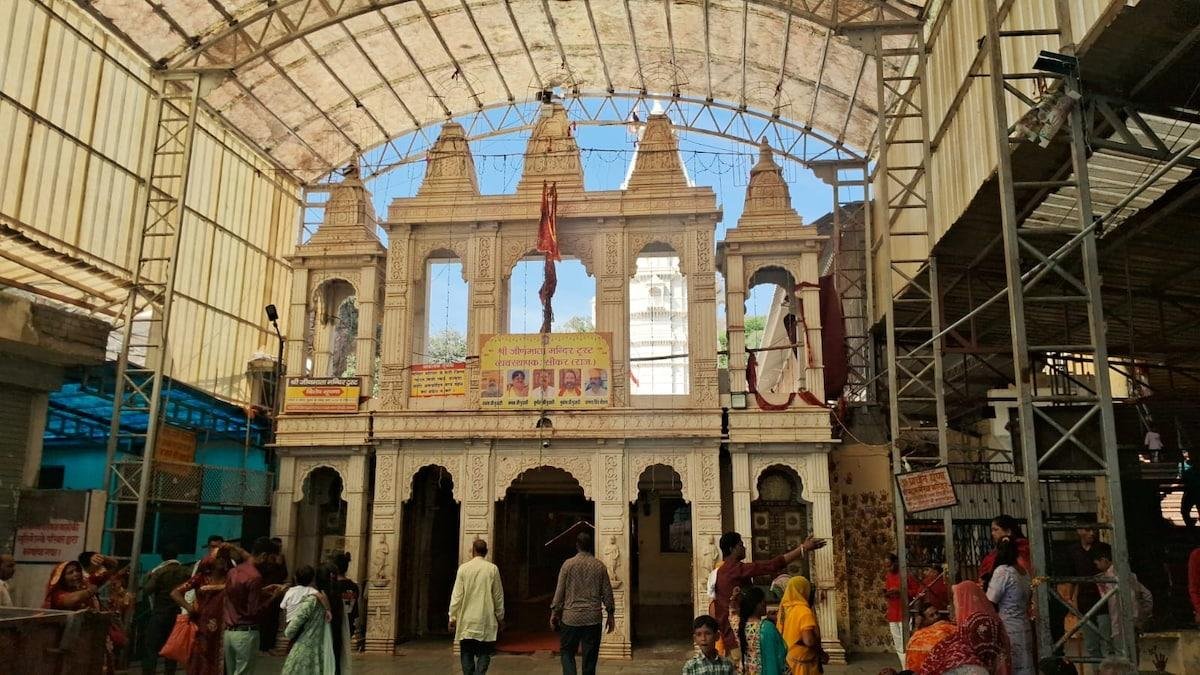
een Mata Temple, Sikar – An Ancient Shakti Shrine in the Aravalli Hills
Jeen Mata Temple is one of Rajasthan’s most revered centres of Goddess worship. Located near Rewasa and Jeenmata village in the Sikar district, the temple stands amid the rocky and forested landscape of the Aravalli hills, approximately 30 kilometres from Sikar city.
The shrine is dedicated to **Jeen Mata**, also identified in local traditions as Jayanti Mata, a powerful manifestation of the Divine Mother. She is worshipped as a protector, fulfiller of sincere prayers and family goddess by numerous communities across Rajasthan, Haryana, Delhi, Uttar Pradesh, West Bengal and other parts of India.
The temple is traditionally honoured as a **Siddh Shakti Peeth**, meaning an established seat of spiritual power. It is especially important for families who regard Jeen Mata as their Kuldevi and visit after marriage, childbirth, mundan ceremonies or before beginning an important personal or professional responsibility.
Surrounded by hills and sacred groves, the temple combines living devotion with considerable historical depth. Rajasthan Tourism describes the shrine as approximately one thousand years old and records that it has been repaired and reconstructed several times.
An inscription associated with the temple and dated to the early twelfth century provides material evidence that the shrine was already an established religious institution during the Chauhan period. The present complex contains ancient architectural elements alongside later repairs, expansions and modern arrangements created for large pilgrim gatherings.
The temple becomes especially vibrant during the **Chaitra and Ashvin Navratri fairs**, when large numbers of devotees arrive for darshan, family rituals, devotional singing and offerings to the Goddess.
Travellers searching for hotels near Jeen Mata Temple, family accommodation in Sikar or suitable stays for a Jeen Mata–Harshnath–Khatu Shyam pilgrimage can explore convenient options through **MudrasStays**.
## Who Is Jeen Mata?
Jeen Mata is worshipped as a regional manifestation of Shakti, the supreme feminine power that creates, protects and sustains the universe.
She is also called:
* Jeen Mata
* Jeen Bhawani
* Jayanti Mata
* Jiya Mata
* Maa Jeen
* Jeen Mataji
* Bhanwaron Wali Mata in some regional traditions
Devotees approach Jeen Mata as a compassionate mother who protects her children while also possessing the strength required to defeat injustice, fear and harmful forces.
She is worshipped for:
* Family protection
* Health and emotional strength
* Blessings for children
* Peace within the household
* Marriage and family harmony
* Courage during adversity
* Success in responsible work
* Protection during travel
* Relief from persistent obstacles
* Fulfilment of sincere wishes
* Spiritual confidence
* Continuity of family traditions
For devotees whose ancestors have worshipped Jeen Mata for generations, visiting the temple is not merely a personal choice. It is part of maintaining a relationship between the family, its Kuldevi and its inherited religious identity.
## Is Jeen Mata Temple a Shakti Peeth?
The temple trust and devotees describe Jeen Mata Dham as a **Siddh Shakti Peeth**.
This title signifies that the shrine is regarded as an awakened and spiritually powerful centre of Goddess worship.
However, it is helpful to distinguish this title from the classical list of Shakti Peethas associated with the places where parts or ornaments of Goddess Sati are believed to have fallen.
Jeen Mata is not universally identified in traditional lists as one of those specific Sati-related sites. Its status as a Shakti Peeth comes primarily from:
* The continuing worship of the Goddess
* The antiquity of the shrine
* The faith of numerous communities
* Its association with tapasya and divine manifestation
* Its importance as a Kuldevi temple
* The spiritual traditions surrounding the Aravalli hills
The temple’s religious importance does not depend upon its inclusion in one fixed list. For devotees, Jeen Mata Dham is a living seat of Shakti whose power has been experienced and remembered across generations.
## The Sacred Story of Jeevan, Jeen Mata and Harsh
The best-known religious tradition associated with the temple is the story of a sister and brother named **Jeevan and Harsh**.
The story exists in several local versions, and individual priests, families and folk singers may narrate certain events differently.
According to the commonly repeated tradition, Jeevan was born into a Chauhan Rajput family. She shared a deep emotional bond with her brother Harsh.
One day, Jeevan and her sister-in-law went to collect water. A disagreement arose between them concerning who was more loved and respected by Harsh.
The disagreement became emotionally painful for Jeevan. Feeling hurt and misunderstood, she left her home and travelled towards the Aravalli hills.
She reached a secluded peak traditionally called **Kajal Shikhar** and began intense meditation and worship of the Divine Mother.
Harsh later learned that his sister had left. Filled with concern and regret, he searched for her and followed her into the hills.
Jeevan, however, had already committed herself to spiritual life and refused to return to ordinary household existence. Through her tapasya, she became identified with the power of Goddess Jayanti and came to be worshipped as Jeen Mata.
Harsh remained in the surrounding hills and was subsequently associated with a protective Shiva or Bhairava tradition.
The story explains the close devotional relationship between:
* Jeen Mata Temple
* Harsh Bhairav traditions
* Harshnath Temple
* The sacred hills surrounding Sikar
* The regional importance of brother-and-sister devotion
The narrative should be understood as sacred folklore rather than as a precisely dated historical biography.
Its deeper message concerns:
* The strength of spiritual determination
* The emotional bond between siblings
* The pain caused by pride and misunderstanding
* Renunciation of worldly conflict
* Transformation through devotion
* Protection offered by a brother
* The emergence of divine power through tapasya
Many pilgrims visit both Jeen Mata and Harshnath as part of a connected spiritual journey.
## Historical Evidence and the Age of the Temple
The exact date when the first shrine was established at Jeen Mata has not been conclusively determined.
Popular accounts sometimes describe the temple as belonging to the eighth century or as being more than twelve hundred years old. Rajasthan Tourism more cautiously describes it as approximately one thousand years old and notes that it has undergone repeated repairs and reconstruction.
The temple’s strongest historical evidence comes from inscriptions recorded on architectural elements within the complex.
An inscription dated **Vikram Samvat 1162**, corresponding approximately to **1105 CE**, has been recorded on a pillar associated with the temple’s assembly hall.
This inscription confirms that the temple was an active and important religious site by the beginning of the twelfth century.
It also places the shrine within the broad historical period of the Chauhan rulers, who exercised considerable influence across the Sambhar, Ajmer, Sikar and wider Rajasthan region.
The temple should therefore be understood through several historical layers:
### Early Sacred Establishment
A shrine dedicated to the Goddess may have existed before the surviving inscription.
### Chauhan-Period Development
The temple was clearly active by the early twelfth century and received support within a region dominated by Chauhan political and religious traditions.
### Later Repairs and Reconstruction
The complex was repaired, enlarged or rebuilt at different times as architectural elements deteriorated and the number of pilgrims increased.
### Modern Pilgrimage Infrastructure
Covered passages, railings, crowd-control systems, market lanes, security arrangements and additional facilities have been created to serve contemporary devotees.
It would be inaccurate to describe every visible wall, gateway or marble surface as belonging to the original medieval temple.
## Chauhan Connections
Jeen Mata Temple has a strong association with Chauhan identity and history.
Local tradition describes Jeevan or Jeen as having been born into a Chauhan family. The temple was situated within an area influenced by branches of the Chauhan ruling houses.
The nearby Harshnath Temple also developed under Chauhan patronage and served as an important Shaiva religious centre.
Jeen Mata came to be worshipped as a Kuldevi by Chauhan families and, over time, by numerous other communities.
This regional sacred landscape therefore brought together:
* Shakti worship at Jeen Mata
* Shiva worship at Harshnath
* Bhairava as the guardian of the Goddess
* Chauhan royal and clan traditions
* Family pilgrimage customs
* Medieval inscriptions and temple patronage
The historical Chauhan connection and the sacred story of Jeevan and Harsh should be presented as related but distinct traditions.
## Architecture of Jeen Mata Temple
Jeen Mata Temple has been repeatedly renovated, but its older sections continue to display features of traditional Rajasthani temple architecture.
The complex includes:
* A sanctum dedicated to Jeen Mata
* An assembly hall or sabhamandapa
* Numerous carved pillars
* Stone and marble architectural elements
* Decorative doorways
* Sculpted figures and motifs
* A temple tower or shikhara
* Courtyards and circulation passages
* Areas for family rituals
* Covered routes for pilgrims
* Secondary shrines and devotional spaces
The assembly hall is traditionally described as being supported by **24 carved pillars**.
These pillars contain decorative representations that may include:
* Human figures
* Divine or semi-divine forms
* Animals
* Floral designs
* Geometric patterns
* Mythological motifs
* Traditional ornamental bands
Some pillars and stone elements belong to older architectural phases, while other parts have been repaired or incorporated into later construction.
Visitors should avoid touching carvings, leaning against historic pillars or attaching cloth and thread to fragile architectural surfaces.
## The Sanctum and Form of the Goddess
The sacred form of Jeen Mata is worshipped inside the main sanctum.
The deity is usually adorned with:
* Red or brightly coloured cloth
* Chunri
* Jewellery
* Flowers and garlands
* A sacred crown
* Decorative ornaments
* Seasonal festival attire
During Navratri and other important occasions, the Goddess may receive elaborate shringar using specially prepared garments and floral decorations.
The sanctum can become crowded, and devotees should continue moving according to the instructions of priests and temple volunteers.
Extended prayer should be performed from a place where it does not obstruct the darshan queue.
## Jeen Mata as Kuldevi
One of the most important characteristics of Jeen Mata Temple is its role as a **Kuldevi shrine**.
A Kuldevi is a protective family or clan goddess whose worship is passed from one generation to another.
Jeen Mata is regarded as Kuldevi by families belonging to several social and regional communities. Lists differ between traditions, but her devotees include families associated with:
* Chauhans
* Shekhawats
* Rajputs
* Agarwals and other mercantile communities
* Brahmin groups
* Yadav and Ahir communities
* Meenas
* Jangirs
* Jats
* Other communities of Rajasthan and northern India
Families may visit Jeen Mata after:
* A wedding
* The birth of a child
* Mundan or Jadula
* Completion of an important vow
* Recovery from illness
* Purchase of a new home
* Beginning a new business
* Success in an examination
* A major family transition
* Return to India from another country
Specific customs differ from family to family. Pilgrims should follow their own inherited tradition or consult a recognised temple priest.
## Mundan and Jadula Ceremony
Jeen Mata Dham is an important destination for the first hair-cutting ceremony of a child, commonly called **Mundan** or **Jadula**.
Families bring children to the temple as an expression of gratitude and to seek the Goddess’s protection.
Those planning the ceremony should confirm:
* The designated ceremony area
* Whether advance registration is required
* Barber or priest arrangements
* Items required for the ritual
* Bathing and hygiene facilities
* Disposal of hair
* Dakshina and other charges
* Crowd conditions during Navratri
* Accommodation for the family
The ceremony should be performed using clean and safe equipment.
Children may become frightened or uncomfortable in crowds, so families should avoid scheduling the ritual during the busiest festival hours unless necessary.
## The Akhand Jyoti
An **Akhand Jyoti**, or continuously maintained sacred flame, forms part of the temple’s devotional tradition.
The flame symbolises:
* The eternal presence of the Goddess
* Continuity of worship
* Divine knowledge
* Protection
* Victory of light over darkness
* The uninterrupted faith of generations
Devotees should view the flame from the permitted area and avoid touching lamps, oil containers or ritual equipment.
Claims that the flame has remained unchanged for a precisely documented number of centuries should be approached cautiously unless supported by temple records.
## The Legend of Aurangzeb and the Bees
One of the best-known regional stories associated with Jeen Mata concerns Mughal emperor Aurangzeb.
According to the legend, an imperial force arrived with the intention of damaging or demolishing the temple.
When the soldiers approached the shrine, swarms of bees emerged and attacked them. The army was unable to continue and withdrew.
Aurangzeb is then said to have recognised the power of Jeen Mata, apologised and arranged for oil to be supplied for the temple’s sacred flame.
This story explains why Jeen Mata is sometimes called **Bhanwaron Wali Mata**, the Goddess associated with bees.
The account remains deeply meaningful within local devotion, but it is not supported by a widely accepted contemporary imperial record that establishes every detail.
It should therefore be described as a temple legend rather than confirmed political history.
Its spiritual message is that the Divine Mother protects her sacred place and devotees even when confronted by powerful worldly authority.
## Harsh Bhairav and the Guardian Tradition
Bhairava is commonly worshipped as the guardian of a Shakti shrine.
Within Jeen Mata’s regional tradition, Harsh is remembered as her devoted brother and protector. This makes the connection between Jeen Mata and Harsh both familial and theological.
Pilgrims may honour:
* Jeen Mata as the Divine Sister and Mother
* Harsh as her protective brother
* Bhairava as guardian of the sacred region
* Lord Shiva at the ancient Harshnath complex
A combined pilgrimage should be planned carefully because the temple sites are separated by hill roads and require adequate travel time.
## Chaitra Navratri Fair
The Chaitra Navratri fair is one of the two largest annual gatherings at Jeen Mata Temple.
Held during March or April, the mela attracts devotees from Rajasthan and other states.
The festival may include:
* Special shringar of Jeen Mata
* Extended darshan arrangements
* Devi bhajans
* Family vows and offerings
* Mundan ceremonies
* Community food distribution
* Puja and prasad shops
* Traditional Rajasthani food stalls
* Handicraft and religious-goods stalls
* Medical assistance
* Security checkpoints
* Special parking and traffic plans
The entire approach area can become extremely crowded.
Families travelling with children, elderly relatives or persons with mobility limitations should arrive early and avoid carrying unnecessary luggage.
## Ashvin or Shardiya Navratri Fair
The second major fair takes place during Ashvin Navratri in September or October.
This period is associated with the worship of Durga and the victory of divine power over evil.
Devotees may experience:
* Large darshan queues
* Floral temple decoration
* Special aarti and bhog
* Continuous devotional activity
* Religious markets
* Temporary transport restrictions
* Increased accommodation demand
* Additional security arrangements
Festival dates change every year according to the Hindu calendar.
Visitors should check the official schedule and district-administration advisories before travelling.
## Offerings at Jeen Mata Temple
Common offerings may include:
* Red chunri
* Coconut
* Flowers and garlands
* Sweets
* Dry prasad
* Incense
* Camphor
* Roli and rice
* Sacred thread
* Bangles
* Decorative cloth
* Family prayer slips or sankalp items
Visitors should purchase only the quantity that can be used respectfully.
Plastic packets and discarded ritual material should not be left around the temple or in the surrounding hills.
Animal sacrifice and alcohol are not part of permitted contemporary pilgrimage conduct at the organised temple complex. Visitors must follow the rules issued by the temple trust and district administration.
## Temple Timings and Aarti
Published sources commonly describe the temple as opening before sunrise and remaining accessible until late evening.
Some listings report opening at approximately 4:00 AM and closing between 10:00 PM and 10:30 PM, with separate morning, midday and evening aarti periods.
However, timings can change during:
* Chaitra Navratri
* Ashvin Navratri
* Special shringar
* Maintenance
* Security arrangements
* Crowd management
* Local administrative orders
Pilgrims should confirm the current same-day darshan and aarti schedule through the temple trust before beginning a long journey.
## Temple Etiquette
Visitors should:
* Dress modestly.
* Remove footwear at the designated area.
* Cooperate with security screening.
* Follow the organised queue.
* Keep mobile phones silent.
* Respect restrictions on photography.
* Avoid touching the deity or historic carvings.
* Use official donation facilities.
* Do not rely on unauthorised priority-darshan agents.
* Keep children supervised.
* Avoid carrying excessive valuables.
* Do not waste prasad.
* Keep the temple and hill environment clean.
* Follow festival entry and exit routes.
* Treat priests, volunteers and other pilgrims respectfully.
Devotion should be expressed through patience and discipline, particularly when the temple is crowded.
## Best Time to Visit Jeen Mata Temple
### October to March
The cooler months are generally the most comfortable for temple visits, hill travel and nearby sightseeing.
### Chaitra Navratri
This offers a vibrant devotional atmosphere but brings very large crowds.
### Ashvin Navratri
The autumn festival is equally important and requires advance planning.
### April to June
Summer temperatures can become extremely high. Early-morning darshan is preferable.
### July to September
The Aravalli landscape becomes greener during the monsoon, but roads and temple approaches may become slippery.
### Ordinary Weekdays
Weekday mornings outside Navratri are generally better for families seeking peaceful darshan.
## How Much Time to Keep
Keep approximately two to three hours for:
* Walking through the approach market
* Security and footwear arrangements
* Main Jeen Mata darshan
* Family prayer or archana
* Viewing the old architectural elements
* Prasad
* Associated shrines
During Navratri, darshan may require several additional hours.
Mundan ceremonies and larger family rituals should not be combined with an overly crowded same-day itinerary.
## How to Reach Jeen Mata Temple
Jeen Mata Temple is located near Rewasa in Sikar district, approximately 30 kilometres from Sikar city and around 108–120 kilometres from Jaipur, depending on the route and starting point.
Visitors may travel by:
* Private taxi
* Personal vehicle
* Hotel-arranged cab
* Pilgrimage bus
* Local bus, subject to schedule
* Hired vehicle from Sikar
* Group tour vehicle
### By Rail
Sikar Junction is a practical major rail connection for travellers staying in Sikar.
Government event information has also identified Goriyan as a nearer local railway connection, though train frequency and onward transport may be limited.
### By Air
Jaipur International Airport is the nearest major airport, followed by onward road travel.
### During Navratri
Traffic may be diverted away from the normal temple approach.
Visitors should use official parking areas and avoid insisting on driving directly to the entrance.
## Food and Pilgrim Facilities
Jeenmata village and the temple approach contain:
* Puja shops
* Prasad stalls
* Tea counters
* Vegetarian restaurants
* Local dhabas
* Sweet shops
* Pharmacies
* General stores
* Dharamshalas
* Public facilities arranged during fairs
Simple vegetarian food may include:
* Dal and roti
* Seasonal vegetables
* Rice
* Kadhi
* Poori sabzi
* Parathas
* Tea
* Samosas and kachori
* Sweets
* Traditional Rajasthani preparations
Pilgrims observing a strict satvik diet should confirm whether onion and garlic are used.
Availability of medical camps, drinking water and special assistance increases during fairs but should not be assumed on ordinary days.
## Nearby Pilgrimage and Heritage Attractions
### Harshnath Temple
Harshnath is a tenth-century Shiva temple complex situated on Harshagiri Hill near Sikar.
It combines living Shiva worship with important Chauhan-period ruins, inscriptions and sculptures.
### Khatu Shyam Ji
Khatu Shyam Ji is one of Rajasthan’s most visited Krishna-related pilgrimage destinations and can be added as a separate journey.
### Shakambhari Mata Temple
This important Shakti shrine lies in the Aravalli landscape of Sikar district and attracts large numbers of devotees during Navratri.
### Sikar City
Visitors may explore local temples, markets, frescoed buildings and the Government Museum, which preserves archaeological material from the region.
### Harsh Bhairav Traditions
Pilgrims following the Jeen Mata–Harsh religious tradition may include an appropriate Harsh or Bhairav shrine after confirming the road, walking requirements and current access.
## Suggested Pilgrimage Itineraries
### Short Jeen Mata Visit
**Sikar – Jeen Mata Temple – Darshan – Return to Sikar**
### Jeen Mata and Harshnath Circuit
**Early Jeen Mata Darshan – Sikar Rest – Harshnath Temple on a Separate Half-Day**
### Shakti and Shiva Journey
**Jeen Mata – Harshnath – Overnight Stay in Sikar**
### Multi-Day Sikar Pilgrimage
**Day 1: Jeen Mata and Sikar**
**Day 2: Harshnath and Khatu Shyam Ji**
The itinerary should be adjusted for children, senior citizens and festival crowds.
## Where to Stay Near Jeen Mata Temple
Pilgrims can stay in Jeenmata village, nearby dharamshalas or Sikar city.
### Stay Near Jeen Mata Temple For:
* Early-morning darshan
* Mundan ceremonies
* Navratri pilgrimage
* Travel with elderly family members
* Reduced same-day road travel
* Completion of family vows
### Stay in Sikar For:
* A wider choice of hotels
* Restaurants and medical facilities
* Railway connectivity
* Better family-room options
* Access to Harshnath and other attractions
* Secure parking
* Multi-day pilgrimage planning
Before booking, verify:
* Actual driving distance from the temple
* Navratri traffic restrictions
* Parking availability
* Ground-floor or lift access
* Family-room configuration
* Vegetarian meals
* Hot-water facilities
* Secure luggage storage
* Early check-in
* Local taxi arrangements
* Festival cancellation conditions
A property described as being near Jeen Mata may still be far from the official parking or darshan route during Navratri.
## Book Stays Near Jeen Mata Temple with MudrasStays
**MudrasStays** helps pilgrims find suitable accommodation near temples, sacred hills, Kuldevi shrines and important spiritual routes.
Travellers visiting Sikar can use MudrasStays to explore:
* Hotels near Jeen Mata Temple
* Family stays in Sikar
* Accommodation for Navratri pilgrims
* Rooms suitable for senior citizens
* Hotels serving vegetarian food
* Group stays for Kuldevi yatras
* Properties with parking
* Stays for mundan ceremonies
* Accommodation for the Jeen Mata–Harshnath circuit
* Hotels near Sikar Junction
Choosing the right accommodation helps families manage early darshan, ritual materials, children, elderly devotees and festival traffic with greater comfort.
Jeen Mata Temple is more than an ancient structure in the Aravalli hills. It is a living centre of family faith where medieval inscriptions, Chauhan traditions, the sacred story of Jeevan and Harsh, Kuldevi worship and large Navratri gatherings continue to shape the spiritual life of thousands of families.
By seeking the blessings of Maa Jeen, respecting the temple’s history and arranging a comfortable nearby stay through **MudrasStays**, pilgrims can experience one of Rajasthan’s most powerful and culturally significant Shakti destinations.