
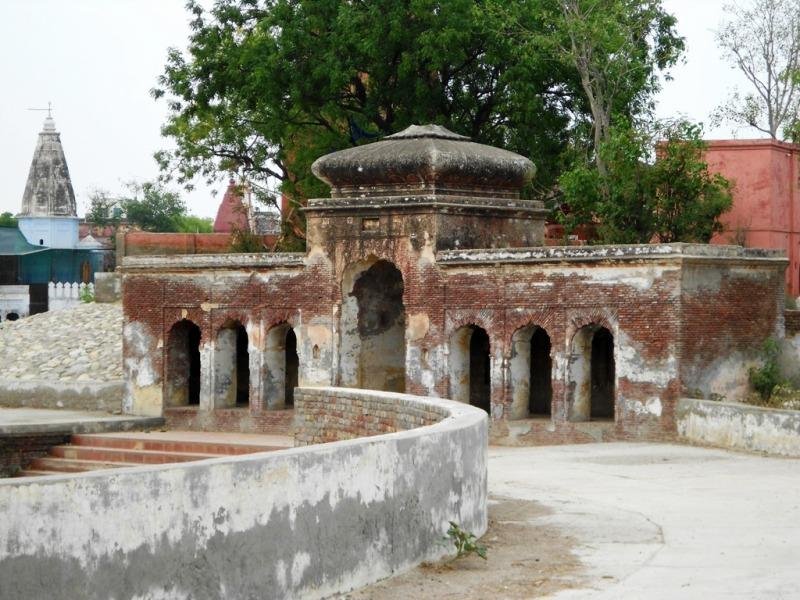
Pehowa Prithudak Temples – A Sacred Centre for Ancestral Worship in Kurukshetra
Pehowa, historically known as **Prithudak**, is one of the most important pilgrimage towns in the Kurukshetra district of Haryana. Situated within the sacred landscape associated with the ancient Saraswati River, the town is especially revered for **pind daan, shraddha, tarpan and prayers offered for departed ancestors**.
The spiritual centre of Pehowa is Prithudak Tirth, a sacred water complex surrounded by temples, ghats, ritual spaces and places used by families performing ancestral ceremonies. The town also contains several important shrines, including Saraswati Tirtha, Kartikeya Temple, Pashupatinath Temple and historic Shiva temples.
Pehowa forms part of the traditional **48 Kos Kurukshetra pilgrimage circuit**. Unlike destinations visited mainly for sightseeing, Pehowa remains an active ritual town where generations of families have come to honour their ancestors, consult hereditary priests and pray for peace and liberation for departed souls.
Travellers searching for hotels near Prithudak Tirth, accommodation near Saraswati Tirtha or family stays for pind daan ceremonies can explore suitable options through **MudrasStays**.
## What Does Prithudak Mean?
The historic name Prithudak is generally interpreted as **the sacred pool or water place associated with King Prithu**.
According to religious tradition, King Prithu performed rites here for his deceased father. The tirtha consequently became associated with ancestral worship and the performance of ceremonies intended to bring peace to departed family members.
Over time, the name Prithudak developed into the present name Pehowa.
The traditions surrounding King Prithu should be understood as part of Pehowa’s sacred narrative rather than as a precisely dated historical event. The town’s documented antiquity, however, is substantial, and inscriptions found in the wider Pehowa area indicate that it was already an important religious and commercial settlement during the early medieval period.
## Importance Within the 48 Kos Kurukshetra Circuit
Prithudak is recognised as an important tirtha within the religious geography of Kurukshetra.
Traditional literature praises the sacred places situated along the Saraswati and gives Prithudak an especially respected position among them. Pilgrims therefore combine Pehowa with other destinations such as:
* Brahma Sarovar
* Sannihit Sarovar
* Jyotisar
* Sthaneshwar Mahadev Temple
* Bhadrakali Shakti Peeth
* Arunai Temple
* Pindara and other ancestral-ritual sites
* Temples and tirthas across the 48 Kos region
Pehowa is particularly relevant for families whose pilgrimage is centred on remembrance of ancestors rather than only on ordinary temple darshan.
## Perform Pind Daan and Shraddha at Prithudak Tirth
Pind daan and shraddha are the principal rituals associated with Prithudak Tirth.
Families may visit to perform ceremonies for:
* Parents and grandparents
* Other departed relatives
* Ancestors whose death anniversaries are being observed
* Family members for whom rites could not previously be completed
* Collective remembrance during Pitru Paksha
* Prayers for peace, gratitude and continuity of family tradition
The rituals usually include offerings of water, sesame seeds, rice preparations, flowers and other materials according to the family’s customs and the guidance of a priest.
Practices differ according to region, lineage and religious tradition. Families should not assume that every ceremony follows an identical procedure.
## Consult Priests Carefully
Pehowa is known for hereditary priests who have traditionally maintained genealogical records for visiting families. Some families may discover entries relating to earlier generations who visited Pehowa for ancestral ceremonies.
Before beginning a ritual:
* Confirm the priest’s identity and affiliation.
* Discuss the exact ceremony required.
* Ask what materials will be needed.
* Agree on the expected dakshina and other charges.
* Avoid pressure to purchase unnecessary rituals.
* Keep original identity documents and valuables secure.
* Request a written receipt for significant payments where available.
* Use recognised ritual areas around the tirtha.
Spiritual ceremonies should be undertaken with understanding and consent rather than fear or financial pressure.
Families may carry details such as the names of departed relatives, family lineage or gotra where known, date of death and the relationship between the person performing the rite and the deceased.
## Visit Saraswati Tirtha
Saraswati Tirtha is one of Pehowa’s principal sacred places and is closely associated with the ancient Saraswati River tradition.
The complex includes a large ritual water body, ghats, temple structures and pavilions used by pilgrims. Devotees offer prayers to Maa Saraswati and perform ancestral ceremonies around the water.
The tirtha is particularly active during:
* Pitru Paksha
* Amavasya observances
* Chaitra Chaudas fair
* Saraswati Mahotsav
* Basant Panchami
* Family death anniversaries
* Other recognised ancestral-ritual dates
Visitors should use only designated ghats and follow instructions concerning bathing, ritual offerings and access to the water.
Flowers, plastic packets, food waste and disposable ritual materials should not be thrown into the sarovar.
## Worship Maa Saraswati
Maa Saraswati is worshipped as the goddess of knowledge, wisdom, speech, music and learning. In Pehowa, her worship is also connected with the sacred river that shaped the town’s spiritual identity.
Students, artists and families may pray for:
* Educational progress
* Clarity of thought
* Wisdom and good judgement
* Skill in music and the arts
* Successful examinations
* Spiritual understanding
* Blessings for children
Basant Panchami is a particularly meaningful occasion for Saraswati worship, although the tirtha can be visited throughout the year.
## Visit Kartikeya Temple
The **Kartikeya Temple at Pehowa** is one of the town’s important traditional shrines.
Lord Kartikeya, also known as Skanda, Murugan or the son of Lord Shiva and Goddess Parvati, is worshipped as a deity of courage, discipline and victory.
Local tradition associates the shrine with continuously maintained sacred lamps. Visitors should treat such accounts as part of the temple’s devotional heritage.
Devotees may offer prayers for:
* Courage and confidence
* Protection from obstacles
* Discipline and strength
* Success in difficult endeavours
* The welfare of children
* Spiritual victory over fear and weakness
Temple timings and the permitted form of offerings should be confirmed locally.
## Visit Pashupatinath Temple
Pehowa’s Pashupatinath Temple is an important Shiva shrine associated with the period of Maratha influence in the region.
Its sanctum houses a **chaturmukha, or four-faced, Shiva Lingam**, traditionally compared with the form worshipped at the Pashupatinath Temple in Kathmandu.
The four faces are interpreted as manifestations of Lord Shiva looking in different directions and expressing different aspects of divine consciousness.
The temple is also noted for its raised platform, domed mandapa and painted decoration.
Visitors should avoid touching old murals or architectural surfaces. Photography instructions should be followed carefully, particularly inside the shrine.
## Explore the Ancient Shiva Temple
Pehowa also contains a protected ancient Shiva temple situated on the southern bank of the Saraswati channel.
The shrine is generally dated to around the ninth or tenth century CE and represents Pehowa’s long continuity as a place of Shiva worship.
Heritage visitors should observe:
* The historic temple form
* Surviving architectural details
* Evidence of repairs and later worship
* The relationship between the shrine and Saraswati’s sacred landscape
Protected architecture should not be scratched, painted or covered with religious materials outside designated worship areas.
Applying oil, sindoor or adhesive decorations directly to old masonry can cause permanent damage.
## Visit Arunai Temple as a Separate Excursion
Arunai Temple is another important Shiva pilgrimage destination in the Pehowa region and forms part of the wider 48 Kos Kurukshetra circuit.
The shrine is associated with the Saraswati tradition and lies outside central Pehowa. Archaeological investigations in the area have identified historic ghat remains connected with the old river landscape.
A suitable itinerary may include:
**Prithudak Tirth – Saraswati Temple – Pehowa Shiva Temples – Arunai Temple**
Visitors should confirm the current road condition, temple timings and transport arrangement before leaving Pehowa.
## Chaitra Chaudas Fair
The Chaitra Chaudas fair is one of the most important pilgrimage gatherings associated with Pehowa.
During the fair, large numbers of devotees arrive for bathing, ancestral rituals and temple worship. The town may experience:
* Extended ritual activity
* Long queues
* Temporary markets
* Increased priest and pilgrim movement
* Traffic diversions
* Special parking arrangements
* Additional police and medical facilities
* Crowded ghats and bathing areas
* Greater demand for accommodation
Families travelling with senior citizens or children should book accommodation early and keep additional time for walking, queues and local transport.
## Pitru Paksha at Pehowa
Pitru Paksha is one of the most significant periods for ancestral worship in Pehowa.
Families visit to perform shraddha and pind daan for departed relatives, express gratitude to previous generations and pray for peace within the family lineage.
During this period:
* Contact a recognised priest before arrival where possible.
* Keep the names and family details required for the ritual ready.
* Confirm what puja materials are genuinely necessary.
* Carry plain, respectful clothing.
* Avoid scheduling immediate onward travel.
* Reserve nearby accommodation in advance.
* Expect crowded ghats and limited parking.
* Keep elderly family members hydrated and rested.
The ceremony can be emotionally significant. Families should allow adequate time instead of treating it as a hurried stop between other tourist attractions.
## Temple and Ghat Etiquette
Visitors should observe the following practices:
* Dress modestly.
* Remove footwear where required.
* Follow the designated ritual area.
* Maintain a quiet and respectful atmosphere.
* Avoid photographing private family rituals without permission.
* Keep children away from unprotected water edges.
* Do not throw plastic or food into the tirtha.
* Use official donation facilities where available.
* Do not obstruct stairs or ghats.
* Avoid loud music and celebratory behaviour.
* Respect priests, pilgrims and local residents.
* Do not enter restricted heritage structures.
Ancestral rituals are private and deeply personal. Other families should not be photographed while grieving or praying unless they explicitly agree.
## Best Time to Visit
Pehowa can be visited throughout the year.
### October to March
The cooler months generally offer the most comfortable conditions for rituals, temple visits and travel around Kurukshetra.
### Pitru Paksha
This is one of the most meaningful but busiest periods for ancestral ceremonies. Advance planning is essential.
### Chaitra Chaudas
The fair provides a powerful devotional atmosphere but brings substantial crowds and traffic.
### Basant Panchami
This is an important time for Saraswati worship and cultural programmes.
### April to June
Haryana can become extremely hot. Early-morning rituals are more comfortable than midday visits.
### July to September
Monsoon weather may make ghats and temple approaches slippery. Visitors should exercise caution near water.
For quieter ceremonies, families may choose an ordinary weekday after consulting their priest regarding the appropriate ritual date.
## How Much Time to Keep
A focused visit to Prithudak and the central temples may require approximately three to five hours.
A typical pilgrimage may include:
**Prithudak Tirth – Pind Daan or Shraddha – Saraswati Temple – Kartikeya Temple – Pashupatinath Temple – Vegetarian Meal**
Families conducting detailed ceremonies or examining genealogical records may require most of the day.
A wider Kurukshetra pilgrimage should ideally be spread across two or more days.
## Vegetarian Food and Local Facilities
Pehowa is a pilgrimage town with restaurants, dhabas, sweet shops, puja stores, pharmacies and general shops.
Visitors may find:
* Dal and roti
* Rice and seasonal vegetables
* Rajma or chana
* Kadhi chawal
* Poori sabzi
* Parathas
* Vegetarian thalis
* Tea
* Samosas and pakoras
* Sweets and dry prasad
Pilgrims observing ritual dietary rules should confirm whether onion and garlic are used.
Families may prefer simple food after the ceremony. Heavy meals immediately before ritual bathing or long periods on the ghats can be uncomfortable.
## How to Reach Pehowa Prithudak Tirth
Pehowa is situated west of Kurukshetra and is connected by road with Kurukshetra, Kaithal, Ambala, Patiala and surrounding towns.
The Kurukshetra district administration lists Saraswati Tirtha at approximately:
* 28 kilometres from Kurukshetra Junction
* 30 kilometres from the new Kurukshetra bus stand
* 33 kilometres from Pipli
Visitors may travel by:
* Private taxi
* Personal vehicle
* Hotel-arranged cab
* Government or private bus
* Local transport from Kurukshetra
Road travel time depends on traffic, fairs and seasonal diversions.
Visitors arriving during Pitru Paksha or Chaitra Chaudas should confirm the designated parking area before entering the central pilgrimage zone.
## Where to Stay Near Prithudak Tirth
Pehowa has dharamshalas, guesthouses, small hotels and pilgrimage accommodation. Kurukshetra offers a broader range of hotels and visitor facilities.
### Stay in Pehowa For:
* Early ancestral rituals
* Immediate access to Prithudak Tirth
* Chaitra Chaudas pilgrimage
* Pitru Paksha ceremonies
* Travel with elderly family members
* Reduced same-day road travel
### Stay in Kurukshetra For:
* A wider hotel selection
* Better access to Brahma Sarovar and Jyotisar
* More restaurants and transport services
* Multi-day 48 Kos pilgrimage itineraries
* Larger family and group accommodation
Before booking, verify:
* Actual distance from the tirtha
* Vehicle access and parking
* Ground-floor or lift availability
* Family-room configuration
* Hot-water facilities
* Vegetarian meals
* Early check-in
* Secure luggage storage
* Priest or local transport assistance
* Festival cancellation conditions
Families performing early-morning rituals should choose accommodation that allows easy access to the ghats without depending on uncertain transport.
## Book Stays Near Pehowa Prithudak Temples with MudrasStays
**MudrasStays** helps pilgrims find suitable accommodation near temples, sacred sarovars, ancestral-ritual centres and important spiritual routes.
Travellers visiting Pehowa can use MudrasStays to explore:
* Hotels near Prithudak Tirth
* Stays near Saraswati Tirtha
* Accommodation for pind daan and shraddha ceremonies
* Family rooms in Pehowa
* Hotels near Kartikeya Temple
* Stays near Pashupatinath Temple
* Rooms suitable for senior citizens
* Properties offering vegetarian meals
* Group accommodation for Pitru Paksha
* Hotels on the Pehowa–Kurukshetra pilgrimage route
Choosing accommodation close to Prithudak Tirth helps families manage ritual materials, early-morning ceremonies, elderly relatives and emotionally significant ancestral worship with greater comfort.
Pehowa Prithudak is more than a collection of temples. It is a living centre of remembrance where families honour those who came before them and reconnect with the sacred Saraswati and Kurukshetra traditions.
By performing ceremonies respectfully, visiting the historic temples and booking a suitable nearby stay through **MudrasStays**, pilgrims can undertake a peaceful and properly organised journey of gratitude, prayer and ancestral remembrance.