
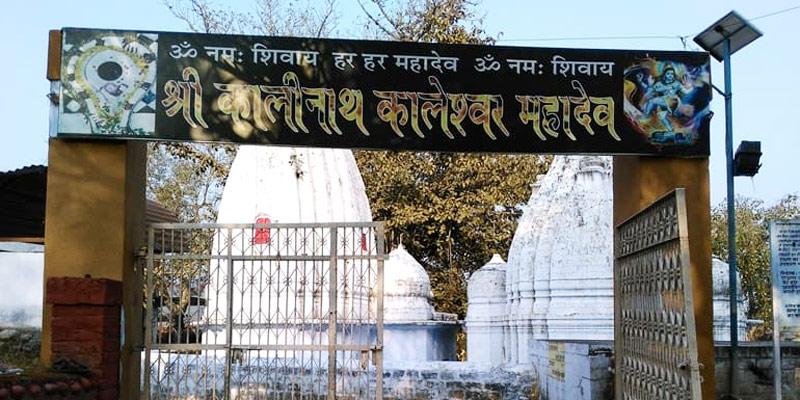
Kaleshwar Mahadev Temple is one of the most spiritually significant yet comparatively less commercialised Shiva temples in the Kangra district of Himachal Pradesh. Situated in Kaleshwar village near Pragpur, the shrine stands beside the Beas River and is surrounded by trees, river terraces, low Himalayan hills and the peaceful rural landscape of the lower Kangra Valley.
The temple is also known as Shri Kalinath Kaleshwar Mahadev Temple, Kalinath Kaleshwar Temple, Kalesar Mahadev Temple, Kaleshwar Mandir and Maha Kaleshwar Mahadev Temple. Travellers arranging transport should clearly specify Kaleshwar Mahadev Temple near Pragpur and Nadaun in Kangra district because similarly named Shiva temples exist in other parts of India.
Official tourism information places the temple approximately 10 kilometres from Pragpur and about 18 kilometres from Nadaun. Practical road distance may vary slightly according to the visitor’s accommodation, selected route and current bridge or road arrangements.
The temple is dedicated to Lord Shiva as Kalinath Kaleshwar or Maha Rudra. Its principal Shivling lies below the ordinary ground level within a comparatively small sanctum, creating a distinctive darshan experience.
The complex is also known for Panchtirthi Kund, a sacred water body associated with five pilgrimage waters in local religious tradition. During Baisakhi, devotees gather to bathe in the Panchtirthi area and the nearby Beas River according to established customs and safety arrangements.
Mahashivratri, the month of Shravan and important Mondays bring additional worshippers to the temple.
The presence of a cremation ghat beside the river gives Kaleshwar Mahadev a deeper relationship with the Shaivite ideas of impermanence, detachment, death and liberation. Visitors should approach this part of the complex with silence and sensitivity because funeral rites may be taking place.
Kaleshwar Mahadev Temple is suitable for Shiva devotees, families, senior citizens, couples, solo pilgrims, heritage travellers and visitors exploring the quieter spiritual destinations of Kangra.
Unlike remote high-altitude temples, it does not ordinarily require a mountain trek. Most visitors can approach by road, followed by a short walk through the temple entrance and courtyard.
The temple can be combined with Pragpur Heritage Village, Garli, Chintpurni Temple, Jwala Ji, Dada Siba, Nadaun, Sujanpur Tira, Maharana Pratap Sagar and other attractions across the lower Kangra region.
Travellers searching for hotels near Kaleshwar Mahadev Temple, homestays near Pragpur, places to stay near Kalesar Temple or pilgrimage accommodation near the Beas River can use MudrasStays to plan a comfortable and geographically practical spiritual journey.
## Spiritual Importance of Kalinath Kaleshwar Mahadev
Lord Shiva is worshipped at the temple as Kalinath Kaleshwar, a divine form associated with time, transformation, protection and the balance between Shiva and Shakti.
The name Kaleshwar may be understood through the Sanskrit concepts of kala and Ishwara.
Kala can refer to time, change, destiny and the force through which every created form eventually transforms.
Ishwara means Lord or supreme divine authority.
Kaleshwar can therefore be interpreted as the Lord of Time—the consciousness that remains beyond birth, growth, decline and death.
The name Kalinath can also be understood as the Lord or divine companion of Maa Kali.
This interpretation is especially important at the temple because regional tradition connects the site with Mahakali and the moment when Shiva pacified her fierce energy.
For devotees, the temple expresses the complementary relationship between Shiva and Shakti.
Shiva represents pure consciousness, stillness and awareness.
Shakti represents energy, creation, movement and transformation.
Without Shakti, consciousness remains inactive. Without Shiva, energy lacks stable awareness.
Kaleshwar Mahadev therefore represents balance rather than conflict between divine masculine and feminine principles.
Pilgrims visit the shrine to pray for courage, family welfare, health, emotional stability, protection, spiritual clarity and relief during difficult periods.
Some devotees pray before beginning a journey, marriage, business, examination or important responsibility.
Others return to express gratitude after experiencing what they consider the fulfilment of a prayer.
Such experiences belong to personal religious faith and should not be presented as guaranteed outcomes.
The temple offers a sacred environment for prayer and reflection, while medical, legal, financial and personal matters should continue to receive appropriate practical attention.
## The Tradition of Maa Kali and Lord Shiva
The principal regional legend of Kaleshwar Mahadev connects the temple with Maa Kali and Lord Shiva.
According to local Hindu tradition, destructive beings created suffering and disturbed the balance of the universe. Different versions identify the demons differently, sometimes referring to Jalandhar, Raktabeej or other forces defeated by the Divine Mother.
The gods prayed for protection, and the fierce power of Mahakali manifested to destroy the harmful forces.
After the battle, her intense energy and anger continued.
To restore balance, Lord Shiva lay down in her path.
When Kali stepped upon Shiva and recognised him, she became calm.
This sacred image of Kali standing upon Shiva appears across Shakta traditions.
It should not be interpreted as the goddess defeating or humiliating Shiva.
The image represents the relationship between dynamic power and silent consciousness.
Shakti is unlimited energy, while Shiva is the awareness through which that energy becomes balanced.
Regional tradition holds that Maa Kali then performed penance or entered samadhi beside the Beas River at the location now associated with Kaleshwar Mahadev.
Lord Shiva manifested here as Kalinath Kaleshwar, the divine lord connected with Kali.
This narrative belongs to sacred mythology and local faith rather than documented history.
Its spiritual message concerns the transformation of anger, the restoration of balance and the need for awareness even after a just struggle has ended.
The temple can therefore be understood as a place where fierce energy becomes peaceful through the presence of Shiva.
## Relationship with Mata Chintpurni
Kaleshwar Mahadev is traditionally connected with Mata Chintpurni, one of the major Shakti pilgrimage centres in the wider region.
Lord Shiva worshipped at Kaleshwar is sometimes described locally as the Maha Rudra or protective Bhairava associated with the Chintpurni Shakti tradition.
Several important Goddess temples are connected symbolically with a nearby Shiva or Bhairava shrine.
Shakti represents active divine energy, while Bhairava or Rudra provides protection, stability and guardianship.
For this reason, some pilgrims combine Chintpurni Mata Temple with Kaleshwar Mahadev Temple.
The two destinations are separate and require road travel, but they can form a meaningful Shiva–Shakti pilgrimage circuit.
Visitors should not present one temple as incomplete or spiritually invalid without the other unless following a specific personal tradition.
Every pilgrim may plan the journey according to faith, available time, health and local guidance.
## The Underground Shivling
The most distinctive sacred feature of Kaleshwar Mahadev Temple is the principal Shivling situated below ground level.
Devotees descend or enter a relatively confined sanctum to receive darshan.
The small space creates a concentrated and intimate worship experience, but it also requires orderly movement.
Only a limited number of visitors may be able to approach at one time.
People with severe mobility difficulties, claustrophobia, balance problems or respiratory concerns should assess the access carefully.
Senior citizens should use support where available and avoid entering during intense crowding.
The Shivling is regarded by devotees as self-manifested or swayambhu.
A swayambhu form is understood as having appeared naturally rather than being created and installed through ordinary human workmanship.
This is a matter of religious faith and cannot be established solely through archaeological examination.
Devotees also preserve the belief that the Shivling gradually descends deeper into the earth over time, sometimes described symbolically as moving by the size of a grain of barley.
This claim should be treated as temple tradition rather than a scientifically measured geological process.
Its symbolic meaning is powerful.
Shiva is understood as limitless and beyond complete human comprehension.
The deeper form may represent a divine presence extending beyond what the eye can see.
Visitors should not attempt to measure, touch excessively, dig around or test the sacred lingam.
Darshan must follow the instructions of the priest and temple management.
## The Meaning of the Shiva Lingam
The Shiva lingam is one of the most important sacred forms within Shaivism.
It represents the formless, infinite and all-pervading nature of Lord Shiva.
Rather than portraying Shiva only through a human-shaped image, the lingam expresses divine consciousness without ordinary physical boundaries.
The circular yoni base surrounding the lingam represents Shakti.
Together, the lingam and yoni express the unity of consciousness and energy from which creation emerges.
At Kaleshwar Mahadev, this symbolism is strengthened by the underground position of the sacred form.
The devotee moves downward towards the sanctum, leaving the bright outer courtyard and entering a smaller, quieter space.
The physical movement can be experienced as an inward spiritual journey.
The visitor temporarily withdraws from the visible world and approaches the unseen foundation beneath it.
## Panchtirthi Kund
Panchtirthi Kund is one of the most important pilgrimage features near Kaleshwar Mahadev Temple.
The name Panchtirthi means a sacred place associated with five tirthas or pilgrimage waters.
Local tradition holds that waters connected with five major holy destinations were brought together or spiritually united at this location.
Different accounts may identify the five tirthas differently or connect the creation of the kund with the Pandavas and divine forces.
These traditions should be presented as matters of religious belief rather than verified hydrological history.
For devotees, the kund represents the combined merit and purification associated with several sacred waters.
The physical water body also reflects a wider Hindu understanding of tirtha.
A tirtha is literally a crossing place—a location where the ordinary and sacred worlds are believed to come closer.
Bathing, prayer and reflection at such a place symbolise the desire to cross from confusion towards clarity and from harmful habits towards disciplined living.
The kund becomes especially important during Baisakhi.
Pilgrims may bathe or touch the water before offering prayers to Lord Shiva.
Visitors should follow current safety, cleanliness and crowd-management rules.
Soap, shampoo, detergent and chemical products must never be used in the sacred water.
Plastic packets, flowers wrapped in synthetic material, food and cloth should not be discarded in or around the kund.
Children and senior citizens should be supervised because steps can become slippery.
The spiritual character of the water does not guarantee medical purity. People with open wounds, weak immunity or other health concerns should make an informed decision before bathing.
## The Pandava Tradition
Official Himachal tourism material records local lore connecting Kaleshwar Mahadev Temple with the exile of the Pandavas.
According to regional belief, the Pandava brothers visited the area, worshipped Lord Shiva and contributed to the creation or sacred significance of Panchtirthi.
Some versions say they brought water from five holy places.
Others connect them with the temple’s earliest construction or ritual activity.
The Pandavas are associated with numerous temples, caves, lakes and mountain routes across Himachal Pradesh.
These traditions reflect the belief that the brothers travelled widely during periods of exile and spiritual preparation.
The existing temple structure should not be presented as archaeologically proven to have been physically constructed by the historical Pandavas.
The current buildings contain architectural material from much later periods.
The legend nevertheless remains culturally important.
It connects Kaleshwar Mahadev with the Mahabharata themes of exile, endurance, moral conflict and the search for divine guidance.
Visitors can respect both archaeological caution and living religious tradition.
## Katoch Patronage
Regional accounts connect the development of Kaleshwar Mahadev Temple with the Katoch rulers of Kangra.
The Katoch dynasty has a long association with the religious and political history of Kangra Valley.
Its rulers supported forts, temples, sacred institutions and artistic traditions across the region.
Kaleshwar Mahadev may have received royal patronage, repair or expansion under Katoch authority.
The precise contribution of individual rulers and dates requires careful historical study and should not be stated more specifically without reliable inscriptions or records.
Royal patronage would have helped provide craftsmen, stone, land, priests and maintenance for a temple situated beside an important river route.
The present complex should be understood as the result of several historical layers rather than one single construction event.
Its sacred traditions may be older than the visible buildings, while the architecture reflects later rebuilding, expansion and repair.
## Temple Architecture
Kaleshwar Mahadev Temple contains a cluster of white-painted shrines and towers with forms associated broadly with North Indian shikhara architecture.
The principal towers rise vertically above the sanctums and are crowned by finials.
Their pale surfaces create a strong contrast with the dark green trees and river landscape.
The temple complex includes stone construction, plastered surfaces, arched entrances, courtyards, smaller shrines and structures added or repaired at different times.
The underground principal sanctum gives the complex an architectural identity different from many conventional Shiva temples.
Visitors should not assume that every shrine belongs to the same historical period.
Living temple complexes evolve continuously.
Roofs are repaired, plaster is renewed, paint is applied and safety railings are introduced as weather and visitor requirements change.
The historical value of the temple lies not only in the age of one wall but in the continuity of its sacred location, worship and relationship with the Beas River.
## Shikhara-Style Towers
The shikhara is the rising tower above the sanctum in North Indian temple architecture.
It symbolically represents a sacred mountain.
The sanctum forms the spiritual centre, while the tower marks the divine presence from a distance.
At Kaleshwar Mahadev, several towers appear together and create a small sacred skyline above the riverbank.
The vertical forms guide the eye upward even though the principal Shivling lies below ground.
This creates an interesting architectural and spiritual contrast.
The visible tower rises towards the sky, while the sacred lingam descends into the earth.
Together, they express Shiva as present both above and below, visible and invisible, transcendent and immanent.
Visitors should observe the towers from the courtyard and permitted exterior areas.
Climbing onto walls, roofs or adjoining structures for photography is unsafe and disrespectful.
## Stonework and Sacred Carvings
The complex contains stonework and carvings associated with Hindu deities and sacred motifs.
Some images may represent Shaivite, Shakta, Vaishnava or other Puranic traditions.
Weathering, repainting and repair can make precise identification difficult.
Visitors should avoid assigning dramatic identities to every worn figure without reliable guidance.
Historic surfaces should not be touched repeatedly, scratched or covered with oil and colour.
The use of vermilion or other devotional substances should remain restricted to objects authorised for active worship.
Ancient or heritage stone requires different treatment from a modern ritual image.
A small act repeated by thousands of visitors can cause permanent damage.
## The Beas River Setting
The Beas River is central to the atmosphere and spiritual identity of Kaleshwar Mahadev Temple.
The river is also known in ancient and regional traditions as Vipasha, Bipasha or Vyas.
It flows through the mountains and valleys of Himachal Pradesh before continuing towards the plains.
At Kaleshwar, the river creates a peaceful environment suitable for prayer, meditation and quiet reflection.
The sound of flowing water, trees and open riverbank separates the temple from the more commercial atmosphere of large pilgrimage towns.
Water symbolises movement, purification and the continuing passage of life.
A river never remains physically identical from one moment to the next, yet it retains its name and identity.
This provides a natural metaphor for Shiva as the consciousness present through continuous transformation.
Visitors should never underestimate the physical power of the Beas.
Water levels can rise quickly during monsoon rainfall, upstream discharge or severe weather.
A calm-looking edge may contain strong current, deep water or unstable sediment.
Visitors must remain behind barriers, avoid wet rocks and obey every local warning.
Swimming and unauthorised ritual bathing in the river should be avoided.
## The Cremation Ghat
A cremation ghat stands near the temple on the riverbank.
Its presence gives Kaleshwar Mahadev a relationship with some of the deepest themes in Shaivism.
Lord Shiva is often associated with cremation grounds because he represents freedom from fear, social pride and attachment to the temporary body.
The cremation ground reminds visitors that wealth, status and physical appearance are temporary.
This is not intended to create fear.
It encourages humility, responsibility and awareness of how life is used.
The ghat may be active.
Visitors must maintain silence and respect the privacy of grieving families.
Funeral rites should never be photographed or recorded without explicit consent.
Travellers should not walk through a ceremony, stand close out of curiosity or treat the ghat as an unusual tourist attraction.
Ash, ritual material and structures connected with cremation should not be touched.
The spiritual importance of the temple increases when the visitor understands that worship, river, life and death exist together within one landscape.
## Moksha and Shiva Worship
Shiva is closely associated with moksha, liberation from ignorance and the cycle of attachment.
The presence of the cremation ghat has led devotees to regard the area as spiritually important for the remembrance of ancestors and the departed.
Rituals for ancestors should only be arranged through authorised priests and according to family tradition.
Visitors should avoid intermediaries making guaranteed claims that a particular payment or ritual will automatically secure liberation for another person.
Religious ceremonies have meaning through faith, intention, ethical conduct and established custom.
They should not be converted into fear-based commercial transactions.
The temple’s atmosphere can encourage every visitor to reflect upon impermanence and live more responsibly.
## Mahashivratri at Kaleshwar Mahadev
Mahashivratri is one of the most important festivals celebrated at Kaleshwar Mahadev Temple.
The occasion is dedicated to Lord Shiva and is observed through fasting, prayer, mantra recitation, abhishek, lamps, bhajans and night worship.
The temple may hold special havans, devotional programmes and fair activities according to annual arrangements.
Large numbers of devotees may arrive from Pragpur, Dehra, Nadaun, Kangra, Hamirpur, Una and adjoining regions.
The narrow temple approach and limited parking can become crowded.
Families should keep children and senior citizens close.
Visitors should follow queue arrangements and avoid remaining inside the small underground sanctum for an extended period.
Accommodation near Pragpur, Garli, Dehra and Nadaun should be booked early during important festival dates.
The exact programme and aarti schedule should be confirmed locally.
## Baisakhi Fair and Sacred Bathing
Baisakhi is one of the defining annual occasions at Kaleshwar Mahadev Temple.
Official Himachal tourism information identifies the temple’s Baisakhi celebration among the important fairs of Kangra district.
The main date ordinarily falls around 13 or 14 April according to the solar calendar.
Devotees gather for worship, sacred bathing, community activity and cultural programmes.
Panchtirthi Kund and the Beas riverside become particularly significant.
Pilgrims may believe that bathing at Panchtirthi carries the spiritual merit of bathing at five holy places.
This remains a matter of faith and should not be described as a guaranteed removal of sin, illness or misfortune.
Crowd management and water safety are essential.
Children, senior citizens and non-swimmers should remain in authorised areas.
Visitors must not enter the Beas when officials, temple representatives or local residents consider the current unsafe.
The religious importance of Baisakhi does not remove the ordinary risks of river current and changing water levels.
## Shravan and Monday Worship
The Hindu month of Shravan is especially sacred to Lord Shiva.
Devotees may visit Kaleshwar Mahadev on Mondays to offer water, bilva leaves, flowers and prayers.
Special abhishek and devotional gatherings may take place according to temple arrangements.
Shravan generally falls during the monsoon.
Visitors should therefore monitor rain, road conditions and the level of the Beas River.
A pilgrimage should be postponed when the route or riverbank becomes unsafe.
Devotion does not require ignoring official weather warnings.
Ordinary Mondays throughout the year may also attract additional Shiva worshippers.
Morning darshan is generally quieter than peak midday periods.
## Morning and Evening Aarti
The temple is generally reported to open early in the morning and remain accessible until evening, with morning and evening aarti conducted according to the daily schedule.
Recent district information lists general opening hours of approximately 5:00 AM to 8:30 PM, morning aarti around 6:00 AM and evening aarti around 7:00 PM.
These timings should be reconfirmed locally because season, festivals, priestly duties and maintenance can create changes.
Morning aarti offers a peaceful experience with cooler air, softer light and fewer day visitors.
Evening aarti combines bells, lamps, river sound and the transition into darkness.
Travellers attending evening worship should arrange dependable transport or stay nearby.
Unfamiliar rural roads and river approaches should not be navigated carelessly after dark.
## Best Time to Visit Kaleshwar Mahadev Temple
The temple can generally be visited throughout the year, although each season provides a different experience.
### Spring
Spring is one of the best times to visit.
The weather is generally comfortable, vegetation becomes fresh and the river landscape appears attractive.
Baisakhi brings the largest seasonal gathering.
Travellers seeking a peaceful visit should choose a weekday before or after the main fair.
Those attending Baisakhi should arrange accommodation and transport early.
### Summer
The lower Kangra region can become hot during summer.
Kaleshwar lies at a much lower elevation than Dharamshala, McLeod Ganj and the Dhauladhar mountains.
Visitors should not assume cool hill-station weather merely because the temple is in Himachal Pradesh.
Morning and evening are preferable.
Travellers should carry drinking water, sunscreen, sunglasses and a light head covering.
The riverbank can remain humid and warm during the afternoon.
### Monsoon
The monsoon makes the landscape green and increases the visual power of the Beas River.
It also creates the greatest safety concerns.
Heavy rainfall may cause rising water, strong currents, erosion, landslides, damaged roads and poor visibility.
The riverbank, kund steps and temple paths can become slippery.
Visitors must obey barriers and should not approach the water merely to photograph high flow.
Travel should be postponed during severe weather warnings.
### Autumn
Autumn is among the most pleasant periods for visiting Kaleshwar Mahadev.
Rain generally reduces, the surrounding countryside remains green and road travel becomes more comfortable.
The weather is suitable for combining the temple with Pragpur, Garli, Chintpurni and other regional destinations.
### Winter
Winter provides cool and peaceful conditions.
Morning and evening can become cold, while daytime may remain comfortable under sunlight.
Fog can affect visibility and road travel in the lower hills.
Snowfall at Kaleshwar Mahadev should not be expected because the temple lies in the lower Kangra region.
Visitors seeking snow should travel towards higher areas only after confirming current conditions.
## Reaching Kaleshwar Mahadev Temple from Pragpur
Pragpur is the most convenient heritage base for visiting Kaleshwar Mahadev Temple.
Official tourism information places the shrine approximately 10 kilometres from Pragpur, while practical estimates may range slightly according to the starting property and selected road.
A local taxi or private vehicle is generally the easiest option.
Public transport may serve nearby villages, but the frequency and final return service should be confirmed.
Visitors should complete the trip during daylight when possible.
The road passes through rural settlements and lower hill terrain.
Traffic may increase during Baisakhi, Mahashivratri and Shravan Mondays.
## Reaching from Dehra Gopipur
Dehra Gopipur is another practical transport and service centre for the temple.
The actual road distance can vary according to the route and river-crossing arrangements.
Dehra offers markets, pharmacies, local transport and accommodation.
Visitors can use it as a base when their itinerary also includes Jwala Ji, Pragpur, Maharana Pratap Sagar or other destinations in the lower Kangra region.
A local driver familiar with the Kaleshwar road can reduce confusion at rural junctions.
## Reaching from Nadaun
Nadaun lies on the Beas River and is approximately 18 kilometres from the temple according to official tourism information.
The town provides hotels, guesthouses, shops, restaurants and road connections towards Hamirpur and Sujanpur.
Nadaun can serve as a practical accommodation base for visitors approaching from Hamirpur, Bilaspur or Mandi.
Travellers should confirm the current road sequence because river geography and bridges can make straight-line distances misleading.
## Reaching from Kangra and Dharamshala
Kaleshwar Mahadev lies considerably farther from Kangra town and Dharamshala than Pragpur or Dehra.
A day trip is possible by private vehicle, but visitors should begin early.
The journey should be planned as part of a lower Kangra circuit rather than added casually after several destinations around McLeod Ganj.
Travellers whose main purpose is Kaleshwar, Chintpurni, Pragpur or Jwala Ji should stay in Pragpur, Garli, Dehra or another nearby location instead of central McLeod Ganj.
## Reaching by Rail
Amb Andaura is an important broad-gauge railway station serving the wider region and is identified by recent district information as one of the nearest major rail points.
Practical road distance should be confirmed according to the selected route.
The Pathankot–Jogindernagar narrow-gauge railway serves other parts of Kangra district but may not provide the most direct access to Kaleshwar.
Train schedules and operational status can change.
Visitors should arrange onward transport before arrival, particularly during early morning or late evening hours.
## Reaching by Air
Kangra Airport at Gaggal is the principal commercial airport in the district.
It lies considerably farther from Kaleshwar Mahadev than Pragpur and Dehra.
Flight operations can be affected by mountain weather.
Travellers should not schedule the temple visit immediately before a tightly timed departure.
Those flying into Kangra can combine Dharamshala with a separate lower-Kangra stay closer to Pragpur.
## Pragpur Heritage Village
Pragpur is one of the most important nearby attractions and the most distinctive accommodation base for Kaleshwar Mahadev Temple.
Founded during the late sixteenth century, Pragpur is recognised for its cobbled lanes, traditional houses, courtyards, water systems and architectural influences drawn from Rajput, colonial and regional styles.
The village offers a slower alternative to commercial hill stations.
Visitors can explore heritage lanes, old residences and local markets while respecting private property.
A combined Kaleshwar and Pragpur itinerary brings together Shiva pilgrimage and rural heritage tourism.
Morning darshan can be followed by an afternoon heritage walk.
## Garli Heritage Village
Garli lies close to Pragpur and is known for historic mansions, old merchant houses and distinctive architecture.
Many buildings reflect the prosperity of families connected with trade, administration and travel during the colonial and princely-state periods.
Some structures have been restored as heritage accommodation, while others remain private homes or fragile historic buildings.
Visitors should not enter abandoned-looking properties without permission.
Photography of residents and private courtyards requires consent.
Garli and Pragpur together provide an attractive stay base for travellers seeking heritage accommodation near Kaleshwar Mahadev Temple.
## Mata Chintpurni Temple
Mata Chintpurni Temple is one of the most important Shakti pilgrimage destinations in the wider region.
The goddess is worshipped as Chhinnamastika or Chintpurni Mata and is approached by devotees seeking courage and freedom from anxiety.
Kaleshwar Mahadev is traditionally associated with the Maha Rudra or Shiva dimension connected with this Shakti tradition.
A combined journey creates a meaningful Shiva–Shakti circuit.
Chintpurni can become extremely crowded during Navratri and major fairs.
Accommodation, parking and darshan time should be planned accordingly.
## Jwala Ji Temple
Jwala Ji is a major Shakti shrine where natural flames are worshipped as manifestations of the Divine Mother.
It can be combined with Kaleshwar Mahadev according to the traveller’s starting point and road itinerary.
A two-day plan is generally more comfortable than attempting Kaleshwar, Chintpurni and Jwala Ji within one rushed day.
Current temple timings, traffic arrangements and Navratri crowd conditions should be checked in advance.
## Dada Siba
Dada Siba is known for its Radha Krishna Temple and elaborate wall paintings.
The temple preserves an important artistic tradition of the Kangra region.
Its painted interior requires careful conservation.
Visitors should not touch frescoes, use flash photography without permission or lean against decorated walls.
Dada Siba can be included in a lower-Kangra cultural itinerary with Pragpur and Kaleshwar Mahadev.
## Nadaun
Nadaun is a historic riverside town associated with the Beas, regional trade and Sikh-period history.
It can serve as a practical accommodation and transport base.
Visitors can combine Kaleshwar darshan with riverside exploration and onward travel towards Sujanpur Tira or Hamirpur.
River safety remains important throughout the region, especially during the monsoon.
## Sujanpur Tira
Sujanpur Tira is known for its fort area, Narbadeshwar Temple and historical association with the Katoch rulers.
Narbadeshwar Temple is especially valued for its wall paintings and sacred architecture.
A longer heritage journey can connect Kaleshwar Mahadev, Pragpur, Nadaun and Sujanpur Tira.
The route should be divided across two or more days to avoid excessive driving.
## Maharana Pratap Sagar and Pong Dam
Maharana Pratap Sagar, formed by Pong Dam on the Beas River, is a major wetland and bird habitat.
Winter attracts migratory waterbirds.
Visitors should use recognised viewpoints and authorised boating arrangements.
Birds should not be chased, fed or disturbed.
Water levels and access vary by season.
The reservoir can be added to a broader lower-Kangra itinerary but requires separate time from temple darshan.
## Suggested One-Day Itinerary
A one-day Kaleshwar Mahadev itinerary is most practical from Pragpur, Garli, Dehra or Nadaun.
Begin with early morning darshan at Kaleshwar Mahadev Temple.
Visit the underground sanctum and Panchtirthi area according to current access.
Spend quiet time beside the river while remaining within safe boundaries.
Return towards Pragpur for breakfast or lunch.
Explore the heritage lanes of Pragpur and Garli during the afternoon.
Return to accommodation before dark.
## Suggested Two-Day Spiritual and Heritage Itinerary
On the first day, arrive in Pragpur or Garli and check into a hotel or homestay.
Explore the heritage villages and local surroundings.
On the second morning, travel to Kaleshwar Mahadev Temple for darshan.
After returning, continue towards Chintpurni or Nadaun according to the onward route.
This itinerary is suitable for families, couples and senior citizens.
## Suggested Three-Day Pilgrimage Circuit
The first day can focus on Pragpur, Garli and Kaleshwar Mahadev.
The second day can include Mata Chintpurni Temple.
The third day can include Jwala Ji or Dada Siba according to the traveller’s next destination.
Travellers should avoid compressing several crowded temples and rural heritage sites into one exhausting day.
## Where to Stay Near Kaleshwar Mahadev Temple
Accommodation immediately around the temple may be limited compared with larger towns.
The most useful bases include Pragpur, Garli, Dehra Gopipur and Nadaun.
### Hotels and Heritage Stays in Pragpur
Pragpur offers heritage properties, guesthouses and homestays.
It is ideal for visitors interested in both pilgrimage and architecture.
Properties within old lanes may have limited vehicle access, so parking and luggage arrangements should be confirmed.
### Stays in Garli
Garli offers heritage-style accommodation and rural homestays.
It suits couples, families and slow travellers seeking a peaceful environment.
Guests should confirm meal arrangements, room heating in winter, air cooling in summer and actual driving time to the temple.
### Hotels in Dehra
Dehra provides practical hotels, markets, pharmacies and transport.
It may suit families, groups and travellers continuing towards Jwala Ji or Kangra.
### Hotels in Nadaun
Nadaun offers convenient access for visitors arriving from Hamirpur and adjoining districts.
Properties may include hotels, guesthouses and simple riverside accommodation.
The exact route to Kaleshwar should be checked before booking.
### Local Homestays
Village homestays near the temple route can provide home-cooked meals, local guidance and a quieter experience.
Facilities vary.
Guests should confirm attached bathrooms, hot water, electricity, parking, meals and mobile connectivity.
## Choosing the Right Accommodation
Pilgrims wanting the shortest practical temple journey should choose a property near Pragpur, Garli, Dehra or the correct Kaleshwar approach.
Heritage travellers may prefer Pragpur or Garli.
Families should check room size, meals, parking and bathroom facilities.
Senior citizens should prioritise ground-floor rooms, direct vehicle access and minimal stairs.
Couples may choose restored heritage properties or peaceful rural homestays.
Solo pilgrims can select affordable guesthouses with dependable transport assistance.
Groups should confirm multiple-room availability, vegetarian food and suitable parking.
Baisakhi, Mahashivratri and Navratri travellers should book early.
Summer visitors should confirm air cooling because the lower Kangra region can become hot.
Monsoon guests should ask about the property’s road access and distance from vulnerable river or drainage areas.
## Book Stays Near Kaleshwar Mahadev Temple with MudrasStays
MudrasStays helps pilgrims, families and heritage travellers discover hotels, homestays, guesthouses and heritage accommodation near Kaleshwar Mahadev Temple, Pragpur, Garli, Dehra and Nadaun.
The platform is designed specifically for travellers searching for places to stay near temples and spiritual destinations across India.
Visitors can compare properties according to practical road distance from the temple, room type, budget, group size and required facilities.
Booking near Pragpur makes it easier to attend peaceful morning darshan and combine the temple with heritage exploration.
Solo pilgrims can search for affordable local rooms and guesthouses.
Couples can explore restored heritage stays and quiet rural homestays.
Families can choose properties offering meals, parking and comfortable room capacity.
Senior citizens can prioritise accessible accommodation and reliable taxi arrangements.
Pilgrimage groups can identify stays providing multiple rooms, vegetarian food and suitable vehicle parking.
Travellers attending the Baisakhi fair can reserve accommodation early and avoid uncertain last-minute availability.
Visitors combining Kaleshwar Mahadev with Chintpurni, Jwala Ji, Dada Siba, Nadaun or Sujanpur can choose different bases according to the actual road sequence.
MudrasStays helps travellers avoid booking a property that appears close on a map but requires unnecessary backtracking across river crossings and rural roads.
## Responsible Temple and River Travel
Kaleshwar Mahadev Temple is an active religious complex beside a powerful Himalayan river.
Visitors should dress respectfully and remove footwear wherever instructed.
Photography of the underground Shivling, sanctum, priests and private rituals should only be undertaken with permission.
The confined sanctum should not be blocked for prolonged photography.
Stone carvings and old temple surfaces should not be scratched, rubbed or covered with unauthorised substances.
Incense and lamps should be used only in designated areas.
Plastic bottles, food wrappers and puja packaging must be carried away.
Soap and chemicals must not be used in Panchtirthi Kund.
Nothing should be thrown into the Beas River.
Visitors must remain behind barriers and avoid wet rocks, unstable sand and strong currents.
Funeral rites at the cremation ghat must never be photographed or disturbed.
Children require continuous supervision near water and steps.
Drones, commercial filming and large photography equipment may require religious, local and aviation permission.
Local priests, drivers, shops, homestays and food providers should be treated fairly.
Responsible pilgrimage protects both the temple and the riverside community.
## A Sacred Meeting of Shiva, Kali and the Beas River
Kaleshwar Mahadev Temple represents a powerful meeting of Shaivism, Shakti tradition, sacred water, rural heritage and reflection on the complete cycle of life.
Lord Shiva is worshipped as Kalinath Kaleshwar, the divine consciousness associated with time and transformation.
The Mahakali legend expresses the restoration of balance after destructive force has been defeated.
The underground Shivling creates an inward and concentrated darshan experience.
The belief that the lingam descends into the earth represents the mystery and limitless nature of Shiva.
Panchtirthi Kund connects the temple with the idea of five sacred pilgrimage waters.
The Pandava traditions connect the site with the Mahabharata and the spiritual geography of exile.
The Katoch association links the shrine with the royal history of Kangra.
The Beas River represents movement, purification and the continuous flow of life.
The cremation ghat reminds visitors of impermanence, humility and the Shaivite path towards liberation.
Baisakhi brings together sacred bathing, worship and community gathering.
Mahashivratri and Shravan strengthen the temple’s living connection with Shiva devotees across the region.
For Shiva worshippers, Kaleshwar Mahadev Temple is a place to seek courage, balance and spiritual clarity.
For Shakti devotees, the Kalinath and Chintpurni traditions create a meaningful relationship between Shiva and the Divine Mother.
For families, the temple provides an accessible pilgrimage without a mountain trek.
For senior citizens, road-based access makes darshan possible when the underground sanctum is approached carefully.
For couples and slow travellers, Pragpur and Garli provide peaceful heritage accommodation near the temple.
For cultural travellers, the journey connects religious tradition with the architecture and rural life of lower Kangra.
For photographers, the white temple towers, old trees and Beas riverside offer memorable compositions when privacy and water safety are respected.
For spiritual seekers, the combination of temple, river and cremation ground encourages reflection upon transformation and the responsible use of life.
Kaleshwar Mahadev Temple should not be treated only as a lesser-known sightseeing location or a quick stop between major Shakti temples.
Its underground Shivling, Panchtirthi tradition, Mahakali legend and Beas riverside setting give it an independent and deeply meaningful spiritual identity.
Plan your pilgrimage to Kaleshwar Mahadev Temple with MudrasStays and experience one of the most peaceful Shiva destinations in Kangra district.
Seek the blessings of Kalinath Kaleshwar Mahadev, visit Panchtirthi Kund respectfully and experience the sacred flow of the Beas River.
Combine your journey with Pragpur Heritage Village, Garli, Mata Chintpurni Temple, Jwala Ji, Dada Siba, Nadaun, Sujanpur Tira and Maharana Pratap Sagar.
Book hotels near Kaleshwar Mahadev Temple, discover homestays near Pragpur and explore heritage and pilgrimage accommodation around Garli, Dehra and Nadaun through MudrasStays.
Stay closer to your spiritual destination, attend peaceful morning darshan and reduce unnecessary travel across rural and river-valley roads.
MudrasStays connects pilgrims, families and heritage travellers with suitable accommodation near temples and sacred destinations across India.
Begin your Kaleshwar Mahadev Temple journey with a comfortable stay and experience a meaningful pilgrimage centred on Lord Shiva, Maa Kali, Panchtirthi, the Beas River and the spiritual heritage of Kangra.