
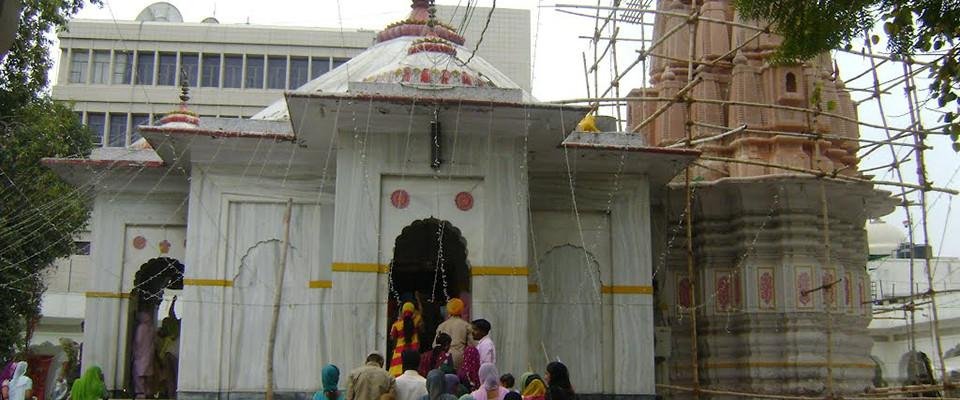
Shri Kali Mata Temple is one of the most revered religious landmarks in Patiala and one of the best-known Goddess temples in Punjab. Located on Mall Road opposite the historic Baradari Gardens, the temple occupies a prominent position within the cultural and architectural landscape of the former princely state of Patiala.
The shrine is also known as:
Shri Kali Devi Temple
Kali Mata Mandir Patiala
Maa Kali Devi Mandir
Shri Kali Devi Ji Temple
Patiala Kali Mata Temple
Kali Devi Mandir Mall Road
Maa Kali Temple Patiala
These names generally refer to the same major temple complex opposite Baradari Gardens.
Travellers booking a taxi, auto-rickshaw or hotel transfer should specify:
**Shri Kali Devi Temple, Mall Road, opposite Baradari Gardens, Patiala.**
This prevents confusion with smaller neighbourhood Kali temples and with the famous Kali Mata Temple at Kalka in Haryana.
The Patiala temple was established under the patronage of Maharaja Bhupinder Singh, ruler of the princely state of Patiala. Official temple and district information dates its construction to 1936.
The Maharaja is remembered for bringing a six-foot-tall image of Maa Kali and a sacred Paawan Jyot from Bengal to Patiala.
This connection with Bengal is central to the temple’s identity.
Bengal has one of India’s strongest and most visually distinctive traditions of Kali worship. By establishing the image in Patiala, the Maharaja created a meeting point between Bengali Shakta traditions and the religious culture of Punjab.
The complex also contains a much older shrine dedicated to Shri Raj Rajeshwari Ji.
This older sacred presence demonstrates that the location’s religious identity is not limited to the twentieth-century Kali temple alone. The present complex brings together royal patronage, older Goddess worship, modern pilgrimage facilities and the continuing faith of devotees from Punjab and neighbouring regions.
Maa Kali is worshipped as a powerful manifestation of Shakti.
Her dark form, fierce expression, weapons and dramatic iconography may initially appear frightening to visitors unfamiliar with Kali traditions.
However, the spiritual meaning of Kali is not uncontrolled violence.
She represents time, truth, transformation and the destruction of ego, fear and harmful attachment.
She removes the illusion that wealth, status and physical life are permanent.
Her power confronts arrogance and protects those who seek refuge with sincerity.
For devotees, Maa Kali is both fierce and maternal.
She destroys destructive forces but protects her children.
She represents courage during crisis, honesty when illusion is comforting and the spiritual power required to change one’s life.
The Patiala temple attracts Hindu and Sikh devotees as well as travellers interested in Punjab’s royal history, temple architecture and living religious traditions.
It is especially busy during Chaitra Navratri and Sharad Navratri, when the complex is decorated and large numbers of visitors arrive for darshan, aarti, offerings and community worship.
Saturdays, Tuesdays, Sundays and public holidays may also attract increased crowds.
The temple’s location within central Patiala makes it easy to combine with Baradari Gardens, Qila Mubarak, Sheesh Mahal, Moti Bagh Palace, Gurdwara Dukhniwaran Sahib and other important destinations.
Visitors searching for hotels near Kali Mata Temple Patiala, homestays near Baradari Gardens, pilgrimage accommodation near Mall Road, family hotels near Patiala railway station or places to stay near Patiala’s temples can use MudrasStays to plan a convenient and comfortable visit.
## Spiritual Importance of Maa Kali
Maa Kali is one of the most profound and frequently misunderstood forms of the Divine Mother.
The name Kali is connected with Kala, meaning time.
Time creates, changes and ultimately dissolves every physical form.
Palaces, empires, wealth, youth, power and the human body are all temporary.
Kali represents the reality that exists beyond these temporary identities.
Her dark or black form symbolises the infinite reality into which all colours and visible forms disappear.
Darkness is not presented here as evil.
It represents the limitless and unmeasurable nature of the Divine Mother.
The universe arises within her, exists through her power and eventually returns to her.
Her fierce appearance expresses spiritual urgency.
Maa Kali does not permit the ego to remain comfortable within false pride.
She cuts through illusion and reminds devotees that personal status cannot protect anyone from time, change or moral responsibility.
The sword in her hand represents the cutting away of ignorance.
The severed head appearing within Kali iconography represents the destruction of ego and false identity.
Her extended tongue has several interpretations within different traditions. It can represent the consumption of destructive forces, intense divine energy or the moment in which she recognises that she has stepped upon Lord Shiva and becomes still.
Garlands and other fierce symbols remind devotees that the physical body is temporary.
Kali’s purpose is not to create fear for its own sake.
Her iconography encourages people to confront realities that they normally avoid.
These include mortality, pride, anger, greed and the consequences of harmful action.
For devotees, Kali is also a deeply loving mother.
A mother may be gentle when comfort is needed and firm when danger must be confronted.
Kali’s fierce form protects rather than terrorises sincere devotees.
People visit Shri Kali Devi Temple to pray for courage, protection, emotional strength, family welfare and the ability to overcome difficult circumstances.
Students may pray for confidence.
Families may ask for peace and responsible decision-making.
Business owners may pray before beginning an important venture.
People experiencing fear or uncertainty may seek the inner strength associated with the Goddess.
These prayers belong to personal faith.
The temple should not be promoted as guaranteeing wealth, marriage, fertility, employment, medical recovery or supernatural protection from every difficulty.
Prayer can provide emotional support, discipline and courage, while practical problems should still receive appropriate medical, legal, financial and personal attention.
## Maa Kali and Shakti
Shakti is the divine energy through which existence becomes active.
Within Hindu philosophy, consciousness without energy remains unexpressed, while energy without consciousness lacks direction.
Lord Shiva represents pure consciousness.
Shakti represents the power through which consciousness becomes creation, movement, knowledge, protection and transformation.
Kali is one of Shakti’s most uncompromising forms.
She represents the force that destroys what has become harmful, false or spiritually stagnant.
This destruction should not be understood only in a physical sense.
A destructive habit may need to end.
An unjust system may need to be confronted.
False pride may need to be broken.
Fear may need to be faced.
Kali’s power makes transformation possible.
Her worship therefore requires honesty.
A devotee should not merely ask the Goddess to remove external enemies while refusing to examine anger, jealousy, dishonesty or arrogance within the self.
The deepest Kali worship involves the courage to identify and change one’s own harmful conduct.
## The Six-Foot Image of Maa Kali
The principal sacred image at Shri Kali Devi Temple is approximately six feet tall and was brought from Bengal under Maharaja Bhupinder Singh’s patronage.
The image presents Maa Kali through a dramatic and powerful form.
Her dark face, large eyes, extended tongue, multiple arms and weapons communicate spiritual power and fearless action.
The image is richly dressed and decorated with garments, jewellery, flowers and garlands.
Its appearance can vary according to the day, festival and seasonal decoration.
During Navratri and other important occasions, the shrine may receive elaborate floral and textile decoration.
The visual form should not be treated simply as an art object.
For devotees, it is the focus of living worship and the presence of the Divine Mother.
Visitors should avoid standing directly before the sanctum for prolonged photography when a queue is waiting.
Flash photography and close recording may be restricted.
The image, throne and sanctum should never be touched without permission.
Darshan is more meaningful when undertaken with attention rather than through continuous phone use.
## Sacred Paawan Jyot
The temple tradition records that a Paawan Jyot was brought from Bengal together with the image of Maa Kali.
Jyot means sacred flame.
Fire has profound spiritual significance in Hindu worship.
It gives light, transforms offerings and removes darkness.
The sacred flame symbolises divine awareness and the continuity of worship.
A flame remains active only when it is protected, maintained and supplied with fuel.
Spiritually, this reflects the need to maintain one’s own awareness through prayer, ethical conduct and discipline.
Visitors should observe lamps and sacred fire from the designated area.
Children must not approach flames without supervision.
Oil, ghee, incense and other material should only be submitted or lit where temple management permits.
Loose clothing, scarves and synthetic garments should be kept away from open flames.
## Shri Raj Rajeshwari Ji Temple
A much older temple dedicated to Shri Raj Rajeshwari Ji stands within the Kali Devi Temple complex.
Raj Rajeshwari means the supreme queen of kings or the sovereign Goddess who rules over all visible and invisible power.
She is connected with Shakti in her majestic, balanced and universal form.
While Kali represents time, fierce transformation and the destruction of ego, Raj Rajeshwari represents divine order, sovereignty, grace and the harmonious governance of creation.
The presence of both forms gives the temple complex a wider spiritual identity.
Devotees encounter both the fierce power that removes harmful forces and the royal power that establishes balance.
Visitors should not leave after seeing only the best-known Kali sanctum.
The Raj Rajeshwari shrine deserves separate and attentive darshan.
Its older devotional tradition forms an essential part of the site’s history.
The exact age of the earlier shrine should be described cautiously unless supported by detailed archaeological documentation.
It is appropriate to call it older than the 1936 Kali temple without assigning an unsupported ancient date.
## Royal Patronage of Maharaja Bhupinder Singh
Maharaja Bhupinder Singh ruled the princely state of Patiala from 1900 to 1938.
He is remembered as one of the most prominent rulers of the Patiala royal house.
His reign was associated with large architectural projects, sport, courtly culture and public institutions.
The establishment of Shri Kali Devi Temple in 1936 represents an important example of royal religious patronage.
The Maharaja did not commission only a local architectural structure.
He connected Patiala with the powerful Kali tradition of Bengal by bringing the principal image and sacred flame to his capital.
This reflected the movement of religious traditions across regional boundaries.
Punjab and Bengal developed distinct languages, artistic traditions and ritual cultures, yet devotion to the Divine Mother created a shared sacred connection.
The temple also demonstrates the religious diversity found within the history of Sikh-ruled princely states.
A Sikh ruler could support an important Hindu Goddess shrine within his capital.
The temple continues to attract devotees from Hindu and Sikh families.
This shared participation forms part of Punjab’s interconnected spiritual heritage.
## Historical Claims and Responsible Interpretation
Popular stories sometimes add dramatic details to the establishment of the temple, including narratives concerning natural disasters, royal vows or older ritual practices.
Such accounts should be presented as local tradition unless supported by reliable historical evidence.
The securely established core information is that Maharaja Bhupinder Singh commissioned the temple in 1936 and brought the six-foot Kali image and Paawan Jyot from Bengal.
The older Raj Rajeshwari shrine already existed within the complex.
The temple subsequently developed into one of Patiala’s principal pilgrimage centres.
Living religious sites change through renovation, decoration and the addition of pilgrim facilities.
The present appearance should not be assumed to be identical to that of 1936.
Floors, railings, walls, coverings, utility systems, entrances and queue arrangements can be renewed while the spiritual continuity remains intact.
## Traditional Offerings
The temple’s devotional customs include offerings such as flowers, sweets, coconuts, chunri, bangles, mustard oil and other materials associated with Goddess worship.
Some descriptions also refer to less common regional or tantric-style offerings.
Visitors should never assume that every historic offering remains permissible or that it may be made independently.
All offerings must follow current temple rules and applicable law.
Animals, intoxicating substances, open fire or unusual ritual material should never be brought into the complex without explicit lawful and authorised guidance.
Visitors should not participate in any activity that causes cruelty, danger, public disorder or environmental harm.
The most appropriate offering for a first-time pilgrim is generally a simple authorised combination of flowers, prasad, coconut or chunri obtained from recognised counters or shops.
Faith should not be exploited by sellers claiming that expensive or unusual offerings are compulsory.
## Navratri at Kali Mata Temple
Navratri is the most important festival period at Shri Kali Devi Temple.
Navratri means nine nights and celebrates the many forms of the Divine Mother.
Two principal Navratri periods are observed each year.
Chaitra Navratri generally falls during March or April.
Sharad Navratri generally falls during September or October.
The exact dates follow the Hindu lunar calendar and change annually.
During Navratri, the temple may be decorated with flowers, lights, flags and colourful cloth.
Special aarti, havan, devotional singing, recitations and community services may be organised.
Large numbers of pilgrims arrive from Patiala and other parts of Punjab, Haryana, Chandigarh, Delhi and neighbouring regions.
The roads around Mall Road and Baradari Gardens can become highly congested.
Parking restrictions, barricades, queues and security checks may be introduced.
Families should keep children and senior citizens close.
Groups should decide upon a meeting point before entering the busiest area.
Visitors should carry minimal luggage and keep identification available.
Morning hours are usually more manageable than peak evening periods.
However, even early mornings can attract significant crowds on Ashtami and Navami.
Temple timings and traffic arrangements should be verified for the relevant year.
## Chaitra Navratri
Chaitra Navratri marks the spring cycle of Goddess worship.
The weather is generally more comfortable than peak summer, though afternoons can become warm.
The festival is associated with renewal, fasting and the beginning of a new spiritual cycle.
Visitors may combine darshan with a visit to Baradari Gardens and other nearby heritage attractions.
Festival crowds require additional time.
## Sharad Navratri
Sharad Navratri takes place after the monsoon and is among the busiest periods at Kali temples.
The nine nights culminate around Ashtami, Navami and Vijayadashami.
The temple atmosphere becomes especially vibrant during evening aarti.
Travellers seeking quieter darshan may visit during an early weekday morning or choose a date immediately before or after the main festival period.
## Kali Puja and Diwali Period
Kali Puja is especially important in Bengal and is commonly observed around the Diwali new moon.
Because Patiala’s image and sacred flame are connected with Bengal, the broader Kali Puja tradition has particular symbolic relevance.
The exact scale and form of celebrations at the Patiala temple should be confirmed annually.
Diwali periods can bring additional visitors, lights and devotional activity.
Fire safety and crowd discipline are essential.
Visitors should not light lamps or fireworks outside designated arrangements.
## Tuesdays, Saturdays and Sundays
Tuesdays are widely associated with Goddess worship across North India.
Saturdays may also attract large numbers of devotees at this temple.
Weekends and public holidays are generally busier because families can travel together.
Visitors seeking quiet prayer should consider an ordinary weekday morning.
## Daily Aarti and Temple Timings
The temple’s published schedule generally begins with opening and morning aarti at approximately 5:00 AM.
The temple normally remains open until the evening, with closing currently published around 9:00 PM.
Evening-aarti hours change between winter and summer.
Visitors should reconfirm the schedule because festival programmes, renovation work, security instructions and seasonal changes can affect access.
The morning aarti offers a focused and comparatively peaceful experience.
Evening aarti creates a more energetic atmosphere of lamps, bells and collective prayer.
Travellers attending late worship should arrange transport and understand any parking restrictions.
## Mata Ji Ki Rasoi
The temple’s published information includes a daily Mata Ji Ki Rasoi service around noon.
Community food service expresses nourishment, equality and devotion.
Visitors should follow the seating and serving arrangements respectfully.
Only the amount of food that can be eaten should be accepted.
Food waste contradicts the purpose of sacred service.
Timings and current operating arrangements should be confirmed, particularly during redevelopment or festivals.
## Architecture of the Temple Complex
Shri Kali Devi Temple combines twentieth-century construction, older sacred architecture and later pilgrim infrastructure.
The principal building uses a white exterior with coloured and ornamental details.
The entrance and sanctum create a strong visual contrast between the pale building and the dark image of Maa Kali.
Domes, shikharas, arches, courtyards and raised platforms define different parts of the complex.
The sanctum uses gold-toned decorative surfaces that intensify the dramatic appearance of the Goddess.
The Raj Rajeshwari shrine introduces an older sacred element.
Marble and patterned flooring provide open circulation areas for devotees.
Railings and queue channels regulate movement during busy periods.
The complex should be understood as a living temple rather than a museum frozen in one historical moment.
Maintenance, repainting, waterproofing and redevelopment are necessary because of constant use and seasonal weather.
## The Sacred Sarovar
The temple historically contains a sacred pond or sarovar.
In recent decades, its condition and water presence have changed, and a major rejuvenation project was announced.
Work has included or proposed desilting, waterproofing, stone lining, water supply, improved walkways and wider heritage-sensitive redevelopment.
Visitors should not assume that the sarovar is fully accessible or filled on every date.
Temporary barriers, construction areas or route changes may be present.
Any opened water area should be approached carefully.
Children must remain supervised.
Bathing should not be attempted unless expressly permitted.
Plastic, flowers, oil, coins and other material should not be thrown into the water.
The revival of a sacred pond should include environmental responsibility rather than only visual beautification.
## Current Redevelopment and Visitor Expectations
A major phased improvement programme was initiated for the temple from late 2025.
Plans have included the revival of the sarovar, improved entrances, pathways, drainage, sanitation, pilgrim facilities, parking and traffic management.
Some facilities may be completed while others remain under construction.
Visitors may encounter scaffolding, restricted passages, temporary queue routes or altered gates.
The presence of construction does not mean that darshan is necessarily closed, but accessibility can change.
Senior citizens and groups should obtain current information before arrival.
Proposed facilities such as new halls, lifts, canteens, shows or accommodation should not be assumed operational until officially confirmed.
## Accessibility for Senior Citizens
The temple is centrally located and does not require a trek.
This makes it considerably more accessible than hill, cave and remote pilgrimage destinations.
The principal complex includes paved and marble areas, but steps, thresholds, crowds and temporary construction may still create difficulty.
Senior citizens should visit during cooler and quieter hours.
A weekday morning is usually preferable.
Wheelchair users should verify the nearest accessible gate, ramp and current route before departure.
During Navratri, parking may be placed farther away and queues may become long.
People unable to tolerate standing should avoid the busiest festival dates.
## Visiting with Children
Children can learn about Maa Kali through themes of courage, truth and the removal of fear.
Parents should explain that her fierce appearance does not mean she is evil.
She represents a protective mother who destroys harmful forces.
Children should remain supervised around lamps, railings, crowded queues and any open water or construction area.
They should not climb temple structures, touch the sacred throne or ring bells continuously.
A frightened child should not be forced close to a visually intense image.
The visit can be introduced gradually and respectfully.
## Temple Etiquette
Visitors should dress modestly and remove footwear wherever directed.
Phones should remain silent in the sanctum.
Photography and video rules must be followed.
The main idol, sacred flame, priests and private rituals should only be recorded when permission is clear.
Visitors should not touch the throne, decorations or ritual objects.
Queue barriers must not be crossed.
Offerings should be purchased or submitted through authorised arrangements.
Visitors should avoid self-appointed intermediaries promising guaranteed blessings or special access.
Faith does not require payment for exaggerated claims.
## Photography and Drone Rules
The temple is a sensitive and crowded religious location.
Drone use may be prohibited or temporarily restricted through administrative orders.
No visitor should launch a drone based only on general city rules.
Written permission must be obtained where applicable.
Photography of security points, restricted construction areas, inner worship spaces and private ceremonies should be avoided.
Professional filming may require separate approval.
## Best Time to Visit Kali Mata Temple
The temple can generally be visited throughout the year.
### October to March
The cooler months provide the most comfortable weather for temple and heritage exploration.
Morning and evening can become cold during December and January.
Fog may affect road and rail schedules.
### Chaitra Navratri
March or April brings major religious activity.
The atmosphere is energetic but crowded.
Accommodation and transport should be arranged early.
### April to June
Patiala can become extremely hot.
Marble and paved surfaces absorb sunlight.
Early-morning or evening darshan is preferable.
Visitors should carry water and avoid prolonged standing in direct afternoon heat.
### July to September
The monsoon brings humidity and rain.
Floors can become slippery.
Drainage or redevelopment work may temporarily affect movement.
### Sharad Navratri
September or October offers the largest festival atmosphere but also the greatest crowd pressure.
Visitors seeking quiet prayer should travel outside the final festival days.
## Reaching Kali Mata Temple
The temple stands on Mall Road opposite Baradari Gardens in central Patiala.
It is easily reached by taxi, auto-rickshaw, private vehicle and local city transport.
The official district information places both Patiala railway station and the principal bus stand at approximately one kilometre, though actual road distance depends upon the specific gate and route.
Traffic can increase during office hours, school timings, weekends and festivals.
## Reaching from Patiala Railway Station
Patiala railway station is close to the temple.
An auto-rickshaw or taxi normally provides a short transfer.
Visitors travelling with large luggage should first check into accommodation or use secure storage.
Suitcases should not be carried through temple queues.
## Reaching from Patiala Bus Stand
The main bus stand is also close to the central temple area.
Autos and local taxis are available.
During Navratri, traffic diversions may lengthen the journey or require walking from a controlled drop-off point.
## Reaching by Air
Chandigarh International Airport is the principal airport for most travellers.
Patiala requires an onward road transfer.
Travel time depends upon traffic and the chosen route.
Visitors arriving from Delhi may also travel by road or rail.
No temple visit should be scheduled immediately before a flight without sufficient buffer time.
## Baradari Gardens
Baradari Gardens stand opposite the temple and form one of Patiala’s best-known historic green spaces.
The garden was developed during the princely period and contains avenues, trees and heritage structures.
A morning itinerary can combine temple darshan with a walk through the garden where public access is permitted.
Visitors should respect maintenance restrictions and should not damage plants or heritage features.
## Qila Mubarak
Qila Mubarak is the historic fortified centre of Patiala.
Its development is associated with Baba Ala Singh, founder of the Patiala state.
The complex includes the Qila Androon and other courtly structures.
Access to individual sections can change because of conservation work.
Visitors should verify opening arrangements and avoid restricted or unstable areas.
## Sheesh Mahal
Sheesh Mahal is associated with Maharaja Narinder Singh and Patiala’s artistic heritage.
Its name refers to decorative mirror work.
The wider complex is connected with paintings, architecture and museum collections.
Current access and renovation status should be confirmed before travel.
## Moti Bagh Palace
The Moti Bagh Palace complex represents Patiala’s royal architectural tradition.
Parts of the wider estate have been used by institutions, including the National Institute of Sports.
Visitors should not assume unrestricted entry to every building or ground.
## Gurdwara Dukhniwaran Sahib
Gurdwara Dukhniwaran Sahib is one of Patiala’s most important Sikh pilgrimage destinations.
It is associated with the visit of Guru Tegh Bahadur.
Visitors should cover their heads, remove footwear and wash their feet where directed.
The sarovar and langar should be approached with respect.
A combined journey to Kali Mata Temple and Dukhniwaran Sahib reflects the interconnected Hindu and Sikh devotional landscape of Patiala.
## Qila Bahadurgarh
Qila Bahadurgarh lies outside central Patiala and has Mughal and Patiala-state associations.
It should be planned as a separate road excursion.
Access to military or restricted sections must not be assumed.
## Suggested Half-Day Temple and Garden Itinerary
Begin with early-morning darshan at Shri Kali Devi Temple.
Attend morning aarti where practical.
Visit the Raj Rajeshwari shrine and other open sacred spaces within the complex.
Cross towards Baradari Gardens after completing darshan.
Spend time in the garden and return to central Patiala for breakfast or lunch.
## Suggested One-Day Patiala Spiritual Itinerary
Begin at Kali Mata Temple.
Continue to Gurdwara Dukhniwaran Sahib.
Visit Qila Mubarak during the afternoon if open.
Explore a central market or heritage area before returning to accommodation.
The schedule should remain flexible because temple queues and urban traffic can vary.
## Suggested Two-Day Heritage Journey
On the first day, visit Kali Mata Temple, Baradari Gardens and Dukhniwaran Sahib.
On the second day, explore Qila Mubarak, Sheesh Mahal and other accessible royal landmarks.
This slower itinerary is more suitable for senior citizens and families.
## Suggested Three-Day Patiala Circuit
Day one can focus on major spiritual destinations.
Day two can cover royal architecture and museums.
Day three can include Qila Bahadurgarh or another verified excursion according to current access.
Travellers can also use Patiala as a base before continuing towards Chandigarh, Fatehgarh Sahib, Sangrur or Nabha.
## Accommodation Near Kali Mata Temple
The temple’s central urban location provides access to hotels, guesthouses, homestays and economical lodging across Patiala.
The best location depends upon arrival transport and the wider itinerary.
## Hotels Near Mall Road and Baradari Gardens
Properties around Mall Road and Baradari provide the most convenient access to the temple.
Guests can reach early-morning darshan with a short drive or walk where practical.
Availability and parking should be checked because central roads can become congested.
## Hotels Near Patiala Railway Station
Railway-area hotels suit short visits and early departures.
Travellers should verify room quality, noise levels, parking and breakfast arrangements.
The temple is comparatively close, making this area practical for pilgrimage-focused stays.
## Hotels Near the Bus Stand
Properties near the bus stand are useful for travellers using intercity buses.
The area can be busy, so families should compare convenience with room comfort and noise.
## Hotels in Leela Bhawan and Central Patiala
Leela Bhawan and surrounding commercial areas provide restaurants, shopping, transport and a range of hotels.
These locations are suitable for families and business travellers combining pilgrimage with other work.
The road distance to the temple remains manageable.
## Hotels in Urban Estate and Quieter Areas
Urban Estate and newer parts of Patiala may offer quieter or more modern accommodation.
They are farther from the temple than Mall Road but can provide easier parking and broader room choices.
Guests should arrange an early taxi for darshan.
## Homestays in Patiala
Verified homestays can provide local meals, Punjabi hospitality and a residential experience.
Facilities vary significantly.
Guests should confirm attached bathrooms, air-conditioning, heating, parking, meals and transport.
## Pilgrim and Dharamshala Accommodation
Economical dharamshalas and community lodging may be available within Patiala.
Availability, identification requirements and booking procedures should be verified directly.
A dharamshala should not automatically be expected to provide hotel-style privacy, housekeeping or attached bathrooms.
Any proposed new accommodation within the temple redevelopment should not be assumed operational until formally opened.
## Choosing the Right Stay
Pilgrims focused primarily on Kali Mata Temple should select a property near Mall Road, Baradari Gardens, the railway station or central Patiala.
Families should confirm room size, meals and safe parking.
Senior citizens should prioritise lifts, ground-floor rooms and dependable transport.
Couples may prefer quieter hotels or homestays outside the busiest transport zone.
Solo pilgrims should choose populated and well-connected accommodation.
Groups should confirm multiple rooms, vegetarian meals, driver lodging and bus parking.
Navratri visitors should book well in advance.
Summer guests should verify effective air-conditioning.
Winter travellers should confirm hot water and heating.
## Book Hotels Near Kali Mata Temple with MudrasStays
MudrasStays helps pilgrims, families and cultural travellers discover hotels, homestays, guesthouses and pilgrimage accommodation near Shri Kali Devi Temple and throughout Patiala.
The platform is designed for travellers searching specifically for places to stay near temples, Shakti shrines and sacred heritage destinations.
Visitors can compare accommodation according to practical road distance from the temple, room category, budget, family size and required facilities.
Booking near Mall Road or Baradari Gardens can make peaceful morning darshan easier.
Rail travellers can select hotels balancing station convenience with temple access.
Families can choose properties offering comfortable rooms, meals and parking.
Senior citizens can prioritise accessible hotels with lifts and reliable taxi services.
Solo pilgrims can search for economical guesthouses in well-connected neighbourhoods.
Pilgrimage groups can identify accommodation providing multiple rooms, vegetarian food and suitable parking.
Travellers visiting during Navratri can reserve rooms early and avoid uncertain last-minute availability.
Visitors combining Kali Mata Temple with Qila Mubarak, Sheesh Mahal, Baradari Gardens, Gurdwara Dukhniwaran Sahib and other attractions can choose a stay according to the actual sequence of the journey.
MudrasStays helps travellers avoid selecting a property that appears close in straight-line distance but requires movement through congested city roads.
## Responsible Pilgrimage
Shri Kali Devi Temple is an active place of worship and an important part of Patiala’s royal and spiritual heritage.
Visitors should dress respectfully and follow the designated queue.
The Maa Kali image, Paawan Jyot, Raj Rajeshwari shrine, priests and private ceremonies should only be photographed when permission is clear.
Sacred surfaces should not be touched or scratched.
Offerings should be made through recognised arrangements.
Children should remain supervised around lamps, stairs, crowds and construction areas.
Food and prasad should not be wasted.
Plastic waste must be placed in appropriate bins.
## Respecting the Goddess and Other Devotees
The fierce appearance of Maa Kali should not be mocked, imitated disrespectfully or used only for dramatic social-media content.
Devotees may be engaged in private prayer, grief or family rituals.
They should not be photographed without consent.
Visitors should avoid loud conversations near the sanctum.
Darshan should be completed without pushing.
## Environmental Responsibility
Flowers and religious offerings should not be left in drains, roads or the sarovar.
Oil and ritual material should be placed only where authorised.
Disposable plastic should be reduced.
Redevelopment and sarovar restoration can succeed only when visitors protect the improved environment.
## Respecting Patiala’s Community
The temple stands within a busy urban neighbourhood.
Vehicles should not block homes, shops, hospital access, garden gates or emergency routes.
Unnecessary horn use should be avoided.
Local residents, shopkeepers, priests, volunteers, drivers and accommodation providers should be treated fairly.
Using responsible local services allows pilgrimage tourism to support the city rather than burden it.
## A Sacred Meeting of Kali, Royal Patronage and Punjabi Heritage
Shri Kali Devi Temple represents a powerful meeting of Maa Kali, royal Patiala history, Bengali Shakta tradition and Punjabi devotional culture.
The six-foot image expresses the fearless energy of the Divine Mother.
The Paawan Jyot represents continuing awareness.
The sword represents the removal of ignorance.
Kali’s dark form represents the infinite reality beyond temporary appearances.
The Raj Rajeshwari shrine expresses divine sovereignty and balance.
Maharaja Bhupinder Singh’s patronage connects the temple with the history of the Patiala state.
The participation of Hindu and Sikh devotees reflects Punjab’s interconnected spiritual heritage.
Navratri brings the temple into its most vibrant cycle of collective worship.
The daily rasoi transforms devotion into nourishment and service.
The sarovar-revival project represents an opportunity to reconnect pilgrimage with water conservation.
For Shakti devotees, the temple is a place to seek courage, truth and spiritual transformation.
For families, it provides an accessible pilgrimage within a major city.
For senior citizens, road access makes the principal darshan manageable when crowds are avoided.
For children, the shrine provides an opportunity to understand that fierce divine forms can represent protection rather than evil.
For cultural travellers, the temple reveals how royal patronage connected Punjab with Bengal’s Kali tradition.
For heritage visitors, its location beside Baradari Gardens creates a direct relationship between sacred and princely Patiala.
For spiritual seekers, Maa Kali communicates a demanding but liberating teaching: everything temporary will change, so life should be lived with courage, honesty and compassion.
Shri Kali Devi Temple should not be treated merely as a quick urban attraction.
Its complete identity deserves time.
Receive darshan of Maa Kali without rushing.
Observe the sacred flame respectfully.
Visit the older Raj Rajeshwari shrine.
Understand the temple’s connection with Maharaja Bhupinder Singh and Bengal.
Follow all current redevelopment and security instructions.
Participate in food service without waste.
Carry Kali’s message beyond the temple by confronting fear, ego and irresponsible conduct.
Plan your pilgrimage to Shri Kali Mata Temple with MudrasStays and experience one of Punjab’s most important Goddess shrines.
Seek the blessings of Maa Kali, witness the sacred Paawan Jyot and pay respect at the historic Raj Rajeshwari Temple.
Combine your journey with Baradari Gardens, Qila Mubarak, Sheesh Mahal, Moti Bagh Palace, Gurdwara Dukhniwaran Sahib and the wider heritage attractions of Patiala.
Book hotels near Kali Mata Temple, discover homestays near Baradari Gardens and explore suitable pilgrimage accommodation throughout Patiala through MudrasStays.
Stay closer to the shrine, attend peaceful morning darshan and reduce unnecessary travel through busy city roads.
MudrasStays connects pilgrims, families and cultural travellers with suitable accommodation near temples, Shakti shrines and sacred heritage destinations across India.
Begin your Kali Mata Temple journey with a comfortable stay and experience a meaningful pilgrimage centred on Maa Kali, the Paawan Jyot, royal Patiala heritage and the timeless spiritual power of transformation.