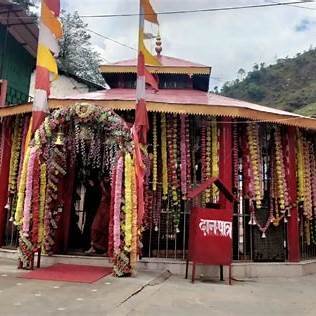
Kalimath Temple is one of the most respected Shakti pilgrimage destinations in the Rudraprayag district of Uttarakhand. Situated in the peaceful Himalayan village of Kalimath, close to Ukhimath and Guptkashi, the temple is dedicated primarily to Goddess Kali and is traditionally regarded as an important Siddha Peeth and Shakti centre of the Garhwal region.
Surrounded by forested hills, mountain villages, agricultural terraces and a sacred river landscape, Kalimath offers a quieter spiritual experience than many of the larger pilgrimage centres of Uttarakhand. The sound of temple bells, flowing water, devotional chants and mountain winds creates an environment suited to worship, meditation and personal reflection.
Kalimath Temple is especially distinctive because Goddess Kali is worshipped here together with Goddess Lakshmi and Goddess Saraswati. These three forms of the Divine Mother represent power, prosperity and wisdom. Their combined worship gives Kalimath a special place within the Shakti traditions of India.
Devotees visit Kalimath throughout the year to seek courage, protection, prosperity, knowledge, family welfare and relief from difficulties. The temple receives particularly large numbers of pilgrims during Navratri, when special prayers and rituals honour the different manifestations of the Divine Mother.
Kalimath is also frequently included in spiritual journeys covering Dhari Devi Temple, Guptkashi, Ukhimath, Triyuginarayan, Kedarnath, Chopta, Tungnath and Madhmaheshwar. Its location allows travellers to experience an important Shakti shrine while exploring the wider sacred landscape of Rudraprayag.
## Spiritual Importance of Kalimath Temple
Kalimath is regarded as a Siddha Peeth, meaning a sacred place associated with spiritual accomplishment, divine energy and generations of religious practice. The shrine is held in particularly high esteem within the local communities of Rudraprayag and among devotees undertaking pilgrimage through the Kedarnath region.
Goddess Kali is worshipped as the fierce and protective manifestation of Shakti. She represents the power that destroys fear, ignorance, injustice, ego and negative forces. Although her appearance and stories can be powerful, devotees approach her as a compassionate mother who protects those who seek her blessings with sincerity.
At Kalimath, Maa Kali is not understood only as a destructive force. She is worshipped as the energy that removes obstacles and creates space for spiritual renewal. Her presence represents courage during difficult circumstances and the strength required to overcome fear.
Goddess Lakshmi is associated with prosperity, well-being, abundance and harmony. Her worship reminds devotees that prosperity includes not only material wealth but also health, family stability, gratitude and responsible living.
Goddess Saraswati represents knowledge, wisdom, learning, music, speech and creative expression. Students, teachers, artists and spiritual seekers may pray for concentration, understanding and clarity.
The presence of Kali, Lakshmi and Saraswati at the same sacred destination represents a complete vision of the Divine Mother. Strength without wisdom may become uncontrolled, prosperity without discipline may become temporary, and knowledge without courage may remain unused. Their combined worship expresses balance between power, abundance and understanding.
This spiritual combination makes Kalimath meaningful for devotees at different stages of life. Families may pray for protection and prosperity, students may seek knowledge, professionals may seek courage and clarity, and spiritual travellers may visit for meditation and inner discipline.
## Kalimath as a Shakti Peeth
Kalimath is traditionally counted among the important Shakti Peethas or Shakti Sthals of India. Shakti Peethas are sacred centres associated with the worship of the Divine Mother and the spiritual power of Goddess Sati or Shakti.
Different religious traditions preserve varying lists and interpretations of the Shakti Peethas. Within Uttarakhand, Kalimath is widely respected as one of the major destinations dedicated to the goddess and is included within the state’s Shakti pilgrimage circuit.
The importance of Kalimath does not depend only on its classification within a particular list. Its significance comes from centuries of continued worship, regional traditions, the presence of the sacred Sri Yantra and the devotion of local communities.
Pilgrims often describe Kalimath as a place where the divine feminine presence is experienced through the temple, river, forests and surrounding mountains. The destination remains less commercial than several nationally famous Shakti shrines, allowing visitors to experience its religious atmosphere more personally.
Travellers should approach the term Shakti Peeth respectfully while recognising that historical and scriptural lists may differ. For devotees, the spiritual importance of Kalimath is rooted in living faith rather than only in classification.
## The Sacred Sri Yantra
One of the most distinctive traditions of Kalimath Temple is that Goddess Kali is not worshipped through a conventional standing idol in the principal shrine.
According to temple tradition, worship is centred on a sacred Sri Yantra located beneath a silver covering. The Sri Yantra is a complex sacred geometric form representing the cosmic power of the Divine Mother and the relationship between the individual soul and universal consciousness.
In Shakta and Tantric traditions, a yantra is not treated merely as a decorative pattern. It is regarded as a spiritual diagram through which divine energy is contemplated and worshipped.
The Sri Yantra contains interlocking geometric forms traditionally interpreted as representing the union of Shiva and Shakti. The outward and inward arrangement of its triangles symbolises the relationship between consciousness, energy, creation and spiritual return.
At Kalimath, the covered Sri Yantra becomes the principal focus of devotion to Maa Kali. This makes the shrine different from temples where the deity is represented primarily through an anthropomorphic image.
According to local religious tradition, the silver covering is opened only on a special occasion during Navratri, and the sacred worship is performed privately by the chief priest according to prescribed rituals.
Visitors should understand that access to the Sri Yantra and the performance of specific ceremonies are governed by temple tradition. Pilgrims should not request that coverings be removed or rituals altered for photography, curiosity or private viewing.
The secrecy surrounding the Sri Yantra is an important part of the temple’s spiritual discipline. Not every sacred object is intended for continuous public display, and the restricted ritual reinforces the belief that divine energy should be approached through reverence and preparation.
Devotees can offer prayers at the shrine without directly viewing the Sri Yantra. The spiritual importance of the temple lies in faith, worship and the presence attributed to Maa Kali rather than in visual access alone.
## Legend of Goddess Kali and Raktabija
Kalimath is closely connected with the religious story of Goddess Kali and the demon Raktabija.
According to Hindu mythology, Raktabija possessed a powerful ability: whenever a drop of his blood touched the ground, another demon resembling him was created. This made him extremely difficult to defeat because every wound increased the number of adversaries.
The Divine Mother manifested in her powerful Kali form to stop Raktabija. She prevented his blood from falling onto the earth and ultimately destroyed the multiplying demonic force.
The story represents more than a battle between a goddess and a demon. Raktabija can be interpreted symbolically as a problem that multiplies whenever it is approached without understanding. Fear, anger, greed and harmful habits can reproduce themselves in the same way when their source is not addressed.
Maa Kali represents the courage and decisive awareness required to stop such destructive patterns completely.
According to the local tradition of Kalimath, after defeating Raktabija, Goddess Kali entered the earth at this sacred location. The point associated with her disappearance is believed to be represented by the covered Sri Yantra worshipped inside the temple.
This account belongs to religious mythology and regional faith rather than documentary history. However, it remains central to the identity of Kalimath and explains why the principal form of the goddess is worshipped beneath the ground rather than through a conventional idol.
For devotees, the story reinforces Kalimath as a place where negative forces were defeated and divine protection became permanently established.
Pilgrims may visit with prayers for freedom from fear, harmful habits, conflict, injustice and repeated difficulties. The temple should not be presented as guaranteeing a particular outcome, but it can provide spiritual strength and emotional reassurance to those facing challenging circumstances.
## Connection Between Kalimath and Dhari Devi
Kalimath Temple shares an important religious connection with Dhari Devi Temple near Srinagar Garhwal.
According to regional tradition, the upper portion of the divine form is worshipped at Dhari Devi, while another portion is worshipped at Kalimath as Goddess Kali.
Dhari Devi stands above the Alaknanda River and is revered as a guardian goddess of Uttarakhand and protector of the Char Dham pilgrimage routes.
Kalimath, situated deeper within Rudraprayag district, represents the powerful Kali manifestation of the same divine feminine energy.
This connection allows devotees to create a meaningful Shakti pilgrimage covering both temples. Travellers arriving from Rishikesh or Srinagar may first visit Dhari Devi before continuing through Rudraprayag towards Guptkashi, Ukhimath and Kalimath.
The journey symbolically connects the Alaknanda valley with the Mandakini and Kedarnath regions. It also provides pilgrims with an opportunity to experience two distinctive forms of Goddess worship within one Garhwal itinerary.
At Dhari Devi, the goddess is experienced above a major Himalayan river. At Kalimath, she is worshipped within a quiet mountain village through the sacred Sri Yantra and the combined presence of Kali, Lakshmi and Saraswati.
Both temples should be approached as independent sacred destinations rather than treating one merely as an extension of the other.
## Worship of Kali, Lakshmi and Saraswati
Kalimath is recognised for the worship of three principal forms of the goddess: Kali, Lakshmi and Saraswati.
The Kali shrine is the spiritual centre of the destination and is associated with the covered Sri Yantra.
The Lakshmi shrine represents prosperity, family welfare and abundance. Local accounts also associate the Lakshmi temple area with a sacred flame maintained through devotional practice.
The Saraswati shrine represents knowledge, wisdom, learning, speech and the arts.
Together, the three temples allow devotees to undertake a complete form of Devi worship within the same pilgrimage complex.
A pilgrim may begin by seeking courage and purification from Maa Kali, continue by praying for well-being before Maa Lakshmi and conclude by asking Maa Saraswati for understanding and wisdom.
The exact sequence of worship should be confirmed with the temple priests because local traditions and ritual arrangements may vary.
Visitors should not enter restricted areas or touch sacred objects without permission. Every shrine may have separate customs regarding offerings, photography and movement.
Traditional offerings may include flowers, incense, coconuts, sweets, red cloth and other puja materials. Pilgrims should purchase only what they require and avoid creating unnecessary religious waste.
## Navratri at Kalimath
Navratri is the most important festival period at Kalimath Temple.
The festival honours the Divine Mother through nine nights of prayer, fasting, devotional singing and ritual worship. Both Chaitra Navratri and Sharad Navratri may attract increased numbers of pilgrims.
During Navratri, the usually peaceful village becomes a vibrant centre of Shakti worship. Devotees arrive from nearby communities and distant parts of India to offer prayers to Maa Kali, Lakshmi and Saraswati.
The temple is decorated with flowers, sacred cloth, lamps and flags. Devotional chants and the ringing of bells continue through different periods of the day.
Special ceremonies are performed according to temple traditions. The sacred Sri Yantra ritual associated with a particular Navratri night is among the most respected practices of Kalimath.
Visitors should understand that certain rituals may remain private and accessible only to authorised priests. Religious restriction should be accepted respectfully rather than treated as an inconvenience.
Accommodation near Kalimath, Ukhimath and Guptkashi may experience higher demand during Navratri. Families, senior citizens and pilgrimage groups should book rooms well in advance.
Roads and parking areas may also become busier. Travellers should arrive early, follow local instructions and allow sufficient time for queues.
Those seeking a quieter experience may visit outside the principal festival dates. Ordinary weekdays often provide more time for prayer and reflection.
Visitors wishing to experience the temple’s strongest community atmosphere may find Navratri especially meaningful, provided they are prepared for larger crowds and limited accommodation.
## Kalimath Village and Himalayan Setting
Kalimath Temple is situated within a traditional Himalayan village environment.
The surrounding landscape includes forested slopes, agricultural terraces, mountain homes and river valleys. This natural setting is an important part of the temple experience.
Unlike shrines surrounded by large commercial markets, Kalimath retains the character of a small Garhwali settlement. The approach encourages travellers to slow down and observe the relationship between the temple and local community.
The village lies beside the Saraswati River, with regional travel accounts also connecting the valley with the Kali Ganga. Flowing water, forest vegetation and mountains create a peaceful setting for the worship of Shakti.
The river should be treated as part of the sacred and ecological landscape. Visitors should not throw plastic, food waste, flowers, cloth or religious packaging into the water.
Mountain villages depend upon limited local resources. Travellers should use water responsibly, avoid unnecessary waste and respect private homes and agricultural land.
Visitors should seek permission before photographing residents, homes, ceremonies or fields. The village is a living community rather than only a tourism backdrop.
Staying overnight near Kalimath allows travellers to experience the destination during quieter morning and evening hours. After day visitors leave, the sound of the river and temple bells becomes more noticeable.
Local homestays may provide an opportunity to experience Garhwali hospitality, home-cooked food and village life. Guests should approach such stays with realistic expectations regarding facilities in a remote mountain setting.
## Morning and Evening Darshan
Morning is one of the most rewarding times to visit Kalimath Temple.
The village is quieter, the air is fresh and the surrounding hills are gradually illuminated by the early Himalayan light.
Early darshan allows devotees to spend time at the shrines before larger visitor groups arrive. It also provides enough daylight for continuing towards Ukhimath, Guptkashi or other nearby destinations.
Morning prayers may create a peaceful atmosphere of bells, incense and devotional chanting.
Evening worship offers a different experience. Lamps and aarti become more prominent as daylight fades across the valley.
The combination of temple prayers, river sounds and the cooler mountain air can make evening darshan deeply memorable.
Visitors planning an evening visit should arrange accommodation nearby. Driving on unfamiliar mountain roads after dark may be difficult, particularly during rain, fog or winter.
Current temple timings should be confirmed directly through local priests, accommodation providers or authorised tourism information. Timings may change according to season, festivals and local arrangements.
Travellers should avoid relying exclusively on old online listings for opening and closing hours.
## Best Time to Visit Kalimath Temple
Kalimath can be visited during much of the year, although weather and road conditions vary considerably by season.
### Spring
Spring generally offers pleasant temperatures, fresh vegetation and comfortable conditions for temple visits.
The surrounding slopes become greener, while flowering plants add colour to the landscape.
This season is suitable for families, couples, senior citizens and travellers planning a combined Kalimath and Ukhimath pilgrimage.
Morning and evening temperatures may remain cool, so light warm clothing should be carried.
### Summer
Summer is a popular pilgrimage period in Rudraprayag because the Kedarnath and Char Dham routes receive large numbers of travellers.
Kalimath offers a quieter alternative or addition to the heavily travelled main pilgrimage route.
Daytime weather is usually comfortable compared with the plains, although direct sunlight can still feel strong.
Accommodation in Guptkashi, Ukhimath and surrounding areas may fill quickly during the Kedarnath season. Advance booking is strongly advisable.
Traffic between Rudraprayag, Guptkashi and Sonprayag can affect travel time. Visitors should maintain a flexible itinerary.
### Monsoon
The monsoon transforms Kalimath into a lush green destination. Clouds, rain and flowing streams create a dramatic Himalayan atmosphere.
However, the monsoon also brings significant travel risks in the mountains. Landslides, falling stones, damaged roads, high river levels and temporary closures can affect the journey.
Travellers should check official weather and road advisories before departure.
Fixed itineraries should be avoided during periods of intense rain. Additional days may be required if road movement is disrupted.
Temple pathways, bridges and village roads may become slippery. Shoes with dependable grip and proper rain protection are essential.
Visitors should remain away from riverbanks during high-water conditions and follow every local safety instruction.
### Autumn
Autumn is among the most favourable periods for visiting Kalimath.
The post-monsoon landscape remains green, skies may become clearer and daytime temperatures are generally comfortable.
Sharad Navratri makes this period especially important for devotees.
Travellers seeking festival energy may plan around Navratri, while visitors preferring quieter darshan should select dates outside the main celebrations.
### Winter
Winter provides a peaceful and comparatively less-crowded pilgrimage experience.
The air becomes cold, particularly in the morning and evening. Warm layers, insulated jackets, gloves and appropriate shoes may be required.
Higher routes around Chopta, Kedarnath and Madhmaheshwar can receive snow, while local road conditions may also be affected by frost or winter weather.
Travellers should confirm access before departure and avoid assuming that every nearby route remains open.
Snowfall should never be guaranteed for a particular travel date.
Visitors should check whether their accommodation provides warm bedding, hot water, room heating and reliable road access.
## Reaching Kalimath Temple
Kalimath is located in Rudraprayag district and is approached through the wider Guptkashi–Ukhimath region.
The temple is approximately 49 kilometres from Rudraprayag according to regional travel information and around 20 to 22 kilometres from Ukhimath, depending on the road and starting point.
Mountain travel times can be considerably longer than travellers expect from the distance alone. Roads follow valleys, ridges and river channels and may be affected by traffic, construction and weather.
Rudraprayag is an important transport junction where the Alaknanda and Mandakini rivers meet. Travellers arriving from Rishikesh, Devprayag or Srinagar Garhwal generally pass through Rudraprayag before continuing towards the Kedarnath region.
Guptkashi is a major pilgrimage town offering hotels, markets, restaurants, medical facilities and road connections.
Ukhimath is another important spiritual and transport base, particularly known for Omkareshwar Temple and its connection with the winter worship of Kedarnath.
From Guptkashi or Ukhimath, travellers can hire a local taxi towards Kalimath. Shared vehicles may operate on some routes, but frequency and timing should be confirmed locally.
Private vehicles are often more convenient for families, senior citizens and groups because they allow flexibility for temple visits and rest stops.
Travellers should ask their accommodation provider about the latest road condition, parking point and final walking distance.
During Navratri and peak pilgrimage periods, traffic arrangements may change and parking may become limited.
## Nearest Travel Gateways
Rishikesh and Haridwar serve as major gateways for travellers arriving from northern India.
Rail services connect Haridwar and other regional stations with several cities. Travellers usually continue from the plains into Garhwal by road.
Dehradun’s airport is the nearest major airport commonly used for the region, followed by a long road journey through Rishikesh, Devprayag, Srinagar and Rudraprayag.
Visitors arriving by air should avoid planning an immediate late-night drive deep into the mountains.
Breaking the journey with an overnight stay in Rishikesh, Srinagar Garhwal or Rudraprayag can make the pilgrimage safer and more comfortable.
Road movement should preferably be completed during daylight, especially for travellers unfamiliar with Himalayan routes.
## Nearby Spiritual Destinations
Kalimath can be included in a comprehensive pilgrimage circuit covering several major temples of Rudraprayag.
### Omkareshwar Temple, Ukhimath
Omkareshwar Temple in Ukhimath is an important Shiva shrine and the winter seat associated with Lord Kedarnath.
During the winter period, when the Kedarnath route becomes inaccessible, ceremonial worship connected with Kedarnath continues at Ukhimath.
The temple can easily be included in a Kalimath pilgrimage because both destinations lie within the same wider region.
A combined journey allows devotees to experience Shakti worship at Kalimath and Shiva worship at Omkareshwar.
### Guptkashi Vishwanath Temple
Guptkashi is known for its Vishwanath Temple, dedicated to Lord Shiva.
The town is also associated with the Ardhanarishwar form, representing the combined presence of Shiva and Shakti.
This makes Guptkashi especially relevant to travellers visiting Kalimath, as the spiritual themes of masculine consciousness and feminine energy are represented across both destinations.
Guptkashi also provides a larger selection of accommodation and travel services.
### Dhari Devi Temple
Dhari Devi Temple is situated above the Alaknanda River between Srinagar Garhwal and Rudraprayag.
The regional belief connecting Dhari Devi with the manifestation worshipped at Kalimath makes the two temples a natural pilgrimage combination.
Travellers arriving from Rishikesh can visit Dhari Devi before continuing towards Rudraprayag, Guptkashi and Kalimath.
### Triyuginarayan Temple
Triyuginarayan Temple is dedicated to Lord Vishnu and is traditionally believed to mark the divine wedding place of Lord Shiva and Goddess Parvati.
It can be included in a longer Shiva–Shakti journey through the Kedarnath region.
Because mountain road journeys require time, Triyuginarayan should generally be planned as a separate excursion rather than added to an already crowded day.
### Kedarnath Temple
Kedarnath is one of the twelve Jyotirlingas and an important destination of the Char Dham Yatra.
Many pilgrims visit Kalimath before or after undertaking the Kedarnath journey.
Kedarnath requires separate registration, transport and trekking arrangements according to current government procedures.
Visitors should not assume that staying near Kalimath automatically provides immediate access to the Kedarnath trekking route.
### Madhmaheshwar Temple
Madhmaheshwar is one of the Panch Kedar temples and is reached through a separate trekking route.
The region around Ukhimath serves as an important base for pilgrims travelling towards Madhmaheshwar.
Kalimath can be combined with Madhmaheshwar as part of a longer pilgrimage, but sufficient days and physical preparation are required.
### Chopta and Tungnath
Chopta is known for forested landscapes and access to the trek towards Tungnath Temple.
Tungnath is one of the Panch Kedar temples and is dedicated to Lord Shiva.
A journey covering Kalimath, Ukhimath, Chopta and Tungnath provides a powerful combination of Shakti worship, Shiva pilgrimage and Himalayan trekking.
Weather and seasonal route conditions should always be checked before departure.
### Deoria Tal
Deoria Tal is a scenic mountain lake reached through the Sari village region.
The destination is known for forest trails and reflections of Himalayan peaks during suitable weather.
It can be combined with Kalimath by travellers interested in both spiritual and nature tourism.
The lake visit involves walking and should be assessed separately from the temple itinerary.
### Kalishila
Kalishila is another spiritually significant site associated with Goddess Kali in the wider Kalimath region.
Reaching it may involve a demanding mountain trail, and the route should only be attempted after obtaining reliable local information.
Travellers should not rely on incomplete online descriptions for trek distance, difficulty or weather conditions.
A local guide, suitable footwear, physical preparation and sufficient daylight may be necessary.
Senior citizens, young children and travellers with medical limitations should assess the trail carefully before attempting it.
## Suggested One-Day Kalimath Visit
A one-day journey is possible for travellers staying in Guptkashi or Ukhimath.
Visitors can begin early, travel to Kalimath and attend morning darshan at the shrines of Kali, Lakshmi and Saraswati.
Time should be kept for walking through the village, observing the river landscape and sitting quietly near the temple.
The afternoon can be used for returning to Ukhimath or Guptkashi and visiting a nearby local temple.
A same-day itinerary should not include too many distant destinations because mountain travel can be unpredictable.
## Suggested Two-Day Itinerary
On the first day, travellers can arrive in Guptkashi or Ukhimath and check into a hotel or homestay.
The afternoon may include Omkareshwar Temple or Vishwanath Temple, depending on the chosen base.
The second day can begin with an early journey to Kalimath Temple.
After darshan and village exploration, visitors can return to their accommodation or continue towards another nearby destination.
This itinerary is suitable for families and senior citizens because it avoids excessive same-day road travel.
## Suggested Three-Day Shakti and Shiva Circuit
The first day can include arrival in Guptkashi, Vishwanath Temple and the Ardhanarishwar shrine.
The second day can be dedicated to Kalimath Temple, including sufficient time for Kali, Lakshmi and Saraswati worship.
The third day can include Ukhimath Omkareshwar Temple and nearby mountain attractions.
Travellers with additional time can continue towards Triyuginarayan, Chopta, Tungnath or the Kedarnath route.
## Extended Garhwal Pilgrimage
A longer itinerary may begin with Dhari Devi Temple near Srinagar Garhwal.
The journey can continue to Rudraprayag Sangam, Guptkashi and Kalimath.
After Kalimath, travellers may visit Ukhimath and proceed towards Chopta and Tungnath.
Pilgrims undertaking the Kedarnath Yatra can separately plan Sonprayag, Gaurikund and Kedarnath.
Those interested in the Panch Kedar circuit may add Madhmaheshwar according to season, fitness and available time.
Such an extended itinerary allows visitors to experience Shakti, Shiva, Vishnu and sacred river traditions across Rudraprayag district.
## Where to Stay Near Kalimath Temple
Accommodation near Kalimath is available in the village, nearby settlements, Guptkashi and Ukhimath.
The most suitable location depends on the traveller’s budget, comfort expectations, onward route and preferred distance from the temple.
### Homestays in Kalimath Village
Staying in Kalimath village provides the closest access to the temple.
Local homestays may offer simple rooms, home-cooked meals and guidance regarding worship, road conditions and nearby places.
A village stay is ideal for travellers who want to attend morning and evening darshan without undertaking a long drive.
Facilities may be more basic than those available in Guptkashi. Guests should confirm attached bathrooms, hot water, electricity, mobile connectivity and meal arrangements.
Travellers should appreciate the personal and cultural value of a homestay rather than expecting the facilities of a large urban hotel.
### Dharamshalas and Pilgrimage Accommodation
Simple pilgrimage accommodation may be available around Kalimath.
Dharamshalas are suitable for devotees prioritising proximity and affordability over luxury.
Room availability may be limited during Navratri and peak pilgrimage periods.
Pilgrims should confirm booking procedures, bedding, bathrooms, meal arrangements and check-in requirements before arrival.
### Hotels in Guptkashi
Guptkashi offers a wider selection of hotels, guesthouses, resorts and homestays.
The town provides markets, restaurants, medical facilities, taxis and other essential services.
It is suitable for families, senior citizens and travellers continuing towards Kedarnath or Triyuginarayan.
Guests should confirm the actual driving time from their hotel to Kalimath because properties described as being in the Guptkashi region may be spread across different roads and slopes.
### Hotels and Homestays in Ukhimath
Ukhimath is another practical base for visiting Kalimath.
The town offers access to Omkareshwar Temple, Deoria Tal, Chopta and routes towards Madhmaheshwar.
Accommodation includes budget hotels, local guesthouses and homestays.
Staying in Ukhimath is suitable for travellers building a broader temple and nature itinerary.
### Stays for Pilgrimage Groups
Groups should look for properties offering multiple rooms, vegetarian meals, driver accommodation and parking for larger vehicles.
Because room inventory near Kalimath may be limited, group reservations should be made well in advance.
Transport between the accommodation and temple should be confirmed before finalising the booking.
## Choosing the Right Accommodation
Travellers should select accommodation according to actual road travel time rather than only map distance.
Mountain properties may appear close geographically but require longer drives because roads follow valleys and ridges.
Families should check room size, meal availability, bathroom facilities and parking.
Senior citizens should prioritise properties with direct vehicle access and limited stairs.
Winter guests should confirm heating, hot water, warm bedding and road conditions.
Monsoon travellers should verify whether the final approach road remains operational during rain.
Guests requiring internet access should confirm mobile and Wi-Fi quality directly with the property.
Power interruptions may occur in mountain areas, so power backup should be checked where essential.
Visitors travelling during Navratri or the Kedarnath season should reserve accommodation early.
## Book Stays Near Kalimath Temple with MudrasStays
MudrasStays helps pilgrims discover hotels, homestays, guesthouses, dharamshalas and mountain stays near Kalimath Temple, Guptkashi and Ukhimath.
The platform is designed specifically for travellers seeking accommodation near temples and spiritual destinations across India.
Visitors can explore properties according to their distance from Kalimath Temple, room requirements, budget, group size and onward pilgrimage route.
Booking a nearby stay makes it easier to attend morning and evening darshan and reduces unnecessary driving on winding mountain roads.
Solo pilgrims can search for simple rooms, dharamshalas and village homestays.
Couples can explore peaceful mountain properties and private homestays.
Families can select hotels offering larger rooms, meals and convenient parking.
Senior citizens can choose accessible properties with limited climbing.
Pilgrimage groups can identify stays offering multiple rooms, vegetarian food and vehicle accommodation.
Travellers continuing towards Kedarnath can compare accommodation in Kalimath, Guptkashi, Ukhimath, Sitapur and Sonprayag according to their complete itinerary.
Visitors exploring Chopta and Tungnath can use Ukhimath or nearby areas as a suitable base.
MudrasStays allows travellers to plan more than an individual room booking. It helps them build a connected spiritual journey around Kalimath and the major temples of Rudraprayag.
## Responsible Pilgrimage at Kalimath
Kalimath is both a sacred destination and a sensitive Himalayan village.
Visitors should dress respectfully and follow temple instructions regarding footwear, offerings and photography.
The covered Sri Yantra should never be touched, photographed or requested to be revealed outside established temple traditions.
Restricted rituals must be respected without argument.
Flowers, incense, cloth and other offerings should be placed only in authorised locations.
Plastic packaging and disposable items should not be left inside the temple or village.
Nothing should be thrown into the river.
Visitors should avoid using loud music or creating unnecessary disturbance around the shrines.
Photography of priests, residents and devotees should only be undertaken with permission.
Travellers should not enter agricultural fields, private courtyards or village homes without invitation.
Water should be used carefully because mountain communities may face seasonal shortages.
Open flames and smoking materials should be handled responsibly because surrounding forests can be vulnerable to fire.
Guests should support local homestays, taxi drivers, guides, shops and food providers where possible.
Responsible spending helps pilgrimage tourism benefit the community that maintains the destination.
## A Sacred Meeting of Power, Prosperity and Wisdom
Kalimath Temple represents a rare and meaningful combination of three principal forms of the Divine Mother.
Maa Kali represents courage and the destruction of fear.
Maa Lakshmi represents prosperity, harmony and well-being.
Maa Saraswati represents wisdom, knowledge and clarity.
Together, they create a spiritual destination where devotees can pray for a balanced and purposeful life.
The sacred Sri Yantra adds another dimension to the temple. Instead of focusing only on the outward appearance of a deity, worship directs attention towards sacred geometry, hidden energy and inner contemplation.
The story of Raktabija reminds visitors that some difficulties multiply when their source is not addressed.
The connection with Dhari Devi links Kalimath with the wider Shakti landscape of Uttarakhand.
The nearby temples of Guptkashi and Ukhimath connect the destination with Lord Shiva and the Kedarnath tradition.
The mountains, river and village remind pilgrims that spirituality in Uttarakhand is closely connected with nature and local community life.
For devotees of Maa Kali, Kalimath is a place to seek courage, protection and freedom from fear.
For families, it is a destination for prayers relating to welfare, prosperity and knowledge.
For students and artists, the Saraswati shrine offers a place to seek clarity and creative inspiration.
For spiritual travellers, the Sri Yantra tradition encourages contemplation beyond outward ritual.
For women and Shakti devotees, Kalimath represents the strength and completeness of the Divine Mother.
For Char Dham pilgrims, it provides a meaningful sacred stop near the Kedarnath route.
For photographers, the colourful temple, flags, bells, mountain slopes and village setting offer memorable visual opportunities, provided religious restrictions are respected.
For nature lovers, the surrounding river valley and forested hills create a peaceful Himalayan retreat.
For solo travellers, the village offers space for silence and personal reflection.
For couples and families, nearby homestays provide an opportunity to experience Garhwali hospitality and mountain life.
Kalimath should not be treated only as a brief diversion from the Kedarnath route.
The destination deserves enough time for worship at all three goddess shrines, quiet observation and interaction with the village environment.
An overnight stay allows visitors to attend evening prayers, rest beside the mountains and return for peaceful morning darshan.
Plan your pilgrimage to Kalimath Temple with MudrasStays and experience one of the most revered Shakti destinations in the Rudraprayag district.
Seek the blessings of Maa Kali, Maa Lakshmi and Maa Saraswati, experience the sacred Sri Yantra tradition and discover the spiritual connection between Kalimath and Dhari Devi.
Combine your journey with Guptkashi, Ukhimath, Triyuginarayan, Chopta, Tungnath, Madhmaheshwar and Kedarnath.
Book homestays near Kalimath Temple, discover pilgrimage accommodation in the village and explore comfortable hotels near Guptkashi and Ukhimath through MudrasStays.
Stay closer to your place of worship, attend morning darshan comfortably and reduce unnecessary travel on winding Himalayan roads.
MudrasStays connects pilgrims and spiritual travellers with suitable accommodation near temples and sacred destinations across India.
Begin your Kalimath Temple journey with a comfortable stay and experience a meaningful pilgrimage centred on Shakti worship, Garhwali traditions, sacred rivers and the peaceful beauty of the Himalayas.