Kapal Mochan is one of the most important pilgrimage destinations in Yamunanagar district and one of northern India’s most distinctive sacred-water landscapes. Located near Bilaspur, historically associated with the name Vyaspur, the destination brings together ancient Hindu traditions, Lord Shiva worship, Maharishi Ved Vyas heritage, Mahabharata legends, Sikh Guru traditions, archaeological remains and one of Haryana’s largest annual pilgrimage fairs.
Although travellers commonly search for **Kapal Mochan Temple**, the destination should not be understood as a single temple containing one sanctum.
Kapal Mochan is a complete tirth complex.
Its spiritual geography includes:
Kapal Mochan Sarovar
Rin Mochan Kund
Surya Kund or Suraj Kund
Hindu temples and Shiva shrines
Gurdwara Kapal Mochan Sahib
Guru Nanak Dev Ji traditions
Guru Gobind Singh Ji traditions
Maharishi Ved Vyas associations
Archaeological sculptures and inscriptions
Guru Gobind Singh Martial Art Museum
The annual
Archaeological sculptures and inscriptions
Guru Gobind Singh Martial Art Museum
The annual Kapal Mochan Mela around Kartik Purnima
The pilgrimage destination is also known as:
Kapal Mochan Tirth
Shri Kapal Mochan
Gopal Mochan
Somsar Mochan
Kapal Mochan Sahib
Kapal Mochan Bilaspur
Kapal Mochan Vyaspur
Kapal Mochan Sarovar
Kapal Mochan Mela Sthal
Travellers arranging a taxi, local vehicle or hotel transfer should clearly specify:
**Shri Kapal Mochan Tirth near Bilaspur or Vyaspur, Yamunanagar district, Haryana.**
This helps prevent confusion with smaller neighbourhood temples or similarly named religious locations elsewhere.
Kapal Mochan lies approximately 17 kilometres northeast of the Yamunanagar–Jagadhari urban area on the Bilaspur Road. The destination is situated in the plains approaching the lower Shivalik landscape and does not require a mountain trek.
Vehicles can approach the pilgrimage area during ordinary periods, although visitors should expect to walk between the sacred ponds, temples, gurdwara, ghats, museum, market spaces and community facilities.
During the Kartik Purnima Mela, normal access changes substantially.
Parking may be created at temporary locations.
One-way pedestrian routes may be introduced.
Vehicles may be stopped farther from the principal sarovars.
Temporary bus services, security posts, medical camps, lighting systems and bathing barriers may operate according to the annual administrative plan.
Travellers should therefore distinguish between an ordinary-day visit and a mela-period pilgrimage.
For Hindu pilgrims, Kapal Mochan is associated with purification, Lord Shiva, the sacred kunds and freedom from the burden of wrongdoing.
For Sikh pilgrims, the destination preserves important memories connected with Guru Nanak Dev Ji and Guru Gobind Singh Ji.
For families, it offers an accessible pilgrimage involving several religious spaces within one area.
For senior citizens, its plains location is easier than a mountain pilgrimage, although the complete circuit can require considerable walking.
For students and heritage travellers, the archaeological sculptures, Brahmi inscription and museum reveal a historical depth that extends beyond mythology.
For visitors searching for hotels near Kapal Mochan Temple, homestays near Bilaspur, accommodation near Kapal Mochan Mela, family hotels in Yamunanagar or pilgrimage stays near sacred sarovars, MudrasStays can help identify properties according to practical road access and traveller requirements.
## Why Kapal Mochan Is Called a Tirth
The Sanskrit word **tirtha** refers to a sacred crossing place.
It can describe a point where the ordinary and sacred worlds are believed to meet.
A tirth may be connected with a river, pond, mountain, forest, temple, sage, Guru or spiritually important event.
The idea of crossing is symbolic.
A pilgrim may physically cross a road, bridge or water channel, but the deeper journey is inward.
The traveller moves from distraction towards reflection.
From pride towards humility.
From harmful habits towards responsible conduct.
From isolation towards community.
At Kapal Mochan, the sacred water bodies form the centre of this crossing experience.
The temples and gurdwaras are part of a larger spiritual landscape rather than isolated monuments.
A visitor may arrive for bathing, Shiva worship, gurdwara darshan, a family vow, the annual mela, ancestral remembrance or a cultural journey.
All these experiences remain connected through the sacred geography of water.
## Meaning of the Name Kapal Mochan
The word **kapal** means skull.
The word **mochan** means liberation, release or freedom.
Kapal Mochan can therefore be understood as the sacred place of release from the skull or from the burden symbolised by the skull.
Within Shaiva tradition, Lord Shiva is associated with an episode involving Brahma’s severed head or skull.
Different religious texts and regional narratives tell the story in different ways.
A common tradition says that after removing one of Brahma’s heads, Shiva was required to carry the skull and wander until he was released from the burden of Brahmahatya.
At Kapal Mochan, devotees believe that the skull finally separated from Shiva and that he became free from the burden.
This is a sacred Puranic tradition rather than an event established through modern historical or archaeological evidence.
Its spiritual meaning is profound.
The skull represents mortality, ego and the consequences of action.
Shiva’s wandering suggests that even extraordinary power does not remove accountability.
Release becomes possible only after the burden has been recognised.
A ritual bath should therefore not be interpreted as a method for escaping responsibility.
A person who has harmed someone remains responsible for apology, correction, restitution and lawful consequences.
Sacred water can mark the beginning of change.
It cannot make continued cruelty, dishonesty or exploitation acceptable.
True Kapal Mochan begins when the devotee releases ego and transforms conduct.
## Lord Shiva at Kapal Mochan
Lord Shiva is central to the identity of Kapal Mochan.
He represents meditation, transformation, time, detachment, compassion and liberation.
Shiva is often shown with a skull, serpent, trident, matted hair, crescent moon and sacred ash.
Each symbol carries a spiritual teaching.
The skull reminds human beings that physical identity and status are temporary.
The serpent represents fear and desire brought under awareness.
The trident represents balance across creation, preservation and transformation.
The crescent moon represents time.
The Ganga flowing from Shiva’s hair represents powerful energy controlled and distributed responsibly.
Sacred ash represents the final equality of all physical forms.
Shiva does not teach escape from life.
He teaches freedom from uncontrolled attachment.
Devotees visiting Kapal Mochan may pray for peace, courage, forgiveness, family wellbeing and the strength to change harmful behaviour.
Some arrive after a difficult period.
Others come to express gratitude.
Pilgrims may offer water, flowers, bilva leaves and other authorised materials at Shiva shrines within the complex.
No visitor should feel pressured to purchase an expensive offering.
Simple prayer and responsible conduct remain spiritually meaningful.
## Kapal Mochan Sarovar
Kapal Mochan Sarovar is the principal sacred water body associated with the name of the pilgrimage.
Its ghats, surrounding religious buildings and relationship with Hindu and Sikh traditions make it the spiritual and visual centre of the destination.
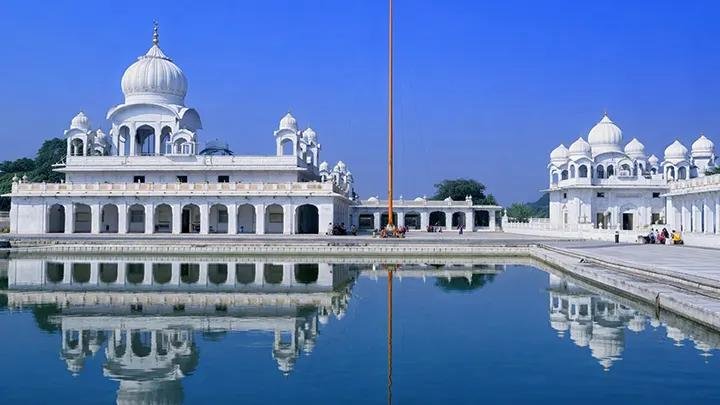
During ordinary mornings, the surface may reflect temple towers, white domes, flags and colonnaded buildings.
During the Kartik Purnima Mela, the same area becomes filled with pilgrims, volunteers, security personnel, religious groups and bathing arrangements.
Devotees traditionally regard bathing in Kapal Mochan Sarovar as spiritually purifying.
The ritual symbolises the intention to release the burden of harmful action and begin again with greater awareness.
It should not be presented as a guaranteed removal of sin regardless of future behaviour.
A person who enters the sacred water but continues exploiting others has misunderstood the pilgrimage.
The real purpose of purification is ethical renewal.
## Rin Mochan Kund
Rin Mochan is the second major sacred water body.
The word **rin** means debt, obligation or something owed.
The name Rin Mochan is therefore connected with release from debt.
This idea should not be misunderstood as permission to ignore financial loans, family responsibilities or legal obligations.
Within spiritual philosophy, human life is supported by many visible and invisible contributions.
People receive care from parents.
Knowledge comes from teachers.
Food depends upon farmers, soil, water and labour.
Roads and institutions are created by society.
Nature provides air, sunlight and biological life.
The pilgrimage to Rin Mochan can therefore encourage gratitude.
A person repays parental debt through care and respect.
The debt to teachers is honoured through responsible use of knowledge.
The debt to society is acknowledged through honest work.
The debt to nature is addressed through environmental protection.
Financial loans must still be repaid according to lawful agreements.
A sacred bath does not cancel practical obligations.
It should inspire the devotee to fulfil them more honestly.
## Surya Kund or Suraj Kund
The third principal water body is Surya Kund, commonly called Suraj Kund.
It is associated with Surya, the Sun God.
Surya represents light, vitality, clarity, discipline and the regular movement of time.
The sun rises without requiring praise.
It provides energy without discriminating between individuals.
Its daily rhythm symbolises consistency.
For a devotee, Surya worship can become a reminder to live with discipline and transparency.
Light reveals what darkness conceals.
In the same way, truth exposes dishonesty and confusion.
Regional traditions also connect Surya Kund with Lord Rama and purification after the defeat of Ravana.
Versions vary, and the narrative should be treated as sacred tradition rather than verified travel history.
The deeper lesson concerns accountability after victory.
Even when a person believes that an action was necessary, reflection upon its consequences remains important.
Success should not create arrogance.
Surya Kund symbolises the moral clarity required after difficult decisions.
## The Three-Sarovar Pilgrimage
The three sacred water bodies create a distinctive spiritual sequence.
Kapal Mochan represents release from the burden of harmful action.
Rin Mochan represents acknowledgement of obligations.
Surya Kund represents clarity, light and disciplined renewal.
Together, they can be understood as a complete inner journey.
First, the pilgrim recognises the burden.
Second, the pilgrim accepts responsibility.
Third, the pilgrim chooses a clearer path.
Visitors should not rush from one kund to another simply to complete a checklist.
Time should be allowed to understand their different meanings.
The full circuit may involve walking across an extended area.
Families should carry drinking water, keep children supervised and avoid unnecessary luggage.
## Ritual Bathing at Kapal Mochan
Ritual bathing is especially important during Kartik Purnima, but physical safety must always take priority.
Visitors should use only designated bathing areas.
The presence of steps does not mean that every part of a sarovar is safe.
Water depth can vary.
Stone surfaces may be slippery.
Crowds can create pressure near the ghats.
Children, non-swimmers and senior citizens require close supervision.
Visitors should never enter deep water for photographs or social-media videos.
Soap, shampoo, detergent and chemical products must not be used.
Plastic bags, oil containers, packaged offerings, synthetic flowers, food and cloth should not be thrown into the ponds.
People with open wounds, reduced immunity or health concerns should consider the condition of the water before entering.
A sacred water body should not be presented as a medically verified treatment.
Those unable or unwilling to bathe can offer prayer from the ghat.
The spiritual value of the journey does not depend upon taking a physical risk.
## Kapal Mochan and the Saraswati Tradition
The pilgrimage is traditionally connected with the sacred geography of the Saraswati River.
The Saraswati occupies an important place within Vedic literature and Hindu thought.
She is worshipped as both a sacred river and the Goddess of knowledge, language, music and learning.
The precise physical courses associated with the historical Saraswati have been studied through archaeology, geology and palaeochannel research.
Sacred tradition and scientific investigation should be explained separately.
For pilgrims, the Saraswati association connects Kapal Mochan with knowledge, purification and the ancient cultural landscape of Haryana.
The nearby Adi Badri region is also strongly associated with Saraswati traditions and can be included within a broader Yamunanagar pilgrimage.
## Bilaspur and Vyaspur
The nearby town of Bilaspur is traditionally connected with Maharishi Ved Vyas and is therefore also called Vyaspur in religious and local narratives.
Ved Vyas is associated with the Mahabharata, the Puranas and the organisation of Vedic knowledge.
Local tradition holds that his ashram stood near a pond in this region.
The modern name Bilaspur is sometimes explained as having developed from Vyaspur.
This connection belongs mainly to sacred and regional memory rather than a fully documented linguistic chronology.
Bilaspur nevertheless remains the most important local service and transport base for Kapal Mochan.
Visitors may find markets, food, basic accommodation, local vehicles and essential facilities in and around the town.
Travellers must specify **Bilaspur, Yamunanagar district, Haryana**, because several other Indian states contain places with the same name.
## Maharishi Ved Vyas
Maharishi Ved Vyas is one of the most influential sages within Hindu tradition.
He is associated with preserving, organising and transmitting sacred knowledge.
The Mahabharata explores far more than the conflict at Kurukshetra.
It examines family duty, governance, greed, justice, loyalty, grief, pilgrimage, spiritual knowledge and the consequences of human decisions.
A destination associated with Ved Vyas should therefore encourage study and reflection.
Pilgrimage should not be limited to repeating stories without understanding their ethical meaning.
Families visiting Kapal Mochan can use the journey to introduce children to the importance of reading, questioning and responsible storytelling.
## Mahabharata and Pandava Traditions
The Kapal Mochan landscape is connected through tradition with the Pandavas and Draupadi.
They are believed to have visited sacred places across northern India during periods of exile and pilgrimage.
The association places Kapal Mochan within the wider sacred geography of the Mahabharata.
Yudhishthira represents responsibility and the difficult pursuit of dharma.
Bhima represents physical strength guided by loyalty.
Arjuna represents concentration, skill and moral questioning.
Nakula and Sahadeva represent knowledge, service and family responsibility.
Draupadi represents dignity and resistance to injustice.
Their journey through sacred landscapes symbolises preparation, reflection and the search for guidance.
These narratives should be understood as epic tradition rather than archaeologically documented travel records.
## Archaeological Importance of Kapal Mochan
The historical significance of Kapal Mochan is supported by important archaeological material.
A sculpture of Uma–Mahadev has been dated broadly to the ninth–tenth centuries.
Uma–Mahadev represents Goddess Parvati and Lord Shiva together.
Their union expresses the relationship between Shakti and consciousness.
A Ganesha sculpture has been dated to approximately the eleventh–twelfth centuries.
Ganesha represents wisdom, auspicious beginnings and the removal of obstacles.
Remains associated with the Gupta period have also been reported from the wider area.
These discoveries indicate that the Kapal Mochan–Bilaspur landscape supported religious and cultural activity over many centuries.
Archaeological dating should not be confused with epic chronology.
A medieval sculpture demonstrates a documented phase of worship.
It neither proves nor disproves sacred traditions connected with earlier ages.
## Hindu Shrines at Kapal Mochan
The Hindu pilgrimage area includes temples and sacred spaces associated with Lord Shiva, the kunds and other Hindu deities.
The complete layout may change as buildings are renovated, repainted or reorganised.
Visitors should use temple signage and authorised guidance rather than identifying every building from appearance alone.
Some structures may have modern marble floors, railings, electric lighting and painted façades even when the sacred tradition is much older.
The age of a pilgrimage should not be confused with the construction date of every visible wall.
Living temples are repaired continuously so that they can serve present-day devotees.
## Guru Nanak Dev Ji at Kapal Mochan
Kapal Mochan is deeply connected with Sikh sacred tradition.
Guru Nanak Dev Ji is believed to have visited the pilgrimage during his journeys.
A well-known teaching associated with this visit challenges the idea of **sootak**, or ritual impurity connected with childbirth and biological processes.
Guru Nanak redirected attention from supposed external impurity towards moral impurity.
Greed, falsehood, exploitation and harmful desire create a deeper pollution than natural human processes.
This teaching gives Kapal Mochan an important message of dignity and equality.
A mother and newborn child should not be treated as spiritually inferior.
True purity arises from honest conduct, compassion and control over greed.
## Guru Gobind Singh Ji at Kapal Mochan
Guru Gobind Singh Ji is traditionally believed to have visited Kapal Mochan after the Battle of Bhangani.
Local and district traditions describe his stay, worship and association with warriors who accompanied him.
The site is also connected with the cleaning or examination of weapons and with a commemorative copper plate associated with the temple priestly tradition.
Specific dates and the duration of the visit vary across accounts and should be presented cautiously.
The wider spiritual meaning concerns courage guided by discipline.
Weapons within Sikh tradition are not symbols of uncontrolled aggression.
They represent the responsibility to protect justice and defend vulnerable people when peaceful options have failed.
The Guru’s association makes Kapal Mochan an important destination for Sikh pilgrims as well as Hindu devotees.
## Gurdwara Kapal Mochan Sahib
Gurdwara Kapal Mochan Sahib is one of the principal sacred structures within the pilgrimage complex.
Its white façades, domes, arched corridors, Nishan Sahib and relationship with the sarovar create a serene visual environment.
Visitors from every background may enter when they follow Sikh maryada.
The head must be covered.
Footwear must be removed.
Feet should be washed where directed.
Tobacco, alcohol and intoxicants are prohibited.
Visitors should sit respectfully before the Guru Granth Sahib.
Photography should only be undertaken where permitted.
The langar should be received without wasting food.
The gurdwara is not merely a tourist attraction or architectural backdrop.
It is an active place of prayer, service and equality.
## Hindu and Sikh Shared Heritage
Kapal Mochan demonstrates how distinct religious traditions can share one geographical landscape without losing their identities.
The Hindu temples, sacred kunds and Shaiva traditions remain Hindu.
The gurdwara, Guru Granth Sahib and Sikh maryada remain Sikh.
Respectful coexistence does not require claiming that both traditions are identical.
It requires learning the customs of each sacred place and entering without hostility.
The annual mela brings Hindu and Sikh pilgrims, saints, community organisations, traders and local residents into one large gathering.
This shared history is one of the destination’s greatest strengths.
## Guru Gobind Singh Martial Art Museum
The Guru Gobind Singh Martial Art Museum stands near the pilgrimage complex and adds a significant educational dimension to the journey.
It is associated with Guru Gobind Singh Ji, Sikh martial heritage and the historical memory of Kapal Mochan.
The museum can help visitors understand that martial tradition involves discipline, training, courage and ethical responsibility.
A stone slab bearing a Brahmi inscription assigned broadly to the seventh–eighth centuries has also been recorded in the gurdwara area.
The presence of this inscription adds another historical layer to the destination.
It does not mean that the present gurdwara building dates from that period.
An older object can survive within or near a later religious structure.
The museum’s published general hours are Tuesday to Sunday, 9:00 AM to 5:00 PM, but visitors should confirm local operation before travel.
Museum access may be affected by maintenance, holidays or events.
Exhibits should not be touched.
Flash photography, tripods and commercial filming may require permission.
## Kapal Mochan Mela
The annual Kapal Mochan Mela is held around Kartik Purnima and is one of Haryana’s largest pilgrimage gatherings.
The civil-calendar date changes each year because it follows the Hindu lunar calendar.
The mela may extend across several days, with the principal bathing observance occurring around the full moon.
Pilgrims arrive from Haryana, Punjab, Himachal Pradesh, Uttar Pradesh, Delhi, Rajasthan and other regions.
The pilgrimage site temporarily becomes a large festival settlement.
Arrangements can include:
Temporary parking zones
Special bus services
Pedestrian corridors
Police and security posts
CCTV surveillance
Medical centres
Drinking-water stations
Temporary toilets
Lighting around the kunds
Barricaded bathing ghats
Lost-and-found centres
Community kitchens
Religious camps
Markets and craft stalls
Emergency-response teams
The exact arrangement changes every year.
Visitors should confirm the current mela schedule, bathing time, road plan and accommodation before departure.
## Kartik Purnima
Kartik Purnima is considered spiritually important across several Indian religious traditions.
At Kapal Mochan, it is associated with bathing, prayer, community food, gurdwara worship and collective pilgrimage.
The full moon and illuminated ghats can create a powerful atmosphere.
Visitors seeking a quiet heritage experience should avoid the main mela period.
Those wishing to attend the fair should prepare for crowds and extended walking.
A sacred date does not make unsafe behaviour acceptable.
Visitors must use designated ghats and follow administrative instructions.
## Mela Safety
Families attending the mela should carry only essential belongings.
Children should carry identification with a parent or guardian’s phone number.
Groups should choose a meeting point before entering the main crowd.
Senior citizens should avoid the most congested bathing period where possible.
Jewellery and valuables should be limited.
Visitors must follow barricades and one-way routes.
Unattended bags should be reported.
Only authorised transport and parking should be used.
No visitor should pay an unverified intermediary promising guaranteed blessings or unauthorised access.
## Langar and Bhandara
Community meals are an important part of the Kapal Mochan pilgrimage.
Langar and bhandara express equality, generosity and service.
Visitors should accept only as much food as they can eat.
Food waste should be avoided.
Disposable plates and cups must be placed in designated collection areas.
Plastic should never be allowed to enter the sarovars.
Volunteers should maintain safe cooking arrangements, clean drinking water and orderly distribution.
Service to pilgrims is meaningful only when it remains hygienic and environmentally responsible.
## Best Time to Visit Kapal Mochan
Kapal Mochan can generally be visited throughout the year.
### October to March
The cooler months provide the most comfortable weather for walking between the kunds, temples, gurdwara and museum.
Morning and evening can become cold during December and January.
Fog may affect road and railway travel.
### Kartik Purnima Mela
The mela offers the strongest collective devotional experience but also the heaviest crowd pressure.
Accommodation, transport and parking should be arranged early.
### February and March
Late winter and early spring are suitable for families and senior citizens seeking a quieter visit.
The weather is usually comfortable for exploring the entire complex.
### April to June
The Yamunanagar region can become extremely hot.
Ghats and open courtyards receive strong sunlight.
An early-morning visit is preferable.
Visitors should carry drinking water and avoid prolonged midday exposure.
### July to September
The monsoon makes the region greener but can create humidity, waterlogging and slippery ghats.
Visitors should monitor weather conditions and avoid unsafe water edges.
## Reaching Kapal Mochan
Kapal Mochan is reached through Bilaspur in Yamunanagar district.
A private taxi, personal vehicle or local bus is generally the most practical option.
The route from Yamunanagar and Jagadhari proceeds towards Bilaspur.
During the mela, additional public transport or temporary shuttle services may operate.
Ordinary-day return transport should be confirmed in advance.
## Reaching by Train
Yamunanagar–Jagadhri Railway Station is the principal railway gateway for most visitors.
A road transfer is required from the station to Kapal Mochan.
Families and groups may find a prearranged taxi more dependable than changing local vehicles.
Large luggage should be left at accommodation or stored securely.
Suitcases are inconvenient around ghats and crowded religious spaces.
## Reaching by Bus
Yamunanagar and Jagadhari have bus connections with Ambala, Karnal, Kurukshetra, Chandigarh, Naraingarh and surrounding towns.
Passengers should confirm the current service towards Bilaspur and the final stop for Kapal Mochan.
Special arrangements may operate during the annual fair.
## Reaching by Air
Chandigarh International Airport is the nearest major airport serving the district.
A substantial road transfer is required.
Traffic around Chandigarh, Panchkula, Naraingarh and Yamunanagar can affect journey time.
A visit should not be scheduled immediately before a flight.
## Accessibility for Senior Citizens
Kapal Mochan does not require a hill climb, making it suitable for many senior citizens.
The full complex may nevertheless involve long walking distances, wet ghats, steps and prolonged standing.
During the mela, parking can be far from the bathing areas.
Senior visitors should prefer an ordinary weekday morning.
A walking stick, required medicines and drinking water can be useful.
Wheelchair access to every older temple, ghat and shrine should not be assumed.
The closest accessible drop-off should be confirmed locally.
## Visiting with Children
Children can learn about Lord Shiva, sacred water, Maharishi Ved Vyas, Guru Nanak Dev Ji, Guru Gobind Singh Ji and interfaith respect.
They must remain supervised near all sarovars.
Running on wet steps should be prohibited.
During the mela, children should carry identity information.
Parents can explain that ritual bathing represents a commitment to better behaviour rather than magical freedom from responsibility.
## Temple and Gurdwara Etiquette
At Hindu temples:
Dress respectfully.
Remove footwear where directed.
Follow the established queue.
Do not photograph the deity or private rituals without permission.
Use authorised offerings.
Do not pour substances upon unidentified stones, sculptures or water structures.
At the gurdwara:
Cover the head.
Remove footwear.
Wash feet where directed.
Avoid tobacco, alcohol and intoxicants.
Sit respectfully before the Guru Granth Sahib.
Follow the guidance of the sevadars.
Receive langar without waste.
Each sacred institution should be honoured according to its own customs.
## Environmental Responsibility
The three sarovars are central to the identity of Kapal Mochan.
Protecting them is an essential act of pilgrimage.
Visitors must not throw plastic bags, bottles, synthetic flowers, packaged food, cloth, soap, oil containers or disposable plates into the water.
Fish and birds should not be fed packaged or unsuitable food.
Open fires should remain in authorised locations.
Festival camps should manage waste responsibly.
A pilgrimage dedicated to purification loses its meaning when visitors pollute the sacred water.
## Nearby Places to Visit
### Bilaspur
Bilaspur is the nearest town and is traditionally associated with Maharishi Ved Vyas.
It provides local food, markets, basic accommodation and transport services.
### Adi Badri
Adi Badri lies within the Shivalik foothills and is associated with the sacred Saraswati tradition.
It contains temples, archaeological areas and a peaceful natural landscape.
A separate road journey is required.
### Panchmukhi Hanuman Temple
The Panchmukhi Hanuman Temple is another important religious attraction near the Bilaspur–Chhachhrauli route.
The five-faced form of Hanuman represents protection, courage and devoted service.
### Kalesar National Park and Wildlife Sanctuary
Kalesar protects an important Shivalik forest landscape.
Entry and safari arrangements depend upon current rules and seasons.
Wildlife should not be fed or disturbed.
### Chhachhrauli
Chhachhrauli was historically associated with the former Kalsia princely state and can be included within a regional heritage itinerary.
### Chaneti Buddhist Stupa
The ancient Buddhist stupa at Chaneti demonstrates the religious diversity of Yamunanagar’s history.
It can be combined with Kapal Mochan by visitors interested in archaeology and Buddhist heritage.
### Ancient Site of Sugh
Sugh is identified with an important ancient settlement and contains archaeological remains connected with the historical development of the region.
### Buria Fort and Rang Mahal
Buria preserves structures associated with regional and Sikh-period heritage.
Entry to old or private sections should not be assumed.
## Suggested Half-Day Kapal Mochan Itinerary
Leave Yamunanagar or Jagadhari early in the morning.
Travel towards Bilaspur and Kapal Mochan.
Begin at Kapal Mochan Sarovar.
Continue to Rin Mochan and Surya Kund.
Visit the Hindu shrines respectfully.
Cover the head and visit Gurdwara Kapal Mochan Sahib.
Participate in langar where available.
Visit the Guru Gobind Singh Martial Art Museum if open.
Return before the strongest afternoon heat.
## Suggested One-Day Spiritual Itinerary
Begin with morning prayer at Kapal Mochan.
Explore all three sacred water bodies.
Visit the temples, gurdwara and museum.
Continue to Bilaspur and learn about the Maharishi Ved Vyas tradition.
Visit Panchmukhi Hanuman Temple or another nearby religious site according to available time.
Return to Yamunanagar by evening.
## Suggested Two-Day Yamunanagar Pilgrimage
On the first day, explore Kapal Mochan, Bilaspur and the museum.
Stay overnight in Yamunanagar, Jagadhari or a verified property near Bilaspur.
On the second day, travel towards Adi Badri, Panchmukhi Hanuman Temple and Chhachhrauli.
This itinerary is more comfortable for families and senior citizens.
## Suggested Three-Day Spiritual and Heritage Circuit
Day one can focus on Kapal Mochan and Bilaspur.
Day two can include Adi Badri, Chhachhrauli and selected Shivalik destinations.
Day three can include Chaneti Buddhist Stupa, Sugh, Buria or Kalesar according to visitor interests and current access.
A slower itinerary allows travellers to appreciate the Hindu, Sikh, Buddhist, archaeological and natural heritage of Yamunanagar without rushing.
## Accommodation Near Kapal Mochan
Accommodation immediately beside the pilgrimage complex is limited compared with Yamunanagar and Jagadhari.
Dharamshalas, community facilities, gurdwara sarai accommodation or temporary mela camps may be available, but facilities, eligibility and advance booking should be confirmed.
Visitors should not arrive during Kartik Purnima without a verified accommodation plan.
## Dharamshalas and Pilgrim Rooms
Dharamshalas may provide economical rooms or shared halls.
Bathrooms may be common.
Identification may be required.
Festival demand can be extremely high.
A pilgrim room should not automatically be expected to provide hotel-style privacy, housekeeping or room service.
## Gurdwara Sarai Accommodation
Sarai-style lodging may be available according to capacity and institutional rules.
Visitors must follow gurdwara discipline and maintain cleanliness.
Such accommodation should not be treated as a free commercial hotel.
Availability should be confirmed before depending upon it.
## Hotels in Bilaspur
Bilaspur offers the closest town-based accommodation.
Options may include basic hotels, lodges and guesthouses.
Guests should verify attached bathrooms, hot water, cooling, meals, parking and transport to Kapal Mochan.
## Hotels in Yamunanagar and Jagadhari
Yamunanagar and Jagadhari provide the largest selection of hotels, restaurants, hospitals, railway services and transport.
They are the most practical bases for first-time visitors seeking comfort and dependable facilities.
A property with convenient access towards Bilaspur Road can reduce morning travel.
## Homestays Near Bilaspur and Yamunanagar
Verified homestays can provide local food, quieter surroundings and route guidance.
Facilities vary substantially.
Guests should confirm bathrooms, electricity, meals, cooling, heating, parking and mobile connectivity.
During the mela, rural accommodation should only be booked after verifying road access.
## Choosing the Right Stay
Visitors prioritising proximity can choose Bilaspur or a verified property on the Kapal Mochan route.
Travellers prioritising comfort, railway connectivity, restaurants and hospitals should stay in Yamunanagar or Jagadhari.
Families should confirm room size, meals and safe parking.
Senior citizens should prioritise lifts, ground-floor rooms and reliable taxis.
Couples may prefer quieter hotels or homestays outside crowded market areas.
Solo pilgrims should select populated accommodation with confirmed transport.
Groups should verify several rooms, vegetarian food, driver accommodation and bus parking.
Kartik Purnima visitors should reserve early.
Summer guests should confirm effective air-conditioning.
Winter travellers should check hot water and room-heating arrangements.
## Book Hotels Near Kapal Mochan with MudrasStays
MudrasStays helps pilgrims, families and heritage travellers discover hotels, homestays, guesthouses and pilgrimage accommodation near Kapal Mochan, Bilaspur, Yamunanagar and Jagadhari.
The platform is designed specifically for travellers searching for places to stay near temples, gurdwaras, sacred sarovars and pilgrimage fairs.
Visitors can compare properties according to practical road distance from Kapal Mochan, room category, family size, budget and required facilities.
Booking on the Bilaspur-facing side of Yamunanagar can make early-morning darshan easier.
Families can choose hotels with comfortable rooms, meals and parking.
Senior citizens can prioritise accessible properties with reliable taxis.
Solo pilgrims can search for economical guesthouses in well-connected areas.
Couples can explore quieter homestays or comfortable city hotels.
Pilgrimage groups can identify properties providing multiple rooms, vegetarian food, driver lodging and bus parking.
Travellers attending the Kapal Mochan Mela can reserve accommodation in advance and avoid uncertain last-minute arrangements.
Visitors combining Kapal Mochan with Adi Badri, Panchmukhi Hanuman Temple, Kalesar, Chaneti Stupa, Sugh, Chhachhrauli or Buria can select accommodation according to the actual geographical sequence of the journey.
MudrasStays helps travellers avoid choosing a property that appears close on a map but lies on an inconvenient road or requires unnecessary city crossings.
## Responsible Pilgrimage
Kapal Mochan is a living Hindu–Sikh sacred landscape.
Visitors should respect the distinct practices of every temple and gurdwara.
The sarovars must not be polluted.
Children should remain supervised.
Religious images, the Guru Granth Sahib, priests, granthis and private ceremonies should only be photographed when permission is clear.
Offerings should be made through recognised systems.
Food should not be wasted.
Plastic should be reduced and disposed of responsibly.
## A Sacred Landscape of Release, Water and Shared Devotion
Kapal Mochan represents a powerful meeting of sacred water, Lord Shiva, Maharishi Ved Vyas, Mahabharata traditions, Guru Nanak Dev Ji and Guru Gobind Singh Ji.
The skull represents mortality, ego and the consequences of action.
Mochan represents release.
Kapal Mochan Sarovar represents purification and transformation.
Rin Mochan represents gratitude and responsibility.
Surya Kund represents light, clarity and discipline.
The Saraswati tradition connects the destination with knowledge.
Maharishi Ved Vyas represents literature and the preservation of wisdom.
The Pandavas represent duty and ethical struggle.
Lord Shiva represents transformation beyond ego.
Guru Nanak Dev Ji represents truth, dignity and freedom from false ideas of impurity.
Guru Gobind Singh Ji represents disciplined courage and the defence of justice.
The gurdwara represents prayer, equality and service.
The temples preserve Shaiva and Puranic worship.
The museum adds historical interpretation.
The annual Kartik Purnima Mela transforms the sacred landscape into one of Haryana’s largest collective pilgrimage gatherings.
For Hindu pilgrims, Kapal Mochan is a place of Shiva worship and spiritual purification.
For Sikh pilgrims, it preserves important Guru traditions.
For families, it offers an accessible pilgrimage involving several sacred sites.
For senior citizens, it is manageable outside the crowded mela period.
For children, the destination provides lessons about water, literature, religion and environmental responsibility.
For heritage travellers, it reveals historical layers extending from ancient sculpture and inscriptions to Sikh sacred memory.
For photographers, the kunds, ghats, domes, towers and reflections create memorable images when worship and safety rules are respected.
For spiritual seekers, Kapal Mochan communicates a demanding lesson: ritual release becomes meaningful only when it produces honesty, accountability and changed behaviour.
Kapal Mochan should not be treated merely as a pond for a quick ritual bath.
Walk through the complete pilgrimage landscape.
Understand the meaning of the three sarovars.
Visit the Hindu shrines patiently.
Enter the gurdwara according to Sikh maryada.
Learn about Maharishi Ved Vyas and the archaeological history of Bilaspur.
Visit the museum where possible.
Protect every water body.
Participate in langar without wasting food.
Respect both Hindu and Sikh traditions.
Carry the meaning of Mochan beyond the pilgrimage by releasing ego, dishonesty and harmful conduct.
Plan your pilgrimage to Kapal Mochan with MudrasStays and experience one of Haryana’s most important sacred-water destinations.
Receive the blessings of Lord Shiva, visit Gurdwara Kapal Mochan Sahib and explore Kapal Mochan Sarovar, Rin Mochan Kund and Surya Kund.
Combine your journey with Bilaspur, Adi Badri, Panchmukhi Hanuman Temple, Kalesar, Chaneti Buddhist Stupa, Sugh and the wider spiritual heritage of Yamunanagar.
Book hotels near Kapal Mochan Temple, discover homestays near Bilaspur and choose suitable pilgrimage accommodation throughout Yamunanagar and Jagadhari through MudrasStays.
Stay closer to the correct route, begin during peaceful morning hours and avoid unnecessary travel during crowded festival periods.
MudrasStays connects pilgrims, families and heritage travellers with suitable accommodation near temples, gurdwaras, sacred water bodies and spiritual destinations across India.
Begin your Kapal Mochan journey with a comfortable stay and experience a meaningful pilgrimage centred on sacred water,Lord Shiva, Maharishi Ved Vyas, the Sikh Gurus and the shared spiritual heritage of Haryana.