Kilkari Bhairav Temple, Delhi – The Ancient Guardian Shrine Near Purana Qila
**Shri Kilkari Baba Bhairav Nath Temple**, commonly known as Kilkari Bhairav Temple, Bhairon Mandir or Purana Qila Bhairav Temple, is one of Delhi’s most distinctive and deeply revered Shaiva shrines. Situated near Purana Qila, Bhairon Marg, Pragati Maidan and Bharat Mandapam, the temple is dedicated to **Baba Bhairav Nath**, the fierce yet compassionate guardian manifestation of Lord Shiva.
The shrine is especially known for its powerful protective traditions, its association with Bhima and the Pandavas, and the unusual custom of offering liquor to Baba Bhairav. A related shrine nearby, known as **Doodhiya Bhairav Temple**, follows a contrasting tradition in which milk is offered.
Devotees visit Kilkari Bhairav Temple to pray for courage, protection, justice, freedom from fear, removal of persistent obstacles and relief from negative influences. Sundays, Kalashtami, Bhairav Ashtami and Maha Shivaratri are among the most significant times for worship.
The temple stands within one of Delhi’s richest historical landscapes. Purana Qila is traditionally connected with Indraprastha, the capital of the Pandavas, while the surviving fortifications largely belong to the sixteenth-century cities developed by Humayun and Sher Shah Suri.
Travellers looking for hotels near Kilkari Bhairav Temple, family accommodation near Purana Qila or convenient stays around Pragati Maidan can explore suitable options through **MudrasStays**.
## Who Is Lord Bhairava?
Bhairava is a powerful manifestation of Lord Shiva. He represents divine protection, fearlessness, discipline, time, justice and the destruction of ego.
The fierce appearance of Bhairava should not be understood as uncontrolled anger. In Shaiva tradition, his intensity represents the power required to destroy arrogance, falsehood, injustice and spiritual ignorance.
Bhairava is worshipped as:
* A guardian manifestation of Lord Shiva
* The protector of sacred places
* The destroyer of fear and negative forces
* A deity of justice and discipline
* A remover of persistent obstacles
* A protector of travellers
* A guardian of boundaries and settlements
* A source of courage and inner strength
* A spiritual force associated with time and mortality
* A deity who disciplines pride and harmful behaviour
In many temples, Bhairava is regarded as the **kshetrapala**, or guardian of the sacred territory. His shrine may therefore be situated near the entrance, outer boundary or surrounding landscape of an important pilgrimage centre.
The dog is traditionally associated with Bhairava as his vahana or sacred vehicle. It symbolises vigilance, loyalty, alertness and guardianship.
## Sacred Origin of Bhairava in Hindu Tradition
One prominent Shaiva narrative describes the manifestation of Bhairava during a dispute concerning pride and supreme authority.
According to the religious tradition, Brahma became filled with arrogance and made claims about his superiority. Lord Shiva manifested Bhairava to destroy this pride and restore cosmic discipline.
Bhairava severed Brahma’s fifth head, symbolically destroying falsehood and ego. He then travelled through different sacred places before receiving liberation from the consequence of the act in Kashi.
The narrative presents Bhairava as the divine power that:
* Destroys arrogance
* Punishes dishonesty
* Restores moral order
* Protects sacred truth
* Forces the individual to confront ego
* Guides devotees towards discipline and humility
Different Shaiva, Shakta and regional traditions preserve different forms of the story. Bhairava may be worshipped as Kaal Bhairava, Batuk Bhairava, Swarna Akarshan Bhairava, Ashta Bhairava or through other regional manifestations.
At the Purana Qila shrine, devotees commonly address the deity as **Bhairon Baba**, **Kilkari Baba** or **Baba Bhairav Nath**.
## History of Kilkari Bhairav Temple
The precise construction date of the present temple building has not been established through a securely published foundation inscription or definitive archaeological record.
The temple’s antiquity is primarily expressed through a deeply rooted local tradition connecting it with the Pandavas and ancient Indraprastha.
According to the temple legend:
* The Pandavas were performing a major yajna in Indraprastha.
* Negative forces repeatedly disturbed the sacred ceremony.
* Lord Krishna advised them to seek the protection of Bhairava.
* Bhima travelled to Kashi to invite Baba Bhairav.
* Bhairava agreed to accompany him under particular conditions.
* A sacred image or spiritual presence of Bhairava was established in the Indraprastha region.
* Baba Bhairav then protected the Pandavas’ ritual from disruption.
Some versions state that Bhima was instructed not to place the deity on the ground before reaching the chosen destination. When the condition could not be maintained, Bhairava remained at the location now associated with the Purana Qila shrine.
Other versions say that the Pandavas installed a stone image of Bhairava after the completion of their yajna.
These stories form the temple’s sacred history and continue to shape the faith of devotees. However, they should not be presented as conclusively proven archaeological events.
## The Temple’s Connection with Bhima
Bhima is the Pandava most closely associated with Kilkari Bhairav Temple.
In the Mahabharata, Bhima represents extraordinary physical strength, courage, loyalty and the determination to protect his family. Bhairava represents divine guardianship, fearlessness and disciplined power.
The association between Bhima and Bhairava therefore carries a deeper symbolic meaning: physical strength becomes complete only when guided by spiritual discipline.
Devotees interpret the story as teaching that:
* Strength must serve righteousness.
* Courage should be guided by humility.
* Power without discipline can become destructive.
* Divine protection is sought through sincere devotion.
* Fear can be overcome through faith and moral action.
Some local traditions also maintain that Bhima attained spiritual powers or siddhis through worship of Bhairava in the area.
Such claims belong to the temple’s devotional narrative rather than verified documentary history.
## Purana Qila, Indraprastha and Archaeology
Kilkari Bhairav Temple stands near Purana Qila, a place popularly associated with **Indraprastha**, the capital established by the Pandavas in the Mahabharata.
A settlement known as Indrapat or Indarpat existed within or around the fort area until the early twentieth century, strengthening the historical memory connecting this location with Indraprastha.
Archaeological excavations at Purana Qila have revealed several layers of settlement. Finds have included pottery and remains associated with different periods of Indian history, including Painted Grey Ware, Northern Black Polished Ware, Mauryan, Shunga, Kushan, Gupta, Rajput, Sultanate and Mughal phases.
Painted Grey Ware is broadly associated with settlements of the first millennium BCE and is frequently discussed in relation to places named in the Mahabharata.
However, the discovery of ancient material does not conclusively prove that the Pandavas built the existing temple or that every event described in the epic occurred at Purana Qila.
The historically careful understanding is:
* Purana Qila occupies a genuinely ancient settlement zone.
* The region has a long association with the name Indraprastha.
* Archaeology confirms repeated habitation over many centuries.
* The present fort largely reflects work undertaken under Humayun and Sher Shah Suri.
* The Pandava and Bhima connection of Kilkari Bhairav Temple remains a sacred local tradition.
* The present temple complex has been repaired, rebuilt and altered over time.
This distinction allows visitors to respect religious belief without presenting uncertain claims as established archaeology.
## Why Is the Temple Called “Kilkari” Bhairav?
The Hindi word **kilkari** usually refers to a loud, resonant cry or energetic call.
Within temple tradition, the name is associated with Baba Bhairav’s powerful presence and victorious protective force. Some devotees describe it as the divine roar or call through which Bhairava drives away negative forces.
Other interpretations associate the name with the joyful spiritual cry of devotees after receiving the deity’s blessings.
There is no single universally documented historical explanation for the name. It is best understood as part of the temple’s oral and devotional heritage.
## Kilkari Bhairav and Doodhiya Bhairav
The Purana Qila area is associated with two linked Bhairava traditions.
### Kilkari Baba Bhairav Nath Temple
The principal and more widely visited shrine is associated with the ritual offering of liquor to Baba Bhairav.
### Doodhiya Bhairav Temple
The nearby Doodhiya Bhairav shrine is traditionally associated with an offering of milk. The name derives from *doodh*, meaning milk.
The two traditions are sometimes interpreted as representing contrasting but complementary expressions of Bhairava:
* Fierce and gentle
* Intense and cooling
* Transformative and nourishing
* Protective power and compassionate care
* Control of worldly impulses and spiritual purification
Devotees may visit both temples during the same pilgrimage.
A suitable sequence can include:
**Doodhiya Bhairav Temple – Kilkari Bhairav Temple – Purana Qila – Nearby Museums**
The two shrines may follow different timings and ritual procedures. Visitors should confirm current access locally.
## The Liquor-Offering Tradition
The offering of liquor is the most unusual and widely known ritual associated with Kilkari Bhairav Temple.
In certain Bhairava and Tantric traditions, substances generally excluded from conventional temple worship may be offered ritually. The principle is not casual consumption but the symbolic control, acceptance and transformation of powerful worldly energies.
Devotees may bring a sealed bottle according to the rules followed by the shrine. The offering is presented through the temple’s established system.
Visitors should understand that:
* Liquor is not compulsory for darshan.
* Devotees may offer ordinary prayers, flowers or other permitted items.
* No person should feel pressured to purchase alcohol.
* The offering must be handled only according to temple instructions.
* Open consumption inside or around the shrine is inappropriate.
* Minors must not purchase or consume alcohol.
* Visitors must comply with all applicable laws.
* Anyone driving must avoid alcohol completely.
* The custom should not be treated as entertainment.
* Other devotees’ private rituals should not be photographed without permission.
The spiritual meaning of the ritual lies in surrendering intense tendencies to divine control, not in encouraging intoxication.
## Milk Offering at Doodhiya Bhairav Temple
The offering of milk at Doodhiya Bhairav Temple reflects a gentler devotional expression.
Milk traditionally symbolises:
* Purity
* Nourishment
* Calmness
* Cooling energy
* Motherly care
* Spiritual cleansing
Visitors should pour milk only through authorised ritual arrangements. Uncontrolled offerings can create waste, slippery surfaces and sanitation problems.
Those who prefer not to participate in the liquor-related custom at Kilkari Bhairav can still complete a meaningful pilgrimage through prayer and the milk-offering tradition at Doodhiya Bhairav.
## Darshan Experience
The temple is an active urban shrine rather than a quiet archaeological monument. Devotees may encounter bells, chants, queues, puja counters and continuous movement around the sanctum.
A typical visit can include:
**Footwear Deposit – Security or Entry Queue – Main Bhairav Darshan – Permitted Offering – Associated Shrines – Prayer – Prasad**
Devotees pray for:
* Protection from negative influences
* Relief from fear and anxiety
* Courage during difficult periods
* Justice in disputes
* Removal of repeated obstacles
* Safety during travel
* Protection of family and livelihood
* Strength to leave destructive habits
* Discipline and self-control
* Spiritual confidence
Temple worship should not be treated as a guaranteed replacement for legal, financial, psychological or medical help. Devotion can provide spiritual support while practical problems are addressed responsibly.
## Architecture and Present Temple Complex
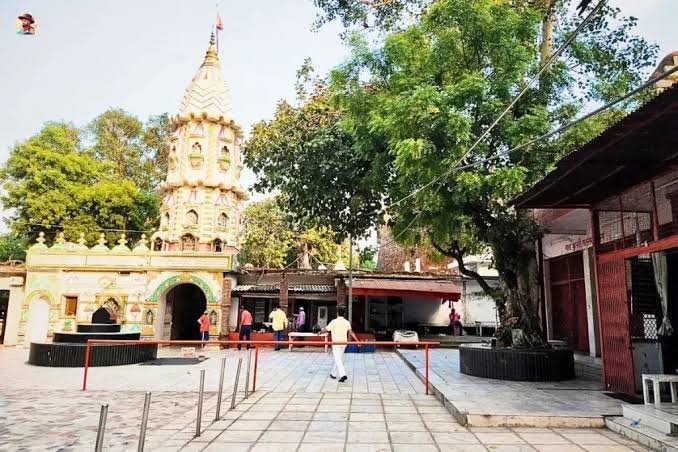
The visible temple complex reflects successive rebuilding, renovation and modern devotional use rather than one unchanged ancient structure.
Visitors may observe:
* A colourful entrance gateway
* Courtyard and queue areas
* Marble or tiled devotional spaces
* Images of Lord Shiva and associated deities
* Bells and religious decorations
* A sanctum dedicated to Baba Bhairav
* Counters or spaces for permitted offerings
* Areas adapted to manage large Sunday crowds
The spiritual importance of the shrine lies primarily in its living tradition rather than in the architectural age of every visible structure.
Visitors should avoid claiming that all marble, statues, gateways or decorative work date to the Pandava period.
## Other Deities in the Temple
Depending on the current arrangement, devotees may also encounter shrines or representations of:
* Lord Shiva
* Goddess Parvati
* Lord Ganesha
* Lord Hanuman
* Lord Kartikeya
* Forms of Devi
* Other Shaiva guardian deities
The placement of individual idols may change during renovation. Visitors should follow current signage and priestly guidance.
## Important Days for Worship
### Sunday
Sunday is traditionally the most popular weekly day for worship at Kilkari Bhairav Temple.
The temple may remain open for longer hours, and queues can be significantly heavier than on ordinary weekdays.
### Kalashtami
Kalashtami is observed on the eighth lunar day of the waning fortnight and is dedicated to Bhairava.
Devotees may fast, recite Bhairav prayers, light lamps and visit the shrine.
### Bhairav Ashtami
Bhairav Ashtami, also known as Kaal Bhairav Jayanti, commemorates the manifestation of Lord Bhairava.
The temple may organise special pujas, decorations and extended worship. Larger crowds should be expected.
### Maha Shivaratri
Because Bhairava is a form of Shiva, Maha Shivaratri is also an important occasion.
Devotees may visit Kilkari Bhairav Temple as part of a wider Shiva pilgrimage in Delhi.
### Sawan and Shiva-Related Observances
The sacred month of Sawan may attract additional Shiva devotees. Current ritual and crowd-management arrangements should be confirmed locally.
## Reported Temple Timings
Commonly published visitor timings are:
* **Monday to Saturday:** approximately 5:00 AM to 12:00 PM and 3:00 PM to 9:00 PM
* **Sunday:** approximately 5:00 AM to 10:00 PM
These hours should be treated as indicative rather than guaranteed.
Timings may change during:
* Bhairav Ashtami
* Maha Shivaratri
* Sawan
* Renovation
* Special pujas
* Security arrangements
* Major exhibitions at Pragati Maidan
* Events at Bharat Mandapam
* Traffic restrictions
Pilgrims should verify the current timings before travelling, especially when arriving from another city.
## Temple Etiquette
Visitors should:
* Dress modestly.
* Remove footwear at the designated location.
* Keep mobile phones silent.
* Follow the organised queue.
* Avoid pushing near the sanctum.
* Carry only essential belongings.
* Use official donation boxes.
* Respect restrictions on photography.
* Avoid photographing private offerings.
* Follow instructions concerning liquid offerings.
* Keep children supervised.
* Do not consume alcohol at the temple.
* Do not drive after consuming alcohol.
* Avoid spilling milk, oil or other liquids.
* Keep the temple and approach road clean.
* Treat the shrine as a sacred place, not a curiosity.
The presence of an unusual offering does not reduce the sanctity of the temple.
## Feeding Dogs as a Devotional Practice
Because the dog is associated with Bhairava, some devotees feed dogs around Bhairava temples.
This act should be performed responsibly:
* Offer safe and suitable food.
* Avoid spicy, sugary or harmful items.
* Remove plastic packaging.
* Do not feed animals in moving traffic.
* Avoid creating uncontrolled crowds.
* Do not tease or force contact with animals.
* Follow municipal and temple instructions.
* Wash hands after feeding animals.
Compassion should be combined with hygiene and animal welfare.
## Visit Purana Qila
Purana Qila is the principal heritage attraction near the temple.
The visible fort complex is associated mainly with Humayun and Sher Shah Suri. Major structures include:
* Bara Darwaza
* Humayun Darwaza
* Talaqi Darwaza
* Qila-i-Kuhna Mosque
* Sher Mandal
* Fort walls and gateways
* Archaeological remains
* Museum or gallery areas, subject to current access
Visitors should check current tickets, opening hours and conservation-related restrictions.
The fort requires a separate visit and should not be rushed immediately before temple closing time.
## Nearby Attractions
A pilgrimage and heritage itinerary can include:
### National Zoological Park
Located beside the Purana Qila area, the zoo is suitable for a separate family visit requiring several hours.
### National Crafts Museum
The museum near Pragati Maidan presents Indian textiles, crafts, traditional objects and artisan practices.
### National Science Centre
A suitable educational attraction for families and school-age children.
### Bharat Mandapam and Pragati Maidan
This major exhibition and conference area lies close to the temple. Events can significantly affect local traffic.
### India Gate and Kartavya Path
These central Delhi landmarks can be added after temple darshan and Purana Qila, subject to traffic and security conditions.
### Humayun’s Tomb
The UNESCO-listed monument is accessible by road and can be included in a wider central Delhi heritage itinerary.
## Suggested Itineraries
### Short Spiritual Visit
**Doodhiya Bhairav Temple – Kilkari Bhairav Temple – Prasad**
### Half-Day Pilgrimage and Heritage Plan
**Kilkari Bhairav Temple – Doodhiya Bhairav Temple – Purana Qila**
### Family Day Plan
**Morning Bhairav Darshan – National Zoological Park – Purana Qila Exterior**
### Cultural Day Plan
**Kilkari Bhairav Temple – Purana Qila – National Crafts Museum – India Gate**
Avoid adding too many attractions on Sundays or during major Pragati Maidan events.
## Best Time to Visit
### October to March
The cooler months are most comfortable for temple darshan and heritage sightseeing.
### Weekday Mornings
Weekday mornings are generally preferable for quieter darshan.
### Sundays
Sunday offers a lively devotional atmosphere but usually brings the largest weekly crowds.
### Bhairav Ashtami and Maha Shivaratri
These occasions provide an especially powerful religious atmosphere but require additional time for queues.
### April to June
Delhi can become extremely hot. Early-morning visits are recommended.
### July to September
Rain may affect roads and pedestrian surfaces. Carry suitable rain protection.
## How to Reach Kilkari Bhairav Temple
The temple is located near Bhairon Marg, Purana Qila, Pragati Maidan and Bharat Mandapam in central Delhi.
Visitors can arrive by:
* Delhi Metro
* Auto-rickshaw
* App-based cab
* Private taxi
* Local bus
* Personal vehicle
* Hotel-arranged transport
Metro stations serving the wider Supreme Court, Pragati Maidan and Indraprastha areas can be followed by an auto-rickshaw or cab, depending on the current route and access controls.
Traffic may increase substantially during:
* Trade fairs
* Exhibitions
* Conferences at Bharat Mandapam
* National events
* Weekend tourism
* India Gate traffic restrictions
* Religious festivals
Visitors should confirm the active drop-off point and return pickup location with their driver.
## Parking Guidance
Parking availability can change according to nearby events.
Visitors should:
* Use authorised parking areas.
* Avoid unauthorised roadside parking.
* Follow Delhi Traffic Police diversions.
* Keep extra time during exhibitions.
* Avoid leaving valuables in vehicles.
* Prefer public transport during major events.
* Confirm closing times of the selected parking facility.
## Where to Stay Near Kilkari Bhairav Temple
Travellers can stay around Pragati Maidan, Connaught Place, Nizamuddin, Sundar Nagar, Paharganj or other central Delhi areas.
### Stay Near Pragati Maidan For:
* Convenient temple access
* Purana Qila
* Bharat Mandapam
* National Science Centre
* National Crafts Museum
### Stay Near Nizamuddin For:
* Railway connectivity
* Humayun’s Tomb
* Family accommodation
* Access to central and south Delhi
### Stay Near Connaught Place For:
* More hotels and restaurants
* Metro connectivity
* Shopping
* Access to several Delhi temples and monuments
Before booking, verify:
* Actual driving distance from the temple
* Event-related traffic restrictions
* Parking
* Family-room configuration
* Lift or ground-floor access
* Vegetarian meal options
* Secure luggage storage
* Metro connectivity
* Early check-in
* Cancellation rules
A property that appears close on a map may take longer to reach during a major event at Pragati Maidan.
## Book Stays Near Kilkari Bhairav Temple with MudrasStays
**MudrasStays** helps pilgrims find suitable accommodation near temples, sacred heritage zones and important spiritual routes.
Travellers visiting Delhi can use MudrasStays to explore:
* Hotels near Kilkari Bhairav Temple
* Stays near Purana Qila
* Accommodation near Pragati Maidan
* Family hotels near Bharat Mandapam
* Rooms suitable for senior citizens
* Hotels serving vegetarian food
* Group stays for Bhairav Ashtami
* Properties with secure parking
* Hotels near Delhi Metro
* Accommodation for Delhi pilgrimage and heritage tours
Choosing accommodation in central Delhi can make early darshan easier and allow families to combine the temple with Purana Qila and nearby museums without undertaking repeated long journeys.
Kilkari Bhairav Temple is more than a shrine known for an unusual ritual. It is a living centre of Shaiva devotion where Bhairava is worshipped as the guardian of sacred space, destroyer of fear and force of divine justice.
By understanding the difference between temple tradition and verified archaeological history, following the shrine’s customs respectfully and booking comfortable nearby accommodation through **MudrasStays**, pilgrims can experience one of Delhi’s most powerful and culturally distinctive spiritual destinations.