
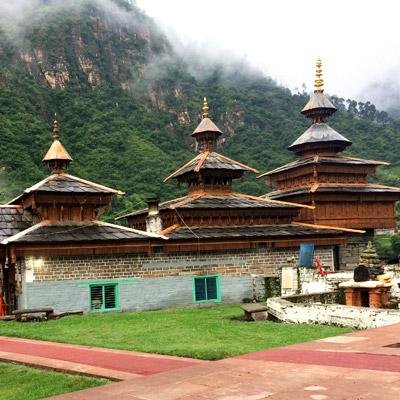
Lakhamandal Temple is one of the most historically fascinating and spiritually significant Shiva pilgrimage destinations in Uttarakhand. Situated in Lakhamandal village in the Jaunsar-Bawar region of Dehradun district, the temple complex brings together ancient stone architecture, archaeological remains, Shaivite worship, Mahabharata-related traditions and the peaceful mountain landscape of the Yamuna valley.
Dedicated to Lord Shiva, Lakhamandal is not merely a single temple building. It is an extensive sacred and archaeological area containing the principal Shiva shrine, stone sculptures, temple fragments, Shiva lingams, carved architectural remains and religious objects belonging to different periods of worship and construction.
The complex is recognised as a protected heritage site, making it important for devotees, historians, archaeology enthusiasts, cultural travellers, photographers and visitors interested in the lesser-known spiritual destinations of Uttarakhand.
Lakhamandal lies amid the mountains of western Garhwal, close to the Yamuna River and along the broader travel corridor connecting Mussoorie with Barkot and the Yamunotri region. The journey passes through winding mountain roads, villages, forests, agricultural slopes and changing views of the river valley.
The temple is approximately 75 kilometres from Mussoorie according to Uttarakhand Tourism. Actual travel time can be considerably longer than expected because of mountain curves, road repairs, traffic, rainfall and local conditions.
Travellers should avoid planning the journey according to distance alone. A road that appears short on a map may require several hours of careful driving through the hills.
Lakhamandal can be approached from Dehradun and Mussoorie, from the Chakrata side or while travelling through the Barkot and Yamunotri route. The most practical approach depends on the visitor’s starting location, season and complete itinerary.
The temple is situated within an inhabited Himalayan village rather than an isolated mountaintop. Visitors can generally travel by vehicle close to the complex and complete the final approach through village roads, pathways or a short walk.
This comparatively accessible location makes Lakhamandal suitable for families, senior citizens and pilgrims who may not be able to undertake a long Himalayan trek.
However, the mountain journey remains substantial. Travellers should begin early, use an experienced driver and complete unfamiliar roads during daylight whenever possible.
The spiritual centre of Lakhamandal Temple is the Shiva lingam worshipped within the principal shrine. Uttarakhand Tourism describes it as a graphite lingam that appears to shimmer or reflect when water is poured over its surface.
This distinctive visual quality has become one of the best-known features of the temple. During worship, devotees may offer water according to established customs and observe the polished surface of the sacred lingam.
Visitors should follow the guidance of the priests regarding abhishek, offerings, entry and photography. The lingam should not be touched, washed or handled outside the permitted ritual process.
Lord Shiva is worshipped at Lakhamandal as the supreme deity associated with meditation, transformation, courage, protection and liberation. Devotees visit the temple to pray for family welfare, health, peace, spiritual strength and relief from personal difficulties.
Some pilgrims arrive before beginning the Yamunotri journey or another important mountain pilgrimage. Others visit Lakhamandal as an independent Shiva destination, spending time within the complex and exploring its religious and archaeological heritage.
According to Uttarakhand’s Shaiv pilgrimage tradition, the Shiva lingam is also connected with Yudhishthira, the eldest of the Pandavas, and is referred to in local belief as Mahamundeshwar.
This account belongs to the temple’s Mahabharata-related religious tradition rather than independently verified historical documentation. Its importance lies in the way local communities have connected Lakhamandal with the Pandavas and the sacred geography of the epic.
The most widely known legend associated with Lakhamandal concerns the Lakshagriha, or house of lac, described in the Mahabharata.
According to the epic narrative, the Kauravas arranged for the Pandavas to stay in a palace constructed from highly flammable materials. The plan was to set the building on fire and kill the Pandavas.
The Pandavas learned of the plot and escaped through an underground passage before the structure was destroyed.
Local tradition identifies Lakhamandal as the place connected with this episode. The name is sometimes interpreted through its supposed connection with the house of lac, although different etymological and regional explanations also exist.
The exact historical location of the Mahabharata’s Lakshagriha is debated, and other places in northern India preserve their own traditions relating to the same event. The Lakhamandal association should therefore be presented as an established local belief rather than definitive archaeological proof.
This distinction does not reduce the cultural importance of the tradition. For generations, the story has shaped the religious identity of Lakhamandal and connected the village with one of India’s most influential epics.
Visitors may hear stories about caves, tunnels or underground passages associated with the escape of the Pandavas. Access to such places may be restricted, unsafe, altered or based primarily on oral tradition.
Travellers should not enter caves, tunnels, excavated areas or unmarked openings without official permission and reliable local guidance. Underground areas may contain unstable rock, poor ventilation, water or archaeological material requiring protection.
The Lakshagriha narrative should be experienced as part of the region’s living mythology and oral heritage rather than as an invitation to explore unsafe structures.
Lakhamandal is also associated with the Pandavas’ devotion to Lord Shiva. Regional tradition says that they established or worshipped Shiva lingams during their journeys through the Himalayas.
The large number of lingams and stone remains found within the complex has strengthened the popular association between Lakhamandal, Shaivite worship and the Mahabharata.
Some local explanations interpret the name Lakhamandal as referring to a very large number of lingams or sacred forms once present in the area. Such interpretations vary and should be understood as part of regional tradition rather than a fixed linguistic conclusion.
The extensive collection of sculptures and architectural fragments demonstrates that Lakhamandal was an important centre of religious activity over a long period.
Visitors can observe old stone bases, carved panels, images of deities, temple remains and numerous Shiva-related objects across the protected complex.
The archaeological area creates the impression of a sacred settlement that developed, changed and expanded over generations rather than a temple constructed at one single moment.
The principal shrine displays the traditional stone architecture associated with the western Himalayan region. Its tall stone tower rises above the sanctum, while local wooden and slate-roofed architectural elements can be seen in surrounding structures.
The stone walls contain carved horizontal bands, niches and architectural details. Their weathered surfaces reflect long exposure to rain, sunlight, wind and the changing climate of the Himalayan valley.
The structure demonstrates how temple builders adapted North Indian sacred architecture to local mountain materials and environmental conditions.
The combination of stone construction, wooden roofing, paved courtyards and village buildings gives Lakhamandal a distinctive appearance that differs from both plains temples and the larger pilgrimage shrines of central Garhwal.
Visitors should observe the temple slowly rather than focusing only on the principal sanctum. The surrounding sculptures and fragments form an essential part of the Lakhamandal experience.
Some images remain installed near shrines or pathways, while others are preserved as archaeological objects within the protected area.
Two prominent human-like stone figures are frequently noticed within the complex. Different local accounts identify them in different ways, often connecting them with protective guardians, epic figures or the names Manav and Danav.
Because interpretations vary, visitors should avoid treating any single popular identification as certain archaeological fact.
The figures remain important examples of historic stone sculpture and should be treated with the same respect given to the principal temple.
Visitors should not touch, climb upon, lean against or place personal belongings on the sculptures. Oil, vermilion, water or other materials should not be applied unless the object remains part of an authorised living worship tradition.
Historic stone can be damaged through repeated touching, rubbing, moisture and chemical substances. Responsible behaviour helps preserve the complex for future generations.
A number of dramatic stories are also associated with the guardian figures and rituals once performed around them. These accounts belong to folklore and should not be presented as medically or scientifically verifiable events.
The value of such legends lies in understanding how local communities interpreted the sacred power of the site, not in treating every story as a literal historical occurrence.
The Archaeological Survey of India recognises the temple and images in its vicinity as a protected monument. This status confirms the national heritage importance of the complex and places an additional responsibility on every visitor.
Lakhamandal is simultaneously a living place of worship and an archaeological site. Devotees should be able to pray, while heritage structures and sculptures must remain protected.
Visitors should follow all signs, barriers and instructions issued by temple personnel, local authorities or archaeological staff.
Protected areas should not be entered without permission. Architectural fragments should never be moved, collected or taken away as souvenirs.
Carving names, drawing symbols, applying paint or scratching stone surfaces is strictly inappropriate and can cause permanent damage.
Tripods, professional lighting, filming equipment and drone use may require prior approval. Visitors should never assume that commercial photography is automatically permitted because ordinary mobile photography is allowed in an exterior area.
Photography inside the sanctum should only be undertaken when clearly authorised. The privacy of priests and worshippers must also be respected.
The location of Lakhamandal within the Jaunsar-Bawar cultural region adds another important dimension to the pilgrimage.
Jaunsar-Bawar is known for its distinctive village traditions, wooden architecture, local festivals, agricultural practices, dress, food and religious customs.
The communities of this mountain region have preserved cultural practices shaped by geography, seasonal movement, local deities and long-standing relationships between villages.
A visit to Lakhamandal can therefore provide more than temple darshan. It can introduce travellers to a part of Uttarakhand that differs culturally and geographically from central Dehradun, Rishikesh and the better-known Kumaon destinations.
Visitors should approach local culture respectfully. Villages are living communities, not open-air displays created for tourism.
Private homes, agricultural fields, residents and ceremonies should not be photographed without permission.
Travellers should avoid commenting disrespectfully on customs they do not fully understand. A local guide or knowledgeable host can help explain cultural practices with greater accuracy.
Purchasing food, local produce, religious offerings and services from community-operated businesses allows pilgrimage tourism to benefit the residents who preserve the destination.
The Yamuna River is another central feature of the Lakhamandal landscape. The village lies within the wider Yamuna valley, and the river accompanies several sections of the regional road journey.
The Yamuna is one of India’s most sacred rivers and is worshipped as Goddess Yamuna. Its source at Yamunotri makes the entire upper valley spiritually significant.
Travellers visiting Lakhamandal may combine Shiva worship with a wider journey towards Barkot, Hanuman Chatti, Janki Chatti and Yamunotri according to the season and current access arrangements.
Lakhamandal should not be described as being immediately beside Yamunotri. The two destinations belong to the same broader travel region but require substantial additional road travel and, in the case of Yamunotri, seasonal pilgrimage planning.
Visitors should not enter fast-flowing stretches of the Yamuna or climb onto wet river rocks for photographs. Mountain rivers can change depth and speed without warning.
Flowers, plastic, food waste and ritual materials should never be thrown into the river. Respect for the Yamuna should form part of responsible pilgrimage behaviour.
Mahashivratri is one of the most important festivals for visiting Lakhamandal Temple.
Devotees gather to worship Lord Shiva through prayers, fasting, abhishek, mantra recitation and offerings of bilva leaves, flowers and water.
The temple complex may become substantially busier than on ordinary days. Visitors should expect queues, limited parking and greater demand for local transport and accommodation.
Families and senior citizens may prefer arriving during the earlier hours of the day. Pilgrimage groups should confirm meals, rooms and vehicles in advance.
The festival should be approached primarily as a religious occasion. Photography and video recording should not interfere with puja, queues or private acts of devotion.
The month of Shravan is another significant period for Shiva worship. Mondays may attract additional pilgrims, and special prayers may be organised according to local tradition.
Shravan generally overlaps with the monsoon, when the landscape becomes green but road and river conditions can be challenging.
Travellers should check weather warnings, landslide advisories and current road conditions before departure.
Religious enthusiasm should never override official safety restrictions. Mountain travel should be postponed when authorities or local residents report unsafe conditions.
Spring is among the most pleasant periods for visiting Lakhamandal. Temperatures are generally comfortable, vegetation becomes fresh and the mountain roads may be easier to navigate than during heavy rain or winter frost.
The season is suitable for families, cultural travellers and visitors combining Lakhamandal with Mussoorie, Chakrata or the Yamuna valley.
Summer can be warm in exposed sections of the lower valley but remains suitable for temple visits. Early morning and late afternoon are usually more comfortable than the strongest midday heat.
Visitors should carry drinking water, sun protection and light clothing while keeping a warmer layer available for changing mountain weather.
Summer is also an important travel period for Yamunotri pilgrims. Accommodation and road traffic may increase along parts of the route, particularly during weekends and holidays.
The monsoon creates dramatic greenery, active streams, waterfalls and mist-covered mountains. The stone temple and village can appear especially atmospheric during light rain.
However, heavy rainfall may cause landslides, falling stones, road blockages and poor visibility. Visitors should avoid driving during intense rain or immediately after major slope failures.
The temple courtyard and village pathways may become slippery. Shoes with good grip and proper rain protection are advisable.
Autumn is one of the best seasons for visiting Lakhamandal. The post-monsoon landscape remains green, rainfall usually reduces and road travel becomes more comfortable.
Clearer skies can improve views of the surrounding mountains and valleys. Autumn is suitable for combining heritage exploration with village travel and nearby pilgrimage destinations.
Winter offers a quieter experience. Days may be pleasant under direct sunlight, while mornings and evenings can become cold.
Frost may affect shaded roads and pathways. Travellers should carry warm clothing and confirm current road conditions before departure.
Snowfall at Lakhamandal should not be guaranteed for a specific date. Higher surrounding areas may receive snow while the temple village remains accessible.
Guests staying nearby should ask about hot water, warm bedding, heating and power backup during winter.
Morning is generally the best time to visit Lakhamandal Temple.
The complex is usually quieter, the light is suitable for observing stone architecture and visitors have sufficient time to explore before continuing their journey.
An early visit is particularly helpful for travellers arriving from Mussoorie, Chakrata or Barkot, as the return drive can be completed during daylight.
Evening worship can provide a peaceful atmosphere of bells, lamps and mountain silence.
Visitors planning an evening visit should stay in Lakhamandal or another nearby settlement rather than attempting a long unfamiliar drive after dark.
Temple opening hours and ritual timings may change according to season, festivals and local arrangements. Travellers should confirm the current schedule through their accommodation host, driver or temple authorities.
The road journey from Mussoorie to Lakhamandal is highly scenic and passes through the wider Kempty and Yamuna valley region.
Mussoorie can serve as a starting point for travellers already staying in the hill station, but completing the temple visit as a hurried short excursion is not advisable.
The return journey may take several hours, and road conditions can change. An overnight stay near Lakhamandal, Barkot or another suitable point can create a more comfortable itinerary.
Dehradun offers the widest range of transport connections, hotels, medical facilities and travel services. Travellers arriving by air or rail can stay in Dehradun before proceeding towards the mountains.
The journey from Dehradun to Lakhamandal is substantial and should preferably begin early in the morning.
Visitors should avoid arriving at Dehradun airport or railway station late in the day and immediately attempting an unfamiliar mountain route.
Chakrata is another important destination that can be combined with Lakhamandal. Known for forests, mountain scenery, cantonment heritage and waterfalls, Chakrata offers hotels, homestays and nature-oriented stays.
Road distances and travel times between Chakrata and Lakhamandal should be checked through current navigation and local advice. Different routes may be affected by construction, weather or seasonal restrictions.
Travellers should not plan Chakrata, Lakhamandal and Mussoorie as rapid stops within a single day. Each destination requires adequate road time.
Kalsi is known for the ancient rock edict of Emperor Ashoka and can be included in a heritage-focused itinerary through Dehradun district.
A journey combining Kalsi and Lakhamandal allows visitors to experience two very different layers of the region’s history: an imperial inscription associated with Ashoka and an ancient Shiva temple complex with Mahabharata traditions.
Hanol Mahasu Temple is another significant pilgrimage destination in the Jaunsar-Bawar region. Dedicated to Mahasu Devta, the temple represents the strong local deity traditions of western Uttarakhand.
Lakhamandal and Hanol can be combined within a longer cultural and spiritual journey, but they should not be treated as neighbouring attractions requiring only a brief drive.
The route should be planned with local accommodation and sufficient daylight.
Barkot is a practical pilgrimage town for visitors travelling towards Yamunotri. It provides a broader selection of hotels, guesthouses, markets, transport and essential facilities than many smaller villages.
Travellers continuing from Lakhamandal towards Barkot and Yamunotri can use Barkot as an overnight base.
Yamunotri Temple is seasonal and requires separate road, registration and walking arrangements. Its opening dates and access depend on annual pilgrimage schedules and mountain conditions.
A one-day Lakhamandal visit is most practical for travellers already staying in the nearby Yamuna valley or a suitable regional base.
Visitors can arrive during the morning, attend Shiva darshan and spend time examining the protected temple complex.
The afternoon can be used for village exploration, photography and a relaxed onward journey.
Travellers beginning from Mussoorie or Dehradun should expect a long road day and should avoid adding several distant attractions.
A two-day itinerary offers a considerably better experience.
On the first day, travellers can depart from Dehradun or Mussoorie, travel through the mountain landscape and check into a guesthouse or homestay near Lakhamandal or along the appropriate route.
The second morning can begin with peaceful temple darshan and detailed exploration of the sculptures and archaeological area.
After the visit, travellers can return towards Mussoorie or continue towards Barkot, Chakrata or another planned destination.
A three-day cultural itinerary can include Kalsi and the western Dehradun heritage route on the first day, Lakhamandal on the second day and Chakrata or the Yamuna valley on the third day.
A longer spiritual itinerary can connect Lakhamandal with Hanol Mahasu Temple, Barkot and Yamunotri, provided sufficient days are allocated for mountain travel.
Accommodation close to Lakhamandal may include small guesthouses, village homestays, basic lodges and pilgrimage-oriented rooms.
Staying in or near the village gives travellers the best opportunity to attend early darshan and experience the temple without completing a long drive on the same day.
Local homestays may provide home-cooked food, parking assistance and information about temple timings and nearby routes.
Facilities may be simpler than those offered by hotels in Dehradun or Mussoorie. Guests should confirm attached bathrooms, hot water, meals, electricity, mobile connectivity and vehicle access before booking.
Travellers should also ask about the actual walking distance between the property and temple complex.
Barkot may be a suitable base for travellers continuing towards Yamunotri or requiring more developed pilgrimage facilities.
Chakrata is appropriate for visitors combining the temple with forest scenery and hill-station experiences, although practical road time should be checked carefully.
Mussoorie offers luxury hotels, resorts, budget accommodation and extensive tourism services but involves a significant drive to Lakhamandal.
Dehradun provides the broadest selection of accommodation and transport but is better used as an arrival or departure base than as the closest temple stay.
Families should select properties offering meals, safe parking, larger rooms and comfortable bathrooms.
Senior citizens should prioritise direct road access and minimal stairs.
Solo pilgrims may choose simple guesthouses or homestays close to the temple route.
Couples can explore peaceful village stays or mountain-view properties within the wider valley.
Pilgrimage groups should confirm multiple-room availability, vegetarian meals, driver accommodation and parking for larger vehicles.
Winter visitors should ask about room heating and warm bedding. Monsoon travellers should confirm the condition of the property’s approach road.
Guests requiring stable internet should verify connectivity directly with the host because network quality can vary significantly across the Jaunsar-Bawar and Yamuna valley region.
MudrasStays helps pilgrims, cultural travellers and families discover hotels, homestays, guesthouses and mountain accommodation near Lakhamandal Temple and along the surrounding pilgrimage route.
The platform is designed specifically for travellers searching for suitable places to stay near temples, heritage shrines and spiritual destinations across India.
Visitors can compare accommodation according to practical distance from Lakhamandal Temple, room requirements, travel budget, group size and onward itinerary.
Booking a nearby stay makes it easier to attend morning darshan, explore the archaeological complex slowly and avoid travelling for several hours before reaching the shrine.
Solo pilgrims can search for affordable village rooms and simple guesthouses.
Couples can discover peaceful homestays surrounded by mountain and river scenery.
Families can select accommodation offering meals, parking and appropriate room capacity.
Senior citizens can prioritise accessible stays with shorter walking approaches.
Pilgrimage groups can identify properties offering several rooms, vegetarian food and support for vehicles.
Travellers proceeding towards Yamunotri can compare stays near Lakhamandal, Barkot and other appropriate route points.
Visitors combining Lakhamandal with Chakrata, Kalsi, Hanol or Mussoorie can select accommodation according to the actual sequence of the road journey.
MudrasStays helps travellers build a complete spiritual itinerary rather than booking a general hotel located far from the temple.
Responsible tourism is especially important at Lakhamandal because the destination is both a living shrine and a protected archaeological complex.
Visitors should carry back all plastic bottles, food wrappers and disposable items.
Waste should not be left within the temple, village, river valley or archaeological area.
Religious offerings should be placed only where authorised.
Visitors should never remove a stone, sculpture fragment, pottery piece or other object from the site, irrespective of its apparent size or condition.
Historic images should not be touched, climbed upon or rubbed.
Oil, colour, vermilion and water should not be applied to protected sculptures unless the specific object remains part of an officially permitted worship practice.
Names, symbols and messages should never be carved or written on temple walls.
Professional photography, filming and drones may require permission.
The privacy of worshippers, priests and village residents should be respected.
Visitors should remain on designated paths and avoid entering excavated or restricted areas.
Smoking and open flames can create risks around wooden structures, village homes and dry vegetation.
Nothing should be thrown into the Yamuna or nearby streams.
Tourism should support rather than disturb the host community. Local guides, drivers, homestays, shops and food providers should be treated fairly and respectfully.
Lakhamandal Temple represents a rare meeting of archaeology, Shaivite worship, epic tradition and Himalayan village culture.
The graphite Shiva lingam forms the spiritual centre of the living temple.
The stone tower reflects the skill of earlier Himalayan builders.
The scattered sculptures and architectural fragments reveal the depth of religious activity once present across the complex.
The guardian figures preserve artistic traditions whose precise identities may continue to invite interpretation.
The Lakshagriha legend connects the village with the Mahabharata and the story of the Pandavas’ survival.
The local association with Yudhishthira connects the temple with devotion to Lord Shiva.
The Yamuna valley places Lakhamandal within a wider sacred landscape extending towards Yamunotri.
The Jaunsar-Bawar setting introduces visitors to a distinctive cultural region of Uttarakhand.
For Shiva devotees, Lakhamandal is a place to seek the blessings of Mahadev and experience an unusual sacred lingam.
For history enthusiasts, it is a protected complex containing important stone sculptures and architectural remains.
For Mahabharata pilgrims, it offers a living local tradition associated with the Pandavas and Lakshagriha.
For families, the road-based approach provides a comparatively accessible Himalayan pilgrimage.
For senior citizens, the absence of a long trek makes the shrine more approachable, although the mountain drive should still be planned carefully.
For photographers, the stone temple, sculptures, village buildings and mountain backdrop create memorable visual opportunities when heritage rules are respected.
For cultural travellers, the destination provides an introduction to Jaunsar-Bawar traditions and village life.
For travellers proceeding towards Yamunotri, Lakhamandal offers a meaningful Shiva and heritage stop within the wider Yamuna valley journey.
Lakhamandal should not be treated only as a mysterious location associated with sensational legends.
Its true value lies in the combination of continuing worship, protected archaeology, local memory and mountain culture.
Visitors should allow enough time to attend darshan, observe the architecture, understand the sculptures and explore the complex respectfully.
An overnight stay near the village or along the regional route can transform a tiring road excursion into a deeper spiritual and cultural experience.
Plan your journey to Lakhamandal Temple with MudrasStays and discover one of the most remarkable ancient Shiva temple complexes in Uttarakhand.
Seek the blessings of Lord Shiva, observe the sacred graphite lingam and explore the stone architecture and sculptures preserved within this nationally important heritage destination.
Learn about the local Mahabharata traditions, the Pandavas, Lakshagriha and the cultural heritage of the Jaunsar-Bawar region.
Combine your journey with Mussoorie, Chakrata, Kalsi, Hanol Mahasu Temple, Barkot, Yamunotri and other spiritual destinations across western Uttarakhand.
Book homestays near Lakhamandal Temple, discover guesthouses in the Yamuna valley and explore suitable pilgrimage accommodation through MudrasStays.
Stay closer to the temple, attend peaceful morning darshan and reduce unnecessary travel on winding mountain roads.
MudrasStays connects pilgrims, families and cultural travellers with suitable accommodation near temples and sacred heritage destinations across India.
Begin your Lakhamandal Temple journey with a comfortable stay and experience a meaningful pilgrimage centred on Lord Shiva, Mahabharata traditions, Jaunsari culture and the archaeological heritage of the Himalayas.