
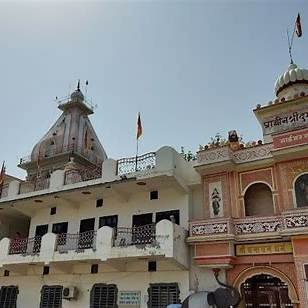
Maisar Khana Temple is one of the most important Shakti pilgrimage destinations in the Malwa region of Punjab. Located in Maisar Khana village on the Bathinda–Mansa Road, the shrine is dedicated principally to Mata Jwala Ji and Goddess Durga and attracts devotees from Punjab, Haryana, Rajasthan, Delhi and other parts of northern India.
The temple is also known through several spelling variations, including:
Maisar Khana Temple
Maiser Khana Temple
Maisar Khana Mandir
Mata Maisar Khana Mandir
Jwala Ji Temple Maisar Khana
Prachin Durga Mandir Maisar Khana
Maisar Khana Mata Temple
The Bathinda district administration officially uses the spelling **Maisar Khana Temple**, while Maiser Khana is also common in travel searches and everyday usage.
Travellers booking a taxi, hotel transfer or local vehicle should clearly specify:
**Maisar Khana Mata Temple on the Bathinda–Mansa Road near Maur, Bathinda district.**
This helps prevent confusion with neighbourhood Durga temples, Jwala Mata shrines and places with similar names elsewhere in Punjab.
Maisar Khana lies approximately 29–30 kilometres from Bathinda city. The temple is situated in the plains and does not require a mountain trek. Vehicles can approach the village and temple area through motorable roads, making the shrine suitable for families, children, senior citizens and organised pilgrimage groups.
The physical effort required within the complex can still vary. Visitors may encounter steps, queue railings, inclined passages, crowded courtyards and separate shrine areas. Festival traffic may require vehicles to be parked farther away than usual.
The temple is best known for its connection with the sacred flame or jyoti of Mata Jwala Ji.
According to the regional religious tradition, a poor devotee was unable to travel to the distant Jwala Ji shrine in the hills of Himachal Pradesh. He prayed with deep faith and performed sustained devotion. Pleased by his sincerity, the Goddess revealed her jyoti at Maisar Khana and granted him darshan.
Some retellings identify the devotee by the name Kamala, while other versions speak simply of a poor or physically unable devotee.
The details vary, but the spiritual message remains consistent.
The Divine Mother is not limited by distance.
Sincere devotion does not depend entirely upon wealth, physical strength or the ability to undertake a difficult pilgrimage.
The sacred presence may become available close to those who cannot travel far.
This tradition gave Maisar Khana its identity as a local manifestation of the Jwala Ji pilgrimage and led to the development of two major annual melas connected with Ashtami.
The temple is not merely a smaller substitute for the Jwala Ji shrine of Himachal Pradesh.
It has developed its own sacred landscape, community traditions, annual fairs and regional importance within Punjab.
Devotees visit to offer prayer, receive darshan, sing bhajans, participate in langar or bhandara and seek the courage associated with Mata Durga and Jwala Ji.
Visitors searching for hotels near Maisar Khana Temple, homestays near Maur, pilgrimage accommodation on the Bathinda–Mansa Road, family rooms near Mata Maisar Khana or places to stay in Bathinda can use MudrasStays to plan a practical and spiritually focused journey.
## Spiritual Importance of Maisar Khana Temple
Maisar Khana Temple is dedicated to Shakti, the universal divine energy worshipped through the Goddess.
Within Hindu philosophy, Shakti is the active power behind creation, protection, knowledge, courage and transformation.
She is present in the nurturing care of a mother.
She is present in the courage required to confront injustice.
She is present in the discipline needed to overcome fear.
She is present in fire, light, knowledge and the continuing force of life.
At Maisar Khana, the Goddess is approached particularly through the traditions of Mata Jwala Ji and Durga.
Mata Jwala Ji represents divine presence through flame.
Maa Durga represents courage, protection and the restoration of dharma.
These identities are closely connected.
Fire provides warmth and light, but it can also destroy what has become harmful.
Durga protects the world by confronting destructive forces.
The sacred jyoti therefore becomes a symbol of knowledge, courage, purification and divine awareness.
Devotees may pray for family welfare, emotional strength, safe travel, education, livelihood and protection during difficult periods.
Parents may bring children for blessings.
Families may visit before weddings or important responsibilities.
Traders and professionals may offer prayer before beginning new work.
Some visitors come after the fulfilment of a religious vow.
Others attend the annual melas as part of a tradition followed by their families across generations.
Such practices belong to personal faith.
Maisar Khana Temple should not be advertised as guaranteeing marriage, employment, childbirth, wealth, medical recovery or the fulfilment of every wish.
Prayer can provide spiritual confidence and emotional support, while practical concerns should continue to receive appropriate medical, legal, financial and personal attention.
## Mata Jwala Ji
Mata Jwala Ji is one of the most distinctive forms of the Divine Mother because she is worshipped through flame rather than only through a conventional sculpted image.
The Sanskrit and Hindi word “jwala” means flame.
Fire has several meanings within Hindu worship.
It gives light.
It transforms offerings.
It removes darkness.
It reveals what is hidden.
It can purify, but it must also be handled with discipline.
The Jwala tradition therefore presents the Goddess as both compassionate and powerful.
She illuminates the path of the devotee while also destroying ignorance and harmful attachment.
The principal Jwala Ji pilgrimage is located in the Kangra region of Himachal Pradesh, where naturally emerging flames are worshipped as manifestations of the Goddess.
The Maisar Khana tradition connects Punjab with this wider Himalayan Shakti landscape.
The local sacred jyoti is believed to have appeared so that a devotee unable to reach the distant hill shrine could receive darshan closer to home.
This does not make the two shrines identical.
Each has its own location, administration, architecture and pilgrimage tradition.
Maisar Khana should be respected as an independent sacred centre with its own community and annual fairs.
## The Sacred Jyoti
The jyoti is the spiritual heart of the Maisar Khana tradition.
A sacred flame is not approached as an ordinary lamp.
It symbolises the continuing presence of the Goddess.
A flame requires attention, fuel and protection from wind.
In the same way, spiritual awareness requires regular practice and protection from distraction.
The outer flame can also remind devotees of the inner light of conscience.
When that inner light is strong, a person can distinguish responsible conduct from selfish action.
The sacred jyoti should be approached carefully.
Visitors must follow temple instructions concerning lamps, oil, ghee, incense and offerings.
Loose clothing, synthetic scarves and children should be kept away from exposed flames.
No independent fire should be started inside the temple complex.
Large quantities of oil or ghee should not be poured without authorisation.
Devotion should never create a fire hazard.
## Maa Durga
Maa Durga represents disciplined divine power.
Her best-known sacred narrative concerns the defeat of Mahishasura.
According to Hindu mythology, Mahishasura acquired great strength and used it to disturb the balance of the world.
The energies of the gods combined and manifested as Goddess Durga.
She received weapons and divine powers and confronted the demon.
The victory represents the restoration of dharma.
The story can also be understood inwardly.
Mahishasura may symbolise arrogance, uncontrolled desire, cruelty, addiction or the misuse of authority.
Durga represents the courage and discipline needed to overcome these forces.
A devotee visiting Maisar Khana may therefore pray not only for relief from external difficulty but also for the strength to confront harmful habits within the self.
The Goddess should not be treated merely as a provider of favours.
Her worship asks the devotee to become more courageous, responsible and compassionate.
## The Devotee’s Legend
The most important Maisar Khana legend concerns a devotee who wished to visit Jwala Ji but could not complete the difficult journey.
Some versions describe poverty as the principal obstacle.
Others suggest age, health, disability or the physical difficulty of mountain travel.
In several popular retellings, the devotee is named Kamala.
He is said to have undertaken prolonged prayer and penance, asking the Goddess for darshan.
Mata Jwala Ji responded to his faith by revealing her jyoti at Maisar Khana.
The Goddess is believed to have promised darshan or a special manifestation twice each year, creating the tradition of the two major melas.
The narrative belongs to regional religious faith rather than independently documented biography.
Its spiritual value lies in its inclusiveness.
Pilgrimage has traditionally required money, transport, health and time.
People without these resources could be excluded from major sacred journeys.
The Maisar Khana story teaches that divine compassion is not restricted to the physically strong or financially secure.
Faith can create a sacred centre within an ordinary village.
The legend also carries an ethical responsibility for modern pilgrims.
If the shrine exists because a poor devotee could not travel, the temple community should remain welcoming to visitors with limited means, senior citizens and people with disabilities.
## The Two Annual Melas
Maisar Khana is especially famous for two major annual fairs.
These gatherings are traditionally associated with Ashtami, the eighth lunar day connected with Goddess worship.
One fair generally occurs during the spring cycle associated with Chaitra Navratri.
The other generally occurs during the autumn cycle associated with Sharad Navratri.
Exact dates change every year according to the Hindu lunar calendar.
The principal fair programme may extend beyond one day because pilgrims begin arriving before Ashtami and continue visiting after the main observance.
The melas attract very large gatherings from Punjab and neighbouring states.
The temple area becomes filled with devotees, bhajan groups, religious flags, food stalls, temporary markets, langars and community services.
Road traffic increases significantly.
Police, civil administration and temple committees may introduce barricades, security checks, parking zones and one-way traffic arrangements.
Visitors should not depend upon an old festival date or traffic plan.
The current year’s schedule must be confirmed locally.
## Chaitra Ashtami Mela
The spring fair usually takes place during Chaitra Navratri, commonly falling in March or April.
The weather is often more comfortable than peak summer, although afternoons can already become warm.
Devotees may observe fasting, offer chunri and coconuts, attend bhajans and receive prasad.
Families often begin journeys early in the morning to avoid heat and heavy traffic.
Festival visitors should carry drinking water, identification and only essential belongings.
Senior citizens may find the largest crowd difficult and may prefer an early hour or another day during the Navratri period.
## Sharad Ashtami Mela
The autumn fair generally occurs during Sharad Navratri, commonly falling in September or October.
The monsoon may have recently ended, and weather conditions are usually more comfortable than midsummer.
The main Ashtami and Navami days can attract intense crowds.
Visitors should book accommodation in Bathinda or Maur early.
Groups should select a meeting point before entering the temple queue.
Children should remain beside a responsible adult.
## Navratri Worship
Navratri means nine nights and honours different manifestations of the Divine Mother.
The nine forms are traditionally known as Shailaputri, Brahmacharini, Chandraghanta, Kushmanda, Skandamata, Katyayani, Kalaratri, Mahagauri and Siddhidatri.
Each form represents a quality required for spiritual growth.
Shailaputri represents stability.
Brahmacharini represents discipline.
Chandraghanta represents courage.
Kushmanda represents creative energy.
Skandamata represents nurturing care.
Katyayani represents action against injustice.
Kalaratri represents the destruction of fear.
Mahagauri represents purity and renewal.
Siddhidatri represents spiritual fulfilment.
A visit to Maisar Khana during Navratri can therefore become more than a request for material benefit.
It can be an opportunity to reflect upon which qualities are missing from one’s daily life.
## Kanya Pujan
Kanya Pujan is commonly performed during Ashtami or Navami.
Young girls are respectfully honoured as manifestations of the Goddess.
Food and gifts may be offered according to family tradition.
The ritual must always preserve the dignity, consent and comfort of the children involved.
Girls should not be treated as ceremonial objects.
The spiritual purpose is to recognise divine worth in every child and to encourage society to protect, educate and respect girls throughout the year.
## Bhajan, Jagran and Devotional Singing
Bhajans and jagrans form an important part of Mata worship at Maisar Khana.
A bhajan is a devotional song.
A jagran is an extended or overnight gathering involving music, sacred narratives and praise of the Goddess.
Music helps create collective devotion and allows people who may not understand formal Sanskrit ritual to participate emotionally.
Organised programmes should follow temple and administrative permission.
Sound levels must remain responsible.
Temporary electrical wiring, stages and lighting should meet safety requirements.
Devotion should not create fire risk, public disorder or distress for nearby residents.
## Langar and Bhandara
Community meals are commonly associated with major melas and Shakti pilgrimages.
Langar and bhandara express generosity, equality and service.
Visitors should accept only the quantity they can eat.
Food waste should be avoided.
Disposable plates, cups and bottles must be placed in designated waste areas.
Serving food is not complete devotion if plastic and leftovers are left across the village or temple approach.
Volunteers should provide safe drinking water, clean serving spaces and orderly queues.
## Temple Architecture
The Maisar Khana complex has developed through several periods of construction, renovation and community patronage.
Visitors can see a mixture of temple towers, arched entrances, balconies, covered passages, painted façades, silver-toned sanctum decoration, courtyards and modern queue-management railings.
The entrance architecture commonly uses red, cream, green and gold-toned decoration.
Lion figures are associated with some temple gateways.
The lion is the traditional vahana or vehicle of Maa Durga.
It represents courage, authority and controlled strength.
Durga is shown above or beside the lion, demonstrating that divine wisdom governs power.
The principal temple structures include tall shikharas crowned with saffron flags.
The flag identifies the sacred presence from a distance and represents continuing devotion.
Temple buildings may appear different from photographs taken in previous years because repainting, decoration and maintenance are frequent at active pilgrimage centres.
The age of the sacred tradition should not be confused with the age of every visible wall or tower.
## The Main Sanctum
The central worship area may contain silver-clad doors, sacred images, decorated thrones, flowers and the jyoti tradition associated with Mata Jwala Ji.
During festival periods, the sanctum is richly decorated.
Visitors should follow the queue and avoid remaining in front of the shrine after completing darshan.
Phones should remain silent.
Photography of the inner sanctum, jyoti, priests and private rituals should only be undertaken when permitted.
Large bags should be avoided because they obstruct movement.
Offerings should be handed over through the authorised system rather than thrown towards the sacred image.
## Multiple Shrines and Temple Areas
Maisar Khana is experienced as a wider sacred complex rather than one isolated room.
Different temple buildings, community institutions or shrine areas may be maintained by separate trusts or local groups.
Visitors may encounter several forms of the Goddess and associated deities.
The exact identity and order of each shrine should be understood through signs or guidance from authorised temple representatives.
Travellers should not confidently label every image from a distance.
Festival clothing and garlands may cover iconographic details.
## Hindu and Sikh Participation
Maisar Khana is located within the culturally interconnected landscape of Punjab.
The annual fairs are attended by devotees from different religious and social backgrounds, including Hindu and Sikh families.
This reflects the shared pilgrimage culture of the Malwa region.
Many Punjabi families visit gurdwaras, temples and local saint shrines according to inherited community traditions.
This shared participation should be respected rather than used to blur the distinct identity of each religion.
Visitors should follow the etiquette of every individual sacred place.
## Gurdwara Traditions in Maisar Khana
Maisar Khana village is also associated with Sikh sacred memory, including a gurdwara tradition connected with Guru Tegh Bahadur Ji’s journeys through the Malwa region.
A visitor may encounter both temple and gurdwara institutions within the wider village.
The temple and gurdwara should be treated as separate sacred spaces with their own customs.
At a gurdwara, visitors must cover their heads, remove footwear and follow the instructions of the sevadars.
At the Mata temple, visitors should follow the relevant offering, queue and sanctum rules.
The coexistence of these places reflects the layered spiritual heritage of Punjab.
## Best Time to Visit Maisar Khana Temple
Maisar Khana Temple can generally be visited throughout the year, subject to temple timings, security arrangements and local conditions.
### October to March
The cooler months provide the most comfortable weather.
Morning and evening can become cold in December and January.
Fog may affect railway and road travel.
Ordinary weekdays during winter can offer peaceful darshan.
### Chaitra Navratri
March or April brings one of the two principal melas.
The temple atmosphere is highly energetic, but crowding is intense.
Accommodation and transport should be planned early.
### April to June
The Bathinda–Mansa region can become extremely hot.
Daytime temperatures may be physically demanding.
Visitors should arrive early in the morning, carry water and avoid prolonged standing in direct afternoon heat.
Children and senior citizens require particular care.
### July to September
The monsoon brings humidity, rain and occasional waterlogging.
Roads can become slippery or congested.
Temporary stalls and unpaved parking areas may become muddy.
### Sharad Navratri
September or October brings the second major mela.
Weather may be more comfortable, but visitor numbers can be very high.
## Suggested Time for Darshan
Early morning is generally the best time for a regular visit.
The weather is cooler, road traffic is lighter and the temple atmosphere is comparatively quiet.
Evening aarti can provide a powerful devotional experience of bells, lamps and collective prayer.
Current opening and aarti timings should be confirmed locally because they may change during melas, security operations and seasonal schedules.
## Reaching Maisar Khana from Bathinda
Maisar Khana Temple lies approximately 29–30 kilometres from Bathinda on the Bathinda–Mansa Road.
A private taxi, local cab or personal vehicle is the easiest option for most families.
Buses and shared vehicles may operate towards Maur, Mansa and nearby villages, but the exact drop-off point and return frequency should be confirmed.
Festival traffic may require a diversion or a longer walk from parking.
Visitors should leave early and avoid scheduling a return train immediately after darshan.
## Reaching from Maur
Maur is one of the closest practical towns and an important local transport base.
Maisar Khana is commonly approached through the Maur side.
Local autos, shared vehicles or taxis may be available.
Visitors staying in Maur should confirm late-evening return transport before attending evening worship.
Accommodation selection is more limited than in Bathinda.
## Reaching from Mansa
The temple lies on the wider Bathinda–Mansa corridor and can be approached from the Mansa side.
Actual travel time depends upon the starting point, road condition and fair traffic.
Visitors combining the temple with Mansa district travel should plan their route geographically rather than returning unnecessarily to Bathinda.
## Reaching by Train
Maisar Khana railway station and Kot Fatteh railway station are identified as nearby rail points.
Train frequency and stopping patterns may be limited.
Bathinda Junction is the principal regional railway hub and offers more extensive connectivity.
Travellers should check the current railway timetable rather than assuming every train stops at the local stations.
A road transfer may still be required from the railway station to the temple.
## Reaching by Air
Bathinda Airport is the closest airport identified by the district administration, approximately 56 kilometres away through the stated route.
Scheduled flight operations can change.
Travellers should verify current routes and days of operation before booking.
Chandigarh, Amritsar and Delhi may provide broader air connectivity but require significantly longer road or rail travel.
## Security and Entry Checks
Maisar Khana receives very large gatherings and may operate enhanced security during festivals or after local alerts.
Visitors should cooperate with frisking, baggage checks and vehicle restrictions.
Government-issued identification should be carried.
Unattended bags should not be left within the complex.
Suspicious objects or behaviour should be reported to temple staff or police.
Drones should not be flown without permission.
Security arrangements may change at short notice.
## Accessibility for Senior Citizens
The temple is located in the plains and does not require a long trek.
However, the internal complex may include steps, ramps, crowd-control railings and prolonged standing.
Senior citizens should visit during quieter hours.
Families should confirm the closest permitted vehicle drop-off.
A walking stick, drinking water and required medicines can be useful.
Festival melas may be unsuitable for people unable to tolerate dense crowds or long queues.
A regular weekday provides a more comfortable experience.
## Visiting with Children
Children can learn about Maa Durga, Jwala Ji, the meaning of the sacred flame and the value of compassion.
They must remain supervised around lamps, crowds, stairs and railings.
Young children should wear identification containing a parent’s phone number during major fairs.
Families should establish a meeting point.
Children should not be allowed to play near the jyoti or touch ritual fire.
## Temple Etiquette
Visitors should wear respectful clothing.
Footwear should be removed wherever instructed.
Phones should remain silent near the sanctum.
Queue barriers should not be crossed.
The jyoti and sacred images should only be photographed when permission is clear.
Visitors should not push, shout or attempt to buy unauthorised special access.
Donations should be made through recognised boxes or official counters.
## Responsible Offerings
Flowers, chunri, coconuts and prasad should be offered through the authorised system.
Plastic packaging should be removed where possible.
Excessive oil, synthetic cloth and non-biodegradable items should not be left around the temple.
No one should be pressured into purchasing expensive offerings through claims that they are compulsory.
The value of worship depends upon sincerity, not the price of the material offered.
## Nearby Attractions
Maisar Khana can be combined with several important destinations across Bathinda district and the Malwa region.
## Qila Mubarak, Bathinda
Qila Mubarak is the most important historic landmark in Bathinda city.
The large brick fort is associated with several periods of regional history and with traditions concerning Razia Sultan.
Its massive walls demonstrate the strategic importance of Bathinda across centuries.
Visitors should check current opening and conservation arrangements.
Restricted or unstable sections should not be entered.
## Takhat Sri Damdama Sahib
Takhat Sri Damdama Sahib at Talwandi Sabo is one of the five Takhts of Sikhism.
It is deeply associated with Guru Gobind Singh Ji and the preparation of the Sikh scriptural tradition.
A combined Maisar Khana and Damdama Sahib journey can reflect the shared sacred geography of Bathinda district.
The gurdwara requires proper head covering, removal of footwear and respectful conduct.
## Rose Garden, Bathinda
Bathinda’s Rose Garden provides a recreational break for families staying in the city.
The garden is best visited during comfortable weather and suitable daylight hours.
It should be treated as an urban leisure stop rather than part of the temple’s religious tradition.
## Bir Talab and Family Attractions
The Bir Talab area has been associated with wildlife and family recreation facilities.
Current operation, animal enclosures and visiting arrangements should be checked before travel.
Facilities can change over time.
## Chetak Park
Chetak Park is another recreational destination near Bathinda.
Opening conditions may depend upon administration and security rules.
Visitors should confirm access before including it in a fixed itinerary.
## Lakhi Jungle
Lakhi Jungle is associated with Sikh history and Guru Nanak Dev Ji’s travels.
It lies outside central Bathinda and requires a separate road journey.
A visit can add spiritual depth to a wider district itinerary.
## Suggested Half-Day Maisar Khana Itinerary
Begin from Bathinda early in the morning.
Travel towards Maisar Khana on the Bathinda–Mansa Road.
Use the authorised parking area.
Complete security checks and enter the temple with minimal luggage.
Receive darshan of Mata Jwala Ji and Maa Durga.
Observe the sacred jyoti respectfully.
Visit the other open shrines within the complex.
Receive prasad and participate in authorised langar where available.
Return to Bathinda before the strongest afternoon heat.
## Suggested One-Day Spiritual Itinerary
Begin with morning darshan at Maisar Khana Temple.
Continue towards Bathinda for lunch.
Visit Qila Mubarak during the afternoon if open.
End the day at another local temple or gurdwara according to the interests of the group.
## Suggested Two-Day Bathinda Pilgrimage
On the first day, arrive in Bathinda and visit Qila Mubarak and selected city attractions.
Stay overnight in Bathinda.
On the second morning, visit Maisar Khana Temple.
Continue towards Takhat Sri Damdama Sahib if the group has adequate time and energy.
This itinerary is suitable for families because it avoids combining long arrival travel with the temple visit.
## Suggested Three-Day Malwa Spiritual Circuit
Day one can focus on Bathinda city.
Day two can include Maisar Khana Temple and Maur.
Day three can include Takhat Sri Damdama Sahib, Lakhi Jungle or another verified destination according to the onward route.
A slower itinerary allows senior citizens and children to travel comfortably.
## Accommodation Near Maisar Khana Temple
Accommodation immediately beside the temple is limited compared with Bathinda.
The village may offer basic pilgrim facilities, dharamshala-style rooms or local lodging, particularly during mela periods.
Availability and standards should be confirmed before arrival.
Bathinda city provides the widest selection of hotels, restaurants, hospitals, railway services and transport.
Maur provides a closer but smaller accommodation base.
## Pilgrim Accommodation Near the Temple
Basic pilgrim rooms may be available through temple or community institutions.
Facilities can include shared rooms, common bathrooms and simple bedding.
A pilgrim room should not be expected to provide the privacy, housekeeping and amenities of a commercial hotel.
Festival accommodation may be allocated differently.
Visitors should use recognised booking channels and avoid unverified intermediaries.
## Hotels in Bathinda
Bathinda is the best accommodation base for most first-time visitors.
The city has budget hotels, family properties, business hotels, premium accommodation and guesthouses.
Guests should choose a property with convenient access to the Bathinda–Mansa Road.
Hotels on the correct side of the city can reduce morning traffic and travel time.
Visitors should confirm parking, breakfast timing, room cooling, hot water and the availability of an early taxi.
## Hotels Near Bathinda Junction
Hotels near Bathinda Junction are convenient for train travellers.
The area provides transport and food options but can be noisy and congested.
Families should check room quality, safe parking and luggage-storage facilities.
The journey to Maisar Khana still requires a road transfer.
## Hotels Near the Bathinda–Mansa Road
Properties located towards the Mansa Road side may offer easier access to Maisar Khana.
Travellers should verify the actual route rather than relying only on straight-line distance.
Some properties marketed as being on the highway may be far from restaurants or city services.
## Hotels and Guesthouses in Maur
Maur is closer to the shrine than central Bathinda and may suit visitors seeking early darshan.
Accommodation choices are more limited.
Guests should confirm attached bathrooms, air-conditioning, hot water, meals, parking and vehicle availability.
## Homestays Near Maisar Khana and Maur
A verified homestay can provide Punjabi meals, local guidance and a quieter rural experience.
Facilities vary significantly.
Guests should confirm electricity, cooling, bathrooms, meals, mobile connectivity and the exact distance to the temple.
No traveller should arrive during a mela without a confirmed booking.
## Choosing the Right Stay
Pilgrims prioritising comfort, railway connectivity and medical facilities should stay in Bathinda.
Visitors prioritising proximity can choose Maur or a verified local property.
Families should confirm room capacity, meals and parking.
Senior citizens should prioritise lifts, ground-floor rooms and dependable transport.
Couples may prefer quieter hotels or homestays away from congested markets.
Solo pilgrims should select populated accommodation with confirmed return transport.
Groups should verify multiple rooms, vegetarian meals, driver accommodation and bus parking.
Mela visitors should reserve rooms well in advance.
Summer travellers must confirm effective air-conditioning.
Winter guests should check hot water and heating arrangements.
## Book Hotels Near Maisar Khana Temple with MudrasStays
MudrasStays helps pilgrims, families and spiritual travellers discover hotels, homestays, guesthouses and pilgrimage accommodation near Maisar Khana Temple, Maur and Bathinda.
The platform is designed specifically for travellers searching for places to stay near temples, Shakti shrines, sacred jyotis and pilgrimage fairs.
Visitors can compare properties according to practical road distance from Maisar Khana Temple, room category, budget, family size and required facilities.
Booking on the Bathinda–Mansa Road side of the city can make peaceful morning darshan easier.
Families can select hotels with comfortable rooms, meals and safe parking.
Senior citizens can prioritise accessible properties with lifts and dependable taxis.
Solo pilgrims can search for economical guesthouses in well-connected areas.
Couples can explore quiet homestays or comfortable city hotels.
Pilgrimage groups can identify properties offering multiple rooms, vegetarian food, driver accommodation and parking for larger vehicles.
Travellers attending either of the two annual Ashtami melas can reserve accommodation early and avoid uncertain last-minute availability.
Visitors combining Maisar Khana with Qila Mubarak, Takhat Sri Damdama Sahib, Lakhi Jungle or other Bathinda attractions can choose a stay based upon the actual geographical sequence of the journey.
MudrasStays helps travellers avoid choosing a property that appears close on a map but requires unnecessary travel through city traffic or rural roads.
## Responsible Pilgrimage
Maisar Khana is an active place of worship and a major gathering centre.
Visitors should dress respectfully and follow the designated queue.
The sacred jyoti, images, priests and private rituals should only be photographed when permission is clear.
Children should remain supervised around flames and crowds.
Offerings should be made through authorised arrangements.
Food should not be wasted.
Plastic and disposable waste must be placed in appropriate bins.
## Fire Safety
The jyoti is central to the shrine, making fire safety especially important.
Loose synthetic clothing should be kept away from flames.
Visitors should not light lamps in unapproved locations.
Children must not handle burning material.
Oil containers should not be left in passages.
Crowded festival decorations and temporary electrical wiring must not be touched.
## Mela Safety
Pilgrims attending the melas should carry minimal belongings.
Jewellery and valuables should be limited.
Group members should keep phone numbers written separately.
Children should wear identification.
Senior citizens should avoid peak crowding if possible.
Visitors must cooperate with police and volunteers.
Unattended bags should be reported.
## Respecting Maisar Khana Village
Maisar Khana is a living village rather than only a pilgrimage site.
Residents use the same roads, water, fields and public spaces as visitors.
Vehicles should not block homes, farms, shops or emergency access.
Private land should not be entered without permission.
Residents should not be photographed casually.
Local drivers, priests, volunteers, shopkeepers, food providers and accommodation hosts should be treated fairly.
Responsible pilgrimage allows temple tourism to support the village rather than creating only congestion and waste.
## A Sacred Flame of Shakti in Punjab’s Malwa Region
Maisar Khana Temple represents a powerful meeting of Mata Jwala Ji, Maa Durga, sacred flame, village faith and the living pilgrimage traditions of Punjab.
The jyoti represents divine awareness.
Fire represents transformation.
Durga represents courage.
The lion represents controlled power.
The devotee’s legend represents compassion for those unable to travel far.
The two annual melas connect the temple with the spring and autumn cycles of Goddess worship.
Bhajans and jagrans transform music into prayer.
Langar transforms devotion into service.
The participation of different Punjabi communities reflects the shared spiritual culture of the Malwa region.
For Shakti devotees, Maisar Khana is a place to seek courage, discipline and clarity.
For families, it provides an accessible pilgrimage without a difficult mountain journey.
For senior citizens, the plains location makes darshan manageable when festival crowds are avoided.
For children, the story of the devotee and sacred jyoti provides lessons about faith and compassion.
For cultural travellers, the temple reveals how a major pilgrimage tradition can emerge from a village and serve people unable to undertake a distant journey.
For spiritual seekers, the flame communicates a simple teaching: even a small light can remove darkness when it is protected and kept alive.
Maisar Khana Temple should not be treated merely as a quick roadside stop between Bathinda and Mansa.
Its complete identity deserves patient darshan and thoughtful interpretation.
Arrive during a quiet hour where possible.
Observe the jyoti respectfully.
Understand the devotee’s story as a tradition of divine accessibility.
Participate in langar without wasting food.
Follow security instructions.
Protect the village from litter.
Carry the courage and clarity associated with Maa Durga beyond the temple.
Plan your pilgrimage to Maisar Khana Temple with MudrasStays and experience one of Punjab’s most important Jwala Ji and Durga shrines.
Seek the blessings of Mata Maisar Khana, receive darshan of the sacred jyoti and experience the devotional atmosphere of the Malwa region.
Combine your journey with Qila Mubarak, Takhat Sri Damdama Sahib, Lakhi Jungle and the wider spiritual and cultural attractions of Bathinda district.
Book hotels near Maisar Khana Temple, discover homestays near Maur and explore suitable pilgrimage accommodation throughout Bathinda through MudrasStays.
Stay closer to the correct route, attend peaceful morning darshan and reduce unnecessary travel through busy roads.
MudrasStays connects pilgrims, families and spiritual travellers with suitable accommodation near temples, Shakti shrines and sacred destinations across India.
Begin your Maisar Khana Temple journey with a comfortable stay and experience a meaningful pilgrimage centred on Mata Jwala Ji, Maa Durga, the sacred flame and the enduring faith of Punjab’s Malwa region.