
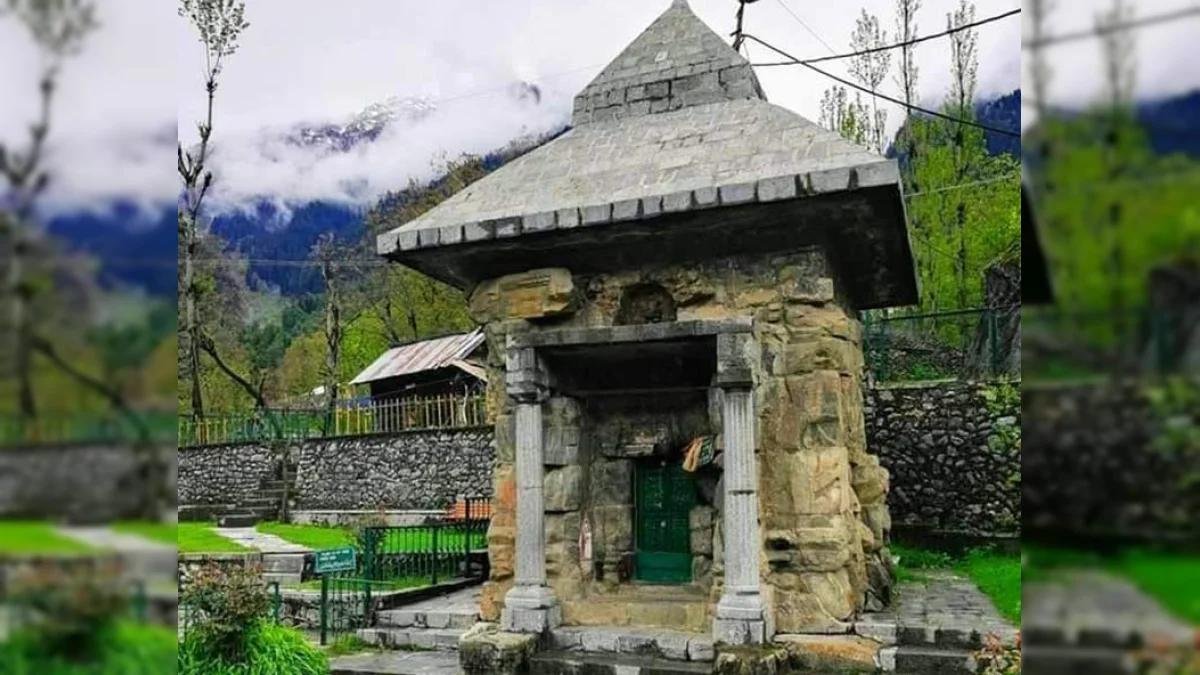
Mamleshwar Temple is one of the most important ancient Shiva shrines in Pahalgam and one of the most peaceful spiritual destinations in the Lidder Valley of Jammu and Kashmir. Located in Mamal village, close to the main Pahalgam settlement, the compact stone temple stands among gardens, traditional houses, forested slopes and mountain scenery associated with Lord Shiva and the wider Amarnath pilgrimage landscape.
The shrine is also known as Mamaleshwar Temple, Mamal Temple, Mammal Temple, Mamleshwar Mahadev Temple, Mammesvara Temple and Mamalaka Temple.
These names refer broadly to the same historic Shiva shrine, although spellings vary because Sanskrit, Kashmiri, Hindi and English sources transliterate the local name differently.
Travellers arranging local transport should clearly mention:
Mamleshwar or Mamal Shiva Temple in Pahalgam, Anantnag district.
This helps avoid confusion with Mamleshwar temples in Karsog, Omkareshwar and other parts of India.
Mamleshwar Temple is dedicated primarily to Lord Shiva. A sacred Shiva lingam occupies the inner sanctum, while the complex also contains a distinctive Nandi image, a spring-fed water tank and architectural features associated with the historic temple-building traditions of Kashmir.
The temple is small when compared with the monumental Martand Sun Temple or the large pilgrimage infrastructure surrounding Amarnath. Its importance does not come from scale.
Mamleshwar’s character lies in intimacy.
The sanctum is compact.
The approach is quiet.
The stonework is restrained.
The spring and surrounding vegetation create a peaceful environment.
The temple remains connected with worship rather than existing only as an archaeological ruin.
For Shiva devotees, Mamleshwar Temple provides an accessible place for prayer within Pahalgam.
For heritage travellers, it preserves a rare example of Kashmiri stone-temple architecture.
For Amarnath pilgrims, it forms part of the older sacred geography of the Pahalgam route.
For families and senior citizens, it offers a meaningful spiritual visit without a long mountain trek.
For photographers and cultural travellers, it presents a quieter side of Pahalgam beyond meadows, pony rides and conventional sightseeing.
Visitors searching for hotels near Mamleshwar Temple, homestays in Mamal village, places to stay near Pahalgam, temple accommodation near the Amarnath route or spiritual stays in the Lidder Valley can use MudrasStays to plan a practical and respectful journey.
## Location of Mamleshwar Temple
Mamleshwar Temple stands in or near Mamal village, generally around one to two kilometres from the main Pahalgam market and bus or taxi areas, depending upon the visitor’s starting point and selected road.
The temple lies within the wider Lidder Valley landscape.
Local roads and pedestrian paths connect the shrine with Pahalgam’s developed tourism area.
Some visitors reach the temple by taxi or private vehicle.
Others enjoy walking from central Pahalgam when weather, road conditions and personal mobility allow.
The route may involve a bridge, village lane, gradual slope or short section of uneven ground.
The exact approach can change because of traffic management, road work, security arrangements and seasonal conditions.
Travellers should ask their accommodation provider for the current practical route rather than relying completely upon an old map pin.
The temple does not require the high-altitude preparation associated with Chandanwari, Sheshnag, Panchtarni or the Amarnath Cave.
However, Pahalgam itself lies at a significant mountain elevation, and cold, snow, rain or slippery ground can affect even a short local visit.
## Pahalgam and the Lidder Valley
Pahalgam is situated in the scenic Lidder Valley of Anantnag district.
The town is surrounded by mountains, forests, streams, meadows and villages traditionally connected with pastoral life.
Its name is commonly interpreted as the “village of shepherds.”
The landscape has long been associated with seasonal movement, grazing, agriculture, pilgrimage and mountain travel.
The Lidder River is one of the defining natural features of Pahalgam.
Its waters originate in the high mountain and glacier systems of the region and flow through the valley before eventually joining the Jhelum basin.
The river supports agriculture, settlements, tourism and natural habitats.
At Mamleshwar Temple, the presence of nearby flowing water and a sacred spring reinforces the spiritual character of the site.
Water in Hindu temple traditions symbolises purification, continuity, life and preparation for worship.
The combination of Shiva, spring water, stone architecture and Himalayan landscape gives Mamleshwar a spiritual atmosphere different from the larger temples of the plains.
## Presiding Deity: Lord Shiva
Lord Shiva is the principal deity worshipped at Mamleshwar Temple.
Shiva represents consciousness, meditation, transformation, detachment and liberation.
He is worshipped as the silent yogi of the Himalayas, the compassionate householder united with Goddess Parvati, the lord of time and the force through which ignorance and harmful attachment are transformed.
The Himalayan landscape is inseparable from Shiva’s sacred identity.
Mountains represent stability, silence and the inward journey.
Rivers represent movement and purification.
Caves represent meditation.
Forests represent freedom from social distraction.
Mamleshwar Temple brings several of these elements together within a small and accessible sacred space.
Devotees may pray for family welfare, courage, health, peace, responsible decision-making and protection during travel.
Some pilgrims visit before beginning the Amarnath journey.
Others come during Mahashivratri, Shravan or an ordinary day in Pahalgam.
Families may offer prayers during important stages of life.
Personal prayers and devotional experiences are matters of faith.
The temple should not be promoted as guaranteeing marriage, fertility, employment, financial gain, healing or any other specific result.
## The Shiva Lingam
The Shiva lingam is the principal sacred form inside Mamleshwar Temple.
Within Shaiva philosophy, the lingam represents Lord Shiva beyond the limits of ordinary human form.
It symbolises infinite consciousness, the source and foundation of existence.
The surrounding base or yoni represents Shakti, the divine energy through which creation becomes active.
Together, Shiva and Shakti express the unity of consciousness and energy, stillness and movement, transcendence and everyday life.
The lingam at Mamleshwar is worshipped through prayers and offerings according to temple custom.
Devotees may offer water, flowers, bilva leaves or other approved materials.
Visitors should follow the priest’s instructions.
Historic temples require careful management because unrestricted quantities of milk, oil, colour or ritual substances can damage stone, create drainage problems and affect conservation.
A simple offering made respectfully is more meaningful than excessive material that creates waste.
Photography of the Shiva lingam or inner sanctum should only be undertaken when clearly permitted.
## Historical Name: Mammesvara
The historical name Mammesvara or Mamesvara is associated with Mamleshwar Temple in accounts of Kashmir’s sacred geography.
Kalhana’s Rajatarangini, the celebrated Sanskrit chronicle of Kashmir, contains a reference to a Shiva shrine called Mammesvara.
Historical interpretation connects this name with the small Shiva temple at Mamal in the Lidder Valley.
The chronicle records that the temple received a golden architectural ornament during the period of King Jayasimha.
This reference is important because it establishes that the shrine was known and respected during medieval Kashmir.
The exact beginning of worship at the site may be older.
However, claims assigning the visible building to an exact year such as 400 CE should be treated cautiously unless supported by firm archaeological dating.
Ancient temples frequently pass through several building phases.
An early shrine may be repaired.
A sanctum may be reconstructed.
A roof may be replaced.
A ruler may add a finial or architectural decoration.
Later communities may reinforce walls and preserve worship.
Mamleshwar should therefore be understood as a layered sacred site rather than a structure created once and left unchanged.
## King Jayasimha and Royal Patronage
King Jayasimha ruled Kashmir during the twelfth century.
Historical tradition associates his period with the decoration of Mammesvara through the addition of a golden amalaka or crowning ornament.
An amalaka is a ribbed architectural element commonly positioned near the top of a North Indian temple tower.
Its form resembles a circular stone disc with repeated ridges.
At Mamleshwar, the historical reference to a golden upper ornament indicates royal patronage and the importance of the shrine within the sacred geography of Kashmir.
Royal support could provide resources for repairs, priests, ritual supplies, water systems, gardens and pilgrimage routes.
The current temple no longer displays every feature described in medieval accounts.
Weather, conflict, deterioration, rebuilding and changing roof arrangements have altered the structure.
The historical record nevertheless demonstrates that Mamleshwar was important enough to receive the attention of a Kashmiri ruler.
## The Rajatarangini and Historical Caution
The Rajatarangini is one of the most important historical chronicles of South Asia.
Written by Kalhana in the twelfth century, it narrates the rulers and political history of Kashmir while also preserving information about temples, rivers, settlements, royal donations and sacred places.
Like other premodern chronicles, it combines historical reporting, inherited memory, poetry and moral interpretation.
Its reference to Mammesvara provides valuable evidence.
However, visitors should avoid using one historical passage to make unsupported claims about every part of the present temple.
The chronicle records the existence and embellishment of the shrine.
It does not necessarily prove that every visible stone wall dates from the same moment.
Responsible heritage interpretation separates what is documented from what is believed and what remains uncertain.
## Traditional Date of the Temple
Many modern travel descriptions call Mamleshwar a fourth- or fifth-century temple and sometimes describe it as approximately 1,600 years old.
This dating has become widely repeated.
It may reflect a belief that the sacred site or an earlier structural phase originated in the early historical period.
However, the precise chronology of the surviving structure is not always explained clearly.
A careful description should state that Mamleshwar is regarded as one of Pahalgam’s oldest Shiva shrines, that the location may preserve an early sacred tradition and that the temple is securely associated with medieval historical records.
This approach respects the antiquity of the site without presenting an uncertain date as an uncontested fact.
## The Ganesha Door-Guardian Tradition
The most famous religious story associated with Mamleshwar Temple concerns Lord Ganesha, Goddess Parvati and Lord Shiva.
According to local Hindu tradition, Goddess Parvati wished to bathe or remain in privacy.
She instructed the young Ganesha to guard the entrance and prevent anyone from entering.
Lord Shiva arrived and attempted to enter, but Ganesha obeyed his mother’s command and refused him access.
A conflict followed, and Shiva severed the child’s head before understanding his identity.
When Parvati discovered what had occurred, she became overwhelmed with grief and anger.
To restore Ganesha, Shiva replaced his head with that of an elephant and granted him an honoured position among the gods.
Ganesha became the remover of obstacles, lord of beginnings and deity traditionally worshipped before important undertakings.
Regional belief connects this episode with the Mamleshwar site.
The story should be presented as Hindu mythology and local temple tradition rather than as a historically documented event.
Its spiritual meaning is profound.
Ganesha represents obedience, duty and courage.
Parvati represents maternal power and protection.
Shiva’s later action represents recognition, restoration and transformation after a destructive misunderstanding.
## Meaning of “Mam Mal”
A popular local explanation connects the name Mamal or Mammal with the expression “Mam Mal,” interpreted as “do not go” or “do not enter.”
The phrase is associated with Ganesha’s command as guardian of Parvati’s doorway.
The linguistic derivation may not be established conclusively through historical philology.
The explanation remains an important part of the temple’s oral tradition.
It gives visitors a memorable way to understand the connection between the place-name and the Ganesha legend.
The story also encourages reflection upon boundaries and responsibility.
Ganesha followed the instruction he had received even when faced with a powerful unknown visitor.
## The Two-Faced Nandi
Mamleshwar Temple is often noted for a small and unusual Nandi image described as having two faces.
Nandi is the sacred bull and vehicle of Lord Shiva.
In Shiva temples, Nandi is generally positioned facing the sanctum and maintaining an unwavering gaze towards the lingam.
Nandi represents devotion, strength, patience and disciplined attention.
The unusual form at Mamleshwar contributes to the shrine’s distinctive identity.
Visitors should not touch, climb upon or reposition the image.
Its age, precise iconographic interpretation and current ritual arrangement should be discussed cautiously unless confirmed by the temple priest or archaeological documentation.
The spiritual meaning remains connected with Nandi’s complete dedication to Mahadev.
Some devotees traditionally speak a prayer near Nandi’s ear, believing that the loyal guardian carries it to Shiva.
Any such practice should be performed gently and only where allowed.
## The Spring-Fed Sacred Tank
A stone-lined tank or small sacred water basin stands near the temple.
Historical descriptions identify it as approximately twelve feet square and fed by a natural spring.
The water feature is one of the most important architectural and spiritual components of Mamleshwar.
Natural springs have held a particularly important place in Kashmir’s sacred geography.
They supplied communities with water and were frequently associated with Nagas, deities, purification and pilgrimage.
At Mamleshwar, the tank creates a transition between the outer landscape and the temple.
Water can symbolise cleansing before worship, the movement of life and the grace of the divine.
Visitors should not assume that spiritually sacred water is automatically medically sterile.
Natural sources can be affected by seasonal runoff, microorganisms and local environmental conditions.
Soap, shampoo, detergent and chemicals must never be used in the tank.
Plastic, food, cloth and flower packaging should not be thrown into the water.
Children require supervision because stone edges may become slippery.
## Springs and Sacred Water in Kashmir
Kashmir contains numerous sacred springs.
Many place-names include the word nag, which can refer to a spring or a sacred water location.
Traditional beliefs connect springs with Nagas—serpent beings associated with water, fertility and guardianship.
Hindu, Buddhist, local and later cultural traditions interacted across Kashmir’s water landscapes.
Mamleshwar’s spring should therefore be understood within a wider regional pattern.
A temple was not positioned beside water merely for visual beauty.
The source supported worship, daily life, ritual purification and the local community.
Protecting the spring is inseparable from protecting the temple.
## Traditional Kashmiri Temple Architecture
Mamleshwar Temple preserves important features of historic Kashmiri stone architecture.
The shrine is compact and built from heavy stone blocks.
Its square sanctum is approached through a small porch.
Two stone columns support the entrance arrangement.
Above the sanctum rises a steep, pyramidal roof form suited to Kashmir’s mountain climate.
The building appears modest when viewed from outside, yet its proportions are carefully controlled.
The temple’s architectural power comes from mass, balance and simplicity rather than dense decorative sculpture.
Kashmiri temple architecture frequently uses:
Square sanctums.
Raised stone bases.
Deep entrance frames.
Columned porches.
Trefoil or shaped openings.
Strong stone masonry.
Steep pyramidal roof forms.
Water tanks or springs near the sacred enclosure.
Mamleshwar contains several of these regional characteristics within a small building.
## The Compact Sanctum
Historical measurements describe the inner chamber as slightly under eight feet square.
This small scale creates an intimate worship environment.
Only a limited number of devotees can enter or approach comfortably at one time.
During Mahashivratri, Shravan or busy tourism periods, visitors should complete darshan without blocking the entrance.
The compact interior also means that flash photography, large bags and excessive movement can disturb both worship and the historic structure.
Visitors should allow their eyes to adjust to the lower light rather than immediately using a phone flash.
The sanctum was designed for focused worship, not for large-group photography.
## The Columned Porch
The entrance porch is supported by two columns.
The porch creates a sheltered transition between the garden or courtyard and the sanctum.
Architecturally, the columns frame the doorway and give visual importance to the entrance.
Spiritually, the porch marks the movement from ordinary outdoor space towards the presence of Shiva.
Visitors should not lean heavy bags or umbrellas against the columns.
Children should not climb upon the stone base.
Repeated physical pressure can gradually damage old architectural surfaces.
## The Pyramidal Roof
The steep pyramidal roof is one of the most recognisable features of Mamleshwar Temple.
Kashmir experiences snow, rain, frost and significant seasonal temperature changes.
A sloping roof helps move water and snow away from the walls.
The form may also reflect the influence of older wooden architecture translated into stone.
The present roof has experienced repair and restoration.
Visitors should not assume that every visible slab belongs to the earliest construction phase.
Living temples require repeated maintenance.
Repairing a roof protects the sanctum, sacred image and surviving historic masonry.
## Weathering and Conservation
Mamleshwar’s stonework is exposed to a demanding mountain environment.
Water enters small cracks.
Freezing temperatures expand trapped moisture.
Snow adds weight.
Plant growth can disturb joints.
Rain and seasonal runoff affect foundations.
Human contact, ritual substances and uncontrolled construction can create additional pressure.
Visitors should therefore follow all archaeological and temple-management instructions.
Stone walls should not be scratched, painted or covered with unauthorised vermilion.
Loose fragments must not be moved.
Professional filming, tripods, drones or organised activities may require permission.
Conservation work can temporarily restrict access.
Such restrictions protect both the visitor and the monument.
## A Living Temple and Heritage Site
Mamleshwar is not merely an abandoned ruin.
Lord Shiva continues to be worshipped within the shrine.
This living character distinguishes it from several archaeological temple complexes in Kashmir.
Visitors must therefore observe both temple etiquette and heritage responsibility.
Footwear should be removed wherever directed.
Dress should remain respectful.
Phones should be silent.
The priest and worshippers should not be photographed without consent.
Historic stone surfaces should not be touched unnecessarily.
Offerings should be made only in authorised areas.
Living worship and conservation can support each other when pilgrims understand that protecting the physical temple is itself a religious responsibility.
## Mamleshwar and the Amarnath Tradition
Pahalgam is one of the principal bases associated with the traditional route to Shri Amarnath Cave.
Historical pilgrimage texts and travel traditions include Mamleshwar or Mammesvara among the sacred locations associated with the journey.
Pilgrims travelling through the Pahalgam route may visit Mamleshwar before continuing towards Chandanwari, Pissu Top, Sheshnag, Panchtarni and the cave.
The temple provides an accessible Shiva darshan before the much more demanding mountain pilgrimage.
Mamleshwar should not, however, be represented as a substitute for official Amarnath registration, medical certification or route procedures.
The annual yatra is administered according to current security, health, environmental and logistical arrangements.
Dates, permitted routes, registration requirements, transport rules, accommodation and access can change each year.
Pilgrims must rely upon current official instructions.
## The Traditional Pahalgam Route to Amarnath
The traditional Pahalgam route generally begins with travel from Pahalgam towards Chandanwari.
From Chandanwari, pilgrims proceed through high mountain terrain towards Pissu Top, Sheshnag, Mahagunas Pass, Panchtarni and the Amarnath Cave.
The route is longer than the Baltal side but is historically established and passes through several landscapes associated with Shiva traditions.
The journey involves substantial altitude, changing weather and physical effort.
A visitor capable of walking from central Pahalgam to Mamleshwar Temple should not assume that they are automatically prepared for the Amarnath trek.
The two journeys are entirely different in difficulty.
Mamleshwar is a local road-accessible shrine.
Amarnath is a high-altitude pilgrimage requiring formal preparation.
## Pahalgam in Amarnath Mythology
Hindu tradition connects Pahalgam with Lord Shiva’s journey towards the secret cave where he revealed the mystery of immortality to Goddess Parvati.
Popular pilgrimage narratives say that Shiva gradually left behind various companions and symbols before entering the remote cave.
Pahalgam is often associated with the place where he left Nandi.
Chandanwari is connected with the Moon.
Sheshnag is associated with the serpents.
Panchtarni is linked with the five elements.
These stories belong to sacred tradition and pilgrimage mythology rather than ordinary geographical history.
They give the route its spiritual meaning.
Mamleshwar Temple belongs within this wider Shiva landscape and allows visitors to experience an important local shrine even when they are not undertaking the complete yatra.
## Mahashivratri at Mamleshwar Temple
Mahashivratri is one of the most significant occasions for Shiva worship.
At Mamleshwar Temple, devotees may offer prayers, water, flowers and bilva leaves according to current arrangements.
Mahashivratri in Kashmir is connected with the wider tradition of Herath, an important festival among Kashmiri Pandits.
Herath reflects the marriage of Shiva and Parvati, family worship, ritual vessels, prayers and community memory.
Festival practices vary between families and locations.
Visitors should not assume that every custom is performed publicly within the small temple.
The shrine may receive additional devotees, and access can be affected by snow or winter weather.
Current opening times and local transport should be confirmed.
## Shravan and Monday Worship
The Hindu month of Shravan is especially sacred to Lord Shiva.
Mondays may bring additional devotees to Mamleshwar.
Offerings can include water, bilva leaves, flowers and simple prayers.
Shravan often overlaps with the Amarnath Yatra and a busy tourism period in Pahalgam.
Hotels, taxis and roads may experience greater demand.
Visitors should book accommodation early and allow additional travel time.
The temple is small, so patience and queue discipline are important.
## Morning Darshan
Morning is the best time for visitors seeking peaceful darshan.
The village is quieter.
The air is cool.
The garden and spring receive soft light.
The short walk from central Pahalgam is also more comfortable before tourism traffic increases.
Morning darshan leaves enough time to explore other Pahalgam attractions later in the day.
Opening arrangements can vary, so travellers planning a very early visit should confirm with their hotel or local temple representative.
## Evening Darshan
Evening creates a quiet atmosphere as the valley cools and shadows move across the mountain slopes.
Temple bells, flowing water and fading light can make the visit deeply reflective.
Visitors should confirm closing time and arrange a safe return.
Winter darkness arrives early.
Village lanes and bridges may be slippery or less visible after sunset.
Senior citizens should use a vehicle when appropriate.
## Best Time to Visit Mamleshwar Temple
Mamleshwar Temple can generally be visited throughout the year when local roads and the temple remain accessible.
### Spring
Spring is one of the most attractive times to visit Pahalgam.
Snow begins retreating from lower areas.
Gardens produce fresh growth.
Surrounding peaks may remain white.
Meltwater and rain can make paths wet.
Visitors should carry a warm waterproof layer and wear shoes with good grip.
The temple garden and spring appear especially fresh during this period.
### Summer
Summer provides long daylight, green surroundings and comfortable access.
Pahalgam remains cooler than the plains, though direct sunlight can still be strong.
The town receives large numbers of tourists.
The Amarnath Yatra period may create additional traffic and accommodation demand.
Morning visits are preferable for quiet darshan.
### Rainy Periods
Rain can occur during the warmer months.
Stone steps, garden paths and village lanes may become slippery.
The Lidder and local streams can rise rapidly after heavy rainfall or upstream weather events.
Visitors should stay behind river barriers and avoid wet rocks.
Travel should be postponed during severe warnings.
### Autumn
Autumn is among the best seasons for heritage and spiritual travel.
The air may become clearer.
Trees change colour.
Crowds can reduce after the peak summer period.
Mornings and evenings become colder as the season progresses.
Warm layers are essential.
### Winter
Winter can cover Pahalgam and Mamal village with snow.
The small stone temple appears especially beautiful in a white landscape.
Access may become difficult because of snow, ice or road restrictions.
The spring area, steps and paths can become slippery.
Visitors should not rely upon ordinary footwear.
Current access must be verified locally.
Snowfall cannot be guaranteed for a particular travel date.
## Reaching Mamleshwar Temple from Central Pahalgam
Mamleshwar Temple lies close enough to central Pahalgam for many visitors to reach it through a short walk or local vehicle journey.
Walking allows travellers to experience Mamal village and the quieter side of the valley.
The route should only be attempted when weather and ground conditions are suitable.
A taxi or local vehicle is more practical for senior citizens, families with small children and winter visitors.
Parking near the temple may be limited.
Visitors should avoid blocking local homes or narrow lanes.
## Reaching Pahalgam from Anantnag
Anantnag is the principal urban and transport centre for the wider district.
Pahalgam is commonly reached by road through the Lidder Valley.
The journey passes through settlements and scenic countryside.
Actual travel time depends upon traffic, weather, security checks and seasonal pilgrimage arrangements.
Private taxis provide flexibility.
Shared vehicles and buses may operate according to local schedules.
Travellers should confirm the last return service.
## Reaching from Srinagar
Pahalgam is reached by road from Srinagar through South Kashmir.
The journey generally passes through or near Pampore, Awantipora, Bijbehara and Anantnag before entering the Lidder Valley.
Travel time varies significantly according to traffic and the starting point within Srinagar.
A same-day trip is possible, but staying in Pahalgam creates a more relaxed experience and allows morning darshan at Mamleshwar Temple.
## Reaching by Train
Anantnag Railway Station is one of the principal rail gateways for Pahalgam.
A road transfer is required from the station.
Rail schedules and through-connections can change.
Visitors should arrange onward transport before arrival, especially when carrying luggage or travelling during the yatra season.
## Reaching by Air
Sheikh ul-Alam International Airport in Srinagar is the principal airport serving the region.
Pahalgam requires a substantial onward road journey.
Flight and road conditions can be affected by weather.
Travellers should not schedule Mamleshwar Temple immediately before a tightly timed departure.
## Accessibility for Senior Citizens
Mamleshwar Temple is more accessible than remote Himalayan shrines.
There is no long trek.
However, the final approach may involve a slope, steps, uneven stone and a compact doorway.
Senior citizens should wear dependable footwear and use support when necessary.
Visitors with significant mobility limitations should ask their hotel to confirm the closest practical vehicle drop-off.
The historic sanctum may not be fully wheelchair-accessible.
Darshan from the porch or doorway may be more comfortable during crowding.
## Visiting with Children
Families can include Mamleshwar Temple easily within a Pahalgam itinerary.
Children can learn about Shiva, Ganesha, Nandi, springs and historic architecture.
They should remain supervised near water, steps and stone surfaces.
Children should not climb on the temple, touch old masonry or ring bells continuously.
The Ganesha story should be explained as a sacred tradition with a moral focus on duty, misunderstanding and restoration.
## Nearby Pahalgam Attractions
Mamleshwar Temple can be combined with several natural, spiritual and heritage destinations.
### Pahalgam Market and Riverside
The main Pahalgam area offers restaurants, shops, hotels and river views.
Visitors should use safe viewpoints and avoid standing on unstable river rocks.
Local crafts and food can support the regional economy when purchased responsibly.
### Betaab Valley
Betaab Valley is known for mountain scenery, meadows and river landscapes.
Vehicle access and local taxi arrangements may be regulated.
Current charges, operating hours and restrictions should be confirmed before departure.
### Chandanwari
Chandanwari is associated with the traditional Amarnath route.
It lies at a higher elevation and can experience snow, cold and changing weather.
Vehicle access may be controlled seasonally.
A visit should not be confused with undertaking the complete Amarnath pilgrimage.
### Aru Valley
Aru is a peaceful mountain village and trekking base surrounded by forests and meadows.
It requires a separate road journey from Pahalgam.
Local transport regulations may apply.
### Baisaran
Baisaran is a meadow destination generally reached on foot or by pony.
Visitors should use registered operators, agree upon rates and treat animals responsibly.
The route may become muddy or inaccessible during bad weather.
### Aishmuqam Shrine
The shrine of Hazrat Zain-ud-Din Wali at Aishmuqam is an important spiritual destination within the wider Pahalgam region.
Visitors should follow the dress and behaviour customs appropriate to the shrine.
A respectful itinerary can include Hindu and Muslim sacred heritage without reducing either to sightseeing alone.
### Martand Sun Temple
Martand Sun Temple near Anantnag is one of Kashmir’s most important archaeological monuments.
A journey combining Mamleshwar and Martand allows travellers to compare a small living Shiva shrine with a monumental ruined Surya complex.
### Avantipura Temple Ruins
Avantipura contains protected temple remains associated with the Utpala dynasty.
The ruins lie along the broader Srinagar–Anantnag route and can be visited during transfer when time allows.
## Suggested One-Day Pahalgam Spiritual Itinerary
Begin with morning darshan at Mamleshwar Temple.
Spend time observing the Shiva lingam, Nandi image, spring-fed tank and stone architecture.
Return to central Pahalgam for breakfast.
Continue to Betaab Valley or Chandanwari according to current transport arrangements.
Spend the evening beside the Lidder only at a safe and recognised viewpoint.
Return to accommodation before darkness.
## Suggested Two-Day Pahalgam Itinerary
On the first day, arrive in Pahalgam and explore the town, riverside and local market.
Visit Mamleshwar Temple during the evening if current timing allows.
On the second morning, return for peaceful darshan and continue towards Aru Valley, Betaab Valley or Chandanwari.
This plan provides more time than a rushed day trip from Srinagar.
## Suggested Three-Day Spiritual and Heritage Itinerary
The first day can focus on Pahalgam and Mamleshwar Temple.
The second day can include Aru, Betaab Valley or Chandanwari.
The third day can include Martand Sun Temple, Mattan Temple and Achabal while travelling towards Anantnag or Srinagar.
Visitors undertaking the Amarnath Yatra require a separate itinerary based on official registration and route arrangements.
## Accommodation Near Mamleshwar Temple
Pahalgam offers one of the widest accommodation selections in South Kashmir.
Options include luxury resorts, mid-range hotels, budget guesthouses, cottages and local homestays.
The best location depends upon whether the visitor prioritises temple access, the market, riverside scenery, quiet surroundings or transport to nearby valleys.
### Hotels Near Mamal Village
Properties near Mamal provide the easiest access to Mamleshwar Temple.
They are suitable for pilgrims, heritage travellers and visitors seeking morning darshan.
Guests should confirm the actual walking distance because maps may not show slopes, bridges or village lanes clearly.
### Hotels in Central Pahalgam
Central hotels provide access to restaurants, shops, taxis and the main tourism facilities.
They are practical for families and first-time visitors.
The area can become crowded during summer and the Amarnath Yatra.
Parking should be confirmed before booking.
### Riverside Hotels
Riverside accommodation can offer attractive views and the sound of flowing water.
Guests should verify safety, heating, road access and the actual distance to the temple.
A property beside the river is not automatically close to a convenient bridge or road.
### Homestays in Pahalgam and Mamal
Homestays can provide local food, personalised guidance and a quieter atmosphere.
Hosts may assist with temple directions and local taxis.
Facilities vary.
Guests should confirm attached bathrooms, heating, hot water, meals, Wi-Fi and parking.
### Resorts Outside the Main Town
Resorts outside central Pahalgam may offer gardens, mountain views and greater privacy.
They can require repeated taxi journeys for temple darshan and market access.
The complete itinerary should be considered before booking.
## Choosing the Right Stay
Pilgrims focused on Mamleshwar Temple should select accommodation in Mamal or central Pahalgam.
Families should confirm room capacity, meals, hot water and parking.
Senior citizens should prioritise lifts, ground-floor rooms and dependable vehicle access.
Couples may prefer quiet cottages or homestays away from market congestion.
Solo travellers can select guesthouses close to transport and populated areas.
Amarnath pilgrims should confirm luggage storage, early meals and transport arrangements.
Winter travellers must verify heating, insulated rooms and road access.
Yatra-season guests should reserve early and expect traffic controls.
## Book Hotels Near Mamleshwar Temple with MudrasStays
MudrasStays helps pilgrims, families and spiritual travellers discover hotels, homestays, guesthouses and resorts near Mamleshwar Temple, Mamal village and Pahalgam.
The platform is designed for travellers searching specifically for places to stay near temples, pilgrimage routes and sacred destinations.
Visitors can compare properties according to practical distance from Mamleshwar Temple, room type, budget, group size and required facilities.
Booking closer to Mamal makes it easier to attend peaceful morning darshan and avoid unnecessary local transport.
Solo pilgrims can search for affordable guesthouses.
Couples can explore quiet cottages and mountain-view homestays.
Families can choose hotels offering meals, parking, heating and comfortable rooms.
Senior citizens can prioritise accessible properties with minimal stairs.
Amarnath pilgrimage groups can identify accommodation offering multiple rooms, vegetarian meals, luggage support and early transport.
Travellers combining Pahalgam with Martand, Mattan, Achabal or Avantipura can choose properties according to the geographical sequence of their journey.
MudrasStays helps travellers avoid booking a property that appears close in straight-line distance but lies across a river, steep lane or inconvenient road.
## Responsible Temple Travel
Mamleshwar Temple is both a living Shiva shrine and an important part of Kashmir’s architectural heritage.
Visitors should remove footwear wherever directed.
The Shiva lingam, Nandi image, priest and private rituals should only be photographed with permission.
Historic walls, columns and roof stones should not be scratched, rubbed or covered with unauthorised substances.
Water, milk, flowers and bilva leaves should be offered only according to temple arrangements.
Soap and chemicals must not be used in the sacred tank.
Plastic, cloth and food should not be thrown into the water.
Children should be supervised near steps and stone edges.
Drones, professional filming and organised events may require permission.
## Responsible Travel in Pahalgam
Visitors should protect the Lidder Valley’s forests, rivers and villages.
Nothing should be thrown into the Lidder River.
Wet rocks and strong currents should be avoided.
Disposable plastic should be reduced.
Waste should be carried back.
Flowers and plants should not be collected from gardens, forests or meadows.
Ponies should be hired through recognised operators and treated humanely.
Private homes, residents and worshippers should not be photographed without consent.
Supporting local hotels, homestays, drivers, guides, artisans and restaurants helps tourism benefit the community.
## A Small Temple with a Deep Spiritual Legacy
Mamleshwar Temple represents a powerful meeting of Shiva worship, Kashmiri architecture, sacred water, Ganesha mythology and the pilgrimage geography of Pahalgam.
The Shiva lingam forms the spiritual centre of the temple.
The compact sanctum creates an intimate darshan experience.
The columned porch preserves a characteristic feature of Kashmiri architecture.
The steep pyramidal roof reflects the demands of mountain weather.
The spring-fed tank connects the temple with Kashmir’s sacred-water traditions.
The two-faced Nandi contributes to the shrine’s distinctive identity.
The name Mammesvara preserves its place in Kashmir’s historical record.
The association with King Jayasimha demonstrates medieval royal patronage.
The Ganesha story connects the temple with duty, boundaries, misunderstanding and divine restoration.
The wider Pahalgam landscape connects Mamleshwar with Lord Shiva’s journey towards Amarnath.
For Shiva devotees, Mamleshwar Temple is a place for prayer, peace and reflection.
For Amarnath pilgrims, it provides meaningful darshan within the traditional Pahalgam pilgrimage landscape.
For families, it offers an accessible sacred destination without a demanding trek.
For senior citizens, the road-based approach makes the shrine more manageable than high-altitude temples.
For historians, the temple preserves a connection with Mammesvara and the Rajatarangini.
For architecture enthusiasts, it offers a compact example of Kashmiri stone construction and pyramidal roofing.
For photographers, the stone shrine, garden, spring and mountain setting provide memorable compositions when worship and heritage rules are respected.
For cultural travellers, it reveals a spiritual side of Pahalgam often overlooked by conventional sightseeing itineraries.
Mamleshwar Temple should not be treated merely as a ten-minute stop between tourist valleys.
Its small size rewards patient attention.
Observe the stone blocks.
Study the two entrance columns.
Notice the steep roof.
Spend time beside the spring without polluting it.
Offer prayers quietly.
Reflect upon the generations who protected worship through changing periods of Kashmir’s history.
Plan your pilgrimage to Mamleshwar Temple with MudrasStays and experience one of the most important ancient Shiva shrines in Pahalgam.
Seek the blessings of Lord Mamleshwar Mahadev, observe the historic Kashmiri architecture and learn about the sacred Ganesha tradition associated with Mamal village.
Combine your journey with the Lidder River, Betaab Valley, Aru Valley, Chandanwari, Aishmuqam, Martand Sun Temple, Mattan Temple and the wider spiritual destinations of Anantnag district.
Book hotels near Mamleshwar Temple, discover homestays in Mamal village and explore comfortable pilgrimage accommodation throughout Pahalgam through MudrasStays.
Stay closer to the shrine, attend peaceful morning darshan and reduce unnecessary travel through crowded mountain roads.
MudrasStays connects pilgrims, families, heritage travellers and Amarnath visitors with suitable accommodation near temples and sacred destinations across India.
Begin your Mamleshwar Temple journey with a comfortable stay and experience a meaningful pilgrimage centred on Lord Shiva, sacred water, ancient Kashmiri architecture and the timeless spiritual landscape of Pahalgam.