
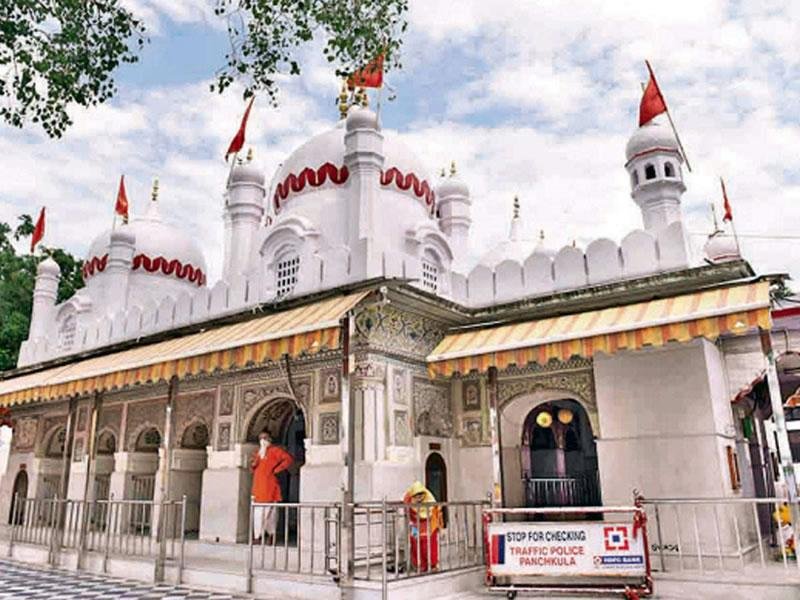
Mata Mansa Devi Temple, Panchkula – A Sacred Shakti Shrine in the Shivalik Foothills
Mata Mansa Devi Temple is one of the most revered Hindu pilgrimage destinations in Panchkula, Haryana. Situated in the foothills of the Shivalik range near Chandigarh, the temple is dedicated to **Maa Mansa Devi**, a manifestation of Shakti worshipped as the compassionate mother who fulfils the sincere wishes of her devotees.
The temple attracts pilgrims from Haryana, Punjab, Chandigarh, Himachal Pradesh, Delhi and other parts of northern India throughout the year. The number of visitors rises dramatically during the **Chaitra and Ashvin Navratri fairs**, when the shrine is decorated and large-scale arrangements are made for darshan, security, medical assistance, sanitation and crowd management.
The spacious temple complex is spread across the historic Bilaspur area of Panchkula. It includes the principal Mata Mansa Devi shrine and the nearby Patiala Temple, allowing devotees to visit two significant sacred structures within the same pilgrimage complex.
Families visit Maa Mansa Devi to pray for health, prosperity, marriage, children, protection, professional progress and fulfilment of personal wishes. Many devotees return after a wish has been fulfilled to offer a chola, distribute prasad, organise a bhandara or express gratitude through prayer and seva.
Travellers looking for hotels near Mata Mansa Devi Temple, family accommodation in Panchkula or convenient stays for the Chandigarh–Panchkula Devi circuit can explore suitable options through **MudrasStays**.
## Who Is Maa Mansa Devi?
The name “Mansa” is commonly associated with the wishes and intentions of the mind. Devotees worship Maa Mansa Devi with the belief that sincere prayers made with faith and purity may receive the grace of the Divine Mother.
Maa Mansa Devi represents:
* Divine feminine power
* Protection from adversity
* Fulfilment of righteous wishes
* Courage during difficult periods
* Family welfare and prosperity
* Spiritual discipline
* Motherly compassion
* Victory over fear and negativity
The shrine forms part of the wider tradition of Shakti worship found throughout the Shivalik foothills. This region includes several important Devi temples associated with Mansa, Chandi, Kalika and other forms of the Goddess.
Devotees may tie sacred threads while making a wish and return after its fulfilment according to their family or community tradition. Such practices should be performed only in permitted areas and without damaging trees, railings or temple structures.
## History of Mata Mansa Devi Temple
The present main temple was constructed between **1811 and 1815** by Maharaja Gopal Singh, the ruler of Manimajra.
The shrine subsequently received royal patronage and became an important centre of Devi worship in the region. Its location near the Shivalik foothills reflects the long religious association between the Himalayan landscape and the worship of Shiva and Shakti.
A second important shrine, known as the **Patiala Temple**, stands approximately 200 metres from the main temple. It was constructed in 1840 by Maharaja Karam Singh of Patiala.
Together, the two temples represent different architectural expressions of nineteenth-century North Indian temple building and royal devotion.
After the political integration of the former princely states, traditional systems of royal patronage changed. The shrine is now administered through the Shri Mata Mansa Devi Shrine Board, which manages worship arrangements, festivals, facilities and development within the complex.
## Architecture of the Main Temple
The main shrine has a distinctive white exterior with domes, arches and decorative painted surfaces. The comparatively low and broad structure differs from the tall curvilinear shikhara commonly seen in several North Indian temples.
The temple’s interior and entrance areas contain intricate decorative work, religious imagery and spaces arranged for the movement of devotees towards the sanctum.
The sacred form of the Goddess is worshipped within the inner shrine. During darshan, pilgrims should continue moving according to the instructions of temple staff so that others can also receive darshan without unnecessary delay.
Visitors should avoid touching painted surfaces, leaning against decorative sections or attempting photography in restricted areas.
## Visit the Patiala Temple
The Patiala Temple is situated a short walk from the principal Mata Mansa Devi shrine and should be included in a complete visit to the complex.
Unlike the main temple, the Patiala Temple has a more recognisable **Nagara-style curvilinear spire** decorated with smaller architectural forms. Its design complements the Shivalik landscape and provides visitors with an opportunity to observe a different temple-building tradition.
The temple was commissioned in 1840 by Maharaja Karam Singh of Patiala.
A suitable pilgrimage sequence may include:
**Main Mata Mansa Devi Temple – Patiala Temple – Prayer and Meditation – Prasad – Community Kitchen or Nearby Meal**
Visitors should keep enough time for both shrines instead of leaving immediately after darshan at the main temple.
## Darshan and Temple Timings
The Shrine Board currently lists separate seasonal timings.
### Summer Timings
* Temple opening: approximately 4:00 AM
* Temple closing: approximately 10:00 PM
* Morning aarti: approximately 4:30 AM to 5:00 AM
* Evening aarti: approximately 7:00 PM to 7:30 PM
### Winter Timings
* Temple opening: approximately 5:00 AM
* Temple closing: approximately 9:00 PM
* Morning aarti: approximately 5:30 AM to 6:00 AM
* Evening aarti: approximately 6:00 PM to 6:30 PM
The daily bhog period is generally listed around 11:00 AM to 11:15 AM.
Timings can change during Navratri, special rituals, maintenance, security arrangements or other major occasions. Pilgrims should verify the current schedule before travelling.
## Experience the Morning and Evening Aarti
Aarti is among the most spiritually meaningful times to visit the temple.
During aarti, devotees gather to offer prayers while lamps are lit and devotional hymns are recited. The sound of bells and collective chanting creates a powerful atmosphere of faith.
Visitors wishing to attend should arrive before the scheduled time because access near the sanctum may become crowded.
Aarti etiquette includes:
* Standing without blocking the queue
* Keeping mobile phones silent
* Avoiding flash photography
* Following directions from temple staff
* Maintaining respectful silence during prayers
* Allowing elderly devotees adequate space
* Avoiding pushing or attempts to move ahead
Families with small children should choose a position from which they can exit safely if the crowd becomes uncomfortable.
## Chola Offering to Maa Mansa Devi
Offering a **chola**, or ceremonial garment and adornment, is an important devotional practice associated with Maa Mansa Devi.
The Shrine Board provides an organised booking system for chola offerings. Devotees planning this ritual should use officially recognised channels instead of relying on unauthorised intermediaries.
The required ceremonial materials may include flowers, fruit, coconut, honey, ghee, curd, milk, fragrance, decorative items and other specified offerings.
Requirements, permitted colours, booking dates and availability can change. Families should check the current official instructions before purchasing materials or travelling specifically for a chola ceremony.
## Puja Materials and Prasad
Shops near the temple sell products commonly used for Devi worship.
Visitors may find:
* Red chunri
* Flowers and garlands
* Coconut
* Incense sticks
* Camphor
* Roli and rice
* Sacred thread
* Bangles
* Sindoor
* Dry prasad
* Sweets
* Pictures of Maa Mansa Devi
* Small idols and religious pendants
* Complete puja baskets
Before purchasing a large basket, confirm which items are allowed inside the temple.
Avoid vendors or agents promising guaranteed wish fulfilment, immediate darshan or unauthorised access. Donations and paid religious services should be arranged through official temple facilities.
## Chaitra Navratri Fair
The Chaitra Navratri fair is one of the most important annual events at Mata Mansa Devi Temple.
For nine days, the temple complex receives large numbers of devotees who come for darshan, prayer, chola offerings, bhandaras and religious ceremonies.
During the fair, visitors may experience:
* Extended temple hours
* Long darshan queues
* Security checkpoints
* Temporary route changes
* Dedicated parking arrangements
* Medical and emergency services
* Drinking-water facilities
* Community kitchens and bhandaras
* Additional sanitation arrangements
* Special support for elderly and disabled visitors
Accommodation demand rises during this period. Pilgrims travelling from outside Panchkula should reserve their rooms early and confirm how close vehicles can reach the temple entrance.
## Ashvin or Shardiya Navratri Fair
The Ashvin Navratri fair, also called Shardiya Navratri, is another major pilgrimage period at the shrine.
The temple is decorated and worship continues throughout the nine sacred days. Devotees observe fasts, offer chunri and prasad, attend aarti and seek the blessings of the Goddess.
Peak days may attract extremely large crowds. Families should:
* Arrive early
* Carry only essential belongings
* Keep children close
* Wear comfortable footwear
* Follow queue barriers
* Carry prescribed medicines
* Use authorised parking
* Confirm the return transport arrangement
* Keep additional time for security checks
* Avoid scheduling immediate onward travel
Visitors seeking peaceful darshan may prefer an ordinary weekday outside Navratri.
## Community Kitchens and Bhandaras
Bhandaras and community kitchens are an important part of the temple’s devotional culture.
Meals may be organised by the Shrine Board, registered groups or devotees fulfilling a religious vow. Visitors should follow the instructions of volunteers, take only the quantity they can finish and avoid wasting food.
Those organising a bhandara should obtain the required permission and use the officially designated area. Unauthorised food distribution can obstruct pedestrian movement and create sanitation or safety problems during crowded festivals.
Travellers with serious food allergies or strict medical diets should use personal judgment because large community kitchens may not be able to guarantee separate preparation.
## Facilities for Pilgrims
Facilities within or around the temple complex may include:
* Organised darshan queues
* Drinking water
* Toilets
* Cloakroom or luggage facilities
* Medical assistance during fairs
* Security screening
* Community kitchens
* Waiting areas
* Accommodation operated or facilitated by the Shrine Board
* Online donation services
* Online chola booking
* Online room-booking options
* Assistance arrangements during major festivals
Availability may vary by season and visitor volume. Pilgrims should confirm specialised facilities such as wheelchair support, lift access or senior-citizen assistance before arrival.
## Temple Etiquette
Visitors should observe the following practices:
* Dress modestly.
* Remove footwear in the designated area.
* Cooperate with security checks.
* Keep mobile phones silent.
* Do not carry tobacco, alcohol or prohibited substances.
* Avoid large bags and unnecessary valuables.
* Follow the organised queue.
* Use official donation boxes or counters.
* Keep children supervised.
* Do not damage temple property.
* Avoid feeding animals inside the complex unless permitted.
* Dispose of waste responsibly.
* Respect restrictions on photography.
* Do not push during darshan.
Devotion should be expressed through patience, cleanliness and consideration for other pilgrims.
## Combine the Visit with Chandi Mandir
Chandi Mandir is another important Devi shrine in the Panchkula region and is located approximately 10 kilometres from the Mata Mansa Devi complex.
Pilgrims can plan a broader Shakti pilgrimage covering:
**Mata Mansa Devi Temple – Chandi Mandir – Kali Mata Temple, Kalka**
This circuit should be planned according to temple timings, road conditions and the mobility of family members.
During Navratri, all major Devi shrines in the region can become crowded. It is often more comfortable to spread the journey across two days.
## Visit Kali Mata Temple in Kalka
Kali Mata Temple in Kalka is an important Shakti shrine situated on the route towards Shimla.
Devotees staying in Panchkula can visit Maa Mansa Devi first and continue towards Kalka on a separate half-day or full-day excursion.
A suitable itinerary may include:
**Mata Mansa Devi Temple – Panchkula Stay – Kali Mata Temple, Kalka – Pinjore**
Travellers should account for local traffic and large crowds during Navratri.
## Add Nada Sahib Gurudwara
Gurudwara Nada Sahib is an important Sikh pilgrimage destination situated beside the Ghaggar River in the Shivalik foothills.
The site is associated with Guru Gobind Singh Ji, who is traditionally believed to have halted here after the Battle of Bhangani.
Visitors of every background may enter respectfully by covering their heads, removing footwear and following gurdwara etiquette.
A multi-faith spiritual itinerary may include:
**Mata Mansa Devi Temple – Gurudwara Nada Sahib – Panchkula Stay**
Both places should be visited as active houses of worship rather than casual sightseeing stops.
## Other Nearby Attractions
Travellers with additional time may include:
* Yadavindra Gardens at Pinjore
* Bhima Devi Temple complex
* Cactus Garden in Panchkula
* Sukhna Lake in Chandigarh
* Rock Garden in Chandigarh
* Morni Hills as a separate excursion
* Chandi Mandir
* Kali Mata Temple in Kalka
* Gurudwara Nada Sahib
Pilgrims should avoid adding too many attractions to a major Navratri darshan day.
## Best Time to Visit
The temple can be visited throughout the year.
### October to March
Cooler weather makes temple visits and local travel comfortable.
### Chaitra Navratri
This period provides a highly devotional and festive atmosphere but brings very heavy crowds.
### Ashvin Navratri
The autumn Navratri fair is another important period marked by decorations, ceremonies and large gatherings.
### April to June
Daytime temperatures can be high. Early-morning or evening darshan is generally more comfortable.
### July to September
Monsoon rain may affect traffic and pedestrian surfaces. Keep extra travel time and carry rain protection.
For quieter darshan, visit on a weekday outside festival periods.
## How to Reach Mata Mansa Devi Temple
The temple is located at the Mansa Devi Complex in Panchkula and is easily accessible from Chandigarh, Mohali, Zirakpur and surrounding areas.
Visitors may travel by:
* Private taxi
* App-based cab
* Auto-rickshaw
* Local bus
* Hotel-arranged vehicle
* Personal car
Chandigarh Railway Station is approximately eight kilometres from the temple, while Chandigarh International Airport is approximately 31 kilometres away according to district tourism information.
Actual journey time depends on traffic, road diversions and festival arrangements.
During Navratri, visitors should use official parking areas and temporary transport services rather than attempting to drive directly to the entrance.
## Where to Stay Near Mata Mansa Devi Temple
Travellers can choose accommodation in Panchkula, Chandigarh, Zirakpur or nearby areas.
### Stay Near the Temple For:
* Early-morning darshan
* Navratri pilgrimage
* Chola ceremonies
* Travel with senior citizens
* Family and group visits
* Reduced dependence on city traffic
### Stay in Central Panchkula For:
* More restaurants
* Medical facilities
* Convenient road access
* Access to Nada Sahib and local attractions
* A broader selection of hotels
### Stay in Chandigarh For:
* Larger hotel selection
* Railway-station access
* City sightseeing
* Restaurants and transport services
* Longer family holidays
Before booking, confirm:
* Actual distance from the temple entrance
* Festival traffic restrictions
* Parking availability
* Lift or ground-floor rooms
* Family-room configuration
* Vegetarian meal options
* Early check-in
* Secure luggage storage
* Assistance for elderly guests
* Cancellation policies during Navratri
A property that appears close on a map may require a longer approach during festival road closures.
## Book Stays Near Mata Mansa Devi Temple with MudrasStays
**MudrasStays** helps pilgrims discover suitable accommodation near temples, gurdwaras, sacred markets and important spiritual routes.
Travellers visiting Panchkula can use MudrasStays to explore:
* Hotels near Mata Mansa Devi Temple
* Family stays in Panchkula
* Accommodation for Navratri pilgrims
* Hotels near Chandi Mandir
* Stays near Gurudwara Nada Sahib
* Rooms suitable for senior citizens
* Properties serving vegetarian food
* Group accommodation for Devi pilgrimages
* Hotels with parking and luggage storage
* Stays with convenient Chandigarh connectivity
Choosing accommodation close to the shrine allows devotees to attend early aarti, manage festival queues comfortably and rest properly after darshan.
Mata Mansa Devi Temple is more than an important religious monument. It is a living centre of Shakti worship where generations of devotees have prayed for courage, protection, prosperity and fulfilment of sincere wishes.
By visiting with faith, respecting temple arrangements and booking a comfortable nearby stay through **MudrasStays**, pilgrims can experience a peaceful and well-organised spiritual journey in the Shivalik foothills.