
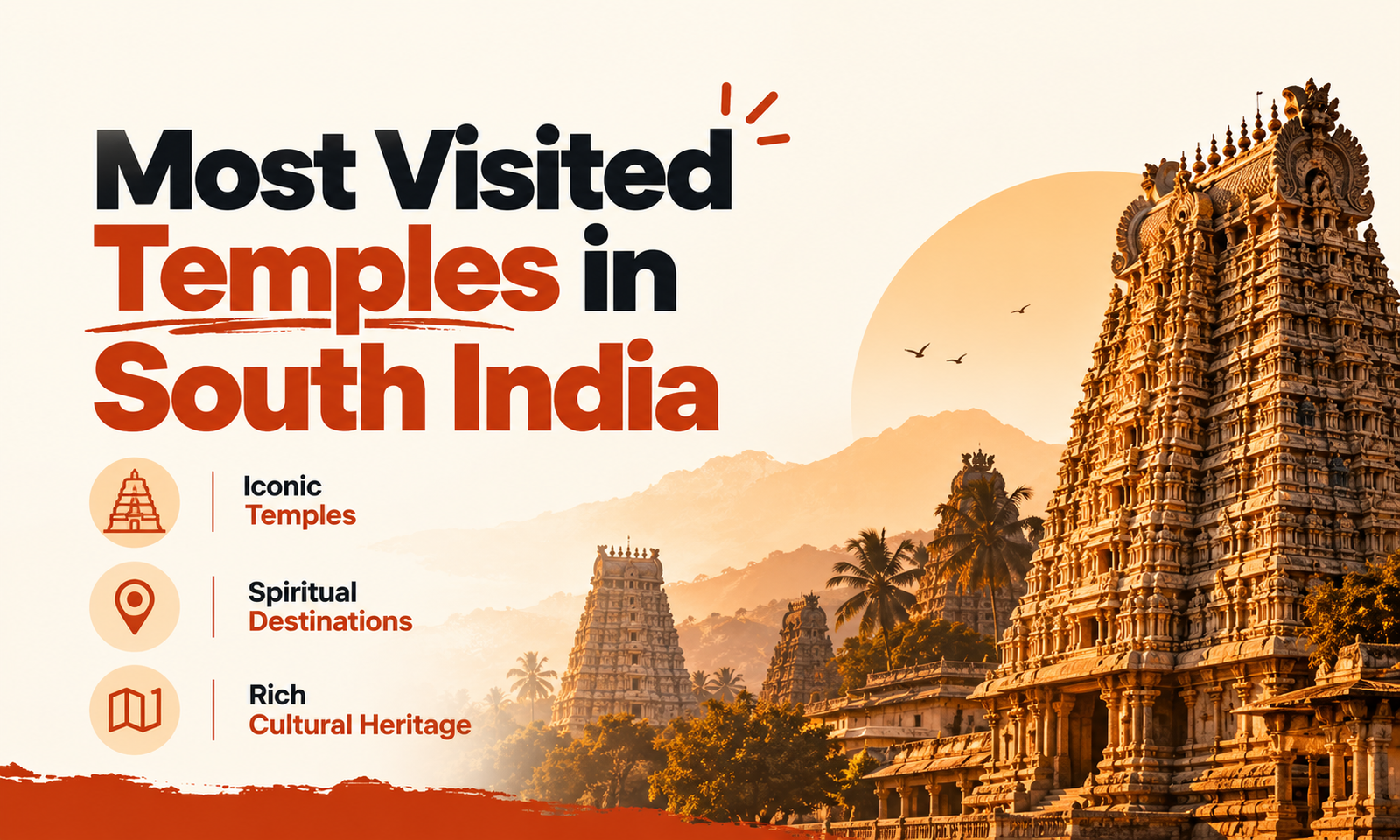
Most Visited Temples in South India
South India contains pilgrimage centres that receive very large visitor flows through the year and exceptional surges during major festivals. Exact annual rankings can vary by source, year and counting method, so it is more responsible to think in terms of widely visited, nationally prominent temples rather than publish a false precision league table.
The temples below are among the region’s best-known high-footfall pilgrimage destinations. For travellers, popularity has practical consequences: darshan planning, queue time, festival congestion, transport availability and the need to book accommodation earlier.
Why the temple draws large pilgrim flows: temples and destinations to consider
1. Sri Venkateswara Temple, Tirumala
Sri Venkateswara Temple, Tirumala is widely recognised as a major pilgrimage destination because it is one of India’s most important Vaishnava pilgrimage centres, set in the Seshachalam hills above Tirupati. A large, highly organised pilgrimage environment where darshan planning often determines the rest of the trip. From an architectural perspective, a sacred hill-temple setting whose meaning is shaped as much by living ritual and pilgrimage discipline as by visual architecture.
Tirupati is a major rail and road gateway, with air connectivity through Tirupati Airport; the final journey continues uphill to Tirumala under current TTD access arrangements. Study the official TTD darshan system before fixing transport. Keep generous buffer time because queue duration and reporting requirements can affect onward plans. Festival periods, weekends and holiday windows can be especially busy, so the official TTD portal should be checked close to the travel date.
Families benefit from keeping the arrival day light, carrying only permitted essentials and avoiding a tight train or flight connection immediately after darshan. When comparing a hotel near temple areas, a family stay, a budget hotel or other pilgrimage accommodation, check the real travel route, local access restrictions and the amount of walking required rather than judging only by straight-line distance on a map. If you plan to book hotel online, confirm current cancellation terms and the property information most relevant to your group.
2. Sabarimala Sree Dharma Sastha Temple
Sabarimala Sree Dharma Sastha Temple is widely recognised as a major pilgrimage destination because it is a major hill pilgrimage destination whose traditions, seasonal access and physical journey are integral to the experience. A disciplined pilgrimage rather than a conventional sightseeing visit, with customs and route planning that should be understood before travel. From an architectural perspective, the hilltop Sannidhanam, sacred steps and forested setting form part of the shrine’s distinctive pilgrimage identity.
Pilgrims approach through designated road and walking routes that can vary with season and official traffic arrangements. Use current official guidance for registration, route, permitted items, health advice and pilgrimage procedures rather than relying on older itineraries. The Mandala–Makaravilakku season is the principal pilgrimage period and requires especially careful advance planning.
Anyone with mobility, stamina or medical concerns should assess the physical demands carefully and seek appropriate advice before undertaking the journey. When comparing a hotel near temple areas, a family stay, a budget hotel or other pilgrimage accommodation, check the real travel route, local access restrictions and the amount of walking required rather than judging only by straight-line distance on a map. If you plan to book hotel online, confirm current cancellation terms and the property information most relevant to your group.
3. Guruvayur Sree Krishna Temple
Guruvayur Sree Krishna Temple is widely recognised as a major pilgrimage destination because it is one of Kerala’s most important Krishna pilgrimage centres and a town whose daily rhythm is strongly shaped by temple worship. A distinctly kerala temple atmosphere where ritual discipline, local customs and pilgrimage-town life are central to the visit. From an architectural perspective, traditional Kerala temple forms create a visual experience very different from the towering gopurams of Tamil Nadu.
Guruvayur is usually reached by road or rail through central Kerala and combines naturally with Thrissur and nearby destinations. Check current entry eligibility, dress expectations and rules on what may be carried inside before arriving. Festival periods can be very crowded, while ordinary weekdays may allow a more measured pilgrimage.
Staying close enough to reduce repeated transfers can be useful for families, but walking conditions and vehicle access should still be checked. When comparing a hotel near temple areas, a family stay, a budget hotel or other pilgrimage accommodation, check the real travel route, local access restrictions and the amount of walking required rather than judging only by straight-line distance on a map. If you plan to book hotel online, confirm current cancellation terms and the property information most relevant to your group.
4. Meenakshi Amman Temple, Madurai
Meenakshi Amman Temple, Madurai is widely recognised as a major pilgrimage destination because it is the spiritual and architectural heart of Madurai, famous for its gopurams, sculpture and living temple-city culture. A pilgrimage that flows directly into the historic streets, markets and everyday life of central madurai. From an architectural perspective, towering gateway towers, sculptural detail and the celebrated thousand-pillared hall create one of South India’s most recognisable temple complexes.
Madurai has its own airport and an important railway junction, making it comparatively easy to include in a Tamil Nadu temple circuit. Allow enough time to move through the busy old-city precinct and check current rules on permitted items and entry before arriving. Major festival periods transform the city and can bring much larger crowds, so accommodation should be planned early when travelling for a festival.
Families and senior travellers should balance temple proximity with vehicle access, because the closest stay is not always the easiest when streets are crowded. When comparing a hotel near temple areas, a family stay, a budget hotel or other pilgrimage accommodation, check the real travel route, local access restrictions and the amount of walking required rather than judging only by straight-line distance on a map. If you plan to book hotel online, confirm current cancellation terms and the property information most relevant to your group.
5. Sri Ramanathaswamy Temple, Rameswaram
Sri Ramanathaswamy Temple, Rameswaram is widely recognised as a major pilgrimage destination because it is a major Shaiva pilgrimage centre associated with the Ramayana tradition and revered as one of the twelve Jyotirlinga shrines. A destination where temple darshan, sacred-water traditions and the island landscape combine into a full pilgrimage rather than a quick monument visit. From an architectural perspective, the long pillared corridors are among the temple’s defining architectural experiences and reward slow observation.
Rameswaram is connected by road and rail, while Madurai is a common air gateway for travellers approaching from other parts of India. If sacred bathing forms part of your family’s practice, verify the present procedure and temple rules first and keep a change of suitable clothing ready. Crowds rise around major religious dates and holiday periods; coastal weather should also be considered before fixing a densely packed schedule.
The coastal climate can be tiring, so children and older travellers benefit from hydration, rest between sites and a less compressed itinerary. When comparing a hotel near temple areas, a family stay, a budget hotel or other pilgrimage accommodation, check the real travel route, local access restrictions and the amount of walking required rather than judging only by straight-line distance on a map. If you plan to book hotel online, confirm current cancellation terms and the property information most relevant to your group.
6. Sri Mallikarjuna Swamy Temple, Srisailam
Sri Mallikarjuna Swamy Temple, Srisailam is widely recognised as a major pilgrimage destination because it is a major hill pilgrimage centre of Shaiva and Shakta significance in the Nallamala region. A journey in which the road approach, sacred landscape and temple visit all contribute to the sense of pilgrimage. From an architectural perspective, a historic temple complex shaped by living worship and layers of South Indian patronage.
Road travel is central to most Srisailam itineraries, so arrival time and rest should be planned around the hill journey. Use the official Srisaila Devasthanam site to review current darshan, accommodation and pilgrim-service information before departure. Festival dates and weekends can be busy; road and weather conditions should be considered during seasonal rain.
Senior citizens and children often do better when the long road transfer and main darshan are separated by a rest period. When comparing a hotel near temple areas, a family stay, a budget hotel or other pilgrimage accommodation, check the real travel route, local access restrictions and the amount of walking required rather than judging only by straight-line distance on a map. If you plan to book hotel online, confirm current cancellation terms and the property information most relevant to your group.
7. Arulmigu Dhandayuthapani Swamy Temple, Palani
Arulmigu Dhandayuthapani Swamy Temple, Palani is widely recognised as a major pilgrimage destination because it is one of the six celebrated abodes of Murugan and one of Tamil Nadu’s major pilgrimage destinations. A hill-temple pilgrimage strongly shaped by murugan devotion and the ascent to the shrine. From an architectural perspective, the hilltop sacred setting is more central to the experience than monumental enclosure scale.
Palani is connected by road and rail and can be paired with Madurai, Dindigul or other Tamil Nadu pilgrimage routes. Check current authorised options for reaching the hill shrine and plan around the mobility needs of the group. Thaipusam and other Murugan festivals can draw very large crowds, while ordinary days are easier for a relaxed visit.
Families with small children or senior citizens should decide the ascent method in advance rather than improvising after arrival. When comparing a hotel near temple areas, a family stay, a budget hotel or other pilgrimage accommodation, check the real travel route, local access restrictions and the amount of walking required rather than judging only by straight-line distance on a map. If you plan to book hotel online, confirm current cancellation terms and the property information most relevant to your group.
8. Udupi Shri Krishna Temple
Udupi Shri Krishna Temple is widely recognised as a major pilgrimage destination because it is a major Vaishnava centre associated with Madhvacharya, the Dvaita tradition and Udupi’s Ashta Mathas. A compact temple-town pilgrimage with strong ritual continuity, local food culture and easy connections to coastal karnataka. From an architectural perspective, the temple’s ritual spaces and distinctive darshan tradition create an experience shaped more by devotion and monastic heritage than monumental scale.
Udupi is well connected by rail and road, while Mangaluru is the main air gateway for many visitors. Give the main temple unhurried time and, if interested, include the nearby mathas and older shrines rather than rushing directly to the coast. Janmashtami and the Paryaya cycle bring special religious energy but also increased visitor numbers.
The compact town layout can suit families, though festival periods require more patience and advance stay planning. When comparing a hotel near temple areas, a family stay, a budget hotel or other pilgrimage accommodation, check the real travel route, local access restrictions and the amount of walking required rather than judging only by straight-line distance on a map. If you plan to book hotel online, confirm current cancellation terms and the property information most relevant to your group.
What high footfall means for your trip
A famous temple’s popularity changes the logistics of the entire destination. Accommodation fills earlier, local traffic can be restricted, queues may fluctuate sharply and festival dates can transform an ordinary town into a very high-density pilgrimage zone. These effects are more important to a traveller than a headline visitor number.
Treat official temple portals and local administration advisories as the final source for current procedures. Old blog posts may describe ticketing categories, routes or entry arrangements that have since changed.
When to avoid peak pressure
If your primary goal is quiet darshan rather than a specific festival, avoid the biggest festival days and long holiday weekends where possible. Weekday travel outside school-holiday peaks often provides more flexibility, although no major pilgrimage centre can guarantee short queues.
If the festival itself is the purpose of the trip, plan the entire journey around it. Arrive earlier, stay longer, expect traffic controls and avoid tight onward connections.
How to Turn This List into a Realistic Journey
The temples in this guide span Andhra Pradesh, Kerala, Tamil Nadu and Karnataka. That geographic spread is a reminder that the list is a source of options, not a recommendation to cover every place in one continuous trip. Start by marking the temples that are non-negotiable for your family, then group them by road or rail corridor. If two priority temples require a long transfer, insert an overnight stop or a lighter day rather than forcing both into the same schedule.
For a first South India temple tour, seven days is usually best spent in one state or one compact cross-border cluster. Ten to fourteen days can support two clusters if the group is comfortable with travel. Longer pilgrimages should still include deliberate rest days. Darshan uncertainty, weather and local traffic are normal parts of pilgrimage travel, so a schedule with no buffer is fragile.
Use flights for long entry and exit sectors, trains where they reduce tiring road travel, and a car when it materially improves access between nearby temple towns. The most efficient itinerary is not automatically the one with the fewest kilometres; it is the one that minimises stressful transitions around the temples that matter most.
Accommodation and Stay Planning
Accommodation can determine whether a pilgrimage feels calm or unnecessarily difficult. Travellers often begin with searches such as “hotel near me,” “best hotel near me,” “hotels near temple,” “family stay,” “budget hotel,” “pilgrimage accommodation” or “rooms near me.” These phrases are useful for discovering options, but the final choice should be based on the real route to the temple, current access rules, room suitability and the needs of the group.
A hotel near temple areas can be valuable for early darshan or repeat visits, yet central streets may have traffic restrictions, pedestrian zones or festival barricades. Conversely, a cheaper stay on the edge of town may add repeated taxi costs and travel time. Before you book hotel online, check the map in road mode, recent property information and cancellation terms. For senior citizens, ask directly about steps, lift availability where relevant and how easily a vehicle can reach the entrance.
For a multi-night pilgrimage, location should support the entire itinerary rather than a single temple. A well-chosen family hotel can reduce fatigue enough to make the spiritual experience better. During major festivals, book earlier and reconfirm the practical approach to the property because local traffic plans may change.
Temple Etiquette, Weather and Practical Preparation
Dress conservatively and follow temple-specific rules even when they differ from what you encountered at the previous shrine. Photography, mobile phones, footwear, bags and entry eligibility may be regulated differently. Use official counters and authorised online systems for darshan or rituals; avoid intermediaries who promise unofficial shortcuts.
South Indian temple travel often involves heat, humidity, barefoot walking and long periods of standing. Carry water outside restricted zones, use sun protection during road or heritage travel and keep essential medication accessible. Monsoon conditions can affect the Western Ghats and coastal routes, while festival crowds can change traffic and walking patterns in temple towns.
Before departure, save digital and offline copies of identity documents, hotel confirmations and official temple bookings. Families should agree on a meeting point in crowded complexes and make sure children know which adult they should stay with. These small precautions reduce stress without interfering with the devotional purpose of the trip.
Official Resources to Check Before Travel
Use these official or authoritative tourism and temple resources to verify current procedures before your trip:
- Sri Venkateswara Temple, Tirumala – official/authoritative planning resource
- Sabarimala Sree Dharma Sastha Temple – official/authoritative planning resource
- Guruvayur Sree Krishna Temple – official/authoritative planning resource
- Meenakshi Amman Temple, Madurai – official/authoritative planning resource
- Sri Ramanathaswamy Temple, Rameswaram – official/authoritative planning resource
- Sri Mallikarjuna Swamy Temple, Srisailam – official/authoritative planning resource
- Arulmigu Dhandayuthapani Swamy Temple, Palani – official/authoritative planning resource
- Udupi Shri Krishna Temple – official/authoritative planning resource
Frequently Asked Questions
How many temples should I include in one South India trip?
For most travellers, three to five major temples in one regional cluster is more comfortable than a long multi-state checklist. Add more only when transfers are short and the group has enough rest.
How early should I book accommodation?
Book earlier for major festivals, school holidays and high-footfall pilgrimage centres. If darshan or a ritual requires advance confirmation, align the stay dates with that commitment before choosing non-refundable rooms.
Is it better to stay near the temple?
Temple proximity can reduce travel time, but the nearest stay may have difficult vehicle access or crowded streets. Compare the actual walking route, local restrictions and the needs of children or senior citizens.
What should senior citizens consider?
Prioritise shorter transfers, rest, easy access, medication timing and realistic queue expectations. Check current official arrangements for eligible pilgrims rather than depending on old online advice.
Do South Indian temples have dress codes?
Many temples expect conservative clothing and some have specific dress rules or entry conditions. These vary by temple, so check the current official guidance before travelling.
Can darshan be booked online?
Some major temple administrations offer online booking for selected darshan categories or services, while others do not. Use only official portals and be cautious about unofficial sellers promising guaranteed access.
What should families pack?
Carry permitted identification, booking confirmations, comfortable conservative clothing, regular medicines and light travel essentials. Avoid large bags because many temples restrict what can be taken inside.
Which is better: road, rail or air?
A mixed-mode itinerary is often best. Fly into a region, use trains for longer intercity sectors and use a car for tightly grouped temple towns. The correct choice depends on route and family comfort.
Which temple has the highest visitor count?
Annual counts vary by source, year and methodology. For trip planning, it is more useful to recognise major high-footfall pilgrimage centres and prepare for their crowd patterns.
Mudras Stays — For Details
For Details: 9599190222
For current stay information at destinations served by Mudras Stays, contact the team or follow the latest updates on Instagram.