
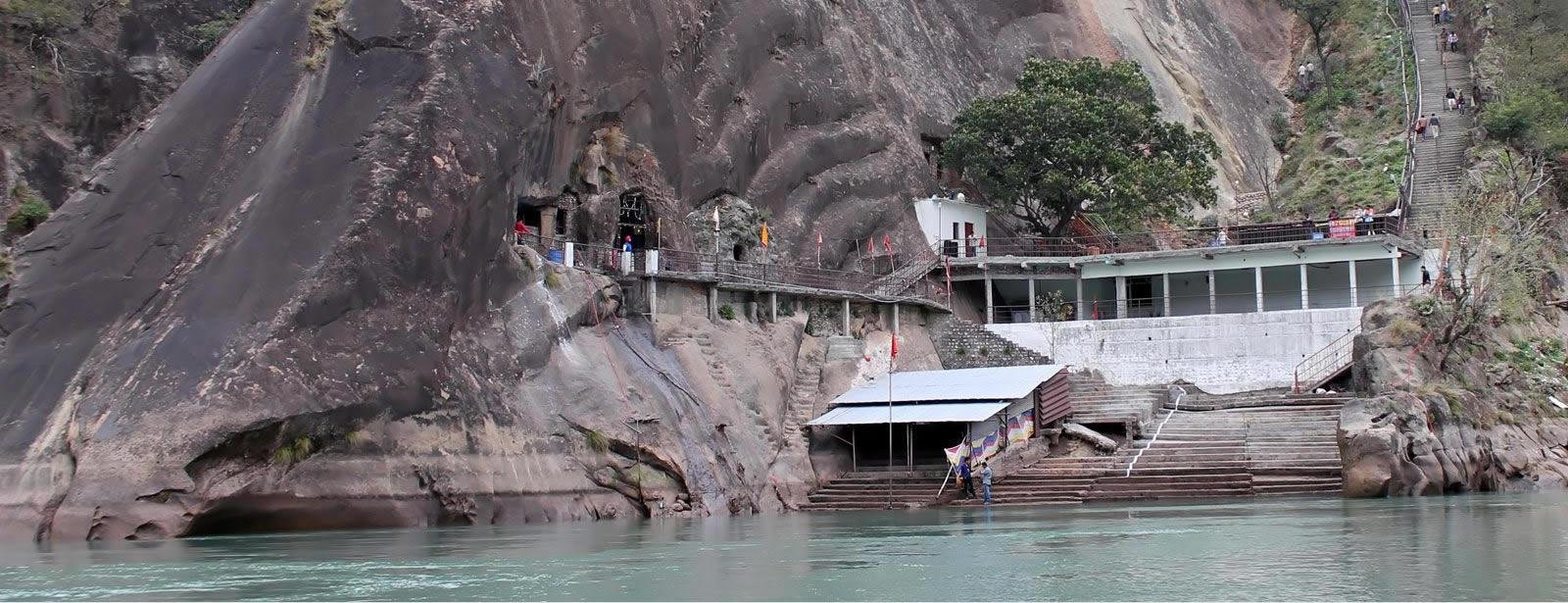
Mukteshwar Mahadev Temple is one of the most spiritually important and naturally dramatic Shiva pilgrimage destinations in Punjab. Situated at Doongh village in the Shahpurkandi area of Pathankot district, the temple complex is built into a massive rocky hillside beside the Ravi River.
The shrine is surrounded by steep stone formations, flowing water, wooded slopes, steps, cave chambers and narrow cliff-side passages. The combination of Lord Shiva, ancient-looking rock shelters and the changing waters of the Ravi creates an atmosphere unlike that of an ordinary urban temple.
Mukteshwar Mahadev Temple is also known as Mukteshwar Dham, Mukesaran Mandir, Mukesra Mandir, Mukteshwar Cave Temple, Mukteshwar Mahadev Dham and Pracheen Shiv Mandir Doongh.
These names generally refer to the same sacred complex near Shahpurkandi and Pathankot.
Travellers should clearly mention:
**Mukteshwar Mahadev Temple at Doongh village near Shahpurkandi, Pathankot.**
This distinction is important because another famous Mukteshwar Temple exists in the Kumaon region of Uttarakhand. The Pathankot shrine is situated in Punjab beside the Ravi River and is associated with cave temples and the Pandavas.
The official district description places Mukteshwar Temple approximately 22 kilometres from Pathankot city. Depending upon the visitor’s exact starting point, the practical road journey may be closer to 22–25 kilometres.
The temple is approached through the Shahpurkandi side of the district.
The final journey leads towards the rocky river valley where the cave shrines are located.
Visitors may encounter a significant series of steps, railings, covered passages and uneven rock surfaces while moving through the temple complex.
The route is not a long wilderness trek, but it is not completely level or barrier-free.
The descent towards the riverside shrine and the return climb can be tiring for senior citizens, visitors with knee problems, people with reduced mobility and families carrying very young children.
The complex is particularly popular during Mahashivratri, Baisakhi, Mukesran Da Mela, Navratri, Somvati Amavasya and other locally important religious dates.
Pilgrims arrive from Punjab, Himachal Pradesh, Jammu and Kashmir and neighbouring regions.
Many travellers also visit Mukteshwar Mahadev while travelling towards Dalhousie, Chamba, Jammu, Kathua, Kangra or other Himalayan destinations.
Visitors searching for hotels near Mukteshwar Mahadev Temple, homestays near Shahpurkandi, pilgrimage accommodation near Doongh village, places to stay near Mukteshwar Dham or family hotels in Pathankot can use MudrasStays to plan a convenient and spiritually focused journey.
## Spiritual Importance of Mukteshwar Mahadev Temple
Mukteshwar Mahadev Temple is dedicated primarily to Lord Shiva.
Shiva is worshipped as Mahadev, the Great God, and as the supreme consciousness within the Shaiva tradition.
He represents meditation, transformation, time, detachment, compassion and liberation from ignorance.
He is both the silent Himalayan yogi and the compassionate householder united with Goddess Parvati.
He is worshipped as the destroyer of harmful attachment, but destruction in Shiva philosophy does not mean meaningless violence.
It refers to transformation.
Old forms must sometimes end for a more truthful and responsible life to begin.
The name Mukteshwar is commonly understood as the Lord of Liberation.
“Mukti” means freedom or spiritual release, while “Ishwar” means lord or divine master.
Mukteshwar therefore refers to Lord Shiva as the giver or guardian of liberation.
Liberation can be interpreted at several levels.
It may mean freedom from fear.
It may mean freedom from uncontrolled anger, greed or pride.
It may mean release from the cycle of birth and death within Hindu philosophy.
It may also mean the ability to live responsibly without being controlled by harmful attachment.
Pilgrims visit Mukteshwar Mahadev to pray for peace, courage, family welfare, health, protection during travel and spiritual clarity.
Some devotees seek strength during difficult family circumstances.
Others visit after the fulfilment of a religious vow.
Students may pray for discipline.
Professionals may seek responsible judgement.
Families may offer gratitude for a major life event.
People performing ancestral remembrance may visit because of the Ravi River’s ritual importance.
Such prayers belong to personal faith.
The temple should not be presented as guaranteeing medical recovery, employment, marriage, fertility, wealth or the fulfilment of every material wish.
Spiritual worship can provide emotional strength and clarity, while medical, legal, financial and personal matters should continue to receive appropriate practical attention.
## Mukteshwar as the Lord of Liberation
The concept of liberation is central to the identity of the temple.
Lord Shiva is traditionally associated with freedom from fear, ego and the limitations of ordinary perception.
A cave shrine is especially suited to this symbolism.
The visitor leaves an open and familiar landscape and enters a space shaped by stone, shadow and limited movement.
The outside world becomes quieter.
Ordinary social status becomes less important.
Everyone must move carefully through the same rock passages.
The cave encourages humility.
The river represents continuous movement.
The stone represents stability.
Shiva represents the consciousness that remains present through both movement and stillness.
A pilgrim may therefore understand Mukteshwar Dham as a place for releasing emotional burden rather than merely requesting a material reward.
## The Marble Shiva Lingam
The principal shrine contains a marble Shiva lingam.
Official descriptions also refer to a copper yoni surrounding or supporting the lingam.
The Shiva lingam is one of the most important sacred forms in Hindu worship.
It represents Lord Shiva beyond the limitations of an ordinary human image.
The lingam has no fixed face, costume or gesture because Shiva cannot be confined within one physical representation.
Its form suggests continuity, infinity and the source from which visible creation emerges.
The yoni represents Shakti, the divine energy associated with Goddess Parvati.
Together, the lingam and yoni express the unity of consciousness and energy.
Shiva represents stillness and awareness.
Shakti represents action, creation and movement.
Neither is complete without the other.
The marble lingam’s pale surface may be associated devotionally with purity, peace and clarity.
The copper yoni introduces the warm colour and ritual significance of a metal traditionally used in temples and sacred vessels.
Visitors should follow the priest’s instructions regarding water, flowers, bilva leaves and other offerings.
Large quantities of milk, oil, colour or packaged material can create waste and drainage problems.
A simple offering made with attention is more meaningful than excessive material that damages the shrine or surrounding environment.
Photography of the lingam and inner sanctum should only be undertaken when clearly permitted.
## Shiva and the Cave Environment
Lord Shiva is deeply associated with mountains, caves and forests.
He is often represented meditating far from royal palaces and crowded cities.
The natural cave therefore becomes an ideal symbolic home for Mahadev.
A cave represents silence.
It represents inward movement.
It also represents the hidden depth of consciousness.
The exterior world is illuminated and active.
The interior cave is enclosed and quiet.
The journey from outside to inside can symbolise the movement from distraction towards spiritual awareness.
At Mukteshwar Dham, the rock face is not merely a background.
It forms an essential part of the temple’s identity.
The caves, ledges and stone passages create a physical sacred geography around the Shiva lingam.
For many devotees, the mountain itself appears to protect the shrine.
## The Cave Temples of Mukteshwar Dham
Mukteshwar is described officially as a group of cave temples.
Popular accounts frequently speak of four principal caves or cave chambers.
The exact way the caves are counted can vary because one person may count a chamber, opening, shrine or connected rock shelter differently.
It is therefore more accurate to say that the complex contains several cave spaces traditionally associated with the Pandavas and Hindu deities.
Some caves appear to be shaped or enlarged through human effort within a natural rock formation.
Others may retain a more naturally irregular appearance.
Over time, steps, railings, platforms, protective roofs and worship areas have been added.
The present complex should therefore be understood as a combination of natural rock, historic cave use, religious development and modern pilgrim infrastructure.
Visitors should not enter closed or unlit cave sections.
A narrow opening that appears accessible may contain unstable rock, poor ventilation or a sudden drop.
Barriers and shrine-management instructions must always be respected.
## The Pandava Tradition
The best-known historical-religious tradition associated with Mukteshwar Mahadev Temple concerns the five Pandava brothers and Draupadi.
According to local belief, the Pandavas stayed in the caves during their exile.
Some versions place their visit during the final year of concealment, while others speak more generally of their long period of exile.
The Pandavas are the central heroes of the Mahabharata.
Yudhishthira represents commitment to dharma and truth.
Bhima represents strength and loyalty.
Arjuna represents skill, discipline and concentration.
Nakula and Sahadeva represent service, knowledge and family responsibility.
Draupadi represents dignity, courage and resistance to injustice.
The caves are traditionally identified with their temporary residence, meditation or worship.
Some accounts state that the Pandavas installed or worshipped the Shiva lingam.
Others connect the cave chambers with their cooking, resting and spiritual practices.
These stories belong to Mahabharata and local temple tradition.
They should not be presented as archaeologically proven residence records.
No securely established inscription or scientific dating commonly available to visitors confirms that the existing cave complex was physically created during the Mahabharata period.
The importance of the tradition lies in the way local communities have understood and protected the site.
Across India, ancient caves, temples, lakes and unusual stone structures are often associated with the Pandavas.
The legends connect local landscapes with the larger sacred geography of the Mahabharata.
## The Claim That Mukteshwar Is 5,500 Years Old
Mukteshwar Dham is frequently described in devotional and popular literature as being approximately 5,500 years old.
This number is based upon traditional calculations connecting the site with the Mahabharata period.
It expresses the belief that the shrine has extremely ancient sacred origins.
However, the precise archaeological age of the surviving caves, stonework and current temple installations is not firmly established through the information generally available to visitors.
The sacred location may have been used for worship long before the present marble lingam, railings, roofs, floors and other structures were installed.
The caves may have experienced several periods of enlargement, repair and ritual reuse.
A careful description should therefore say:
Mukteshwar Mahadev Temple is traditionally associated with the Mahabharata and is regarded by devotees as thousands of years old, while the precise archaeological date of the complete visible complex remains uncertain.
This formulation respects religious faith without presenting a traditional chronology as proven scientific fact.
## Idols Surrounding the Shiva Lingam
Official district information records that images of Brahma, Vishnu, Hanuman, Parvati and Ganesha are associated with the principal Shiva shrine.
Their presence transforms the sanctum into a wider representation of the Hindu sacred universe.
### Lord Brahma
Brahma represents creation and sacred knowledge.
He is traditionally associated with the emergence of the universe and the transmission of the Vedas.
His presence reminds devotees that transformation begins with creation and understanding.
### Lord Vishnu
Vishnu represents preservation, order and protection.
His divine role is to sustain dharma and restore balance when harmful forces become dominant.
Within a Shiva shrine, Vishnu’s presence reflects the complementary relationship between creation, preservation and transformation.
### Goddess Parvati
Parvati represents Shakti, courage, compassion, motherhood and active divine energy.
She is Shiva’s consort and spiritual equal.
The presence of Parvati beside the Shiva lingam reinforces the unity represented by the lingam and yoni.
### Lord Ganesha
Ganesha is worshipped as the remover of obstacles and lord of beginnings.
He represents wisdom, patience and the ability to distinguish what is important from what is merely distracting.
Pilgrims may offer prayers to Ganesha before proceeding with the wider temple journey.
### Lord Hanuman
Hanuman represents devotion, strength, humility and service.
His presence reminds visitors that spiritual power should be used for the welfare of others rather than personal pride.
The gathering of these deities around Shiva demonstrates that Mukteshwar Dham is not limited to one isolated icon.
It represents an interconnected sacred world.
## The Mukesaran Name
Mukteshwar Mahadev Temple is also locally known as Mukesaran Mandir or Mukesra Mandir.
The pronunciation reflects regional Punjabi and Pahari speech.
Mukesaran is especially visible in the name of the annual Mukesran Da Mela.
The regional form should not be treated as incorrect.
It demonstrates how Sanskrit-derived temple names become adapted within local language and oral tradition.
A devotee may say Mukteshwar Dham, Mukesaran Mandir or Mukesra without referring to a different shrine.
## The Ravi River
The Ravi River is one of the defining natural features of Mukteshwar Mahadev Temple.
The shrine stands along a dramatic bend or section of the river beneath the rocky hillside.
The colour and visible level of the water can change according to season, rainfall, upstream release, sediment and light.
At certain times, the water may appear blue-green or turquoise.
At other times, it may become darker, muddier or faster.
Visitors should not expect the river to look identical to photographs taken during a different season.
Within Hindu tradition, rivers represent purification, movement, life and continuity.
The Ravi is one of the major rivers of the northwestern Indian subcontinent and has supported agriculture, settlements and sacred traditions for centuries.
At Mukteshwar, the river reinforces the concept of release.
Water continues moving rather than remaining fixed.
A pilgrim can understand this as a reminder to release anger, grief and harmful attachment.
## River Safety at Mukteshwar Dham
The beauty of the Ravi should never cause visitors to underestimate its danger.
River depth and current can be difficult to judge from the bank.
Smooth-looking water may conceal strong movement.
Wet rocks become slippery.
Water levels can change because of rainfall or the operation of upstream and downstream water infrastructure.
Visitors should remain within recognised temple and viewing areas.
Swimming should not be attempted unless an activity is explicitly authorised and supervised, which should never be assumed at a pilgrimage site.
Children must remain beside adults.
Selfies should not be taken from unstable ledges.
Visitors should not cross barriers or move onto exposed rocks near fast water.
During the monsoon, the river and small channels around the temple can rise quickly.
A pilgrimage should be postponed when local authorities or temple management restrict access.
## Mukteshwar as Chhota Haridwar
Mukteshwar Dham is sometimes described in regional religious tradition as Chhota Haridwar or Little Haridwar.
The title reflects its position beside a sacred river and its association with ancestral rites.
Families unable to travel to Haridwar have traditionally performed certain memorial rituals or immersed ashes in the Ravi near Mukteshwar.
Such practices should only be carried out through authorised local arrangements.
Riverbank safety, environmental rules and current water conditions must be respected.
Plastic bags, synthetic cloth, containers and non-biodegradable ritual material must never be thrown into the river.
Ancestral remembrance should be performed with dignity and environmental responsibility.
Private mourning and memorial ceremonies should not be photographed by tourists.
## Ancestral Rituals and Spiritual Responsibility
The immersion of ashes symbolises the return of the physical body to the natural elements.
Within Hindu thought, the individual soul is understood as continuing beyond physical death, while the body returns to earth, water, fire, air and space.
The river becomes a symbol of the onward journey.
Families performing ancestral rites may seek the guidance of a recognised priest.
Visitors should avoid intermediaries who create fear or pressure families into expensive ceremonies.
No ritual should be advertised as guaranteeing liberation in exchange for a payment.
The value of ancestral remembrance lies in gratitude, prayer and responsible conduct towards the living.
## Architecture of Mukteshwar Mahadev Temple
Mukteshwar Dham cannot be understood through one architectural style alone.
The complex consists of a rocky hillside, caves, built sanctums, staircases, platforms, retaining walls, covered corridors and modern facilities.
The most visually powerful element is the natural rock face.
The temple appears attached to or emerging from the stone.
This creates a strong relationship between architecture and landscape.
Human construction adapts itself to the mountain rather than replacing it completely.
The main components include:
Rock-cut or rock-sheltered cave chambers.
A Shiva sanctum containing the marble lingam and copper yoni.
Shrines or images of associated deities.
Stone and concrete staircases.
Metal railings.
Platforms beside the Ravi River.
Covered passages protecting visitors from rain and sun.
Retaining walls and safety structures.
Modern service spaces for pilgrims.
Different parts of the complex may belong to different periods.
A recently painted wall or railing should not be used to date the original cave.
Similarly, the ancient appearance of the rock does not prove that every carved surface was created during one specific historical period.
## The Cave Openings
The cave openings are visible within the steep rock face.
Some appear as irregular recesses, while others have been developed into accessible shrine spaces.
The contrast between natural rock and constructed doorways is an important part of the site’s character.
Visitors should not touch or scrape the cave walls.
Names, dates and religious symbols must never be carved into the rock.
Even a small scratch permanently damages the surface.
Coins, plastic flowers and cloth should not be pushed into cracks.
The cave should remain a place of worship rather than becoming a collection point for discarded objects.
## The Stairway
The approach involves a substantial stairway.
Different accounts provide different step counts, and access arrangements can change because of repairs, parking and crowd-control routes.
Visitors should therefore prepare for a meaningful descent and ascent rather than relying upon one exact number.
The downward journey may feel easy.
The return climb is more tiring, particularly during summer heat or humid weather.
Senior citizens should take breaks.
People with knee or heart conditions should move slowly.
Young children should not run.
During rain, moss and water can make steps slippery.
Shoes with dependable grip are preferable to smooth sandals.
## The Riverside Platforms
Stone and constructed platforms provide access to parts of the riverside temple.
These areas may be used for prayer, movement or authorised rituals.
They should not be treated as unrestricted picnic or bathing spaces.
Water can reach steps and platforms unexpectedly.
Visitors should follow barriers and avoid sitting near unprotected edges.
Photography should be completed without obstructing worshippers.
## The Temple Courtyard and Modern Structures
The wider temple complex includes more recent buildings, painted shikharas, covered areas, bells and spaces serving the growing number of pilgrims.
Modern construction is necessary for shade, crowd movement, sanitation and protection from weather.
It should not be confused automatically with the age of the cave shrines.
A living temple changes over time.
The spiritual continuity of worship can remain strong even when roofs, floors or walls are repaired.
## Mahashivratri at Mukteshwar Dham
Mahashivratri is one of the most important festivals celebrated at Mukteshwar Mahadev Temple.
The festival usually falls in February or March according to the Hindu lunar calendar.
Devotees observe fasting, mantra recitation, abhishek, prayer and night worship.
The day is associated with several Shiva traditions.
Some devotees celebrate the marriage of Lord Shiva and Goddess Parvati.
Others associate it with Shiva’s cosmic dance.
Another tradition remembers the infinite pillar of light through which Shiva revealed his limitless nature.
At Mukteshwar Dham, the festival attracts pilgrims from Pathankot, Punjab, Himachal Pradesh and Jammu and Kashmir.
The road, steps, caves and sanctum can become crowded.
Visitors should expect queues and controlled movement.
Families should keep children and senior citizens close.
Large bags should not be carried into the cave complex.
The exact festival programme and temple timing should be confirmed for the relevant year.
## Mukesran Da Mela and Baisakhi
Mukesran Da Mela is one of the shrine’s most distinctive annual events.
It is generally organised around Baisakhi in April.
Baisakhi is one of Punjab’s most important seasonal and cultural festivals.
It marks the harvest period and holds major religious significance within Sikh tradition.
At Mukteshwar Dham, the occasion is expressed through Shiva worship, pilgrimage, community gathering and a local fair.
Devotees may attend darshan, religious programmes, food stalls and community activities.
The mela brings together people from the Punjab plains, the Jammu region and the nearby hills of Himachal Pradesh.
The exact duration can vary.
Some descriptions refer to extended festival activity around Mukteshwar during this period.
Visitors should verify dates, traffic controls, parking and accommodation before travelling.
April afternoons can become warm.
Morning darshan is more comfortable for senior citizens and children.
## Chaitra Celebrations
A Chaitra festival, often locally described as Chaitra Chaudas, Chaitra Chaturdashi or a related regional observance, is also associated with the temple.
The exact date follows the Hindu lunar calendar.
Spelling and local terminology can differ.
Visitors planning around the festival should confirm the annual temple schedule rather than relying on an old calendar.
Chaitra marks a period of seasonal renewal and is associated with several Hindu festivals across North India.
At Mukteshwar, the gathering reinforces the continuing relationship between Shiva worship, local communities and the Ravi landscape.
## Navratri
Navratri is primarily associated with the worship of the Divine Mother.
Its celebration at Mukteshwar reflects the presence of Goddess Parvati and the inseparable relationship between Shiva and Shakti.
Devotees may visit the associated Goddess shrines, participate in prayer and offer respect to the complete divine family.
Chaitra Navratri usually falls in spring.
Sharad Navratri generally falls in autumn.
Festival dates and crowd levels change each year.
## Somvati Amavasya
Somvati Amavasya occurs when the new-moon day falls on a Monday.
Monday is sacred to Lord Shiva, while Amavasya is associated with prayer, reflection and ancestral rites.
The combination gives Somvati Amavasya special significance at a riverside Shiva shrine.
Pilgrims may perform prayer, bathing or memorial rituals according to local custom.
The river should only be approached through authorised areas.
Crowds and water conditions must be taken seriously.
## Shravan Mondays
The month of Shravan is especially sacred to Lord Shiva.
Mondays during Shravan may attract additional pilgrims.
Devotees may offer water, bilva leaves and flowers.
Shravan often overlaps with the monsoon season.
This creates a direct safety concern at Mukteshwar.
The rock face, stairs and riverside platforms can become slippery.
The Ravi can rise.
Visitors should monitor weather and follow local access restrictions.
A religiously important date does not remove physical risk.
## Daily Darshan
Opening and closing times can change according to season, festival schedules, maintenance and temple-management arrangements.
Visitors planning very early or late darshan should confirm the current timing locally.
Morning is generally the best period for a peaceful visit.
The weather is cooler.
The road is quieter.
The steps are easier before the strongest heat.
Morning also provides enough daylight to explore nearby attractions or return to Pathankot comfortably.
Evening worship can be atmospheric, but the return route through rural roads and stairways should be completed safely.
## Best Time to Visit Mukteshwar Mahadev Temple
Mukteshwar Dham can generally be visited throughout the year when the road and temple remain accessible.
### Spring
Spring is one of the best periods for visiting.
The weather is usually comfortable.
Vegetation becomes greener.
Mahashivratri or Chaitra festivals may fall within the broader season.
A light jacket may be useful during early morning, while afternoons can become warmer.
### Baisakhi and Early Summer
April brings Mukesran Da Mela and Baisakhi-related activity.
The temple becomes vibrant and crowded.
Visitors seeking the festival experience should book accommodation and transport early.
Those seeking quiet cave exploration should choose an ordinary weekday outside the mela.
### Summer
Pathankot and the lower Ravi region can become very hot during summer.
The cave may feel cooler, but the return stair climb can be exhausting.
Visitors should begin early, carry drinking water and avoid the strongest afternoon heat.
Children and senior citizens require frequent rest.
### Monsoon
The monsoon creates dramatic scenery, stronger water flow and greener hills.
It is also the most sensitive period for safety.
Rain can make the stairs and rock slippery.
Small stones or debris may fall from wet slopes.
The Ravi can rise or change colour rapidly.
Visitors should obey every closure and avoid riverbank photography during unstable conditions.
### Autumn
Autumn is one of the most comfortable periods for pilgrimage.
Rain generally reduces.
Temperatures become manageable.
The river valley can remain green after the monsoon.
Navratri may bring additional worshippers.
### Winter
Winter mornings and evenings can become cold, though Pathankot is not a high-altitude snow destination.
Daytime weather is often suitable for temple exploration.
Fog can affect roads.
Snowfall should not be expected at the temple.
Warm layers are useful for early darshan and shaded cave areas.
## Reaching Mukteshwar Mahadev Temple from Pathankot
Pathankot is the principal transport and accommodation base.
The official location is Doongh village in the Shahpurkandi area.
The temple is approximately 22 kilometres from the city, while the district’s practical access information places it about 25 kilometres from Pathankot Bus Stand.
A taxi or private vehicle is generally the easiest option.
Public buses or shared vehicles may serve Shahpurkandi and nearby settlements, but they may not stop directly at the temple entrance.
Visitors relying on public transport should confirm the final connection and the last return service.
A prearranged taxi is more practical for families, senior citizens and visitors carrying luggage.
## Reaching from Pathankot Railway Stations
Pathankot has important railway connectivity.
Pathankot Junction and Pathankot Cantt serve trains on different routes.
The closest station for a particular traveller depends upon the train and accommodation location.
Official district information places the temple approximately 25 kilometres from the nearest railway station through its stated route.
A road transfer is required.
Visitors should deposit large luggage at their hotel or use a secure cloakroom before visiting.
Suitcases are unsuitable for the stair and cave route.
## Reaching by Air
Pathankot has an airport with limited scheduled connectivity, but flight days and routes can change.
Travellers should verify current operations before booking.
Jammu, Amritsar and Kangra airports may serve as alternatives depending upon flight availability and the wider itinerary.
Every airport requires onward road travel.
A temple visit should not be scheduled immediately before a tightly timed flight.
## Reaching from Jammu and Kathua
Travellers arriving from Jammu or Kathua can approach Pathankot through the main regional road network and continue towards Shahpurkandi.
Actual travel time depends upon traffic, border-state movement, road work and the starting point.
A stay in Pathankot is practical for visitors combining Mukteshwar with other Punjab, Jammu or Himachal destinations.
## Reaching from Dalhousie and Chamba
Mukteshwar Dham can be included by travellers moving between Pathankot and the Chamba or Dalhousie region.
The shrine is not located directly within Dalhousie town.
It requires a separate diversion towards Shahpurkandi and Doongh.
Mountain travellers should allow sufficient daylight and avoid compressing the temple, a long hill journey and multiple attractions into one day.
## Reaching from Dharamshala or Kangra
Pathankot acts as an important gateway to the Kangra region.
Visitors arriving from Dharamshala, Kangra or Nurpur can include Mukteshwar according to the road sequence.
The exact route should be checked before departure because state borders and hill-road connections can make straight-line distance misleading.
## Parking and Final Approach
Parking arrangements may vary according to crowd levels and festival management.
Vehicles should be left only in authorised areas.
The approach may require walking through temple lanes and negotiating a substantial stair route.
Drivers should not block village homes, emergency access or turning points.
During major festivals, vehicles may be stopped farther from the shrine.
Visitors should carry only essential items.
## Accessibility for Senior Citizens
Mukteshwar Mahadev Temple is road-accessible but not fully barrier-free.
The cave complex and riverside location involve stairs, slopes and potentially damp surfaces.
Senior citizens who walk comfortably may complete the journey slowly with rest.
A walking stick can provide support.
Visitors with significant knee, heart, breathing or balance concerns should understand the final route before descending.
The availability of any assisted access should be confirmed rather than assumed.
There is no spiritual failure in offering prayer from an accessible part of the complex when physical limitations prevent entry into every cave.
## Visiting with Children
Children can learn about Lord Shiva, the Pandavas, cave environments and the importance of rivers.
They require constant supervision.
They should not run on the stairs.
They must not climb rocks or railings.
They should remain away from the river edge.
Parents can explain the Pandava tradition as a sacred story rather than proven archaeology.
The journey can also teach children that protecting water and heritage is part of religious responsibility.
## Visitors with Limited Mobility
Wheelchair access may be possible only in selected upper or developed sections and should not be assumed for the complete cave and riverside complex.
The stairway and uneven rock create significant barriers.
Visitors should contact their accommodation provider or local temple representatives for the latest information about the nearest vehicle point.
## Cave and Rock Safety
Natural rock environments require caution.
Visitors should remain on designated routes.
Cave walls must not be climbed.
Loose stones should not be touched or moved.
Closed openings should not be entered.
During rain, visitors should avoid standing beneath unstable-looking rock or slopes.
Children should not be allowed to explore independently.
## Photography
The Ravi River, rock face and cave shrines make Mukteshwar visually striking.
Ordinary visitor photography should follow current temple rules.
The inner sanctum, Shiva lingam, priests and private rituals should only be photographed with permission.
Flash photography can disturb worshippers inside dark cave spaces.
Tripods, drones and commercial shoots may require special approval.
Drones should be avoided near dams, water infrastructure and other sensitive installations unless explicit permission has been obtained.
## Nearby Attractions
Mukteshwar Mahadev Temple can be combined with several important spiritual, natural and heritage destinations.
## Ranjit Sagar Dam
Ranjit Sagar Dam, also known as Thein Dam, is one of the principal attractions of Pathankot district.
It is constructed on the Ravi River and lies in the wider Shahpurkandi region.
The reservoir and surrounding hills create impressive scenery.
Entry into controlled dam areas may require permission.
Visitors should obey photography and security restrictions.
The dam should not be treated as an unrestricted picnic or swimming area.
## Shahpurkandi Area
Shahpurkandi is closely connected with the Ravi River and major water infrastructure.
The area contains settlements, roads and viewpoints associated with the dam landscape.
Access can change because of project operations, security or maintenance.
Visitors should follow current local directions and should not enter restricted construction or power-project zones.
## Dhar Nature Retreat
Dhar Nature Retreat and Awareness Camp is situated within the forested Dhar Kalan region.
It is associated with nature education, recreation and accommodation facilities.
Current booking and activity availability should be checked before travel.
A Mukteshwar and Dhar itinerary allows visitors to combine pilgrimage with responsible nature tourism.
## Atal Setu
Atal Setu near the Basohli and Dunera side is a cable-stayed bridge spanning the Ravi reservoir landscape.
It offers dramatic views but lies considerably farther from Pathankot than Mukteshwar Dham.
It should be included within a full-day or multi-day itinerary.
Vehicles should stop only at authorised viewpoints.
## Kathgarh Mahadev Temple
Kathgarh Mahadev Temple is an important Shiva shrine near the Punjab–Himachal border.
It is known for a vertically divided sacred lingam worshipped through Shiva–Parvati and Ardhanarishvara traditions.
Kathgarh and Mukteshwar are separate temples with different legends and locations.
A dedicated Shiva circuit can include both.
## Nurpur Fort
Nurpur Fort lies in neighbouring Himachal Pradesh.
It contains historic fort structures and a temple associated with Brij Raj Swami.
The fort represents the political and artistic history of the region.
Visitors should follow current entry arrangements and avoid unstable sections.
## Gurudwara Shri Barth Sahib
Gurudwara Shri Barth Sahib is an important Sikh pilgrimage destination near Pathankot.
It is associated with Baba Sri Chand.
Visitors should cover their heads, remove footwear and follow gurdwara etiquette.
A respectful regional itinerary can include Hindu and Sikh sacred heritage without treating either merely as a tourist display.
## Pathankot City
Pathankot is an important transport and commercial centre at the meeting point of Punjab, Himachal Pradesh and Jammu and Kashmir.
The city provides hotels, railway stations, bus services, markets, hospitals and restaurants.
It is the most practical base for first-time visitors to Mukteshwar.
## Dalhousie
Dalhousie is a popular hill destination in Himachal Pradesh.
It requires a separate mountain-road journey from Pathankot.
A combined itinerary can include Mukteshwar on the arrival or departure side, but visitors should avoid attempting the temple, Dalhousie sightseeing and a long transfer within one rushed day.
## Suggested Half-Day Mukteshwar Itinerary
Begin from Pathankot early in the morning.
Travel towards Shahpurkandi and Doongh village.
Use authorised parking.
Walk towards the temple complex and descend the steps carefully.
Receive darshan of the marble Shiva lingam and associated deities.
Explore only the accessible cave sections.
Observe the Ravi River from safe platforms.
Return to Pathankot before afternoon heat.
## Suggested One-Day Spiritual and Scenic Itinerary
Begin with morning darshan at Mukteshwar Mahadev Temple.
Spend sufficient time understanding the cave complex and Pandava traditions.
After returning from the temple, have lunch in Shahpurkandi or Pathankot.
Continue towards an authorised viewpoint near Ranjit Sagar Dam or visit another nearby road-accessible attraction.
Return to Pathankot before evening.
## Suggested Two-Day Pathankot Itinerary
On the first day, arrive in Pathankot and explore the city or Gurudwara Shri Barth Sahib.
Stay overnight in Pathankot.
On the second morning, visit Mukteshwar Mahadev Temple.
After darshan, continue towards Ranjit Sagar Dam, Dhar Nature Retreat or another verified attraction according to current access.
This itinerary is suitable for families and senior citizens because it avoids a rushed arrival and departure.
## Suggested Three-Day Temple and Heritage Circuit
The first day can include Pathankot and Gurudwara Shri Barth Sahib.
The second day can focus on Mukteshwar Mahadev Temple and the Shahpurkandi landscape.
The third day can include Kathgarh Mahadev Temple, Nurpur Fort or a carefully planned journey towards Atal Setu and Basohli.
Travellers continuing to Dalhousie or Jammu can adjust the third day according to their onward route.
## Accommodation Near Mukteshwar Mahadev Temple
Accommodation immediately beside the cave shrine is more limited than in Pathankot city.
Doongh and Shahpurkandi may have guesthouses, local rooms or limited homestays, but availability should be verified before arrival.
Pathankot offers the most dependable range of hotels, restaurants, medical services and transport.
## Hotels in Pathankot
Pathankot is the best accommodation base for most travellers.
The city has budget hotels, family properties, business hotels, guesthouses and premium options.
Visitors should choose a location according to their arrival station and the road towards Shahpurkandi.
A hotel on the correct side of the city can reduce unnecessary traffic.
Guests should confirm parking, breakfast timing, hot water, air-conditioning and taxi availability.
## Hotels Near Pathankot Railway Stations
Hotels around Pathankot Junction or Pathankot Cantt are convenient for rail travellers.
The two stations are in different locations, so guests should verify which one serves their train.
A railway-area hotel may be convenient for a short stay but can involve additional road travel towards Mukteshwar.
## Hotels and Guesthouses in Shahpurkandi
Shahpurkandi may offer smaller hotels, guesthouses and institutional accommodation.
These properties can provide easier morning access to the temple.
Facilities may be simpler than in Pathankot.
Guests should verify attached bathrooms, meals, cooling, heating, parking, mobile network and distance from the temple steps.
## Homestays Near Doongh and Dhar Kalan
A verified homestay can offer local food, rural hospitality and a quieter experience.
Supply may be limited.
Travellers should not arrive without a confirmed reservation.
Hosts may provide valuable information about river conditions, festivals and the temple approach.
## Accommodation Near Ranjit Sagar Dam
Tourism cottages and other accommodation may be available around the wider dam region according to current administration.
Booking arrangements can differ from conventional online hotel reservations.
Visitors should verify current operation and entry permission before depending upon such accommodation.
## Hotels in Dalhousie
Dalhousie offers a wide range of mountain hotels and resorts but is not the closest base for Mukteshwar Mahadev Temple.
It is suitable only when the temple forms part of a larger Himachal itinerary.
The additional hill-road journey should be considered.
## Hotels in Kathua
Kathua may serve travellers arriving from Jammu and continuing towards Pathankot.
It has hotels, railway access and road connections.
Pathankot remains more practical for morning Mukteshwar darshan.
## Choosing the Right Place to Stay
Pilgrims whose main purpose is Mukteshwar Mahadev Temple should generally stay in Pathankot, Shahpurkandi or a verified nearby homestay.
Families should check room capacity, meals, parking and bathroom facilities.
Senior citizens should prioritise lifts, ground-floor rooms and dependable taxis.
Couples may prefer quieter stays near the foothills or Ravi landscape.
Solo pilgrims should select populated accommodation with confirmed transport.
Groups should verify multiple rooms, vegetarian meals, driver accommodation and bus parking.
Festival visitors should reserve early.
Summer guests should confirm air-conditioning or effective cooling.
Winter travellers should verify hot water.
Monsoon visitors should ask specifically about road, stairs and river conditions.
## Book Hotels Near Mukteshwar Mahadev Temple with MudrasStays
MudrasStays helps pilgrims, families and spiritual travellers discover hotels, homestays, guesthouses and pilgrimage accommodation near Mukteshwar Mahadev Temple, Shahpurkandi, Doongh village and Pathankot.
The platform is designed for travellers searching specifically for places to stay near temples, cave shrines and sacred river destinations.
Visitors can compare accommodation according to practical road distance from Mukteshwar Dham, room type, budget, family size and required facilities.
Booking on the Shahpurkandi-facing side of Pathankot can reduce unnecessary travel through the city and make morning darshan more convenient.
Solo pilgrims can search for economical guesthouses.
Couples can explore quiet homestays or foothill properties.
Families can select hotels offering meals, parking and suitable room capacity.
Senior citizens can prioritise accessible hotels with dependable vehicle arrangements.
Pilgrimage groups can identify properties providing multiple rooms, vegetarian food and parking for larger vehicles.
Travellers attending Mukesran Da Mela, Mahashivratri or another festival can reserve accommodation early and avoid uncertain last-minute availability.
Visitors combining Mukteshwar Mahadev with Kathgarh Temple, Ranjit Sagar Dam, Atal Setu, Nurpur Fort, Dalhousie or Jammu can choose accommodation according to the actual geographical sequence of the journey.
MudrasStays helps pilgrims avoid booking a property that appears close in straight-line distance but lies on an inconvenient side of Pathankot or requires repeated travel through regional roads.
## Responsible Temple Travel
Mukteshwar Mahadev Temple is both an active place of worship and a sensitive cave and river environment.
Visitors should dress respectfully.
Footwear should be removed wherever directed.
The Shiva lingam, priests and private rituals should only be photographed when permission is clear.
Cave walls should not be scratched or covered with paint.
Loose stone should not be moved.
Closed cave sections must not be entered.
Visitors should remain within authorised pathways and railings.
## Responsible River Travel
The Ravi must be treated with caution.
Swimming should not be attempted.
Children must remain supervised.
Visitors should stay away from strong current and unstable rocks.
River levels can change.
Ash immersion or other rituals should only be performed in recognised areas.
Plastic, cloth, food, flowers in packaging and ritual containers must not be thrown into the river.
## Protecting the Cave Complex
Incense, lamps and fire should remain within authorised locations.
Smoke can darken cave walls and damage enclosed spaces.
Oil and vermilion should not be applied to unidentified stone formations.
Natural openings should not be filled with coins or offerings.
Every visitor should remember that apparently solid rock can still contain cracks, moisture and unstable surfaces.
## Respecting Doongh Village
Doongh is a living community.
Residents use the roads, water, fields and public spaces surrounding the shrine.
Vehicles should not block homes or emergency access.
Private land should not be entered without permission.
Residents should not be photographed casually.
Local drivers, priests, shopkeepers, food providers and accommodation hosts should be treated fairly.
Supporting local services allows pilgrimage tourism to benefit the community.
## A Sacred Meeting of Shiva, Caves and the Ravi
Mukteshwar Mahadev Temple represents a powerful meeting of Lord Shiva, rocky caves, sacred water and Mahabharata tradition.
The marble lingam represents Mahadev beyond ordinary human form.
The copper yoni represents Shakti and the energy of creation.
The cave represents the inward journey.
The rock represents stability.
The Ravi River represents movement, purification and release.
The Pandava tradition connects the shrine with exile, endurance and the search for divine guidance.
The images of Brahma, Vishnu, Parvati, Ganesha and Hanuman create a complete sacred environment around Shiva.
Mukesran Da Mela connects temple worship with the cultural energy of Baisakhi.
Mahashivratri brings devotees into collective meditation and prayer.
Somvati Amavasya connects Shiva worship with ancestral remembrance.
The name Mukteshwar expresses the spiritual hope of liberation.
For Shiva devotees, the shrine is a place to seek peace, courage and freedom from harmful attachment.
For families, it offers a meaningful spiritual journey combined with a dramatic natural setting.
For senior citizens, the temple is more accessible than a remote mountain cave, though the stairs require careful planning.
For children, it provides lessons about the Pandavas, rivers, caves and environmental responsibility.
For cultural travellers, it reveals the relationship between Punjabi, Pahari and Himalayan sacred traditions.
For photographers, the Ravi, rock face, cave openings and temple structures provide memorable compositions when safety and worship rules are respected.
For spiritual seekers, the site teaches that liberation requires both stability and movement—the stability of stone and the movement of water.
Mukteshwar Dham should not be treated merely as a scenic riverside stop.
Its real identity lies in the relationship between Mahadev, the cave and the Ravi.
Arrive without rushing.
Descend the steps carefully.
Enter only the permitted cave areas.
Receive darshan with attention.
Spend time observing the landscape without approaching unsafe water.
Understand the Pandava stories as sacred tradition.
Protect the river.
Respect the village.
Carry the meaning of Mukti beyond the temple by releasing anger, pride and irresponsible conduct.
Plan your pilgrimage to Mukteshwar Mahadev Temple with MudrasStays and experience one of Punjab’s most distinctive Shiva cave shrines.
Seek the blessings of Lord Mukteshwar Mahadev, receive darshan of the marble Shiva lingam and explore the sacred cave complex beside the Ravi River.
Combine your journey with Ranjit Sagar Dam, Dhar Nature Retreat, Kathgarh Mahadev Temple, Nurpur Fort, Gurudwara Shri Barth Sahib, Atal Setu and the wider spiritual and natural attractions of Pathankot.
Book hotels near Mukteshwar Mahadev Temple, discover homestays near Shahpurkandi and explore suitable pilgrimage accommodation throughout Pathankot through MudrasStays.
Stay closer to the correct route, attend peaceful morning darshan and reduce unnecessary travel through regional roads.
MudrasStays connects pilgrims, families and spiritual travellers with suitable accommodation near temples, cave shrines, sacred rivers and heritage destinations across India.
Begin your Mukteshwar Mahadev journey with a comfortable stay and experience a meaningful pilgrimage centred on Lord Shiva, the Pandava cave traditions, the flowing Ravi River and the spiritual promise of liberation.