Nanda Devi Temple is one of the most important religious, cultural and historical landmarks in Almora, Uttarakhand. Located above the Mall Road area in the heart of Almora town, the temple is dedicated to Goddess Nanda Devi, a revered form of Goddess Durga and one of the most deeply worshipped deities of the Kumaon Himalayas. For the people of Almora and the wider Kumaon region, Nanda Devi is not only a divine mother but also a guardian goddess associated with prosperity, protection, strength and the spiritual identity of the mountains.
The temple occupies a special position within the religious life of Almora. Unlike remote Himalayan shrines that require a long trek or difficult road journey, Nanda Devi Temple is situated within the historic town and can be included conveniently in an Almora sightseeing or pilgrimage itinerary. Its central location makes it suitable for families, senior citizens, solo pilgrims, cultural travellers and visitors staying in different parts of Almora.
The shrine was built during the rule of the Chand dynasty, which governed large parts of Kumaon for several centuries. Historical accounts associated with Almora identify King Dyot Chand as the ruler who established the temple during the seventeenth century. Nanda Devi was regarded as the family goddess of the Chand rulers, and the construction of the temple reflected the dynasty’s devotion to the goddess as well as her importance in the religious traditions of the Kumaon region.
The word “Nanda” is traditionally associated with prosperity, happiness and well-being. In the spiritual traditions of Uttarakhand, Goddess Nanda is worshipped as a daughter of the Himalayas and a compassionate form of the Divine Mother. She is revered across several mountain communities, and temples dedicated to her can be found in different parts of Kumaon and Garhwal. The Almora temple remains particularly important because of its strong connection with the Chand kings, the cultural history of the town and the centuries-old Nanda Devi Mela.
The idol of Goddess Nanda Devi is housed within the antechamber of an older Shiva temple. This relationship between the goddess shrine and the Shiva temple reflects the interconnected traditions of Shaiva and Shakta worship in the Himalayas. Devotees visit the temple to seek the blessings of Goddess Nanda Devi for family welfare, prosperity, protection, health, marriage, children, success and spiritual strength.
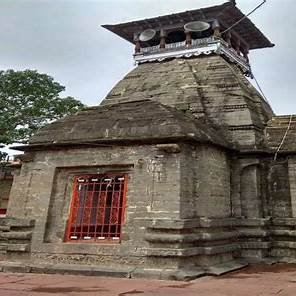
The temple’s architecture reflects the traditional craftsmanship of the Kumaon region. Its stone structure, wooden roof, elevated crown and carved surfaces distinguish it from the brightly painted modern temples found in many cities. The aged stone walls and traditional Himalayan design give the shrine a historic character that connects visitors with the architectural heritage of Almora.
Intricate carvings can be observed on parts of the temple structure. These carvings include symbolic figures and decorative details connected with regional temple craftsmanship. The combination of stone construction and wooden roofing demonstrates how religious architecture in the Himalayan region developed in response to local materials, climate and building traditions.
The temple complex has a peaceful courtyard where devotees gather for prayer, religious ceremonies and cultural events. Temple bells, sacred flags, floral offerings and the fragrance of incense contribute to the devotional atmosphere. The sound of prayers and bells blends with the everyday rhythm of Almora, creating a spiritual space within the active hill town.
Nanda Devi Temple is especially significant because it remains a living centre of worship rather than functioning only as an archaeological or historical attraction. Local residents regularly visit the temple, and the goddess continues to play an important role in family traditions, community celebrations and the cultural identity of Almora.
For first-time visitors, the temple provides an introduction to the distinctive religious traditions of Kumaon. The experience is different from visiting a large national pilgrimage centre. The temple is closely connected with local customs, regional history and the everyday lives of the people living in the surrounding neighbourhoods.
The most important annual celebration associated with the temple is the Nanda Devi Mela, also known as the Nanda Devi Mahotsav. This major religious and cultural festival is organised every year around Nandashtami, generally during September. The celebration has remained an important part of Almora’s cultural calendar for more than four centuries.
During the Nanda Devi Mela, the area surrounding the temple becomes one of the liveliest places in Almora. Thousands of devotees, local residents, artists, traders and visitors gather to participate in prayers, processions, cultural performances and traditional celebrations. The quiet temple courtyard is transformed into the centre of a large community festival.
The festival is associated with the worship of Goddess Nanda and Goddess Sunanda. Traditional images of the goddesses are prepared and decorated through customs preserved by the local community. Religious rituals are accompanied by folk music, devotional songs, processions and public participation.
The Nanda Devi Mela is not limited to worship alone. It also celebrates the cultural heritage of Kumaon. Local musicians, dancers, craftworkers and traders participate in the occasion, allowing visitors to experience regional traditions that may not be visible during an ordinary temple visit.
For travellers interested in culture, September can be one of the most rewarding periods to visit Nanda Devi Temple. The festival provides an opportunity to observe religious traditions, Kumaoni clothing, music, food, handicrafts and community celebrations in one place. However, the temple and central Almora are considerably busier during this period, so travellers should arrange accommodation and transport in advance.
Visitors seeking a quieter spiritual experience may prefer to visit outside the main festival dates. During normal days, the temple offers a calmer environment for darshan, prayer and reflection. Morning hours are particularly suitable for pilgrims who wish to visit before exploring Almora’s markets and nearby attractions.
The temple is situated close to the historic commercial and cultural areas of Almora. This makes it possible to combine darshan with a walk through the old town, local markets and traditional neighbourhoods. The surrounding area gives travellers an opportunity to understand Almora as both a sacred destination and a living Himalayan town.
Lala Bazaar, one of Almora’s well-known traditional market areas, can be explored as part of the visit. The narrow market streets contain shops selling local products, everyday goods, religious items, woollen clothing, sweets and Kumaoni handicrafts. Walking through these areas allows travellers to experience the architecture, culture and daily life of Almora.
Visitors can also try traditional Kumaoni food and locally produced sweets during their stay. Almora is particularly known for regional delicacies and a culinary culture influenced by the mountain environment. Choosing locally operated restaurants, shops and homestays can make the pilgrimage experience more connected with the destination.
Nanda Devi Temple can be included in a wider temple circuit covering the most important spiritual places around Almora. Kasar Devi Temple, Chitai Golu Devta Temple, Katarmal Sun Temple, Jageshwar Dham and several smaller regional shrines can be visited during a multi-day stay.
Kasar Devi Temple is known for its peaceful hilltop environment, meditation traditions and association with spiritual seekers. Travellers can combine the active cultural atmosphere of Nanda Devi Temple with the quieter and more contemplative surroundings of Kasar Devi.
Chitai Golu Devta Temple is another significant pilgrimage destination near Almora. Dedicated to Golu Devta, popularly worshipped as the God of Justice, the temple is known for the thousands of bells offered by devotees and the written petitions submitted by people seeking justice and fulfilment of their prayers.
Katarmal Sun Temple offers a different spiritual and architectural experience. Dedicated to the Sun God, the temple stands in a scenic hill setting and is valued for its historic stone architecture. A visit to Katarmal can be included in an Almora heritage and temple itinerary.
Jageshwar Dham is one of the most important temple destinations in the wider Almora district. Surrounded by tall deodar forests, the site contains a historic group of stone temples dedicated mainly to Lord Shiva. Travellers can use Almora as a base and undertake a day trip to Jageshwar while visiting Chitai Golu Devta Temple along the route.
A one-day Almora pilgrimage itinerary may begin with morning darshan at Nanda Devi Temple, followed by a walk through Lala Bazaar and a visit to Chitai Golu Devta Temple or Kasar Devi Temple. Travellers can return to Almora in the evening and enjoy views of the surrounding mountains.
A two-day itinerary provides more time to experience the town and its nearby temples. The first day can include Nanda Devi Temple, Almora market and Kasar Devi. The second day can include Chitai Golu Devta Temple and Katarmal Sun Temple.
A three-day spiritual itinerary may include Nanda Devi Temple and Almora town on the first day, Kasar Devi and Binsar on the second day, and Chitai Golu Devta Temple with Jageshwar Dham on the third day. This route combines goddess worship, folk traditions, Shiva temples, forests and mountain landscapes.
Nanda Devi Temple is suitable for travellers of different ages because of its location within Almora. Unlike shrines reached only by trekking, the temple can generally be accessed through the town’s roads and walking routes. However, Almora is a hill destination with sloping roads, steps and narrow market lanes, so travellers with mobility limitations should select accommodation and transport carefully.
Families visiting with children can combine the temple with a cultural walk through Almora. Senior citizens may prefer a hotel close to the central town area to minimise uphill travel. Solo travellers and spiritual visitors may choose quieter homestays slightly outside the market while retaining convenient access to the temple.
Accommodation near Nanda Devi Temple includes budget hotels, family guesthouses, boutique properties, traditional homestays and mountain-view stays across Almora. Travellers can choose a property based on proximity to the temple, road access, parking, market connectivity, room facilities and views.
Staying in central Almora can be convenient for pilgrims who wish to visit Nanda Devi Temple, explore the market and access local transport easily. Central properties are particularly useful during short visits because they reduce the time required to travel between the temple, shops and restaurants.
Travellers seeking a quieter experience may select homestays or resorts on the outskirts of Almora. These properties may offer wider mountain views, forest surroundings and a more peaceful environment while remaining within travelling distance of Nanda Devi Temple.
During the Nanda Devi Mela, accommodation near the temple and central Almora may experience greater demand. Pilgrims planning to attend the festival should book rooms early, especially when travelling with families or large groups. Properties offering parking, meals and easy road access can be particularly useful during crowded periods.
MudrasStays helps pilgrims find hotels, homestays, guesthouses and spiritual stays near Nanda Devi Temple in Almora. The platform is designed to connect travellers with accommodation located close to temples and important pilgrimage destinations.
Visitors can search for properties based on their preferred distance from Nanda Devi Temple, group size, travel budget and required facilities. Families can choose larger rooms or homestays, solo travellers can select budget accommodation, and spiritual travellers can explore quieter mountain stays.
Booking a stay near the temple allows visitors to attend morning and evening darshan without undertaking repeated long journeys. It also makes it easier to explore Almora’s market, nearby temples and cultural attractions at a relaxed pace.
MudrasStays can also support travellers planning a complete Kumaon temple journey. A stay in Almora can serve as the base for visiting Nanda Devi Temple, Kasar Devi Temple, Chitai Golu Devta Temple, Katarmal Sun Temple, Jageshwar Dham, Syahi Devi Temple and other sacred places in the region.
The best time to visit Nanda Devi Temple depends on the type of experience a traveller prefers. Spring offers pleasant weather and flowering mountain landscapes. Summer is generally cooler than the plains and is suitable for families planning an extended Himalayan holiday.
The monsoon brings greenery, mist and changing mountain scenery, although heavy rain can affect roads and outdoor travel. Visitors travelling during the rainy season should check local weather and carry suitable footwear and rain protection.
Autumn generally offers pleasant weather, clearer skies and an active cultural atmosphere. The annual Nanda Devi Mela makes September particularly significant for religious and cultural visitors. Winter provides a quieter environment and, on clear days, attractive mountain views, although mornings and evenings can be cold.
Travellers should dress respectfully while visiting the temple and remove footwear where required. Photography rules should be confirmed before taking pictures of the inner shrine, deity or religious ceremonies. Visitors should avoid disturbing worshippers or blocking temple passages while taking photographs.
During the Nanda Devi Mela, visitors should follow crowd-management instructions and respect local customs. The festival is a living religious celebration rather than only a tourist event. Travellers should observe processions, rituals and traditional performances respectfully.
Responsible tourism is important within the temple and Almora town. Visitors should avoid littering, reduce the use of disposable plastic and place religious offerings only in designated areas. Maintaining cleanliness helps preserve the dignity of the temple and the fragile environment of the Himalayan town.
Choosing local accommodation, transport, guides, shops and restaurants contributes to the economy of Almora. Homestays can also help travellers learn more about Kumaoni food, festivals, family traditions and nearby pilgrimage routes.
Nanda Devi Temple represents the close relationship between faith, royal history and community life in Kumaon. Its importance comes not only from its age or architecture but also from the continued devotion of generations of local residents.
The temple offers visitors a meaningful combination of spirituality and culture. Devotees come to seek the blessings of the goddess, while heritage travellers come to observe the stone structure and traditional design. Festival visitors experience music, processions and community celebrations, while ordinary travellers find a peaceful place of worship within Almora.
For pilgrims interested in the worship of the Divine Mother, Nanda Devi Temple is an essential destination in Uttarakhand. The goddess is regarded as a protector of the Himalayan region, and her presence is deeply woven into the cultural memory of Kumaon.
For heritage travellers, the temple provides insight into the period of the Chand rulers and the traditional architecture of Almora. For photographers and cultural researchers, the shrine and annual fair offer a rich visual record of Himalayan religious life.
For families and leisure travellers, the central location makes the temple easy to combine with markets, viewpoints, local food and nearby excursions. For spiritual travellers, the temple can become the starting point of a wider journey through the sacred landscape of Almora.
Plan your visit to Nanda Devi Temple with MudrasStays and experience one of Almora’s most important spiritual and cultural landmarks. Attend darshan, explore the historic market, discover the traditions of the Nanda Devi Mela and visit the sacred temples of the Kumaon Himalayas.
Book hotels near Nanda Devi Temple, find homestays in Almora and explore comfortable mountain stays through MudrasStays. Stay closer to your spiritual destination and experience the temples, culture, markets and natural beauty of Almora at a relaxed pace.
MudrasStays brings pilgrims closer to sacred destinations by helping them discover suitable accommodation near temples across India. Begin your Nanda Devi pilgrimage with a comfortable stay in Almora and build a complete spiritual journey through the historic temples and peaceful mountains of Kumaon.