
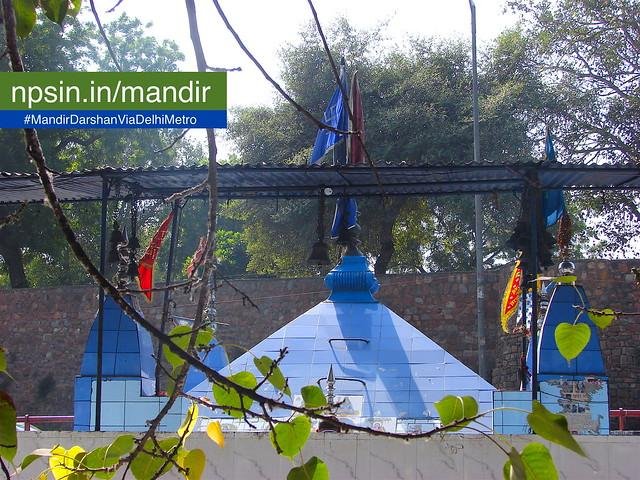
Neeli Chhatri Temple, Nigambodh Ghat – An Ancient Shiva Shrine on Delhi’s Yamuna Bank
Neeli Chhatri Temple, also written as Nili Chhatri Mandir or Prachin Neeli Chhatri Mandir, is a revered Shiva shrine situated near Nigambodh Ghat and Yamuna Bazaar in Old Delhi. Located close to the Yamuna, Salimgarh Fort and the northern side of the Red Fort area, the temple forms part of one of Delhi’s oldest continuously remembered sacred landscapes.
The shrine is dedicated principally to Lord Shiva and is popularly described as a Pandav Kalin Mandir, or a temple connected with the age of the Pandavas. According to local religious tradition, Dharmaraj Yudhishthira established or restored a Shiva shrine at this location and performed an important royal yajna after the Mahabharata war.
The temple takes its name from its distinctive blue-coloured roof or chhatri. The Hindi word neeli means blue, while chhatri can refer to a canopy, pavilion, domed covering or umbrella-shaped architectural feature.
Although the current temple has undergone rebuilding, repainting and modern alteration, its spiritual identity remains connected with the ancient traditions of Indraprastha, the Pandavas, Lord Shiva and the sacred Yamuna.
Neeli Chhatri Temple is smaller and less commercially developed than many famous Delhi temples. Its significance lies not in monumental scale but in its location beside Nigambodh Ghat and its continued place within Old Delhi’s religious memory.
Travellers searching for hotels near Neeli Chhatri Temple, accommodation near Nigambodh Ghat or pilgrimage-friendly stays around Kashmere Gate and Old Delhi can explore suitable options through MudrasStays.
Who Is Worshipped at Neeli Chhatri Temple?
The principal deity of Neeli Chhatri Temple is Lord Shiva.
Lord Shiva is worshipped as:
- Mahadev, the Supreme Lord
- The destroyer of ignorance and ego
- The lord of meditation
- The protector of devotees
- The deity of transformation
- The compassionate receiver of sincere prayer
- The lord associated with death, liberation and rebirth
- The guardian of sacred cremation grounds
- The force beyond worldly attachment
The temple’s location close to Nigambodh Ghat gives Shiva worship here an additional spiritual meaning.
Within Hindu tradition, Lord Shiva is strongly connected with cremation grounds and the contemplation of mortality. He represents the truth that all worldly forms are temporary while the spiritual self continues beyond physical change.
Devotees may visit Neeli Chhatri Temple to pray for:
- Family welfare
- Protection
- Peace of mind
- Relief from fear
- Health and spiritual strength
- Success in important responsibilities
- Peace for departed ancestors
- Freedom from repeated obstacles
- The blessings of Lord Shiva
- Inner acceptance during periods of grief
Sacred Tradition Linking the Temple with Yudhishthira
The most important religious narrative associated with Neeli Chhatri Temple connects it with Dharmaraj Yudhishthira, the eldest of the five Pandava brothers.
According to local temple tradition, Yudhishthira established, restored or worshipped at a Shiva shrine on the Yamuna bank after the events of the Mahabharata.
Some versions say he performed an Ashvamedha Yajna, while others associate the location with the Rajasuya Yajna. These were major royal Vedic ceremonies linked with sovereignty, duty and the ritual responsibilities of a king.
The different versions should not be treated as identical historical accounts. They are part of the oral sacred tradition through which the temple’s importance has been preserved.
The central belief is that Yudhishthira worshipped Lord Shiva at this sacred Yamuna-bank location and performed a major yajna connected with kingship, purification and restoration of dharma.
Lord Krishna, Balrama and other Pandavas are also mentioned in some local narratives as having worshipped Shiva in the area.
These stories give the temple a meaningful place within Delhi’s broader identification with Indraprastha, the Pandava capital described in the Mahabharata.
Indraprastha and the Ancient Sacred Landscape of Delhi
Delhi has long been associated in religious and historical memory with Indraprastha.
Purana Qila is the location most commonly connected with the ancient Pandava capital, but the sacred geography associated with Indraprastha extended beyond a single fortified site. The Yamuna, its ghats, yajna locations and Shiva shrines formed part of the wider religious landscape.
Nigambodh Ghat and Neeli Chhatri Temple are therefore understood by devotees as surviving elements of an older sacred Delhi that existed before Shahjahanabad and the modern city.
However, visitors should distinguish between three different layers:
- Sacred Tradition: The temple is traditionally associated with Yudhishthira, the Pandavas and a royal yajna.
- Historical Continuity: Nigambodh Ghat was already regarded as sacred before the construction of Shahjahanabad in the seventeenth century.
- Present Structure: The visible temple has been rebuilt and altered over time. Its modern surfaces and blue-painted architectural elements should not all be assumed to date from the Mahabharata period.
This distinction allows visitors to respect faith while avoiding unsupported archaeological claims.
History of the Present Temple
The exact date of the earliest shrine at Neeli Chhatri has not been established by a surviving foundation inscription available in standard historical records.
The temple administration and local devotees preserve the belief that Shiva worship at this place began in the Mahabharata era.
Delhi heritage accounts indicate that very little, if anything, of an original ancient temple structure survives in recognisable form. The Shiva Lingam and the continuity of worship are considered more important than the age of the current walls, roof and entrance.
Some secondary sources connect the name Neeli Chhatri with a later pavilion decorated with blue ceramic tiles and associate such a structure with the Mughal period. A claim that a blue-tiled pavilion was built in 1565 by a noble named Naubat Khan is repeated online, but it is not consistently documented in reliable official records and may relate to a different architectural structure or a later phase of the site.
The safest historical understanding is:
- The location has an old and deeply rooted sacred reputation.
- The temple tradition links the site with Yudhishthira and the Pandavas.
- Nigambodh Ghat was revered before the creation of Mughal Shahjahanabad.
- Later rulers and communities may have built or restored pavilions and shrines in the area.
- The current temple reflects several stages of rebuilding and modern religious use.
- The age of the sacred tradition should not be confused with the date of every visible architectural element.
Why Is It Called Neeli Chhatri?
The temple’s name refers to its blue roof, canopy or upper architectural form.
Today, blue-painted and blue-tiled elements make the small shrine easy to identify. Earlier descriptions also refer to a blue-covered pavilion or dome.
Several explanations are repeated in popular tradition:
- The temple once had a canopy covered with blue tiles.
- The roof was decorated with blue ceramic work.
- The blue colour symbolised the sky and Lord Shiva’s limitless nature.
- Some devotional accounts claim precious blue stones once decorated the upper structure.
The claim about precious sapphire-like stones is part of folklore and should not be presented as verified architectural history.
The simpler and more credible explanation is that the temple became known as Neeli Chhatri because of its recognisable blue canopy or roof.
Connection with Nigambodh Ghat
Nigambodh Ghat is one of Delhi’s oldest and most sacred Yamuna-bank ghats.
The name is often explained through the Sanskrit-derived terms:
- Nigam, referring to sacred knowledge or the Vedas
- Bodh, meaning knowledge, awakening or understanding
According to religious tradition, the place received the name Nigambodh because sacred knowledge of the Vedas could be recovered or realised through contact with the Yamuna at this location.
One tradition says Lord Brahma recovered forgotten Vedic knowledge here. Another connects the site with Indra’s sacrifices and the sacred landscape of Indraprastha.
Historian Swapna Liddle has noted that Shah Jahan’s selection of the Yamuna bank for his imperial city should also be understood in relation to the pre-existing sacred importance of Nigambodh.
The ghat today is best known as a major cremation ground. It remains an active site where families perform last rites.
Visitors must therefore remember that the area is not an ordinary sightseeing promenade. Families may be grieving, carrying out cremations or performing post-death rituals.
Spiritual Meaning of Shiva Worship Near a Cremation Ghat
The presence of a Shiva temple near a cremation ground is deeply meaningful in Hindu spiritual thought.
Lord Shiva is often depicted in places where ordinary social identity, pride and possessions lose their importance. The cremation ground represents the truth of impermanence.
Worship at Neeli Chhatri may encourage reflection on:
- The temporary nature of the body
- The importance of righteous action
- Detachment from ego
- Compassion towards grieving families
- The continuity of the soul
- Acceptance of mortality
- Prayer for liberation
- Respect for ancestors
- The need to use life meaningfully
The temple can therefore be visited not only for wish fulfilment but also for quiet spiritual contemplation.
Darshan at Neeli Chhatri Temple
Neeli Chhatri Temple is a modest living shrine rather than a large formal pilgrimage campus.
A typical visit may include:
Footwear Removal – Shiva Lingam Darshan – Water or Flower Offering – Associated Shrines – Quiet Prayer – Prasad
Devotees may offer:
- Water
- Milk, where permitted
- Bilva leaves
- Flowers
- Fruit
- Incense
- Camphor
- Sweets
- White cloth
- Rudraksha
- Prayers for ancestors
Visitors should confirm permitted offerings with the temple priest before performing abhishekam.
Large quantities of milk, oil or other substances should not be poured without guidance. Improper offerings can create waste, slippery floors and drainage problems.
Other Sacred Figures at the Temple
The temple’s current religious arrangement may include shrines or representations associated with:
- Lord Shiva
- Goddess Parvati
- Lord Ganesha
- Lord Hanuman
- Bhairava
- Guru Gorakhnath
- Gogaji or Goga Dev
- Local guardian traditions
The temple’s own communication includes references to Guru Gorakhnath, Goga Dev and Nahar Singh Pandey Dev, indicating that the present complex carries more than one layer of regional devotional practice.
Visitors should follow the current layout and priestly guidance rather than relying on older photographs or descriptions.
Important Festivals and Worship Days
Maha Shivaratri
Maha Shivaratri is the most important annual festival for a Shiva temple. Devotees may offer water, milk, bilva leaves and prayers throughout the day and evening. The temple can become significantly busier than usual.
Sawan
The sacred month of Sawan is especially important for Lord Shiva worship. Mondays during Sawan may attract additional devotees carrying water and Shiva offerings.
Monthly Pradosh
Pradosh Vrat is observed during the twilight period on the thirteenth lunar day and is dedicated to Lord Shiva.
Shravan Shivaratri
This is another important occasion for Shiva devotees in North India.
Somvati Amavasya and Amavasya
Because of the temple’s proximity to Nigambodh Ghat and the Yamuna, Amavasya dates may be significant for ancestral prayers and ritual remembrance.
Pitru Paksha
Families visiting the ghat during Pitru Paksha may also offer prayers at the Shiva temple for the peace of departed ancestors.
Ritual procedures vary by family tradition. Visitors should consult an appropriate priest rather than assuming every ceremony follows the same method.
Temple Timings
Common visitor listings report approximate daily timings from:
5:00 AM to 9:30 PM
A morning aarti is sometimes listed at approximately:
8:00 AM
These timings are not guaranteed. They may change because of:
- Maha Shivaratri
- Sawan
- Amavasya
- Special pujas
- Local management decisions
- Flooding or high Yamuna levels
- Road restrictions
- Repairs or renovation
Visitors should verify the current darshan and aarti schedule before travelling, especially when coming from outside Delhi.
Temple Etiquette
Visitors should:
- Dress modestly.
- Remove footwear where instructed.
- Keep mobile phones silent.
- Avoid photographing private rituals.
- Follow instructions regarding abhishekam.
- Use authorised donation facilities.
- Keep children supervised.
- Do not touch fragile roof or wall elements.
- Avoid blocking the small entrance.
- Keep the temple surroundings clean.
- Do not throw offerings into the Yamuna.
- Maintain silence near grieving families.
- Avoid treating Nigambodh Ghat as a picnic or entertainment area.
- Respect funeral processions and cremation rituals.
Compassion and restraint are especially important because the temple stands beside an active cremation ground.
Visiting Nigambodh Ghat Responsibly
Visitors may pass through or near Nigambodh Ghat while reaching the temple.
They should not:
- Photograph cremations
- Record grieving families
- Enter restricted platforms
- Block funeral vehicles
- Laugh loudly or play music
- Conduct casual social-media shoots
- Throw waste into the river
- Enter flood-affected or unstable sections
- Interfere with priests or ritual workers
Nigambodh Ghat is a sacred functional space, not simply a heritage attraction.
Those visiting only for temple darshan should follow the most direct route and avoid unnecessary movement through active cremation areas.
Monsoon and Yamuna-Flood Safety
The Nigambodh Ghat and Yamuna Bazaar area can be affected when the Yamuna rises during severe monsoon conditions.
Possible disruptions include:
- Flooded approach roads
- Closure of sections near the ghat
- Traffic diversions
- Slippery surfaces
- Restricted cremation or temple access
- Damage to riverbank walls
- Congestion on Ring Road
- Temporary suspension of nearby facilities
Visitors travelling during periods of heavy rain should check current advisories issued by Delhi authorities and local temple management.
Barricades or closure notices must never be ignored.
Visit Marghat Wale Hanuman Temple
Marghat Wale Hanuman Temple is another well-known shrine in the Yamuna Bazaar and Nigambodh Ghat area.
The temple is dedicated to Lord Hanuman and is associated with the cremation-ground landscape.
Devotees often pray for:
- Protection from fear
- Courage
- Relief from negative thoughts
- Strength during grief
- Family safety
- Hanuman Ji’s blessings
A local pilgrimage may include:
Neeli Chhatri Temple – Marghat Wale Hanuman Temple – Yamuna-Bank Prayer
Visitors should confirm the safest walking route locally because roads, service lanes and access points can change.
Visit Gauri Shankar Temple
Gauri Shankar Temple near Chandni Chowk is one of Old Delhi’s important Shiva temples.
A broader Shiva pilgrimage can include:
Neeli Chhatri Temple – Gauri Shankar Temple – Lal Mandir Area – Chandni Chowk
Traffic and parking around Chandni Chowk are highly restricted, making metro and e-rickshaw travel more practical.
Visit the Red Fort
The Red Fort stands close to the wider Nigambodh and Salimgarh area.
The fort was developed under Mughal emperor Shah Jahan after the establishment of Shahjahanabad in the seventeenth century.
Visitors can explore:
- Lahori Gate
- Diwan-i-Aam
- Diwan-i-Khas
- Rang Mahal
- Mughal palace areas
- Museums, subject to current operation
- Fort gardens and walls
The Red Fort requires a separate ticket, security screening and several hours for a meaningful visit.
Salimgarh Fort and the Old Delhi Landscape
Salimgarh Fort lies beside the Red Fort complex and was constructed before Shahjahanabad.
Neeli Chhatri Temple is commonly described as being near a gate or service-road side associated with Salimgarh.
Access to Salimgarh is controlled as part of the Red Fort complex and may not be independently available from the temple side.
Visitors should not attempt to enter closed railway, security or fortified areas.
Explore Chandni Chowk
Chandni Chowk can be added for food, shopping and visits to several places of worship.
Possible stops include:
- Gauri Shankar Temple
- Shri Digambar Jain Lal Mandir
- Gurudwara Sis Ganj Sahib
- Fatehpuri Masjid
- Old Delhi markets
- Traditional vegetarian food outlets
A multi-faith heritage visit should be planned respectfully, allowing proper time at every active religious site.
Best Time to Visit
October to March
The cooler months are the most comfortable for visiting the temple and exploring Old Delhi.
Maha Shivaratri
This provides a strong devotional atmosphere but larger crowds should be expected.
Sawan Mondays
These are spiritually important and may bring additional devotees.
April to June
Delhi can become extremely hot. Early-morning visits are preferable.
July to September
Check Yamuna levels and monsoon advisories before travelling.
Ordinary Weekday Mornings
These are generally best for quieter darshan and easier access.
Suggested Duration
Keep approximately 30 minutes to one hour for the temple itself.
A local pilgrimage may require two to three hours:
Neeli Chhatri Temple – Marghat Wale Hanuman Temple – Nearby Yamuna Sacred Area
A broader Old Delhi temple and heritage itinerary may require a full day:
Neeli Chhatri Temple – Red Fort – Gauri Shankar Temple – Gurudwara Sis Ganj Sahib – Chandni Chowk
How to Reach Neeli Chhatri Temple
The temple is located in Yamuna Bazaar near Nigambodh Ghat, the Ring Road and the Salimgarh–Red Fort side of Old Delhi.
Visitors may travel by:
- Delhi Metro
- Auto-rickshaw
- E-rickshaw
- App-based cab
- Private taxi
- Local bus
- Personal vehicle, subject to parking
- Hotel-arranged transport
Kashmere Gate Metro Station is one of the most convenient major metro connections for the wider area. From there, visitors can continue by auto-rickshaw, e-rickshaw or taxi.
Chandni Chowk and Lal Qila metro access may also be useful depending on the chosen itinerary, but the final route should be confirmed locally.
The temple’s position near service roads, Ring Road and ghat access can make it difficult to identify from the main carriageway. Visitors should use the full destination name:
Prachin Pandav Kalin Neeli Chhatri Mandir, Jamuna Bazaar, near Nigambodh Ghat
Parking can be limited, and funeral vehicles must be given priority.
Food and Local Facilities
Yamuna Bazaar has local tea stalls, basic eateries, puja shops and general stores. Larger dining choices are available around:
- Chandni Chowk
- Kashmere Gate
- Civil Lines
- Old Delhi Railway Station
- Connaught Place
Visitors may find:
- Tea
- Kachori
- Poori sabzi
- Samosa
- Vegetarian thali
- Dal and roti
- Sweets
- Packaged snacks
Families should choose clean establishments and avoid eating in areas where funeral rites are taking place.
Where to Stay Near Neeli Chhatri Temple
Travellers may choose accommodation around Kashmere Gate, Civil Lines, Chandni Chowk, Paharganj or central Delhi.
Stay Near Kashmere Gate For:
- Easier metro connectivity
- Access to Nigambodh Ghat
- Inter-state bus connectivity
- Convenient Old Delhi travel
- Short morning temple visits
Stay in Civil Lines For:
- Quieter accommodation
- Better road access
- Family-friendly hotels and guesthouses
- Metro connectivity
- Reduced old-city congestion
Stay Near Chandni Chowk For:
- Access to Old Delhi temples
- Red Fort visits
- Traditional markets
- Heritage exploration
- Walking and e-rickshaw travel
Before booking, verify:
- Actual driving distance from the temple
- Final vehicle access
- Parking availability
- Lift or ground-floor rooms
- Family-room configuration
- Vegetarian food
- Secure luggage storage
- Metro connectivity
- Monsoon access conditions
- Early check-in
- Street noise
A property that appears close on a map may require a longer route because of Ring Road traffic, one-way streets or ghat access restrictions.
Book Stays Near Neeli Chhatri Temple with MudrasStays
MudrasStays helps pilgrims find suitable accommodation near temples, sacred ghats, heritage areas and important spiritual routes.
Travellers visiting Neeli Chhatri Temple can use MudrasStays to explore:
- Hotels near Nigambodh Ghat
- Stays near Neeli Chhatri Temple
- Family accommodation near Kashmere Gate
- Hotels near the Red Fort
- Rooms suitable for senior citizens
- Properties near vegetarian food
- Group stays for Shiva pilgrimages
- Hotels with Delhi Metro connectivity
- Accommodation near Chandni Chowk
- Stays for Old Delhi temple circuits
Choosing a convenient stay near Kashmere Gate, Civil Lines or Old Delhi can make early temple darshan easier and reduce travel fatigue during a wider pilgrimage.
Neeli Chhatri Temple is more than a small Shiva shrine with a blue roof. It represents Delhi’s ancient sacred memory, the Pandava traditions of Indraprastha, the spiritual importance of the Yamuna and the continuing relationship between Lord Shiva, mortality and liberation.
By visiting with sensitivity, respecting the active cremation ground and booking a comfortable nearby stay through MudrasStays, pilgrims can experience a quiet and historically layered side of Old Delhi’s religious heritage.