
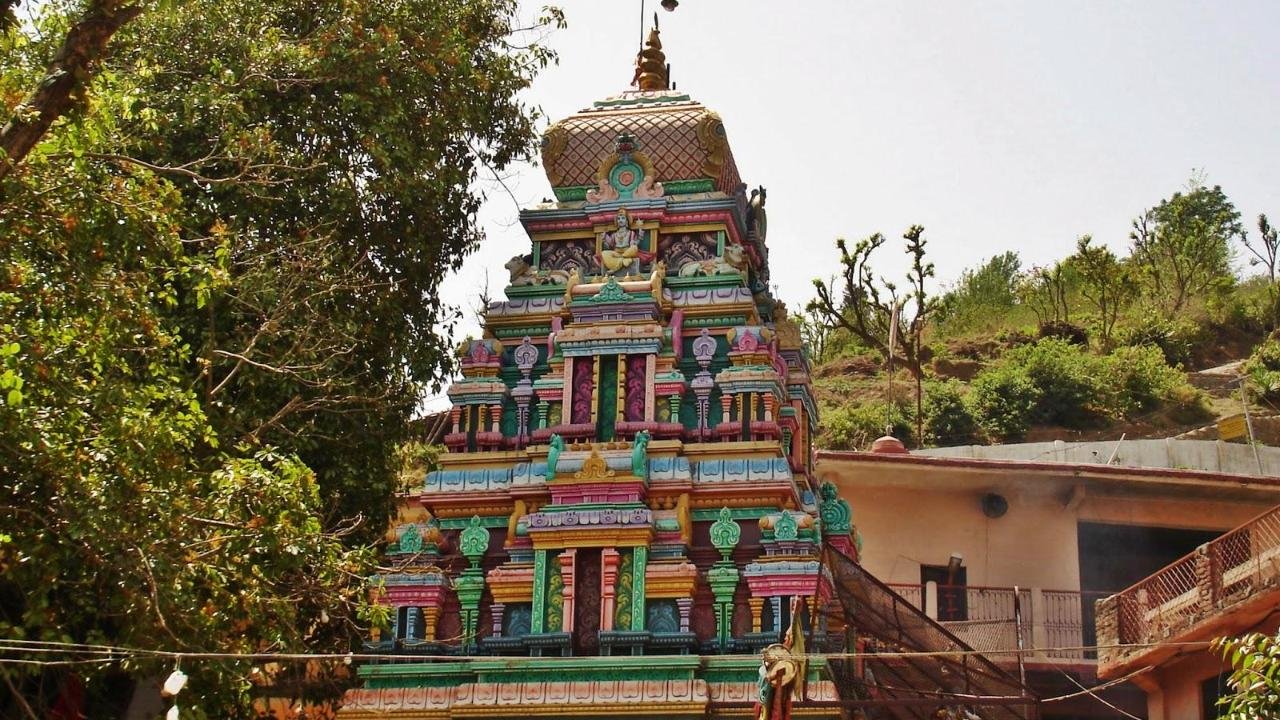
Neelkanth Mahadev Aarti: Worship of the Blue-Throated Lord
Neelkanth Mahadev Aarti is the ceremonial worship of Lord Shiva at the revered Neelkanth Mahadev Temple near Rishikesh in Uttarakhand. Sacred lamps, incense, bells, mantras and devotional songs are offered before the Shiva Lingam in remembrance of Shiva’s compassion during the churning of the cosmic ocean.
The temple is traditionally associated with the place where Lord Shiva consumed the destructive poison produced during Samudra Manthan. The poison marked His throat with a blue colour, giving Him the name Neelkanth, meaning the blue-throated one.
This connection gives the Aarti a distinctive meaning. Devotees are not only praising Shiva as the divine destroyer but also remembering Him as the protector who accepted suffering to save other living beings.
The ceremony is performed within a mountain shrine surrounded by forested valleys. The sound of bells, repeated chanting of “Om Namah Shivaya” and the glow of the Aarti flame create a devotional atmosphere different from the large riverside Ganga Aartis conducted in central Rishikesh.
Visitors should understand that Neelkanth Mahadev Aarti and Rishikesh Ganga Aarti are separate ceremonies. Neelkanth Aarti worships Lord Shiva inside the temple, while the ceremonies at Triveni Ghat and Parmarth Niketan honour the sacred River Ganga.
Who Is Neelkanth Mahadev?
The name Neelkanth is formed from two Sanskrit words: neela, meaning blue, and kantha, meaning throat. It refers to the form of Lord Shiva whose throat became blue after He consumed the poison that emerged from Samudra Manthan.
According to the scriptural account, the devas and asuras churned the cosmic ocean in their search for Amrita, the nectar of immortality. Mount Mandara was used as the churning rod and Vasuki, the king of serpents, served as the rope.
Before the desired nectar appeared, an extremely destructive poison known as Halahala or Kalakuta emerged. Its power threatened living beings throughout creation, and the frightened celestial personalities approached Lord Shiva for protection.
Moved by compassion, Shiva accepted the poison. Its force marked His neck with a blue line, but He prevented it from destroying the universe. This act became one of the most powerful expressions of self-sacrifice associated with Shiva.
Local tradition identifies the forested location of Neelkanth Mahadev Temple as the sacred place connected with this event. The temple’s colourful architectural decoration depicts the churning of the ocean, helping pilgrims understand the story before entering the main shrine.
Origin of Neelkanth Mahadev Aarti
The precise date on which regular Aarti began at the shrine is not conclusively documented in widely available official records. The practice forms part of the continuing Shaiva tradition in which a Shiva Lingam is worshipped at different stages of the day.
As worship developed at this sacred location, the daily rituals came to include purification, Abhishek, offerings, decoration, presentation of lamps and devotional chanting.
The Aarti connects the universal Samudra Manthan story with the physical shrine. When lamps are offered before the Shiva Lingam, devotees remember the light of consciousness that remains undisturbed even when surrounded by poison, fear or confusion.
Morning worship welcomes the divine presence at the beginning of the day. Midday offerings express gratitude for nourishment, while the evening Aarti concludes the active period of worship with lamps, bells and collective prayer.
Spiritual Significance of Neelkanth Mahadev Aarti
Neelkanth Mahadev Aarti primarily represents compassion. Shiva accepted the dangerous poison not for personal benefit but to protect creation from destruction.
The ceremony also teaches restraint. Shiva did not allow the poison to spread through the universe. Devotees interpret this as a reminder not to spread anger, bitterness or harmful speech to others.
The blue throat represents transformation. Difficulty is not denied, but it is contained through awareness, strength and self-control.
The Aarti flame symbolises divine knowledge. When the lamp is moved before the Shiva Lingam, devotees pray for the removal of fear, ignorance, pride and destructive habits.
Water and milk offered during Abhishek represent purification and calmness. Bilva leaves are associated with devotion to Shiva, while flowers express gratitude and surrender.
The mountain setting reinforces the contemplative character of Shiva worship. The journey away from the busy areas of Rishikesh and into the forested hills can help pilgrims prepare mentally before entering the temple.
What Makes Neelkanth Mahadev Aarti Special?
- Connection with Samudra Manthan: The worship remembers Shiva’s act of consuming the destructive poison produced during the churning of the ocean.
- Meaning of Neelkanth: The shrine honours Shiva specifically as the compassionate blue-throated protector.
- Mountain atmosphere: The ceremony takes place within a forested Himalayan setting away from central Rishikesh.
- Shiva Lingam worship: Aarti forms part of a wider ritual sequence that can include Jalabhishek, milk offerings, Bilva leaves and flowers.
- Temple iconography: The exterior decoration visually presents the Samudra Manthan story.
- Morning and evening character: Early worship is quieter and disciplined, while Sandhya Aarti creates a warmer congregational atmosphere.
- Shravan importance: The temple becomes a major destination for Shiva devotees and Kanwariyas during the holy month of Shravan.
- Mahashivratri worship: Special prayers, Abhishek and extended worship transform the ordinary daily routine.
- Powerful chanting: “Om Namah Shivaya” and “Har Har Mahadev” are commonly heard throughout the worship area.
- Distinct from Ganga Aarti: The ceremony focuses upon Lord Shiva rather than the worship of the river.
Devotional Value of Attending the Aarti
- Reflection on compassion: Shiva’s Neelkanth form demonstrates the importance of protecting others during danger.
- Emotional control: The blue throat can be understood as a reminder to contain anger rather than pass it to another person.
- Beginning with prayer: Morning Aarti establishes a disciplined and devotional intention for the day.
- Release from distraction: Bells, lamps and mantra chanting help direct attention towards a single sacred focus.
- Connection with Shiva tradition: The ceremony introduces visitors to Abhishek, Bilva offerings and Shiva mantras.
- Gratitude: Offerings encourage appreciation for water, food, health, family and natural surroundings.
- Mountain contemplation: The forested location supports silence and inward reflection.
- Collective devotion: Pilgrims from different regions participate through familiar chants and folded-hand prayer.
- Understanding sacrifice: The Samudra Manthan account encourages people to consider responsibility beyond personal interest.
- Spiritual discipline: Reaching the shrine for morning worship requires preparation, punctuality and patience.
These should be understood as devotional and reflective values rather than promises of guaranteed material results. Every visitor’s experience depends upon personal faith, attention and conduct.
Neelkanth Mahadev Aarti Timings
Important timing note: The Pauri Garhwal district’s official temple page confirms the shrine’s location and religious significance but does not publish a live daily Aarti schedule. Current travel and pilgrimage references provide different hours.
The following should therefore be treated as an indicative planning schedule rather than a permanent official timetable:
- Around 4:00 AM to 5:00 AM: Early temple preparation and morning Abhishek may begin.
- Around 4:30 AM to 6:00 AM: Commonly published window for Mangala or morning Aarti.
- Around 12:00 noon to 1:00 PM: Some references list a midday Bhog Aarti or offering interval.
- Around 6:30 PM to 7:30 PM: Most commonly published window for evening Abhishek and Sandhya Aarti.
General darshan hours are also reported differently. Some current sources show continuous access from approximately 5:00 AM until early evening, while others list separate morning and evening sessions with an afternoon closure.
Devotees travelling specifically for Aarti should confirm the schedule locally on the same day. The timings can be adjusted according to season, sunset, priestly arrangements, Shravan crowds, Mahashivratri worship and local crowd-control measures.
Understanding the Daily Aarti Cycle
Morning Abhishek and Mangala Aarti
Morning worship begins with the purification and bathing of the Shiva Lingam. Water, milk or other accepted sacred substances may be offered according to the temple’s arrangements.
The word Mangala means auspicious. Lamps, incense and prayers are offered to begin the day under Shiva’s protection.
The morning atmosphere is generally more peaceful than the later darshan period. Pilgrims who want to observe the ritual carefully should stay near Rishikesh or the temple route and begin their journey well before sunrise.
Midday Bhog Offering
Some published schedules describe a midday Bhog Aarti between approximately noon and 1:00 PM. Food, fruits or sweets may be symbolically presented before the deity before being distributed or accepted as prasad according to temple practice.
A temporary closure can occur while the offering is being prepared. Visitors should not assume that a closed curtain means the temple has finished worship for the day.
Sandhya Aarti
Sandhya Aarti is performed during the transition from daylight to evening. Illuminated lamps are presented before Neelkanth Mahadev while bells ring and Shiva mantras are recited.
The flame becomes especially prominent as natural light fades. Devotees gather around the worship area, chant “Har Har Mahadev” and receive the final darshan of the illuminated shrine.
Evening Aarti is generally the most convenient choice for visitors who want a visually expressive ceremony. However, the return journey to Rishikesh follows a winding forest road, so transport should be arranged before remaining for late worship.
Rituals Performed During Neelkanth Mahadev Aarti
Purification of the Worship Area
The shrine and ceremonial articles are prepared before the principal offerings begin. Priests maintain the ritual purity required for worship of the Shiva Lingam.
Jalabhishek
Water is poured over the Shiva Lingam as an expression of purification, surrender and cooling devotion. Many pilgrims bring sacred water, particularly during Shravan.
Devotees should offer water only through the recognised queue and ritual system. Pouring large quantities outside the designated area can create slippery floors and unnecessary waste.
Milk Abhishek
Milk may be offered to Lord Shiva according to temple instructions. It symbolises purity, nourishment and calmness.
Visitors should ask before presenting milk because crowd-control and sanitation arrangements can change during peak periods.
Offering of Bilva Leaves
The three-part Bilva leaf has an important place in Shiva worship. Devotees traditionally offer clean and undamaged leaves with reverence.
Leaves should be handed over or placed only where authorised. Visitors should not reach across barriers or interrupt the priestly ritual.
Incense and Fragrance
Incense represents purified thought and prayer. Its fragrance helps create a focused devotional environment within the shrine.
Offering of the Sacred Lamp
A ghee or oil lamp is moved in circular patterns before the Shiva Lingam. The flame represents knowledge, consciousness and Shiva’s power to remove inner darkness.
Bells and Conch
Bells announce sacred moments and help the congregation focus on worship. A conch may also be sounded according to the ritual sequence followed by the priests.
Mantras and Shiva Bhajans
“Om Namah Shivaya” is one of the principal mantras associated with Shiva. Devotees may also sing familiar Shiva Aarti compositions and respond to invocations of “Har Har Mahadev.”
Receiving the Aarti Flame
When the lamp is brought towards the congregation, devotees commonly place their hands near its warmth and then respectfully touch their forehead or head.
Visitors should wait for the lamp to reach them instead of pushing forward or attempting to touch the flame.
Prasad and Final Darshan
The worship concludes with prayers, darshan and the possible distribution of prasad. Devotees may silently offer personal prayers before leaving without blocking the movement of the next group.
Meaning of Common Offerings
- Water: Purification, simplicity and the cooling of intense energy.
- Milk: Purity, nourishment and peaceful devotion.
- Bilva leaves: A traditional offering closely associated with Lord Shiva.
- Flowers: Beauty, gratitude and the temporary nature of worldly life.
- Fruits: The symbolic offering of the results of one’s actions.
- Sweets: Gratitude and the sharing of divine grace through prasad.
- Incense: Purified thought and prayers rising towards the divine.
- Sacred lamp: Knowledge, consciousness and the removal of ignorance.
Which Neelkanth Mahadev Aarti Should You Attend?
Choose morning Aarti if you want a quieter and more disciplined experience. Early arrival also allows visitors to avoid some of the later traffic and darshan queues.
Choose the Abhishek period if you want to understand the importance of water, milk and Bilva offerings in Shiva worship.
Choose the midday ceremony if your main interest is understanding Bhog and food offerings. Confirm it locally because not every published schedule lists a separate public midday Aarti.
Choose Sandhya Aarti if you are attending for the first time. The evening lamps, bells and illuminated shrine create the most visually expressive experience.
Visitors attending evening worship should arrange their return vehicle in advance. Transport can become limited after dark, particularly outside peak pilgrimage periods.
Festival Aartis and Special Worship
Mahashivratri
Mahashivratri is one of the most important annual celebrations at Neelkanth Mahadev Temple. Special Abhishek, Shiva mantras, night worship and large congregations can continue beyond the ordinary daily programme.
The festival remembers Shiva through fasting, prayer, meditation and worship during different parts of the night. Visitors should not rely on the normal Aarti timetable during Mahashivratri.
Shravan Month
Shravan is a major pilgrimage period for the temple. Kanwariyas and other Shiva devotees travel to offer sacred water to Neelkanth Mahadev.
Mondays during Shravan are especially crowded. Barricaded queues, traffic diversions and extended worship arrangements may be introduced.
The monsoon landscape is beautiful, but heavy rain can affect the forest road and walking route. Pilgrims should prioritise official weather and local administration instructions.
Shravan Shivratri
The Shivratri observed during the Shravan period attracts substantial numbers of devotees for Jalabhishek and special prayers. Darshan queues may begin very early and continue for many hours.
Monthly Shivratri
Devotees may observe the monthly Shivratri through fasting, mantra chanting and Shiva worship. The temple can receive more visitors than on an ordinary weekday.
Mondays
Monday is traditionally associated with Lord Shiva. Morning Abhishek and evening Aarti can therefore attract additional local devotees and visiting pilgrims.
Dress Code and Aarti Etiquette
- Wear clean and modest clothing covering the shoulders and knees.
- Carry an additional shawl or light layer during early morning and winter visits.
- Remove footwear at the designated place before approaching the shrine.
- Follow the separate queue arrangements introduced during crowded periods.
- Keep mobile phones silent during Aarti and mantra recitation.
- Follow the current photography restrictions, particularly inside the sanctum.
- Do not use flash, tripods or selfie sticks in the worship area.
- Offer water, milk, Bilva leaves and flowers only through authorised arrangements.
- Do not touch the Shiva Lingam unless temple representatives specifically permit it.
- Avoid pushing when the sanctum becomes crowded or the Aarti flame is presented.
- Do not place cash directly on wet ritual surfaces.
- Keep children close because floors can become slippery after Jalabhishek.
- Allow elderly devotees and people with limited mobility sufficient space.
- Avoid wasting milk, food, flowers or other offerings.
- Do not leave plastic bottles, packets or disposable containers near the temple or forest route.
- Follow all directions issued by priests, volunteers, police and local authorities.
Best Time to Experience Neelkanth Mahadev Aarti
An ordinary weekday outside Shravan and Mahashivratri is preferable for visitors who want a calmer Aarti experience.
Morning Aarti offers greater stillness and generally cooler conditions. Sandhya Aarti is more convenient and provides the strongest visual combination of lamps, bells and temple illumination.
October to March usually provides comfortable daytime conditions, although early mornings and evenings can be cold. April to June can be warmer, making early worship more comfortable than midday darshan.
Shravan provides the most intense expression of Shiva devotion but also brings heavy crowds, rain, traffic restrictions and longer waiting periods.
For an ordinary ceremony, try to arrive 30 to 45 minutes before the locally confirmed Aarti time. During Shravan Mondays and Mahashivratri, several additional hours may be required.
Devotees planning an early departure or a late return can explore accommodation around Rishikesh and nearby pilgrimage areas through Mudras Stays. Staying closer to the route can reduce the difficulty of reaching the hill shrine before morning worship.
Practical Information for Aarti Visitors
- The Pauri Garhwal district administration places the temple approximately 32 kilometres from Rishikesh via the barrage route and 22 kilometres from the Ram Jhula or Swargashram side.
- Travel time varies substantially according to road conditions, traffic and pilgrimage crowds.
- The final road passes through hilly and forested surroundings with several bends.
- Routine public darshan and Aarti ordinarily do not require an entry ticket.
- Special Pujas, Abhishek materials and priest-assisted rituals follow separate arrangements.
- An afternoon worship interval or temporary closure may be observed.
- Confirm the evening closing time before travelling specifically for Sandhya Aarti.
- Arrange return transport in advance when remaining until after evening worship.
- Photography may be prohibited inside the main sanctum.
- During monsoon, check the latest weather, road and local administration updates.
- Families should supervise children near wet floors and crowded offering areas.
- Senior citizens should prefer ordinary weekdays and less crowded morning periods.
Nearby Spiritual Places After Neelkanth Mahadev Aarti
- Parmarth Niketan: A major Rishikesh ashram known for its evening worship beside the Ganga.
- Triveni Ghat: A sacred riverfront location where Ganga Aarti is performed at dusk.
- Bharat Mandir: One of the historic temples situated within Rishikesh.
- Vashishta Gufa: A riverside meditation cave traditionally associated with Sage Vashishta.
- Swargashram: A spiritual area containing ashrams, temples and pedestrian access along the Ganga.
Visitors should not try to attend Neelkanth Sandhya Aarti and a central Rishikesh Ganga Aarti at the same time. The locations are separated by a significant hill journey, and both ceremonies are generally associated with the evening period.
Interesting Facts About Neelkanth Mahadev Aarti
- Neelkanth means the blue-throated form of Lord Shiva.
- The name originates from Shiva’s consumption of the poison produced during Samudra Manthan.
- The Shrimad Bhagavatam describes the poison marking Shiva’s neck with a bluish line.
- The temple’s exterior imagery depicts the churning of the cosmic ocean.
- The shrine is situated within the three valleys of Vishnukoot, Brahmakoot and Manikoot.
- The Pauri district administration associates the location with the Madhumati and Pankaja rivers.
- Neelkanth Aarti worships Lord Shiva and should not be confused with Rishikesh Ganga Aarti.
- Water Abhishek has particular importance during Shravan.
- Bilva leaves are among the most traditional offerings made to Shiva.
- Morning Aarti is associated with an auspicious beginning to the day.
- Sandhya Aarti marks the transition between daylight and night.
- Mahashivratri worship can continue beyond the ordinary daily schedule.
- Different current sources publish different Aarti and opening hours.
- Same-day local confirmation is important when travelling specifically for a ceremony.
- The Aarti’s central spiritual theme is compassion combined with self-control.
Frequently Asked Questions About Neelkanth Mahadev Aarti
What is Neelkanth Mahadev Aarti?
It is the ceremonial worship of Lord Shiva through sacred lamps, incense, Abhishek, mantras, bells, flowers and devotional singing at Neelkanth Mahadev Temple near Rishikesh.
What does Neelkanth mean?
Neelkanth means blue-throated. The name refers to Lord Shiva’s throat becoming blue after He consumed the poison produced during Samudra Manthan.
What time is morning Aarti?
Current published references place morning worship within an approximate 4:30 AM to 6:00 AM window. The exact same-day time should be confirmed locally.
What time is Sandhya Aarti?
Evening Aarti is commonly reported between approximately 6:30 PM and 7:30 PM. Seasonal and festival changes are possible.
Is there a midday Aarti?
Some pilgrimage references list Bhog Aarti or a midday offering between approximately 12:00 noon and 1:00 PM. Visitors should confirm whether it is publicly accessible on their chosen day.
Are the Aarti timings officially confirmed?
The official Pauri Garhwal district page does not currently publish a daily Aarti timetable. Available sources provide conflicting schedules, so the listed ranges should be treated as indicative.
Which Aarti is best for first-time visitors?
Sandhya Aarti is generally the most visually expressive choice. Morning Aarti is preferable for visitors who want a quieter and more disciplined experience.
Is Neelkanth Aarti the same as Rishikesh Ganga Aarti?
No. Neelkanth Aarti worships Lord Shiva inside the mountain temple. Ganga Aarti at Triveni Ghat or Parmarth Niketan worships the sacred River Ganga.
Is there an entry fee?
Routine temple entry and participation in ordinary public Aarti are generally free. Donations, special Pujas and offering materials are separate.
Is advance booking required?
Advance booking is generally not required for routine public Aarti. Special priest-assisted rituals may follow separate arrangements.
Can devotees perform Jalabhishek?
Jalabhishek is an important part of worship, but visitors must follow the temple’s current queue and offering system.
Can milk and Bilva leaves be offered?
Milk and Bilva leaves are commonly associated with Shiva worship. They should be presented only through recognised temple arrangements.
Are photographs allowed during Aarti?
Photography may be restricted inside the main sanctum. Visitors should follow current signs and priestly instructions and avoid flash photography.
How early should devotees arrive?
Arrive 30 to 45 minutes before an ordinary Aarti. Shravan Mondays, Mahashivratri and other important Shiva occasions require substantially more time.
Is the temple open throughout the afternoon?
Published schedules disagree regarding afternoon access. A Bhog interval or temporary closure may occur, so same-day confirmation is recommended.
Can children and senior citizens attend?
Yes, but families should be careful around wet floors and crowded Jalabhishek areas. Senior citizens may find ordinary weekday mornings more manageable.
Is Shravan the best time to attend Aarti?
Shravan offers an intense devotional atmosphere but also brings heavy crowds, rain and traffic restrictions. Visitors seeking a peaceful ceremony should choose an ordinary weekday outside the peak period.
Can visitors attend Neelkanth Aarti and Triveni Ghat Aarti on the same evening?
It is generally impractical because both ceremonies occur around evening and the hill journey between the locations requires considerable time.