
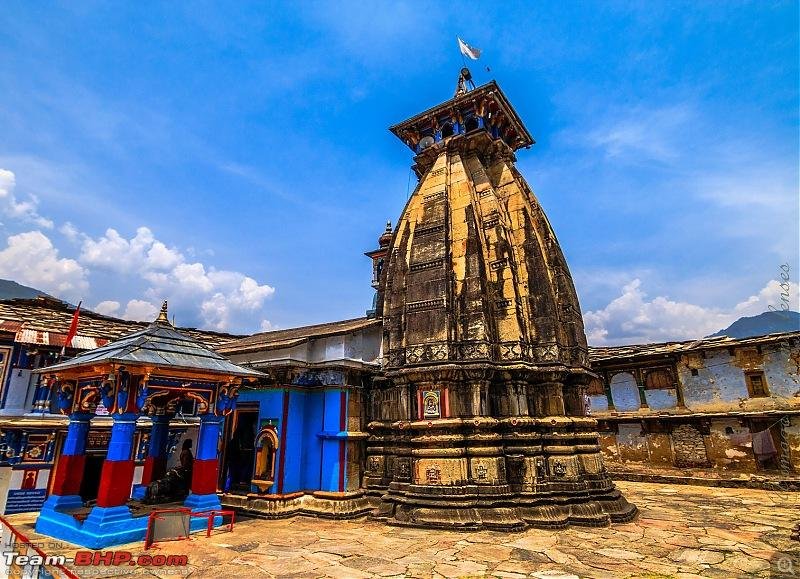
Omkareshwar Temple in Ukhimath is one of the most spiritually important Shiva temples in the Rudraprayag district of Uttarakhand. Located within the peaceful Himalayan town of Ukhimath, the temple is widely revered as the winter seat of Lord Kedarnath. When the high-altitude Kedarnath Temple closes during winter because of heavy snowfall and severe weather, the ceremonial representation of Lord Kedarnath is brought to Omkareshwar Temple and worship continues here until the mountain shrine reopens.
The temple is also associated with the winter worship of Lord Madhmaheshwar, one of the sacred Panch Kedar temples. After the Madhmaheshwar shrine closes for winter, its ceremonial doli reaches Omkareshwar Temple, where devotees can continue offering prayers during the months when the original high-altitude temple becomes inaccessible.
This winter-seat tradition makes Omkareshwar Temple much more than a local shrine. It allows the spiritual worship connected with Kedarnath and Madhmaheshwar to continue throughout the year, even when snow closes the remote Himalayan pilgrimage routes.
For pilgrims who cannot undertake the demanding journey to Kedarnath or the trek to Madhmaheshwar, Omkareshwar Temple offers an accessible opportunity to seek the blessings associated with these sacred Shiva shrines during winter. The temple is therefore an important destination for senior citizens, families, devotees with limited mobility and travellers looking for a quieter form of Himalayan pilgrimage.
Situated at an elevation of approximately 1,311 metres, Ukhimath is surrounded by forested mountain slopes, terraced fields, traditional settlements and views across the Garhwal Himalayas. The town lies roughly 41 kilometres from Rudraprayag and around 13 kilometres from Guptkashi, making it an important spiritual and travel base within the wider Kedarnath region.
The peaceful environment of Ukhimath, combined with the year-round religious importance of Omkareshwar Temple, attracts Shiva devotees, Char Dham pilgrims, Panch Kedar travellers, spiritual seekers, families, photographers and visitors interested in Garhwali culture.
## Spiritual Importance of Omkareshwar Temple
Omkareshwar Temple is primarily dedicated to Lord Shiva. The name Omkareshwar refers to Shiva as the Lord of Om, the sacred primordial sound regarded in Hindu philosophy as the vibration from which creation emerges.
The syllable Om represents the unity of creation, preservation and transformation. It is connected with the timeless nature of the Divine and is traditionally recited before prayers, mantras and spiritual practices.
At Omkareshwar Temple, Lord Shiva is worshipped not only as the presiding deity of the local shrine but also through the winter traditions connected with Kedarnath and Madhmaheshwar.
This combination gives the temple several layers of spiritual importance. It is a permanent Shiva temple, the winter seat of Lord Kedarnath and a winter worship centre connected with Lord Madhmaheshwar.
Devotees visit to pray for protection, courage, family welfare, spiritual strength, health, peace and liberation from personal difficulties.
Many pilgrims seek the blessings of Lord Shiva before beginning a journey towards Kedarnath, Madhmaheshwar, Tungnath or other sacred destinations of Rudraprayag and Chamoli.
Others visit after completing their pilgrimage to express gratitude for a safe journey.
The temple is particularly meaningful during winter because it allows devotees to remain connected with Kedarnath even when the original temple is closed.
Rather than viewing winter as the end of the pilgrimage season, Omkareshwar Temple transforms it into a different form of worship. The deity descends from the remote snow-covered mountains to a town where pilgrims can continue offering prayers.
This seasonal movement reflects an important characteristic of Himalayan religious traditions. The deities are not understood as being limited permanently to one physical structure. Ritual worship moves according to climate, accessibility and established religious customs.
## Winter Seat of Lord Kedarnath
Kedarnath Temple is situated at a high altitude in the Garhwal Himalayas and is one of the twelve Jyotirlingas of Lord Shiva. It also forms part of Uttarakhand’s Char Dham pilgrimage and the Panch Kedar tradition.
Because of heavy snowfall and extreme winter conditions, Kedarnath Temple remains closed for several months each year.
At the time of winter closure, the ceremonial representation of Lord Kedarnath is carried from the mountain temple in a traditional procession known as a doli yatra.
The procession travels through different settlements and sacred locations before reaching Omkareshwar Temple in Ukhimath.
Once the deity reaches Ukhimath, winter worship begins at Omkareshwar Temple and continues until the seasonal reopening of Kedarnath.
For devotees, this is not simply a practical relocation caused by weather. The journey is a sacred religious event involving prayers, music, rituals, local participation and the ceremonial movement of the deity.
Residents of villages along the route may gather to welcome the doli, offer prayers and participate in the religious procession.
The arrival of Lord Kedarnath at Ukhimath marks the beginning of the winter pilgrimage season.
During these months, devotees can visit Omkareshwar Temple and receive darshan connected with Lord Kedarnath without undertaking the high-altitude trek from Gaurikund.
This makes Ukhimath an especially important destination for pilgrims who are unable to travel during the main summer Char Dham season.
Senior citizens, families with young children and people who may not be physically prepared for a long mountain trek can experience an important part of the Kedarnath tradition at Omkareshwar Temple.
The exact dates of the winter procession and the return journey change every year according to the Hindu calendar, temple traditions and seasonal conditions.
Travellers planning to witness the ceremonial arrival or departure should confirm the current schedule with the temple authorities, district administration or their accommodation provider.
## Winter Worship of Lord Madhmaheshwar
Omkareshwar Temple is also connected with Lord Madhmaheshwar, one of the Panch Kedar shrines.
Madhmaheshwar Temple is situated in a remote high-altitude valley and requires a mountain trek. The original shrine becomes inaccessible during winter because of snow and severe weather.
After the seasonal closure of Madhmaheshwar Temple, the ceremonial doli of Lord Madhmaheshwar travels to Ukhimath.
The arrival is associated with religious celebrations and the Madhmaheshwar fair, during which devotees gather to welcome the deity.
Winter worship then continues at Omkareshwar Temple.
This tradition makes Omkareshwar Temple an important centre for devotees undertaking or studying the Panch Kedar pilgrimage.
The Panch Kedar temples are traditionally identified as Kedarnath, Madhmaheshwar, Tungnath, Rudranath and Kalpeshwar.
Each temple represents a particular manifestation of Lord Shiva and is associated with religious traditions involving the Pandavas.
Kedarnath and Madhmaheshwar are both closely linked with Ukhimath through their winter worship arrangements.
For pilgrims, visiting Omkareshwar Temple can therefore provide an introduction to the larger Panch Kedar tradition.
Travellers planning a future trek to Madhmaheshwar may begin their spiritual journey at Ukhimath, seek the blessings of Lord Shiva and learn about the seasonal movement of the deity.
## Temple Architecture
Omkareshwar Temple reflects the traditional stone temple architecture of the Garhwal Himalayas.
The principal stone shikhara rises prominently above the surrounding courtyard and nearby structures.
The tall tower has a strong vertical form, drawing attention towards the sky and the surrounding mountains.
Its weathered stone surface reflects generations of exposure to Himalayan rain, sunlight, winter cold and seasonal changes.
The main stone structure is accompanied by brightly painted architectural elements in shades of blue, red, yellow and white.
These colours create a striking contrast with the dark stone tower and the green mountain slopes surrounding Ukhimath.
The temple courtyard is paved with stone and enclosed by traditional buildings, smaller shrines and covered areas used during worship and ceremonial occasions.
The combination of historic stone architecture and colourful Garhwali decorative work gives the temple a distinctive identity.
Unlike a modern urban temple complex, Omkareshwar remains closely integrated with the town and surrounding mountain landscape.
Visitors pass through the lanes and buildings of Ukhimath before entering the temple courtyard.
The experience feels connected with the everyday religious life of the local community rather than separated into a large commercial pilgrimage complex.
The temple is an active place of worship, and architectural observation should never interfere with darshan, ceremonies or the movement of devotees.
Visitors should avoid touching old stone carvings, leaning against temple structures or climbing onto raised architectural sections.
Photography of the exterior and courtyard may be permitted, but visitors should confirm the rules before photographing the inner shrine, deities, priests or religious rituals.
## Deities Worshipped at Omkareshwar Temple
Lord Shiva is the principal deity of Omkareshwar Temple.
The complex is also associated with temples and sacred forms connected with Goddess Parvati, Usha, Aniruddha and other deities.
A form of Mahadev with five faces is associated with the local temple tradition and resembles the five-faced representation connected with Kedarnath.
The five faces of Shiva are traditionally interpreted through different philosophical and spiritual meanings.
They may be associated with different directions, aspects of creation, forms of consciousness and divine functions.
Visitors should ask the temple priests about the correct sequence of worship and the specific deities housed within different sections of the complex.
Local traditions and arrangements may change over time, and not every sacred area may remain continuously open to visitors.
The presence of multiple shrines allows pilgrims to experience Shiva worship alongside the local legends and cultural traditions of Ukhimath.
## Usha and Aniruddha Tradition
Ukhimath is closely associated with the religious story of Usha and Aniruddha.
According to Hindu tradition, Usha was the daughter of Banasura, while Aniruddha was the grandson of Lord Krishna.
Usha is believed to have seen Aniruddha in a dream and fallen in love with him.
Her companion Chitralekha, who possessed exceptional artistic and spiritual abilities in the story, helped identify Aniruddha and bring the two together.
The relationship eventually led to conflict involving Banasura, Lord Krishna and Lord Shiva.
The story concludes with the marriage of Usha and Aniruddha.
Regional folklore connects Ukhimath with Usha and states that the town’s name developed from an earlier association with her.
Temples and sacred images connected with Usha, Aniruddha and Chitralekha form part of the cultural and religious landscape of Ukhimath.
These traditions add a Vaishnava and local mythological dimension to a town primarily known for Shiva worship.
Visitors can therefore experience narratives connected with both Lord Shiva and the family of Lord Krishna within the same pilgrimage destination.
The Usha–Aniruddha account should be presented as a sacred religious tradition and regional legend rather than documented modern history.
Its importance lies in the cultural identity it gives to Ukhimath and the way generations of residents have preserved the story.
Travellers interested in mythology should spend time understanding these local traditions rather than limiting their visit only to the main temple.
## Ukhimath as a Winter Pilgrimage Town
Ukhimath is one of the most important winter pilgrimage centres in Uttarakhand.
During the warmer months, many travellers pass through the region while heading towards Kedarnath, Chopta, Tungnath, Madhmaheshwar and Deoria Tal.
During winter, the town gains a different spiritual significance because worship associated with Kedarnath and Madhmaheshwar moves to Omkareshwar Temple.
This seasonal transformation makes Ukhimath a year-round spiritual destination.
Summer visitors can use Ukhimath as a base for surrounding temples and treks.
Winter visitors can experience the ceremonial worship of deities brought down from high-altitude shrines.
The town generally remains quieter than larger pilgrimage bases such as Guptkashi, Sonprayag and Rudraprayag.
Its slower pace, mountain views and traditional settlement pattern make it suitable for travellers looking for a peaceful spiritual stay.
Visitors can attend temple darshan, explore the local market, walk through nearby settlements and observe the daily life of the Garhwali community.
An overnight stay allows pilgrims to experience Ukhimath beyond a short roadside visit.
Early mornings are often calm, with temple bells, mountain air and views of the surrounding slopes.
Evenings provide an opportunity to attend prayers and observe the town after day visitors have departed.
## Morning and Evening Darshan
Morning is one of the most rewarding times to visit Omkareshwar Temple.
The temple courtyard is generally quieter, the air is fresh and the surrounding mountain environment creates a peaceful atmosphere.
Visitors staying in Ukhimath can attend morning darshan without undertaking a long road journey from Guptkashi or Rudraprayag.
The combination of bells, incense, mantras and early Himalayan light creates a deeply spiritual beginning to the day.
Morning darshan also leaves sufficient time for visitors to continue towards Chopta, Sari village, Deoria Tal, Kalimath or Guptkashi.
Evening worship offers a different experience.
As the temperature falls and daylight fades, lamps, bells and devotional prayers become more prominent within the temple courtyard.
Visitors planning evening darshan should stay in Ukhimath or arrange their return transport in advance.
Mountain roads can become difficult after dark, especially during rain, fog or winter frost.
Temple timings may change according to season, festivals, winter worship arrangements and local religious ceremonies.
Travellers should confirm current timings through their hotel, homestay host, temple authorities or official local information.
## Festivals and Ceremonial Processions
The arrival and departure of the Kedarnath and Madhmaheshwar dolis are among the most important religious occasions associated with Omkareshwar Temple.
These ceremonies attract devotees, priests, local residents and travellers from different parts of Uttarakhand.
The processions may include decorated palanquins, traditional musical instruments, prayers, flower offerings and community participation.
The winter arrival marks the beginning of worship at Ukhimath.
The spring departure marks the return of the deity towards the high-altitude temple before its seasonal reopening.
The exact route, timing and dates vary each year.
Pilgrims should plan accommodation early when travelling during these ceremonies because Ukhimath has a more limited room inventory than larger tourist towns.
Mahashivratri is another important festival for the temple.
Devotees gather to worship Lord Shiva, offer water and bilva leaves, recite mantras and participate in special prayers.
The temple may become significantly busier during Mahashivratri, Mondays in Shravan and other Shiva-related occasions.
The Madhmaheshwar fair associated with the winter arrival of the deity is another important cultural and spiritual event.
Visitors attending a festival should remember that religious ceremonies take priority over sightseeing and photography.
Movement, recording and access may be regulated during rituals.
## Best Time to Visit Omkareshwar Temple
Omkareshwar Temple can be visited throughout much of the year, but every season offers a different experience.
### Spring
Spring generally brings pleasant temperatures, fresh vegetation and comfortable conditions for temple visits.
The surrounding hills begin to display new growth and flowering plants.
This season is suitable for families, senior citizens and travellers combining Ukhimath with Deoria Tal, Chopta or nearby temples.
Spring may also coincide with ceremonial preparations for the return of deities to their high-altitude shrines.
Travellers interested in witnessing the departure processions should confirm the annual dates in advance.
### Summer
Summer is a popular pilgrimage season because Kedarnath, Tungnath and other high-altitude destinations generally become accessible.
Ukhimath can serve as a convenient base for several regional journeys.
Daytime weather is usually more comfortable than in the plains, although direct sunlight can still feel strong.
Accommodation demand may rise during weekends, school holidays and the Char Dham season.
Travellers should book rooms early, particularly when visiting as a family or group.
Traffic on the roads connecting Rudraprayag, Guptkashi, Sonprayag and Chopta may affect travel times.
### Monsoon
The monsoon transforms the surrounding mountains into a green and misty landscape.
Forests, agricultural terraces and streams become especially active.
However, heavy rainfall can create landslides, falling stones, road closures and travel delays across Rudraprayag district.
Visitors should check official weather and road advisories before departure.
Fixed, tightly scheduled itineraries should be avoided during periods of intense rain.
Stone pathways and temple steps may become slippery.
Comfortable footwear with reliable grip and proper rain protection are essential.
Travellers should avoid walking close to unstable slopes or overflowing streams.
### Autumn
Autumn is one of the most favourable periods for visiting Ukhimath.
The post-monsoon landscape remains green, skies may become clearer and mountain visibility often improves.
Temperatures are generally comfortable during the day, although mornings and evenings become cooler.
The season may include the closing ceremonies of the high-altitude temples and the arrival of the winter dolis.
This makes autumn especially significant for devotees wishing to experience the winter-seat tradition.
Rooms should be reserved in advance when travelling around ceremonial dates.
### Winter
Winter is one of the most spiritually important seasons at Omkareshwar Temple.
Kedarnath and Madhmaheshwar become inaccessible, while their winter worship continues at Ukhimath.
The town is quieter than during the main Char Dham season, allowing visitors to experience peaceful darshan and a slower form of pilgrimage.
Mornings and evenings can become cold.
Travellers should carry thermals, insulated jackets, gloves, caps and suitable footwear.
Snowfall may occur in the higher surrounding destinations, although snowfall in Ukhimath itself cannot be guaranteed for a particular date.
Road conditions should be checked before travelling, especially when planning excursions towards Chopta or higher areas.
Accommodation providers should be asked about room heating, hot water, warm bedding and power backup.
## Reaching Omkareshwar Temple
Ukhimath is connected by road with Rudraprayag, Guptkashi, Kund, Chopta and other destinations in the region.
The town is approximately 41 kilometres from Rudraprayag and around 13 kilometres from Guptkashi.
Travellers arriving from Rishikesh or Haridwar generally travel through Devprayag, Srinagar Garhwal and Rudraprayag before continuing into the Mandakini valley.
At Kund, the road separates towards Ukhimath and the routes leading towards Chopta and Madhmaheshwar.
Private taxis provide the most flexible option for families, senior citizens and pilgrimage groups.
Shared vehicles may be available on some routes, but timing and frequency can vary according to season and local demand.
Visitors should confirm the final distance between the vehicle drop-off point and the temple.
The temple lies within the town, but Ukhimath is a mountain settlement with slopes, steps and narrow lanes.
Travellers with mobility limitations should select their parking point and accommodation carefully.
Mountain journey times should never be estimated only from distance.
Traffic, road repairs, pilgrimage movement, rainfall and landslides can extend travel considerably.
Daylight travel is generally preferable for visitors unfamiliar with the route.
## Travel Gateways
Haridwar and Rishikesh are major gateways for travellers beginning journeys into Garhwal.
Rail connections are available to Haridwar and other nearby stations, followed by a long road journey towards Rudraprayag and Ukhimath.
Dehradun’s airport is commonly used by air travellers, followed by road travel through Rishikesh and the mountain districts.
Travellers arriving late in the day should avoid beginning an unfamiliar mountain journey immediately after dark.
An overnight stop in Rishikesh, Srinagar Garhwal or Rudraprayag can make the journey safer and more comfortable.
Visitors should carry valid identification, sufficient cash for remote areas, essential medicines and weather-appropriate clothing.
Mobile connectivity may vary along parts of the route.
## Nearby Spiritual Destinations
Omkareshwar Temple can be combined with several important pilgrimage sites in Rudraprayag and the surrounding Himalayas.
### Kedarnath Temple
Kedarnath is one of the twelve Jyotirlingas, a Char Dham destination and the most prominent of the Panch Kedar shrines.
During the main pilgrimage season, devotees travel through Guptkashi, Sonprayag and Gaurikund before beginning the trek to Kedarnath.
During winter, worship associated with Lord Kedarnath continues at Omkareshwar Temple.
This makes Ukhimath spiritually relevant to the Kedarnath journey throughout the year.
Visitors should remember that Kedarnath requires separate registration, transport, weather preparation and trekking arrangements.
### Madhmaheshwar Temple
Madhmaheshwar is one of the Panch Kedar temples and is reached through a mountain trekking route.
The winter worship connection between Madhmaheshwar and Omkareshwar Temple makes Ukhimath an important base for pilgrims interested in the shrine.
Travellers planning the Madhmaheshwar trek should obtain current information regarding the route, accommodation, weather and physical requirements.
### Tungnath Temple
Tungnath is another Panch Kedar shrine and is known as one of the highest Shiva temples in the world.
The trek generally begins from Chopta, which is accessible by road from the Ukhimath region.
A journey combining Omkareshwar and Tungnath allows travellers to experience both an accessible town temple and a high-altitude mountain shrine.
Tungnath access is seasonal and may be affected by snow, rain and weather.
### Kalimath Temple
Kalimath is an important Shakti shrine dedicated to Goddess Kali and associated with the worship of Lakshmi and Saraswati.
The temple can be combined with Ukhimath as part of a Shiva–Shakti pilgrimage.
Travellers should keep sufficient time for mountain roads and avoid attempting too many destinations in one day.
### Guptkashi Vishwanath Temple
Guptkashi is known for Vishwanath Temple and the Ardhanarishwar shrine.
The Ardhanarishwar form represents the combined presence of Shiva and Shakti.
Guptkashi is only around 13 kilometres from Ukhimath and offers additional accommodation, markets and travel services.
### Triyuginarayan Temple
Triyuginarayan is a Vishnu temple traditionally associated with the divine marriage of Lord Shiva and Goddess Parvati.
The sacred wedding fire makes it an important destination for couples and devotees praying for marital harmony.
Triyuginarayan can be included in a longer Rudraprayag pilgrimage, although road time should be planned carefully.
### Kartik Swami Temple
Kartik Swami Temple is dedicated to Lord Kartikeya and is situated above Kanakchauri village.
The journey includes a forest trek and panoramic Himalayan views.
It should generally be planned as a separate day excursion from the Ukhimath region.
### Dhari Devi Temple
Dhari Devi Temple stands above the Alaknanda River between Srinagar Garhwal and Rudraprayag.
Travellers arriving from Rishikesh can visit Dhari Devi before continuing towards Ukhimath.
### Rudraprayag Sangam
Rudraprayag is one of the Panch Prayags and marks the confluence of the Alaknanda and Mandakini rivers.
Pilgrims can visit the sangam and nearby temples before travelling towards Ukhimath.
## Nearby Nature Destinations
### Chopta
Chopta is known for forested mountain scenery, meadows and access to the Tungnath and Chandrashila trek.
The road from Ukhimath towards Chopta passes through beautiful Himalayan landscapes.
Chopta can receive snow in winter, and access conditions should be checked locally.
During summer and autumn, the destination attracts trekkers, families and nature travellers.
### Deoria Tal
Deoria Tal is a scenic Himalayan lake reached through a walking trail from Sari village.
During favourable weather, the water may reflect the surrounding mountain ranges.
The trek is suitable for many regular travellers but still requires appropriate footwear, water and weather preparation.
Visitors can stay in Ukhimath or Sari village depending on their itinerary.
### Sari Village
Sari is the principal base for the Deoria Tal trail and provides homestays, village accommodation and mountain views.
A combined Ukhimath and Sari itinerary allows visitors to experience both temple worship and village-based nature travel.
### Mandal and Forest Routes
The wider region includes forests, mountain villages and scenic roads leading towards Chopta, Gopeshwar and adjoining valleys.
Travellers should remain aware that remote routes may have limited fuel, medical and communication facilities.
## Suggested One-Day Visit
A one-day Ukhimath pilgrimage can begin with early morning darshan at Omkareshwar Temple.
Visitors can explore the temple courtyard, offer prayers and learn about the winter-seat tradition.
The afternoon can be used to visit Guptkashi Vishwanath Temple or explore Ukhimath town.
Travellers should avoid adding a demanding trek to the same day unless physically prepared and travelling with sufficient daylight.
## Suggested Two-Day Itinerary
On the first day, travellers can arrive in Ukhimath, check into a hotel or homestay and attend evening darshan at Omkareshwar Temple.
The second morning can begin with another temple visit before continuing towards Sari village and Deoria Tal.
Visitors can return to Ukhimath or stay in Sari according to their itinerary.
This plan is suitable for families, couples and spiritual travellers seeking a relaxed journey.
## Suggested Three-Day Spiritual and Nature Circuit
The first day can include arrival in Ukhimath and Omkareshwar Temple.
The second day can include Sari village and the Deoria Tal trail.
The third day can include Chopta and, when accessible, the Tungnath trek.
Travellers who prefer a temple-focused itinerary can replace the trek with Kalimath and Guptkashi.
## Extended Pilgrimage Journey
A longer pilgrimage may begin with Dhari Devi Temple and Rudraprayag Sangam.
The journey can continue towards Guptkashi and Omkareshwar Temple in Ukhimath.
From Ukhimath, travellers may visit Kalimath, Triyuginarayan, Chopta and Tungnath.
Pilgrims undertaking Kedarnath can separately continue towards Sonprayag and Gaurikund.
Visitors interested in the Panch Kedar tradition may also plan Madhmaheshwar according to season, available days and physical fitness.
## Where to Stay Near Omkareshwar Temple
Accommodation near Omkareshwar Temple is available in Ukhimath, Guptkashi, Sari village and nearby mountain settlements.
The best location depends on the traveller’s pilgrimage plans, preferred comfort level and onward journey.
### Hotels and Homestays in Ukhimath
Staying in Ukhimath provides the most convenient access to Omkareshwar Temple.
Visitors can attend morning and evening darshan without undertaking a long road journey.
Accommodation includes budget hotels, family guesthouses, local homestays and small mountain properties.
A homestay may provide home-cooked meals, local knowledge and a closer experience of Garhwali hospitality.
Travellers should confirm the property’s exact distance from the temple because Ukhimath extends across sloping mountain terrain.
A room that appears geographically close may still require an uphill walk or short drive.
### Hotels in Guptkashi
Guptkashi offers a broader range of hotels, resorts, guesthouses and pilgrimage accommodation.
The town provides markets, restaurants, medical facilities and transport services.
It is suitable for travellers continuing towards Kedarnath, Triyuginarayan or Kalimath.
However, visitors whose primary purpose is Omkareshwar Temple may find Ukhimath more convenient.
### Homestays in Sari Village
Sari village is suitable for travellers planning to combine Omkareshwar Temple with Deoria Tal.
Accommodation generally includes homestays, simple guesthouses and mountain-view rooms.
Guests should confirm meals, road access, hot water and the distance to the trail starting point.
### Stays Near Chopta
Chopta and nearby areas offer camps, cottages, guesthouses and small resorts according to season.
These properties are suitable for visitors focusing on Tungnath, Chandrashila and nature experiences.
Winter access and heating arrangements should be checked carefully.
### Accommodation for Pilgrimage Groups
Groups should select properties offering multiple rooms, vegetarian meals, driver accommodation and parking.
Room inventory within Ukhimath may be limited during important winter processions, Mahashivratri and peak pilgrimage periods.
Advance booking is strongly recommended.
## Choosing Suitable Accommodation
Travellers should select accommodation according to actual road and walking access rather than only the displayed map distance.
Families should check room size, meal arrangements, parking and bathroom facilities.
Senior citizens should prioritise properties with direct vehicle access, fewer stairs and rooms close to the temple.
Winter travellers should confirm heating, hot water, warm bedding and power backup.
Monsoon visitors should check the condition of the final approach road and any active travel advisory.
Guests requiring stable internet should verify connectivity directly with the property.
Mountain settlements may experience power or network interruptions.
Travellers planning sunrise trips or early temple visits should confirm whether breakfast and transport can be arranged.
## Book Stays Near Omkareshwar Temple with MudrasStays
MudrasStays helps pilgrims discover hotels, homestays, guesthouses and mountain stays near Omkareshwar Temple in Ukhimath.
The platform is designed specifically for travellers searching for accommodation near temples and pilgrimage destinations across India.
Visitors can explore properties based on their distance from Omkareshwar Temple, room type, group size, travel budget and onward pilgrimage route.
Booking a stay in Ukhimath makes it easier to attend peaceful morning and evening darshan.
A nearby stay also allows visitors to experience the winter worship of Lord Kedarnath without repeated travel from Guptkashi or Rudraprayag.
Solo pilgrims can search for affordable rooms and local homestays.
Couples can explore peaceful mountain-view properties and private guesthouses.
Families can select accommodation offering larger rooms, meals and convenient parking.
Senior citizens can choose properties with accessible rooms and limited climbing.
Pilgrimage groups can identify hotels offering multiple rooms, vegetarian food and space for vehicles.
Travellers interested in Deoria Tal can compare stays in Ukhimath and Sari village.
Visitors travelling towards Chopta and Tungnath can choose accommodation according to road and seasonal conditions.
Kedarnath pilgrims can select stays that support onward travel towards Guptkashi, Sitapur and Sonprayag.
MudrasStays helps travellers build a connected spiritual journey around Omkareshwar Temple rather than arranging only a general hotel booking.
## Responsible Temple Travel
Omkareshwar Temple is an active place of worship and should be visited with respect.
Visitors should wear appropriate clothing and remove footwear wherever instructed.
Photography of the inner shrine, deities, priests or ceremonies should only be undertaken with permission.
Devotees should avoid blocking temple entrances and narrow courtyard areas while taking photographs.
Flowers, incense, cloth and other offerings should be placed only in designated areas.
Plastic packaging, food wrappers and disposable containers should not be left inside the temple or surrounding town.
Visitors should avoid touching old stone structures and religious objects unnecessarily.
Temple bells, sacred flags and ceremonial items should not be treated as photography props.
During doli processions, visitors should follow crowd-management instructions and avoid obstructing the route.
Drone photography should not be attempted without all required religious, local and aviation permissions.
Travellers should respect Ukhimath as a living town and avoid entering private homes, courtyards or agricultural fields without permission.
Local homestays, taxi drivers, guides, restaurants and shops should be supported fairly so that pilgrimage tourism benefits the resident community.
## A Year-Round Connection with Lord Kedarnath
Omkareshwar Temple represents the continuity of Himalayan faith across changing seasons.
When the path to Kedarnath disappears beneath snow, worship does not end.
The ceremonial presence of Lord Kedarnath moves to Ukhimath, where devotees continue offering prayers throughout winter.
When Madhmaheshwar becomes inaccessible, its winter tradition also reaches Omkareshwar Temple.
The temple therefore connects remote high-altitude shrines with an accessible Himalayan town.
For Kedarnath devotees, it offers winter darshan and continued spiritual connection.
For Panch Kedar pilgrims, it provides an important centre connected with both Kedarnath and Madhmaheshwar.
For senior citizens, it offers a more accessible form of worship without requiring a long mountain trek.
For families, it creates an opportunity to introduce younger generations to the seasonal traditions of Uttarakhand.
For spiritual travellers, the quiet town and temple courtyard provide space for reflection.
For cultural visitors, the doli processions, winter worship and Usha–Aniruddha legends reveal the living religious heritage of Garhwal.
For nature lovers, Ukhimath provides access to Chopta, Deoria Tal, Sari village and the surrounding forests.
For photographers, the old stone shikhara, colourful temple structures and mountain setting create a memorable visual destination.
For travellers planning Kedarnath, the temple can become the spiritual beginning or conclusion of the journey.
Omkareshwar Temple should not be treated merely as a short stop between Guptkashi and Chopta.
Its importance becomes clearer when visitors understand the winter-seat tradition, attend prayer and spend time within Ukhimath.
An overnight stay allows pilgrims to experience the temple during peaceful morning and evening hours.
Winter visitors can witness a form of Char Dham worship that many summer pilgrims never experience.
Plan your pilgrimage to Omkareshwar Temple with MudrasStays and discover the sacred winter seat of Lord Kedarnath in the peaceful town of Ukhimath.
Seek the blessings of Lord Shiva, understand the winter traditions of Kedarnath and Madhmaheshwar, and explore the temples associated with Usha, Aniruddha, Shiva and Parvati.
Combine your journey with Guptkashi, Kalimath, Deoria Tal, Chopta, Tungnath, Triyuginarayan, Madhmaheshwar and Kedarnath.
Book hotels near Omkareshwar Temple, discover homestays in Ukhimath and explore comfortable mountain accommodation around Guptkashi and Sari village through MudrasStays.
Stay closer to your place of worship, attend morning and evening darshan comfortably and reduce unnecessary travel on winding Himalayan roads.
MudrasStays connects pilgrims and spiritual travellers with suitable accommodation near temples and sacred destinations across India.
Begin your Omkareshwar Temple journey with a comfortable stay and experience a meaningful pilgrimage centred on Lord Shiva, winter Char Dham traditions, Garhwali culture and the peaceful beauty of the Rudraprayag Himalayas.