
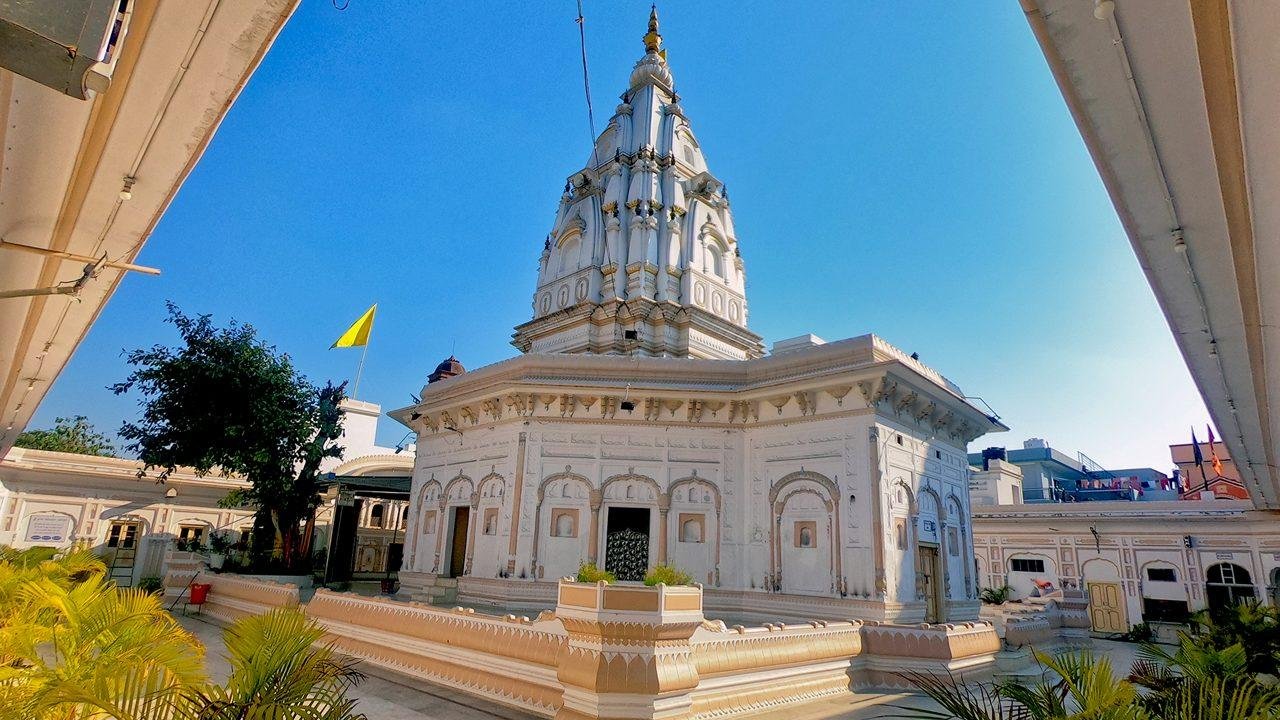
Panch Mandir is one of the most important Hindu heritage temples in Kapurthala and one of the city’s most distinctive examples of royal-era sacred architecture. Located within the historic urban landscape of Kapurthala in Punjab, the temple brings several forms of Hindu worship together within one coordinated complex of five principal shrines.
The destination is also known as:
Panch Mandir Kapurthala
Panj Mandir Kapurthala
Panch Mandir Temple
Panch Mandir Shalimar Bagh
Five Temples of Kapurthala
Panch Dev Mandir Kapurthala
The words “Panch” and “Panj” both mean five. Panch is the Sanskrit- and Hindi-derived form, while Panj reflects Punjabi pronunciation and usage. Both spellings are commonly used for the same heritage temple complex.
Travellers booking local transport should specify:
**Panch Mandir, Kapurthala city, near the Shalimar Bagh area.**
This helps distinguish it from smaller temples named Panch Mandir or Panch Dev Mandir in other towns.
The temple was built during the reign of Sardar Fateh Singh Ahluwalia, one of the important rulers of the former princely state of Kapurthala.
Its most celebrated design feature is the visual arrangement of the principal shrines. From the main entrance, traditionally associated with a silver doorway, a devotee can see and pay respect to the five principal sacred images without moving separately into five disconnected buildings.
This creates a powerful sense of spiritual unity.
The temple does not suggest that one form of the Divine must replace another. Instead, it allows several devotional traditions to exist within one shared sacred plan.
A worshipper devoted to Lord Shiva can offer prayers here.
A family following the Vaishnava tradition can pay respect to Lakshmi Narayan, Lord Rama or Radha–Krishna.
A devotee of Surya can honour the Sun God.
Worshippers of Maa Durga and Maa Kali can also find sacred spaces associated with the Divine Mother.
Hanuman, Shani Dev, Baba Balak Nath, Baba Lal Dayal and Panchmukhi Shiva are also represented within the larger temple environment.
This diversity makes Panch Mandir suitable for family pilgrimages in which different members may follow different devotional traditions.
The temple is equally important for visitors interested in architecture, Kapurthala’s princely history and the religious culture of Punjab.
Kapurthala is frequently called the “Paris of Punjab” because of its palaces, gardens and buildings inspired by European and Indo-Saracenic architectural traditions.
Panch Mandir adds a distinctly Hindu sacred structure to that varied architectural landscape.
Together with the Moorish Mosque, State Gurdwara, royal palaces, gardens and later civic buildings, it reflects the multicultural patronage associated with Kapurthala’s rulers.
Visitors searching for hotels near Panch Mandir Kapurthala, homestays near Shalimar Bagh, pilgrimage accommodation near Kapurthala temples, family hotels near Kapurthala Railway Station or places to stay for a Kapurthala heritage tour can use MudrasStays to plan a convenient and meaningful journey.
## Spiritual Importance of Panch Mandir
Panch Mandir expresses the Hindu understanding that the Divine can be approached through several names, images and spiritual paths.
One devotee may be drawn towards Shiva’s silence and meditation.
Another may feel connected with the compassion and dharma represented by Lord Rama.
Another may worship Lakshmi Narayan as the sustaining power of the universe.
Another may approach Radha and Krishna through devotion and divine love.
Another may honour Surya as the visible source of light and life.
These forms differ in symbolism, mythology and ritual, but they are not required to exist in conflict.
The coordinated arrangement of the temple allows several traditions to remain visible simultaneously.
A devotee standing at the entrance can direct prayer towards more than one sacred form.
This architectural experience carries an important spiritual message.
Human beings may enter worship with different needs.
A student may seek knowledge and discipline.
A family may pray for harmony.
A person experiencing uncertainty may seek courage.
A business owner may pray for responsible prosperity.
Someone facing grief may seek peace and acceptance.
Another visitor may come simply to express gratitude.
Panch Mandir creates space for these varied prayers without reducing spirituality to one demand or one divine image.
Such prayers belong to personal faith.
The temple should not be promoted as guaranteeing wealth, employment, marriage, childbirth, medical recovery or the fulfilment of every wish.
Pilgrimage can provide emotional strength, reflection and spiritual confidence, while health, legal, financial and family matters should continue to receive appropriate professional and practical attention.
## Meaning of the Five-Temple Arrangement
The number five carries considerable symbolic importance within Hindu philosophy.
It can represent the five natural elements:
Earth
Water
Fire
Air
Space
It can also represent the five senses through which human beings experience the world:
Sight
Sound
Smell
Taste
Touch
Other traditions connect five with the five forms of Shiva, the five vital energies or the Panchayatana system of worship in which several major Hindu deities are honoured within one coordinated arrangement.
It would be inappropriate to claim that Panch Mandir’s exact layout was definitively created to represent every one of these philosophical systems unless supported by specific temple records.
However, the number five naturally encourages reflection upon completeness and balance.
A healthy spiritual life requires stability like earth, adaptability like water, energy like fire, movement like air and openness like space.
Similarly, a devotee must learn to use the five senses responsibly rather than becoming controlled by constant desire and distraction.
The five-shrine arrangement can therefore be understood as an invitation to bring different aspects of life into spiritual balance.
## Sardar Fateh Singh Ahluwalia and Royal Patronage
Panch Mandir was established during the reign of Sardar Fateh Singh Ahluwalia.
The Ahluwalia ruling house played an important role in the development of Kapurthala as a princely centre.
Royal patronage historically supported temples, gurdwaras, mosques, gardens, public buildings, educational institutions and civic improvements.
The construction of Panch Mandir demonstrates that rulers expressed authority not only through forts and palaces but also through religious and community institutions.
The temple was intended to serve worshippers while also contributing to the visual identity of the city.
It represents a period in which craftsmanship, ritual planning and royal resources came together to create a sacred monument.
The temple should not be incorrectly attributed to Maharaja Jagatjit Singh merely because many of Kapurthala’s better-known European-style monuments are connected with his later reign.
Jagatjit Singh was responsible for several important buildings and developments in Kapurthala, but official sources associate Panch Mandir specifically with Sardar Fateh Singh Ahluwalia.
The structure may have experienced repairs, repainting, additions and changes after its original construction.
A living temple is maintained continuously.
Floors, electrical systems, railings, paint, doors, roofs and community spaces may be renewed while the historic identity of the sacred complex remains intact.
## Architecture of Panch Mandir
Panch Mandir is known for its bright white exterior, rising temple spires, delicately framed arches and coordinated courtyard design.
The white surface gives the structure a calm and luminous appearance.
During strong daylight, carved details create sharp patterns of light and shadow.
During softer morning and evening light, the temple appears more delicate.
Traditional descriptions praise its appearance under moonlight, when the pale walls seem to glow against the darker sky.
The temple’s architecture is principally rooted in North Indian Hindu sacred design.
Prominent features include:
A raised sacred platform
Tall shikhara-style towers
Arched entrances
Carved or moulded decorative borders
Projecting roof edges
Small ornamental spires
Courtyard circulation
A visually aligned entrance
Multiple interconnected shrine areas
A central sacred focus
The building should not be described only as white marble without verification of the material used in every section.
Its visible appearance includes white or light-coloured finished surfaces, decorative plasterwork, stonework and later repairs.
The temple’s historic value comes from its complete plan and visual composition rather than from one construction material alone.
## The Silver Entrance and Unified Darshan
One of Panch Mandir’s most celebrated features is the entrance from which the five principal idols can be seen.
Tourism descriptions refer to a silver doorway.
Silver is widely used in Hindu temples for sacred doors, coverings, thrones and decorative panels.
Its reflective surface represents purity, light and ritual importance.
The entrance is not merely a passage from outside to inside.
It acts as the principal viewing axis of the complete complex.
Standing at this point allows the devotee to recognise the unity of the five shrines.
This arrangement is valuable for senior citizens and visitors who may not be able to move repeatedly between several distant temple areas.
However, visitors should not assume that every idol will always remain fully visible.
Festival decorations, curtains, queues, restoration work and ritual arrangements may temporarily alter the view.
Photography should not obstruct the doorway or delay other worshippers.
## The Sun God and the First Rays
Panch Mandir is especially known for its association with Surya, the Sun God.
Traditional and tourism descriptions state that the first rays of the morning sun illuminate the image of Surya.
This relationship between architecture, orientation and sunlight gives the temple a distinctive identity.
Surya is the visible source of light and energy upon which life depends.
In Hindu tradition, he represents vitality, discipline, knowledge, clarity and the regular movement of time.
The sun rises without requiring recognition from human beings.
Its daily appearance represents consistency.
For a devotee, Surya worship can therefore become a reminder to live with discipline and integrity.
Sunlight also symbolises the removal of ignorance.
Darkness disappears when light becomes present.
Similarly, confusion can be reduced through knowledge, reflection and truthful conduct.
Visitors hoping to observe the morning-light effect should arrive early and understand that visibility depends upon the season, weather, temple doors, surrounding buildings and current shrine arrangements.
Cloud, fog and maintenance can affect the experience.
No exact beam of sunlight should be guaranteed on every morning.
## Lord Shiva and the Shiva Lingam
Lord Shiva is represented within the Panch Mandir complex through the Shiva lingam and a Panchmukhi Shiva tradition.
Shiva represents pure consciousness, meditation, transformation, time and liberation from harmful attachment.
The lingam represents Mahadev beyond the limitations of an ordinary human form.
Its continuous shape suggests infinity and the source from which visible creation emerges.
The surrounding base represents Shakti, the active divine energy through which consciousness becomes creation.
Together they express the unity of Shiva and Shakti.
Devotees may offer water, flowers and bilva leaves according to current temple practice.
Large quantities of milk, oil or synthetic colour should not be used without authorisation.
Excessive offerings can create waste and damage drainage or sacred surfaces.
Simple prayer undertaken with attention is spiritually sufficient.
## Panchmukhi Shiva
Panchmukhi Shiva means the five-faced form of Lord Shiva.
The five faces are interpreted differently across Shaiva traditions but are commonly connected with Shiva’s cosmic functions and the five directions or elements.
They may represent creation, preservation, transformation, concealment and grace.
The Panchmukhi form is especially appropriate within a temple whose identity is based upon the number five.
Devotees can reflect upon the idea that the Divine is not limited to one direction or one function.
Shiva is present in beginning and ending, silence and movement, discipline and compassion.
Popular belief may connect particular periods of worship with special blessings.
Such beliefs should be treated as devotional traditions rather than guaranteed outcomes.
## Ram Darbar
Ram Darbar generally presents Lord Rama with Mata Sita, Lakshmana and Lord Hanuman.
The group represents dharma, courage, family responsibility and devoted service.
Lord Rama represents the effort to act according to duty.
Mata Sita represents dignity, strength and endurance.
Lakshmana represents loyalty and disciplined service.
Hanuman represents power guided by humility and devotion.
Families visiting Panch Mandir can use Ram Darbar as an opportunity to reflect upon mutual responsibility.
A household is not sustained merely through authority or tradition.
It requires respect, communication, loyalty and the willingness to support one another during hardship.
## Lakshmi Narayan
Lakshmi Narayan refers to Goddess Lakshmi and Lord Vishnu together.
Vishnu represents preservation, balance and protection of dharma.
Lakshmi represents prosperity, nourishment, wellbeing and auspiciousness.
Prosperity within this tradition is broader than financial wealth.
It can include health, food, knowledge, family stability, generosity and the ability to fulfil responsibilities.
Worshippers may pray for economic wellbeing, but Lakshmi worship should not be reduced to asking for money.
Wealth that is acquired dishonestly or used without responsibility contradicts the ethical meaning of divine prosperity.
The Lakshmi Narayan shrine encourages devotees to connect success with balance, generosity and dharma.
## Radha and Krishna
Radha–Krishna worship represents divine love, devotion and the soul’s longing for the sacred.
Krishna is associated with wisdom, playfulness, music, protection and the teachings of the Bhagavad Gita.
Radha represents complete devotion and spiritual love.
Their relationship should not be understood only as an ordinary romantic story.
Within devotional traditions, it expresses the soul’s intense desire for union with the Divine.
Music, bhajan and kirtan often form an important part of Radha–Krishna worship.
Krishna Janmashtami is therefore one of the important festival periods associated with Panch Mandir.
## Lord Hanuman
Hanuman represents strength, humility, courage and service.
His extraordinary abilities are never directed towards personal pride.
He uses them in the service of Lord Rama and the protection of others.
This gives Hanuman worship an important ethical lesson.
Power becomes sacred when guided by responsibility.
Devotees may pray for courage, concentration and protection, but they should also reflect upon whether their own abilities are being used to help others.
## Maa Durga and Maa Kali
Maa Durga represents courage, disciplined power and the defeat of destructive forces.
Maa Kali represents time, transformation and the destruction of ego and illusion.
Their fierce iconography should not be misunderstood as evil or uncontrolled violence.
They are protective manifestations of the Divine Mother.
Durga confronts arrogance and injustice.
Kali removes the false belief that wealth, status and physical life are permanent.
The presence of both forms broadens the spiritual character of Panch Mandir and makes Navratri an important festival period.
## Shani Dev
Shani Dev is associated with discipline, justice, time and the consequences of action.
He should not be understood merely as a deity who brings misfortune.
Within Hindu astrology and devotional tradition, Shani reminds human beings that actions have consequences.
Patience, responsibility and ethical conduct are essential.
Fear-based claims concerning Shani should be avoided.
No visitor should be pressured into costly rituals through threats that disaster will occur without payment.
## Baba Balak Nath
Baba Balak Nath is a revered spiritual figure with strong devotional traditions across Punjab and Himachal Pradesh.
He is associated with asceticism, discipline, celibacy and spiritual power.
The principal pilgrimage associated with him is Deotsidh in Himachal Pradesh, while many temples across Punjab honour his sacred presence.
His inclusion at Panch Mandir reflects the interconnected pilgrimage culture of the plains and lower Himalayan regions.
## Baba Lal Dayal
Baba Lal Dayal is associated with a devotional and yogic tradition that developed across Punjab and surrounding regions.
He is remembered through teachings concerning meditation, spiritual discipline and the unity underlying outward religious differences.
Visitors should follow local temple information regarding the precise form and history of his shrine within Panch Mandir.
## Place of Reverence for All Faiths
Official district information describes Panch Mandir as a place of reverence for people of all faiths.
This should not be misunderstood to mean that the five shrines belong to five separate religions.
Panch Mandir is a Hindu temple complex dedicated to several Hindu divine forms.
Its wider importance lies in its welcoming character and in Kapurthala’s historic landscape of temples, gurdwaras, mosques and other institutions.
Visitors from every background may appreciate the architecture and peaceful environment when temple customs are respected.
Interfaith respect does not require merging distinct religious identities.
It requires approaching each sacred place without hostility or mockery.
## Replica in a Lahore Museum
One of the temple’s most widely noted heritage distinctions is the existence of an architectural replica in a museum in Lahore.
This reflects the importance attributed to Panch Mandir’s design in the wider cultural landscape of undivided Punjab.
Before the Partition of 1947, Lahore functioned as a major centre of education, museums, art and architecture for the entire Punjab region.
The reference to a replica demonstrates that Panch Mandir was valued not only as a place of worship but also as an architectural model worthy of documentation and display.
The precise current gallery location and public accessibility of the replica should be verified before making travel plans centred upon it.
## Mahashivratri
Mahashivratri is one of the principal festivals celebrated at Panch Mandir.
The occasion is dedicated to Lord Shiva and usually falls during February or March.
Devotees may observe fasting, offer water and bilva leaves, recite mantras and attend special worship.
The Shiva and Panchmukhi Shiva shrines can receive larger crowds.
The exact annual programme and temple hours should be confirmed locally.
## Navratri
Chaitra and Sharad Navratri honour the different forms of the Divine Mother.
Chaitra Navratri generally occurs during March or April.
Sharad Navratri generally occurs during September or October.
Special decoration, devotional music, havan and aarti may be organised.
The shrines associated with Maa Durga and Maa Kali receive particular attention.
Ashtami and Navami are likely to be busier than ordinary days.
Families should keep children and senior citizens close during crowded periods.
## Krishna Janmashtami
Krishna Janmashtami celebrates the birth of Lord Krishna.
The festival normally occurs during August or September.
The Radha–Krishna shrine may be decorated with flowers, garments and devotional scenes.
Bhajans, kirtan and late-evening worship may be organised according to the annual temple programme.
Visitors attending night celebrations should arrange return transport in advance.
## Ram Navami
Ram Navami celebrates the birth of Lord Rama and generally falls during March or April.
The Ram Darbar becomes a focal point for prayer and recitation.
Festival timing can overlap with Chaitra Navratri in the wider Hindu calendar.
## Diwali
Diwali honours light, prosperity and the victory of dharma over darkness.
The Lakshmi Narayan shrine may receive special worship.
Lamps and decorative lighting can make the white temple especially attractive.
Fire and electrical safety instructions must be followed.
Visitors should not light lamps in unauthorised areas or bring fireworks into the temple complex.
## Daily Darshan and Timings
Published tourism information gives general opening hours of approximately 6:00 AM to 9:00 PM.
The schedule may change according to season, festivals, rituals, maintenance and community functions.
Morning is usually the best time for quiet darshan and for observing the temple’s relationship with sunlight.
Evening can provide a peaceful atmosphere and attractive illumination.
Visitors planning a very early or late visit should confirm current timings locally.
## Best Time to Visit Panch Mandir
Panch Mandir can generally be visited throughout the year.
### October to March
The cooler months are ideal for temple and heritage exploration.
Morning and evening can become cold in December and January.
Fog may affect roads and trains.
### February to April
The weather is often comfortable, and festivals such as Mahashivratri, Chaitra Navratri and Ram Navami may occur during this period.
### May and June
Kapurthala can become extremely hot.
Morning darshan is strongly recommended.
Visitors should carry drinking water and avoid prolonged midday walking.
### July to September
The monsoon brings humidity and rainfall.
Temple floors and outdoor pathways may become slippery.
Janmashtami and Sharad Navratri may fall within the later part of this period.
### Moonlit Evenings
The pale temple is traditionally praised for its appearance under moonlight.
Visitors should confirm evening opening hours and avoid obstructing worshippers while taking photographs.
## Reaching Panch Mandir
Panch Mandir is located within Kapurthala city and can be reached by auto-rickshaw, local taxi, private vehicle or city transport.
Drivers should be given the full temple name and Shalimar Bagh-area reference.
Urban traffic, festivals and local functions can affect the closest vehicle drop-off.
## Reaching by Train
Kapurthala Railway Station is the nearest rail gateway.
Train frequency may be lower than at Jalandhar City or Jalandhar Cantonment.
Travellers should compare schedules before selecting a station.
Visitors arriving through Jalandhar can continue to Kapurthala by road.
Large luggage should be left at the hotel or stored securely before entering the temple.
## Reaching from Jalandhar
Kapurthala is connected with Jalandhar by road and is commonly visited as a day trip from the larger city.
The route is relatively convenient, but urban traffic can increase travel time.
Travellers staying in Jalandhar should begin early if they wish to combine Panch Mandir with several Kapurthala attractions.
## Reaching by Air
Sri Guru Ram Dass Jee International Airport in Amritsar and Adampur Airport near Jalandhar are the principal regional airports.
Flight operations at Adampur can change, so current schedules should be checked.
Both airports require onward road travel.
## Accessibility
Panch Mandir is an urban, road-accessible temple and does not require a trek.
The principal experience is manageable for many families and senior citizens.
Individual shrines may contain steps, thresholds or narrow entrances.
Wheelchair users should confirm the current accessible gate and route.
Festival crowds can make circulation more difficult.
A quiet weekday morning is usually the most comfortable option.
## Visiting with Children
Children can learn about the five-shrine arrangement and the different values represented by Surya, Shiva, Rama, Lakshmi Narayan and Radha–Krishna.
They should remain supervised near lamps, bells, stairs and queues.
Children should not climb temple walls, touch sacred images or ring bells continuously.
Parents can explain that respecting several divine forms teaches openness without removing the distinct meaning of each tradition.
## Temple Etiquette
Visitors should dress respectfully and remove footwear where instructed.
Phones should remain silent near the sanctums.
Photography of sacred images, priests and private ceremonies should only be undertaken when permitted.
The silver entrance, historic walls and decorative surfaces should not be touched unnecessarily.
Offerings should be made through authorised arrangements.
Visitors should not block the central viewing axis while taking photographs.
## Responsible Heritage Behaviour
Panch Mandir is both an active place of worship and a heritage structure.
Names should not be carved into the walls.
Paint, vermilion, oil and adhesive materials should not be applied to historic surfaces unless specifically authorised for worship.
Children should not climb platforms or ornamental elements.
Commercial filming, large equipment and drones may require permission.
Protecting the architecture is part of respecting the temple.
## Nearby Attractions
### Shalimar Gardens
Shalimar Gardens are located within Kapurthala city and contain royal cenotaphs, marble obelisks and red-sandstone chambers.
They can be combined easily with Panch Mandir, subject to current access and maintenance.
### Jagatjit Palace
Jagatjit Palace is one of Kapurthala’s most famous buildings and was modelled partly upon European royal architecture.
The complex is now associated with Sainik School, so public access to all areas should not be assumed.
### Moorish Mosque
The Moorish Mosque was completed during the reign of Maharaja Jagatjit Singh and reflects architectural inspiration from the Islamic West.
Visitors should dress respectfully and follow current access rules.
### Jagatjit Club
Jagatjit Club reflects European classical architectural inspiration and forms part of Kapurthala’s princely heritage.
Its current institutional use and entry arrangements should be checked.
### Kanjli Wetland
Kanjli Wetland was created through irrigation headworks on the Bein and is recognised as a wetland of international importance.
It is suitable for nature and birdwatching visits when conditions are favourable.
Visitors should avoid littering, disturbing wildlife or entering unsafe water areas.
### Pushpa Gujral Science City
Science City lies on the Jalandhar–Kapurthala corridor and is suitable for families and educational groups.
Current tickets, shows and opening hours should be checked.
### Sultanpur Lodhi
Sultanpur Lodhi is one of Punjab’s most important Sikh pilgrimage destinations and is deeply associated with Guru Nanak Dev Ji.
Gurdwara Ber Sahib, the Kali Bein and other historic gurdwaras can be explored respectfully as part of a longer district journey.
## Suggested Half-Day Panch Mandir Itinerary
Begin with early-morning darshan at Panch Mandir.
Observe the first light on the temple architecture where conditions allow.
Pay respect at the five principal shrines and associated sacred spaces.
Visit Shalimar Gardens after completing darshan.
Continue to another central Kapurthala heritage site or return to accommodation.
## Suggested One-Day Kapurthala Heritage Itinerary
Begin at Panch Mandir.
Continue to Shalimar Gardens and the exterior or publicly accessible parts of Jagatjit Palace.
Visit the Moorish Mosque according to current access.
Explore Kanjli Wetland during the later afternoon when weather is suitable.
Avoid rushing through active religious sites merely to complete a checklist.
## Suggested Two-Day Kapurthala Journey
On the first day, focus on Panch Mandir and Kapurthala’s princely heritage.
On the second day, visit Sultanpur Lodhi and its important gurdwaras.
Travellers with children can replace part of the heritage schedule with Pushpa Gujral Science City.
## Accommodation Near Panch Mandir
Kapurthala city provides hotels, guesthouses and limited homestay options.
Properties are available around Shalimar Bagh, Amritsar Road, Jalandhar Road and other central areas.
The best location depends upon the wider itinerary.
## Hotels Near Shalimar Bagh
Accommodation near Shalimar Bagh offers convenient access to Panch Mandir and several central heritage attractions.
Guests should confirm parking, noise levels, meals, air-conditioning and actual walking or driving distance.
## Hotels on Jalandhar Road
Jalandhar Road properties are practical for travellers arriving from Jalandhar or visiting Science City.
They may provide larger parking areas and easier highway access.
## Hotels Near Kapurthala Railway Station
Station-area lodging is useful for short visits, but travellers should compare room standards and distance from the temple.
## Hotels in Jalandhar
Jalandhar provides a wider range of premium, mid-range and budget hotels.
It is suitable for travellers combining Kapurthala with Devi Talab Mandir, Talhan Sahib or other Doaba attractions.
The road journey to Kapurthala should be included in the daily schedule.
## Accommodation in Sultanpur Lodhi
Sultanpur Lodhi is suitable for pilgrims whose main focus is the Guru Nanak heritage circuit.
It is not the closest base for Panch Mandir, but it can be included within a multi-day Kapurthala district itinerary.
## Choosing the Right Stay
Pilgrims focused primarily on Panch Mandir should stay in central Kapurthala or near Shalimar Bagh.
Visitors combining Kapurthala with Jalandhar may prefer a Jalandhar hotel.
Families should confirm room capacity, meals and parking.
Senior citizens should prioritise lifts, ground-floor rooms and dependable local transport.
Couples may prefer quieter heritage-oriented stays or homestays.
Solo pilgrims should select populated and well-connected accommodation.
Groups should confirm multiple rooms, breakfast and parking for larger vehicles.
Summer travellers should verify effective air-conditioning.
Winter guests should confirm hot water and heating arrangements.
## Book Hotels Near Panch Mandir with MudrasStays
MudrasStays helps pilgrims, families and heritage travellers discover hotels, homestays, guesthouses and pilgrimage accommodation near Panch Mandir and throughout Kapurthala.
The platform is designed for travellers searching specifically for places to stay near temples, sacred heritage centres and spiritual destinations.
Visitors can compare properties according to practical driving distance from Panch Mandir, room category, budget, family size and required facilities.
Booking near Shalimar Bagh or central Kapurthala can make early-morning darshan easier.
Rail travellers can select accommodation balancing station access with temple proximity.
Families can choose properties offering comfortable rooms, meals and safe parking.
Senior citizens can prioritise accessible hotels with lifts and dependable taxis.
Solo travellers can search for economical guesthouses in well-connected areas.
Heritage groups can identify accommodation offering multiple rooms, early breakfast and parking for larger vehicles.
Travellers combining Panch Mandir with Jagatjit Palace, Moorish Mosque, Shalimar Gardens, Kanjli Wetland, Science City or Sultanpur Lodhi can select accommodation according to the actual geographical sequence of their journey.
MudrasStays helps travellers avoid choosing a property that appears close in straight-line distance but requires unnecessary movement across city roads or between different towns.
## A Temple of Five Sacred Paths
Panch Mandir represents a powerful meeting of royal Kapurthala history, Hindu devotion and architectural planning.
The five shrines represent spiritual diversity within one sacred space.
The entrance creates unified darshan.
The silver doorway represents purity and sacred transition.
The Sun shrine represents light, time and discipline.
The Shiva lingam represents infinite consciousness.
Panchmukhi Shiva reflects the Divine in several directions and functions.
Ram Darbar represents dharma, family responsibility and service.
Lakshmi Narayan represents balanced prosperity and preservation.
Radha–Krishna represents devotion and divine love.
Maa Durga represents courage.
Maa Kali represents transformation.
Hanuman represents humble strength.
Shani Dev represents justice and the consequences of action.
The bright white architecture represents calmness and clarity.
The temple’s Lahore replica connects it with the shared cultural heritage of undivided Punjab.
For devotees, Panch Mandir provides the opportunity to honour several sacred forms in one journey.
For families, it allows members with different devotional preferences to worship together.
For senior citizens, its city location makes it more manageable than remote pilgrimage sites.
For children, the five-shrine arrangement creates an educational introduction to Hindu traditions.
For heritage travellers, the temple reveals a different side of Kapurthala’s royal architecture.
For photographers, the white shikharas, arched façades and changing light provide memorable images when worship rules are respected.
For spiritual seekers, the temple communicates a simple but important teaching: different forms of prayer can exist within one harmonious sacred vision.
Plan your visit to Panch Mandir with MudrasStays and experience one of Kapurthala’s most important religious and architectural landmarks.
Receive darshan of the five principal shrines, observe the sacred relationship between Surya and the morning light and explore the wider traditions of Shiva, Rama, Lakshmi Narayan, Radha–Krishna and the Divine Mother.
Combine your journey with Shalimar Gardens, Jagatjit Palace, Moorish Mosque, Kanjli Wetland, Pushpa Gujral Science City and Sultanpur Lodhi.
Book hotels near Panch Mandir, discover homestays in Kapurthala and choose suitable pilgrimage accommodation through MudrasStays.
Stay closer to the temple, attend peaceful morning darshan and explore Kapurthala’s royal and spiritual heritage without unnecessary travel.
Begin your Panch Mandir journey with a comfortable stay and experience a meaningful pilgrimage centred on five sacred shrines, royal patronage, architectural harmony and the inclusive spiritual heritage of Kapurthala.