
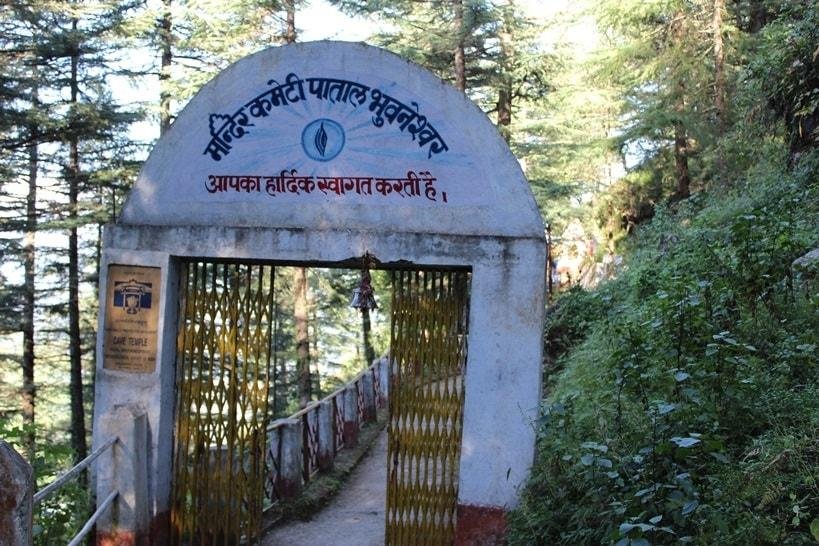
Patal Bhuvaneshwar Cave Temple is one of the most mysterious, spiritually significant and visually extraordinary pilgrimage destinations in Uttarakhand. Located in Bhuvaneshwar village near Gangolihat in the Pithoragarh district, this sacred underground cave is primarily dedicated to Lord Shiva and is traditionally believed to contain symbolic forms associated with numerous Hindu gods and goddesses.
The name Patal Bhuvaneshwar can broadly be understood as the underground or subterranean abode of Lord Bhuvaneshwar, a form of Lord Shiva regarded as the Lord of the Universe. Unlike a conventional temple constructed above the ground with carved pillars, towers and courtyards, Patal Bhuvaneshwar is situated inside a naturally formed limestone cave.
Visitors approach the shrine through the peaceful mountain landscape of Kumaon before entering a narrow passage that descends beneath the surface of the earth. The transition from the open Himalayan environment into the cool, dark and enclosed cave creates a powerful sense of entering a sacred world hidden beneath the mountains.
The cave temple is situated approximately 14 kilometres from Gangolihat and is accessible by road through the scenic hills of the Pithoragarh region. Gangolihat is an important pilgrimage town known for several temples, particularly the Haat Kalika Temple. Travellers often combine Patal Bhuvaneshwar with Gangolihat, Berinag, Chaukori and other spiritual and natural destinations in eastern Kumaon.
Patal Bhuvaneshwar is not simply a single chamber containing one shrine. The sacred site is associated with a network of natural cave spaces, narrow passages, limestone surfaces and unusual rock formations created gradually through the action of water and minerals.
Over long periods, mineral-rich water passing through the limestone produced stalactites hanging from the cave ceiling and stalagmites rising from the cave floor. These natural formations have developed into different shapes, textures and patterns.
Within the religious tradition of Patal Bhuvaneshwar, many of these formations are interpreted as manifestations or symbolic representations of Hindu deities, sacred animals and events described in mythology. Devotees do not see the cave only as a geological formation. They experience it as a naturally created temple where the mountains themselves appear to have taken sacred forms.
The cave is traditionally believed to be the abode of thirty-three koti deities. This expression is often popularly translated as thirty-three crore gods and goddesses, although the religious interpretation of the Sanskrit word “koti” can vary between categories, types and numerical meanings.
The belief expresses the idea that the divine presence of the Hindu pantheon can be experienced together within the cave. For pilgrims, visiting Patal Bhuvaneshwar is therefore considered a spiritually powerful journey involving the blessings of multiple deities within one sacred underground space.
Lord Shiva remains central to the identity of the cave. Shiva has long been associated with the Himalayas, meditation, caves, mountains and remote natural environments. Patal Bhuvaneshwar brings all these elements together in a single pilgrimage destination.
The cave’s enclosed silence, natural stone formations, dripping water and limited light create an atmosphere that is very different from temples situated in busy towns. The spiritual experience depends not only on the deity or ritual but also on the physical act of descending into the earth.
Visitors generally reach the cave entrance after walking through the temple premises and surrounding forested area. The actual entrance is narrow, and the descent may involve steep, confined and uneven sections.
Support arrangements such as chains, railings, steps or assistance from local temple personnel may be available according to current management conditions. Travellers should follow the instructions of temple authorities and local guides rather than attempting to enter independently.
The descent can require bending, balancing and moving carefully through a restricted passage. The stone surface may be damp or slippery because of the natural moisture inside the limestone cave.
Visitors should wear comfortable clothing that allows easy movement. Shoes with reliable grip are advisable for reaching the entrance, although footwear rules may apply before entering the sacred cave area.
People with significant mobility difficulties, severe knee or back problems, claustrophobia, breathing concerns or discomfort in narrow underground spaces should assess the conditions carefully. Senior citizens, pregnant travellers and families visiting with very young children should ask temple authorities whether the descent is suitable before entering.
The restrictions are not intended to discourage visitors but to ensure that the sacred journey is undertaken safely. Travellers who cannot descend into the cave can still visit the external temple premises, offer prayers and experience the peaceful Himalayan surroundings.
Once inside, the temperature is usually cooler than the outdoor environment. The combination of stone, moisture and limited natural light creates a distinctive underground atmosphere.
Artificial lighting may illuminate important sections, but the cave remains naturally dark and enclosed. Visitors should remain close to their authorised guide or group and avoid touching fragile limestone formations.
The mineral formations inside the cave have developed over extremely long periods. Even minor damage caused by repeated touching, scratching or breaking can permanently affect the natural structure.
According to temple traditions, different formations are associated with Lord Shiva, Lord Ganesha, Sheshnag, Garuda and other divine figures. Pilgrims may also be shown formations connected with stories from the Ramayana, Mahabharata and Puranic traditions.
These interpretations form part of the living religious heritage of Patal Bhuvaneshwar. They should be experienced as sacred beliefs maintained through generations of priests, local residents and devotees.
One of the most frequently described formations is associated with Sheshnag, the cosmic serpent traditionally believed to support the universe. The natural ridges and curves of the stone are interpreted by devotees as the hoods or body of Sheshnag.
Another formation is traditionally associated with Lord Ganesha. Local narratives connect the cave with different episodes from Hindu mythology, and priests may explain how the natural rocks represent particular deities or sacred events.
The ceiling, walls and floor of the cave contain formations shaped by continuous mineral deposits. Water droplets falling from above add to the sense that the cave remains active and continuously evolving.
Patal Bhuvaneshwar is therefore a destination where geology and spirituality are closely connected. A traveller may view the stalactites and stalagmites as natural limestone formations, while a devotee may experience the same structures as manifestations of divine energy.
These two ways of understanding the cave do not necessarily need to conflict. The natural history of the cave explains how the formations developed, while the spiritual traditions explain the meaning that generations of worshippers have found within them.
The cave is associated with several ancient legends. According to a widely shared religious tradition, King Rituparna of the Solar dynasty was among the earliest people to enter and experience the sacred cave during the legendary Treta Yuga.
The story describes King Rituparna being guided into the underground realm and witnessing the presence of numerous gods and goddesses. This account belongs to sacred tradition and mythology rather than documented modern history, but it remains central to the temple’s religious identity.
Another tradition connects the cave with Adi Shankaracharya, the influential philosopher and spiritual teacher associated with the revival and organisation of Hindu pilgrimage traditions across India.
Local belief holds that Adi Shankaracharya visited or rediscovered the cave and established formal worship there. This association has helped strengthen the importance of Patal Bhuvaneshwar within the spiritual geography of the Himalayas.
The cave is also linked through regional stories with the Pandavas of the Mahabharata. It is believed that the Pandavas visited or worshipped within the cave during their final journey towards the Himalayas.
Other traditions describe hidden passages extending from the cave towards sacred Himalayan destinations. These underground connections should be understood as matters of religious belief and folklore rather than established geographical routes.
Such legends are an important part of the experience because Patal Bhuvaneshwar has been preserved not only as a natural cave but also as a landscape of sacred storytelling.
Priests and local guides often explain the meanings associated with particular rocks, chambers and formations. Listening carefully to these narratives can help visitors understand why the cave holds such a respected position in Kumaoni religious culture.
The experience of Patal Bhuvaneshwar is intensely personal. Some visitors are drawn by devotion to Lord Shiva, while others come because of the cave’s legends, geology or sense of mystery.
For Shiva devotees, the cave represents a hidden Himalayan abode of Mahadev. The descent can be understood symbolically as a movement away from the visible material world and towards a deeper spiritual reality.
For followers of Shakti traditions, the wider Gangolihat region offers a powerful combination of Shiva and Goddess worship. Travellers can visit Patal Bhuvaneshwar and Haat Kalika Temple within the same pilgrimage journey.
For heritage travellers, the cave provides insight into the manner in which natural environments become sacred destinations through mythology, ritual and community tradition.
For geology enthusiasts, the limestone formations demonstrate the slow natural processes through which water and minerals shape underground landscapes.
For photographers and content creators, the surroundings outside the cave offer forest scenery, traditional temple gateways and mountain landscapes. Photography inside the cave may be restricted to protect the sacred environment and ensure safe visitor movement, so current rules should be confirmed before entry.
Patal Bhuvaneshwar is also suitable for travellers seeking lesser-known pilgrimage destinations away from the more commercial temple circuits of Uttarakhand.
The destination may receive substantial numbers of devotees during important religious periods, but its mountain location and underground setting create an experience different from large urban pilgrimage centres.
The external environment around the cave is peaceful and green. Pine, deodar and other Himalayan vegetation contribute to the calm atmosphere of the temple area.
The journey through eastern Kumaon passes through small towns, villages, forest sections, terraced fields and mountain roads. For many travellers, the road journey becomes an important part of the pilgrimage.
Depending on the route, visitors may travel through Almora, Bageshwar, Berinag, Chaukori, Gangolihat or Pithoragarh. Mountain travel times can be considerably longer than distances shown on maps because the roads follow winding ridges and valleys.
Travellers should therefore avoid planning the temple visit too tightly. Sufficient time should be kept for road conditions, stops, weather changes and the regulated entry process at the cave.
Morning is generally a suitable time to visit Patal Bhuvaneshwar. Beginning early allows travellers to reach the temple before larger groups arrive and gives sufficient daylight for the return journey.
The cave visit itself may take time because visitors are often organised into manageable groups for safety. Waiting periods can vary during weekends, festivals and peak tourist months.
Visitors should confirm current opening times directly with the temple or their accommodation provider. Timings may change according to season, weather, religious events, maintenance and local administrative instructions.
Mahashivratri is an important occasion for Shiva devotees visiting Patal Bhuvaneshwar. Special prayers and increased pilgrimage activity may take place during the festival period.
The Hindu month of Shravan is also considered highly sacred for Lord Shiva. Devotees may visit the cave to offer prayers and seek the blessings of Mahadev during this period.
Navratri can be significant for travellers combining Patal Bhuvaneshwar with Haat Kalika Temple and other Devi shrines around Gangolihat.
Accommodation demand may increase during festivals, long weekends and the summer holiday season. Travellers should reserve nearby hotels and homestays in advance when visiting during popular periods.
Spring is one of the most pleasant seasons for travelling to Patal Bhuvaneshwar. The temperature is generally comfortable, mountain vegetation becomes colourful and road travel is easier than during heavy winter or monsoon conditions.
Summer offers relief from the heat of the plains. The cave remains naturally cool, while the surrounding Gangolihat and Berinag areas provide a refreshing mountain environment.
The summer months can also attract more families and holiday travellers. Early hotel reservations are advisable, particularly for visitors seeking accommodation close to the cave.
The monsoon transforms the region into a green and misty landscape. Forests become dense, streams become active and the mountain environment appears especially dramatic.
However, heavy rainfall may affect road conditions, visibility and the safety of steep pathways. The cave’s natural moisture can also make internal surfaces more slippery.
Travellers visiting during the monsoon should check current weather, road conditions and cave access before departure. Flexible itineraries are preferable during periods of intense rain.
Autumn generally offers clearer skies, fresh landscapes and comfortable daytime conditions. It is one of the most suitable periods for combining the temple with Himalayan views in Chaukori or Berinag.
Winter provides a peaceful and less-crowded experience, but temperatures can become cold, particularly during mornings and evenings.
Visitors should carry warm clothing and confirm whether frost, fog or snowfall has affected nearby roads. Daylight hours are shorter in winter, so early travel planning is important.
A one-day visit is possible for travellers staying in Gangolihat, Berinag or the immediate Patal Bhuvaneshwar area. Guests can begin early, complete the cave darshan and spend the remaining time exploring nearby villages or viewpoints.
Travellers staying in Chaukori may undertake a day excursion to Patal Bhuvaneshwar, although sufficient travel time should be considered. Chaukori is known for its panoramic mountain scenery, tea gardens and views of the Himalayan peaks.
A two-day itinerary provides a more relaxed spiritual experience. On the first day, visitors can arrive near Patal Bhuvaneshwar, check into a homestay and explore the peaceful surroundings.
The second day can begin with the cave temple visit, followed by travel towards Gangolihat and Haat Kalika Temple.
A three-day pilgrimage itinerary can include Patal Bhuvaneshwar on the first full day, Gangolihat and Haat Kalika Temple on the second day, and Berinag or Chaukori on the third day.
Travellers with additional time may extend their journey towards Pithoragarh, Bageshwar, Jageshwar, Almora or Munsiyari, depending on road conditions and the direction of travel.
Haat Kalika Temple is one of the most important nearby spiritual destinations. Located in Gangolihat, the temple is dedicated to Goddess Kali and is surrounded by dense deodar forests.
The combination of Patal Bhuvaneshwar and Haat Kalika creates a strong Shiva–Shakti pilgrimage itinerary. Visitors can experience the underground Shiva cave and the powerful Goddess tradition of Gangolihat within a short regional journey.
Gangolihat itself serves as an important base for temple travellers. The town provides road connections, local markets, basic services and access to other religious sites in the region.
Berinag is another useful destination for travellers visiting Patal Bhuvaneshwar. The region is known for its mountain surroundings and historic association with serpent temples.
Chaukori is particularly suitable for visitors who wish to combine pilgrimage with a peaceful Himalayan holiday. The destination offers mountain views, tea gardens, forest walks and accommodation ranging from tourist lodges to homestays and private retreats.
On clear days, the wider region may offer views of snow-covered Himalayan ranges. These views add a natural dimension to the temple journey and encourage travellers to stay for more than one night.
Accommodation near Patal Bhuvaneshwar includes small hotels, guesthouses, traditional homestays, cottages and mountain retreats in Bhuvaneshwar village and the surrounding area.
Staying close to the cave is convenient for travellers who wish to arrive early and avoid a long road journey on the day of darshan.
Nearby homestays can offer a personal introduction to Kumaoni hospitality, locally prepared meals and village life. Hosts may also provide useful information about temple timings, road conditions and current visitor procedures.
Properties in Gangolihat offer access to shops, local transport and Haat Kalika Temple. This location is suitable for travellers planning to visit multiple religious destinations.
Hotels and homestays in Berinag can be convenient for visitors arriving from Almora, Bageshwar or Chaukori. Berinag also provides access to local markets and regional transport.
Chaukori is suitable for travellers looking for scenic resorts, Himalayan-view properties and a quieter holiday environment. Guests can use Chaukori as a base for a day trip to Patal Bhuvaneshwar.
Travellers should choose accommodation according to their itinerary rather than selecting a property only by district name. Mountain routes may make two geographically close places considerably farther apart by road.
Before booking, visitors should check the actual driving time to Patal Bhuvaneshwar Cave Temple, availability of taxis, meal arrangements, parking and road access.
Families should confirm room size, hot-water availability and food options. Travellers with senior citizens should choose properties with minimal stairs and convenient vehicle access.
Winter visitors should confirm heating, warm bedding and hot-water arrangements. Guests travelling during the monsoon should check whether the approach road remains accessible during heavy rain.
Mobile connectivity and internet performance may vary in remote mountain areas. Travellers requiring stable connectivity for work or emergencies should confirm these facilities directly with the accommodation provider.
MudrasStays helps pilgrims discover hotels, homestays, guesthouses, cottages and peaceful mountain retreats near Patal Bhuvaneshwar Cave Temple.
The platform is designed specifically for travellers searching for places to stay near temples, pilgrimage centres and spiritual destinations across India.
Visitors can explore accommodation based on its distance from Patal Bhuvaneshwar, location, room type, travel budget and required facilities.
Booking a nearby stay allows pilgrims to begin their temple visit early, reduce unnecessary mountain travel and experience the destination without rushing.
MudrasStays can also help travellers identify accommodation suitable for a wider Gangolihat pilgrimage circuit covering Patal Bhuvaneshwar, Haat Kalika Temple, Berinag and Chaukori.
Properties can be selected according to the needs of solo travellers, couples, families, senior citizens and pilgrimage groups.
A solo spiritual traveller may prefer a peaceful homestay close to the cave, while a family may require a larger room, meals and reliable road access.
Groups undertaking a temple tour may choose properties capable of arranging multiple rooms, parking and local transport.
Pilgrims should carry only essential belongings into the temple area. Large bags and unnecessary items can make movement through the narrow cave difficult.
Visitors should follow all instructions regarding footwear, mobile phones, cameras and personal belongings. These rules may be necessary for religious discipline, safety and protection of the cave.
Food should not be carried into the underground cave unless specifically permitted. Visitors should avoid leaving flowers, plastic packets, coins or ritual materials on natural cave formations.
Religious offerings should be made only at designated places under the guidance of priests or temple authorities.
The formations inside the cave should never be scratched, broken or climbed upon. They are both sacred objects for devotees and fragile geological structures.
Silence should be maintained as far as possible. Loud conversations, shouting and disruptive recording can disturb worshippers and create difficulty within an enclosed space.
Visitors should not separate from the authorised group or attempt to enter closed passages. Some parts of a cave system may be unsafe, unexplored or restricted.
The region outside the cave should also be protected. Plastic bottles, food wrappers and disposable items should be carried back or placed in designated bins.
The forests and mountain slopes surrounding Patal Bhuvaneshwar form part of a sensitive Himalayan ecosystem. Travellers should avoid open fires, careless smoking and activities that may damage vegetation.
Supporting local homestays, taxi operators, guides, shops and food providers can help tourism benefits reach the communities living around the temple.
Local guides and priests hold generations of knowledge about the cave’s mythology and religious customs. Listening respectfully to their explanations can make the visit more meaningful.
At the same time, visitors should distinguish between documented geographical information, natural geological processes and traditional religious beliefs. Each contributes differently to understanding the destination.
The geological formations explain the physical development of the cave. The legends explain how communities have interpreted and worshipped the cave across generations.
Together, they make Patal Bhuvaneshwar one of the most unusual spiritual destinations in the Indian Himalayas.
The temple offers a pilgrimage experience based on discovery. The sacred space is not immediately visible from a distant road or open courtyard.
Visitors must approach the mountain, enter through a narrow opening and descend carefully before experiencing the underground shrine.
This movement creates a sense of separation from the outside world. The bright mountain landscape is replaced by stone, darkness, moisture and silence.
For devotees, the descent may represent an inward spiritual journey. It encourages humility, concentration and awareness of every movement.
The restricted passage also reminds visitors that not every sacred destination is meant to be experienced casually or quickly.
Patal Bhuvaneshwar requires patience, physical care and respect for both the natural cave and the religious traditions associated with it.
For Lord Shiva devotees, the cave offers an opportunity to experience Mahadev within an environment closely connected with the mountains and the earth.
For families, the destination provides a memorable introduction to Hindu mythology, cave geology and Kumaoni culture.
For spiritual seekers, the silence and underground atmosphere offer an unusual setting for contemplation.
For nature lovers, the journey provides forest scenery, mountain roads and access to beautiful destinations such as Chaukori.
For heritage and cultural travellers, the cave demonstrates how oral traditions and natural landmarks can become major pilgrimage centres.
For adventure-oriented visitors, the narrow descent adds a controlled sense of exploration, provided all temple safety instructions are followed.
Patal Bhuvaneshwar should not be treated only as a tourist cave. It remains an active sacred site where devotees come to pray, seek blessings and participate in religious traditions.
Visitors should therefore balance curiosity with reverence. Every formation may hold a sacred meaning for local devotees, even when another traveller views it primarily as geology.
The most rewarding visit is one that respects both perspectives and allows sufficient time to understand the temple’s spiritual, natural and cultural importance.
Plan your journey to Patal Bhuvaneshwar Cave Temple with MudrasStays and experience one of Uttarakhand’s most extraordinary underground pilgrimage destinations.
Descend carefully into the sacred limestone cave, seek the blessings of Lord Shiva, observe the naturally formed structures and listen to the legends preserved by generations of devotees.
Combine your pilgrimage with Haat Kalika Temple in Gangolihat, the scenic mountain destination of Chaukori and the peaceful landscapes of Berinag and Pithoragarh.
Book hotels near Patal Bhuvaneshwar Cave Temple, discover homestays near Gangolihat and explore comfortable mountain retreats through MudrasStays.
Stay closer to the temple, begin your darshan early and reduce unnecessary travel on winding Himalayan roads.
MudrasStays connects pilgrims with accommodation near temples and spiritual destinations across India, helping travellers plan more comfortable, convenient and meaningful religious journeys.
Begin your Patal Bhuvaneshwar pilgrimage with a suitable stay and experience the sacred caves, ancient legends, mountain culture and natural beauty of eastern Kumaon.