
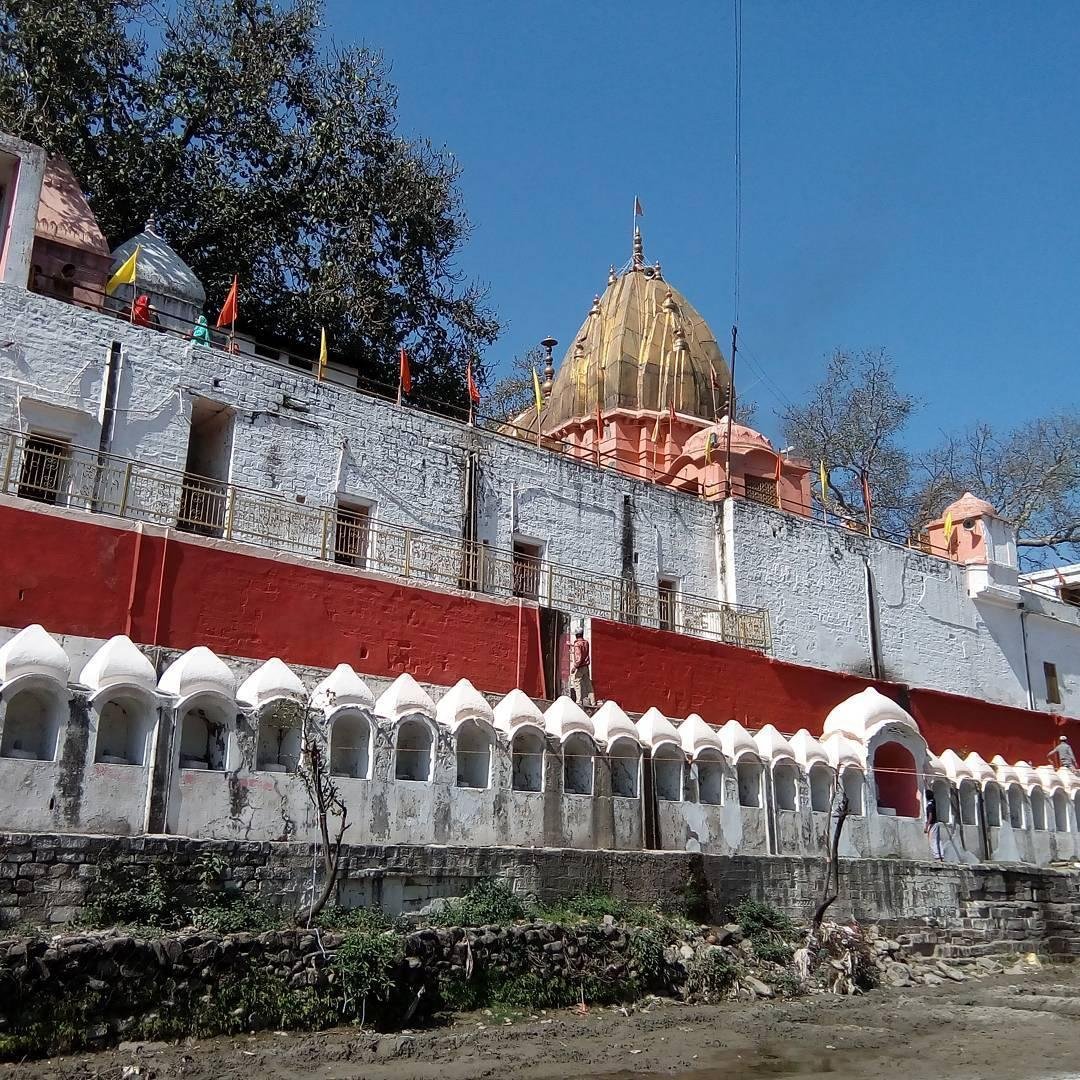
Purmandal Temple Complex is one of the most important Shiva pilgrimage destinations in the Jammu region of Jammu and Kashmir. Situated beside the sacred Devika River in Samba district, the historic temple settlement is surrounded by low Shivalik hills, village homes, ancient shrines, riverside ghats, old dharamshalas and religious structures associated with generations of Dogra devotion.
Purmandal is widely known as Chhota Kashi, meaning Little Kashi.
The name reflects the settlement’s strong connection with Lord Shiva, sacred water, ancestral rituals, pilgrimage bathing and a concentrated group of temples and Shiva lingams.
Just as Kashi stands beside the Ganga and is regarded as one of Hinduism’s greatest centres of Shiva worship, Purmandal stands beside the Devika and occupies a similarly respected position within the spiritual geography of the Jammu region.
The principal shrine is commonly known as Umapati Mahadev Temple.
“Uma” is a name of Goddess Parvati, while “Pati” means husband or lord. Umapati therefore refers to Lord Shiva as the divine consort of Uma.
The temple’s sacred identity brings Shiva and Parvati together, while the wider complex contains numerous shrines, Shiva lingams, small sanctums, riverside structures and religious spaces connected with different forms of Mahadev.
Purmandal Temple Complex is not merely one isolated temple.
It is a historic pilgrimage settlement in which temples, ghats, water, courtyards, dharamshalas, painted interiors and village life form one interconnected sacred landscape.
The settlement was also remembered as a centre of trade, religious study and movement between Jammu, Samba and the surrounding Shivalik region.
Pilgrims have visited the Devika River and Purmandal temples for prayer, ritual bathing, ancestral remembrance, Mahashivratri celebrations and monthly religious gatherings.
The present architectural environment reflects several historical periods.
Some traditions describe the sacred site as extremely ancient and connect its origin with Raja Veni Datt or Veni Dutta.
Many visible temple buildings, painted interiors, dharamshalas and residential structures, however, were repaired, enlarged or decorated during the nineteenth century and later Dogra period.
Purmandal should therefore be understood as a living sacred complex that developed across centuries rather than as one building constructed completely in a single year.
The temple settlement is suitable for Shiva devotees, families, couples, senior citizens, spiritual groups, heritage travellers, photographers and visitors exploring the religious traditions of Samba and Jammu.
There is no high-altitude trek.
Most visitors can reach Purmandal by road and complete a short walk through the temple lanes and riverside complex.
Steps, uneven surfaces, slopes and riverbank paths may still create difficulty for visitors with limited mobility.
Travellers searching for hotels near Purmandal Temple Complex, homestays near Chhota Kashi, pilgrimage accommodation near the Devika River, places to stay near Samba temples or family rooms near Purmandal can use MudrasStays to plan a convenient and spiritually meaningful journey.
## Spiritual Importance of Purmandal
Purmandal is primarily a sacred centre of Lord Shiva.
Shiva is worshipped as Mahadev, Umapati, the lord of meditation, the master of time and the divine consciousness beyond birth and death.
He is the Himalayan yogi who remains free from worldly pride, yet he is also the compassionate husband of Parvati and father of Ganesha and Kartikeya.
Purmandal’s spiritual identity reflects both dimensions.
The Shiva lingam represents the formless and limitless presence of Mahadev.
The Umapati tradition represents Shiva within his divine relationship with Uma or Parvati.
The river represents purification, continuity and the passage of life.
The ghats connect worship with ancestral remembrance.
The temple cluster creates a sacred environment in which several manifestations of Shiva can be honoured within one pilgrimage.
Devotees may pray for peace, family welfare, courage, health, marital harmony, protection and spiritual clarity.
Couples may seek the blessings of Shiva and Parvati for mutual respect and a stable family life.
Parents may pray for the wellbeing and education of their children.
Students and professionals may seek discipline and responsible decision-making.
Pilgrims facing hardship may pray for strength and acceptance.
These prayers represent personal faith.
Purmandal Temple Complex should not be promoted as guaranteeing marriage, fertility, employment, financial gain, healing or any other particular result.
Religious worship can provide emotional support and spiritual confidence, while medical, legal, financial and personal matters should continue to receive appropriate practical attention.
## Meaning of Chhota Kashi
Purmandal’s title of Chhota Kashi expresses its importance as a local centre of Shiva worship and sacred-water ritual.
Kashi, also called Varanasi, is one of Hinduism’s most revered pilgrimage cities.
It stands beside the Ganga and is associated with Lord Shiva, ancestral ceremonies, liberation and the complete cycle of life.
Purmandal reflects several similar features on a regional scale.
It has a sacred river.
It contains numerous Shiva shrines and lingams.
It has ghats used for worship and religious ceremonies.
It has dharamshalas built for visiting pilgrims.
It is associated with fairs, bathing and ancestral traditions.
Its temples are embedded within a living settlement rather than separated from everyday community life.
The title does not mean that Purmandal is an exact architectural copy of Varanasi.
Its landscape, culture and history belong specifically to the Dogra and Shivalik region.
Chhota Kashi should therefore be understood as an expression of spiritual equivalence and local devotion rather than physical imitation.
## Umapati Mahadev
The central sacred identity of Purmandal is associated with Umapati Mahadev.
Umapati means the husband or lord of Uma, another name of Goddess Parvati.
The term refers to Shiva within the divine partnership of Shiva and Shakti.
Shiva represents consciousness, meditation and stillness.
Parvati represents Shakti, the power of action, compassion, fertility and creation.
Neither principle is complete in isolation.
Consciousness requires energy to manifest, while energy requires awareness and direction.
The Umapati tradition therefore expresses balance between meditation and family responsibility, detachment and compassion, strength and gentleness.
For married couples, the Shiva–Parvati relationship is often understood as a model of commitment and shared spiritual growth.
For individual devotees, it represents the need to balance inner awareness with practical duties.
The name should not be misunderstood as referring only to Goddess Parvati.
The principal devotional form is Shiva as Umapati, with the presence of Uma integral to the temple’s spiritual meaning.
## Shiva Lingams Across the Complex
Purmandal is known for its large number of Shiva lingams and smaller Shiva shrines.
Local tradition frequently speaks of 108 temples, lingam shrines or sacred representations across the settlement.
The exact number visible, accessible and actively worshipped may vary because some structures have deteriorated, been rebuilt or remain incorporated within larger buildings.
The number 108 is sacred in Hindu, Buddhist and yogic traditions.
It appears in prayer beads, mantra repetitions, sacred geometry and symbolic descriptions of the cosmos.
At Purmandal, the tradition of numerous lingams reinforces the settlement’s identity as Chhota Kashi.
The Shiva lingam represents Mahadev beyond ordinary human form.
Its simple geometry suggests infinity and the divine source from which the visible universe emerges.
The surrounding base represents Shakti, expressing the union of consciousness and energy.
Visitors should not assume that every stone within the complex is a lingam.
Unidentified architectural fragments, heritage masonry and ordinary river stones should not be worshipped, moved or covered with ritual material without local guidance.
## The Sacred Devika River
The Devika River is central to the identity of Purmandal.
Without the Devika, the temple complex cannot be understood fully.
In regional Hindu tradition, the Devika is regarded as a sacred river and is sometimes described as the elder sister, daughter or local manifestation of the Ganga.
Different oral traditions explain her divine origin differently.
Some connect the river with Lord Shiva and Goddess Parvati.
Others describe Devika as a sacred presence manifested for the spiritual benefit of the Jammu region.
These accounts belong to religious belief rather than modern hydrological history.
The river’s spiritual importance is expressed through bathing, prayer, ancestral ceremonies and gatherings on specific lunar dates.
Its channel may appear shallow, sandy, seasonal or partly dry during certain periods.
At other times, rainfall and runoff can increase the visible flow.
Visitors should not assume that the river will look the same throughout the year.
The sacred identity of a river is not measured only by the amount of visible surface water on one particular day.
## Devika as a Regional Ganga
For devotees, the Devika performs a spiritual role similar to the Ganga.
Pilgrims may bathe, offer prayers or remember departed family members beside the river.
Water represents purification and renewal.
Bathing can symbolise the intention to leave behind harmful conduct and begin again with greater awareness.
It should not be promoted as a guaranteed removal of disease, moral responsibility or personal difficulties.
A ritual bath has meaning when accompanied by sincere reflection and responsible action.
The physical cleanliness of natural water can vary.
Visitors with open wounds, reduced immunity or other health concerns should assess bathing conditions carefully.
Children and senior citizens should only enter water where the depth, flow and riverbed are clearly safe.
## The Seasonal Riverbed
The Devika at Purmandal may be less visibly water-filled than visitors expect from photographs of major perennial rivers.
Sections of the channel can appear sandy or contain limited surface flow.
Water may also move beneath deposits or become concentrated in smaller channels.
During heavy rainfall, however, apparently dry riverbeds can change quickly.
Visitors should not park vehicles, pitch tents or sit for prolonged periods within an active channel during unstable weather.
Flash runoff from surrounding hills can arrive with limited warning.
Local instructions and weather conditions must be respected.
A shallow appearance should never be treated as proof that the channel is permanently safe.
## Utterbehni and the Northward-Flowing Devika
Utterbehni is an important associated pilgrimage destination approximately five kilometres from Purmandal.
The name is connected with the northward movement of the Devika.
“Uttar” means north, while “vahini” or “behni” refers to flowing.
A northward-flowing sacred river is regarded as especially significant in Hindu pilgrimage traditions.
The direction creates a symbolic comparison with certain sacred sections of the Ganga near Kashi.
Utterbehni contains old temples beside the river and forms a natural extension of the Purmandal pilgrimage.
The route between Purmandal and Utterbehni passes through the connected cultural landscape of Devika worship.
Visitors should allocate separate time for both places rather than treating Utterbehni as merely a roadside stop.
The condition of individual shrines, ghats and access paths can vary.
## Purmandal–Mandal–Utterbehni Circuit
The broader pilgrimage landscape includes Purmandal, Mandal and Utterbehni.
These settlements are connected by the Devika and by traditions of Shiva worship.
Mandal contains shrines associated with forms such as Rameshwar and Bhuteshwar.
The exact sequence of temples should be confirmed locally because names, access points and road approaches may be unfamiliar to first-time visitors.
A slow journey along the circuit allows travellers to understand that Purmandal is part of a sacred river valley rather than an isolated temple.
The river connects the shrines physically and spiritually.
## Ancestral Rites and Remembrance
Purmandal and the Devika ghats are associated with rituals performed for departed family members.
These may include prayers, pind-related ceremonies, offerings or other rites conducted according to family tradition.
Such ceremonies should be arranged only through recognised priests or trusted family contacts.
Visitors should avoid intermediaries who create fear or claim that an expensive ritual guarantees liberation.
The spiritual value of ancestral remembrance lies in gratitude, duty and awareness of one’s connection with earlier generations.
Families performing private ceremonies should not be photographed.
Visitors should remain quiet around mourning or memorial rituals.
Food, ash and ritual material should be handled according to temple and environmental guidelines rather than left as river pollution.
## History of the Sacred Site
Purmandal’s religious history is older than the complete visible form of its present buildings.
Local traditions connect the shrine with an early ruler called Raja Veni Datt or Veni Dutta.
Some accounts place him many centuries ago and attribute an original temple or phase of construction to his patronage.
Firm archaeological evidence for the precise date and complete form of this early structure is limited in commonly available records.
The story should therefore be presented as inherited regional tradition.
The complex was repaired, expanded and decorated during later periods.
Dogra rulers, local patrons, merchants, priests and devotees contributed to temple construction, dharamshalas and religious institutions.
The surviving buildings contain a combination of stone, brick, plaster, wood and painted decoration.
Purmandal’s history is therefore not one single event.
It is a long process of sacred continuity.
## Dogra-Era Patronage
The Dogra period played an important role in shaping the architecture and visual character seen at Purmandal today.
Dogra rulers and nobles supported temples, pilgrimage routes, dharamshalas, learning and religious institutions throughout the Jammu region.
During the nineteenth century, temples were repaired, enlarged and decorated.
Pilgrim rest houses and havelis were also constructed or improved.
Many surviving murals and painted interiors in the Purmandal area belong broadly to the nineteenth century.
They form part of the wider tradition of Dogra and Pahari wall painting.
The paintings demonstrate that pilgrimage architecture was not purely functional.
Walls were used to teach sacred narratives, create beauty and express the devotion of patrons.
## Maharaja Ranjit Singh Tradition
Regional accounts preserve the tradition that Maharaja Ranjit Singh visited Purmandal and made offerings at the shrine.
Some narratives refer to gold vessels, temple decoration or royal support.
The precise details differ between sources and should not be overstated without contemporary documentation.
The wider tradition is significant because Purmandal stood within a region connected historically with the Sikh Empire and the later Dogra state.
Ranjit Singh’s court supported several Hindu, Sikh and Muslim sacred institutions.
His association with Purmandal reflects the temple’s importance beyond the immediate village.
## Guru Nanak Tradition
Local tradition also associates Guru Nanak with a visit to Purmandal.
Guru Nanak travelled widely across South Asia and visited many religious centres, engaging in dialogue about devotion, equality and ethical conduct.
Precise details of every claimed visit are not always preserved through contemporary records.
The Purmandal association should therefore be described as regional Sikh and local tradition.
Its presence adds another layer to the settlement’s religious history.
Visitors should approach such traditions as evidence of shared sacred memory rather than using them to create competition between communities.
## Temple Architecture
Purmandal Temple Complex presents a visually striking riverside composition.
The main buildings are arranged along the raised bank of the Devika.
Staircases descend towards the ghats and river channel.
Long exterior walls contain repeated arched niches.
Golden or yellow-painted shikharas rise above pink, red, white or pale plastered buildings.
Smaller shrines and pavilions create a layered skyline.
The architecture reflects multiple periods of construction and repair.
Stone foundations and sacred structures may preserve older phases.
Brick and plastered walls often represent later expansion.
Wooden windows, balconies and interior ceilings demonstrate regional building practices.
Paint colours may change during restoration or repainting.
Visitors should not use colour alone to date a building.
## The Golden Shikharas
The most visible elements of the temple complex are the tall shikharas rising above the riverside buildings.
A shikhara marks the position of the sanctum and symbolically represents a sacred mountain.
Its upward movement directs attention from the earthly level towards divine consciousness.
At Purmandal, the golden or yellow surface makes the temple visible from across the riverbed and surrounding slopes.
The shining tower also creates an association with sunlight and sacred brilliance.
The current metallic or painted appearance may result from later renovation.
It should not automatically be assumed to preserve the original surface from the earliest construction period.
## Riverside Ghats
Steps descend from the temple complex towards the Devika.
These ghats provide access for bathing, prayer and ritual activity.
The exact condition of the steps can vary with erosion, sediment, repair and seasonal water.
Visitors should use recognised access points.
Wet or algae-covered steps may be slippery.
Unstable riverbank edges should be avoided.
Senior citizens should use railings or family assistance.
During major festivals, crowd-control routes may change the normal entry and exit sequence.
## Temple Niches and Shiva Lingams
Rows of small arched niches can be seen along parts of the complex.
Some contain Shiva lingams or sacred objects.
The repeated forms visually reinforce Purmandal’s identity as a concentrated Shiva pilgrimage centre.
Each niche should be approached respectfully.
Visitors should not insert plastic flowers, candles or unauthorised objects.
Oil and soot can damage plaster and painted surfaces.
Offerings should be placed only according to temple guidance.
## Historic Dharamshalas
Purmandal contains old dharamshalas constructed to serve pilgrims.
A dharamshala traditionally provides simple rest, shelter and community support rather than commercial luxury.
These buildings are important because they demonstrate the scale of earlier pilgrimage.
Travellers required places to sleep, cook, store belongings and prepare for religious ceremonies.
Some historic dharamshalas contain murals or architectural features of considerable cultural value.
Their physical condition can vary greatly.
Visitors should not enter damaged or closed buildings simply because a doorway appears accessible.
Old floors, roofs and balconies may be unsafe.
## Purmandal Havelis
The settlement also contains historic residential or institutional buildings described as havelis.
A haveli is a substantial house or mansion organised around rooms, courtyards and service spaces.
Such buildings may have belonged to patrons, administrators, merchants or religious establishments.
Their presence reflects Purmandal’s role as more than a small temple village.
It was connected with trade, learning, pilgrimage administration and patronage.
Private buildings must not be entered without permission.
A structure that appears abandoned may still have an owner or remain structurally unsafe.
## Frescoes and Wall Paintings
The frescoes and wall paintings of Purmandal are among its most valuable heritage features.
Historic paintings are found within temples, dharamshalas and related buildings.
Many surviving works are associated broadly with the nineteenth-century Dogra and Pahari painting tradition.
Subjects may include Shiva and Parvati, Ganesha, Vishnu, Rama, Krishna, Goddess forms, ascetics, celestial beings and sacred narratives.
Paintings served as visual teaching tools.
A pilgrim who could not read a religious manuscript could still understand important stories through painted walls.
The murals also reveal clothing, jewellery, architecture and artistic taste from the period in which they were created.
## Protecting the Frescoes
Historic wall paintings are extremely fragile.
Moisture can loosen plaster.
Smoke can darken pigments.
Touching transfers oil from the skin.
Flash photography and strong artificial lighting may contribute to deterioration.
Visitors should never rub a painting, lean against a painted wall or apply religious substances to historic plaster.
Oil lamps and incense should remain in designated locations away from murals.
Professional photography may require permission.
Conservation work may temporarily restrict entry to painted rooms.
Such restrictions are necessary to prevent irreversible loss.
## Shiva and Parvati Marriage Tradition
The annual Purmandal celebration is strongly associated with the marriage of Lord Shiva and Goddess Parvati.
According to Hindu tradition, Parvati undertook intense spiritual discipline to receive Shiva as her husband.
Shiva initially lived as a detached ascetic beyond ordinary social expectations.
Parvati represented devotion, determination and the active power of Shakti.
Their marriage joined ascetic consciousness with household responsibility and cosmic energy.
The story is celebrated during Mahashivratri and through local mela traditions.
Purmandal’s Umapati identity makes this union especially significant.
The festival should not be treated merely as entertainment.
It expresses a major theological idea: the balance of Shiva and Shakti sustains creation.
## Mahashivratri and Purmandal Mela
Mahashivratri is the most important festival at Purmandal.
The date falls in February or March according to the Hindu lunar calendar.
Devotees gather for Shiva worship, fasting, abhishek, mantra recitation, night prayers and celebrations connected with Shiva and Parvati’s marriage.
A multi-day mela may include processions, local markets, cultural activity and large-scale pilgrimage bathing.
Roads and temple lanes become crowded.
Parking arrangements may be established outside the principal settlement.
Families should keep children and senior citizens close.
Visitors should carry minimal luggage.
Accommodation in Purmandal, Bari Brahmana, Vijaypur, Samba and Jammu should be booked early.
The exact dates, traffic arrangements and programme must be verified for the relevant year.
## Monthly Melas and Sacred Dates
Purmandal is also associated with monthly religious gatherings.
Traditional accounts refer to twelve melas corresponding with different months or sacred dates.
Names and current scale can vary.
Some gatherings may involve bathing in the Devika, Shiva worship, community meals and local markets.
Visitors planning around a specific mela should confirm the date through temple authorities or local residents.
An old festival calendar should not be assumed to remain unchanged.
## Shravan and Monday Worship
Shravan is especially sacred to Lord Shiva.
Mondays during the month may attract additional devotees offering water, flowers and bilva leaves.
Shravan often overlaps with the rainy season.
Roads can become slippery, and sudden runoff may affect the Devika channel.
Visitors should monitor weather and avoid entering the riverbed during heavy rain.
A religiously important day does not remove physical risk.
## Chaitra and Other Gatherings
Chaitra and other lunar-calendar periods may also bring fairs, bathing and local worship.
The Purmandal–Utterbehni circuit remains active across the year rather than only on Mahashivratri.
Visitors interested in quieter heritage exploration should choose an ordinary weekday outside major festival dates.
## Morning Darshan
Morning is the best time for peaceful darshan.
The temple lanes are quieter, the weather is cooler and soft light falls across the riverfront buildings.
Devotees can visit Umapati Mahadev and the nearby Shiva shrines before larger groups arrive.
Morning also provides sufficient time to continue towards Utterbehni, Mansar or Jammu later in the day.
Temple opening times should be confirmed locally.
## Evening Experience
Evening worship can be especially atmospheric.
Temple bells, lamps and the changing light across the Devika create a reflective environment.
Visitors should ensure that return transport is available.
Village roads become darker quickly, and public transport can become limited.
Senior citizens and families should avoid walking unfamiliar riverbank paths after sunset.
## Best Time to Visit Purmandal
Purmandal can generally be visited throughout the year.
### Spring
Spring offers comfortable temperatures and improving greenery.
Mahashivratri may fall during late winter or early spring.
Festival visitors should expect crowds, while ordinary weekdays provide a peaceful experience.
### Summer
Summer in Samba and Jammu can become extremely hot.
Purmandal is not a cool high-altitude hill station.
Morning visits are strongly recommended.
Travellers should carry drinking water, sunscreen and light cotton clothing.
Children and senior citizens should avoid prolonged exposure to midday heat.
### Monsoon
The monsoon brings greener hills but also creates road, riverbed and drainage risks.
The Devika channel may respond quickly to heavy rainfall.
Visitors should not sit or park in low sections during unstable weather.
Temple steps and ghats may become slippery.
### Autumn
Autumn is one of the most comfortable periods for pilgrimage and heritage exploration.
Rain generally reduces and daytime temperatures become manageable.
It is suitable for combining Purmandal with Utterbehni, Mansar Lake or Samba.
### Winter
Winter mornings and evenings can be cold, while daytime conditions are often pleasant.
Fog may affect regional roads.
Snowfall should not be expected at Purmandal because it lies within the lower Shivalik region.
Warm layers remain useful for early darshan.
## Reaching Purmandal from Jammu
Purmandal lies approximately 30 kilometres from Jammu, depending upon the starting point and chosen road.
A taxi or private vehicle provides the most convenient access.
Bus services may operate from Jammu and nearby towns, but current schedules and return timings should be confirmed.
A same-day trip from Jammu is easy for most families.
An early departure allows visitors to explore Purmandal and Utterbehni without rushing.
## Reaching from Samba
Purmandal lies roughly 25 kilometres from Samba by road through the Vijaypur side, although the exact distance varies.
Samba is a practical base for visitors exploring several district attractions.
Local taxis can be arranged for Purmandal, Utterbehni and Mansar.
## Reaching from Bari Brahmana
Bari Brahmana is one of the closest developed transport and accommodation areas.
Purmandal is commonly placed approximately 14 kilometres away, depending upon the exact route.
Bari Brahmana provides hotels, markets, fuel stations and highway access.
It is practical for travellers seeking better facilities while remaining closer than central Jammu.
## Reaching from Vijaypur
Vijaypur provides road and rail connectivity within Samba district.
The approach to Purmandal and Utterbehni can be planned from this side.
A smaller railway station may be geographically convenient, but train frequency should be checked.
Jammu Tawi remains the major railway hub for long-distance travellers.
## Reaching by Train
Jammu Tawi Railway Station provides the widest long-distance connectivity.
Vijaypur may be the closest useful smaller station for certain routes and trains.
Travellers should compare actual train schedules rather than selecting a station solely by distance.
A taxi or road transfer is required from either railhead.
## Reaching by Air
Jammu Airport is the nearest commercial airport.
The road journey continues through the Jammu or Bari Brahmana side.
Flight schedules and road traffic should be considered when planning the visit.
Purmandal should not be scheduled immediately before a tightly timed departure.
## Accessibility for Senior Citizens
Purmandal is road-accessible and does not require a mountain trek.
However, the temple settlement contains slopes, stairs, narrow passages and uneven ghats.
Senior citizens should use stable footwear and assistance.
The nearest vehicle drop-off can change during festivals.
Visitors with substantial mobility limitations should ask their hotel or driver to confirm the easiest entrance.
There is no need to descend every ghat to receive temple darshan.
## Visiting with Children
Families can include Purmandal comfortably within a Jammu or Samba itinerary.
Children should remain supervised near the riverbed, steps and old buildings.
Parents can explain the importance of Shiva, Parvati, sacred water and heritage conservation.
Children should not climb temple walls, enter ruined dharamshalas or touch paintings.
Water and sun protection are essential during warm months.
## Utterbehni
Utterbehni is the most important nearby pilgrimage destination.
Its old temples and northward-flowing Devika create a direct spiritual relationship with Purmandal.
The two sites can be visited within the same day.
Visitors should allow time for prayer and observation at both locations.
## Mansar Lake
Mansar Lake is an important sacred and natural destination in Samba district.
Temples, lake views and cultural traditions make it suitable for a longer district itinerary.
The lake requires a separate road journey.
Visitors should use authorised boating where available and avoid feeding wildlife irresponsibly.
Nothing should be thrown into the water.
## Surinsar Lake
Surinsar is associated with Mansar as part of a twin-lake landscape.
It is surrounded by wooded hills and requires a separate route.
A two- or three-day itinerary can include Purmandal, Mansar and Surinsar.
## Shri Narsingh Dev Ji Temple
The centuries-old Narsingh Dev Ji Temple at Ghagwal is another important religious destination in Samba district.
It is dedicated to the Narasimha form of Lord Vishnu.
A combined journey demonstrates the diversity of Shaiva and Vaishnava worship in the region.
## Ranbireshwar Temple
Ranbireshwar Temple in Jammu is one of the city’s principal Shiva shrines.
It contains a large central Shiva lingam and numerous smaller lingams.
A Shiva pilgrimage itinerary can connect Ranbireshwar with Purmandal’s Chhota Kashi tradition.
## Raghunath Temple
Raghunath Temple stands in central Jammu and forms one of the region’s most important temple complexes.
It is primarily associated with Lord Rama and the wider Vaishnava tradition.
Purmandal and Raghunath Temple can be included within a two-day spiritual journey.
## Suggested One-Day Itinerary
Begin with an early departure from Jammu, Bari Brahmana, Vijaypur or Samba.
Visit Umapati Mahadev Temple and the principal Purmandal shrines during the morning.
Walk through the riverside complex and observe the ghats, shikharas and historic buildings.
Continue to Utterbehni.
Return towards Jammu or Samba before evening.
## Suggested Two-Day Itinerary
On the first day, visit Purmandal and Utterbehni and stay in Jammu, Bari Brahmana or Samba.
On the second day, explore Mansar Lake and another nearby temple.
This plan is suitable for families and senior citizens.
## Suggested Three-Day Temple Circuit
The first day can focus on Purmandal and Utterbehni.
The second day can include Mansar and Surinsar.
The third day can include Raghunath Temple, Ranbireshwar Temple and other sacred sites in Jammu city.
## Accommodation Near Purmandal Temple Complex
Accommodation immediately within Purmandal is more limited than in Jammu.
Options may include dharamshalas, basic guesthouses, local rooms and occasional homestays.
Facilities should be confirmed before arrival.
Festival periods can create severe pressure on available rooms.
### Dharamshalas in Purmandal
Dharamshalas provide simple pilgrimage accommodation.
Facilities may include shared rooms, basic bedding and common bathrooms.
Guests should not expect resort-style service.
Current availability and management rules should be verified directly.
### Homestays Near Purmandal
Verified homestays can offer local meals, village hospitality and convenient temple access.
Guests should confirm bathrooms, hot water, cooling, heating, parking and mobile connectivity.
### Hotels in Bari Brahmana
Bari Brahmana provides practical hotels, restaurants, markets and highway access.
It is one of the most convenient developed bases close to Purmandal.
### Hotels in Vijaypur and Samba
Vijaypur and Samba offer hotels, guesthouses and transport connections.
They are suitable for travellers combining Purmandal with other district attractions.
### Hotels in Jammu
Jammu provides the widest selection of hotels, guesthouses, transport and medical facilities.
It is the best base for travellers combining Purmandal with city temples, rail travel or flights.
The additional road journey should be considered when planning early darshan.
## Choosing the Right Property
Pilgrims seeking the shortest journey should choose a verified property near Purmandal or Bari Brahmana.
Families should check room size, meals, parking and bathroom facilities.
Senior citizens should prioritise ground-floor rooms, lifts and dependable vehicle access.
Couples may prefer quiet homestays or comfortable hotels outside busy market areas.
Solo pilgrims can select economical guesthouses with confirmed transport.
Groups should verify multiple rooms, vegetarian meals and parking for large vehicles.
Mahashivratri visitors should book well in advance.
Summer travellers should confirm air-conditioning or effective cooling.
## Book Hotels Near Purmandal Temple with MudrasStays
MudrasStays helps pilgrims, families and heritage travellers discover hotels, homestays, guesthouses and pilgrimage accommodation near Purmandal Temple Complex, Utterbehni, Bari Brahmana, Vijaypur, Samba and Jammu.
The platform is designed for travellers searching specifically for places to stay near temples and spiritual destinations.
Visitors can compare accommodation according to practical road distance from Purmandal, room type, budget, group size and required facilities.
Booking closer to the temple allows devotees to attend peaceful morning darshan and avoid unnecessary travel through Jammu traffic.
Solo pilgrims can search for affordable rooms.
Couples can explore quiet village homestays.
Families can choose hotels offering meals, parking and comfortable rooms.
Senior citizens can prioritise accessible properties with dependable taxis.
Pilgrimage groups can identify accommodation providing multiple rooms, vegetarian food and suitable vehicle parking.
Travellers combining Purmandal with Utterbehni, Mansar, Surinsar and Jammu temples can select accommodation according to the actual road sequence.
MudrasStays helps pilgrims avoid selecting a property that appears nearby on a map but requires inconvenient backtracking.
## Responsible Temple and River Travel
Purmandal is both a living pilgrimage centre and a sensitive heritage settlement.
Visitors should dress respectfully and remove footwear wherever directed.
Photography of sanctums, Shiva lingams, priests and private rituals should only be undertaken with permission.
Historic murals should never be touched.
Oil, water, vermilion or adhesive material should not be applied to painted walls.
Incense and lamps should remain in authorised areas.
Plastic, flowers, cloth and food waste must not be thrown into the Devika.
Visitors should not enter unsafe dharamshalas, roofs or balconies.
Funeral and ancestral ceremonies should never be photographed.
Children require supervision near ghats and the river channel.
Vehicles must not block temple lanes or village homes.
## A Sacred Shiva Landscape on the Devika
Purmandal Temple Complex represents a powerful meeting of Shiva worship, sacred water, Dogra heritage and living village pilgrimage.
Umapati Mahadev expresses the divine relationship between Shiva and Uma.
The numerous lingams give the settlement its Chhota Kashi identity.
The Devika connects Purmandal with purification, ancestral remembrance and regional faith.
Utterbehni extends the pilgrimage along the northward-flowing sacred river.
The ghats connect temple worship with water.
The shikharas create a distinctive riverside skyline.
The historic dharamshalas record generations of pilgrimage.
The frescoes preserve nineteenth-century Dogra and Pahari artistic traditions.
Mahashivratri celebrates the union of Shiva and Parvati.
Monthly gatherings keep the sacred calendar active throughout the year.
For Shiva devotees, Purmandal is a place for prayer, reflection and gratitude.
For couples, the Umapati tradition provides a meaningful symbol of partnership and balance.
For families, road access creates a manageable pilgrimage without a mountain trek.
For senior citizens, nearby transport makes the principal temples accessible when the ghats are approached carefully.
For heritage travellers, the murals, havelis and dharamshalas reveal the cultural history of Dogra pilgrimage.
For photographers, the golden shikharas, pink walls, riverbank and Shivalik setting provide memorable compositions when privacy and temple rules are respected.
For spiritual travellers, the complete Purmandal–Utterbehni circuit demonstrates how a sacred river can connect temples, villages and generations of worship.
Purmandal should not be treated merely as a quick stop outside Jammu.
Its real significance emerges through time.
Attend morning darshan.
Walk slowly through the temple lanes.
Observe the architecture without touching the murals.
Spend quiet time beside the Devika.
Continue to Utterbehni.
Understand why generations of devotees have called this settlement Chhota Kashi.
Plan your pilgrimage to Purmandal Temple Complex with MudrasStays and experience one of the most important Shiva destinations in Samba district.
Seek the blessings of Umapati Mahadev, explore the historic Shiva shrines and experience the sacred landscape of the Devika River.
Combine your journey with Utterbehni, Mansar Lake, Surinsar Lake, Narsingh Dev Ji Temple, Ranbireshwar Temple and Raghunath Temple.
Book hotels near Purmandal Temple Complex, discover homestays near the Devika River and explore comfortable pilgrimage accommodation around Bari Brahmana, Vijaypur, Samba and Jammu through MudrasStays.
Stay closer to the shrine, attend peaceful morning darshan and reduce unnecessary travel through regional roads.
MudrasStays connects pilgrims, families and heritage travellers with suitable accommodation near temples and sacred destinations across India.
Begin your Purmandal journey with a comfortable stay and experience a meaningful pilgrimage centred on Lord Shiva, Goddess Parvati, the sacred Devika River and the living spiritual heritage of Chhota Kashi.