
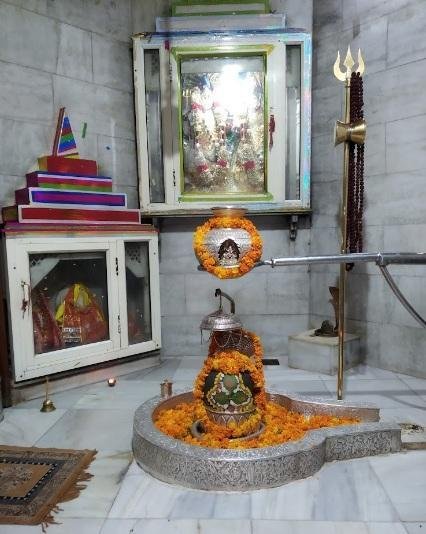
Saketri Shiva Temple is one of the most important Lord Shiva pilgrimage destinations in Panchkula and one of the best-known historic temples near Chandigarh. Situated in the Saketri–Mahadevpura area of Haryana, close to Mata Mansa Devi Temple and the lower Shivalik foothills, the shrine attracts devotees throughout the year and becomes one of the Tricity region’s largest centres of Shiva worship during Mahashivratri.
The temple is also known as:
Saketri Shiv Mandir
Saketri Shiva Temple
Prachin Shiv Mandir Saketri
Mahadev Shiv Mandir Saketri
Saketri Mahadev Temple
Shiv Mandir Mahadevpura
Saketri Dham
Saketri Mandir Panchkula
The spelling “Saketri” is most widely used, although “Saketadi,” “Saketri Dham” and other local variations may appear in older travel descriptions, devotional videos and maps.
Travellers arranging local transport should clearly specify:
**Prachin Shiv Mandir Saketri, Mahadevpura, near Mata Mansa Devi Complex, Panchkula, Haryana.**
This helps distinguish the temple from the many neighbourhood Shiva temples located across Panchkula, Chandigarh, Mohali and the surrounding villages.
The temple stands within the transitional landscape between the planned urban sectors of Panchkula and the wooded foothills of the Shivalik range. The journey towards Saketri gradually moves away from broad commercial roads and residential sectors into a quieter village and forest-edge setting.
The surrounding landscape is one of the reasons the temple feels different from an ordinary urban shrine.
Trees, low hills, seasonal greenery and comparatively quieter surroundings create a natural setting traditionally associated with Lord Shiva.
Shiva is frequently imagined as the Himalayan yogi who meditates beyond crowded cities and royal courts. A temple located near the foothills therefore creates an appropriate spiritual relationship between the deity and the landscape.
Saketri Shiva Temple is road-accessible and does not require a long trek. Vehicles can approach the temple area during ordinary periods, though parking and vehicle movement may be restricted during Mahashivratri, Shravan Mondays and other crowded religious occasions.
The complex contains several temples and sacred spaces rather than one isolated shrine. Visitors may encounter the principal Shiva temple together with shrines associated with other Hindu deities, devotional halls, covered passages, ritual areas, bells, courtyards and community facilities.
The temple is especially known for its Mahashivratri fair and abhishek traditions. Thousands of devotees from Panchkula, Chandigarh, Mohali, Punjab, Haryana, Himachal Pradesh and other parts of northern India arrive to offer water, milk, flowers and bilva leaves to Lord Shiva.
For Shiva devotees, Saketri is a place of prayer, transformation and surrender.
For families, it provides an accessible pilgrimage close to the Tricity.
For senior citizens, the road approach makes it considerably more manageable than remote mountain temples, though crowds and internal steps still require planning.
For children, the multiple shrines and Mahashivratri traditions offer an introduction to Shiva worship.
For travellers combining several temples, Saketri can be visited with Mata Mansa Devi Temple, Gurdwara Nada Sahib, Chandi Mata Temple, Kalka Kali Mata Temple and other spiritual destinations around Panchkula.
Visitors searching for hotels near Saketri Shiva Temple, homestays near Mansa Devi Complex, places to stay near Saketri village, pilgrimage accommodation in Panchkula or family hotels near Chandigarh can use MudrasStays to plan a comfortable and geographically practical journey.
## Spiritual Importance of Saketri Shiva Temple
Saketri Shiva Temple is dedicated principally to Lord Shiva, one of the most profound and widely worshipped deities within Hindu tradition.
Shiva represents meditation, transformation, time, detachment, compassion and liberation.
He is worshipped as Mahadev, the Great God.
He is also called Bholenath, the innocent and easily pleased Lord, because devotees believe that sincere and uncomplicated prayer is sufficient to reach him.
Shiva’s sacred identity contains several apparent contrasts.
He is the silent ascetic seated in meditation.
He is also the husband of Goddess Parvati and father of Ganesha and Kartikeya.
He represents the destruction of harmful forms, but his destruction is not meaningless violence.
It is transformation.
Old attachments, ignorance, arrogance and destructive habits must sometimes end before a more responsible life can begin.
He resides symbolically in cremation grounds, reminding human beings that wealth, appearance and social status are temporary.
He carries the Ganga in his hair, representing the control and responsible distribution of powerful energy.
The crescent moon upon his head represents time brought under awareness.
The serpent around his neck represents mastery over fear, desire and mortality.
The third eye represents insight beyond superficial appearance.
The trident represents several spiritual triads, including creation, preservation and transformation.
The damaru represents rhythm, vibration and the movement through which creation becomes expressed.
Devotees visit Saketri to pray for peace, courage, family wellbeing, freedom from fear, responsible decision-making and the strength to overcome personal difficulty.
Some offer gratitude after completing a religious vow.
Others arrive at the beginning of a new phase in life.
Students may pray for concentration.
Professionals may seek clarity during uncertainty.
Families may pray for harmony and health.
These prayers belong to personal faith.
Saketri Shiva Temple should not be advertised as guaranteeing employment, marriage, fertility, wealth, medical recovery or the removal of every difficulty.
Spiritual worship can provide confidence, emotional support and reflection, while medical, legal, financial and family concerns should continue to receive suitable professional attention.
## The Sacred Shiva Lingam
The Shiva lingam is the principal sacred form within the temple.
The lingam represents Lord Shiva beyond the limitations of an ordinary human image.
It has no fixed facial expression, clothing or social identity.
Its continuous form suggests infinity, consciousness and the source from which visible creation emerges.
The base surrounding the lingam represents Shakti, the active divine energy associated with Goddess Parvati.
Together, the lingam and its base express the unity of consciousness and energy.
Shiva represents awareness and stillness.
Shakti represents action, creation and movement.
Neither is complete in isolation.
At Saketri, the lingam is worshipped through abhishek, flowers, bilva leaves, sacred thread, sandalwood and other authorised offerings.
Its appearance may change according to daily decoration, festival arrangements and ritual schedules.
During Mahashivratri, the sanctum is often richly decorated with flowers and sacred material.
Visitors should follow the current instructions of temple priests and volunteers.
Large quantities of milk, oil or sweet liquids should not be poured independently merely because they appear devotional.
Temple management may regulate offerings to prevent waste, drainage problems, crowding and damage to the sacred area.
Simple water offered with attention is spiritually meaningful.
The quantity or price of an offering does not determine the sincerity of devotion.
## Swayambhu Shiva Tradition
Popular local accounts describe the principal Shiva lingam as swayambhu or self-manifested.
A swayambhu sacred form is believed to have appeared naturally rather than being formally carved and installed by human hands.
This belief gives the shrine special importance to devotees.
Within Hindu tradition, a naturally appearing form is understood as a place where divine presence revealed itself directly through the landscape.
The swayambhu identity should be presented as temple and regional faith.
Visitors should not attempt to test whether the stone is natural, move it, measure it or scrape its surface.
Religious significance is not established by physically interfering with the sacred form.
The lack of a publicly available archaeological report confirming its geological or chronological history does not remove the importance of the belief to worshippers.
Faith and archaeological research answer different questions.
Faith explains why devotees experience the place as sacred.
Archaeology examines physical chronology, materials and documented construction.
A responsible temple description respects both without presenting one as the other.
## Pandava and Mahabharata Tradition
One of the most frequently repeated legends connects Saketri Shiva Temple with the Pandavas.
According to local tradition, the five Pandava brothers visited the region during their exile and worshipped Lord Shiva.
Some versions say that Mahadev appeared before them in response to their prayer.
Other accounts connect the sacred lingam or an underground chamber with their stay.
The Pandavas are the principal heroes of the Mahabharata.
Yudhishthira represents responsibility and the complex pursuit of dharma.
Bhima represents strength.
Arjuna represents discipline and skill.
Nakula and Sahadeva represent service, knowledge and loyalty.
Draupadi represents dignity and resistance to injustice.
Across northern India, caves, temples, springs and unusual stone formations are frequently associated with the Pandavas.
These stories connect local landscapes with the larger sacred geography of the Mahabharata.
The Saketri tradition should be presented as religious and oral history rather than proven archaeological evidence.
The visible temple architecture does not itself establish construction during the epic period.
The precise age of the earliest worship at the site remains uncertain.
The value of the tradition lies in the way generations of local devotees have understood and protected the shrine.
## The Five-Hundred-Year Tradition
Saketri Shiva Temple is commonly described in local travel literature and oral accounts as approximately 500 years old.
This description expresses the belief that the temple has served the region for several centuries.
However, an exact founding year should not be stated as established fact unless supported by a dated inscription, archival record or archaeological investigation.
A living temple may contain several historical layers.
The sacred location may be older than the present walls.
An original shrine may have been rebuilt.
Temple towers may have been renewed.
Marble floors, railings, electrical systems, covered corridors and community halls may have been added much later.
The responsible description is that Saketri is a historic Shiva shrine traditionally believed to be several centuries old, while its exact earliest date remains uncertain.
This wording honours the inherited tradition without inventing precision.
## The Temple Complex and Seven Shrines
The Saketri campus contains multiple shrines dedicated to different Hindu deities.
Reports concerning the complex identify seven individual shrine spaces.
This makes Saketri more than a single-room Shiva temple.
The principal identity remains Shaiva, but the wider campus represents an interconnected Hindu sacred universe.
Visitors may encounter shrines associated with forms of the Divine Mother, Lord Rama, Radha and Krishna, Ganesha, Hanuman and other deities according to the current layout.
The exact sequence, names and accessibility of the shrines should be understood from temple signage or authorised guidance.
Individual structures may be opened or closed according to ritual timing, renovation or security requirements.
The presence of several deities is natural within a Shiva complex.
Goddess Parvati represents Shakti, the energy inseparable from Shiva.
Ganesha represents wisdom and auspicious beginnings.
Kartikeya represents disciplined courage.
Hanuman represents devotion and strength.
Rama represents dharma.
Krishna represents wisdom, protection and divine love.
Durga represents courage and the defeat of destructive forces.
The complex allows a family to honour several sacred traditions during one pilgrimage.
## The Underground Shrine and Cave Traditions
Some local accounts speak of an underground shrine, lower chamber or cave-like sacred area connected with the temple.
Reports about the campus confirm the presence of a temple space situated below ground level.
Such spaces often develop strong local legends because they appear older, hidden or more directly connected with the earth.
Visitors should enter only when the area is officially open.
Underground chambers can have narrow access, limited ventilation, damp flooring or restricted capacity.
Children and senior citizens should not be pressured to enter.
No closed passage should be explored independently.
Stories concerning hidden tunnels, serpents or connections beyond the visible temple should be understood as oral tradition unless supported by physical and archaeological documentation.
## Serpent Traditions and Lord Shiva
Local devotional retellings sometimes associate Saketri with a serpent appearing near the sacred lingam.
The serpent is an important symbol of Lord Shiva.
A cobra is traditionally shown around Shiva’s neck.
It represents fear, mortality, desire and powerful instinct brought under control.
Shiva does not destroy the serpent.
He wears it calmly.
This suggests mastery rather than uncontrolled suppression.
Stories that a serpent once appeared to receive milk should be understood as local religious tradition.
Visitors should never attempt to attract or feed snakes.
Milk is not a natural or safe food for most snakes.
Wildlife should not be handled in the name of religious practice.
Any snake seen in or around the temple should be reported to trained wildlife personnel.
Respect for Shiva includes protecting living creatures without placing devotees or animals in danger.
## Nandi
Nandi, the sacred bull and vehicle of Lord Shiva, commonly faces the Shiva sanctum.
Nandi represents patience, strength, loyalty and disciplined attention.
The bull remains seated before Mahadev, completely focused upon the Divine.
This posture teaches that spiritual practice requires steadiness.
A distracted mind constantly changes direction.
Nandi remains still.
Devotees sometimes whisper prayers near Nandi according to regional customs.
Visitors should follow local practice without climbing, scratching or placing excessive material upon the sculpture.
Children should be taught that Nandi is a sacred symbol rather than playground equipment.
## The Trident
The trishul or trident is one of Shiva’s principal symbols.
Its three points carry several interpretations.
They may represent creation, preservation and transformation.
They may represent the past, present and future.
They may represent body, mind and consciousness.
They may also represent the three qualities of nature—sattva, rajas and tamas.
The trident teaches that the Divine remains present through every phase of existence.
It also represents the discipline required to bring different forces of life into balance.
Visitors should not hang unauthorised objects upon ritual tridents or touch sharp metal points.
## Architecture of Saketri Shiva Temple
The temple complex reflects several periods of construction and renovation.
Its present visual identity includes pale stone or marble-finished walls, tall tapering temple towers, saffron flags, covered corridors, carved gateways, courtyards and modern pilgrim facilities.
The main entrance is visually distinctive.
Its ornamental arch contains floral patterns, scalloped forms, religious inscriptions and small pavilion-like structures along the upper edge.
The gateway marks the transition from the village road into the sacred campus.
Beyond the gate, the complex becomes more functional and devotional.
Covered walkways protect pilgrims from sun and rain.
Marble or polished floors help maintain cleanliness but can become slippery.
Temple towers rise above the lower buildings and identify the complex from a distance.
Several shikharas may belong to different shrine spaces within the campus.
The tallest tower marks the principal sacred focus.
Saffron and coloured flags represent continuing worship and divine presence.
The architecture should not be described as belonging completely to one historical period.
Active temples are repaired repeatedly.
A historic shrine can remain spiritually continuous even when its walls, roofs and flooring are renewed.
## The Shivalik Setting
Saketri lies close to the lower Shivalik landscape.
The foothills form a natural transition between the plains of Haryana and the Himalayan regions further north.
This setting is especially meaningful for Shiva worship.
Lord Shiva is deeply associated with mountains, caves, forests and rivers.
The surrounding trees and low hills create a symbolic connection with Kailash, even though Saketri is not a high-altitude Himalayan temple.
The forest-edge environment must be treated responsibly.
Visitors should remain within recognised temple and road areas.
Entering reserve or protected forest without authorisation should be avoided.
Wild animals, reptiles and birds should not be disturbed.
Food should not be left where it attracts monkeys, stray animals or wildlife.
Open flames and smoking create serious fire risk during dry weather.
## Mahashivratri at Saketri
Mahashivratri is the largest and most important annual celebration at Saketri Shiva Temple.
The festival usually falls during February or March according to the Hindu lunar calendar.
Its name means the Great Night of Shiva.
Several sacred traditions explain its importance.
Some devotees celebrate the marriage of Lord Shiva and Goddess Parvati.
Others connect it with Shiva’s cosmic dance.
Another tradition remembers the limitless pillar of light through which Shiva revealed his infinite nature.
Devotees may observe fasting, night vigil, mantra recitation, abhishek and special puja.
At Saketri, worship begins before the main festival day and can continue throughout the night and following day.
Long queues may begin around midnight or in the early morning.
The temple is decorated with flowers and lights.
Devotees offer water, milk, honey, fruit, jaggery, flowers and bilva leaves according to current temple arrangements.
Bhajans, langar, prasad distribution and religious programmes may continue for extended hours.
Temporary stalls selling flowers, puja material and refreshments appear along the approach road.
The mela atmosphere is powerful but demanding.
Visitors should expect:
Long waiting periods
Security screening
Vehicle diversions
Regulated parking
Crowded corridors
Temporary one-way routes
Limited mobile connectivity in dense crowds
Extended walking from the parking area
Separate arrangements for offerings
The annual traffic and security plan changes according to anticipated footfall.
Visitors should check Panchkula Police and local administration advisories before departure.
## Mahashivratri Safety
Families attending Mahashivratri should carry only essential belongings.
Children should wear a card containing a parent’s phone number.
Groups should choose a meeting point outside the most crowded part of the temple.
Senior citizens should avoid the busiest midnight and morning hours unless suitable assistance is available.
Visitors should cooperate with police, volunteers and security personnel.
Unattended bags should be reported.
Barricades should not be crossed.
No attempt should be made to reach the sanctum through an unauthorised side passage.
Faith does not justify pushing or creating danger for other devotees.
## Four Prahar Puja
Mahashivratri night is traditionally divided into four prahars or periods of worship.
Each phase may involve separate abhishek, mantra recitation and decoration.
The four-part worship represents sustained spiritual attention throughout the night.
Remaining awake symbolises awareness.
The devotee attempts not merely to keep the eyes open but to awaken spiritually from ignorance and uncontrolled habit.
Temple-specific puja arrangements can change each year.
Participation, offerings and access should be confirmed through authorised temple channels.
## Shravan and Sawan Mondays
The Hindu month of Shravan, also called Sawan, is especially sacred to Lord Shiva.
It usually falls during July and August, although exact dates depend upon the regional lunar calendar.
Mondays during Shravan attract additional devotees.
Pilgrims may offer water, flowers and bilva leaves.
Some observe fasting or recite the Mahamrityunjaya Mantra and Shiva Chalisa.
Shravan often overlaps with the monsoon.
This makes floors and approach roads slippery.
Visitors should wear footwear with dependable grip and should carry rain protection.
Heavy rain near foothill and forest areas can create waterlogging and falling branches.
Current weather and road conditions should be checked before departure.
## Monthly Shivratri and Pradosh
Monthly Shivratri occurs during the dark half of each lunar month and is observed by some Shiva devotees through fasting and evening prayer.
Pradosh Vrat is observed around the thirteenth lunar day and is associated with Shiva worship during twilight.
The temple may receive additional visitors on these dates, particularly when they coincide with Monday.
Exact ritual schedules should be confirmed locally.
## Mondays
Monday is traditionally dedicated to Lord Shiva.
The Hindi name Somvar connects the day with Soma, the moon, which Shiva carries upon his head.
Ordinary Mondays are generally busier than other weekdays.
Shravan Mondays can become substantially crowded.
Visitors seeking peaceful darshan may prefer an early morning on a non-festival weekday.
## Abhishek at Saketri
Abhishek involves the ceremonial bathing of the Shiva lingam.
Common offerings include clean water, milk, honey, curd and other authorised substances.
Each carries symbolic meaning.
Water represents purification.
Milk represents nourishment.
Honey represents sweetness in speech and conduct.
Bilva leaves are associated with Shiva and may symbolise the three aspects represented by their leaflets.
The ritual should remain environmentally responsible.
Excessive quantities of food-grade material should not be poured merely for display.
Temple management may collect, regulate or redistribute offerings.
Packaged milk and plastic containers create significant waste during large festivals.
Visitors should use the approved system and avoid leaving containers in the temple or village.
## Langar and Community Service
Langar and community food distribution are important elements of major Saketri gatherings.
Volunteers provide meals, water, tea and prasad to pilgrims.
Service expresses equality and compassion.
Everyone receives food without distinction of social status.
Visitors should accept only the quantity they can eat.
Food waste should be avoided.
Disposable plates and cups should be placed in designated collection areas.
Serving food is not complete devotion when plastic and leftovers are abandoned around the temple or forest edge.
## Temple Timings
Temple opening, closing and aarti timings may change according to season, Monday worship, Shravan, Mahashivratri and special ceremonies.
Online listings do not always agree.
Visitors planning an early-morning, late-evening or overnight visit should confirm the current schedule locally.
Mahashivratri may involve extended or continuous opening, but this should not be assumed for ordinary days.
Individual shrines within the campus may follow different schedules.
## Best Time to Visit Saketri Shiva Temple
The temple can generally be visited throughout the year.
### October to March
The cooler months provide the most comfortable weather.
Morning and evening can become cold during December and January.
Fog may affect roads around Chandigarh and Panchkula.
Mahashivratri may fall near the end of this period.
### February and March
The weather is often pleasant, but Mahashivratri creates extremely large crowds.
Visitors seeking the festival experience should plan carefully.
Those seeking quiet darshan should choose another date.
### April to June
Panchkula can become extremely hot.
Marble floors, courtyards and roads receive strong sunlight.
Early-morning darshan is preferable.
Visitors should carry drinking water and avoid prolonged waiting during the hottest afternoon hours.
### July to September
The monsoon and Shravan create green surroundings and spiritually important Monday worship.
The same period can bring humidity, slippery floors, waterlogging and storms.
Visitors should monitor weather conditions.
### November and December
Winter weekdays can offer peaceful darshan and comfortable daytime temperatures.
Warm clothing may be needed during early morning.
## Reaching Saketri Shiva Temple from Panchkula
The temple lies in the Saketri–Mahadevpura area near Mansa Devi Complex.
A taxi, auto-rickshaw, private vehicle or prearranged cab is generally the easiest method of travel.
The approach commonly passes through the Mansa Devi side of Panchkula.
Road conditions and entry arrangements can change during festivals.
Drivers should be given the complete temple name rather than only “Shiv Mandir.”
## Reaching from Mata Mansa Devi Temple
Saketri Shiva Temple lies approximately five kilometres from Shri Mata Mansa Devi Temple.
The two shrines form a natural Shiva–Shakti pilgrimage circuit.
Mansa Devi represents Shakti, the active divine energy.
Saketri represents Shiva, pure consciousness.
Together they express the inseparable relationship between Shiva and Shakti.
A taxi or auto-rickshaw can normally complete the connection, subject to road and traffic conditions.
During Navratri or Mahashivratri, travelling between the two may take substantially longer.
## Reaching from Chandigarh
Saketri is commonly visited from Chandigarh through the northern or northeastern side of the city.
The practical distance depends upon the starting sector.
Travellers staying near Sukhna Lake, IT Park, Manimajra or the northern sectors may have a shorter journey than those staying near the airport or southern Chandigarh.
A private taxi or vehicle is generally more convenient than depending upon an uncertain return cab from the village area.
## Reaching from Chandigarh Railway Station
Chandigarh Railway Station is the principal nearby rail gateway.
A road transfer is required.
The journey can be affected by railway-area traffic, Manimajra congestion and the route selected towards Panchkula.
Travellers should leave large luggage at their hotel or use secure storage.
Suitcases should not be carried through the temple complex.
## Reaching from Chandigarh Airport
Chandigarh International Airport serves the Tricity.
Saketri lies on the opposite side of the urban region from the airport.
The road transfer can take considerable time during traffic.
A temple visit should not be scheduled immediately before a flight.
## Public Transport
Local buses have served Saketri and nearby pilgrimage routes at different times, but routes and frequency can change.
Visitors relying on buses should confirm the current service and last return timing.
A prearranged vehicle is more dependable for families, senior citizens and evening visits.
## Parking
Ordinary-day parking may be available near the temple complex.
During Mahashivratri, vehicles may be diverted to temporary or distant parking areas.
Visitors should park only where directed.
Village lanes, forest access, private homes and emergency routes must not be blocked.
Drivers should note the parking location carefully because festival traffic may create different entry and exit routes.
## Accessibility for Senior Citizens
Saketri is road-accessible and does not require a long hill trek.
This makes it suitable for many senior citizens.
However, the internal complex may contain steps, thresholds, crowded corridors and prolonged standing.
Festival parking can increase walking distance.
A quiet weekday morning is generally the most comfortable option.
Senior visitors should carry medicines, water and a walking aid where required.
Wheelchair users should confirm the nearest accessible entrance and the route to the principal shrine.
Not every smaller shrine or underground chamber may be accessible.
There is no spiritual failure in receiving darshan from an accessible area when physical limitations prevent entry into every section.
## Visiting with Children
Children can learn about Lord Shiva, Nandi, the trident, the Ganga and the meaning of Mahashivratri.
They must remain supervised near lamps, bells, crowds, steps and railings.
During festivals, children should carry identification with a guardian’s phone number.
Parents should choose a meeting point in case family members become separated.
Children should not run inside the complex, climb Nandi or touch ritual objects.
## Visitors with Limited Mobility
The temple’s road location helps visitors with mobility limitations, but complete barrier-free access should not be assumed.
The sanctum queue, thresholds and lower-level shrines may present obstacles.
Current assistance arrangements should be confirmed before travel.
Visitors should avoid the most crowded dates when wheelchairs and walking aids become difficult to manoeuvre.
## Temple–Mosque Neighbourhood Harmony
One of the Saketri area’s most meaningful social features is the peaceful proximity of the historic Shiva temple and a mosque.
Local accounts describe long-standing cooperation and mutual respect between Hindu and Muslim residents.
The two places retain their distinct religious identities while existing within the same neighbourhood.
This is an important lesson for pilgrims.
Religious devotion should deepen respect, not create hostility.
The presence of another faith nearby does not reduce the sanctity of one’s own place of worship.
Visitors should avoid loud, provocative or disrespectful behaviour around either sacred site.
Neighbourly harmony is itself a form of cultural heritage worth protecting.
## Environmental Responsibility
The temple lies close to a sensitive foothill and forest landscape.
Visitors should not enter forest tracks without permission.
Plastic bottles, milk packets, food wrappers and disposable plates must not be left around the road or temple.
Monkeys and other animals should not be fed packaged food.
Open flames should remain within authorised ritual areas.
Smoking should be avoided.
Noise should be controlled outside festival programmes.
Protecting the surrounding environment is an appropriate form of service to Lord Shiva, who is deeply associated with mountains, forests, rivers and living creatures.
## Nearby Places to Visit
### Shri Mata Mansa Devi Temple
Mata Mansa Devi Temple is the closest major pilgrimage destination and lies approximately five kilometres away.
It is one of northern India’s important Shakti shrines and receives very large gatherings during Chaitra and Sharad Navratri.
A combined Mansa Devi–Saketri pilgrimage symbolically unites Shiva and Shakti.
### Gurdwara Nada Sahib
Gurdwara Nada Sahib is associated with Guru Gobind Singh Ji and his journey after the Battle of Bhangani.
Visitors should cover their heads, remove footwear and follow Sikh maryada.
The langar should be received without waste.
### Sukhna Lake
Sukhna Lake is one of Chandigarh’s most important recreational landmarks.
It offers walking, birdwatching and regulated boating.
Visitors should follow current timings and environmental rules.
### Rock Garden
The Rock Garden is a major cultural attraction created from reclaimed and discarded material.
It can be combined with Saketri during a full-day Chandigarh and Panchkula itinerary.
### Cactus Garden
The National Cactus and Succulent Botanical Garden in Panchkula is known for its extensive plant collection.
Current opening hours should be checked before travel.
### Bhima Devi Temple Complex
Bhima Devi Temple Complex at Pinjore preserves medieval Hindu temple foundations, sculptures and a site museum.
It provides an archaeological experience very different from Saketri’s active worship environment.
### Yadavindra Gardens
Yadavindra Gardens, also known as Pinjore Gardens, contains terraced gardens, fountains and historic pavilions.
It requires a separate road journey north of Panchkula.
### Kali Mata Temple, Kalka
The historic Kali Mata Temple at Kalka is an important active Goddess shrine and gateway pilgrimage destination towards Himachal Pradesh.
### Chandi Mata Temple
Chandi Mata Temple is associated with the Goddess after whom Chandigarh and Chandimandir are traditionally named.
The surrounding cantonment and security environment may affect access, so current arrangements should be confirmed.
## Suggested Half-Day Saketri Itinerary
Begin from Panchkula or Chandigarh early in the morning.
Travel towards Saketri through the Mansa Devi side.
Use authorised parking.
Receive darshan of the principal Shiva lingam.
Visit the other open shrines within the complex.
Spend time in quiet prayer without obstructing worshippers.
Continue to Mata Mansa Devi Temple.
Return to accommodation before afternoon heat or city traffic increases.
## Suggested One-Day Shiva–Shakti Itinerary
Begin with Saketri Shiva Temple during the early morning.
Continue to Mata Mansa Devi Temple.
After lunch, visit Gurdwara Nada Sahib or the Cactus Garden.
End the day at Sukhna Lake according to available time and energy.
Festival days may require the itinerary to be reduced.
## Suggested Two-Day Panchkula Spiritual Journey
On the first day, visit Saketri Shiva Temple, Mata Mansa Devi Temple and Gurdwara Nada Sahib.
On the second day, travel to Bhima Devi Temple Complex and Yadavindra Gardens at Pinjore.
This itinerary combines active Shaiva worship, Shakti pilgrimage, Sikh sacred history and archaeological heritage.
## Suggested Three-Day Tricity Pilgrimage and Heritage Circuit
Day one can focus on Saketri and Mansa Devi.
Day two can include Nada Sahib, Sukhna Lake, Rock Garden and selected Chandigarh attractions.
Day three can include Pinjore, Bhima Devi Temple Complex and Kalka Kali Mata Temple.
A slower itinerary is preferable for families and senior citizens.
## Accommodation Near Saketri Shiva Temple
Accommodation directly beside Saketri is limited compared with Panchkula and Chandigarh.
Basic pilgrim or community facilities may be available, but their current operation, room condition and booking procedures should be confirmed directly.
Most visitors should stay in Mansa Devi Complex, Panchkula, Chandigarh, Zirakpur, Pinjore or Kalka according to the wider itinerary.
## Hotels Near Mansa Devi Complex
Mansa Devi Complex is one of the most convenient bases for Saketri Shiva Temple.
It reduces morning travel and provides access to both Saketri and Mata Mansa Devi Temple.
Accommodation supply may include guesthouses, budget rooms and residential-style stays.
Guests should verify parking, meals, air-conditioning, hot water and actual driving time.
## Hotels in Panchkula
Panchkula offers modern hotels, restaurants, hospitals and easy access to the Tricity road network.
Sectors near Mansa Devi, Sector 5 and central Panchkula are practical for most travellers.
Families should compare room size, parking and breakfast.
## Hotels in Chandigarh
Chandigarh provides the widest accommodation range, including budget hotels, guesthouses, serviced apartments and premium properties.
Northern and northeastern locations can provide easier access to Saketri.
Hotels near the airport or southern sectors may require a longer cross-city journey.
## Hotels in Manimajra and IT Park Area
Manimajra and the Chandigarh IT Park side may provide convenient access towards Panchkula and Saketri.
Guests should verify the actual route because railway crossings and peak traffic can affect travel time.
## Hotels in Zirakpur
Zirakpur offers a large range of highway and business hotels.
It is practical for airport travellers but is not the closest base for Saketri.
Traffic through Panchkula should be included in the schedule.
## Hotels in Pinjore and Kalka
Pinjore and Kalka are suitable for visitors continuing towards Himachal Pradesh or combining Saketri with Bhima Devi, Yadavindra Gardens and Kali Mata Temple.
They require additional road travel to Saketri.
## Homestays Near Panchkula
Verified homestays can provide quieter accommodation and local guidance.
Guests should confirm attached bathrooms, meals, parking, cooling, heating and taxi availability.
The phrase “near Saketri” should be checked against actual driving time rather than straight-line distance.
## Choosing the Right Place to Stay
Pilgrims focused mainly on Saketri and Mansa Devi should stay in Mansa Devi Complex or Panchkula.
Travellers planning a wider Chandigarh holiday may prefer Chandigarh.
Airport passengers may choose Zirakpur but should allow additional travel time.
Families should prioritise room capacity, meals and safe parking.
Senior citizens should select properties with lifts, ground-floor rooms and dependable taxis.
Couples may prefer quieter hotels or homestays outside crowded market areas.
Solo pilgrims should choose populated and well-connected accommodation.
Groups should confirm multiple rooms, early breakfast, vegetarian meals and bus parking.
Mahashivratri visitors should book accommodation well in advance.
Summer guests should verify effective air-conditioning.
Winter travellers should confirm hot water and heating arrangements.
## Book Hotels Near Saketri Shiva Temple with MudrasStays
MudrasStays helps pilgrims, families and spiritual travellers discover hotels, homestays, guesthouses and pilgrimage accommodation near Saketri Shiva Temple, Mata Mansa Devi Temple, Panchkula and Chandigarh.
The platform is designed for travellers searching specifically for places to stay near temples, sacred circuits and spiritual destinations.
Visitors can compare accommodation according to practical driving time from Saketri, room category, budget, family size and required facilities.
Booking near Mansa Devi Complex can make peaceful morning darshan easier and reduce unnecessary movement through the Tricity.
Families can choose hotels offering comfortable rooms, meals and safe parking.
Senior citizens can prioritise accessible properties with lifts and reliable transport.
Solo pilgrims can search for economical guesthouses in well-connected areas.
Couples can explore quiet homestays or comfortable city hotels.
Pilgrimage groups can identify accommodation providing multiple rooms, vegetarian food, driver lodging and parking for larger vehicles.
Travellers attending Mahashivratri or Shravan Mondays can reserve accommodation early and avoid uncertain last-minute availability.
Visitors combining Saketri with Mansa Devi, Nada Sahib, Bhima Devi Temple Complex, Pinjore Gardens, Kalka and Chandigarh attractions can choose accommodation according to the actual geographical sequence of the journey.
MudrasStays helps travellers avoid booking a property that appears close on a map but requires unnecessary city crossings, congested routes or difficult festival access.
## Responsible Pilgrimage
Saketri Shiva Temple is an active sacred place and part of a living village and forest-edge community.
Visitors should dress respectfully and follow the designated queue.
The Shiva lingam, associated deities, priests and private rituals should only be photographed when permission is clear.
Children should remain supervised.
Sacred objects should not be touched unnecessarily.
Offerings should be made through authorised arrangements.
Food and prasad should not be wasted.
Plastic waste must be placed in designated bins.
## Responsible Abhishek
Abhishek should be performed with attention rather than excess.
Visitors should follow the temple’s system for milk, water and other offerings.
Plastic packets should not be abandoned near the shrine.
Food-grade offerings should be handled hygienically.
No substance should be poured upon an archaeological, decorative or unidentified stone.
Simple prayer is spiritually valid.
## Respecting Saketri Village
Saketri is a living community rather than only a pilgrimage destination.
Residents use the same roads, shops, water systems and public spaces as visitors.
Vehicles should not block homes, village lanes, forest access or emergency routes.
Residents should not be photographed without consent.
Local priests, volunteers, drivers, shopkeepers and food providers should be treated fairly.
Responsible pilgrimage should support the community rather than leaving behind congestion and waste.
## A Sacred Meeting of Shiva, Shakti and the Shivalik Foothills
Saketri Shiva Temple represents a powerful meeting of Lord Shiva, village faith, Mahashivratri devotion and the natural setting of the Shivalik foothills.
The Shiva lingam represents consciousness beyond ordinary human form.
The surrounding base represents Shakti.
Nandi represents patience and complete attention.
The trident represents balance across time and the forces of creation.
The serpent represents mastery over fear.
The Ganga represents powerful energy guided responsibly.
The moon represents awareness of time.
The Pandava tradition connects the shrine with the sacred geography of the Mahabharata.
The swayambhu belief expresses divine presence within nature.
The multiple shrines create a complete sacred environment around Mahadev.
Mahashivratri transforms the temple into one of the Tricity’s largest collective gatherings.
Shravan Mondays preserve the continuing rhythm of Shiva worship.
Langar turns devotion into service.
The nearby Mansa Devi Temple creates a natural Shiva–Shakti pilgrimage circuit.
The peaceful presence of a temple and mosque within the same neighbourhood demonstrates that religious identity and neighbourly respect can exist together.
For Shiva devotees, Saketri is a place to seek peace, courage and transformation.
For families, it provides an accessible spiritual destination near Chandigarh.
For senior citizens, the road approach makes the principal pilgrimage manageable when crowds are avoided.
For children, the temple provides lessons about Shiva’s symbols, patience and environmental responsibility.
For cultural travellers, it reveals how village tradition remains alive beside a rapidly expanding urban region.
For photographers, the temple towers, gateway and foothill environment offer memorable images when sacred-space rules are respected.
For spiritual seekers, Saketri communicates a central Shaiva teaching: real transformation begins when the individual is willing to release ego, fear and harmful attachment.
Saketri Shiva Temple should not be treated merely as a quick stop near Mansa Devi.
Its complete identity deserves time.
Visit during a quiet hour where possible.
Receive darshan without rushing.
Observe Nandi’s stillness.
Understand the Pandava and swayambhu stories as sacred traditions.
Use authorised offerings.
Protect the surrounding environment.
Respect the nearby community and mosque.
Carry the meaning of Shiva beyond the temple by becoming calmer, more truthful and more responsible.
Plan your pilgrimage to Saketri Shiva Temple with MudrasStays and experience one of Panchkula’s most important Mahadev shrines.
Seek the blessings of Lord Shiva, offer prayer at the sacred lingam and explore the wider temple complex.
Combine your journey with Shri Mata Mansa Devi Temple, Gurdwara Nada Sahib, Sukhna Lake, Rock Garden, Bhima Devi Temple Complex, Yadavindra Gardens and the wider spiritual attractions of Panchkula and Chandigarh.
Book hotels near Saketri Shiva Temple, discover homestays near Mansa Devi Complex and explore suitable pilgrimage accommodation throughout Panchkula and the Tricity through MudrasStays.
Stay closer to the correct route, attend peaceful morning darshan and avoid unnecessary travel through congested festival roads.
MudrasStays connects pilgrims, families and spiritual travellers with suitable accommodation near temples, Shiva shrines and sacred destinations across India.
Begin your Saketri Shiva Temple journey with a comfortable stay and experience a meaningful pilgrimage centred on Mahadev, sacred transformation, Mahashivratri devotion and the living spiritual landscape of the Shivalik foothills.