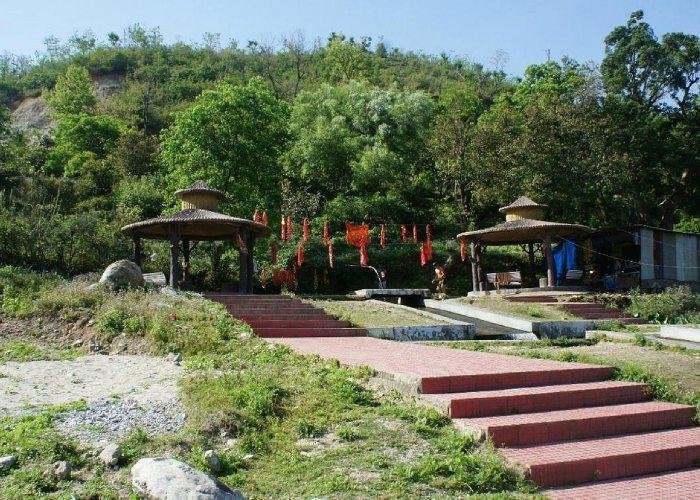
Shiv Khori Cave Temple is one of the most extraordinary Shiva pilgrimage destinations in Jammu and Kashmir. Located near Ransoo village in the Pouni area of Reasi district, the shrine lies inside a naturally formed mountain cave surrounded by forested hills, seasonal streams, village settlements and the deeply rooted religious traditions of the Jammu region.
The shrine is commonly known as Shiv Khori, Shri Shiv Khori Dham, Shiv Khori Gufa, Shiv Khori Cave Temple, Shivkhori Mahadev Temple and Shri Shiv Khori Shrine Ransoo.
The meaning of the name is direct and spiritually powerful.
“Shiv” refers to Lord Shiva, while “Khori” or “Khori Gufa” refers to a cave.
Shiv Khori therefore means the Cave of Lord Shiva.
Unlike a conventional temple created primarily through masonry, pillars and a constructed sanctum, the sacred identity of Shiv Khori comes from the mountain itself.
The cave walls form the temple enclosure.
Natural rock formations create the sacred landscape.
Water descends from the cave roof.
The inner chamber becomes the sanctum.
A naturally formed Shiva lingam stands at the centre of worship.
The result is a pilgrimage experience in which geology, mythology, devotion and physical movement become inseparable.
Shiv Khori is among the principal pilgrimage attractions of Reasi district, together with Shri Mata Vaishno Devi, Baba Dhansar, Nau Devi Cave Temple, Dera Baba Banda Bahadur, Aghar Jitto and other sacred destinations.
It is particularly popular among pilgrims staying in Katra who wish to extend their spiritual journey beyond Mata Vaishno Devi and experience an important natural Shiva cave.
However, Shiv Khori is not located immediately beside Katra.
The road journey to Ransoo is substantial and is followed by an approximately three-kilometre uphill pilgrimage track.
Travellers should therefore treat Shiv Khori as a dedicated full-day journey rather than a short local temple visit.
The shrine attracts devotees throughout the year and receives especially large crowds during Mahashivratri, Shravan Mondays, public holidays and organised pilgrimage periods.
Its natural cave, narrow passage and walking route require thoughtful preparation.
Families, children, senior citizens and travellers with mobility or breathing concerns should understand the physical nature of the journey before beginning.
Visitors searching for hotels near Shiv Khori, homestays in Ransoo, pilgrimage accommodation near Pouni, family hotels in Reasi or places to stay for the Shiv Khori yatra can use MudrasStays to plan a comfortable and geographically practical pilgrimage.
## Spiritual Importance of Shiv Khori
Shiv Khori is dedicated to Lord Shiva, one of the principal deities of Hinduism and the supreme divine reality within Shaivism.
Shiva is worshipped as Mahadev, the Great God.
He represents pure consciousness, meditation, transformation, time, destruction of ignorance and liberation from harmful attachment.
He is the silent yogi of the Himalayas and the compassionate family deity united with Goddess Parvati.
He is worshipped as the lord of ascetics, the protector of devotees and the divine power through which old forms are transformed so that spiritual renewal can begin.
At Shiv Khori, these qualities are expressed through a natural cave rather than a grand palace-like temple.
The cave is dark, enclosed and physically demanding.
It requires the visitor to leave the open landscape and move gradually towards an inner chamber.
In some sections, a pilgrim may need to lower the body, move carefully through confined space or follow strict instructions from shrine staff.
This physical movement carries a powerful symbolic meaning.
The visitor leaves ordinary distraction behind.
Pride becomes less useful inside a narrow passage.
Social status cannot widen the rock.
Every pilgrim must move with patience, humility and awareness.
The cave therefore becomes an external representation of the inward spiritual journey.
A person enters darkness and seeks divine awareness.
A person bends physically and is reminded to reduce the ego.
A person follows the passage and learns the value of discipline.
The inner sanctum represents the discovery of Shiva within the deepest part of consciousness.
## The Swayambhu Shiva Lingam
The central sacred form at Shiv Khori is worshipped as a swayambhu Shiva lingam.
The Sanskrit word swayambhu means self-manifested or naturally revealed.
Within temple tradition, the lingam is not regarded as an ordinary sculpture carved and installed by human hands.
Devotees believe that the sacred form appeared naturally within the cave and carries the direct presence of Mahadev.
This is a matter of religious faith and should not be represented as a scientifically tested supernatural claim.
From a geological perspective, caves can contain mineral formations created gradually through the movement of water and the deposition of material over very long periods.
From a devotional perspective, the resulting sacred form is recognised as Shiva.
The geological and religious descriptions answer different questions.
Geology considers how the rock developed.
Faith considers why the formation is sacred and what spiritual meaning it holds for devotees.
The lingam at Shiv Khori is commonly described as substantial in height and rising naturally from the cave floor.
Official tourism descriptions refer to a naturally formed image of Shiva approximately four metres high.
Exact measurements may differ according to the point from which the complete formation is considered.
Visitors should not attempt to verify the dimensions personally.
The sacred form must never be scratched, touched unnecessarily, tested, measured or photographed against current cave rules.
Darshan should be completed through the arrangements established by the Shri Shiv Khori Shrine Board and temple priests.
## Meaning of the Shiva Lingam
The Shiva lingam is one of the most profound sacred symbols within Hindu thought.
It represents Lord Shiva beyond the limitations of an ordinary human body.
Its form suggests infinity, continuity and the source from which visible creation emerges.
The surrounding base represents Shakti, the active divine energy through which consciousness becomes the universe.
Together, Shiva and Shakti express the unity of stillness and movement, awareness and action, meditation and creation.
Inside Shiv Khori, the lingam appears as part of the mountain itself.
This strengthens the understanding of Shiva as the divine presence existing within nature rather than outside it.
The rock, flowing water, confined chamber and sacred formation combine to create one integrated temple.
## Natural Water Falling on the Lingam
One of the most distinctive features of the cave is the natural water that descends from the roof and falls upon or near the sacred lingam.
Devotees interpret this continuing flow as a natural abhishek performed by the cave itself.
Abhishek is the ritual bathing of a sacred image with water or other approved offerings.
In an ordinary temple, devotees or priests pour water over the lingam.
At Shiv Khori, the mountain appears to perform the ritual continuously.
This creates an especially powerful spiritual image.
The earth forms the shrine.
The cave shelters the deity.
Water performs worship.
The devotee becomes a witness rather than the sole performer of the ritual.
The volume of water can vary with season, rainfall and underground conditions.
Visitors should not expect the flow to look identical throughout the year.
The water should not be interpreted as a guaranteed medicinal substance.
Natural cave water can contain minerals and microorganisms.
It should only be touched or received according to current shrine guidance.
Soap, oil, packaged offerings and chemicals must never be introduced into the cave’s water system.
## Natural Forms of Shiva’s Divine Family
The cave contains several rock formations that devotees traditionally recognise as sacred forms connected with Goddess Parvati, Lord Ganesha, Nandi and other divine beings.
The roof is also described as containing serpent-like formations.
These sacred resemblances are part of the religious interpretation of Shiv Khori.
Visitors should approach them respectfully without insisting that every person see precisely the same visual shape.
Natural formations can appear differently under changing light, decoration and viewing angle.
For devotees, recognition does not depend upon the form being identical to a conventional sculpture.
A curve in the stone may be understood as the hood of Sheshnag.
Another formation may resemble Nandi.
A rock projection may be identified with Ganesha or Parvati.
Such interpretations transform the entire cave into a divine assembly rather than a shrine containing only one sacred object.
Shiv Khori is therefore sometimes described in devotional language as a home of the gods.
Claims that a precise number of all Hindu deities physically exists inside the cave should be presented as religious belief rather than a measurable archaeological fact.
## Lord Shiva, Goddess Parvati and Nandi
Shiva is rarely understood in isolation from Goddess Parvati and Nandi.
Parvati represents Shakti, compassion, courage, motherhood and creative energy.
Shiva represents consciousness and meditative stillness.
Their union expresses the spiritual balance necessary for creation and responsible life.
Nandi, the sacred bull, is Shiva’s vehicle and devoted guardian.
In conventional Shiva temples, Nandi faces the sanctum and maintains an unwavering gaze towards the lingam.
This represents total devotion and spiritual concentration.
At Shiv Khori, naturally formed shapes associated with Shiva’s family strengthen the idea that the cave is not merely a place of solitary meditation.
It is also a divine household and cosmic assembly.
For families visiting the shrine, this provides an opportunity to reflect on mutual responsibility, loyalty and the balance between individual spiritual practice and family duty.
## The Bhasmasura Tradition
One of the most widely narrated legends associated with Shiv Khori concerns the demon Bhasmasura.
According to Hindu mythology, Bhasmasura performed intense austerities to please Lord Shiva.
Shiva, satisfied by the demon’s penance, granted him a powerful boon.
Bhasmasura received the ability to reduce any being to ashes by placing his hand upon that being’s head.
After obtaining the boon, the demon became arrogant and attempted to use the power against Shiva himself.
Lord Shiva moved through the mountains and is believed in local tradition to have entered the cave associated with Shiv Khori.
Lord Vishnu then appeared in the enchanting form of Mohini.
Mohini invited Bhasmasura to dance and persuaded him to imitate each of her movements.
During the dance, Mohini placed her hand upon her own head.
Bhasmasura copied the gesture and was destroyed by the very power he had intended to misuse against others.
The story belongs to Hindu mythology and regional temple tradition, not documented political history.
Its spiritual meaning remains highly relevant.
Power without wisdom becomes dangerous.
A boon received through discipline can be destroyed through arrogance.
Lord Shiva’s compassion in granting blessings must be accompanied by the receiver’s ethical responsibility.
Mohini represents intelligence, strategy and the ability to overcome destructive force without matching it through uncontrolled violence.
The story also teaches that harmful power frequently destroys the person who misuses it.
## The Cave and the Amarnath Tradition
A famous local belief states that one of the inner cave passages once continued towards the sacred Amarnath Cave in Kashmir.
Stories describe ascetics entering the passage and failing to return.
The route is treated as closed and should not be explored.
This connection belongs to regional religious tradition rather than verified cave mapping.
Visitors should never attempt to enter blocked passages, cross barriers or test the belief by moving into unauthorised sections.
Cave systems can contain unstable rock, sudden drops, poor air circulation, water and routes impossible to navigate safely.
The spiritual connection between Shiv Khori and Amarnath does not require a physically open tunnel.
Both shrines are natural Shiva caves.
Both contain sacred formations.
Both express the relationship between Mahadev, mountains, rock, water and the inward journey.
The belief in an underground connection symbolises the unity of Shiva’s sacred geography across the Himalayan region.
## Structure of the Natural Cave
Jammu and Kashmir Tourism describes Shiv Khori as a natural cave approximately 200 metres long.
The shape and available space vary significantly from one section to another.
The entrance chamber is comparatively wide and capable of accommodating many pilgrims.
The inner passage becomes much narrower and lower.
The sanctum area opens again around the principal sacred formation.
This changing cave structure creates three broad stages of experience.
The entrance represents arrival and gathering.
The narrow middle passage represents humility, concentration and transition.
The sanctum represents spiritual revelation.
Visitors should not assume that the complete cave is a wide, level corridor.
Movement can involve bending, turning sideways or following a controlled route through restricted space.
Modern improvements, lighting, railings and managed entry help visitors, but the natural character of the cave remains central.
## The Broad Entrance Chamber
The outer portion of the cave is significantly larger than the narrow interior.
It provides space for pilgrims to assemble and prepare for entry.
The dramatic cave mouth is set within a rugged rock face and marked by temple structures, flags, bells and controlled pathways.
The large opening creates a powerful contrast with the narrow passage deeper inside.
Visitors move from daylight into shadow.
The temperature changes.
Sound becomes amplified or softened by the stone.
The cave begins to replace the external world.
During busy periods, shrine authorities may control the number of pilgrims allowed to enter.
Visitors should wait patiently and avoid pushing near the cave mouth or steps.
## The Narrow Inner Passage
The narrow passage is one of the most memorable and physically challenging parts of the Shiv Khori experience.
Official tourism descriptions state that pilgrims may need to stoop, bend low, move sideways or adjust their bodies while proceeding towards the sanctum.
This section can be difficult for people with severe claustrophobia, obesity, knee problems, back conditions, respiratory disorders or limited balance.
Crowds can intensify discomfort.
Visitors should follow the instructions of shrine staff and should never force movement against the queue.
Large bags, loose clothing and unnecessary objects should be avoided.
People should not stop suddenly to record videos.
The passage is a place for safe and focused movement.
There is no spiritual failure in deciding that the cave interior is physically unsuitable.
A devotee can offer prayer from an authorised outer area when health or mobility makes entry unsafe.
## Cave Lighting and Ventilation
Modern lighting and other safety arrangements have been introduced to support pilgrimage movement.
However, a natural cave can still feel dark, damp and enclosed.
Lighting conditions may vary during maintenance or power interruption.
Visitors should not depend entirely upon a phone torch, particularly when phones or cameras are restricted.
Ventilation can also feel different from an outdoor environment.
People prone to panic, breathlessness or dizziness should remain aware of their condition.
Any discomfort should be communicated immediately to accompanying family members or shrine personnel.
## Entry and Exit Arrangements
Large pilgrimage numbers require controlled entry and exit.
Current routes may involve a separate exit, regulated queue or time-based cave access.
These arrangements can change during festivals, maintenance and periods of heavy crowding.
Visitors should follow current signs rather than an old travel video or previous experience.
Barriers should not be crossed.
Blocked cave sections should never be entered.
The objective of controlled movement is to protect pilgrims, the natural cave and the sanctum.
## Ransoo: Base Camp of the Shiv Khori Yatra
Ransoo is the principal base camp for the Shiv Khori pilgrimage.
Road vehicles generally reach Ransoo, after which pilgrims continue on foot towards the cave.
The village and pilgrimage base include parking areas, shops, food points, registration or checking facilities, pilgrim services and accommodation of varying standards.
The atmosphere changes significantly during Mahashivratri.
Temporary stalls, security arrangements, medical support and traffic controls may be introduced.
Ransoo should not be treated merely as a parking area.
It is a living settlement whose residents, workers, pony operators, priests, drivers and shopkeepers support the pilgrimage throughout the year.
Visitors should behave respectfully, avoid blocking local access and support responsible local businesses.
## The Shiv Khori Pilgrimage Track
The walking route from Ransoo to the cave is generally described as approximately three kilometres.
The effective distance can vary slightly according to the parking point, registration area and current route arrangement.
The path climbs gradually through the hills towards the shrine.
Sections may be paved or tiled and can include railings, resting places, shelters and basic facilities.
The journey is shorter than the Vaishno Devi yatra but should not be underestimated.
A three-kilometre uphill walk followed by cave movement and a return descent requires moderate physical effort.
Walking time depends upon age, fitness, crowding, weather and the number of rest stops.
Families should allow adequate time rather than planning the journey against a tightly timed train or flight.
## Walking, Pony and Palanquin Options
Pilgrims commonly complete the route on foot.
Pony, palanquin or other authorised assistance may be available depending upon current regulations and operational conditions.
Availability, rates and permitted points can change.
Visitors should use only registered operators and confirm official rates before beginning.
Arguments over price should be avoided by agreeing upon the complete service clearly.
Animal welfare must be respected.
Ponies should not be overloaded or forced through unsafe congestion.
Travellers using palanquins should confirm whether the service covers the complete route or only designated sections.
No visitor should assume that a proposed ropeway, helicopter or other infrastructure project is operational unless officially confirmed for the actual travel date.
## Yatra Registration and Security Checks
Pilgrimage management may require registration, a yatra slip, identity verification, security screening or controlled entry during particular periods.
The current process should be checked through the shrine administration, district authorities or verified accommodation providers.
An old online description may not reflect present arrangements.
Visitors should carry government-issued identification and keep essential information available.
Prohibited objects, large luggage and photography equipment may need to be deposited at an authorised cloakroom.
Security staff instructions should be followed without argument.
Such procedures protect the shrine and the large number of pilgrims visiting it.
## Mahashivratri Mela
Mahashivratri is the most important annual celebration at Shiv Khori.
Official Reasi district information records a large fair continuing for three days around Shivratri.
The exact dates change according to the Hindu lunar calendar and annual administrative arrangements.
The mela attracts devotees from Jammu and Kashmir, Punjab, Himachal Pradesh, Haryana, Delhi and other regions.
Ransoo becomes a major pilgrimage centre filled with devotional music, flags, temporary markets, food distribution, religious ceremonies and organised services.
The cave, track, parking areas and roads experience intense pressure.
Festival visitors should book accommodation and transport in advance.
Families should keep children and senior citizens close.
Groups should establish a meeting point at Ransoo before entering the track.
Pilgrims should carry minimal luggage and remain prepared for long queues.
The annual traffic plan, entry system and cave timing should be verified before departure.
## Spiritual Meaning of Mahashivratri
Mahashivratri celebrates Lord Shiva through fasting, meditation, mantra, abhishek and night worship.
Different traditions associate the occasion with Shiva’s cosmic dance, his marriage to Parvati and the manifestation of the infinite lingam of light.
The festival encourages wakefulness not merely in the physical sense but in the spiritual sense.
A person is invited to awaken from ignorance, uncontrolled desire and habitual distraction.
At Shiv Khori, the cave deepens this symbolism.
The pilgrim moves through darkness towards the sacred lingam.
The physical journey reflects movement towards awareness.
## Shravan and Monday Worship
The Hindu month of Shravan is particularly sacred to Lord Shiva.
Mondays may bring additional devotees to Shiv Khori.
Pilgrims may carry water, flowers, bilva leaves and other approved offerings.
Shravan commonly overlaps with the rainy season.
This creates a direct safety concern.
The hills become green, but pathways can become slippery.
Roads may experience falling stones, mud or drainage problems.
Cave moisture can increase.
Travellers should monitor weather and follow all official advisories.
A religiously important date does not make an unsafe road or overcrowded cave physically safe.
## Best Time to Visit Shiv Khori
Shiv Khori can generally be visited throughout the year, subject to road, weather and cave conditions.
### Spring
Spring is one of the best periods for pilgrimage.
The weather is often comfortable, surrounding hills become greener and Mahashivratri may occur during late winter or early spring.
Festival visitors experience the shrine at its most active.
Travellers seeking a quieter visit should choose an ordinary weekday after the mela.
### Summer
Summer around Ransoo can become warm.
The walk should begin early in the morning.
Visitors should carry drinking water, light clothing, sun protection and an additional layer for the cooler cave interior.
The cave may feel significantly cooler and damper than the outdoor track.
Children and senior citizens should rest during the climb.
### Monsoon
The monsoon makes the landscape green but creates the greatest travel risk.
Heavy rain can lead to slippery tracks, falling stones, road damage and reduced visibility.
Water movement inside and around the cave may change.
Visitors should postpone travel during severe weather advisories.
Shoes with dependable grip are essential.
### Autumn
Autumn is among the most comfortable periods for the yatra.
Rain generally reduces, road conditions improve and the temperature becomes manageable.
Morning visits provide pleasant walking conditions.
### Winter
Winter is cool and often quieter outside the Shivratri period.
Early morning and evening can become cold.
The cave may feel especially damp and chilly.
Regular heavy snowfall should not be expected at Ransoo, but frost, cold rain and weather disruptions remain possible.
Warm layers and suitable footwear are important.
## Reaching Shiv Khori from Reasi
Official district information places Shiv Khori approximately 40 kilometres from Reasi.
The road journey proceeds towards the Ransoo and Pouni side, although the exact route and travel time can change according to road works, weather and traffic.
Reasi offers hotels, guesthouses, markets, restaurants, hospitals and local taxi services.
It is a useful base for travellers combining Shiv Khori with Bhimgarh Fort, Dera Baba Banda Bahadur, Baba Dhansar and other district attractions.
An early departure is recommended.
## Reaching Shiv Khori from Katra
Katra is the most popular accommodation base for travellers combining Shri Mata Vaishno Devi and Shiv Khori.
Different official and tourism sources provide road estimates ranging broadly from around 65 to 80 kilometres depending upon the exact route and starting point.
The journey can require several hours on hill roads.
Visitors should not plan Shiv Khori as a short excursion immediately after returning exhausted from Vaishno Devi Bhawan.
A dedicated day after proper rest is more suitable.
Taxis, buses and organised pilgrimage vehicles may operate from Katra.
The return time should be confirmed carefully.
Travellers should avoid scheduling a late-evening train on the same day without a substantial buffer.
## Reaching from Jammu
Jammu is the principal air and long-distance rail gateway.
Road distances to Ransoo vary considerably according to whether the route proceeds through Katra, Akhnoor, Reasi or another approved road.
A same-day return journey from Jammu can be tiring because it includes a long drive, the three-kilometre pilgrimage track, cave darshan and the return walk.
Staying in Ransoo, Reasi or Katra can create a more comfortable itinerary.
## Reaching by Train
Shri Mata Vaishno Devi Katra Railway Station is the nearest major railway gateway identified by Reasi district, at approximately 65 kilometres according to its official route information.
Jammu Tawi offers additional long-distance rail services.
A road transfer is required from either station.
Travellers arriving late should stay overnight rather than beginning the journey towards Ransoo immediately.
## Reaching by Air
Jammu Airport is the principal commercial airport serving the region.
Reasi district places it approximately 80 kilometres from Shiv Khori through its stated route, although practical driving distance and time can differ.
Weather, traffic and hill roads can affect the journey.
Pilgrims should keep a substantial buffer before flights.
## Accessibility for Senior Citizens
Shiv Khori is not fully accessible for people with significant mobility limitations.
The journey includes an uphill track of approximately three kilometres and a natural cave containing low or narrow sections.
Senior citizens who walk regularly may complete the pilgrimage with sufficient time and rest.
A walking stick can provide support.
Authorised pony or palanquin services may reduce part of the physical effort, but they may not remove every walking requirement.
The inner cave should be assessed separately.
A visitor capable of completing the outdoor track may still find the narrow passage difficult.
No one should be pressured to enter a confined cave against their health needs.
## Visiting with Children
Children can participate in the Shiv Khori pilgrimage when supervised closely.
Parents should prepare them for the uphill walk, dark cave and possible crowding.
Young children should remain beside an adult inside the cave.
Running, pushing and touching rock formations should not be permitted.
A child frightened by confined space should not be forced to continue.
Water, simple snacks and weather-appropriate clothing should be carried on the track, while all waste must be removed responsibly.
## Visitors with Claustrophobia or Respiratory Conditions
The narrow inner passage can be difficult for people with claustrophobia, asthma, severe anxiety or breathing conditions.
Visitors should ask shrine personnel about the current route before entering.
They should avoid peak crowding and inform family members about their condition.
There is no spiritual obligation to risk a medical emergency.
Prayer offered safely from the outer cave area remains meaningful.
## Cave Etiquette
The cave is both a natural environment and an active sanctum.
Visitors should remain silent or speak softly.
Photography and video rules must be followed.
Flash and prolonged filming can disturb worshippers and obstruct movement.
Rock formations should never be touched unnecessarily.
Names and symbols must not be carved into the cave.
Coins, flowers, plastic and cloth should not be inserted into cracks.
Oil, vermilion and milk should only be offered where specifically authorised.
## Environmental Responsibility
The pilgrimage route passes through a sensitive hill environment.
Plastic bottles, food wrappers and disposable plates must not be thrown along the track.
Waste should be placed in designated bins or carried back.
Open fires and smoking should be avoided.
Trees, plants and rock formations should not be damaged.
Wildlife and birds should not be chased or fed irresponsibly.
Responsible pilgrimage protects the landscape that gives Shiv Khori its sacred character.
## Nearby Attractions and Pilgrimage Circuit
Shiv Khori can be combined with several important destinations across Reasi district, but road distances require realistic planning.
### Shri Mata Vaishno Devi
Shri Mata Vaishno Devi Bhawan is the principal pilgrimage destination near Katra.
It is dedicated to the Divine Mother and requires a separate uphill yatra.
Vaishno Devi and Shiv Khori together create a major Shakti–Shiva pilgrimage, but both require physical effort.
Adequate rest should be included between them.
### Baba Dhansar Temple
Baba Dhansar is known for its Shiva cave, forested waterfall and sacred Karua Jheel.
It lies on the Katra–Reasi side and can be included on a separate day or carefully planned route.
The sacred pool should not be entered for swimming.
### Nau Devi Cave Temple
Nau Devi Cave Temple contains nine sacred pindis representing forms of the Goddess.
It is road-accessible near Katra but includes stairs and a natural cave.
Nau Devi and Shiv Khori are separate shrines and should not be confused.
### Aghar Jitto
Aghar Jitto preserves the memory of Baba Jitto, a farmer-saint associated with dignity, justice and sacrifice.
It adds an important social and cultural dimension to a Reasi pilgrimage.
### Dera Baba Banda Bahadur
Dera Baba Banda Bahadur is an important Sikh and Hindu pilgrimage centre beside the Chenab.
It preserves the memory of Banda Singh Bahadur and becomes especially active around Baisakhi.
### Bhimgarh Fort
Bhimgarh Fort overlooks Reasi and represents the military and political history of the region.
Access and opening arrangements should be checked before visiting.
### Siar Baba
Siar Baba is known for its waterfall and religious significance.
Waterfall and rock safety are essential, particularly after rainfall.
### Salal Power Project and Chenab Valley
The Salal region offers views of the Chenab landscape and major hydroelectric infrastructure.
Security and photography restrictions must be followed.
## Suggested One-Day Shiv Khori Itinerary
Begin with an early departure from Ransoo, Reasi or Katra.
Reach Ransoo and complete the current registration and security process.
Begin the approximately three-kilometre track during the cooler morning hours.
Walk at a steady pace and use authorised assistance where required.
Deposit prohibited items or photography equipment according to current rules.
Enter the cave only after understanding the queue and passage conditions.
Receive darshan of the swayambhu Shiva lingam.
Exit through the designated route.
Rest before beginning the return walk.
Have a simple meal at Ransoo and return to accommodation with sufficient daylight.
## Suggested Two-Day Reasi Pilgrimage
On the first day, arrive in Reasi or Ransoo and check into accommodation.
Visit a nearby road-accessible attraction or rest after travel.
On the second morning, complete the Shiv Khori yatra.
Return to Reasi or continue towards Katra after adequate rest.
This plan is suitable for families and senior citizens because it avoids combining the entire pilgrimage with a long same-day transfer.
## Suggested Three-Day Shiva–Shakti Circuit
The first day can include arrival in Katra and Shri Mata Vaishno Devi preparations or rest.
The second day can focus on Nau Devi Temple and Baba Dhansar.
The third day can be dedicated completely to Shiv Khori.
Travellers should avoid attempting Vaishno Devi Bhawan, Baba Dhansar, Nau Devi and Shiv Khori within one physically exhausting day.
## Accommodation Near Shiv Khori
Accommodation immediately near the cave is limited because the principal lodging area is around Ransoo base camp rather than the sanctum.
Options may include shrine guesthouses, yatri niwas facilities, dharamshalas, small hotels, guesthouses and local homestays.
Availability and standards can vary.
Visitors should confirm bathrooms, hot water, bedding, meals, parking, electricity and distance from the track entrance.
Mahashivratri creates extremely high demand.
## Shrine and Pilgrim Accommodation at Ransoo
Pilgrim accommodation around Ransoo is designed primarily for convenience rather than luxury.
Rooms and dormitory-style facilities may be available according to current operation.
Booking procedures should be verified through recognised channels.
Guests should not assume that an old online listing remains operational.
Basic accommodation may not provide hotel-style room service, heating or private bathrooms.
## Homestays Near Ransoo
Verified homestays can offer local meals, village hospitality and early access to the track.
Hosts may assist with road information, pilgrimage timing and transport.
Facilities can be simple.
Guests should confirm attached bathrooms, hot water, cooling, heating, electricity and mobile connectivity.
Staying locally can help pilgrimage income support families around Ransoo.
## Hotels in Reasi
Reasi offers hotels, guesthouses, restaurants, markets and medical services.
It is a practical base for travellers exploring several district attractions.
The road journey to Ransoo should be started early.
Reasi is particularly suitable for visitors combining Shiv Khori with Bhimgarh Fort and Dera Baba Banda Bahadur.
## Hotels in Katra
Katra offers the widest range of developed accommodation for travellers combining Shiv Khori with Mata Vaishno Devi.
Options include budget hotels, premium properties, resorts, guesthouses, dharamshalas and pilgrimage rooms.
Travellers should confirm whether the hotel can arrange a dependable Shiv Khori day-trip vehicle.
The journey should begin early and should not be scheduled immediately after an exhausting Bhawan trek.
## Hotels in Jammu
Jammu is suitable as an arrival or departure base.
It offers the largest range of transport, hotels and medical facilities.
The long road journey makes it less convenient than Ransoo, Reasi or Katra for morning Shiv Khori darshan.
## Choosing the Right Place to Stay
Pilgrims focused primarily on Shiv Khori should choose Ransoo or Reasi.
Travellers combining Shiv Khori with Vaishno Devi may prefer Katra.
Families should verify room size, meals, bathrooms and parking.
Senior citizens should prioritise ground-floor rooms, lifts and reliable transport.
Couples may choose quiet homestays or comfortable hotels outside crowded markets.
Solo pilgrims should select populated properties with confirmed return transport.
Groups should verify multiple rooms, vegetarian meals, driver accommodation and parking for buses.
Mahashivratri visitors should reserve accommodation early.
Summer guests should confirm cooling.
Winter travellers should verify hot water and room heating.
Monsoon visitors should ask specifically about road and track conditions.
## Book Hotels Near Shiv Khori with MudrasStays
MudrasStays helps pilgrims, families and spiritual travellers discover hotels, homestays, guesthouses and pilgrimage accommodation near Shiv Khori Cave Temple, Ransoo, Pouni, Reasi and Katra.
The platform is designed for travellers searching specifically for places to stay near temples, sacred caves and pilgrimage routes.
Visitors can compare accommodation according to practical distance from Ransoo base camp, room category, budget, group size and required facilities.
Booking closer to Ransoo makes it easier to begin the pilgrimage track during peaceful morning hours and reduces same-day road fatigue.
Solo pilgrims can search for economical guesthouses and pilgrim rooms.
Couples can explore quiet village homestays.
Families can choose accommodation offering meals, parking and comfortable rooms.
Senior citizens can prioritise properties with minimal stairs and dependable vehicle arrangements.
Vaishno Devi pilgrims can select Katra hotels capable of arranging a dedicated Shiv Khori day trip.
Pilgrimage groups can identify stays providing multiple rooms, vegetarian food and suitable parking for larger vehicles.
Travellers combining Shiv Khori with Baba Dhansar, Nau Devi, Aghar Jitto, Dera Baba Banda Bahadur and Reasi can select accommodation according to the actual road sequence.
MudrasStays helps pilgrims avoid choosing a property that appears close in straight-line distance but requires unnecessary movement through separate hill routes.
## Responsible Pilgrimage at Shiv Khori
Shiv Khori is an active Shiva shrine and a sensitive natural cave.
Visitors should follow the registered route and every instruction issued by shrine personnel.
The lingam, sacred formations, priests and private rituals should only be photographed when permission is clear.
Blocked passages must never be entered.
Rock formations should not be touched, broken or collected.
Coins and religious objects should not be inserted into cave cracks.
Plastic and food waste must not be left on the track.
Natural water should not be polluted.
Incense, lamps and offerings should remain in authorised areas.
Children should remain beside adults.
Visitors should not push inside the narrow passage.
Donations should be made through recognised counters or official arrangements.
## Respecting Ransoo and Local Communities
Ransoo is a living village and pilgrimage base.
Residents use the same roads, water resources and market areas as visitors.
Vehicles must not block homes, shops or emergency access.
Private land should not be entered without permission.
Residents should not be photographed casually.
Local guides, pony operators, palanquin workers, drivers, shopkeepers, priests, food providers and accommodation hosts should be treated fairly.
Using authorised local services can allow pilgrimage tourism to support the surrounding community.
## A Journey into the Mountain Abode of Mahadev
Shiv Khori Cave Temple represents a powerful meeting of Lord Shiva, natural rock, flowing water, cave mythology and physical pilgrimage.
The mountain forms the temple.
The cave creates the sanctum.
The swayambhu lingam represents Mahadev beyond ordinary human construction.
The natural water performs a continuing abhishek.
The formations associated with Parvati, Ganesha, Nandi and serpents transform the cave into a divine assembly.
The narrow passage requires humility.
The Bhasmasura story warns against the misuse of power.
The Mohini tradition celebrates intelligence and spiritual strategy.
The belief in a connection with Amarnath expresses the unity of Himalayan Shiva pilgrimage.
The three-kilometre track prepares the body and mind for darshan.
Mahashivratri brings thousands of devotees into collective worship.
For Shiva devotees, Shiv Khori is a place to seek peace, courage and liberation from harmful attachment.
For families, it creates a shared journey requiring patience and cooperation.
For senior citizens, it offers an achievable pilgrimage when health, walking assistance and cave access are planned realistically.
For children, it provides lessons about humility, nature and responsible use of power.
For cultural travellers, it reveals the importance of cave worship within the sacred geography of Jammu and Kashmir.
For photographers, the rock face, cave entrance, saffron flags and pilgrimage track provide memorable images when shrine rules are respected.
For spiritual seekers, the experience communicates a timeless teaching: the path towards inner awareness may require effort, darkness, patience and the willingness to bend.
Shiv Khori should not be treated merely as an additional stop after Vaishno Devi.
It deserves a dedicated day, adequate physical preparation and respectful attention.
Begin early.
Walk without unnecessary competition.
Assist children and senior citizens.
Enter the cave only when physically comfortable.
Receive darshan without obstructing others.
Respect every barrier.
Protect the track and natural rock.
Return from the shrine carrying not only prasad but also the qualities associated with Mahadev—calmness, discipline, humility and courage.
Plan your pilgrimage to Shiv Khori Cave Temple with MudrasStays and experience one of the most remarkable natural Shiva shrines in North India.
Seek the blessings of Lord Shiv Khori Mahadev, walk the sacred route from Ransoo and receive darshan of the swayambhu lingam within the mountain cave.
Combine your journey with Shri Mata Vaishno Devi, Baba Dhansar Temple, Nau Devi Cave Temple, Aghar Jitto, Dera Baba Banda Bahadur, Bhimgarh Fort and the wider sacred destinations of Reasi district.
Book hotels near Shiv Khori Cave Temple, discover homestays in Ransoo and explore suitable pilgrimage accommodation around Pouni, Reasi and Katra through MudrasStays.
Stay closer to the yatra base, begin during peaceful morning hours and reduce unnecessary same-day travel through hill roads.
MudrasStays connects pilgrims, families and spiritual travellers with suitable accommodation near temples, caves and sacred destinations across India.
Begin your Shiv Khori journey with a comfortable stay and experience a meaningful pilgrimage centred on Lord Shiva, the swayambhu lingam, the sacred cave and the spiritual landscape of Ransoo and Reasi.