
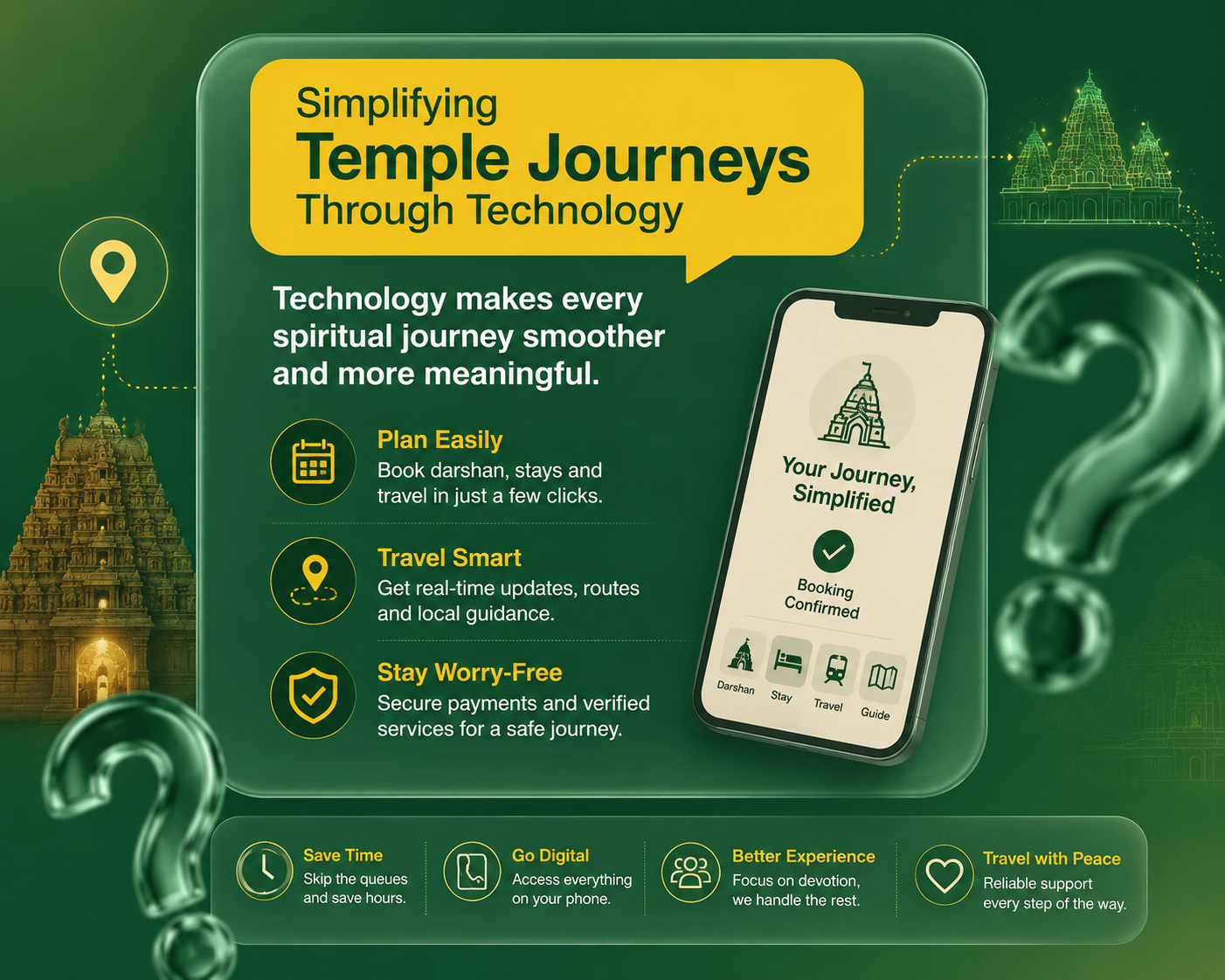
Temple journeys have always been deeply rooted in faith, tradition, and personal devotion. What has changed over time is the way travelers plan these journeys. Earlier, pilgrims depended heavily on local agents, handwritten schedules, word-of-mouth recommendations, and last-minute hotel searches. Today, digital tools allow devotees to organize almost every important part of a pilgrimage before leaving home.
From searching for accommodation near temples and checking travel routes to saving tickets, researching local attractions, and coordinating family members, technology is making religious travel more organized and accessible. The spiritual purpose remains unchanged, but unnecessary travel uncertainty can now be reduced through better information and smarter planning.
For people visiting destinations such as Kedarnath, Badrinath, Tirupati, Vaishno Devi, Kashi Vishwanath, Mahakaleshwar, Somnath, Dwarka, Rameswaram, Jagannath Puri, Ayodhya, or other important sacred destinations across India, digital planning can save valuable time and make the journey considerably easier.
Technology becomes especially valuable when families are travelling with children, elderly parents, or large groups. Accommodation, transport, temple access, weather, and local facilities can all be reviewed before arrival, helping travelers make decisions that better match the needs of their group.
This guide explains how technology is simplifying modern temple journeys and how digital travel platforms such as Mudras Stays can help devotees plan more convenient and comfortable pilgrimages.
Temple Travel Has Become Easier to Research
One of the biggest advantages of technology is access to information before the journey begins. A traveler planning a pilgrimage no longer needs to arrive at the destination without knowing what to expect.
Before travelling, devotees can research:
- Temple location.
- General darshan timings.
- Weather conditions.
- Accommodation options.
- Transportation routes.
- Nearby attractions.
- Local markets.
- Dining areas.
Having this information in advance makes travel planning more structured and reduces last-minute uncertainty.
Online Hotel Booking Removes One of the Biggest Pilgrimage Challenges
Accommodation has traditionally been one of the most stressful parts of pilgrimage travel. During busy periods, devotees arriving without a confirmed hotel may find that conveniently located rooms are already unavailable.
Online hotel booking allows travelers to compare accommodation before starting their journey.
They can evaluate:
- Room categories.
- Hotel location.
- Facilities.
- Pricing.
- Availability.
- Guest reviews.
- Booking conditions.
This provides greater confidence and reduces the need to search for rooms after arriving at an unfamiliar temple town.
Temple-Focused Platforms Make Accommodation Search More Relevant
Large travel platforms may display hundreds of hotels across an entire destination. While this provides variety, it can make decision-making difficult for pilgrims whose primary concern is convenient temple access.
A temple-focused platform such as Mudras Stays narrows the search toward accommodation relevant to spiritual travel.
Travelers can focus more easily on:
- Hotels near important temples.
- Practical location.
- Family-friendly accommodation.
- Options suitable for senior citizens.
- Budget stays.
- Premium properties.
This can reduce the time spent filtering through properties that may not suit a pilgrimage itinerary.
Digital Maps Make Unfamiliar Destinations Easier to Understand
Navigating a new pilgrimage destination can be confusing, especially when temple towns include narrow lanes, restricted vehicle zones, busy market roads, or multiple access points.
Digital maps can help travelers understand:
- General distance between hotel and temple.
- Railway station location.
- Bus stand location.
- Nearby restaurants.
- Medical facilities.
- Local attractions.
- Alternative routes.
However, map distance should not be treated as the only measure of convenience. Local traffic restrictions, pedestrian access, and terrain can affect the actual experience considerably.
Technology Helps Travelers Compare Practical Location
A hotel that appears geographically close to the temple may not always be the easiest property to reach.
Travelers can use digital research to check:
- Driving time.
- Walking distance.
- Road access.
- Parking availability.
- Public transport options.
- Nearby landmarks.
This helps families choose accommodation that is convenient in real travel terms rather than relying only on straight-line distance.
Temple Information Can Be Checked Before Arrival
Many devotees now research temple procedures before beginning their journey.
Depending on the destination, travelers may check:
- Opening and closing hours.
- Darshan schedules.
- Festival timings.
- Special rituals.
- Dress requirements.
- Visitor guidelines.
- Restrictions on electronic items.
Knowing these details beforehand allows travelers to create a more realistic daily itinerary.
Digital Tickets Make Transport Planning More Organized
Pilgrimage travel often involves several transportation stages including trains, flights, buses, taxis, and local vehicles.
Digital booking allows travelers to keep these arrangements in one place.
Useful confirmations to save include:
- Flight tickets.
- Train reservations.
- Bus bookings.
- Hotel confirmations.
- Taxi details.
- Temple reservations where applicable.
Saving screenshots or offline copies is helpful in locations where mobile connectivity may be inconsistent.
Digital Payments Make Everyday Travel More Convenient
Digital payments have reduced the need for travelers to carry large amounts of cash during pilgrimages.
Depending on local acceptance, digital payments can be useful for:
- Hotel payments.
- Restaurants.
- Local transport.
- Shopping.
- Travel bookings.
However, carrying a reasonable amount of cash remains useful for remote destinations, small vendors, or temporary service disruptions.
Weather Apps Help Devotees Prepare Better
Weather can influence temple travel significantly, especially in Himalayan, coastal, or monsoon-prone destinations.
Digital weather information helps travelers prepare for:
- Rain.
- Cold temperatures.
- Heat.
- Snowfall.
- Changing travel conditions.
Checking forecasts before departure and again during the trip can help families decide what to wear, when to travel, and whether to adjust outdoor plans.
Travel Alerts Help Pilgrims Avoid Unnecessary Delays
Road access, transport schedules, and local traffic patterns may change during festivals, adverse weather, or high pilgrimage seasons.
Digital information can help travelers monitor:
- Transport delays.
- Road advisories.
- Weather warnings.
- Temple announcements.
- Festival-related crowd information.
Being informed allows travelers to adjust plans early rather than reacting after reaching a problem area.
Technology Helps Families Coordinate Better
Family pilgrimages often involve several people travelling together, sometimes from different cities.
Digital planning tools make it easier to share:
- Hotel confirmations.
- Travel schedules.
- Meeting points.
- Emergency contacts.
- Destination details.
- Daily itineraries.
Keeping everyone informed reduces confusion and makes group travel easier to manage.
Senior Citizen Travel Can Be Planned More Carefully
Families travelling with elderly parents can use digital information to investigate accessibility before making a reservation.
Important details to check include:
- Lift availability.
- Ground-floor rooms.
- Walking distance.
- Vehicle access.
- Nearby medical facilities.
- Local transport availability.
This can prevent families from arriving at a hotel that is unsuitable for senior travelers.
Online Reviews Provide Useful Real-World Context
Hotel descriptions and professional photographs are useful, but traveler reviews often reveal practical details.
Pilgrims should pay attention to recent comments about:
- Cleanliness.
- Actual temple distance.
- Room comfort.
- Staff behaviour.
- Accessibility.
- Noise.
- Nearby food.
Reading several reviews gives a more balanced understanding than relying on a single rating.
Technology Helps Travelers Compare Affordability Properly
Affordable travel is not simply about choosing the lowest room rate.
A cheaper hotel located far from the temple may result in additional taxi fares and longer daily travel.
Digital research allows travelers to compare:
- Room price.
- Transport cost.
- Distance from temple.
- Included amenities.
- Meal availability.
- Parking cost.
This makes it easier to judge the total value of a stay.
Digital Tools Make Festival Travel More Manageable
Temple festivals attract large numbers of visitors and can create significant pressure on accommodation and transport.
Technology allows travelers to:
- Book hotels early.
- Secure transportation.
- Review festival schedules.
- Monitor weather.
- Save important confirmations.
- Prepare for larger crowds.
Advance digital planning becomes especially valuable during peak pilgrimage periods.
Technology Makes Multi-Temple Tours Easier to Organize
Pilgrims visiting several temples have more complex planning requirements than travelers staying in one destination.
Digital tools can help organize:
- Temple order.
- Driving distances.
- Hotel reservations.
- Transport connections.
- Rest days.
- Estimated travel time.
This is useful for journeys such as Char Dham, Jyotirlinga circuits, Shakti Peetha tours, or regional temple itineraries.
Online Destination Content Makes Pilgrimages More Informative
Many devotees want to understand the destination rather than simply visit the temple and leave.
Digital guides can introduce travelers to:
- Nearby sacred sites.
- Local history.
- Markets.
- Traditional food.
- Cultural attractions.
- Important nearby temples.
This helps travelers experience more of the spiritual and cultural character of the destination.
Technology Helps Reduce Overpacked Itineraries
Travelers sometimes underestimate distances between attractions. Digital navigation and travel-time estimates can reveal whether an itinerary is realistic before the journey begins.
A well-balanced pilgrimage should allow time for:
- Darshan.
- Meals.
- Rest.
- Transportation.
- Unexpected queues.
- Family needs.
Technology is useful not only for adding activities but also for deciding what should be removed from an overly ambitious schedule.
Digital Communication Makes Hotel Coordination Easier
Travelers often have specific questions that should be clarified before arrival.
These may include:
- Whether a vehicle can reach the hotel.
- Parking arrangements.
- Check-in timing.
- Room configuration.
- Extra bedding.
- Meal availability.
- Accessibility requirements.
Clarifying such details digitally before the journey can prevent misunderstandings after arrival.
Digital Tools Can Improve Safety
Technology can support safer travel when used carefully.
Travelers can use it to:
- Share their itinerary.
- Store emergency numbers.
- Locate medical facilities.
- Navigate unfamiliar areas.
- Check weather.
- Keep bookings accessible.
Digital tools should supplement normal travel awareness rather than replace it.
Offline Backups Remain Essential
Not every pilgrimage destination has strong internet connectivity.
Before leaving your accommodation, save:
- Hotel address.
- Booking confirmation.
- Ticket details.
- Emergency contacts.
- Route screenshots.
- Important identification copies where appropriate.
Offline information becomes valuable when mobile signals are weak or unavailable.
A Charged Phone Has Become a Travel Essential
Modern travelers depend on smartphones for navigation, bookings, payments, photography, communication, and emergency information.
Carry:
- Phone charger.
- Power bank.
- Suitable charging cable.
Charge your devices before leaving for long darshan schedules or road trips.
Technology Can Make Pilgrimages More Accessible to First-Time Travelers
First-time pilgrims may feel uncertain about an unfamiliar temple destination.
Digital planning reduces this uncertainty by allowing them to research:
- Where to stay.
- How to reach the temple.
- What the local area looks like.
- What weather to expect.
- Where essential services are located.
Better preparation builds confidence before departure.
Digital Planning Can Support International Pilgrims
Visitors travelling from outside India may require more pre-trip information than domestic travelers.
Technology can help them research:
- Transport routes.
- Accommodation.
- Temple etiquette.
- Local geography.
- Payment options.
- Nearby cultural attractions.
This reduces dependence on last-minute local arrangements.
Digital Convenience Should Not Replace the Spiritual Experience
Technology should make the journey easier, not dominate it.
Once accommodation, transport, and practical information are organized, travelers can intentionally reduce screen time and focus on:
- Prayer.
- Temple rituals.
- Family time.
- Local culture.
- Personal reflection.
The most effective digital pilgrimage is one where technology handles logistics quietly in the background.
How Mudras Stays Simplifies Digital Temple Travel
One challenge of online planning is that too much information can become overwhelming. Travelers may find hundreds of hotels but still struggle to understand which properties make practical sense for their temple visit.
Mudras Stays focuses specifically on temple and spiritual destinations. Its purpose is to make accommodation search more relevant to pilgrims.
Depending on the destination, travelers can explore:
- Hotels near temples.
- Budget accommodation.
- Family-friendly properties.
- Senior-friendly stays.
- Premium accommodation.
- Destination-focused travel information.
This allows travelers to combine the convenience of digital booking with a more specialized understanding of pilgrimage requirements.
Technology Can Help Travelers Book Earlier and Plan Better
Online availability makes it easier to recognize when hotels are beginning to fill during festivals or peak seasons.
Booking early provides:
- Greater hotel choice.
- More room categories.
- Better location options.
- More time to organize transport.
- Reduced last-minute pressure.
This is particularly useful for families requiring multiple rooms or specific accessibility facilities.
Better Digital Information Creates Better Pilgrimage Decisions
The biggest contribution of technology to pilgrimage travel is not speed alone. It is informed decision-making.
A traveler can now compare location, accommodation, weather, transportation, budget, and accessibility before committing to a journey.
This makes temple travel more predictable and organized while allowing devotees to preserve the spiritual focus that makes pilgrimage meaningful.
Frequently Asked Questions
How does technology simplify temple journeys?
Technology helps travelers research destinations, book accommodation and transportation, access maps, compare hotels, monitor weather, store tickets, and coordinate family travel before and during the pilgrimage.
Why is online hotel booking useful for pilgrims?
Online booking allows devotees to compare location, room types, prices, facilities, and availability in advance instead of searching for accommodation after reaching the temple town.
How does Mudras Stays support digital pilgrimage planning?
Mudras Stays focuses on accommodation around temple destinations, making it easier for travelers to search according to pilgrimage-specific needs such as practical location, family requirements, affordability, and accessibility.
Can technology help families plan temple trips?
Yes. Families can share itineraries, bookings, hotel details, transportation information, emergency contacts, and destination plans digitally, reducing confusion during group travel.
How can technology help senior citizens during pilgrimages?
Families can research hotel accessibility, travel distances, transportation options, nearby medical facilities, room categories, and local conditions before travelling with elderly parents.
Should pilgrims rely completely on digital maps?
No. Maps are helpful for general navigation, but temple towns may have restricted roads, pedestrian zones, seasonal access changes, or local routes that require additional verification.
What important information should be saved offline?
Keep offline copies of hotel details, booking confirmations, travel tickets, emergency contacts, basic route information, and other essential records in case mobile connectivity is unavailable.
Are digital payments enough for temple travel?
Digital payments are convenient, but travelers should still carry a reasonable amount of cash because small vendors, local transport providers, or remote locations may not always accept electronic payments.
Can technology help during major temple festivals?
Yes. It helps devotees book accommodation early, monitor schedules, prepare for crowds, track weather, save travel confirmations, and organize transportation during high-demand festival periods.
Does technology reduce the spiritual value of pilgrimage?
Not when used thoughtfully. Technology can handle practical logistics and reduce uncertainty, allowing devotees to spend more time focusing on prayer, family, rituals, and the spiritual experience itself.