Dwarkadhish Aarti: Royal Worship of Lord Krishna in Mathura
Dwarkadhish Aarti is part of the elaborate daily worship performed at Shri Dwarkadhish Temple in Mathura, Uttar Pradesh. The ceremony honours Lord Krishna in his majestic form as Dwarkadhish, meaning the Lord or King of Dwarka. Unlike temples where Krishna is mainly worshipped as the playful child of Braj, this shrine presents him in a dignified royal form known as Dwarkanath.
The principal deity is represented by a black marble image of Lord Dwarkadhish, accompanied by a white marble image of Sri Radharani. During the daily worship, the deities are adorned with carefully selected garments, jewellery, flowers and seasonal decorations. Sacred lamps, incense, bells, devotional verses and offerings form part of the different ceremonies conducted throughout the day.
Dwarkadhish Temple follows the Pushtimarg tradition of Krishna bhakti. Worship therefore takes the form of loving seva, in which the deity is treated as a living divine presence. Krishna is awakened, dressed, offered meals, allowed to rest, welcomed again in the afternoon and finally prepared for the night. Devotees attend these ceremonies to experience the different devotional moods associated with Krishna’s daily routine.
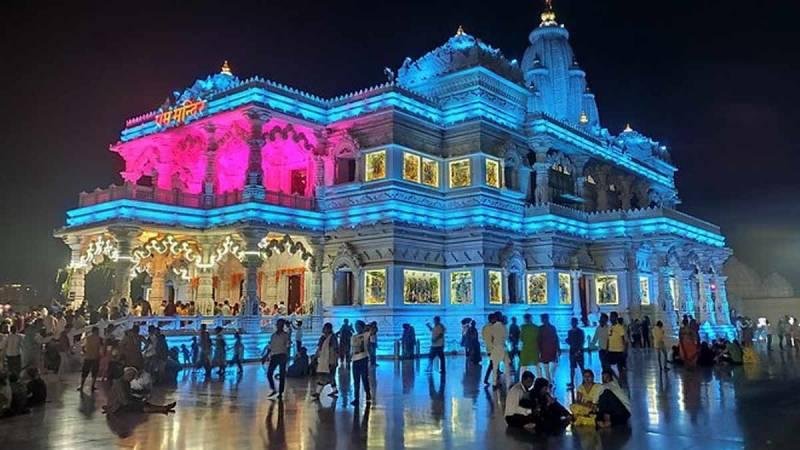
The evening Aarti is especially atmospheric. Illuminated lamps are offered before the beautifully decorated deity while bells ring and devotees sing Krishna bhajans. The historic courtyard, carved pillars and painted interiors deepen the feeling of entering a royal house of worship.
History of Dwarkadhish Temple and Its Aarti Tradition
The present Dwarkadhish Temple was constructed in 1814 by Seth Gokul Das Parikh, who served as the treasurer of the Gwalior State under the Scindia rulers. A devoted follower of Lord Krishna, he commissioned the temple close to the sacred Yamuna riverfront and Vishram Ghat.
The temple became one of Mathura’s largest and most respected Krishna shrines. Its grand courtyard, richly carved pillars and paintings depicting episodes from Krishna’s life reflect the royal character associated with Dwarkadhish. The architectural setting gives the daily lamp ceremonies a distinctive visual identity.
The precise date on which the current Aarti sequence began is not publicly documented. However, the ceremonies follow the established Pushtimarg system of seva associated with Mahaprabhu Vallabhacharya’s devotional tradition. In this system, worship is organised around several daily jhankis or darshan periods.
Each jhanki reveals Krishna in a different stage of his divine routine. The curtains are opened for darshan and may be closed again while the deity is dressed, offered food or allowed to rest. Consequently, the temple does not remain continuously open throughout the day, and visitors must reach it during an announced darshan period.
The daily traditions become more elaborate during Holi, Janmashtami, Diwali, Annakut and the Hindola celebrations of Shravan. Special garments, seasonal decorations, devotional singing and festival offerings may accompany the regular Aarti and darshan sequence.
Spiritual Significance of Dwarkadhish Aarti
Aarti symbolises the offering of light to the divine. The flame represents knowledge, purity and awakened consciousness. When the priest moves the lamp before Lord Dwarkadhish, devotees symbolically surrender their thoughts, actions and senses to Krishna.
The royal form of Dwarkadhish carries a distinctive spiritual meaning. Krishna is worshipped as a compassionate ruler who protects devotees and establishes righteousness. His royal adornment does not represent material power alone; it expresses the divine majesty, order and generosity associated with his rule in Dwarka.
The sound of temple bells helps devotees concentrate on worship. A conch may be blown to announce an auspicious moment, while incense symbolises purified intention. Flowers represent affection and gratitude, and the collective singing of bhajans allows everyone to participate regardless of whether they know the formal mantras.
At the end of the Aarti, devotees commonly place their hands near the sacred flame and touch their forehead. This gesture symbolises receiving divine light and carrying Krishna’s blessings into everyday life.
The different daily ceremonies also carry individual meanings. Mangla welcomes Krishna at the beginning of the day, Shringar celebrates his divine beauty, Gwal remembers his cowherd form, Rajbhog presents the principal meal, Utthapan marks his afternoon awakening and Shayan prepares him for rest.
Benefits of Attending Dwarkadhish Aarti
- Spiritual peace: The sacred lamps, chanting and temple atmosphere can help devotees experience inner quietness.
- Stronger Krishna bhakti: Participating in the daily seva encourages a more personal devotional relationship with Lord Krishna.
- Positive focus: Bells, prayers and bhajans help the mind move away from ordinary distractions.
- Emotional reassurance: Worshipping Krishna as a compassionate divine ruler can offer comfort during uncertain periods.
- Understanding of Pushtimarg: The ceremonies introduce visitors to a distinctive tradition of loving service to Krishna.
- Cultural experience: Devotees witness living rituals preserved through generations in the Braj region.
- Community worship: Collective chanting creates a feeling of unity among pilgrims from different backgrounds.
- Mindful gratitude: The Aarti provides an opportunity to express thankfulness and reflect on personal intentions.
What Makes Dwarkadhish Aarti Special?
Dwarkadhish Aarti is distinguished by its royal devotional character. Krishna is presented as the King of Dwarka through elaborate garments, crowns, jewellery, flowers and carefully arranged Shringar. The appearance of the deity may change according to the season, festival and time of day.
The ceremony is closely connected with the Pushtimarg understanding of seva. Devotees do not simply view an idol; they participate in the daily care of a living divine presence. Meals, rest periods, clothing and music are organised according to Krishna’s ceremonial routine.
The Aarti is performed within an impressive historic setting. Carved pillars surround the courtyard, while paintings illustrate episodes from Krishna’s life. When lamps are raised before the deity and bells begin to ring, the architecture, art and ritual combine into one devotional experience.
The temple’s jhanki system also makes each darshan feel distinct. Curtains are opened at designated moments, revealing a fresh form of the deity. A visitor attending Shringar experiences a different devotional mood from someone arriving for Rajbhog or Shayan.
During Shravan, the Hindola or swing celebration becomes a major attraction. Lord Dwarkadhish and Radharani are presented on beautifully decorated swings. Different colours, flowers, fabrics and ornamental themes may be used to create special festival darshans.
Holi is another remarkable celebration. The temple becomes filled with colour, music and joyful Krishna devotion. Janmashtami brings special decorations and worship, while Diwali and Annakut introduce illuminated lamps and elaborate food offerings.
Dwarkadhish Aarti Timings
Dwarkadhish Temple follows separate seasonal schedules. The following are widely published reference timings for its daily seva and darshan sequence. Some stages are darshans or bhog services rather than separate lamp Aartis, but they collectively form the temple’s daily worship programme.
Summer Aarti and Darshan Schedule
- Mangla: 6:30 AM to 7:00 AM
- Shringar: 7:40 AM to 7:55 AM
- Gwal: 8:25 AM to 8:45 AM
- Rajbhog: 10:00 AM to 10:30 AM
- Utthapan: 4:00 PM to 4:20 PM
- Bhog: 4:45 PM to 5:05 PM
- Evening Aarti: 5:20 PM to 5:40 PM
- Shayan: 6:30 PM to 7:00 PM
Winter Aarti and Darshan Schedule
- Mangla: 6:30 AM to 7:00 AM
- Shringar: 7:40 AM to 7:55 AM
- Gwal: Approximately 8:25 AM to 8:45 AM
- Rajbhog: 10:00 AM to 10:30 AM
- Utthapan: 3:30 PM to 3:50 PM
- Bhog: 4:20 PM to 4:40 PM
- Evening Aarti: Commonly listed at approximately 6:00 PM
- Shayan: Conducted as part of the concluding evening worship; visitors should confirm the day’s exact time locally.
Visitors should understand that the sanctum may close between individual jhankis. Arriving during the broader morning or evening opening period does not guarantee that the curtains will be open immediately. Reaching the temple 20 to 30 minutes before the desired ceremony is advisable.
Note: Timings may change during festivals or according to temple administration.
Rituals Performed During Dwarkadhish Aarti
Preparation and Shringar
Before the ceremony, priests prepare the shrine and adorn Lord Dwarkadhish and Radharani. Garments, crowns, jewellery, garlands and flowers are selected according to the season and devotional calendar.
Lighting of Sacred Lamps
Cotton wicks are placed in a lamp containing ghee or oil and then illuminated. The priest moves the lamp in circular patterns before the deities as an offering of light, purity and devotion.
Offering of Incense and Flowers
Incense is offered to purify the worship space and symbolise prayers rising towards the divine. Flowers and garlands express gratitude, affection and the beauty of selfless devotion.
Temple Bells and Conch Shell
Bells are rung during important moments of the ceremony, helping devotees focus on Krishna. The conch shell traditionally announces an auspicious beginning and marks the sacred character of the worship.
Krishna Bhajans and Devotional Chants
Priests and devotees sing prayers dedicated to Krishna and Radha. Familiar responses allow the congregation to participate collectively, transforming the Aarti into a shared devotional offering.
Bhog and Prasad
Food is offered at designated stages such as Gwal, Rajbhog and evening Bhog. Seasonal fruits, sweets, milk preparations and other permitted foods may be included. Sanctified offerings can later be distributed as prasad.
Receiving the Aarti
After the lamp has been offered, devotees respectfully receive its warmth by placing their hands near the flame and touching their forehead. They may then bow before Lord Dwarkadhish and proceed according to the temple’s queue system.
Temple Dress Code and Visitor Guidelines
- Wear modest clothing that covers the shoulders and knees.
- Remove footwear at the designated place before entering the temple.
- Maintain silence while priests perform prayers and offerings.
- Do not interrupt the ritual or enter areas reserved for priests.
- Photography is generally prohibited inside the temple.
- Keep mobile phones put away and follow instructions displayed at the entrance.
- Stand patiently in the designated queue and avoid pushing.
- Travel light and keep personal belongings secure in the crowded market lanes.
- Accept prasad respectfully with the right hand or both hands.
- Follow the directions of temple staff, priests and security personnel.
Best Time to Attend Dwarkadhish Aarti
Mangla and early morning darshan are suitable for visitors seeking a quieter devotional atmosphere. The surrounding market lanes are generally calmer, and the softer morning worship allows greater concentration.
Shringar and Rajbhog are ideal for devotees interested in seeing Lord Dwarkadhish in elaborate royal adornment. Rajbhog is one of the most cherished daily darshans because it combines full Shringar with the principal food offering.
Evening Aarti is a strong choice for first-time visitors. The illuminated lamps, temple bells, bhajans and larger congregation create an energetic yet devotional atmosphere. Visitors should check whether the temple is following its summer or winter schedule.
Shravan offers the colourful Hindola celebrations, while Holi and Janmashtami present the temple at its most festive. These periods also bring very large crowds and modified worship schedules.
For a peaceful experience, an ordinary weekday morning is generally preferable. Devotees planning to attend a specific jhanki can use Mudras Stays to explore accommodation in Mathura and the wider Braj region, making early arrival easier.
Nearby Attractions
- Vishram Ghat: Located close to the temple on the Yamuna, this sacred ghat is associated with Krishna resting after defeating Kansa and hosts daily river worship.
- Shri Krishna Janmabhoomi: The revered complex traditionally identified as Lord Krishna’s birthplace is one of Mathura’s principal pilgrimage destinations.
- Government Museum, Mathura: The museum preserves significant sculptures and archaeological objects connected with the ancient Mathura school of art.
Interesting Facts About Dwarkadhish Aarti and Temple
- Lord Krishna is worshipped here in his royal Dwarkadhish form rather than only as the child Krishna of Braj.
- The black marble image of Dwarkanath is accompanied by a white marble image of Radharani.
- The current temple structure was completed in 1814 through the patronage of Seth Gokul Das Parikh.
- The worship follows the Pushtimarg tradition of loving and carefully organised seva.
- The sanctum opens in individual jhankis instead of remaining continuously visible.
- Rajbhog is considered one of the most cherished daily darshan periods.
- The Hindola celebration presents the deities on elaborately decorated seasonal swings.
- The temple is known for its carved pillars and painted scenes illustrating Krishna’s life.
Frequently Asked Questions About Dwarkadhish Aarti
What is Dwarkadhish Aarti in Mathura?
Dwarkadhish Aarti is the ceremonial offering of illuminated lamps, prayers, incense and devotional music to Lord Krishna in his royal form at Shri Dwarkadhish Temple in Mathura.
Where is Dwarkadhish Aarti performed?
The ceremony is performed at Shri Dwarkadhish Temple in Mathura’s old city, close to Vishram Ghat and the Yamuna riverfront.
What are the Dwarkadhish Aarti timings?
The summer reference schedule lists evening Aarti from approximately 5:20 PM to 5:40 PM, while the winter evening Aarti is commonly listed at around 6:00 PM. Morning and other seva timings are provided in the seasonal schedule above.
Which is the most popular darshan at Dwarkadhish Temple?
Rajbhog is especially cherished because Lord Dwarkadhish appears in elaborate royal Shringar with the principal meal offering. Evening Aarti is popular for its lamps, bells and collective bhajans.
Can anyone attend Dwarkadhish Aarti?
Yes. Regular Aarti and darshan are generally open to respectful devotees and visitors, subject to temple rules, available space and special crowd arrangements.
Is there an entry fee for Dwarkadhish Aarti?
There is generally no entry fee for regular darshan or Aarti. Donations and separately arranged offerings are voluntary and may follow their own procedures.
Is photography allowed during the Aarti?
Photography is generally prohibited inside Dwarkadhish Temple. Visitors should keep cameras and mobile phones put away and follow the instructions displayed by the temple administration.
What should devotees wear for Dwarkadhish Aarti?
Devotees should wear clean, modest clothing that covers the shoulders and knees. Footwear must be removed before entering the designated worship area.