
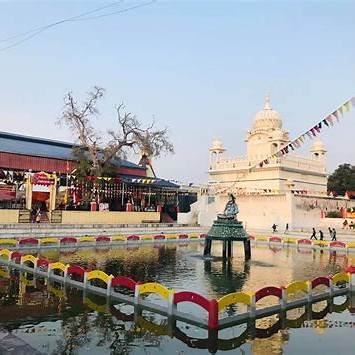
Sthaneshwar Mahadev Temple is one of the most important Shiva pilgrimage destinations in Kurukshetra and one of the defining sacred landmarks of historic Thanesar in Haryana. Located within the old city, the temple stands beside a rectangular sacred tank and preserves a powerful combination of Shaiva worship, Mahabharata traditions, early-medieval royal history and the living pilgrimage culture of Kurukshetra.
The temple is known by several closely related names:
Sthaneshwar Mahadev Temple
Sthaneshwara Mahadev Temple
Sthaneswar Mahadev Mandir
Sthaneshwar Shiva Temple
Prachin Sthaneshwar Mahadev Mandir
Thanesar Mahadev Temple
Sthanvishvara Mahadev Temple
These spellings generally refer to the same shrine.
Travellers booking a taxi, auto-rickshaw or accommodation should specify:
**Sthaneshwar Mahadev Temple in old Thanesar, Kurukshetra, Haryana.**
This helps distinguish it from Sarveshwar Mahadev Temple at Brahma Sarovar and other Shiva temples located across the wider Kurukshetra pilgrimage region.
Sthaneshwar Mahadev Temple is traditionally considered one of the essential sacred stops within a Kurukshetra pilgrimage. Haryana’s official tourism tradition describes a visit to Kurukshetra as spiritually incomplete without darshan at Sthaneshwar Mahadev.
The shrine is dedicated to Lord Shiva, who is worshipped here through the sacred Shiva lingam.
According to Hindu tradition, Lord Krishna and the Pandavas came to this place before the beginning of the Mahabharata war. They are believed to have worshipped Mahadev and sought his blessings before entering the battlefield of Kurukshetra.
Another local tradition identifies Sthaneshwar as the place where Lord Brahma first established or worshipped Shiva in the form of a lingam.
The sacred tank adjoining the temple is connected with the legend of King Bana, who is believed to have recovered from a severe skin disease after using its water.
These accounts form an important part of the temple’s religious identity.
They should be presented respectfully as sacred, Puranic and local traditions rather than scientifically verified history or medical evidence.
The temple is also historically connected with ancient Sthanvishvara, the settlement now known as Thanesar. The town became an important political and religious centre under the Pushyabhuti or Vardhana dynasty and was associated with Emperor Harshavardhana during the seventh century.
Sthaneshwar Mahadev was regarded as the presiding deity of the historic city.
This relationship between deity and settlement is reflected in the name itself.
The present temple complex displays the result of centuries of worship, rebuilding, repair and renovation. Its pale exterior, prominent dome, smaller corner pavilions, sacred tank and central Shiva image create a distinctive visual identity.
Visitors should not assume that every visible wall, dome, railing or floor belongs to the earliest period of worship.
Ancient sacred sites frequently preserve spiritual continuity even when their buildings have been reconstructed multiple times.
For Shiva devotees, Sthaneshwar Mahadev is a place of prayer, surrender and spiritual transformation.
For Mahabharata pilgrims, it forms an important part of the sacred geography associated with Krishna and the Pandavas.
For heritage travellers, it connects the mythological landscape of Kurukshetra with the historically documented city of Thanesar.
For families, it offers a road-accessible pilgrimage without a difficult trek.
For senior citizens, its urban location and comparatively compact complex make darshan manageable when major festival crowds are avoided.
For students, the temple introduces the relationship between sacred tradition, early-medieval history, water heritage and living religious practice.
Visitors searching for hotels near Sthaneshwar Mahadev Temple, homestays in Thanesar, pilgrimage accommodation near old Kurukshetra, family hotels near Kurukshetra Junction or places to stay near the Kurukshetra temple circuit can use MudrasStays to plan a comfortable and geographically practical journey.
## Meaning of Sthaneshwar
The name Sthaneshwar is commonly derived from Sanskrit expressions connected with Sthanu and Ishvara.
Sthanu is an ancient name of Lord Shiva and can suggest stability, permanence, the unmoving principle or the divine presence that remains constant through change.
Ishvara means Lord or supreme divine authority.
Sthaneshwar may therefore be understood as the Lord who remains firm, the Lord of the sacred place or Shiva as the presiding deity of the settlement.
The historic name Sthanvishvara gradually developed through regional pronunciation into Thanesar.
The modern urban area of Kurukshetra and Thanesar has expanded considerably, but the older name continues to preserve the city’s association with Mahadev.
The meaning is particularly appropriate for Shiva.
The visible world changes constantly.
Cities rise and decline.
Kingdoms expand and disappear.
Buildings are reconstructed.
Human bodies age.
Personal circumstances change.
Shiva as Sthanu represents the consciousness that remains steady through these transformations.
A visit to Sthaneshwar can therefore become an opportunity to examine what remains stable within one’s own life.
A person may lose money, recognition, comfort or certainty.
Spiritual stability comes from values, awareness and responsible conduct rather than from temporary circumstances alone.
## Spiritual Importance of Lord Shiva
Lord Shiva is one of the principal deities of Hindu tradition and is worshipped as Mahadev, the Great God.
He represents meditation, time, transformation, detachment, compassion and liberation.
Shiva contains several complementary identities.
He is the silent yogi absorbed in meditation.
He is also the husband of Goddess Parvati and father of Ganesha and Kartikeya.
He lives beyond ordinary society, yet he remains deeply connected with family and devotees.
He is described as the destroyer, but destruction within Shaiva philosophy does not mean meaningless violence.
It means transformation.
Ignorance may need to end before wisdom can grow.
Pride may need to be broken before humility becomes possible.
A harmful habit may need to be abandoned before life can improve.
Shiva’s destruction creates space for renewal.
His third eye represents perception beyond superficial appearance.
The crescent moon represents time held within awareness.
The Ganga flowing from his matted hair represents powerful energy controlled and distributed responsibly.
The serpent around his neck represents mastery over fear, death and uncontrolled desire.
The trident represents several spiritual triads, including creation, preservation and transformation.
The damaru represents rhythm, sound and the movement through which creation becomes expressed.
The ash upon Shiva’s body reminds devotees that physical status, wealth and appearance are temporary.
Pilgrims visit Sthaneshwar Mahadev to pray for peace, courage, family welfare, clarity, responsible decision-making and freedom from harmful attachment.
Some arrive before beginning an important responsibility.
Others visit during illness, uncertainty or emotional distress.
Students may pray for concentration.
Families may seek harmony.
Professionals may seek integrity and wisdom.
Devotees may offer gratitude after completing a vow.
Such prayers belong to personal faith.
The temple should not be promoted as guaranteeing employment, marriage, fertility, wealth, legal success or medical recovery.
Prayer can provide inner strength, discipline and hope, while practical concerns should continue to receive appropriate professional attention.
## The Sacred Shiva Lingam
The Shiva lingam is the central sacred form at Sthaneshwar Mahadev Temple.
The lingam represents Lord Shiva beyond the limitations of a conventional human image.
It has no fixed face, costume, age or social identity.
Its continuous form suggests infinity and the source from which visible creation emerges.
The base surrounding the lingam represents Shakti, the active divine energy associated with Goddess Parvati.
Together, the lingam and its base express the inseparable relationship between consciousness and energy.
Shiva represents awareness and stillness.
Shakti represents action, movement and creation.
Neither is complete without the other.
Devotees may perform or participate in abhishek according to temple arrangements.
Common Shiva offerings include clean water, flowers, bilva leaves, sandalwood and other approved materials.
Milk, honey, curd or additional substances may be used during organised worship, but visitors should not pour large quantities independently.
Excessive offerings can create food waste, slippery flooring, blocked drainage and sanitation problems.
A simple offering made with attention is spiritually meaningful.
The value of worship is not determined by the cost or volume of material offered.
## Tradition of the First Shiva Lingam
An important local belief states that Lord Brahma established the first Shiva lingam at Sthaneshwar.
This tradition gives the temple exceptional importance within Kurukshetra’s sacred geography.
Brahma represents creation.
Shiva represents transformation and the limitless consciousness underlying existence.
The establishment of the lingam by Brahma symbolically connects creation with the reality beyond creation.
The claim that this was literally the first Shiva lingam worshipped anywhere in the world belongs to temple tradition.
It should not be presented as a conclusion established through archaeology.
The spiritual value of the account lies in its attempt to express the extreme sanctity and antiquity attributed to the shrine.
Pilgrims can respect the tradition without converting a theological statement into an archaeological date.
## Krishna and the Pandavas
The temple’s best-known Mahabharata tradition concerns Lord Krishna and the five Pandava brothers.
According to local belief, Krishna brought the Pandavas to Sthaneshwar before the battle of Kurukshetra.
They worshipped Lord Shiva and sought his blessings for victory and the protection of dharma.
The tradition places Shiva worship immediately before one of the most morally complex conflicts in Indian sacred literature.
The Mahabharata war was not presented as an ordinary struggle for wealth.
It emerged after repeated failures of negotiation, humiliation, injustice and the refusal to restore the Pandavas’ rights.
Even then, the decision to fight carried terrible consequences.
The Pandavas’ prayer to Shiva can therefore be interpreted as a request for courage, clarity and spiritual accountability rather than a simple request to defeat enemies.
Yudhishthira represents responsibility and the difficult pursuit of dharma.
Bhima represents strength and loyalty.
Arjuna represents skill, concentration and moral questioning.
Nakula and Sahadeva represent service, knowledge and family responsibility.
Draupadi represents dignity and resistance to injustice.
Krishna represents guidance, wisdom and the ability to act without becoming controlled by fear or attachment.
The association of these figures with Sthaneshwar makes the temple an important part of the broader Mahabharata pilgrimage circuit.
The story belongs to Hindu sacred tradition.
The existing temple architecture should not automatically be dated to the Mahabharata period.
A sacred association can remain continuous even when the physical structure has been rebuilt.
## Shiva and the Ethics of Victory
The Pandava tradition carries an important lesson for modern devotees.
Victory alone is not proof of righteousness.
The method used to achieve success matters.
The purpose for which power is used matters.
A person may win an argument and still behave unjustly.
A business may earn profit while exploiting others.
A family member may impose authority without respecting another person’s dignity.
A political ruler may control territory without creating justice.
Seeking Shiva’s blessing should therefore involve examining one’s intention.
The devotee should ask:
Is the goal fair?
Will the action harm innocent people?
Is the decision motivated by duty or ego?
Has peaceful resolution been attempted?
Will success be used responsibly?
This transforms the Mahabharata tradition from a story of supernatural victory into a lesson about ethical action.
## King Bana and the Sacred Tank
A sacred tank stands directly in front of the temple and forms an essential part of its visual and religious identity.
Local tradition associates the water with King Bana, who is believed to have suffered from a severe skin condition.
After bathing in or applying water from the tank, he is said to have recovered.
This story has encouraged generations of devotees to regard the tank as holy and spiritually purifying.
The water tradition should be approached respectfully but responsibly.
It is not appropriate to claim that the tank provides a scientifically proven treatment for leprosy, skin disease or any other medical condition.
Natural and managed water bodies can contain microorganisms, algae, sediment or pollutants.
Visitors with open wounds, reduced immunity or skin conditions should seek medical advice before entering unfamiliar water.
Prayer and medical treatment are not mutually exclusive.
A devotee may honour the sacred tradition while continuing professional healthcare.
## Spiritual Meaning of the Tank
Water represents life, purification and renewal.
It receives the reflection of the temple without permanently holding it.
When the surface becomes disturbed, the reflected image breaks.
When the water becomes calm, the temple appears clearly.
The same idea can be applied to the mind.
A mind continuously disturbed by anger, fear, jealousy and distraction struggles to perceive truth.
A calmer mind allows clearer reflection.
The sacred tank therefore creates more than a scenic foreground.
It reinforces the temple’s spiritual message.
Shiva represents the stable centre.
Water represents the changing world.
The devotee learns to remain aware while circumstances continue moving.
## Water Safety and Cleanliness
Visitors should follow current temple instructions concerning bathing, touching the water or performing ritual ablutions.
The presence of steps does not automatically mean that unrestricted swimming or immersion is permitted.
Children must remain beside responsible adults.
No one should lean over barriers or enter deep water for photography.
Soap, shampoo, detergent and chemical products must not be used.
Plastic bags, packaged flowers, food, oil, cloth and disposable ritual material should never be thrown into the tank.
Coins can also contribute to water contamination and should not be thrown unless a recognised system specifically permits an offering.
Protecting the tank is one of the most direct ways to honour Sthaneshwar Mahadev.
## The Shiva Statue in the Tank
A large seated image of Lord Shiva stands upon a raised pavilion-like platform within the tank.
The blue-toned image has become one of the temple’s most recognisable visual features.
It presents Mahadev in meditation, surrounded by sacred water and facing the temple complex.
The image reinforces the association between Shiva, stillness and the natural elements.
It is a modern devotional installation rather than evidence for the archaeological age of the original shrine.
Visitors should photograph it from authorised areas without climbing railings or approaching unsafe water.
The image should not be treated merely as a decorative backdrop.
For worshippers, it represents the meditative presence of Shiva.
## Architecture of the Temple
Sthaneshwar Mahadev Temple has a compact and visually distinctive form.
The main building is predominantly pale or white, creating a calm appearance against the water of the tank.
A large ribbed dome rises above the central shrine.
Smaller pavilion-like turrets mark the corners of the upper structure.
Decorative railings, arches, moulded borders and finials add detail to the exterior.
The design reflects a combination of temple architecture and later North Indian building traditions.
The dome differs from the tall curving shikhara associated with many classical Nagara temples.
This does not reduce the building’s Hindu identity.
Sacred architecture changes according to period, region, available craftsmanship and reconstruction.
The temple’s present form likely reflects several phases of building and renovation.
The central sanctum remains the spiritual focus, while adjoining spaces serve devotees, priests and associated deities.
Visitors should avoid assigning one precise date to every visible feature unless detailed architectural documentation is available.
## Interior and Associated Shrines
The principal sanctum is dedicated to Sthaneshwar Mahadev.
The wider complex may include sacred images and spaces associated with other Hindu deities and forms of Shiva worship.
Living temple arrangements can change through renovation, festival decoration and ritual use.
Visitors should follow temple signage and authorised guidance when identifying individual shrines.
The sanctum can become crowded during Mahashivratri and Shravan.
Pilgrims should complete darshan without blocking the doorway.
Phones should remain silent.
Photography of the lingam, sacred decoration, priests and private rituals should only be undertaken when clearly permitted.
## Sthaneshwar and Emperor Harshavardhana
Sthaneshwar Mahadev Temple was an important religious centre within the kingdom associated with the Pushyabhuti or Vardhana dynasty.
Thanesar served as an important capital before Emperor Harshavardhana expanded his political authority across large parts of northern India during the seventh century.
The connection between the dynasty and Sthaneshwar Mahadev illustrates the relationship between kingship and sacred patronage.
A presiding deity could become closely associated with the identity and protection of a capital.
The ruler’s political authority and the city’s sacred geography reinforced one another.
Visitors should distinguish this historically documented early-medieval importance from the much older Mahabharata and Brahma traditions.
The temple may hold several historical layers simultaneously:
A Puranic and Mahabharata sacred tradition
An early-medieval connection with Thanesar and Harshavardhana
Later rebuilding and renovation
Continuing modern worship
Each layer contributes to the site’s identity.
## Harsh Ka Tila
Harsh Ka Tila is located near the temple and preserves archaeological remains associated with historic Thanesar.
The mound contains evidence from several periods of settlement.
It offers an important historical complement to the temple.
Sthaneshwar Mahadev communicates living sacred tradition.
Harsh Ka Tila helps visitors understand that Thanesar was also a significant urban and political centre.
Access, conservation work and visitor movement around archaeological areas can change.
Visitors should remain within authorised paths and should not collect pottery, bricks or fragments.
## Mahashivratri
Mahashivratri is the most important annual festival at Sthaneshwar Mahadev Temple.
The festival usually falls during February or March according to the Hindu lunar calendar.
Its name means the Great Night of Shiva.
Several traditions explain its significance.
Some devotees celebrate the marriage of Lord Shiva and Goddess Parvati.
Others associate the night with Shiva’s cosmic dance.
Another tradition remembers the infinite pillar of light through which Shiva revealed that the Divine has no measurable beginning or end.
Devotees may observe fasting, night vigil, mantra recitation, abhishek and special puja.
The temple is decorated with flowers, lights and devotional material.
Long queues may begin before sunrise and continue through the day.
Water, milk, bilva leaves and flowers may be offered through regulated arrangements.
Pilgrims should expect security screening, crowd-control barriers, traffic restrictions and limited parking close to the shrine.
The exact annual programme should be confirmed locally.
## Mahashivratri Safety
Festival visitors should carry minimal luggage.
Children should wear identification containing a guardian’s phone number.
Groups should establish a meeting point outside the most crowded section.
Senior citizens and visitors unable to stand for long periods should avoid the busiest hours.
Barricades and one-way routes must be followed.
No person should push towards the sanctum or attempt unauthorised entry.
Religious enthusiasm should never create danger for other devotees.
## Shravan and Sawan Mondays
The Hindu month of Shravan, also called Sawan, is particularly sacred to Lord Shiva.
It generally falls during July and August, though the exact dates depend on the lunar calendar.
Mondays during Shravan attract additional visitors.
Devotees may offer water, flowers and bilva leaves and recite Shiva mantras.
The period often overlaps with the monsoon.
Visitors should prepare for humidity, rain and slippery flooring.
Water containers and plastic packaging should be handled responsibly.
Large volumes of milk or water should not be carried into the queue unless permitted by temple management.
## Monthly Shivratri and Pradosh
Some devotees visit on the monthly Shivratri and during Pradosh Vrat.
Pradosh is associated with Shiva worship during twilight on the thirteenth lunar day.
The temple may receive increased evening attendance on these dates.
Current aarti and puja schedules should be verified locally.
## Mondays
Monday is traditionally associated with Lord Shiva.
The Hindi name Somvar relates to Soma, the moon carried by Shiva upon his head.
Ordinary Mondays may be busier than other weekdays.
Visitors seeking quiet darshan should consider an early morning on a non-festival weekday.
## Temple Timings
Opening, closing, aarti and abhishek timings may change according to season, festivals and special ceremonies.
Online listings are not always consistent.
Visitors planning very early or late darshan should confirm the current schedule directly.
The sanctum may close temporarily for bhog, decoration, cleaning or private rituals even when the wider complex remains open.
## Best Time to Visit Sthaneshwar Mahadev Temple
The temple can generally be visited throughout the year.
### October to March
The cooler months provide the most comfortable weather for temple and heritage exploration.
Morning and evening can become cold during December and January.
Fog may affect trains and road travel.
### February and March
Mahashivratri may fall during this period.
The festival offers a powerful collective experience but brings heavy crowding.
Travellers seeking a peaceful visit should choose a different date.
### April to June
Kurukshetra can become extremely hot.
The tank-side area, roads and temple courtyards receive strong sunlight.
Early-morning or evening darshan is preferable.
Visitors should carry drinking water and protect children and senior citizens from heat.
### July to September
The monsoon and Shravan create an important devotional period.
Rain can make floors and roads slippery.
Drainage and water conditions should be observed carefully.
### November and December
The International Gita Mahotsav period brings increased tourism to Kurukshetra.
Accommodation near Brahma Sarovar and central pilgrimage areas may fill quickly.
Visitors should book early when combining the temple with major city events.
## Reaching Sthaneshwar Mahadev Temple
The temple is situated in old Thanesar within the urban area of Kurukshetra.
It can be reached by auto-rickshaw, e-rickshaw, taxi, private vehicle and local transport.
The lanes near old-city religious sites may become congested.
Drivers should use the complete temple name rather than only asking for “Mahadev Mandir.”
## Reaching from Kurukshetra Junction
Kurukshetra Junction is the principal railway gateway.
The temple is approximately four to five kilometres away, depending upon the route and station exit used.
Autos, e-rickshaws and taxis are generally available.
Travellers carrying large luggage should check into accommodation or use secure storage before visiting.
Suitcases should not be carried into temple queues.
## Reaching from Thanesar Railway Station
Thanesar Railway Station serves selected regional services.
It may offer a convenient connection for travellers whose trains stop there.
Train schedules and stopping patterns should be checked before planning.
## Reaching from the Bus Stand
The New Bus Stand in Sector 10 is approximately five kilometres from the temple through the district’s listed route.
The Old Bus Stand may be closer to some parts of Thanesar.
Local autos and e-rickshaws are normally the most convenient final connection.
## Reaching from Pipli
Pipli lies on NH-44 and functions as an important highway entry point for Kurukshetra.
The temple is approximately eight to nine kilometres from Pipli according to the official district route.
Visitors arriving by intercity bus or private vehicle can continue towards Thanesar.
## Reaching from Delhi
Kurukshetra is approximately 160 kilometres from Delhi through NH-44, depending upon the starting point.
A same-day road trip is possible, but pilgrims seeking a complete temple circuit should stay overnight.
Traffic around Delhi, Sonipat, Panipat and Karnal can affect travel time substantially.
## Reaching from Chandigarh
Chandigarh is approximately 95 kilometres from Kurukshetra through NH-44.
The journey is convenient for a day trip, but an overnight stay allows visitors to experience Brahma Sarovar, Jyotisar and other sites without rushing.
## Reaching by Air
Shaheed Bhagat Singh International Airport near Chandigarh is one of the principal airports serving Kurukshetra.
Indira Gandhi International Airport in Delhi is another major option.
Both require onward road or rail travel.
A temple visit should not be scheduled immediately before a flight without a generous time allowance.
## Accessibility for Senior Citizens
Sthaneshwar Mahadev Temple is an urban and road-accessible pilgrimage destination.
It does not require a mountain trek or long stair climb.
This makes it suitable for many senior citizens.
Visitors may still encounter thresholds, wet flooring, narrow queues and steps around the tank.
Festival parking may be farther from the entrance.
Senior citizens should visit during a quiet weekday morning where possible.
Wheelchair access to every sanctum or tank-side area should not be assumed.
The nearest accessible drop-off and current route should be confirmed locally.
## Visiting with Children
Children can learn about Lord Shiva, Krishna, the Pandavas and the history of Thanesar.
They require continuous supervision near the tank, steps, lamps and crowded queues.
They should not climb railings or throw food into the water.
Parents can explain the King Bana story as a sacred legend rather than a medical guarantee.
The visit can also teach children that keeping temple water clean is part of religious responsibility.
## Temple Etiquette
Visitors should dress respectfully and remove footwear wherever instructed.
Phones should remain silent near the sanctum.
Photography of the Shiva lingam, priests, sacred decoration and private rituals should only be undertaken when permission is clear.
Queue barriers should not be crossed.
Offerings should be presented through authorised arrangements.
Donations should be made through recognised boxes or counters.
Visitors should avoid intermediaries promising guaranteed blessings or special access in exchange for excessive payment.
## Nearby Gurdwara and Interconnected Heritage
A gurdwara near the Sthaneshwar sacred area is traditionally associated with Guru Tegh Bahadur, the ninth Sikh Guru.
Visitors who enter a gurdwara should cover their heads, remove footwear and follow Sikh maryada.
The proximity of Hindu and Sikh sacred traditions reflects the layered religious history of Thanesar.
Each place should retain its distinct identity.
Respectful travel does not require merging different traditions.
It requires following the customs of each sacred institution with humility.
## Nearby Attractions
### Bhadrakali Temple
Bhadrakali Temple, also known as Shri Devi Koop Temple, is one of Kurukshetra’s major Shakti pilgrimage destinations.
It is traditionally associated with the fall of Mata Sati’s ankle and with the Pandavas offering horses after their victory.
Devotees continue to offer miniature horses according to local tradition.
The temple is situated close enough to Sthaneshwar Mahadev to form a natural Shiva–Shakti pilgrimage circuit.
### Harsh Ka Tila
Harsh Ka Tila preserves the archaeological history of Thanesar and its association with Emperor Harshavardhana.
Visitors should follow all conservation restrictions.
### Brahma Sarovar
Brahma Sarovar is one of Kurukshetra’s most important sacred water bodies.
It contains Sarveshwar Mahadev Temple and becomes the centre of major celebrations during Gita Jayanti and solar-eclipse pilgrimages.
Sthaneshwar Mahadev and Sarveshwar Mahadev are separate temples.
### Sannihit Sarovar
Sannihit Sarovar is traditionally regarded as the meeting place of sacred rivers and is especially important on Amavasya.
Visitors should follow current bathing and safety arrangements.
### Jyotisar
Jyotisar is traditionally identified as the place where Lord Krishna delivered the teachings of the Bhagavad Gita to Arjuna.
The sacred banyan tree, chariot representation and interpretive programme make it an essential part of the Kurukshetra circuit.
### Sri Krishna Museum
The Sri Krishna Museum contains sculptures, paintings, manuscripts, archaeological objects and artistic representations connected with Krishna and the Mahabharata.
Opening days and ticketing should be checked before visiting.
### Kurukshetra Panorama and Science Centre
The Panorama and Science Centre presents a large interpretation of the Mahabharata battle alongside science exhibits.
It is particularly suitable for families and school groups.
### Sheikh Chilli’s Tomb
Sheikh Chilli’s Tomb is an important Mughal-period heritage complex containing a tomb, madrasa, gardens and archaeological displays.
Its Islamic architectural history provides a valuable contrast with Kurukshetra’s Hindu pilgrimage sites.
### Dharohar Museum
Dharohar Museum at Kurukshetra University presents the folk culture, crafts, agriculture, architecture and everyday life of Haryana.
### Bhishma Kund
Bhishma Kund at Narkatari is associated through Mahabharata tradition with Bhishma lying upon the bed of arrows.
It requires a separate road journey.
## Suggested Half-Day Sthaneshwar Itinerary
Begin with early-morning darshan at Sthaneshwar Mahadev Temple.
Offer prayer at the Shiva lingam through the authorised system.
Walk around the sacred tank without polluting the water.
Visit the nearby gurdwara where appropriate and follow its separate customs.
Continue to Harsh Ka Tila and Bhadrakali Temple.
Return to accommodation before the strongest afternoon heat.
## Suggested One-Day Kurukshetra Pilgrimage
Begin at Sthaneshwar Mahadev Temple.
Continue to Bhadrakali Temple.
Visit Sannihit Sarovar and Brahma Sarovar.
Explore Sri Krishna Museum or the Panorama and Science Centre during the afternoon.
Travel to Jyotisar for the later part of the day.
The itinerary should remain flexible because traffic, temple queues and museum timings can vary.
## Suggested Two-Day Spiritual Journey
On the first day, focus on Sthaneshwar Mahadev, Bhadrakali Temple, Harsh Ka Tila, Sannihit Sarovar and Brahma Sarovar.
On the second day, visit Jyotisar, Bhishma Kund, the Sri Krishna Museum and selected sites within the 48-kos Kurukshetra region.
A two-day schedule is more comfortable for families and senior citizens.
## Suggested Three-Day Kurukshetra Heritage Circuit
Day one can cover the principal temples and sarovars of Thanesar.
Day two can focus on Jyotisar, museums and Mahabharata interpretation centres.
Day three can include Pehowa, Bhishma Kund, Amin or other recognised sites within the wider Kurukshetra pilgrimage landscape.
A slower schedule allows travellers to understand each destination rather than treating the journey as a checklist.
## Accommodation Near Sthaneshwar Mahadev Temple
Kurukshetra provides a wide range of hotels, guesthouses, dharamshalas, resorts and homestays.
The most suitable location depends upon the wider itinerary.
## Dharamshalas Near the Sacred Sarovars
Economical pilgrim accommodation is available around Brahma Sarovar, Sannihit Sarovar and other religious areas.
Facilities can be basic and may include shared bathrooms, restricted check-in rules and limited housekeeping.
Availability should be confirmed directly.
## Hotels in Thanesar and the Old City
Staying in Thanesar provides convenient access to Sthaneshwar Mahadev, Bhadrakali Temple and nearby heritage sites.
Old-city roads can be congested, and parking may be limited.
Guests should confirm whether the property can be reached by car.
## Hotels Near Kurukshetra Junction
Railway-area hotels are practical for short stays and early departures.
Guests should compare room cleanliness, family suitability, noise, breakfast and luggage storage.
## Hotels Near Brahma Sarovar
Accommodation near Brahma Sarovar is useful for pilgrims attending morning or evening aarti and visiting museums.
The area becomes busy during Gita Mahotsav, eclipses and major festivals.
## Hotels in the Modern Sectors
Modern areas around Sectors 7, 10, 13 and adjoining neighbourhoods may offer wider roads, restaurants and newer accommodation.
A local vehicle is required for old-city temples.
## Hotels Along NH-44 and Pipli
Highway hotels are convenient for road travellers continuing between Delhi, Chandigarh, Punjab and Himachal Pradesh.
They may provide better parking but involve additional travel into Thanesar.
## Homestays in Kurukshetra
Verified homestays can provide local meals and personalised route guidance.
Guests should confirm attached bathrooms, air-conditioning, heating, parking and the actual driving distance to the temple.
## Choosing the Right Stay
Pilgrims focused mainly on Sthaneshwar Mahadev and old Thanesar should select central accommodation with manageable temple access.
Visitors prioritising museums and Brahma Sarovar may stay near the sarovar or university side.
Road travellers may prefer NH-44 or Pipli.
Families should confirm room capacity, meals and parking.
Senior citizens should prioritise lifts, ground-floor rooms and dependable transport.
Couples may prefer quieter hotels or homestays outside congested lanes.
Solo pilgrims should choose populated and well-connected accommodation.
Groups should confirm multiple rooms, vegetarian meals and bus parking.
Mahashivratri and Gita Mahotsav visitors should reserve early.
## Book Hotels Near Sthaneshwar Mahadev Temple with MudrasStays
MudrasStays helps pilgrims, families and heritage travellers discover hotels, homestays, guesthouses and pilgrimage accommodation near Sthaneshwar Mahadev Temple and throughout Kurukshetra.
The platform is designed for travellers searching specifically for places to stay near temples, sacred tanks, Mahabharata destinations and pilgrimage circuits.
Visitors can compare accommodation according to practical road distance from Sthaneshwar Mahadev, room category, budget, family size and required facilities.
Booking in Thanesar can make peaceful morning darshan easier.
Rail travellers can select properties balancing Kurukshetra Junction access with temple proximity.
Families can choose hotels offering comfortable rooms, meals and safe parking.
Senior citizens can prioritise accessible properties with lifts and reliable taxis.
Solo pilgrims can search for economical guesthouses in populated areas.
Pilgrimage groups can identify accommodation providing multiple rooms, vegetarian meals and parking for larger vehicles.
Travellers attending Mahashivratri, Shravan Mondays or the International Gita Mahotsav can reserve accommodation early and avoid uncertain last-minute availability.
Visitors combining Sthaneshwar Mahadev with Bhadrakali Temple, Brahma Sarovar, Sannihit Sarovar, Jyotisar, Bhishma Kund and Kurukshetra’s museums can choose a stay according to the actual geographical sequence of the journey.
MudrasStays helps travellers avoid selecting accommodation that appears close in straight-line distance but requires unnecessary movement through congested old-city roads.
## Responsible Pilgrimage
Sthaneshwar Mahadev Temple is an active place of worship and a sensitive sacred-water site.
Visitors should dress respectfully and follow the designated queue.
The Shiva lingam, priests and private rituals should only be photographed when permission is clear.
The sacred tank must not be polluted.
Children should remain supervised.
Offerings should be made through authorised arrangements.
Food and prasad should not be wasted.
Plastic must be placed in designated bins.
## Responsible Abhishek
Abhishek should be performed with attention rather than excess.
Visitors should follow the temple’s system for water, milk and other offerings.
Plastic packets and containers should not be left behind.
No substance should be poured upon an unidentified stone or architectural surface.
Simple water, prayer and responsible conduct are spiritually sufficient.
## Respecting Thanesar
Thanesar is a living historic city.
Residents use the same lanes, markets, water systems and public spaces as pilgrims.
Vehicles should not block homes, shops or emergency access.
Unnecessary horn use should be avoided.
Local residents, priests, vendors, drivers and accommodation providers should be treated fairly.
Heritage mounds, old structures and water bodies should not be damaged.
Responsible pilgrimage allows sacred tourism to benefit the city rather than creating only traffic and waste.
## A Sacred Meeting of Shiva, Mahabharata and Thanesar’s History
Sthaneshwar Mahadev Temple represents a powerful meeting of Lord Shiva, the Mahabharata tradition, sacred water and the historical identity of Thanesar.
The Shiva lingam represents consciousness beyond ordinary form.
The sacred tank represents purification and reflection.
The King Bana tradition represents faith in renewal.
The Brahma tradition expresses the shrine’s exceptional sacred status.
The Pandava story connects the temple with ethical struggle and the search for divine guidance before conflict.
Krishna represents wisdom.
Yudhishthira represents responsibility.
Bhima represents strength.
Arjuna represents disciplined action and moral questioning.
Shiva as Sthanu represents stability through change.
The historic city of Sthanvishvara connects the shrine with the Vardhana dynasty and Emperor Harshavardhana.
The present dome and tank preserve the visual identity of a temple repeatedly maintained through changing centuries.
Mahashivratri brings the shrine into its largest cycle of collective worship.
Shravan Mondays preserve the continuing rhythm of Shaiva devotion.
The nearby Bhadrakali Temple creates a meaningful Shiva–Shakti pilgrimage circuit.
The gurdwara tradition reflects the layered Hindu and Sikh heritage of Thanesar.
For Shiva devotees, Sthaneshwar is a place to seek peace, courage and transformation.
For Mahabharata pilgrims, it is an essential sacred stop within Kurukshetra.
For families, it offers an accessible temple experience connected with mythology and history.
For senior citizens, the urban location makes darshan manageable when crowds are avoided.
For children, the temple provides lessons about Shiva, Krishna, the Pandavas and environmental responsibility.
For heritage travellers, it connects living worship with the political history of early-medieval Thanesar.
For photographers, the white-domed temple, sacred tank and meditating Shiva image provide memorable compositions when worship and safety rules are respected.
For spiritual seekers, Sthaneshwar communicates an enduring lesson: circumstances change constantly, but clarity and ethical responsibility require an inner centre that remains steady.
Sthaneshwar Mahadev Temple should not be treated merely as a brief stop between Kurukshetra’s larger sarovars.
Its complete identity deserves attention.
Receive darshan without rushing.
Understand the Pandava tradition as sacred memory.
Recognise the distinction between ancient worship and later architecture.
Protect the temple tank.
Use offerings responsibly.
Explore nearby Harsh Ka Tila and understand Thanesar’s historical importance.
Respect the adjoining religious traditions.
Carry Shiva’s stability beyond the temple by becoming calmer, more truthful and more responsible.
Plan your pilgrimage to Sthaneshwar Mahadev Temple with MudrasStays and experience one of Kurukshetra’s most important Shiva shrines.
Seek the blessings of Lord Sthaneshwar Mahadev, offer prayer at the sacred lingam and experience the peaceful relationship between the temple and its holy tank.
Combine your journey with Bhadrakali Temple, Harsh Ka Tila, Brahma Sarovar, Sannihit Sarovar, Jyotisar, Sri Krishna Museum and the wider Mahabharata heritage of Kurukshetra.
Book hotels near Sthaneshwar Mahadev Temple, discover homestays in Thanesar and choose suitable pilgrimage accommodation through MudrasStays.
Stay closer to the correct route, attend peaceful morning darshan and reduce unnecessary travel through congested city roads.
MudrasStays connects pilgrims, families and heritage travellers with suitable accommodation near temples, sacred water bodies and spiritual destinations across India.
Begin your Sthaneshwar Mahadev journey with a comfortable stay and experience a meaningful pilgrimage centred on Lord Shiva, the Pandavas, sacred water and the enduring spiritual heritage of historic Thanesar.